News
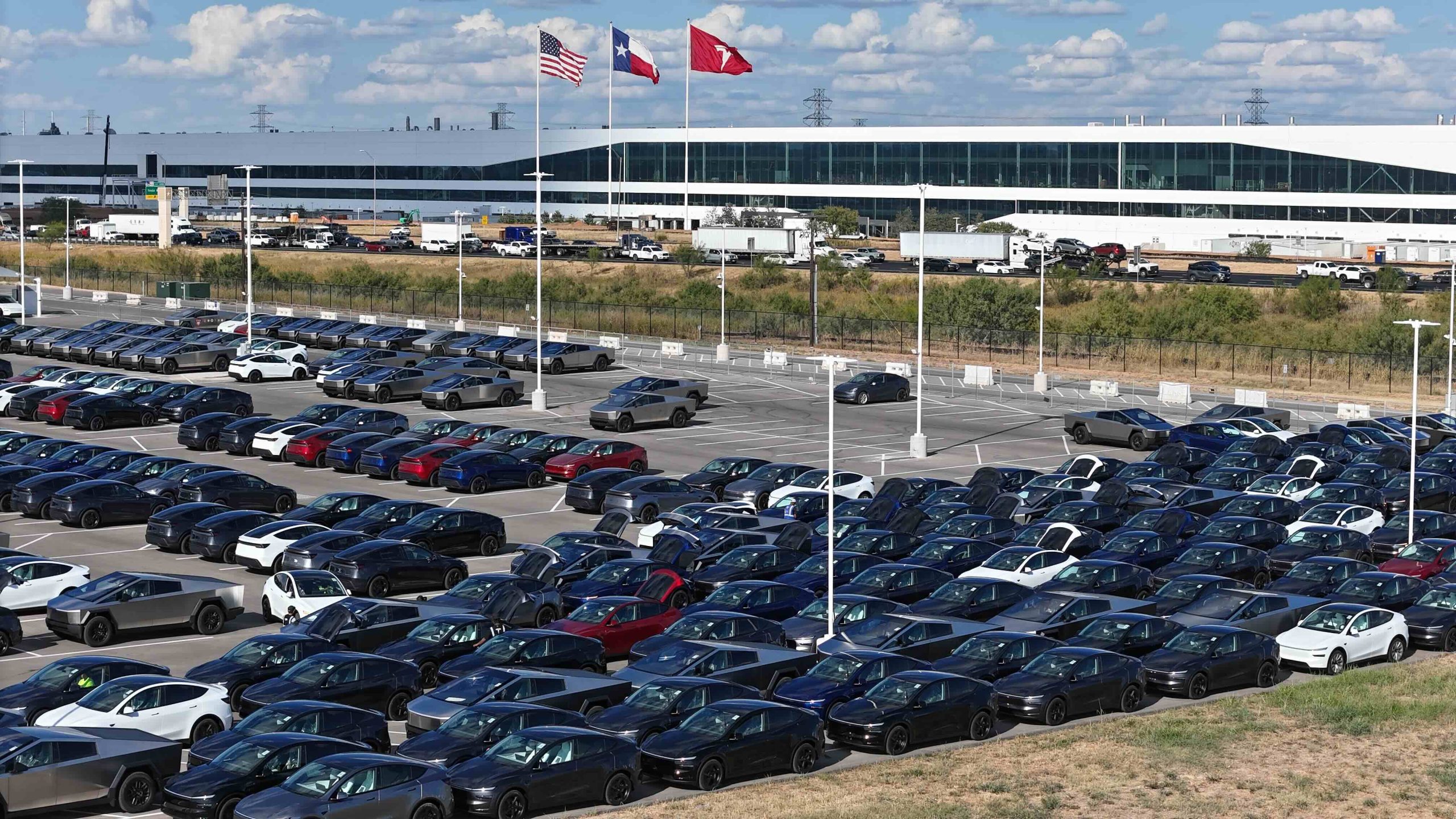
Tesla Gigafactory Texas to include battery cell production, filings show

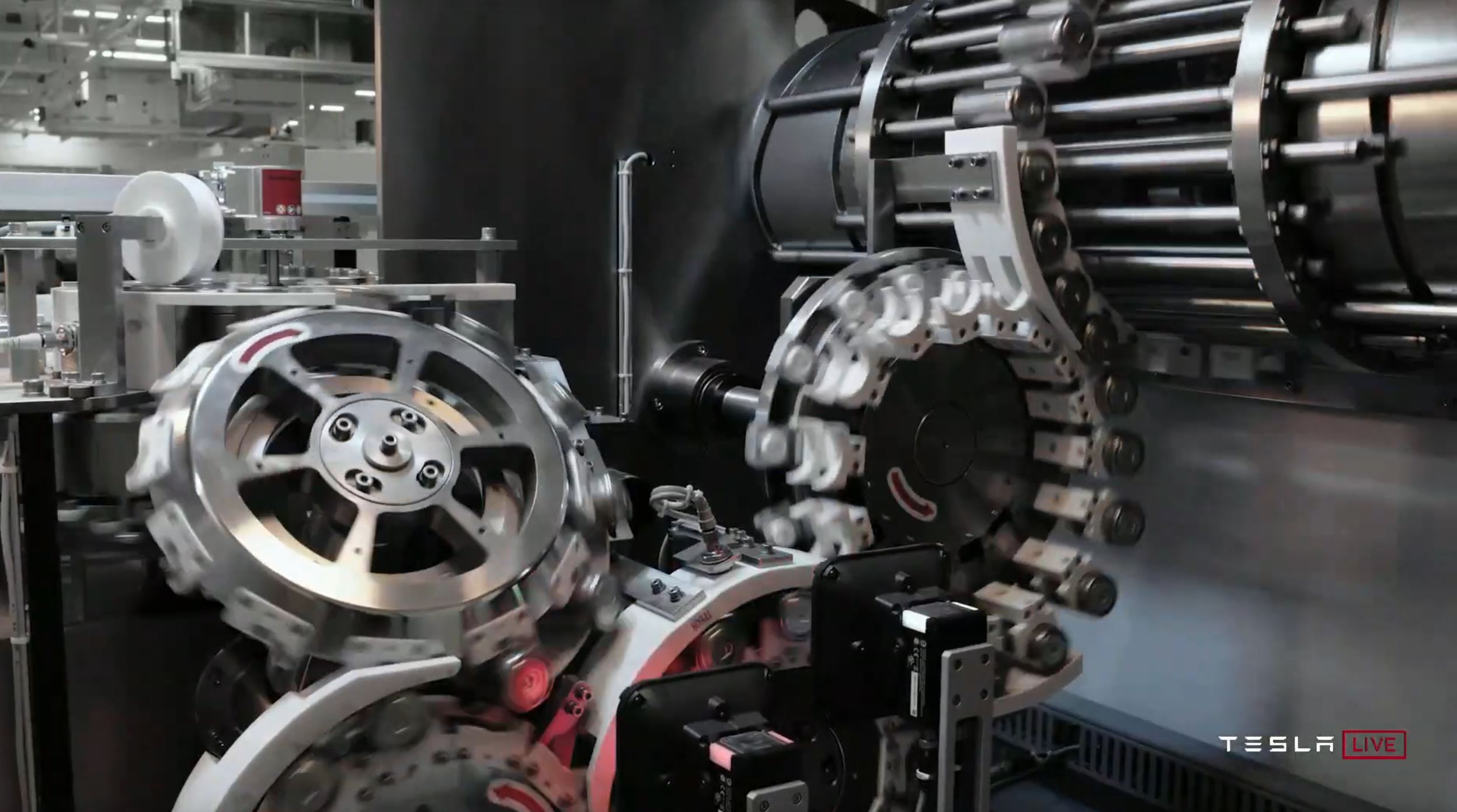
Recent filings to the Texas Commission on Environmental Quality (TECQ) have hinted at something quite interesting about Tesla’s plans for Gigafactory Texas. Based on the documents, Tesla will not only be producing electric vehicles in the massive complex; it will also be operating a “cell-manufacturing unit” that will build battery packs for the company’s industry-leading EVs.
The TECQ filing was submitted by local firm GHD Services Inc on Tesla’s behalf back in July. The documents themselves are a permit-by-the-rule registration for the processes to construct equipment that will be utilized in Gigafactory Texas’ battery facility. These equipment include six 20,000-liter nitrogen-blanketed tanks, which will be used for cell production.
As noted in a report from the Austin Business Journal, the filing itself did not specify if Tesla will be manufacturing its battery cells at the original 2,100-acre Gigafactory Texas complex, or at the nearby 381-acre site that the company recently acquired. That said, the Journal’s sources have pointed to Tesla mining lithium at an Austin site, despite the activity not being mentioned in the TECQ filings.
Tesla’s battery production efforts have caught the attention of the electric vehicle community. On its Battery Day event, Tesla outlined a plan for the company to produce its own cells for its electric vehicles and energy storage products. The company also took the wraps off its own custom 4680 cell, which boasts five times the volume of the Model 3’s 2170 cells. Since then, Tesla has confirmed that cell production will happen in Gigafactory Berlin, which will start with the production of the Model Y.
Numerous reports have also emerged about Tesla’s further initiatives to start its battery production activities. These involve partnerships with firms such as Canadian mining firm Giga Metals to acquire valuable materials like nickel. A report from market intelligence publisher Benchmark Mineral Intelligence further indicated that Tesla is planning to build a lithium hydroxide chemical plant in Texas, which will support Gigafactory Texas’ operations.
Gigafactory Texas is Tesla’s most ambitious vehicle production facility yet, with the factory being tasked to build key products like the Cybertruck and the Semi. It is also the first of Tesla’s facilities that will be partially open to the public, with CEO Elon Musk noting that Giga Texas will be an ecological paradise of sorts, featuring a boardwalk, hiking, and biking trails, among many amenities.



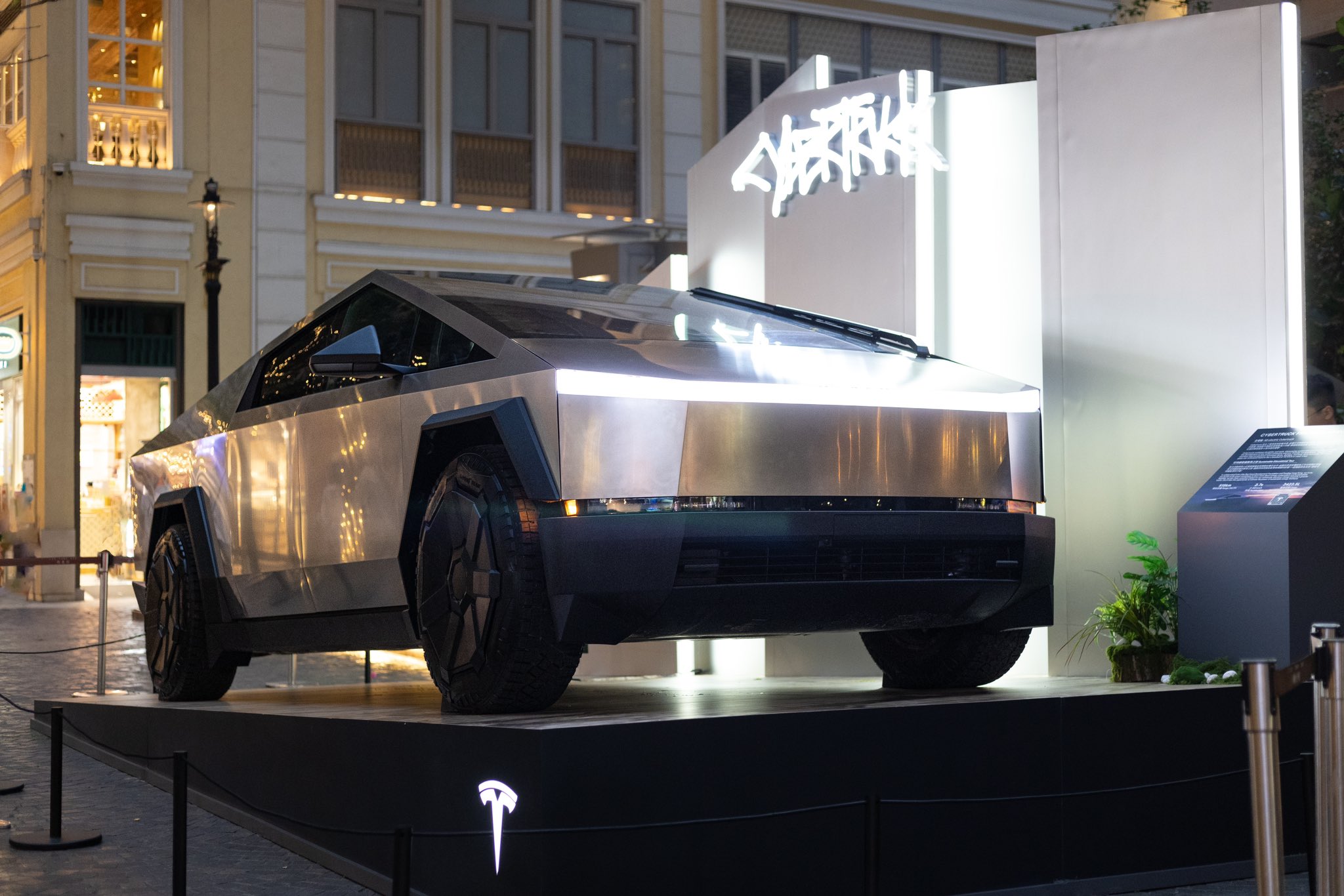
Tesla is lowering the monthly price of its Cybertruck Windshield Protection Plan from $35 to $25. The new rate will apply to the first payment on or after October 1, 2026. Tesla has told subscribers that all other benefits stay the same.
The plan covers unlimited repairs for chips and minor cracks on the front windshield. It also includes one full replacement every 12 months at no extra charge. Additional replacements in the same year carry a $100 deductible. Service is performed with Tesla glass and camera calibration, which matters because Autopilot and Full Self-Driving rely on those lenses behind the windshield.
Looks like Tesla is decreasing the Cybertruck windshield protection plan price from $35 to $25
Awesome https://t.co/MRlTU1XTbf pic.twitter.com/PWkMZt1H7G
— TESLARATI (@Teslarati) August 28, 2026
There is no long-term contract. Coverage applies only to the front glass and does not include collision, vandalism, or weather damage.
The Cybertruck’s large, complex windshield has been more expensive to replace than glass on Tesla’s cars, which is why the pickup started at a higher subscription price. The $10 monthly cut reduces the annual cost from $420 to $300. Tesla has not publicly explained the change. The timing coincides with a year of claims data after the plan was extended to the Cybertruck.
Tesla sells several related protection products as monthly subscriptions through the Tesla app. The Windshield Protection Plan is also offered on other models. Model 3 and Model Y currently cost $16 a month. Those passenger-car rates are unchanged in the latest Cybertruck notice.
The Wheel and Tire Protection Plan covers road-hazard damage such as potholes, nails, and debris. Repairs are unlimited. Each wheel or tire replacement appointment has a $25 deductible. Pricing varies by model and whether the vehicle is a Performance version. Tesla is raising some of those rates on the same October 1 date.
Reported examples include Model 3 Performance moving from $16 to $24 and Model Y Performance from $20 to $24. Cybertruck wheel-and-tire coverage has been listed at $20 a month for the standard configuration.
A separate Luxe Package bundles four years of windshield coverage, wheel-and-tire coverage, and recommended maintenance on certain new Model S, Model X, and Cyberbeast orders, although the Model S and X are now defunct.
Tesla also offers an Extended Service Agreement after the basic vehicle warranty ends. That product covers many Tesla-manufactured parts rather than glass or tires. Together, the plans give owners a menu of targeted, cancel-anytime coverage instead of relying only on auto insurance.
UPDATE: The number has now been updated to 45 units, up from 7!
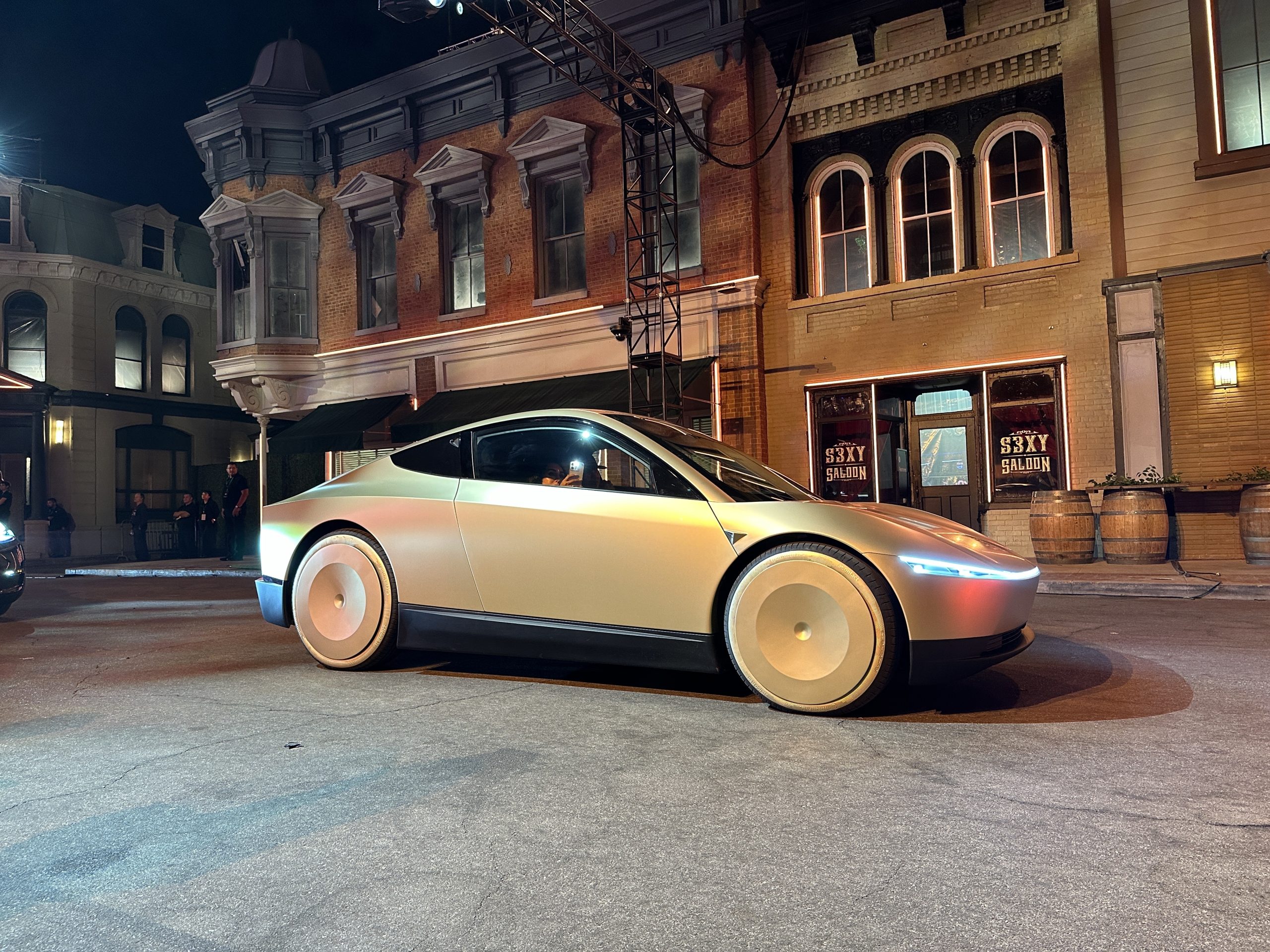
Here we go! Tesla has just added another 38 Cybercabs to its Robotaxi fleet, bringing the total up to 45, according to the Texas DMV.
Robots on robots on robots! This Thursday’s launch event is gonna be awesome🤖🤖🤖 pic.twitter.com/3HF24rHK4T
— Sawyer Merritt (@SawyerMerritt) August 31, 2026
Tesla is bolstering its Cybercab fleet with the State of Texas’s regulatory bodies ahead of the planned launch of the all-electric ride-hailing vehicle this Thursday.
Seven purpose-built Tesla Cybercabs have been added to Texas’s official automated vehicle registry, appearing in the Texas Motor Carrier Credentialing System (TxMCCS) public lookup just three days before Tesla’s invite-only Cybercab launch event in Austin on September 3.
The records, visible through TxDMV’s Motor Carrier and Automated Motor Vehicle Operator Lookup, list seven 2026 Tesla Cybercabs under Tesla Robotaxi, LLC. Their VINs begin with the 5YJA prefix, distinct from the 7SAYG Model Y robotaxis that already dominate Tesla’s Texas fleet.
Community trackers that scrape the same public database recorded the new entries on August 31, bringing Tesla’s authorized Texas robotaxi total to 276 vehicles: 269 Model Ys and the seven Cybercabs:
🚨 There are now SEVEN Tesla Cybercabs registered with the state of Texas
We are just three days from Cybercab! pic.twitter.com/ndwhuFYsep
— TESLARATI (@Teslarati) August 31, 2026
Texas Senate Bill 2807, which took effect in late May 2026, created a self-certification framework for commercial Level 4 operations. Operators file through TxMCCS, attest to SAE Level 4 capability, maintain insurance, and keep an active vehicle list.
Tesla completed that process months earlier for its existing Model Y Robotaxi service, which has carried paying passengers in Austin, Dallas, Houston and other markets. Adding the Cybercabs to the same authorization means the new two-seat, steering-wheel-free vehicles are now legally recognized for commercial use on Texas roads.
The timing is deliberate as Tesla scheduled the September 3 event at its Austin campus after sending invitations to selected Robotaxi riders and other guests. The company has described the evening as a chance to “experience the future of full autonomy” and plans to livestream it.
Production Cybercabs, which lack pedals and a steering wheel, have been rolling off the Giga Texas line for months; some earlier examples still carried temporary driver controls for data collection. Registering a small fleet of the finished design immediately before the public event signals that Tesla intends to move the purpose-built vehicle from factory and test tracks into the same Robotaxi app already used by Model Y passengers.
The seven units remain a tiny fraction of Tesla’s overall Texas authorization and far smaller than competing fleets. Registration does not automatically equal unsupervised public rides; it is the legal prerequisite.
Still, the sudden appearance of Cybercab VINs in the state’s lookup system, after a year of Model Y-only listings, is the clearest official confirmation yet that Tesla’s dedicated robotaxi hardware is entering the regulatory pipeline at the same moment the company is preparing to show it to invited guests and a global livestream audience.
Whether those seven vehicles appear at the September 3 event or begin carrying passengers shortly afterward, their presence in TxMCCS marks a concrete regulatory step that has been anticipated since the Cybercab concept was first revealed.
Tesla has expanded the operational geofence for its driverless Robotaxi service in Austin, Texas, marking the first such increase in some time. The updated Service Area for Robotaxi in Austin now spans about 288 square miles and is roughly 9 percent larger than the previous boundary.
This incremental growth adds approximately 24 square miles of coverage, bringing the prior zone of roughly 264 square miles into a broader footprint that better serves northern suburbs.
The expansion extends the geofence northward toward Pflugerville along the US 183 corridor, incorporating additional neighborhoods north of the Domain and areas such as Mesa Park. These additions include higher-end residential and commercial districts that previously sat just outside the allowed operating zone.
Riders can now request unsupervised trips that begin or end in these newly included locations, provided the entire route remains inside the digital boundary:
Tesla has just expanded its Robotaxi service area in Austin, Texas for the first time in 10 months.
The new service area is roughly 9% larger than the old one, and is about 288 square miles in total. pic.twitter.com/i4oBM1KfWS
— Sawyer Merritt (@SawyerMerritt) August 31, 2026
Tesla first launched public Robotaxi operations in Austin in mid-2025 with a modest initial zone of about 20 square miles. Subsequent enlargements in 2025 and early 2026 steadily grew the map until it covered much of the metropolitan area.
After the last major update roughly ten months earlier, the company held the boundary steady while it collected additional miles and refined the FSD suite.
The modest nine percent increase still matters for daily utility. Longer trips become possible, more residents gain access, and the fleet can accumulate more diverse real-world data across new road types and traffic patterns. Observers note that the added territory aligns with existing Tesla service infrastructure, which could support more efficient vehicle staging in the North end of Austin.
Although the geofence has grown, Tesla continues to operate a relatively small unsupervised fleet in the city. The company has emphasized safety and software readiness over rapid geographic scaling. This latest map update signals that Tesla remains committed to expanding Robotaxi availability in its home market as it prepares for further software improvements and potential Cybercab deployments.
The 288-square-mile zone now gives Austin riders one of the larger driverless service areas currently available in the United States.

Tesla Cybertruck windshield protection just got cheaper

Tesla Cybercab fleet grows in Austin ahead of launch event


