News
New Tesla Giga Press components spotted in Gigafactory Berlin complex

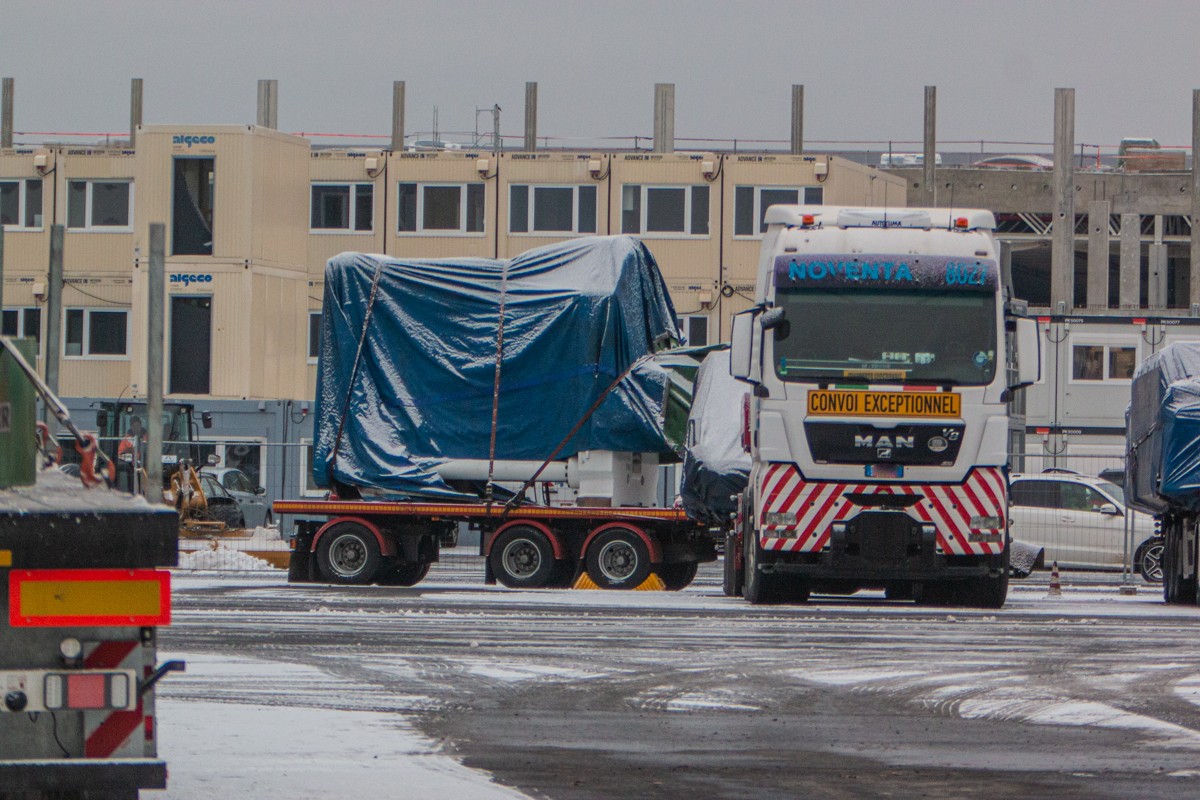
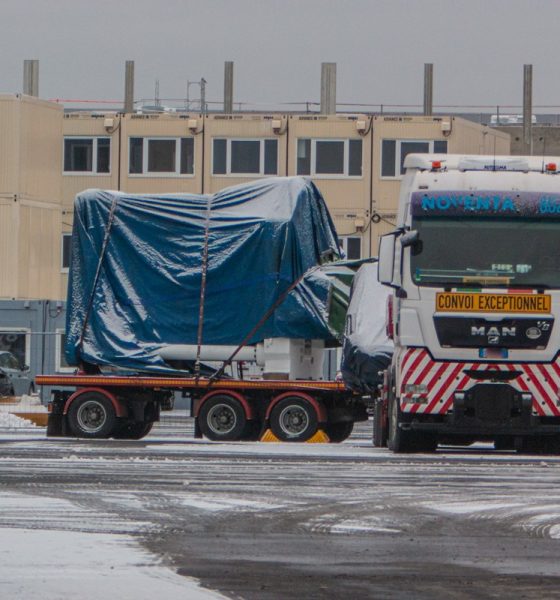
Recent Gigafactory Berlin images revealed that a number of Giga Press components have arrived on the site. The pictures were taken this weekend by a number of Tesla enthusiasts who have been closely following the progress of Giga Berlin’s electric vehicle production facility.
As could be seen in the recently shared photos, the Giga Press components are massive, with some portions requiring a whole truck to transport them. Tesla Gigafactory Berlin watcher @GF4Tesla observed that the trucks transporting the Giga Press components, which are manufactured by IDRA, were marked with “Autotransporti Cram,” the name of an Italian heavy transport firm.
This is not the first time that Giga Press parts have been spotted in the Gigafactory Berlin complex. Late last month, a drone flyover of the site from fellow electric vehicle advocate Tobias Lindh revealed that some parts of the massive casting machine have arrived at the site. The parts that were transported then seemed to be minor components of the Giga Press itself, though speculations suggested that work on some parts of the machine’s main frame may have already been underway.
Considering the size of the Giga Press components that were spotted this weekend, as well as portions of the machine that were visible from the images, it would appear that the general assembly of the mammoth casting contraption is at hand. This bodes well for Giga Berlin’s impending production of the Made-in-Germany Model Y later this year, as the Giga Presses are a key factor in the efficient and cost-effective production of the all-electric crossover.
Previous reports have indicated that Tesla will be deploying a whopping eight Giga Press machines at Gigafactory Berlin. The reasons behind this number have not been disclosed by Tesla, though speculations in the EV community suggest that some machines may be intended for the local production of other vehicles, such as a Made-in-Germany Model 3 and a compact, more affordable car.
Watch a recent drone flyover of the Giga Berlin complex in the video below.
The Teslarati team would appreciate hearing from you. If you have any tips, email us at tips@teslarati.com or reach out to me at maria@teslarati.com.



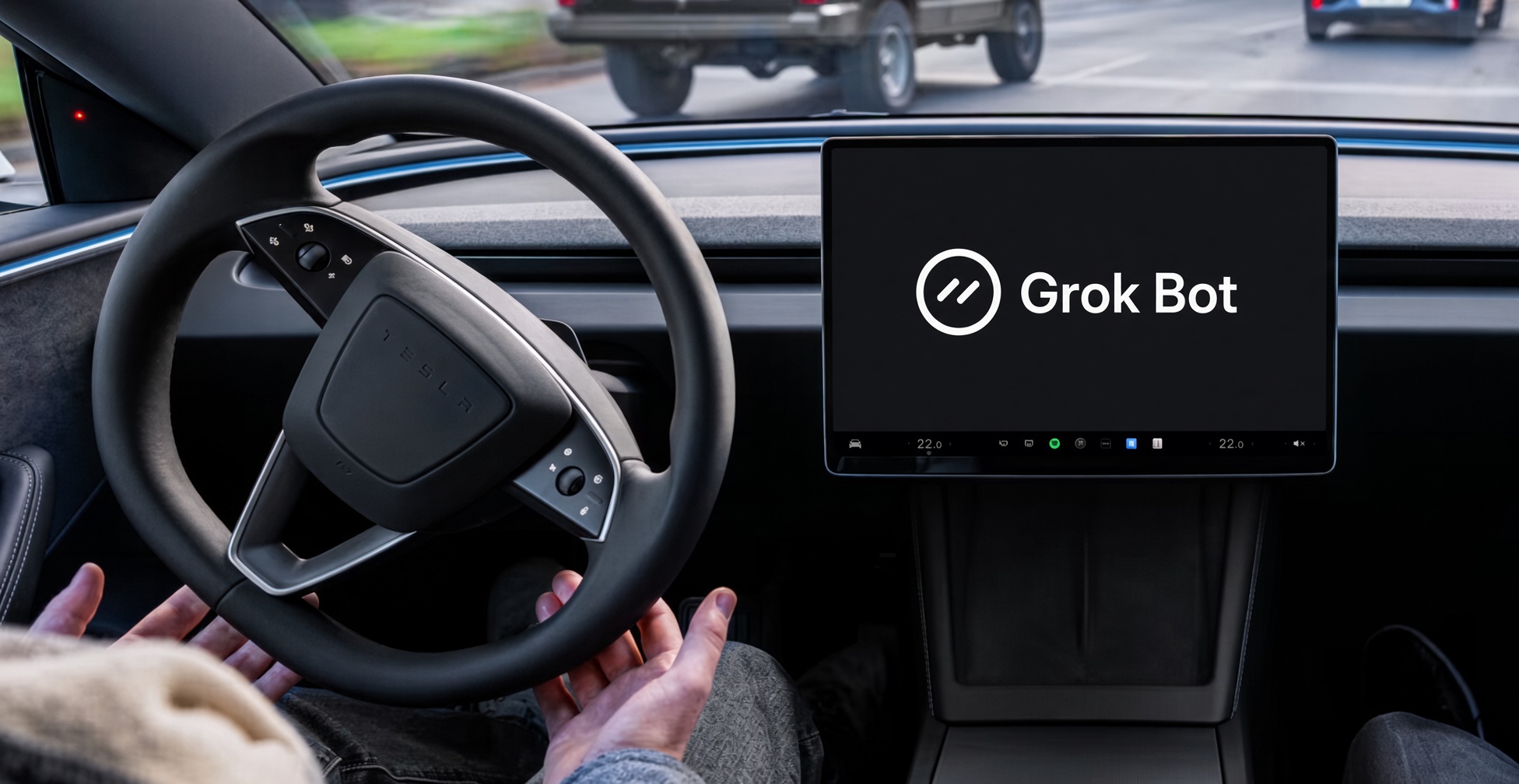
Tesla has expanded Grok from an in-car chatbot into a hands-free work assistant. On September 22, Tesla officially launched Grok Bot capability, confirming that drivers can now manage email, calendars, files, chats, and tasks by voice and then hand more ambitious errands to the AI-fueled productivity cheat code.
Grok itself is built by xAI. The new car features split into two layers: Connectors link Grok to outside accounts. Grok Bot, currently limited to SuperGrok Heavy subscribers, can complete multi-step tasks such as placing a usual coffee order, booking a reservation, or scheduling an appointment. It truly puts the driver in a nearly complete hands-free driving and productivity setting, with ironically the only task truly requiring your hands being to touch the “Start Self-Driving” button.
We were granted access to Grok Bot’s Tesla integration a few weeks back, and we’ve been able to do a handful of things with it. On a handful of occasions, we’ve used it to order food and have it ready for pickup slightly later into the evening; we’ve managed to pick up groceries after a day of errands with Grok Bot, and outside of the car, it’s helped with budgeting and even my fantasy football draft.
We’ve been using @Grok Bot in Tesla for a few weeks after gaining Early Access, which we thank the awesome engineers for
Grok Bot makes things much easier across your entire life. From the Tesla, I’ve used it to place pickup orders for my Fiancée and I, we’ve ordered groceries… https://t.co/ZJSLieG1s5
— TESLARATI (@Teslarati) September 22, 2026
Tesla shows another way to utilize it: in their demo, a driver says “Hey Grok,” asks the assistant to check an inbox, and hears that a message concerns a weekend reservation. Grok then scans the calendar, reports no conflicts, and confirms the Tahoe trip is clear. It can also add check-in details to a road-trip itinerary. The point is not novelty chat. It is keeping eyes on the road, or on Full Self-Driving, while the car handles the paperwork of a trip:
.@Grok in your Tesla can now do meaningful work for you
With Connectors, you can manage your inbox, clean up your calendar, or talk through existing files/chat/tasks – all hands-free pic.twitter.com/W1LuybQh0P
— Tesla (@Tesla) September 22, 2026
This Grok rollout is not a gadget add-on as much as it is Tesla’s thesis in software form: the car should stop being a machine you operate and start being a room you occupy.
Connectors and Grok Bot treat the cabin as an office that happens to move, and that has truly been Tesla’s intention for years now. The car has slowly become an extension of a home more than a vehicle. Inbox, calendar, groceries, takeout, and reservations become voice work, not dashboard chores that you need to do before you get in your car.
Responsibility shifts from the driver to the stack, and as many Tesla owners rely on FSD for travel, Grok Bot now handles the monotony of dinner reservations or appointments.
Elon Musk
X changed how everyone gets paid, and this lawsuit shows why
X sued a Bitcoin account network over fake payouts as its creator pay model shifts

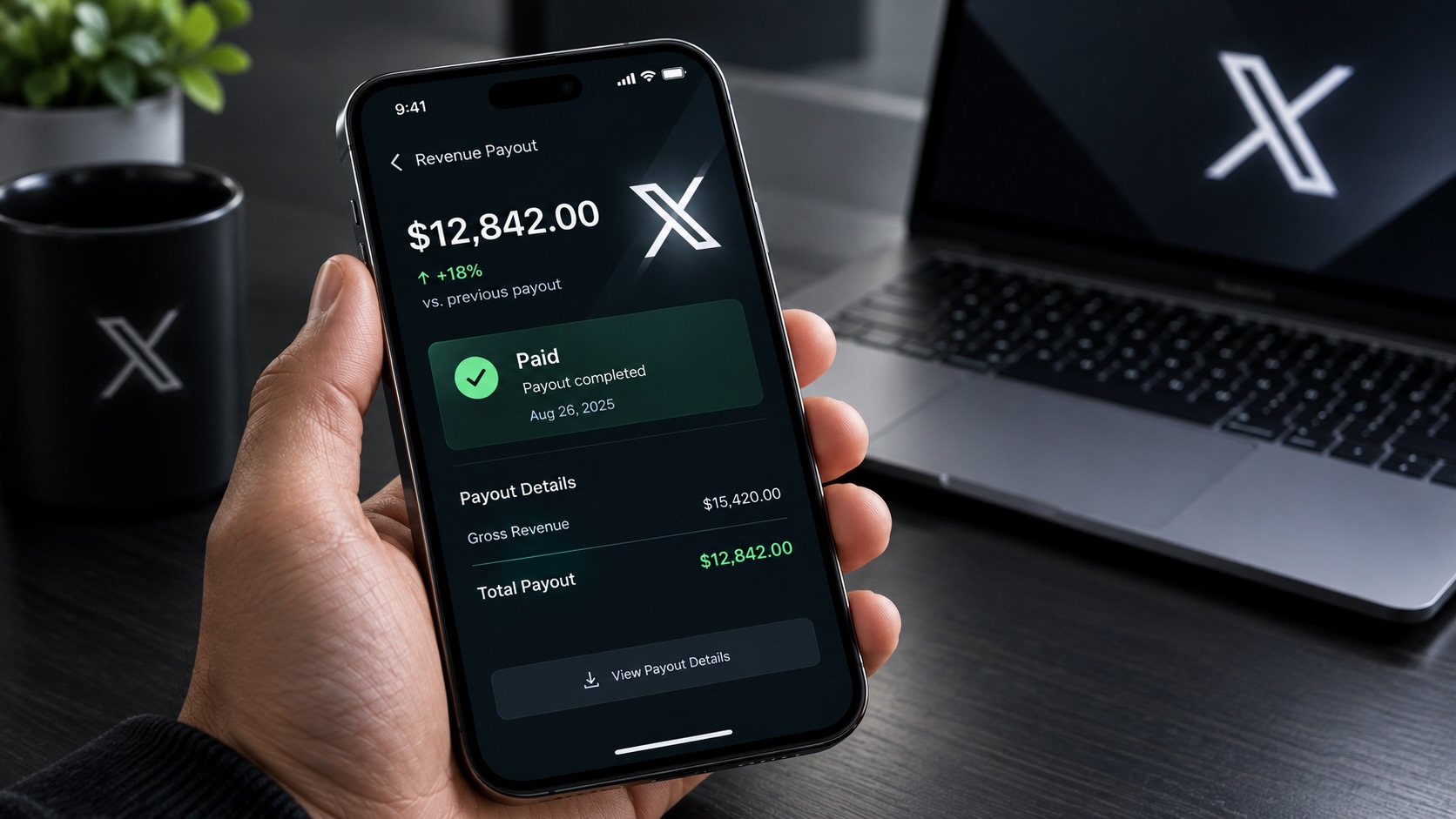
Elon Musk’s X has taken a Bitcoin-focused engagement ring to court, and the case doubles as a receipt for how differently the platform pays creators today. The company filed suit in the High Court of England and Wales against Vivek Kumar Sen and Zamyang Sherpa, alleging the pair ran six accounts, including @Vivek4real_, @Bitcoin_Teddy and @TrendingBitcoin, as one coordinated operation to fake the kind of engagement that used to translate directly into money.
According to the filing, first reported by Gizmodo, the accounts posted near identical “BREAKING” crypto headlines seconds apart, in one case 11 seconds, then had three more handles like, reply to and repost the material to manufacture what X called “a false appearance of genuine, human communication and interaction.” X says the scheme pulled in at least £207,384, about $278,000, and pegs its own investigation and remediation costs at another £75,000. The accounts were suspended August 18. X general counsel James Burnham announced the case on X last weekend, writing that the company “will act forcefully to protect our platform and the earnings of genuine creators.” Musk’s own reaction, posted shortly after, was three words: “Don’t mess with 𝕏.”
Don’t mess with 𝕏 https://t.co/HSmd5hL6aQ
— Elon Musk (@elonmusk) September 21, 2026
The timing lines up with a a recent update to how X pays its creators. The program these accounts allegedly gamed, Creator Revenue Sharing, launched in mid 2023 and paid out based on how much a post got engaged with. Originality was never part of the formula, which is exactly how the platform ended up flooded with recycled clips, copy pasted “BREAKING” posts and replies engineered purely to farm reactions from paying subscribers.
X tried patching the model more than once, including an April cut to aggregator payouts and a March regional weighting change that Musk personally paused hours after it was announced. X retired Creator Revenue Sharing for good on September 7 and opened its replacement, Original Content Rewards, the next day.
Today, we’re launching Original Content Rewards.
The reality is that Revenue Sharing had reached a point where its incentives were misaligned. Creators should be focused on bringing net new content to the platform instead of maximizing payouts. We could have kept adding more… pic.twitter.com/VJIxqlPrjm
— Allegra Jacchia (@allegrajacchia) August 7, 2026
The new math is stricter. Payouts now come only from qualified impressions, meaning unique Home Timeline views from Premium subscribers where at least half the post is visible, and replies no longer count toward eligibility at all. Copied posts, reuploaded media and reposts without meaningful changes are explicitly excluded. Allegra Jacchia, senior product manager for Creators at SpaceXAI, which now runs X’s product and AI work following xAI’s acquisition of the platform, put it bluntly, saying the goal is to reward creators who bring original ideas and perspective, “not those who have become best at gaming the system.”
Read that way, the lawsuit isn’t really about six crypto accounts. It’s X putting a dollar figure on what the old incentive structure cost, then suing to collect it right as the new one goes live. For live updates on how the case and the new rewards program shake out, follow @Teslarati on X.
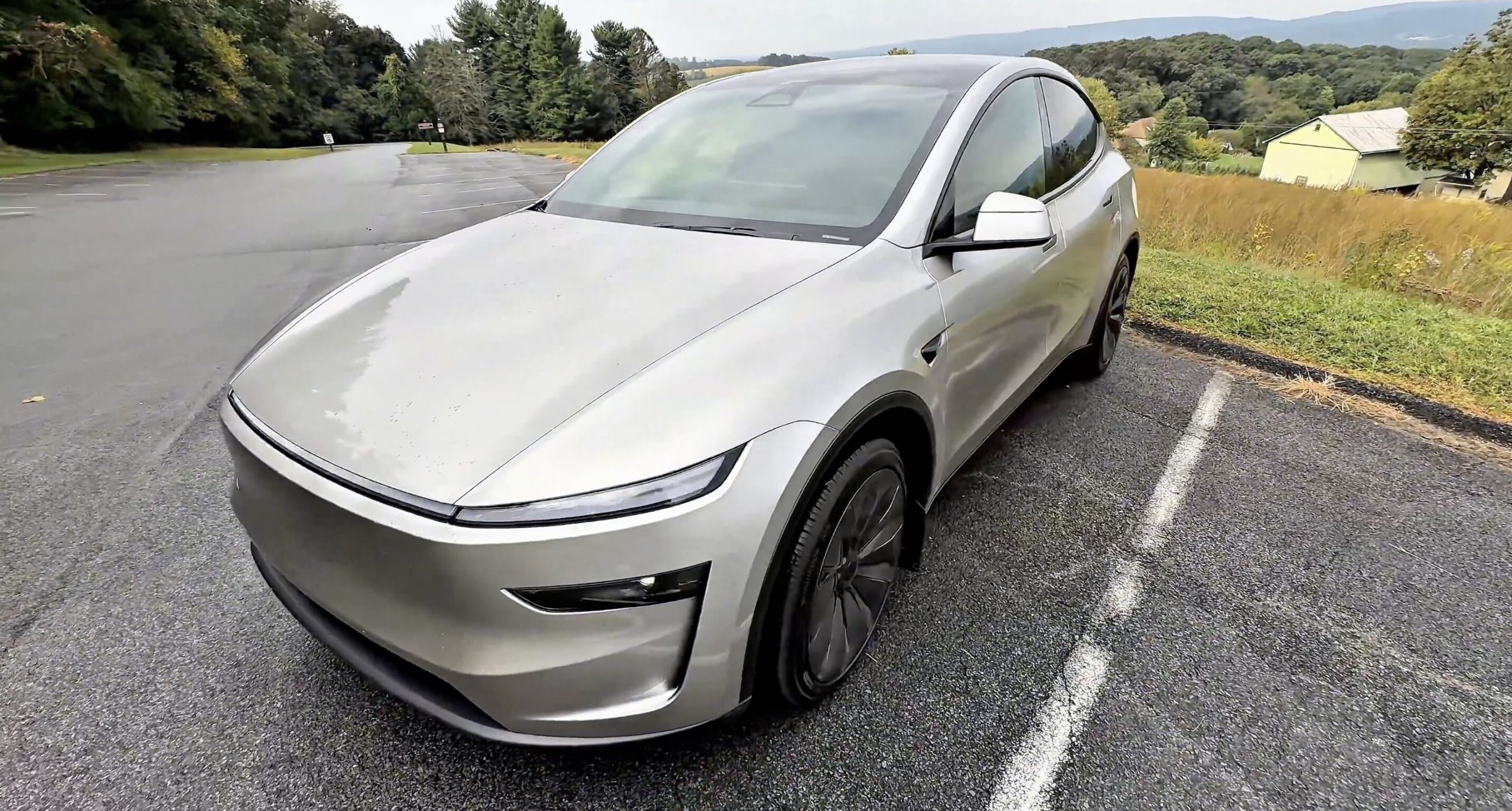
Last week, Tesla sent me the Model Y L for five days to test, assess, and enjoy for journalistic purposes. It’s always a treat when I get any media vehicle, and I’ve had the pleasure of working with Tesla and Ford for hands-on reviews of their products.
This one was exceptionally exciting for a few reasons: first, because it is the car I own, but bigger, so I was really excited to see if that extra space was worth it; and second, because my Fiancée (we’re down to just 18 days ’til she’s officially my wife!!!) and I plan to fill a car up with kids in the near future, so it was really nice to have a trial with a car that would potentially be in our driveway in a few years.
I did a full 10-minute video review of the Model Y L, which I will post at the bottom of this more condensed written version. If you prefer to watch a review, go ahead and skip to the bottom for that.
For those who prefer the writing, I’ll break down the big things about the Model Y L that I noticed, focusing on the big addition/difference that this car has from the Model Y: the third row. Tesla also added small-but-mighty changes to the Y L that I really wish were on my Model Y Premium, so I’ll be sure to mention those as well.
What Makes It Different from the Model Y?
Credit: TESLARATI
The first thing to note is that the interior of this vehicle, from the front row, is generally the same. It truly does feel like you’re in the same exact car with a slightly different seating layout. Of course, Tesla interiors do feel this way, at least with the Model 3 and Model Y, but there are no drastic differences between the Model Y L and the Model Y from the front row.
This should be expected, so definitely do not go into it thinking you’ll know you’re in a different car. It is a very similar experience to the Model Y.
Tesla Model Y L: new features that make it better than the standard Model Y
The true differences come from the back two rows. The only true difference from the front is the addition of a new Dynamics Feature that falls under the “Ride & Handling Priority” menu, which now allows you to adjust the suspension damping to prioritize a comfortable ride for everyone or one that is noticeably better from the rear two rows. In terms of ride comfort, the front rows definitely feel the impact of this; it is a noticeable difference and much stiffer in the driver’s seat with this setting turned to prioritize the rear occupants.
What changes from an engineering standpoint between these two settings @elonmusk @larsmoravy?
There is a very noticeable difference in comfort from the driver’s seat between these two settings https://t.co/62bdZJOr26 pic.twitter.com/KFP12jleHj
— TESLARATI (@Teslarati) September 14, 2026
There are also a series of small improvements, like the rear taillight is now up toward the spoiler, which must be a strategy for making the rear glass actually useful in the Y L compared to the regular Y.
Pretty crazy how much different the rear windshield is compared to the Model Y
Not even close in size https://t.co/62bdZJOr26 pic.twitter.com/IjNbWwMBcS
— TESLARATI (@Teslarati) September 14, 2026
Some other small changes are the addition of small magnets for the sub-trunk lid, which is a great addition and something I’d like to do in my Model Y; it sounds to me as if the Model Y L liftgate motor is less whiny than the one in my Model Y; and all three rows of climate are controllable from the front touchscreen.
I talk about them in a short video here:
🚨 Five things you might not know about the new Tesla Model Y L! pic.twitter.com/I42VTQoS5R
— TESLARATI (@Teslarati) September 14, 2026
Second and Third-Row Legroom
The major feature of the Model Y L is the third row, and Tesla did a great job of making it spacious enough for more than just your nine-year-old nephew. It actually does have a suitable amount of legroom for adults, but it is dependent on how tall the people are in the first- and second-row seats in front of you.
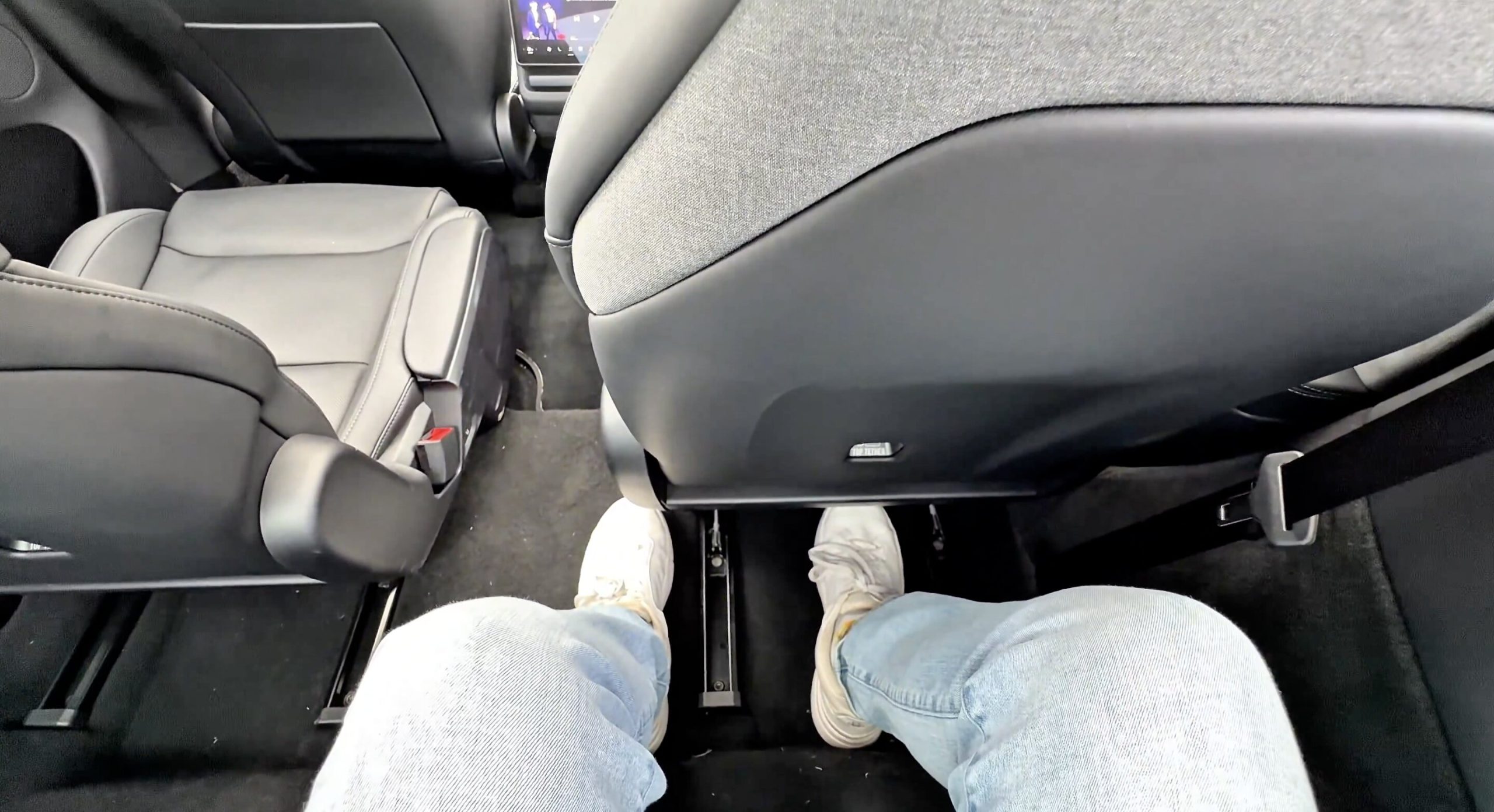
This is where I caught some slack from those who have also sat in the Model Y L and believe there is enough room for anyone of any height. I certainly believe that those who are not complainers could sit back there for a multiple-hour drive and not complain. I would enjoy sitting in the back row because I think it is comfortable; the vents for air are perfectly positioned on the C pillars for maximum comfort, and I found that there was enough room back there for me. I’m 5′ 8″, so I’m definitely not tall. However, I found that I had more than enough legroom:
Credit: TESLARATI
The picture above is where my Fiancèe could sit comfortably in the second row in front of me, and she is 5′ 1″. There is a lot of give and take with these seats, and I believe most groups could make it work. She was comfortable in the second-row seat in front in this position, and as you can see, I have plenty of room. She could easily come back a few inches, and I’d still be comfortable.
This is where I think people would truly benefit from seeing what the space in this car looks like for themselves. To me, I found it more than suitable for a group of friends to go out in and for everyone to be comfortable. There might be some strategy to it if you have some taller friends, but it’s definitely doable.
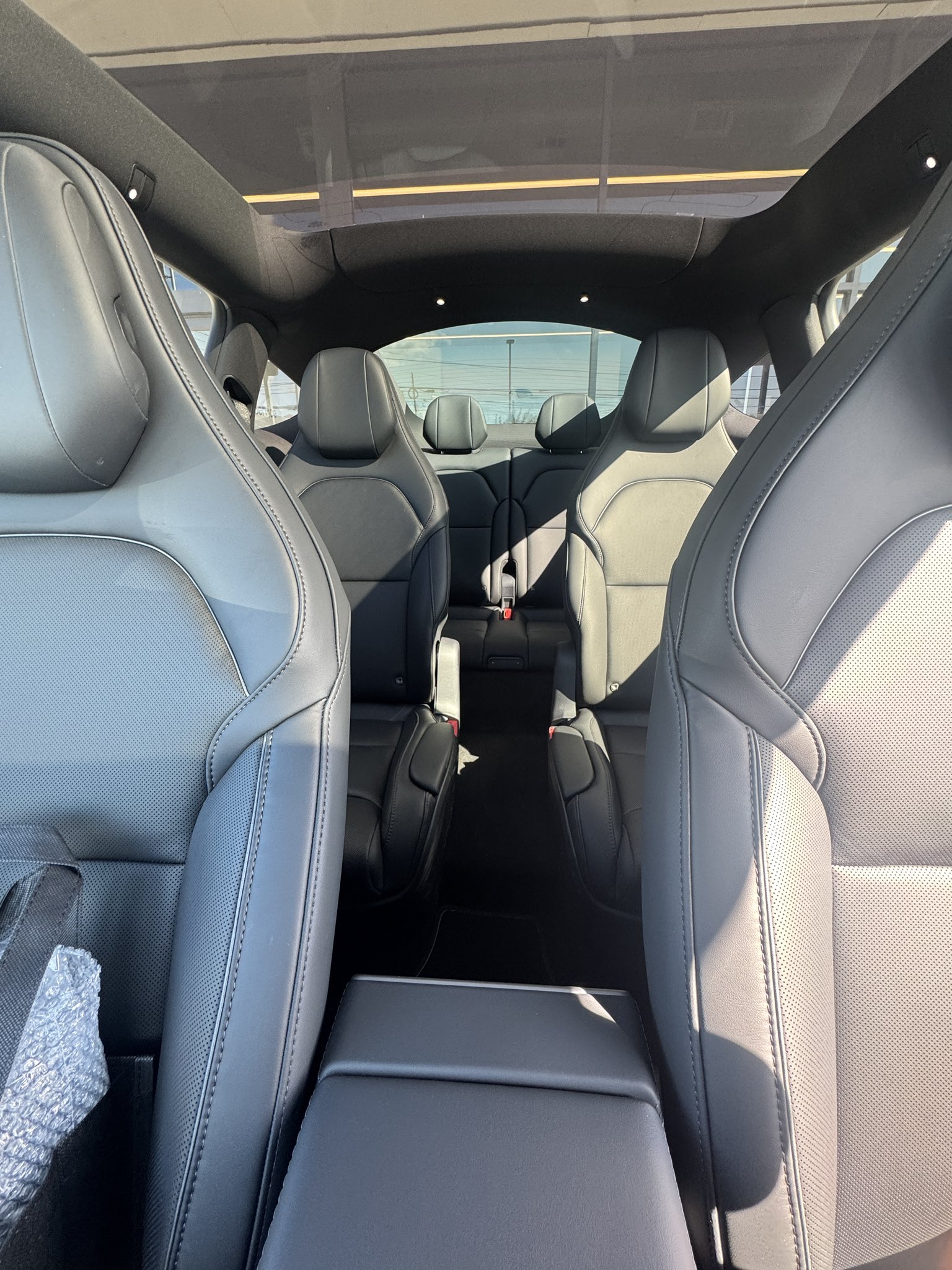
Overall, the space in the Y L in the back two rows is great: the second-row Captain’s Chairs have mechanical armrests that go down automatically when you exit the car, and come back up on their own when you return. The second row also has ventilated seats; you’ll only have the heat option in the third row.
Credit: TESLARATI
Overall Thoughts
It was really a great five days with the Model Y L, and I do believe that this is a great car for families. I do not believe it is the perfect one. It is really an excellent option for those who can make do with what is truly a compact crossover stretched out to make way for a third row. However, I think that more families simply want something large, like Tahoe or Expedition large, and the Model Y L does not necessarily answer that call.
I think it is more than reasonable for a family of six to have this car and make it work. It is safe, it has Full Self-Driving, which I believe will be a non-negotiable for me moving forward in car buying; and it is relatively affordable, with the Launch Edition coming in at a price of $61,990 before options. Not going to a gas station for the past year has really been a lifesaver for me, especially with home charging saving us so much money.
Tesla will need to have an answer for the families that want something like a Cyber SUV or simply something that qualifies as a full-size SUV. I just truly do not think that every family will see this as enough space, and I think that’s understandable. If someone were to want to take an overnight trip with their four kids, I don’t know if it would be the easiest cargo situation because without that third row folded down, that trunk space is confined to just 14.8 cubic feet. I couldn’t take four kids and a wife to Ocean City for a week with using only the trunk space. We’d likely have to get creative, and I think that’s what many families want to avoid.
For comparison’s sake, a Tahoe offers 25.5 cubic feet of trunk space, which is still tight, but much more manageable and forgiving.
With all that being said, the Model Y L is still a great option and I’d be willing to see past the cargo issues because of FSD and the safety of Tesla vehicles overall. For our full review, check out the video below:

Tesla integrates Grok Bot into its vehicles for the ultimate personal assistant

X changed how everyone gets paid, and this lawsuit shows why


