News
Elon Musk’s SpaceX lab school principles now molding young innovators around the world

The advent of COVID has brought about a myriad of problems in the world to the forefront, including hard-to-swallow realizations about the systems that surround, forge, and often dictate human society. Education was among these systems affected by the global pandemic.
As students moved their learning experiences from the classroom into their living rooms, it became evident that the traditional education system was not equipped to mold young minds in the middle of a pandemic. At the same time, however, the coronavirus’s effect on schools and learning highlighted some issues that have been plaguing the educational sector for some time.
Some parents, teachers, and other advocates of learning have taken the time the pandemic has afforded us to try and fix some of the fundamental issues that have surfaced in traditional education systems across the globe throughout the years, prior to COVID.
Synthesis School has taken a different route.
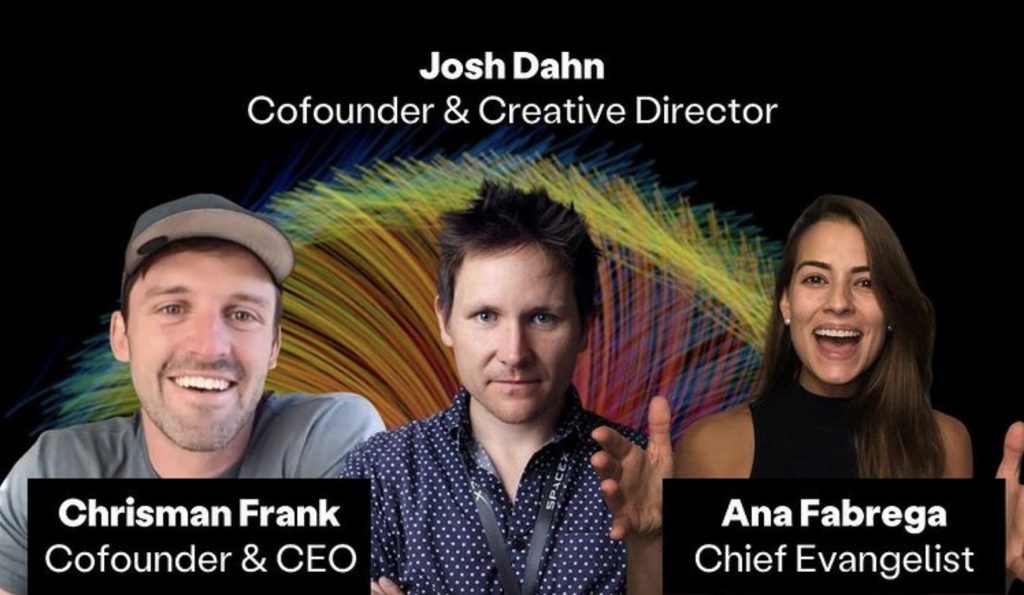
Led by Josh Dahn (Cofounder & Creative Director), Chrisman Frank (Cofounder & CEO), and Ana Fabrega (Chief Evangelist), Synthesis School seems to get to the root of learning and education by teaching kids and young adults fundamental problem-solving skills through a medium that comes naturally to them: games.
“Synthesis school has taken the games that were played at Ad Astra campus, at the lab school of SpaceX. We’ve taken those games and we’ve scaled them up to offer to kids all around the world. The particular focus of them has to do with teaching bigger concepts like game theory, collaboration, Network Effect. What it’s like to work in a teams, strategy…,” Jessica Bogart, a Synthesis School facilitator, told Teslarati.
Bogart left the entertainment industry after two decades to join Synthesis School as a facilitator. She sat down with Teslarati and explained the schematics of each class and how it helped enrich and cultivate young minds to face the everyday problems that life will throw at them.
Elon Musk’s educational principles from Ad Astra – the SpaceX lab school he created for his sons with the help of Josh Dahn—make up the core of Synthesis School. Musk described the two core principles of Ad Astra years ago as: 1) Ditch the assembly line model, no grade levels and 2) Problem-focused, not tool-focused.
At Synthesis, about 18-20 kids are put into groups called cohorts. Each group has one facilitator. Bogart explained that facilitators don’t lecture to their cohorts, like teachers do in a classroom.
A typical meeting starts with the cohorts logging into one of Synthesis School’s games and a Zoom call. The facilitator does not give them instructions about the game. Each cohort is given time to explore and learn the schematics of the game on their own.
After they have explored, the cohorts talk to each other to learn information that others might have found about the game. Then the cohorts are broken down into several groups and must navigate the game together to complete a given objective.
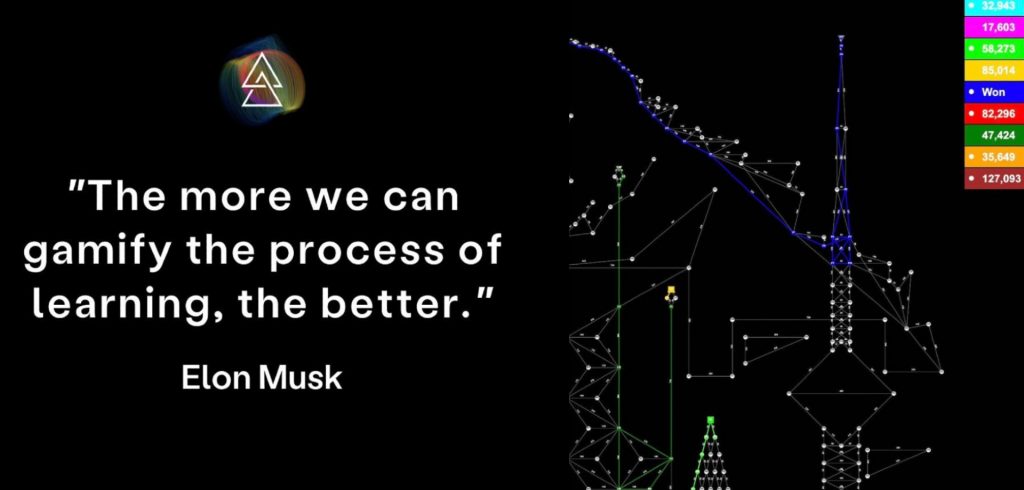
“There’s no wrong answers and there’s no grades. It’s all about seeing how you think,” Bogart said. She explained that Synthesis didn’t teach kids through rote memorization or focus on grades and teaching to the test. It focused more on critical thinking, problem-solving, and teaching kids how to find or learn about the tools they need to solve complex issues.
“In regular school, an example would be, here are 50 different screwdrivers and you’re going to memorize the size and shape and handles and where they go on the board,” Bogart explained.
“The way that [it was being taught at Ad Astra] at the time was here’s the engine that’s broken and we need to fix it, but what do we do to get the casing off? Well, we use a screwdriver. And now you’ve made that connection.”
In Jessica Bogart’s cohort missions, she has been able to teach her kids concepts like the Network Effect or the Stag Hunt game theory. Right before her interview with Teslarati, Bogart taught her cohorts offensive and defensive strategies based on The Art of War by Sun Tzu.
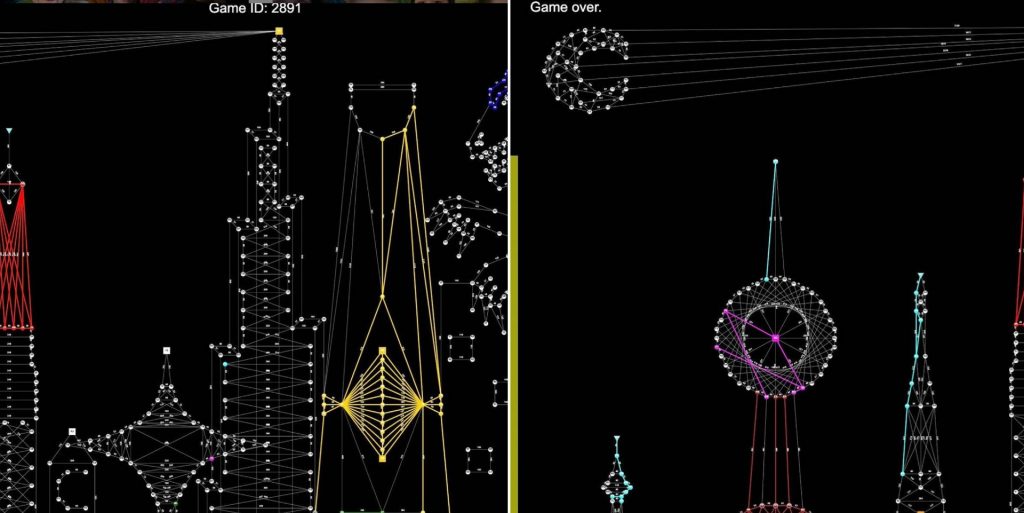
Synthesis School already has cohorts from around the world, including Australia, England, India, Bahrain, and the United States. The enrichment club offers weekly classes for $180 a month and has plans to add more classes in the future.
It is a growing community dedicated to teaching children and young adults fundamental skills they will need to learn and thrive in life through games like Constellation. In Jessica Bogart’s words, Synthesis School helps kids “embrace the chaos.”
Given the global landscape of today, embracing the chaos of the world and having the ability to work through it, may just be what the doctor ordered.
For more information on Synthesis School, click here.
If you have a story share related to Elon Musk, Tesla, or any of his companies, we’d like to hear from you. Email us at tips@teslarati.com or reach out to me at maria@teslarati.com.


Elon Musk
SpaceX turned a heralding moment for Starship into its greatest moment
Starship reached orbit despite losing an engine, deployed 26 Starlink V3 satellites on Flight 14.

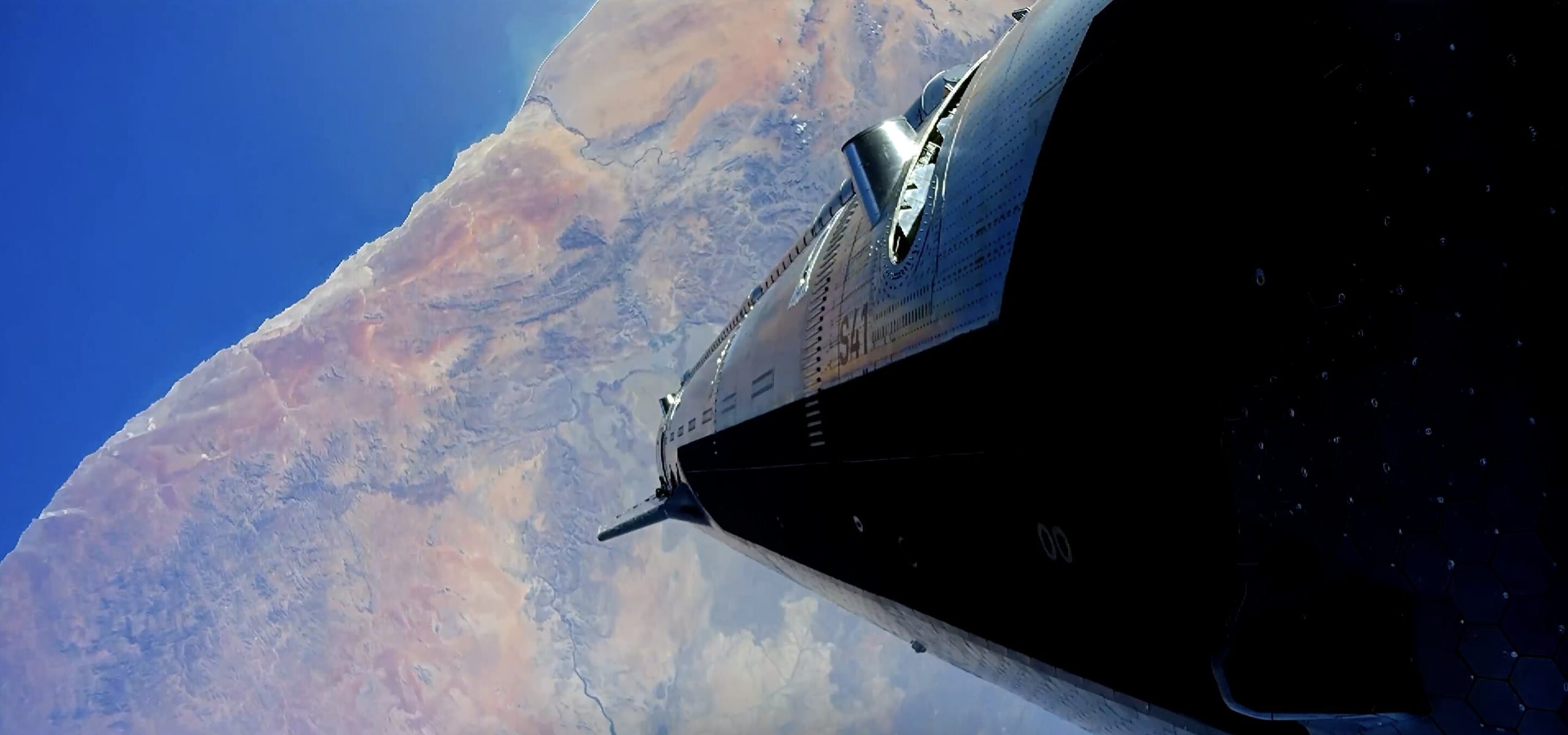
SpaceX’s Starship reached orbit for the first time on Monday, and for a few nail-biting minutes it looked like it wouldn’t. During ascent on Flight 14, one of Ship 41’s six Raptor engines shut down early, and SpaceX’s livestream host Dan Huot told viewers the team had decided not to commit to orbit. Minutes later, after what Huot described as a lot of conversation in the control room, the final poll came back in favor, and a roughly 19 second burn of a single Raptor pushed the ship into orbit about 170 miles up.
The reversal matters because SpaceX had written the exit ramp into the mission plan. The company said it would only fire the orbital insertion burn if flight controllers confirmed enough backup hardware remained for the deorbit burn, a condition Teslarati laid out ahead of the flight. Losing an engine was exactly the scenario that rule was built for.
Pressing forward fits Elon Musk’s history. Falcon 1 failed three straight times before its fourth launch reached orbit in 2008, with SpaceX nearly out of money, and Starship was developed by flying prototypes until they broke. What changed this year SpaceX going public, and with $SPCX sliding below its IPO price in July when Flight 13 slipped, the short interest climbed significantly, as Teslarati reported at the time. A Starship potentially lost today with revenue generating next-gen Starlink satellites aboard would have landed directly on shareholders.
Splashdown confirmed. Congratulations to the entire SpaceX team on the first orbital flight of Starship! pic.twitter.com/urjmiwnvNl
— SpaceX (@SpaceX) September 28, 2026
That pressure showed up after orbit. SpaceX cut a flight planned to last nearly 10 hours to about three, moving splashdown from west of Chile to the North Pacific near Hawaii. SpaceX gave no reason, though Musk said this month the company was being extremely cautious about debris risk. The single Raptor for deorbit worked, and Ship 41 completed its flip and landing burn before breaking apart in the water, an outcome SpaceX expected. Musk has structured SpaceX’s governance to shield long term bets from market pressure.
The payload is the bigger business story. Musk posted that all 26 Starlink V3 satellites deployed and are “operating nominally.” Each V3 is rated for about 1 Tbps of downlink and 160 Gbps of uplink, so this single launch adds roughly 26 Tbps, about 10 times what a Falcon 9 load of V2 Mini satellites adds. The V3 is too large for Falcon 9, making Starship the only vehicle that can build out the planned 100,000 satellite constellation, at up to 60 per flight once it reaches routine service. Unlike the 20 V3 units on Flight 13, which reentered on a suborbital path, these will raise their orbits and could begin serving customers within weeks and bring in hundreds of millions of additional dollars in projected Starlink revenue.
SpaceX has already begun winding down Falcon 9 Starlink launches from Florida in favor of Starship. Reported targets put Flight 15 as early as October 19, leaving about three weeks to diagnose Monday’s engine shutdown before the next orbital attempt.
Starship’s 14th flight is set to launch on Monday, Sept 28. The 75-minute launch window opens at 7:15 a.m. CT. Live coverage of the mission starts ~35 minutes before launch → https://t.co/uQKQvgaTmJ
— SpaceX (@SpaceX) September 27, 2026

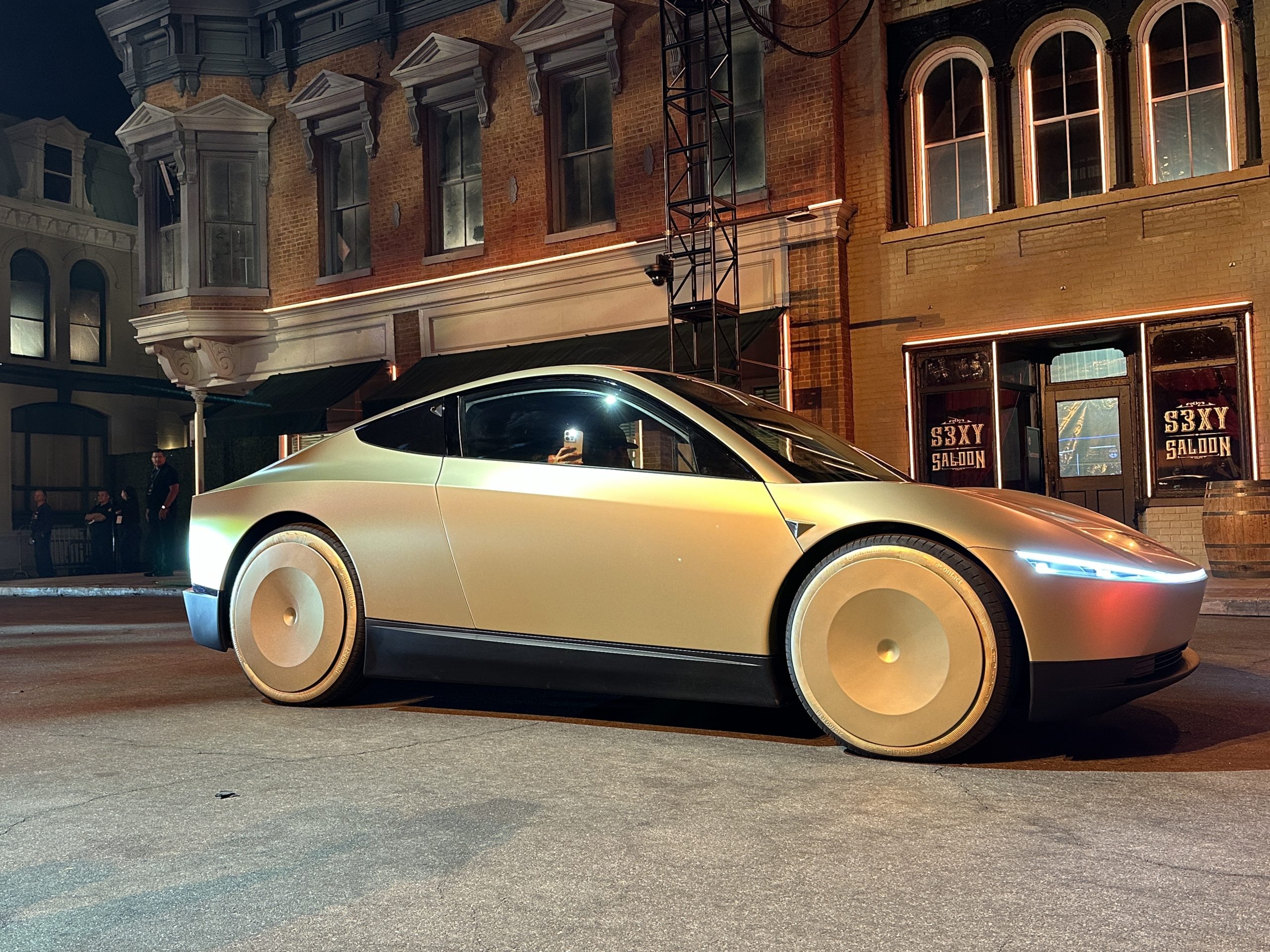
Tesla quietly doubled the size of its Cybercab fleet within the Robotaxi program in Austin, Texas, over the weekend to well over 100 units.
The move not only establishes more of the steering-wheel-less and pedal-less vehicles within the ride-sharing fleet Tesla has been operating for a year, but it also solidifies a more robust Robotaxi fleet as a whole.
Riders started receiving notifications from the Robotaxi app that stated: “Cybercab fleet has doubled: more rides available.”
I got this notification on the robotaxi app. They are saying the Cybercab fleet has doubled. Glad that they are advertising this pic.twitter.com/FFrnw4FRCF
— Abhimanyu Yadav (@WorldlyReviewer) September 26, 2026
Tesla first launched rides in the Cybercab in early September, although the Robotaxi fleet has been active for over a year, as rides began last Summer. Cybercab is truly Tesla’s most crucial vehicle release yet, as it is the first car any company has built that is geared toward full-fledged and end-to-end autonomy, never needing human intervention for anything.
Only available in Austin at the current time, Cybercab has two seats and has been spotted testing around various U.S. states and regions; Tesla plans to deploy the Cybercab in various U.S. cities in the coming months as a best-case scenario.
Tesla Cybercab gets initial tie-in to localized, in-house cathode plant
The availability of the Cybercab has doubled from just 58 units last Monday to 125 the following Friday. Marking a substantial increase in Cybercab availability, the additional ride-sharing units are more than welcome, as wait times for Cybercabs, especially, were quite high.
The dramatic increase is a sign that demand for Robotaxi is growing and Tesla is feeling more confident that its driverless ride-hailing suite, especially its Full Self-Driving software, is able to handle any traffic situation without explicit direction or supervision from a human being.
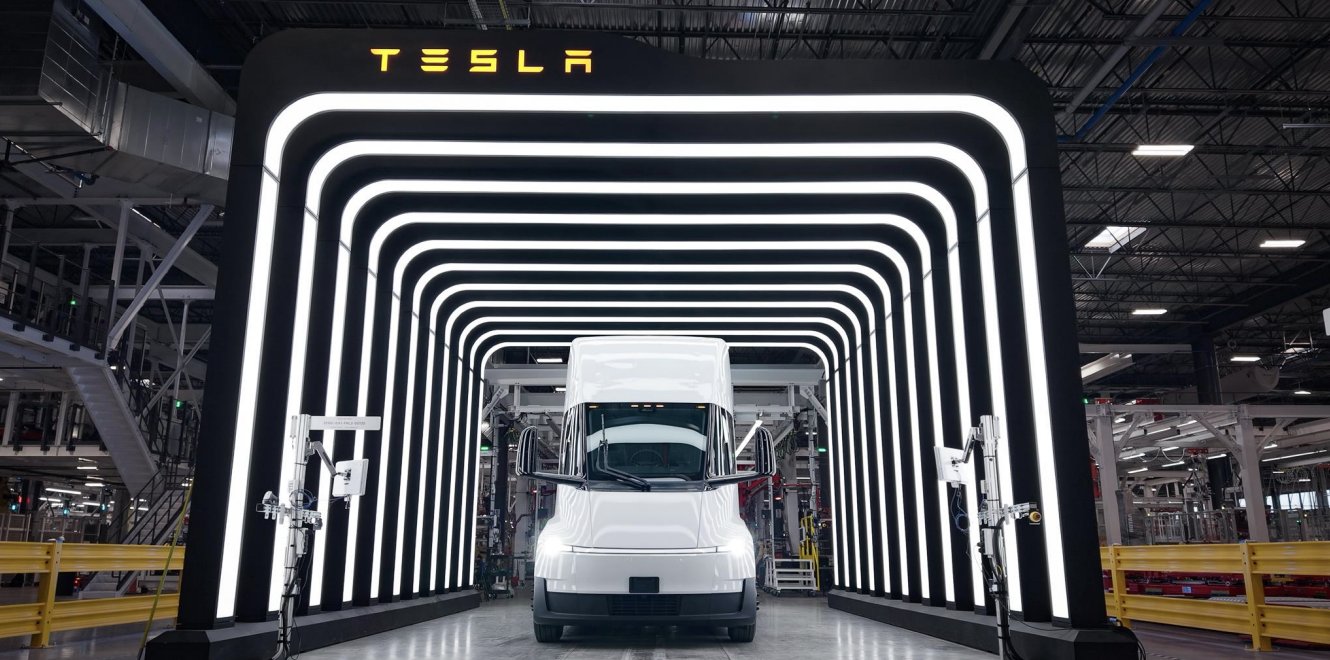
Tesla is advancing a fully automated pipeline for the 4680 battery cells used in its all-electric Semi, spanning production from Giga Texas through shipment and direct consumption on the line at the new dedicated Semi Factory in Sparks, Nevada.
The approach was outlined by Tesla at its September 24 Semi Handover event, which launched high-volume production at its new 1.8-million-square-foot plant in Nevada, which sits adjacent to Gigafactory Nevada and is designed for an annual production rate of 50,000 trucks per year.
After years of pilot builds and what was a four-year-long redesign of the truck, Tesla moved the Semi from 2170 batteries to its in-house 4680 cells, which are made in Austin. The change cuts battery mass and total energy while holding range, a key step in making volume production a realistic possibility.
Cells will leave Giga Texas in trailers, and at the Nevada Semi plant, Tesla intends for a dedicated line to unload those trailers automatically, station the cells, and feed them straight into pack and vehicle assembly.
🚨 Tesla plans to use a completely automated unloading process for cells coming from Giga Texas arriving at the Semi factory in Nevada
A line will “consume” cells from the trailer
The goal is to have zero human touch point throughout the entire process. Insane! pic.twitter.com/wdBFM8LC3F
— TESLARATI (@Teslarati) September 25, 2026
Both Lars Moravy, Tesla’s VP of Vehicle Engineering, and Dan Priestley, the Head of Tesla’s Semi program, described the goal as a “zero human touch point” from the moment the trailer arrives in Texas until a finished Semi drives off the production line in Nevada.
The unloading system that Moravy and Priestley described is just one piece of a much broader automation push. The plant uses what Tesla calls the highest-capacity electric monorail conveyance in vehicle manufacturing, carrying frames-in-white simultaneously. Powder-coating replaces conventional paint, and many processes that would normally require operators have been designed out.
Tesla has repeatedly said that “the best part is no part,” and the cell-handling plan extends that philosophy from the cell factory floor in Texas all the way to final assembly in Nevada.
If executed as described, the closed-loop flow would reduce labor, handling damage, and inventory buffers while tightening quality control on a component that represents a large share of the truck’s cost and weight. It also shortens the physical and organizational distance between two factories separated by more than 1,200 miles. The Semi itself now shares a bar-wound stator and other components with the Cybertruck, further linking Tesla’s passenger and commercial production systems.
High-volume output is expected to ramp gradually after the first trucks left the new line in April 2026. Early customers include PepsiCo, DHL, and U.S. Foods. Whether the automated trailer-to-line process reaches the promised zero-touch standard will be visible in the coming months as production scales. For Tesla, the Semi factory is another test of how far it can push “the machine that builds the machine” across sites.

SpaceX turned a heralding moment for Starship into its greatest moment

Tesla Cybercab fleet doubles to well over 100 units


