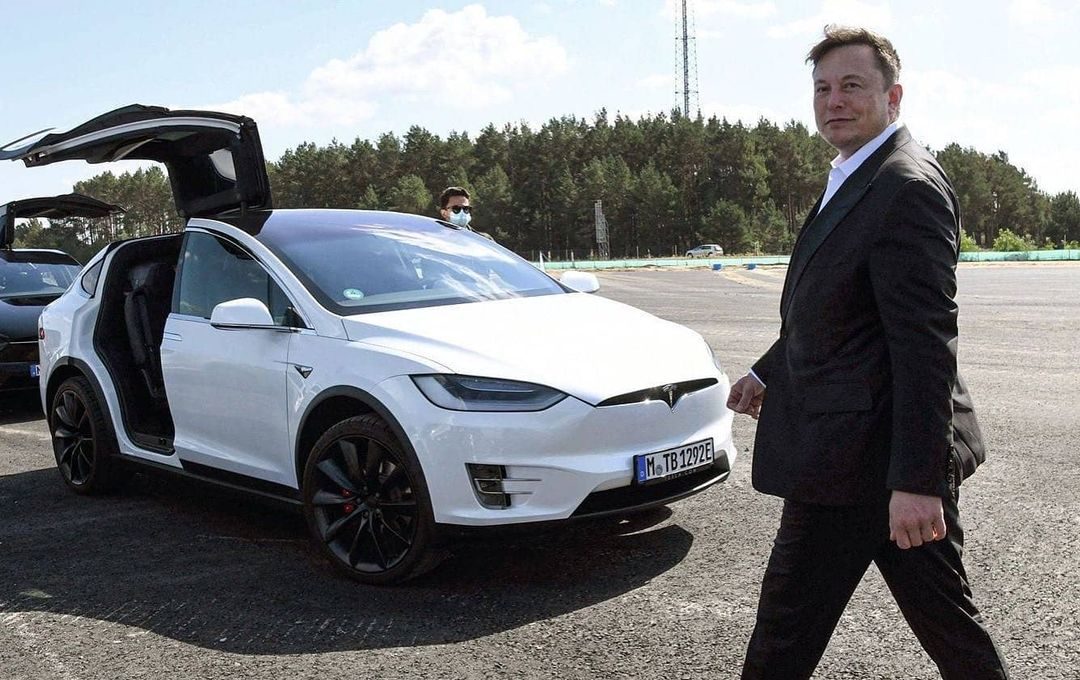

Back in 2018, Elon Musk and Tesla (NASDAQ:TSLA) proposed a compensation plan that was just about as insane as the vehicles that the company produces. Dubbed as one of the most radical CEO payment plans in corporate history, it required Musk to hit a series of market cap and operational targets before he is compensated. If he succeeds, he is paid heartily, making him one of the wealthiest persons in the world by net worth. If he fails, he gets nothing.
“If all that happens over the next ten years is that Tesla’s value grows by 80 or 90%, then my amount of compensation would be zero,” Elon Musk said, describing his payment plan to The New York Times.
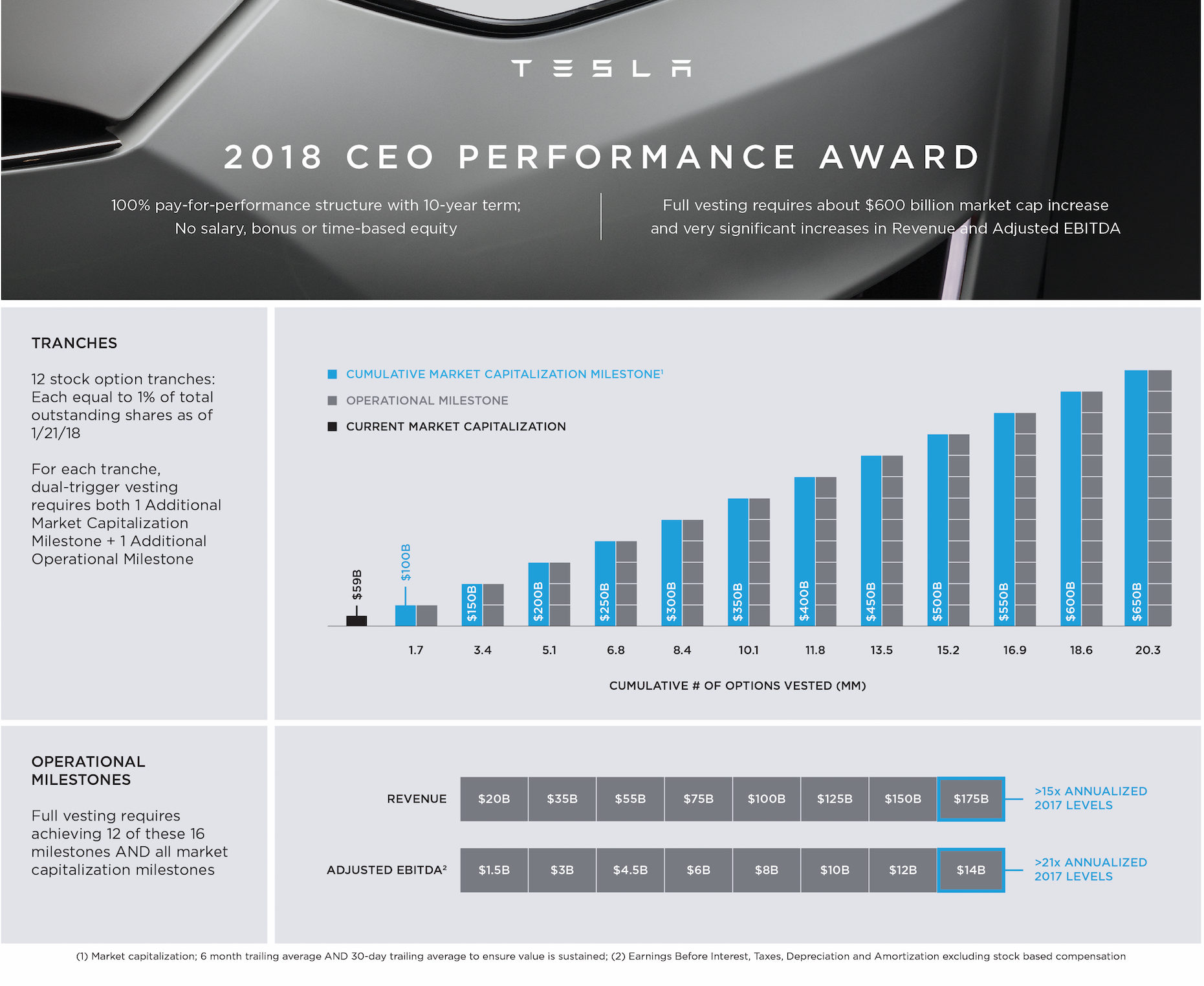
A dozen Market cap targets were set, each $50 billion more than the next, starting at $100 billion and so on. Revenue and adjusted profit goals were also established. For each tranche that is achieved, Elon Musk would have the option to purchase about 1% of Tesla stock at $70 per share. Considering that Tesla’s market cap only stood at $59 billion then, the ambitious compensation plan was dubbed as laughably impossible by critics.
“Mr. Musk’s critics — and there are many — are likely to contend that the new compensation plan is just the company’s latest publicity stunt. He has been called a modern-day P.T. Barnum who has created the illusion of success while consistently missing production estimates. The company continues to lose money; at one point last year, it was losing almost a half-million dollars an hour… Jim Chanos, a short-seller who has bet against Tesla’s shares — and has thus far been on the losing side of that trade — has contended that Tesla is worthless,” the NYT wrote then.
That was just over three years ago.
In a securities filing last Friday, Tesla noted that Elon Musk had achieved 6 of his 12 operating targets, and two more were probable soon. A good number of these targets reflected an adjusted version of earnings before interest, taxes, depreciation, and amortization. Two others represented revenue targets. As noted in a report from The Wall Street Journal, Tesla had also reached 11 of Elon Musk’s 12 market cap targets.
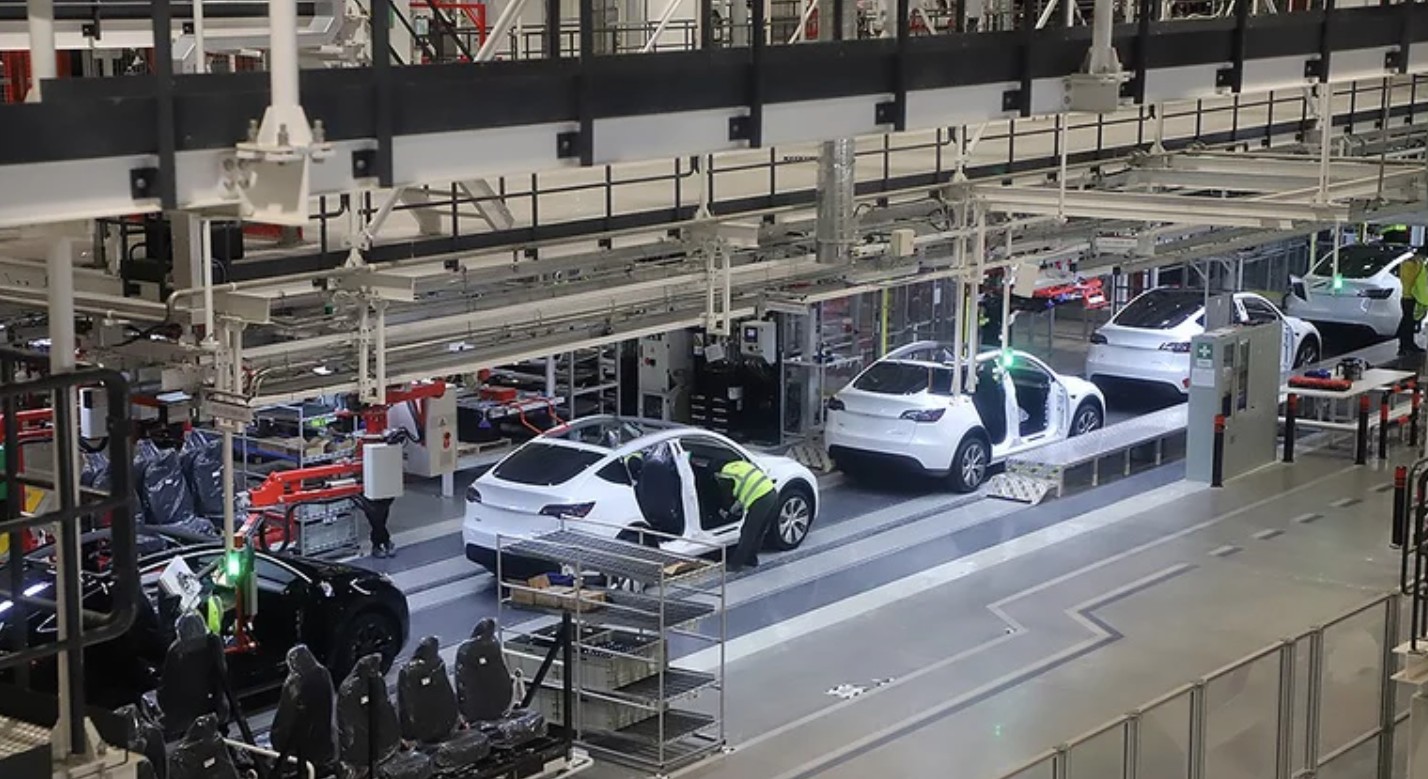
This is incredibly impressive considering that Musk’s 10-year performance award is only in its third year. The long-term plan was designed for a 10-year period, and even Musk, in a statement to the NYT, spoke of a decade-long timeframe when he described his performance award. “I actually see the potential for Tesla to become a trillion-dollar company within a 10-year period,” he said.
While his net worth will radically increase due to his Tesla performance award, Musk could not simply sell his shares and disappear. Under the terms of his payment arrangement, even once his TSLA shares vest, Musk would have to hold them for an additional five years before he is even allowed to sell them. And as per Elon Musk’s previous statements, this is something that he does not intend to do.
Musk’s 10-year Tesla performance award is arguably one of the most shareholder-friendly executive payment plans in the market. Other companies typically install outsize packages that often come at the expense of shareholders because executives are compensated even if they underperform. Tesla’s all-or-nothing plan for Elon Musk, on the other hand, greatly benefits shareholders as their holdings will increase in value as Tesla hits its market cap goals. This is great for long-term shareholders who hold the stock, as well as Tesla employees, as they receive TSLA shares when they are employed by the company.
At the end of December, Elon Musk owned about 22.4% of TSLA’s outstanding shares, up from 20.8% a year earlier. Tesla also has a market cap of $683.42 billion as of Friday’s close.
Disclaimer: I am long TSLA.
Don’t hesitate to contact us for news tips. Just send a message to tips@teslarati.com to give us a heads up.



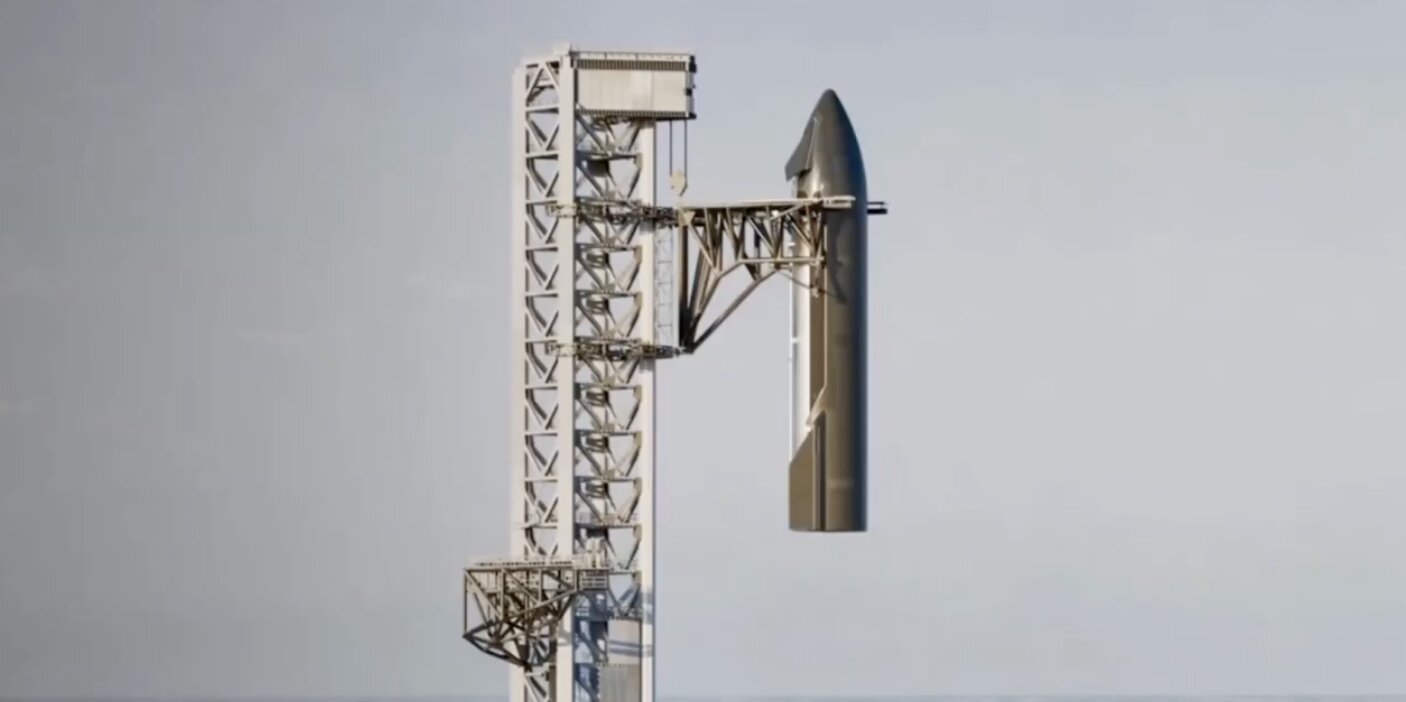
SpaceX plans to attempt what will be a defining moment in rocket reusability on Starship Flight 15.
As Elon Musk announced in a recent X post, SpaceX will attempt to catch both the Super Heavy Booster and the Starship upper stage during the upcoming orbital flight. If successful, it will mark the first time that all parts of an orbital rocket return to Earth intact, a breakthrough Musk has called essential to making life multiplanetary.
SpaceX will attempt to catch both the Super Heavy booster and Starship on the upcoming flight.
If both are successful, it will mark the first time that all parts of an orbital rocket return to Earth intact.
This is the critical breakthrough needed to make life multiplanetary.
— Elon Musk (@elonmusk) November 6, 2026
Previous flights have demonstrated the tower-catch technique with Super Heavy. SpaceX has successfully caught V1 boosters three times (on Flights 5, 7, and 8), with some even reflown. The Ship upper stage has never been caught.
Returning from orbital velocity after deploying payload makes it a significantly harder challenge due to higher energy, heat loads, and the need for precise belly-flop reentry, a flip maneuver, and a final landing burn to settle between the Mechazilla tower’s chopstick arms.
Flight 15, using Booster 22 and Ship 42 (both Block 3 vehicles), is targeted for no earlier than Friday, November 13, 2026, from Orbital Launch Pad 2 at Starbase, Texas. The 75-minute window opens at 4:45 p.m. CT, pending regulatory approval. After hot staging and separation, the booster is planned to return for a catch roughly 6 minutes and 35 seconds after liftoff.
The Ship will insert into a roughly 275 km orbit, deploy 26 advanced Starlink V3 satellites, complete about 14 orbits over more than 22 hours, and—if systems check out—perform a deorbit burn, reentry, flip, and landing burn for a tower catch at approximately T+22 hours 32 minutes.
SpaceX confirms Starship 15 launch window with massive ambitions
A simulation shown during SpaceX’s October earnings call depicted the Ship descending in a belly-flop attitude, flipping upright with a short engine burn, and being captured by the arms:
From simulation to reality
SpaceX is just ONE WEEK away from attempting its most ambitious Starship catch yet https://t.co/nHrxSX6DSz
— X Freeze (@XFreeze) November 6, 2026
Contingency splashdown zones exist in the Gulf of Mexico (booster) and Pacific (Ship) if a catch is not viable. SpaceX has stressed rigorous health checks before committing the Ship to a return-to-launch-site trajectory.
Musk has described the odds of success on this first dual-catch attempt as “more likely than not,” noting a steady stream of additional flights is already scheduled if needed. Full recovery would enable rapid inspection, refurbishment, and reflight—slashing costs and supporting the high launch cadence required for Starlink expansion, lunar missions, and eventual Mars settlement.
As Musk put it, this is “the critical breakthrough needed to make life multiplanetary.”
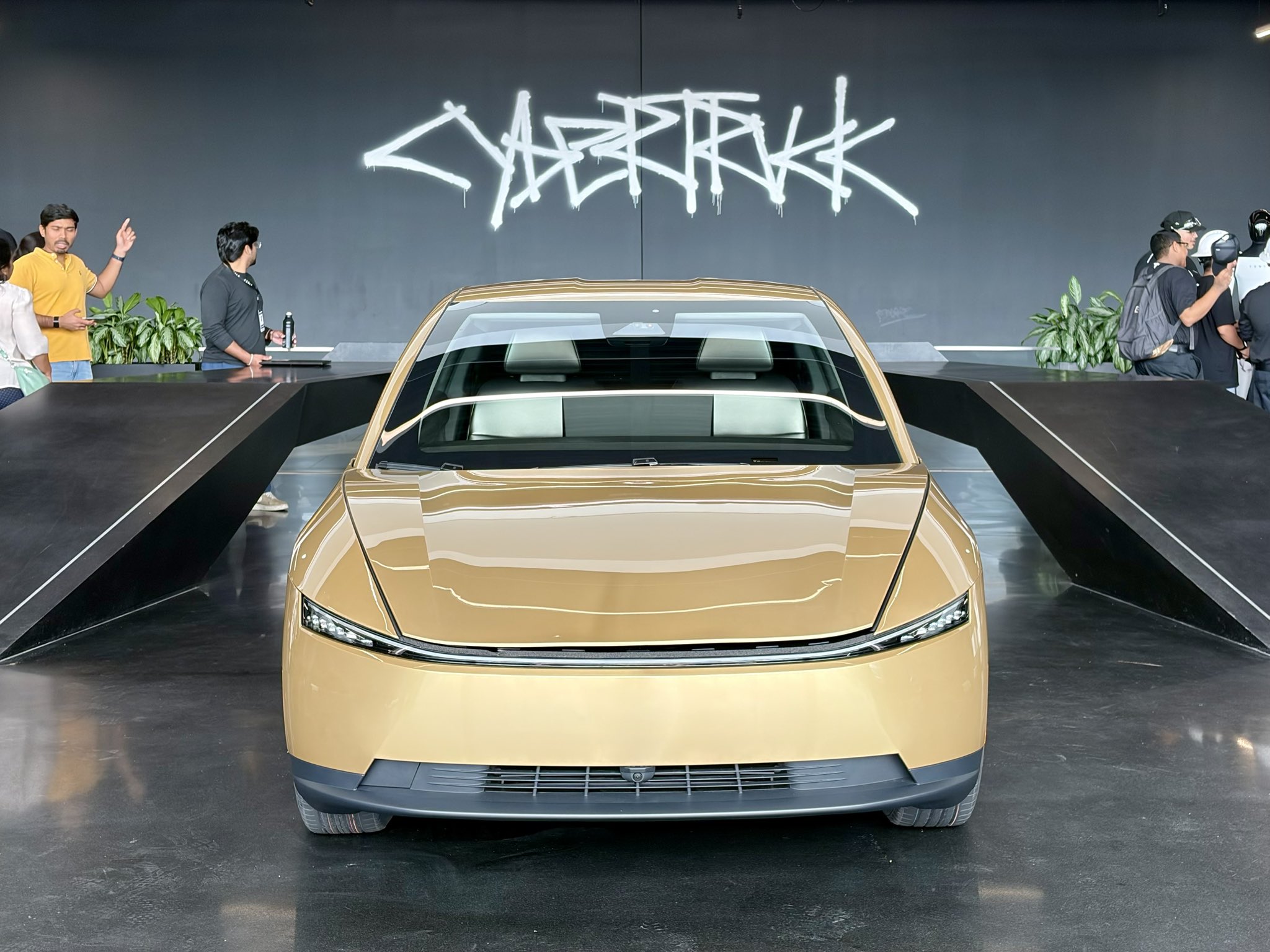
Tesla Cybercab is going to get some pretty substantial updates, including improvements to efficiency and a new color.
CEO Elon Musk said in a post on X on Saturday that Tesla would be working to refine the Cybercab even more, following the announcement during the week that the company would eliminate the Cybertruck lines within Giga Texas for more Cybercab manufacturing capacity.
“There are efficiency improvements coming that will allow for a 40kWh Cybercab pack,” Musk posted on X. “We will make this in liquid silver, so the colors are not too monotonous.”
There are efficiency improvements coming that will allow for a 40kWh Cybercab pack. We will make this in liquid silver, so the colors are not too monotonous.
The biggest thing most people fail to understand is that there are a very limited number of smart, dedicated people! They can only do so many things.
If we have to maintain a complex production line, supply chain and allocate engineering for Cybertruck, we can’t use those people or factory space and machinery for scaling Cybercab, which is the vehicle that will PROFOUNDLY transform the world of terrestrial transport!
— Elon Musk (@elonmusk) November 7, 2026
A new, more efficient model of the Cybercab will be engineered, which will only help Tesla’s profitability and margins, and it also boosts the argument for why the Cybertruck should be discontinued, at least from a business perspective.
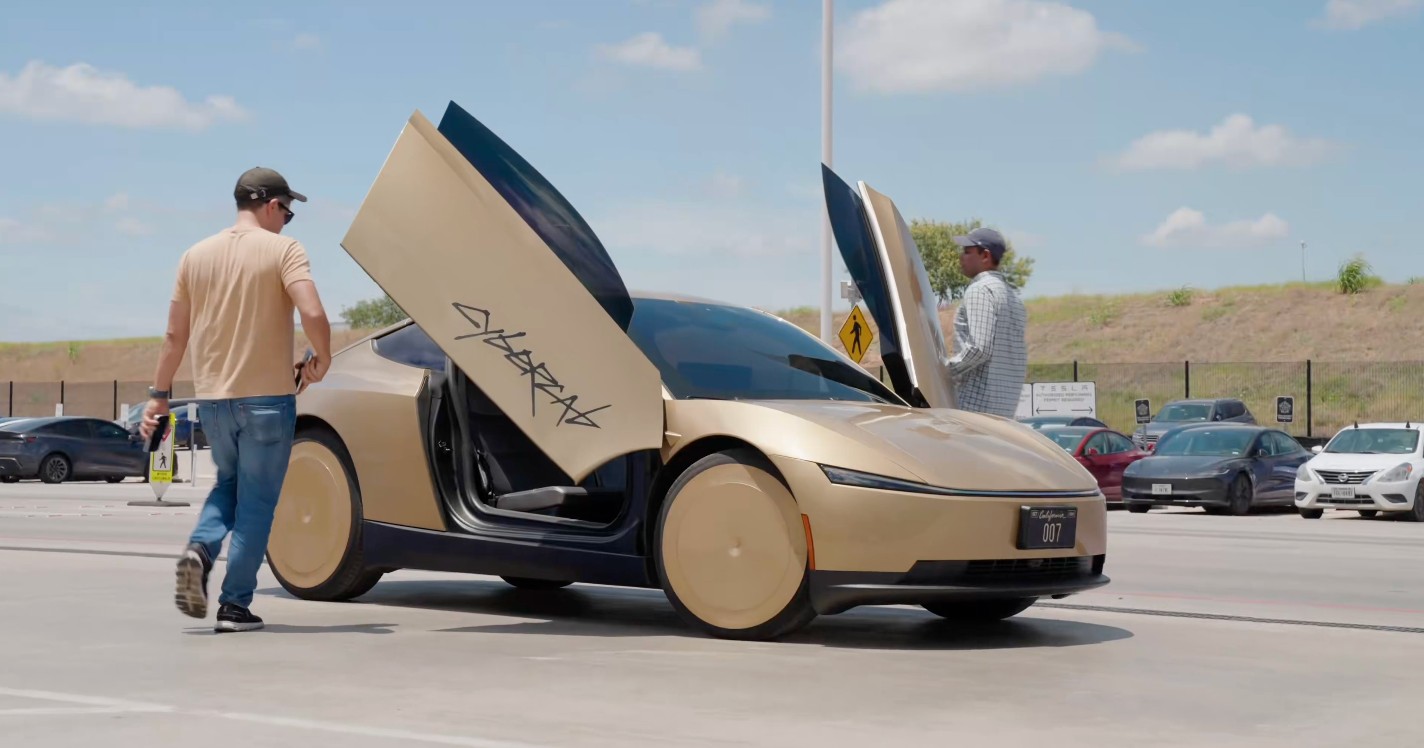
The current Cybercab that operates in the Robotaxi platform in Austin, Texas, has a 48 kWh pack, and it sounds like Musk believes Tesla is on its way to introducing a version that has fewer cells but can manage the same workload thanks to engineering efficiencies.
Credit: Tesla
Musk also doubled down on the decision to prioritize Cybercab production over Cybertruck, which is a decision that has been extremely polarizing within the community, and many fans have made it abundantly clear that they are not particularly pleased with the plans.
“If we have to maintain a complex production line, supply chain, and allocate engineering for Cybertruck, we can’t use those people or factory space and machinery for scaling Cybercab, which is the vehicle that will PROFOUNDLY transform the world of terrestrial transport,” Musk said.
A good look at Tesla’s new Liquid Silver Cybercab, planned with a 40 kWh battery pack following new improvements
😍 https://t.co/IUYsUcCBMs
— TESLARATI (@Teslarati) November 8, 2026
Cybercab is obviously Tesla’s path forward in an automotive sense. It seems that Tesla is less concerned about catering to the passenger vehicle market and is more prone to focus on transforming passenger transportation in a way that prioritizes autonomy. However, this requires some sacrifice on Tesla’s end, and the Cybertruck is unfortunately a victim of this.
Cybercab holds an extremely crucial part of Tesla’s future. With the company already revolutionizing passenger transportation once, this is the next phase, and Cybercab is the path forward.
News
Tesla Robotaxi app update now tells riders if Cybercab is the better choice
Tesla’s Robotaxi app now shows ETAs, wait times and availability for Cybercab and Model Y.

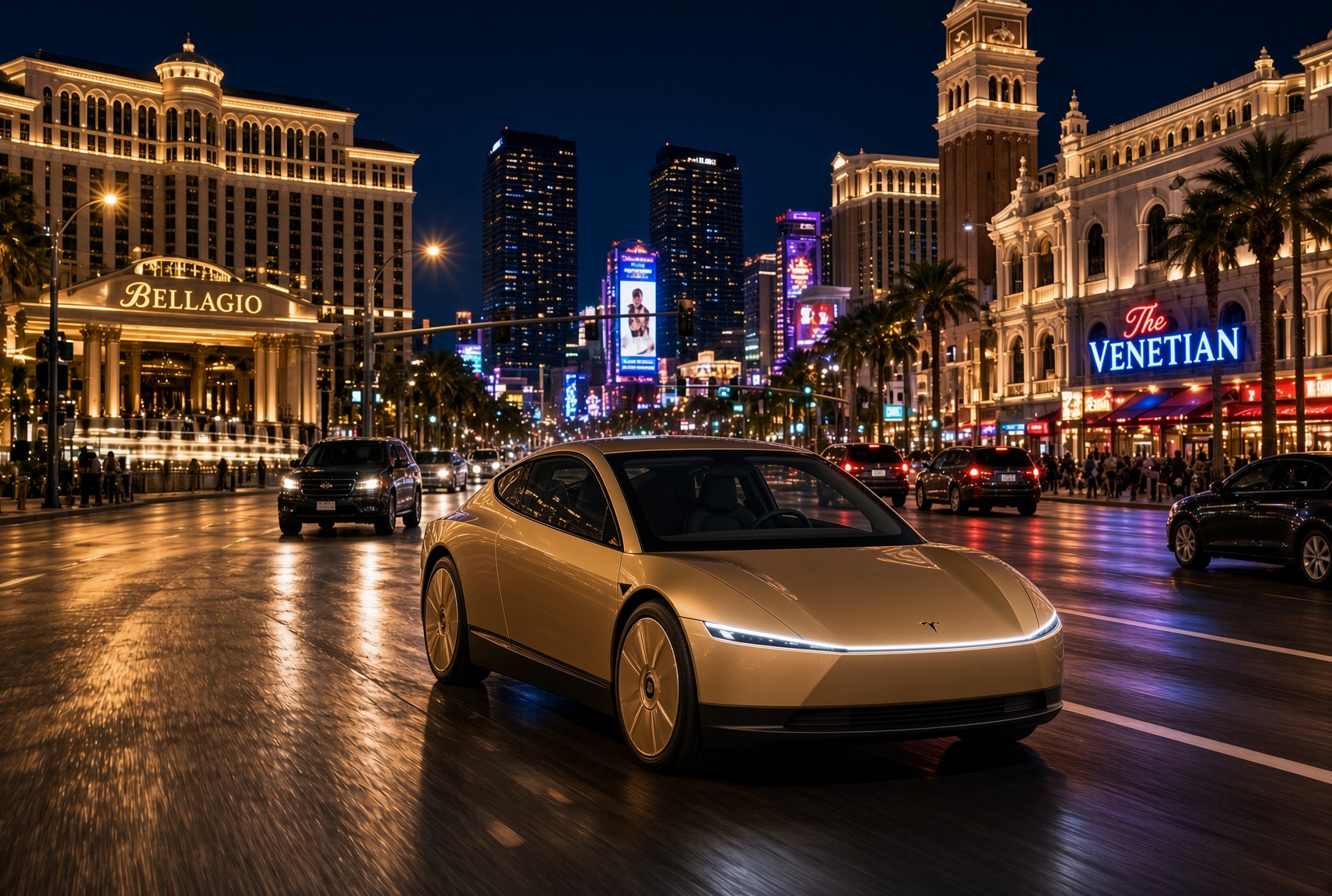
Tesla has rolled out a new vehicle selection screen in its Robotaxi app, and it puts the numbers riders care about most in front of them before they book.
Version 26.11.0 of the app shows the estimated arrival time, the expected wait and current availability for each vehicle option on a single screen, according to a video shared by @gheeunit on X on November 7. Riders deciding between a Cybercab and a Model Y Robotaxi can now compare those figures side by side instead of picking a car first and learning how long it will take afterward.
Tesla first gave riders that choice on September 3, the day paid Cybercab rides began in Austin. The original version of the screen listed the Cybercab, which seats two, next to the Model Y, which seats four. A later build, 26.8.2, added a seating capacity indicator so groups knew which car would fit them. What it did not show was whether choosing the Cybercab meant standing on the curb a few extra minutes.
Newest version of @robotaxi app has a new vehicle selector UI for choosing between Cybercab and Model Y and shows you the fare for both simultaneously! https://t.co/7qoDQ0vACX — mantequilla 🧈 (@gheeunit) November 7, 2026
That question matters more now than it did two months ago. Tesla had 45 Cybercabs on the Texas DMV roster when rides started. By late October the state listed 573, alongside 631 Model Ys, and community trackers logged a record 1,576 Cybercab sightings across Austin on Halloween alone. With two large fleets sharing one service area, the closest car and the quickest pickup are not always the same vehicle.
Inline availability also changes what happens when demand spikes. If no Cybercab is free nearby, the rider sees that on the selection screen rather than after trying to book one.
For now the comparison is mostly an Austin feature. Riders in Dallas, Houston, Fort Worth and the Florida markets are still matched with Model Y vehicles, though Tesla said on its third quarter earnings call that Cybercab rides would launch in Dallas this month.
The update follows a steady run of smaller changes to the rider experience. Late last month Tesla brought a quiet mode that blacks out the cabin screen to Model Y Robotaxis after first testing it in the Cybercab, and it has stretched Austin service to run from 6 a.m. to 2 a.m.
The Cybercab side of that selection screen is about to get much busier. Elon Musk said this week that Tesla will wind down Cybertruck production at Gigafactory Texas around the middle of 2027 to make room for more Cybercab output, and Tesla has said it is aiming to get Cybercabs to customers by the end of this year.
Tesla has not published official release notes for version 26.11.0.

SpaceX will perform Starship double catch attempt with Flight 15

Tesla Cybercab is set to get some massive improvements


