Lifestyle
On the Shoulder of Giants: How the Tesla Cybertruck’s ambitious camper is willing itself into being

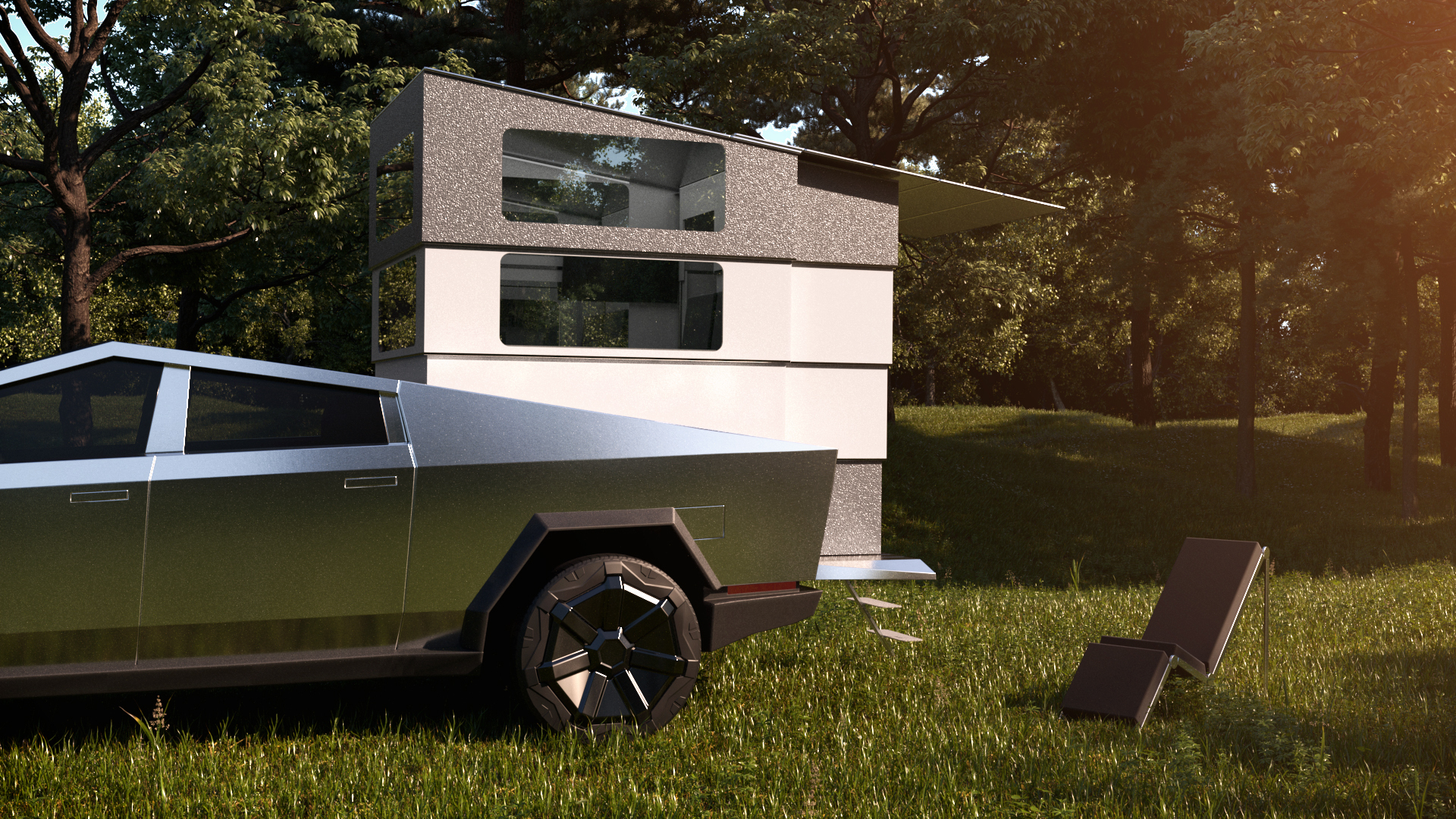
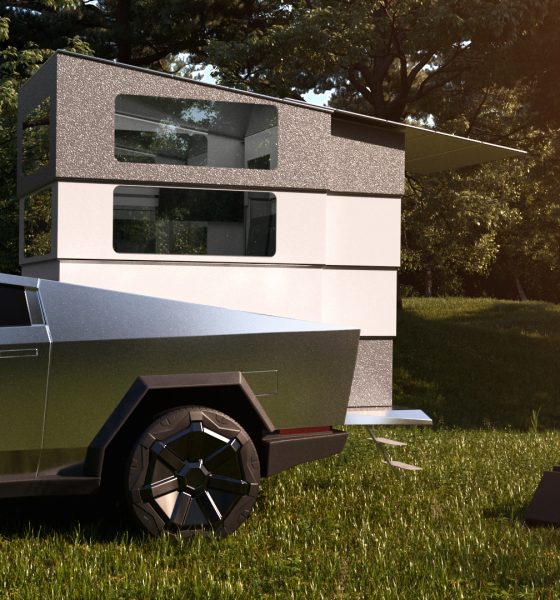
The Cyberlandr, an ambitious, ultra-high-tech, ultra-compact, premium camper for the Tesla Cybertruck, broke out to much attention and even some acclaim when it debuted last month. Promising a full camper experience in an incredibly compact and attractive package, the Cyberlandr seemed like the perfect companion for the Tesla Cybertruck. It takes a hyper-futuristic camper to match a cyberpunk pickup truck that looks like it’s from the future, after all.
It did not take long before the hype surrounding the Cyberlandr translated into potential sales. Granted, the transforming pop-up camper was priced at a premium at about $50,000 per unit, but for some Cybertruck reservation holders, the expense was worth it. Just days after its unveiling, the Cyberlandr accumulated $50 million worth of pre-orders, and after a few days more, $60 million. Considering the price of the camper, that’s about 1,350 reservations from Cybertruck buyers.
But inasmuch as the Cyberlandr is exciting, the road to actually producing the transforming camper is steep. Stream It, the company behind Cyberlandr, is a software firm that specializes in AI-enhanced video analytics. Over the years, Stream It has created software products that are capable of gathering and analyzing video data in real-time. The company has some experience in hardware, but only on components such as computer modules. Never has it attempted such a complex product such as the Cyberlandr.
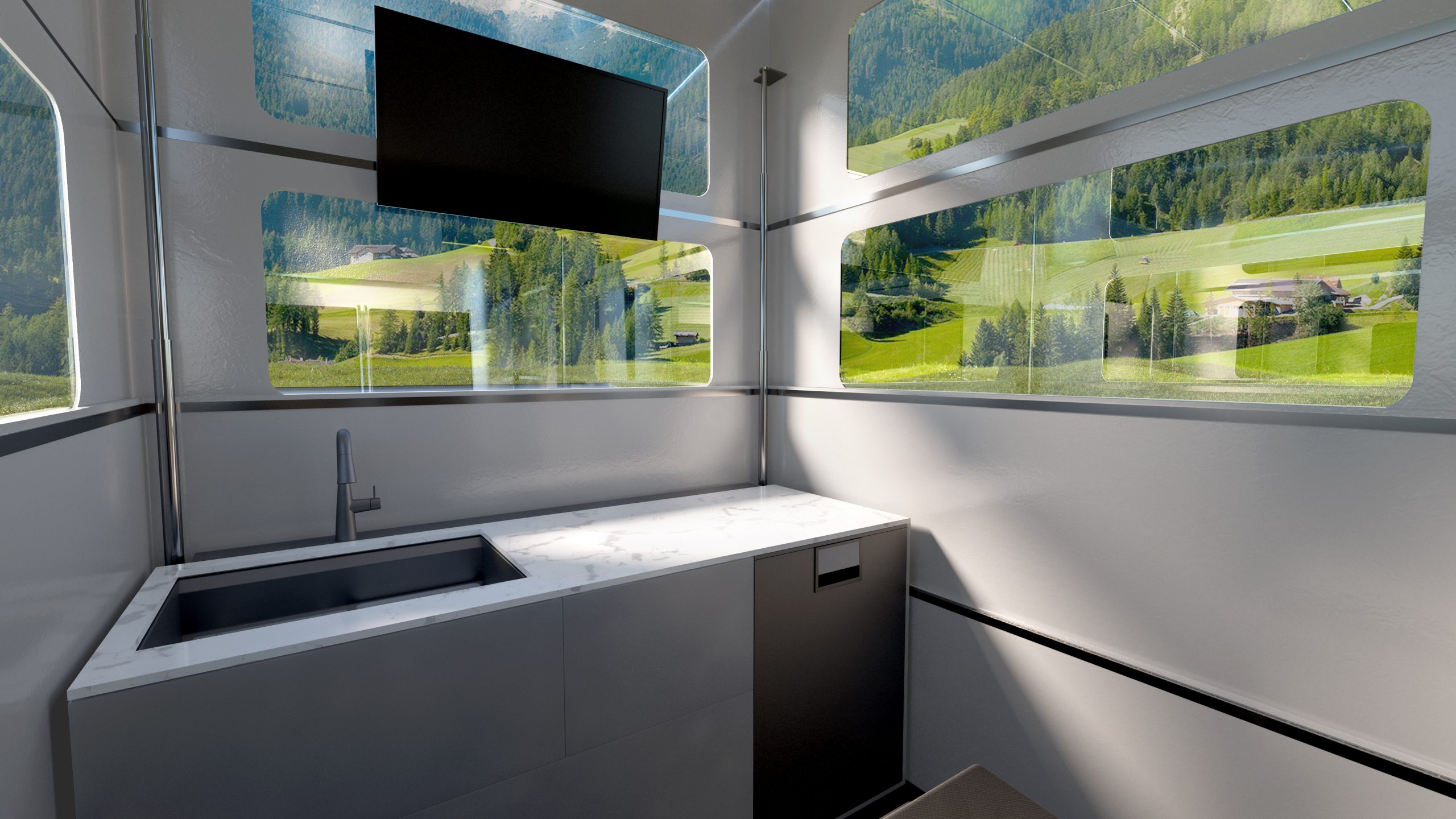
This has led to a healthy dose of skepticism surrounding the Cyberlandr, which promises to provide a sink, kitchen, living area, and bathroom with shower in a camper that fits on the 6.5-foot bed of the Cybertruck. While a lot of the Cyberlandr’s features such as its auto-dimming windows and floor heaters rely on Stream It’s software prowess, skeptics have shared concerns about the camper being too complex, or too ambitious, to become an actual feasible product.
Willing a Dream Into Reality
During a conversation with Teslarati, Stream It Founder and Chief Analytics Officer Bill French, who holds a Cybertruck reservation himself, explained that while the task of producing the Cyberlandr is indeed complex, he believes that Stream It has a good chance of pulling it off. This is because ultimately, campers, even those as ambitious as the Cyberlandr, are nowhere near as complex as a whole electric car.
“We’re not building the truck. We’re building an add-in to the truck. Add-ins fall into a different class. It’s a smaller, more constrained environment. We only have to worry about that which sits in the truck. That’s not to say that it’s not complex. It is an advanced add-in, but it’s not as complex as the truck,” French said.
Stream It CEO and Tesla Model 3 Performance owner Lance King notes that this is what will separate Cyberlandr from other ambitious projects that have fizzled out, or worse, unraveled. The electric vehicle sector has witnessed such events over the past year, with some companies that were once considered darlings of the sustainability segment falling from grace in a rapid and shocking manner. King noted that the best thing Cyberlandr could do is to simply be honest about what it can already accomplish, and what it needs help with.
“We’re trying to be honest and open with where we’re at instead of pretending we got more than what we have. That’s a great place to start. We’re also humble enough to say we don’t have deep expertise in certain areas, so we’re partnering with people who do. So we’ve partnered with designers and engineers and even Munro and Associates on setting up the factory. And we’re making great progress with them,” King said.
A Straight Path
Munro and Associates, led by automotive veteran Sandy Munro, has become one of the EV sector’s most trusted voices. With his expertise in lean design and engineering, Munro and his team have helped companies, including Tesla, optimize products like the Model 3 and Model Y. Stream It decided to take a more proactive approach when it reached out to Munro’s team. Instead of making mistakes and having Munro analyze ways to address and solve them, the software firm is aiming to get the automotive veteran’s go signal even before the production of the Cyberlandr begins. This is especially notable as Munro’s team is being tapped to help design not only the Cyberlandr itself, but its factory as well.
But even with the help of Munro and Associates, establishing a factory for a camper as complex as the Cyberlandr is no joke. In previous interviews, King and French have noted that they would like to establish a factory close to Gigafactory Texas. This way, Cybertruck customers could get their campers installed right after taking delivery of their all-electric pickup truck. According to the Stream It CEO, however, such a place has not been found, and the company is now eyeing locations within 15 to 40 minutes from Gigafactory Texas.
The company has also decided against building a factory for the camper, instead opting for an existing site that could host a production facility. Part of this is due to the Cybertruck’s aggressive timeframe, which suggests that the first vehicles could roll off Gigafactory Texas by the end of the year. With this in mind, Stream It would have to not only work hard, but raise a substantial amount of funding to make the Cyberlandr a reality. King shared an estimate for the buildout of the Cyberlandr’s production facility, as well as funding options that Stream It is looking into for now.
“We’re estimating it at around the $100 million range to reach the market potential over the next year or two with the intent to raise. We’re currently exploring many different ways of financing it, including debt, traditional equity, private equity, and SPACs. So we’re looking at all four of those. And they each have their own strengths and weaknesses. And so, we’re evaluating what’s the best way for us,” he said.
The Risks of Innovation
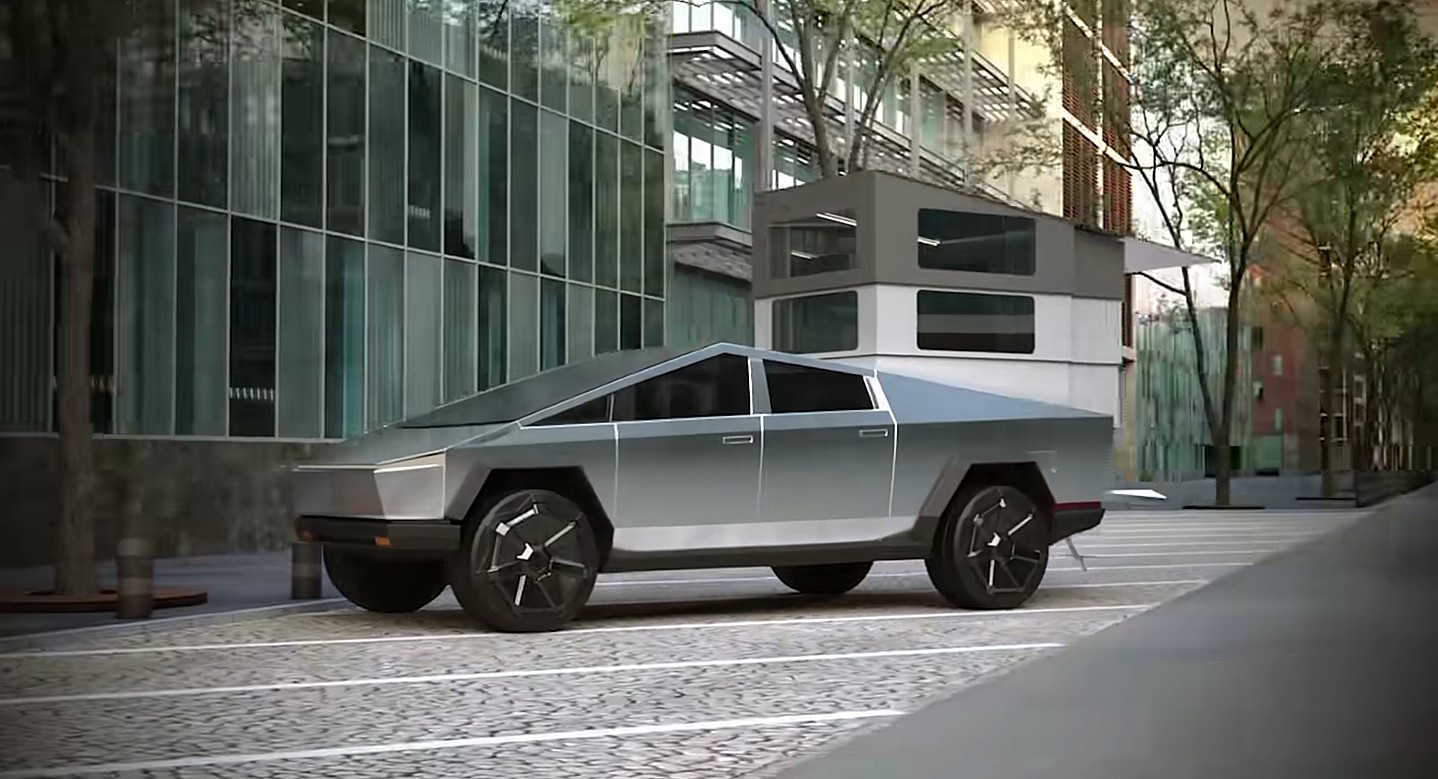
The Stream It CEO later explained that Cyberlandr would not be built by a manufacturing partner, simply because it is such a unique product. Instead, the company is aiming to develop a solid production system for the futuristic camper on its own. Elaborating further, French added that ultimately, the Cyberlandr’s capability to hide inside the Cybertruck’s vault is something that has never really been done before in the RV industry. To make such innovations possible, a great degree of software has to be employed. Software is where Stream It’s experience lies.
Yet at the end of the day, manufacturing is hard. Tesla itself, with its long experience building premium electric vehicles, still struggles with build quality from time to time, especially when launching a new product like the Model Y. When asked about this, King noted that Tesla actually built its reputation as the world’s premier electric car maker because it is a software company at its core. While it is true that Tesla remains challenged with things like paint quality and panel alignment, King and French explained that the EV maker’s software provides such a unique, superior experience that it simply resonates with customers.
“There are always challenges in manufacturing, and it’s just the nature of it. But aren’t you glad that a software company like Tesla decided to make cars? Teslas have the highest customer satisfaction rating of any car, even though JD Power says they have the lowest initial quality. So there’s not a direct correlation between some of those little nitpicky things like the paint not being perfect or the doors not lining properly with the satisfaction of driving the car. The only reason Tesla is able to reinvent the car was because they weren’t in the auto industry. So when people say, ‘Well, you’re not on the RV industry, how can you make an RV?’ It’s because we’re innovating. We’re making a new kind of RV because nobody in the RV industry has innovated in 50 years,” King said.
French pressed this point further. “That underscores the fact that nobody in the RV industry has been in software and built an RV, and every RV on the road today shows that really, the engineering skills that go into those products is a very different mindset, a very different approach. And it’s, you know, it’s basically saying, ‘It’s time to build a camper, starting with software.’ If you start with software, and you think about it, suddenly dimensions and size and fit and finish all begin to come together when you start to use technology to build this product instead of, you know, the physical aspects of assembling rivets and bolts, pieces of plywood and all the other stuff, all the stuff that you see that goes into into a traditional RV style camper,” he said.
On the Shoulders of an EV Giant
Eventually, Stream It would like to collaborate with Tesla directly so that buyers of the Cybertruck could have the Cyberlandr installed even before they take delivery of their all-electric pickup truck. The company also hopes to eventually collaborate with Tesla when it comes to servicing the transforming camper when needed. Stream It has not yet contacted Tesla with a proposal, but King and French noted that they intend to do so once the final specs of the Cybertruck are available and once the Cyberlandr’s production is ironed out.
There is no doubt that the Cyberlandr is a moonshot, and the path ahead is steep. It’s a great concept, but its feasibility remains to be seen for now. With $60 million worth of orders, there’s definitely a lot of people looking forward to it. Stream It would now have the responsibility to prove its skeptics wrong and show that even ambitious dreams can come true if one works hard enough. Bill French admits as much, stating that in a lot of ways, the Cyberlandr is a moonshot built on top of a moonshot (Tesla). And Tesla, with its superior battery technology and heavy software focus, just happens to be the perfect platform for such an ambitious product to build itself up.
As For Lance King, the CEO believes that the potential of the camper is great.So much so that it may help usher in the post-SUV age.
“The last 25 years, the entire world moved from sedans to SUVs. Well, what comes after the SUV? Or will we really still have those in 25 more years? The answer is no. The post SUV is what we call an adventure vehicle. This is the first of those adventure vehicles. And we think that 10 years from now, you’ll look back on it and say, ‘Well, why would anybody buy a car that doesn’t have a kitchen, living room, bedroom, bathroom, and office in it?’ We wouldn’t buy a phone that doesn’t have an internet browser and a camera and video recorder and production studio, and, you know, it goes on and on. I think we’re about to look at vehicles the same way,” he said.
Don’t hesitate to contact us for news tips. Just send a message to tips@teslarati.com to give us a heads up.


Elon Musk
How to use Grok Bot to block spam calls and texts
Musk told users to ask Grok Bot to scrub their phone numbers from spam lists.

Elon Musk has a new use case for Grok Bot, and it is the spam call. On Thursday he replied to an X user named Arash with a short instruction: “Ask your @Grok @Bot to remove your phone number from spam call & text lists!” Arash had said he got tired of the calls, had an AI bot find his number on listing sites and file removal requests, and packaged the process as a free skill for others.
The skill is called Spam-Call Scrubber, which is described to find a phone number on people search sites and data brokers, submits the opt outs, completes the confirmation emails those sites send back, and rechecks on a schedule the user picks. Using it requires the Grok Bot app. The pitch is time saved, since most broker opt outs sit behind separate forms on separate sites.
Ask your @Grok @Bot to remove your phone number from spam call & text lists!
— Elon Musk (@elonmusk) October 15, 2026
Musk said Grok Bot now gives each bot its own email address, and that it can detect scam emails. On Thursday he also said SpaceX would make users whole if the bot botches a purchase or leaks a card, then told users to shop away from Amazon after the retailer blocked the agent, as Teslarati reported. The terms of service we reviewed at the time put responsibility for what an agent does on the user.
For Tesla owners, Grok Bot is not just a phone app. Tesla brought Grok Bot into its vehicles on September 22, and we argued earlier this week that the Cybercab’s real advantage may be the errands it runs during a ride. Every Cybercab and the rest of the Model Y Robotaxi fleet has it enabled. The more routine tasks like this one become, the more a rider has reason to hand over something personal in the back seat.
The new Spam-Call Scrubber skill can be downloaded for free and works on sites that honor removal requests, while noting that listings can reappear, and illegal robocallers do not check any registry. Whether Spam-Call Scrubber cuts anyone’s call volume is something the first wave of users will find out, and Musk’s endorsement guarantees that wave is coming.
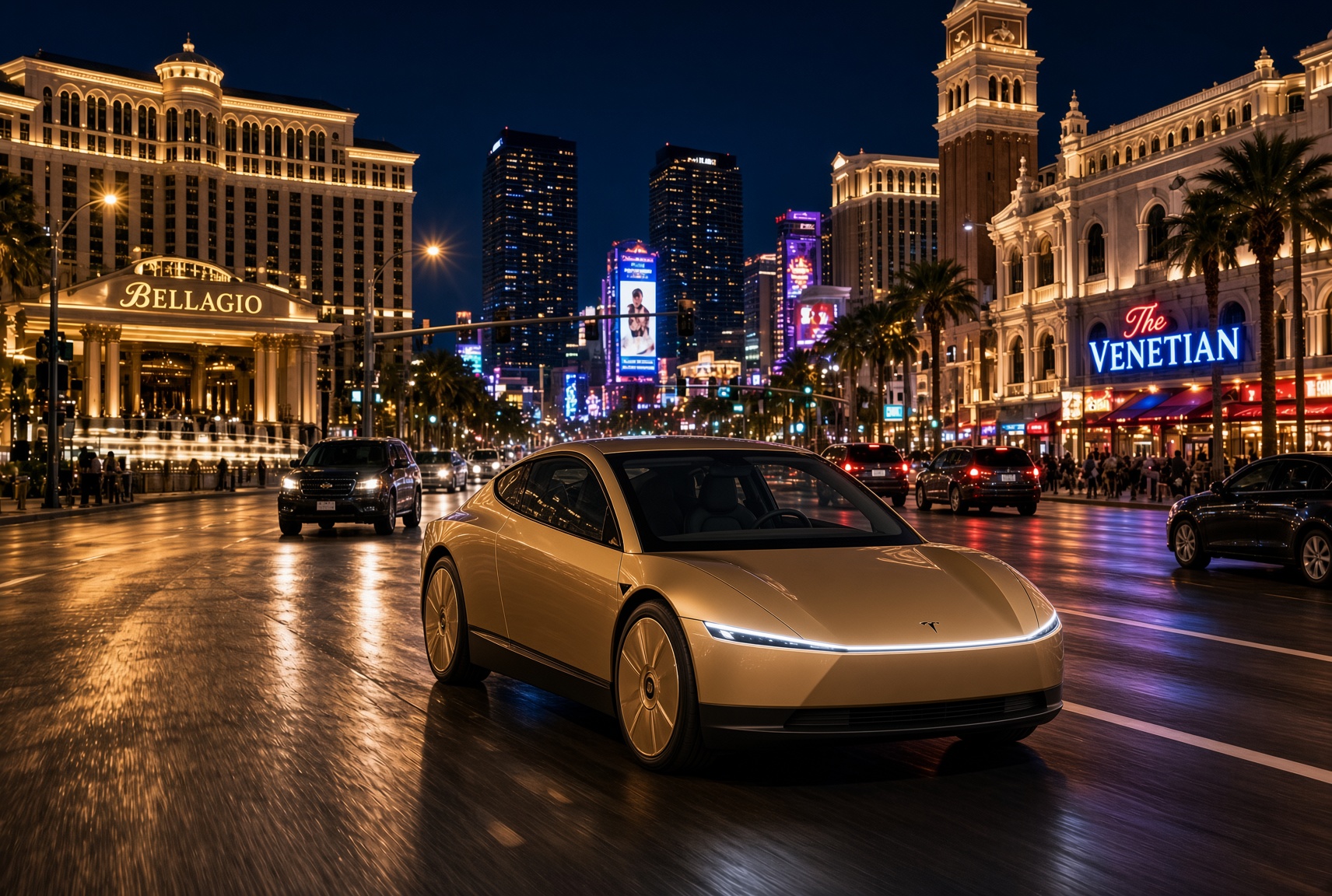
For a century, the car has asked the same thing of its owner, which is basically to pay attention. Even the best ride-hailing app like Uber or Lyft only moved the problem into someone else’s hands. You stopped driving, but you still sat in a stranger’s car, while half listening, and wondering whether to take a phone call in the car without being rude. The Cybercab has no wheel, no pedals and no driver. With Grok @bot now live inside it, it becomes something else entirely, and I think that matters more than the fleet count that everyone is tracking.
Grok @bot is an agent, not a voice assistant. A rider signs in once, and from then on can say what they need and watch it happen. Order dinner from a favorite restaurant. Fill the grocery cart. Move money, answer email, adjust a calendar, push a work project forward. Tesla engineer Yun-Ta Tsai confirmed it is enabled across every Cybercab and the rest of the Model Y fleet, and Tesla’s own pitch is that Full Self-Driving handles the commute while Grok handles the errands.
Think about what that does to a thirty minute ride. Uber sells you a trip, while Waymo sells you the same trip in a more private setting. Tesla is selling the thirty minutes themselves, returned to you with an assistant attached. Errands that used to eat a Saturday get done between pickup and drop off. The ride stops being dead time between two places and becomes a place of its own.
Tesla integrates Grok Bot into its vehicles for the ultimate personal assistant
Best of all, your Bots follow you into any Cybercab, and presumably your own Tesla, then logs you out automatically when you step out. Anyone can bolt a chatbot onto a screen, but much harder to own the vehicle, the autonomy stack and the assistant at once. It also quietly ties SpaceX’s Super Intelligence business to Tesla’s fleet, after Tesla converted its xAI stake into SpaceX equity. The relationship between those two companies is getting harder to describe as separate.
This is also where the hard questions start, because an agent that can spend your money in a vehicle other people also ride in needs some answers. How does it handle a voice it shouldn’t trust? What gets recorded, who can see it, and for how long? What happens when a rider leaves halfway through a task?
If Tesla gets those answers right, the scoreboard changes. We have been counting Cybercabs and wait times. The more telling number may be what riders accomplish per trip. That is data almost no one else will ever have, and it is the real reason to watch Grok @bot.
What do you think? Leave me a comment.
Lifestyle
Tesla’s mirrorless Cybercab will give riders a visibility upgrade
Tesla engineer confirms Cybercab update letting riders pull up rear and repeater cameras on demand.
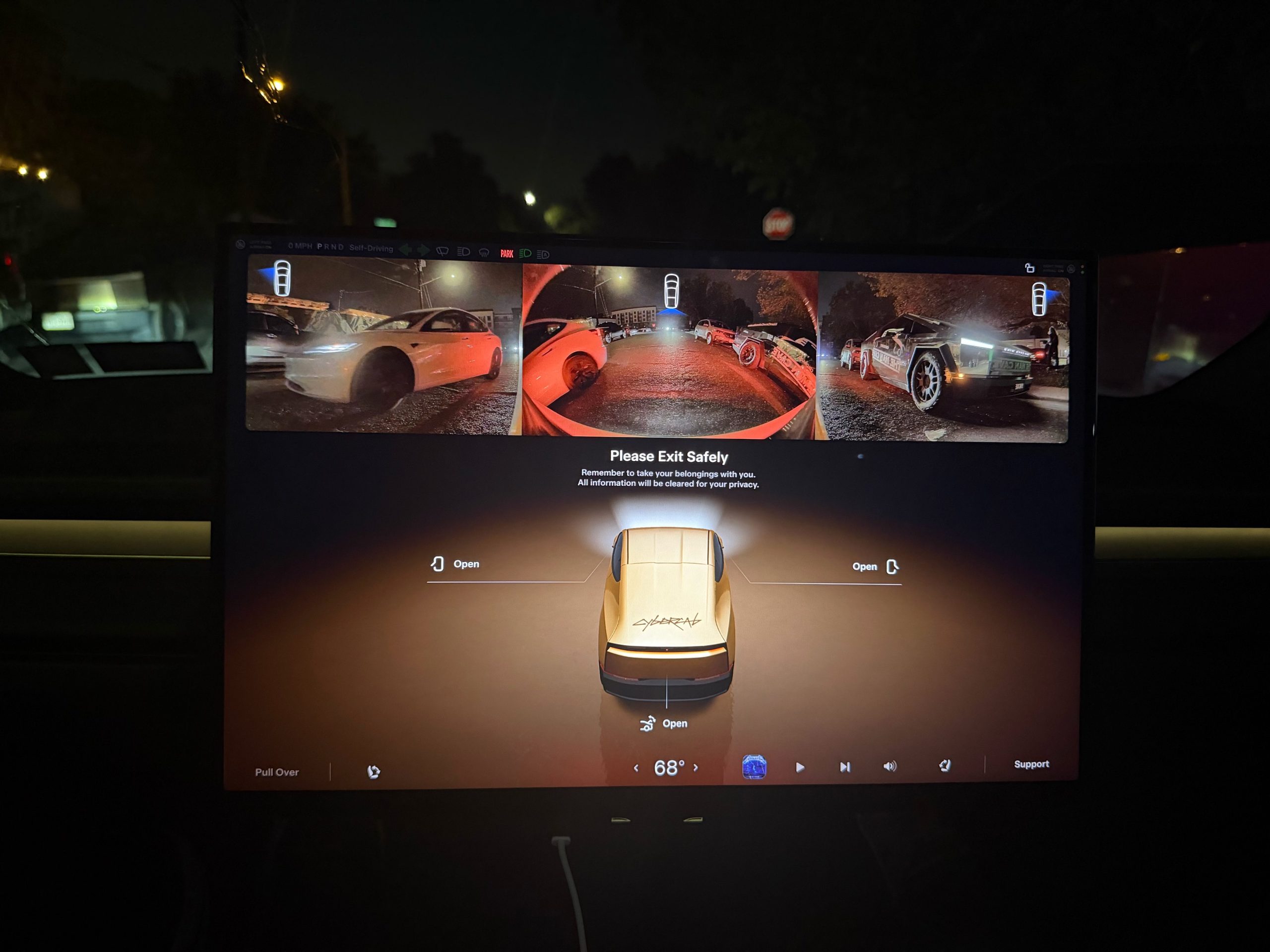
Tesla is working on a Cybercab update that would let passengers pull up the vehicle’s rear and side cameras on demand, and the request came straight from a rider.
The exchange played out on X late Friday. Cybercab rider Dan Burkland shared photos of the two-seater’s cabin screen after an evening ride, praised the UI team’s work, and left one request: let riders open the rear and repeater cameras whenever they want, “especially for peace of mind.” Tesla UI software engineer Evan (@CarCoder) answered with two words: “In development.”
The Tesla UI team absolutely crushed it with the infotainment software. Nicely done @CarCoder!
One feature request: Allow folks to pull up the rear & repeater cameras on demand. This would be great especially for peace of mind. https://t.co/mNAOSLx6pE
— Dan Burkland (@DBurkland) October 10, 2026
The idea fits a pattern Teslarati has tracked since public rides began. Days after paid Cybercab service opened in Austin, Tesla sent riders a survey that asked them to rate the touchscreen, the app and the cabin, and to pick the features they wanted most. We reported on that survey in September, and a camera view is the kind of small software change Tesla can push quickly if riders keep asking.
It also speaks to something unique about the vehicle. With no steering wheel, no pedals and no driver, passengers have no mirror to check and no way to see behind them. The hardware is clearly built for camera awareness, from the repeater cameras to the rear camera. Letting a passenger look through those same cameras would give a nervous first time rider a way to confirm what is around the car.
The timing matters because the fleet is growing fast. Tesla’s Robotaxi account said on Saturday that more than 300 Cybercabs are now serving Austin, an eightfold increase in 30 days, and Tesla AI chief Ashok Elluswamy named Dallas as the next city. More cars and more cities mean more people riding in a driverless vehicle for the first time, which is exactly when small trust features carry weight.
For now, the feature is confirmed only as in development. If Tesla follows its usual pattern with Cybercab software, riders could see it appear in a point release without any announcement, and Teslarati will watch for it.

Tesla reveals Optimus Academy, where robots teach themselves

The Starship moon landing number NASA and Elon Musk can’t agree on


