News
The Boring Company starts negotiations for San Antonio, Texas Loop

The Boring Company (TBC) started negotiations with the Alamo Regional Mobility Authority (RMA) after board members voted to conduct a feasibility study into the project.
The Boring Company was one of two finalists for the San Antonio transportation project. According to the San Antonio Express News, the other company bidding for the project was Bexar Automated Transport (BAT), which proposed an electric bus system that would travel through elevated and underground tracks.
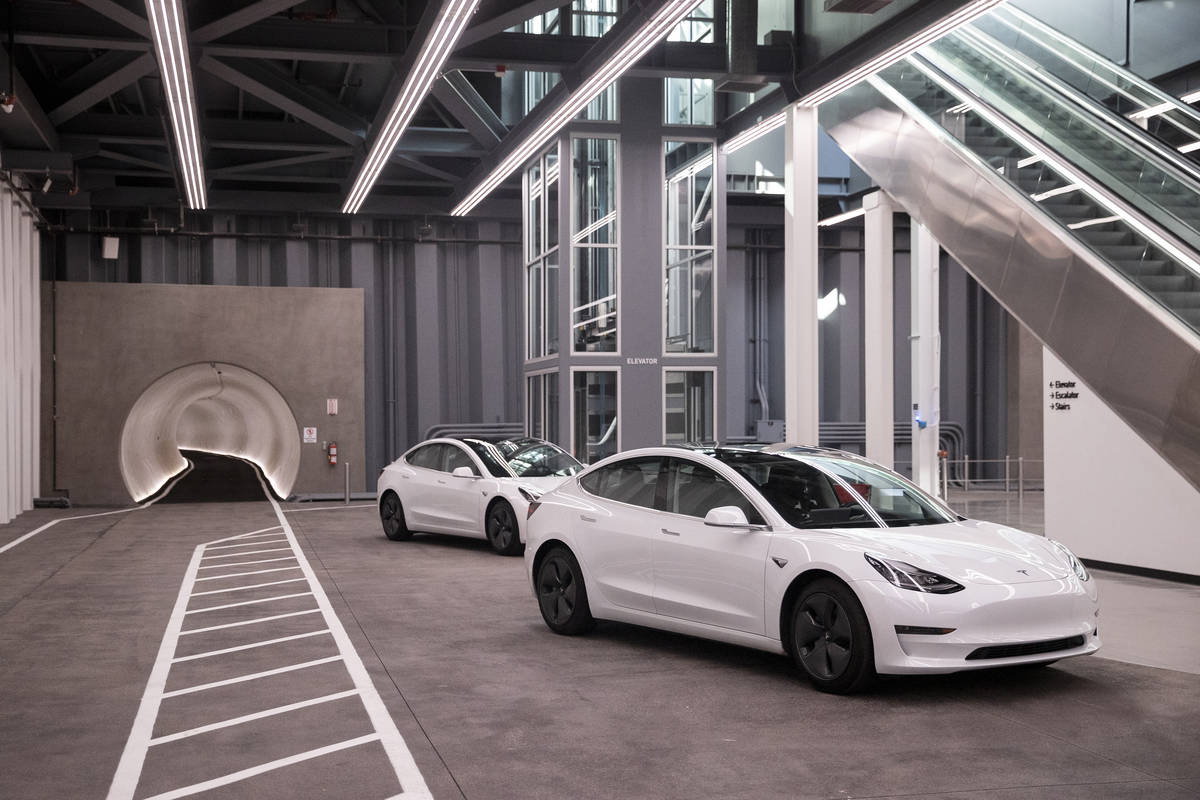
TBC’s proposal called for twin underground tunnels that Tesla vehicles could pass through, transporting riders between the San Antonio International Airport and downtown.
Both companies presented their proposals to the Alamo RMA. The decision seemed to depend on finances.
“The Board has continually sought innovative ways to finance transportation projects to ensure a bright future for the community in a way that bridges technology and accelerates the delivery of needed projects. Today’s Board action is the first of many discussions towards relieving congestion instead of waiting years,” stated Board Chair Mike Lynd.
San Antonio Loop Negotiations
Lynd emphasized that the last voting round did not solidify the project’s future, but rather marked the beginning of negotiations between The Boring Company and Alamo RMA. The Boring Company will meet with Alamo RMA staff in the coming weeks.
TBC estimated that the San Antonio Loop project would cost from $247 million to $289 million in total — although the company noted that these are “very rough” estimates — for a Loop between the airport and downtown. The board may decide to add more stations in the future.
According to Bexar County Engineer Renee Green, The Boring Company believes it could start construction in 12 months and complete the first phase in 18 months. TBC estimates that the entire twin tunnel system would be complete in 36 months.
Staff-written documents revealed that the company is willing to finance between $27 million and $45 million for the first phase. Before negotiations started, The Boring Company said it would self-finance the entire project and turn it over to the Alamo RMA once the Loop was complete. The Boring Company might operate and maintain the San Antonio Loop for the Alamo RMA under a lease agreement similar to its deal with the Las Vegas Convention and Visitors Authority (LVCVA) for the Las Vegas Convention Center (LVCC) Loop.
The Teslarati team would appreciate hearing from you. If you have any tips, reach out to me at maria@teslarati.com or via Twitter @Writer_01001101.


Elon Musk
SpaceX’s $24B Starbase supercomputer plan slipped past a key roadblock
SpaceX wants a Starbase tax break for a $24 billion gas plant and supercomputer campus.

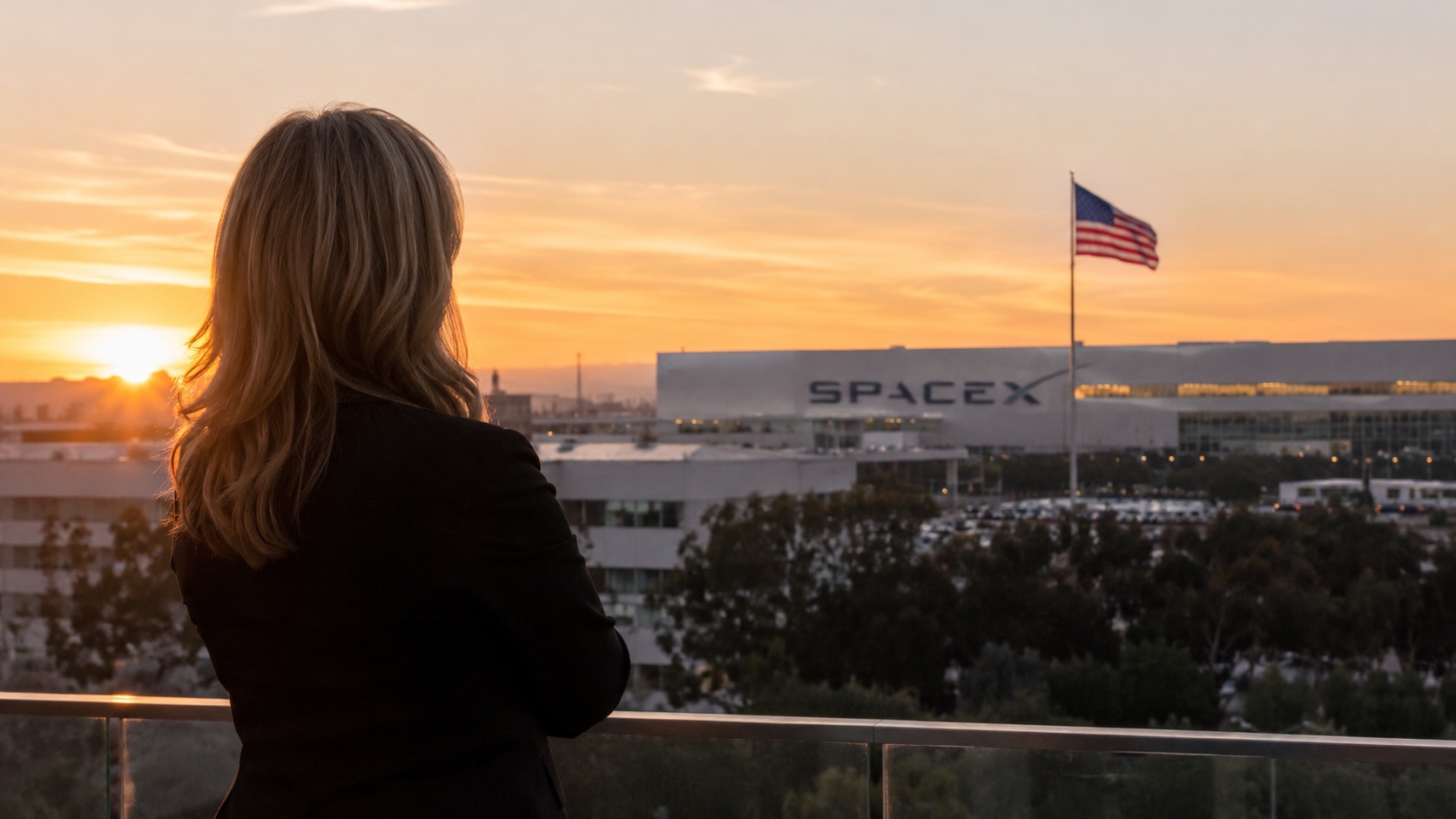
SpaceX is asking its own company town for a tax break on a $24 billion natural gas power plant and supercomputing facility at Starbase, Texas, and the land it picked sits just outside the reach of a data center moratorium that took effect in neighboring Brownsville last week.
A City of Starbase public hearing notice says SpaceX “proposes to construct, own, and operate a gas-fired power plant and super-compute facility” on roughly 444 acres between Boca Chica Boulevard and the Port of Brownsville. The $24 billion figure covers only the initial phases, and the notice leaves room for future expansions. The Starbase City Commission will consider a property tax abatement and a related economic development agreement at a 7 p.m. hearing on December 9. The notice does not disclose the size or length of the abatement, or how much computing capacity the site would hold.
The location has a history. Over the summer, SpaceX asked Brownsville to remove the tract from its city limits and offered $220 million for water and wastewater projects in return. Brownsville approved the move in August, and Starbase later annexed the land. Brownsville’s own 90-day pause on data center applications took effect last week, and had the tract stayed inside the city, the project likely would have needed a different home.
The power side is already in front of state regulators. SpaceX has applied to the Texas Commission on Environmental Quality for air permits covering 35 mobile gas turbines producing roughly 750 megawatts, according to Politico, which also noted that two of the three Starbase commissioners voting on the incentives are SpaceX executives.
Building its own plant lets SpaceX skip the Texas grid. Gov. Greg Abbott paused new data center grid connections in August pending an audit, but a facility that generates its own electricity does not need one. The air permit still has to clear the TCEQ, where Abbott also ordered a halt on data center permits.
The bigger test arrives in January. Governor-elect Gina Hinojosa, who unseated Abbott last week, has said she will block data center approvals until the legislature passes new protections, and she has already asked state officials to hold off on any sale of Boca Chica State Park to SpaceX until she is sworn in. Tesla and SpaceX shares both fell the day after the election, and Musk’s first reaction on X was “Data centers in space looking pretty appealing right now.”
That line points to Starmind, SpaceX’s orbital compute constellation. Musk has said terrestrial compute will be “peanuts compared to orbital compute” and expects monthly orbital deployments to pass ground deployments around the end of 2028, as Teslarati reported. Until then, SpaceX still needs gigawatts on the ground. It ended the third quarter with 1.7 GW of nameplate compute, is targeting 2.5 to 3 GW by the end of this year and wants at least 10 GW more in 2027. Its existing Colossus sites around Memphis already run on gas turbines and face a lawsuit from residents over emissions.
Local reaction is split. The South Texas Environmental Justice Network has announced a protest, citing air quality, water use and energy bills, while some Brownsville residents told the Tribune they welcome the jobs. SpaceX did not respond to the Tribune’s questions about the project.

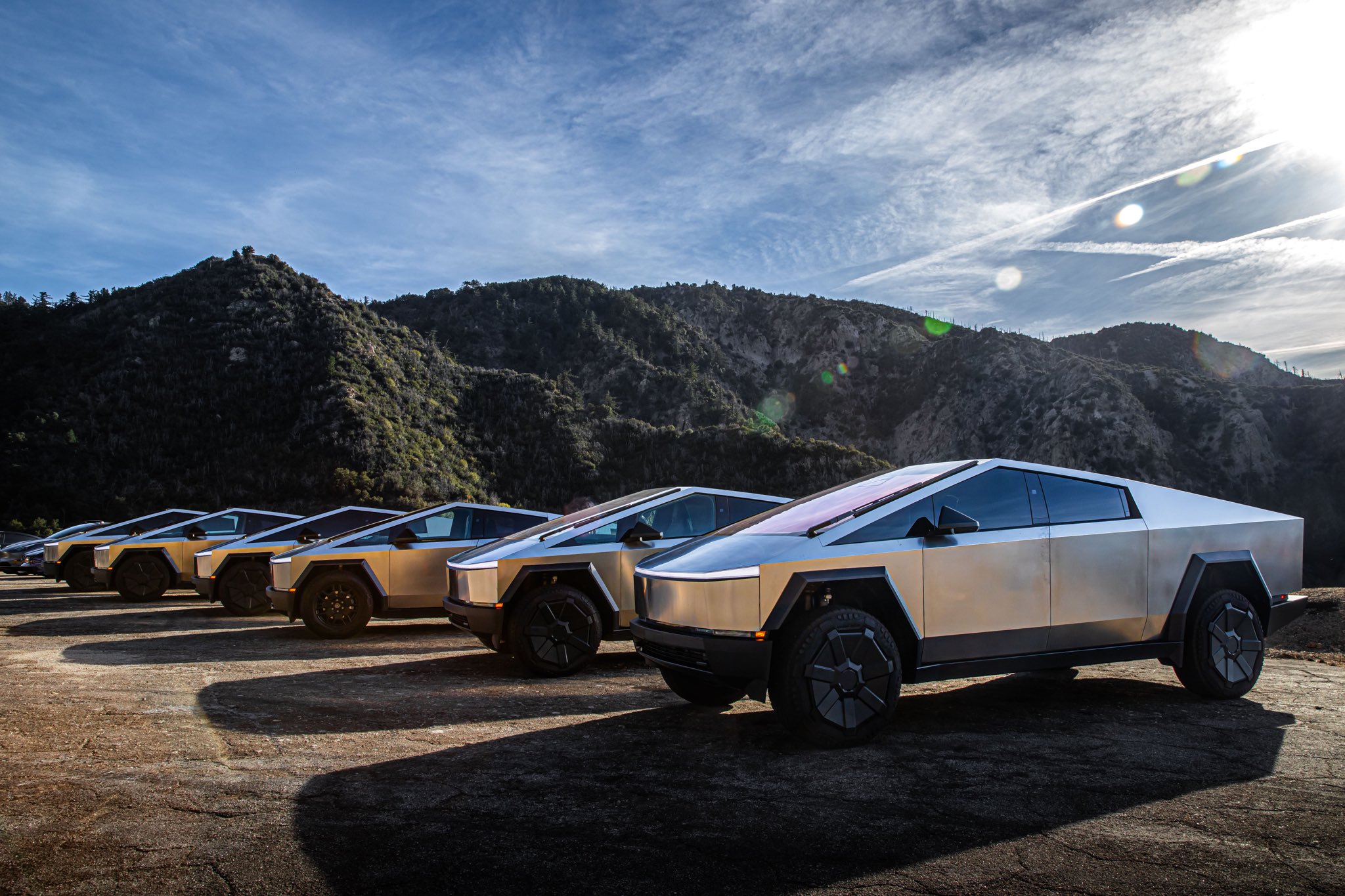
Tesla CEO Elon Musk announced that the company will extend Cybertruck production slightly to handle its extensive order backlog.
On Wednesday, Musk announced that “In order to work through more of the Cybertruck order backlog, production will be extended through the end of summer 2027.”
In order to work through more of the Cybertruck order backlog, production will be extended through the end of summer 2027
— Elon Musk (@elonmusk) November 11, 2026
Tesla has already attempted to simplify its last months of production for the Cybertruck by eliminating several trim levels and only offering the Cyberbeast, the most expensive trim that starts at $109,990. The other two trim levels, the Cybertruck All-Wheel-Drive and Premium All-Wheel-Drive have both been discontinued.
There has been plenty of backlash against Tesla’s decision to ax the Cybertruck, but the company’s forecast prioritizes Cybercab and autonomy. Factory space at Gigafactory Texas that is not necessary is now being set aside for the Cybercab as the company truly embraces its “transportation-as-a-service” model.
There is still a slim chance the Cybertruck survives. Last evening, Tesla upfitter Unplugged Performance offered to take the Cybertruck line off of Tesla’s hands and continue building it, along with a CyberSUV.
Nevertheless, Tesla seems to be ending the Cybertruck on its terms after what will be a three-and-a-half-year run. It still does not really feel quite real; I think many of us thought the Cybertruck would be around for years to come.
Musk added more detail, stating that while it was not the smartest move, “there must be some room in this world for sentimentality or what’s the point?”
This is not the smartest move from a profit-maximizing standpoint btw, but there must be some room in this world for sentimentality or what’s the point?
— Elon Musk (@elonmusk) November 11, 2026
Other EV pickups on the market have experienced a similar fate.
The Ford F-150 Lightning was axed by the Detroit company due to the continued losses the company took from sales. That truck was never profitable, and Ford is still taking a quarterly loss in its EV side. However, things are moving along as it has plans for a mass market EV pickup, which will likely gather some substantial demand if Ford can get it just right.
Perhaps another extension or even a total change of heart might come. Only Musk knows.
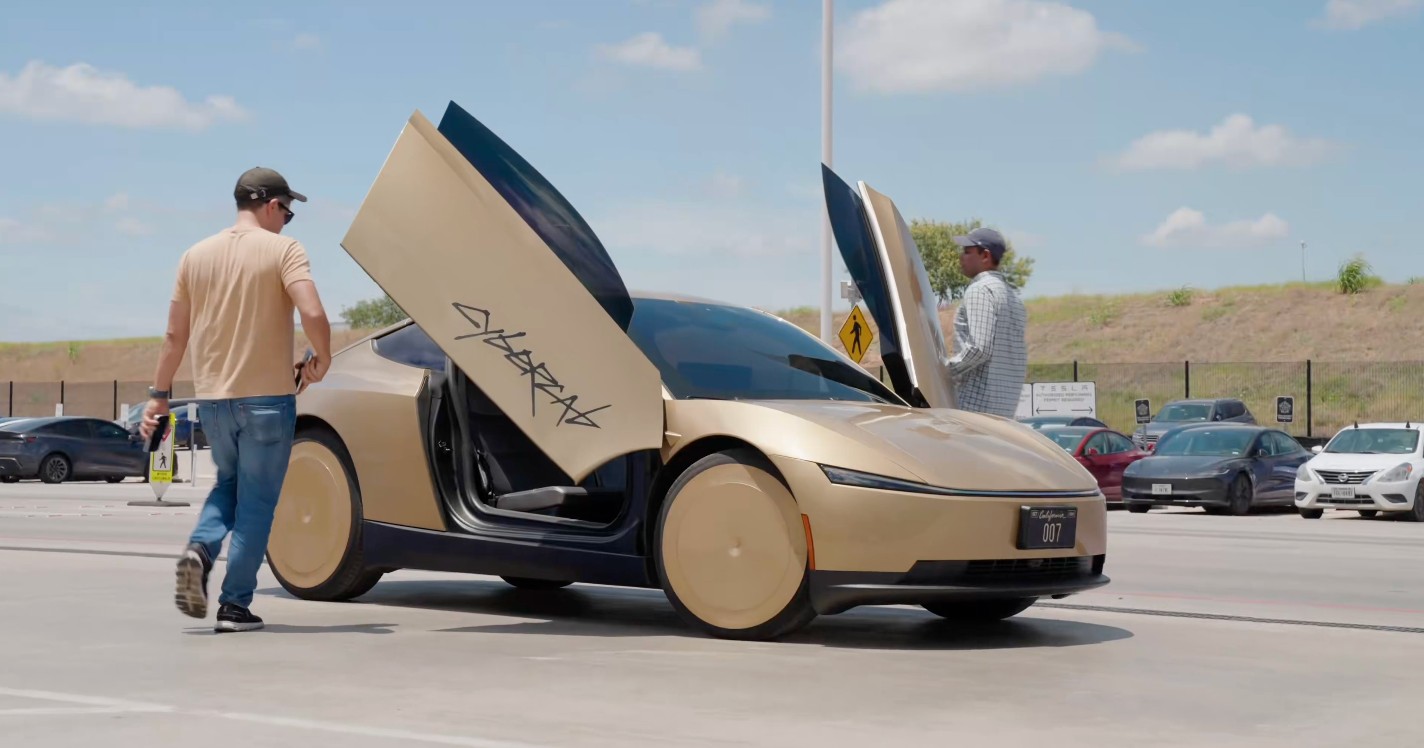
In a sudden and closely watched milestone, Tesla Robotaxi has edged past Waymo on the Texas Department of Motor Vehicles automated vehicle registry. As of November 10, Tesla lists 1,302 registered vehicles under Tesla Robotaxi, LLC, compared with Waymo’s 1,297.
The flip is narrow, but real, according to the State’s books. Tesla’s Texas fleet, following an expansion on November 10, now consists of 729 Model Ys and 573 purpose-built Cybercab vehicles. Waymo’s roster is dominated by the Jaguar I-PACE and a growing number of Zeekr-based Ojai minivans.
NEW: Tesla Robotaxi just added 20 Tesla Model Ys to its fleet. The Texas fleet now stands at 1302 vehicles.
Live tracker: https://t.co/ri0WMLRhCQ
Tracker powered by @EVject
— Texas Autonomous Vehicle Tracker (@texasavtracker) November 10, 2026
Those figures come from the same public TxDMV automated vehicle listings that independent trackers have monitored since a Texas law required operators to disclose fleet sizes.
The scale of Tesla’s climb is pretty interesting and shows how much the company has grown its autonomous ride-hailing fleet over the past months. When the registry first became public in late May 2026, Tesla listed just 42 vehicles on it. Meanwhile, Waymo had several hundred vehicles registered to it.
Tesla CEO Elon Musk shades Waymo: ‘Never really had a chance’
Since then, Tesla has multiplied its authorized Texas fleet more than thirty times, driven by repeated Model Y additions and a steady build of Cybercabs. Waymo has also expanded, but at a slower pace than Tesla.
It is also important to note that registrations are not necessarily equal to operational fleet. The TxDMV list shows the number of vehicles each company is permitted to run, but it does not report how many are actively carrying riders, which cities they serve, or trip volume. Both companies stage vehicles and run mixed fleets that can include units in testing or temporarily offline.
A lead on the registry therefore signals capacity and regulatory positioning more than immediate ride volume.
Tesla has use the growing authorized fleet to expand its unsupervised service beyond the original Austin geofence area, as now it is flowing into cities like San Antonio and Dallas. The company has highlighted plans for a broader Cybercab deployment, eventually into new states and territories.
Waymo is operating across multiple Texas markets and in other areas of the United States.
Right now, the five-vehicle margin is thin and could reverse with the next large registration from either side. For the moment, however, the public Texas record shows Tesla holding the larger authorized Robotaxi fleet in the state.

SpaceX’s $24B Starbase supercomputer plan slipped past a key roadblock

Tesla extends Cybertruck production as Musk concedes ‘sentimentality’


