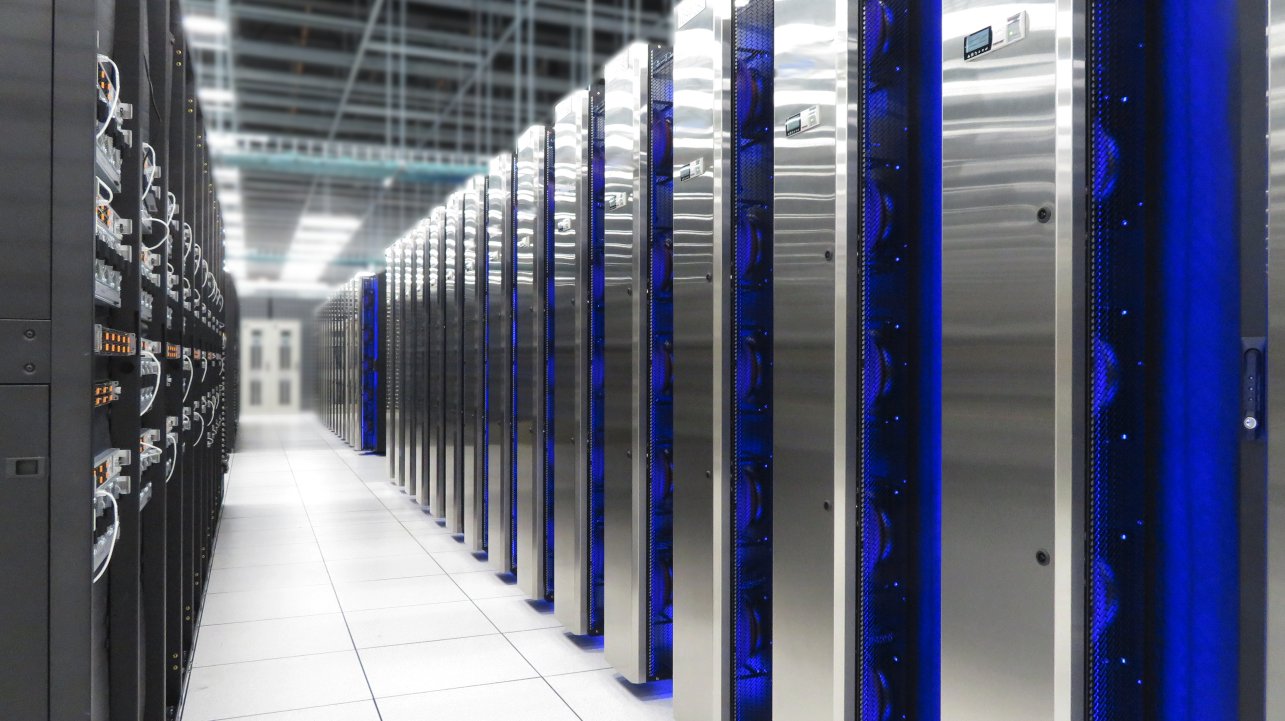
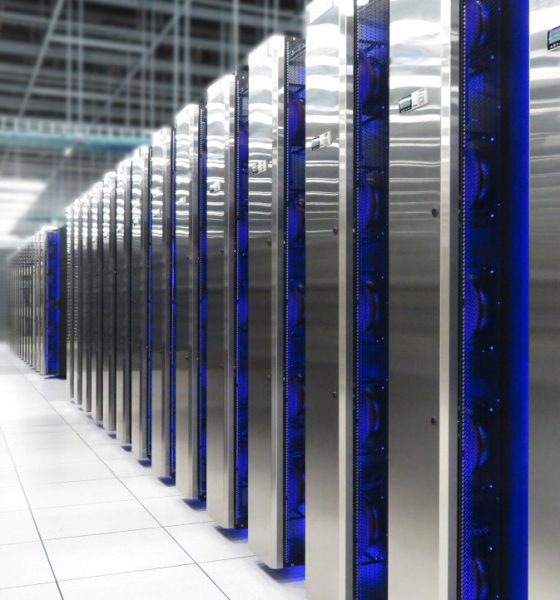

Tesla will be sponsoring the Machine Learning & Systems Conference (MLSYS) and showing its recently upgraded GPU, according to Tim Zaman, an Engineering Manager at Tesla. Tesla recently upgraded its GPU supercomputer to 7360 A-100(80GB) GPUs which now makes it Top-7 by GPU count.
https://twitter.com/tesla10trillion/status/1558204418742296577
Launched in 2020, the 80GB version of the NVIDIA A100 is twice the capacity with just over 2 terabytes per second of memory bandwidth. This allows data to be fed quickly to the A100.
The NVIDIA A100 80GB delivers up to a 3x speedup and enables the training of the largest models with more parameters that fit within a single HGX-powered server which combines the company’s A100 Tensor Core GPUs with high-speed interconnects to form the world’s most powerful servers.
The MLSYS conference s an in-person-only event and attendees need to be wearing masks, vaccinated, and practicing social distancing. The conference aims to identify best practices and design principles for learning systems in the fields of machine learning and systems.
Topics will include:
- Efficient model training, inference, and serving
- Privacy and security for ML applications
- Fairness, interpretability, and explainability for ML applications
- ML programming models and abstractions
- Programming languages for machine learning
- Specialized hardware for machine learning
- Machine Learning for Systems
- Distributed and parallel learning algorithms
- Testing, debugging, and monitoring of ML applications
- Data preparation, feature selection, and feature extraction
- ML compilers and runtime
- Visualization of data, models, and predictions
- Hardware-efficient ML methods
- Systems for Machine Learning
Tesla is sponsoring the conference and will have a booth for career opportunities for its AI team. The conference begins on August 29, 2022, and runs through September 1, 2022. Tesla is also holding its second AI Day event on September 30th, 2022, and is expected to unveil a working prototype of its humanoid robot, the Optimus Bot.
During an interview with Bloomberg’s Editor-In=Chief, John Micklethwait, Elon Musk said that he hoped Tesla would have an interesting prototype to show people. He also said that Tesla had a very talented team and hinted at a few other exciting things Tesla will share at AI Day.
“We have these sort of AI Day events to just emphasize that Tesla is a lot more than a car company and that we are, in my view, the leading real-world AI company that exists,” Elon Musk said.
Disclaimer: Johnna is long Tesla.
I’d love to hear from you! If you have any comments, concerns, or see a typo, you can email me at johnna@teslarati.com. You can also reach me on Twitter @JohnnaCrider1


Elon Musk
Elon Musk says Tesla’s Roadster demo could be a bang, quite literally
Musk says tonight’s Roadster demo will be a banger, maybe literally. The clues add up.

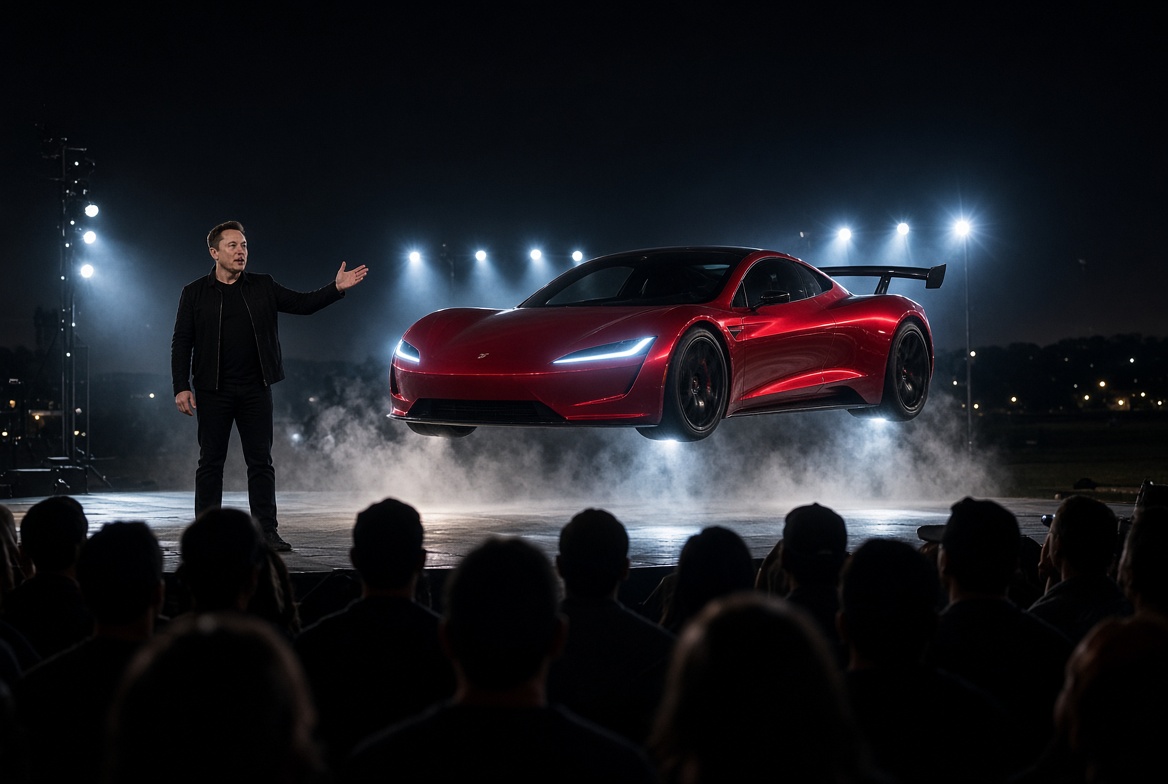
Elon Musk spent Wednesday and Thursday stacking teases on top of Tesla’s Roadster event, and the wording is getting harder to read as routine hype. Tesla streams the unveil tonight at 7:55 p.m. Central on X. Musk has called it “a candidate for greatest product demo of all time,” then added that “this demo will be a BANGER, probably metaphorically, though some chance literally.”
New Roadster is
beyond movies,
beyond imagination,
beyond human,
yet still made
by humans
on Earth— Elon Musk (@elonmusk) October 15, 2026
The “some chance literally” part is the line to watch. The Roadster has been tied to a SpaceX option package since 2018, and as we reported when the date was announced, the system is reportedly codenamed A71 and uses cold gas thrusters fed by a composite overwrapped pressure vessel, the same tank design SpaceX uses on Falcon 9. Musk has said a thruster equipped car could reach 60 mph in about 1.1 seconds. Cold gas thrusters firing at full output are loud, and reports ahead of the event say the car will be unmanned with spectators kept several hundred yards back. A literal bang could simply mean a demonstration that sounds like one, though it is also an admission that something could go wrong on stage.
Then there is “Timing is everything,” which Musk posted a day earlier. Stocktwits noted that 7:55 p.m. is 19:55 on a 24 hour clock, which echoes 1955, the year Marty McFly travels to in Back to the Future. Musk has made that connection before. In 2019 he replied to an animation of a flying DeLorean by saying the new Roadster “will actually do something like this.” Nothing from Tesla confirms the movie reference, but the stream time was chosen by someone, and Tesla has not been shy about this kind of wink.
Also, Tesla said it moved the event because it “can only be held outdoors,” and Musk then wrote that the demo was postponed “due to high winds,” as Teslarati covered at the time. A car running a standing start in front of a crowd shrugs off wind. A car that leaves the ground does not. The venue near SpaceX’s McGregor test site and the FAA airspace closures reported around the original date point the same way, though we also noted the delay could be a plain safety precaution. Musk has also described the new Roadster as “beyond movies, beyond imagination, beyond human, yet still made by humans on Earth.”
The only official figures remain the 2017 ones: 620 miles of range, a top speed above 250 mph, a 1.9 second 0 to 60 time, and prices of $200,000 for the base car and $250,000 for the Founders Series. Production is expected at Giga Texas in 2027 or 2028. Tesla has said the event will cover pricing, specifications and production targets, and its livestream preview has the full rundown. Tesla reports third quarter earnings on October 21, so whatever lands tonight will be fresh going into that call. We will have live coverage as soon as the stream starts.
Elon Musk
Elon Musk breaks his silence on the Starlink impact to Ukraine drones
Musk says the US military and president set Starshield limits, not SpaceX, amid Ukraine complaints.
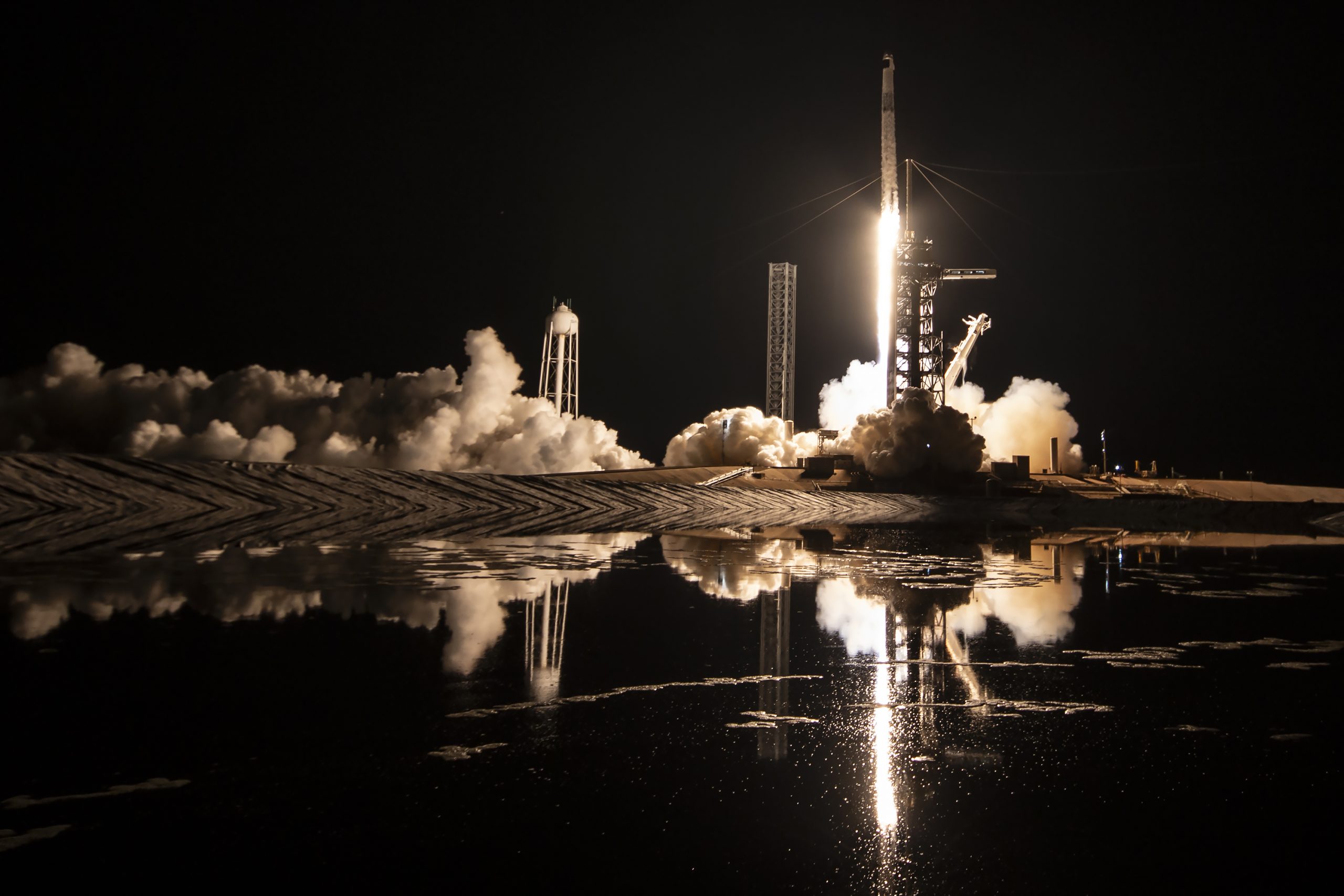
Elon Musk says the speed limit cutting out Ukraine’s military Starlink terminals is not SpaceX’s decision. In a post on X Wednesday, Musk wrote that “Starshield systems are owned and controlled by the US government. Any limits on speed or usage are decided by the US military and ultimately POTUS.” He added that Starlink is a commercial service limited to civilian or defensive activities and “cannot be used for offensive military action, as doing so would be inappropriate for a commercial company.”
He was replying to Mykhailo Fedorov, Ukraine’s former defense minister, who had thanked Musk for restoring connectivity at speeds up to 160 km/h and said removing the Starshield limit entirely is “now critical for Ukraine’s defense.”
Starshield systems are owned and controlled by the US government. Any limits on speed or usage are decided by the US military and ultimately POTUS.
Starlink is a commercial service owned and controlled by SpaceX. Usage of Starlink is limited to civilian or defensive activities and cannot be used for offensive military action, as doing so would be inappropriate for a commercial company.
— Elon Musk (@elonmusk) October 14, 2026
The complaint started Tuesday night, when Ukrainian officials said military terminals began losing service above roughly 100 mph. Presidential adviser Serhiy Beskrestnov said the defense forces got no warning and several missions were disrupted, as Teslarati reported earlier Wednesday. The 7th Rapid Reaction Corps told Reuters connections dropped for 10 to 20 seconds at speeds well below the limit, which made drones harder to control. Poland’s foreign minister, Radoslaw Sikorski, asked Musk on X whether he is “playing politics with your products again.”
That is why the Starlink and Starshield distinction matters. SpaceX introduced Starshield in 2022 as the government version of Starlink, with an initial focus on Earth observation, communications and hosted payloads. It won a Space Force contract in 2023 with a $70 million ceiling. In December 2024, the Pentagon moved Ukraine’s terminals onto Starshield, covering about 3,000 units across two contracts. Ukraine’s military connections therefore run through a service that Musk now says sits under Washington’s control.
While Musk’s post describes who holds authority, it does not infer that anyone ordered the limit, and neither SpaceX nor the US government has confirmed who set it. Ukrainian officials have pointed to the timing, which follows President Trump’s push for an energy ceasefire and Musk’s Saturday post that “Zelensky has gone too far.” The BBC noted Trump denied threatening to restrict intelligence sharing with Kyiv, and no evidence has been presented that Washington requested the cap.
The episode also revives a promise from 2025. After Poland accused him of threatening Ukraine’s access, Musk said Starlink “will never turn off its terminals” and would not be used as a bargaining chip. Poland has since supplied more than 29,000 terminals to Ukraine. Teslarati also covered Kyiv’s search for Starlink alternatives in 2025, and the latest dispute gives that search new urgency.
Investor's Corner
Tesla opens the Q&A for its biggest earnings call yet
Tesla opens its Q3 earnings Q&A, and Cybercab, Robotaxi, Optimus and regulators loom over October 21.
Tesla has opened its shareholder question portal for the Q3 2026 earnings call, with the Say Q&A page already listing questions. Investors have until 4:00 p.m. EDT on October 20 to submit and vote on what management should answer.
The call is set for Wednesday, October 21. Tesla will post results after the market closes, with a live webcast at 4:30 p.m. CT, or 5:30 p.m. ET, through its investor relations site.
Say ranks questions by the number of shares behind the votes, which gives institutional holders extra weight over the retail crowd.
Ahead of Q2, retail investors asked why Robotaxi growth had stalled, when Cybercab would start customer rides, and where the Optimus Gen 3 ramp stood, while an institutional holder asked how Tesla and SpaceX would split Terafab duties. Cybercab has since answered one of those. Tesla said last week it has 300 plus Cybercabs serving Austin, up eightfold in 30 days, with Dallas named as the next city. The questions now are likely to move from when to how fast.
There is also a regulatory question hanging over the call. NHTSA has demanded sworn answers on how the pedal free Cybercab was certified against federal safety standards, with responses due October 30, nine days after the call. Whether an analyst raises it live is unknown, but it is the kind of exposure that tends to find its way into a Q&A.
The numbers will not be the main draw. Tesla already reported 486,532 deliveries and 13.7 GWh of storage for the quarter. Consensus sits around 43 to 45 cents per share on roughly $27.8 billion in revenue, according to Zacks, after a Q2 report that missed on EPS. Goldman Sachs, which holds a Neutral rating and a $360 target, argues the outlook for Robotaxi, FSD and Optimus will matter more to the stock than the quarter itself.
The call also lands six days after the rescheduled Roadster event, which Tesla will stream on X on Thursday, October 15, at 7:55 p.m. CT. If the Roadster shows up with a production date or a SpaceX thruster package, expect it to climb the voting list before the deadline.

Elon Musk says Tesla’s Roadster demo could be a bang, quite literally

Elon Musk breaks his silence on the Starlink impact to Ukraine drones

Tesla opens the Q&A for its biggest earnings call yet

The Pentagon taps Elon Musk to design the battlefield of the future

SpaceX reveals how its 1 Million AI satellite network will work and prevent space collisions


