News
Tesla aims to produce 50K Tesla Semi in 2024, could become one of US’ largest truck makers

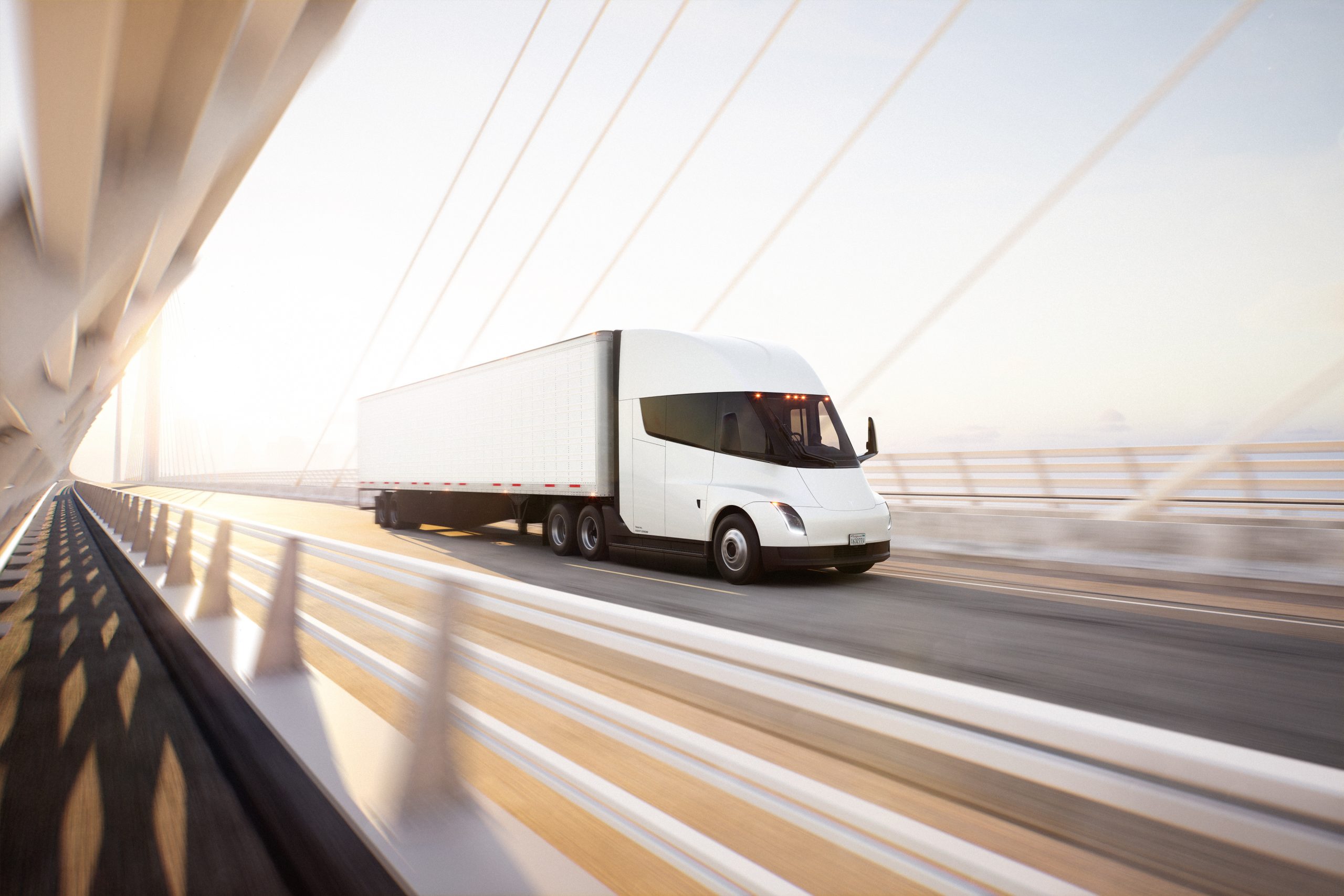
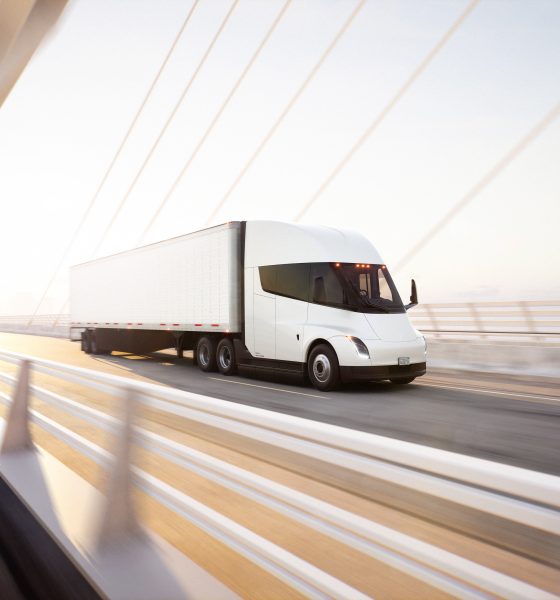
If there were one upcoming product that Tesla truly discussed during the Q3 2022 earnings call, it would be the Tesla Semi. Elon Musk and Tesla executives shared a lot of interesting tidbits of information about the Class 8 all-electric truck, such as its battery range when it’s fully loaded and the expected date of its first deliveries.
While answering questions from retail and institutional investors during the Q&A session, Musk mentioned that the Semi is already in early production. And since Tesla typically takes about a year to ramp up production of a new product, the company is currently looking to produce 50,000 Tesla Semi units per year in 2024.
“We’ll be ramping up Semi production through next year. As I think everyone knows at this point, it takes about a year to ramp up production. So, we expect to see significant — we’re tentatively aiming for 50,000 units in 2024 for Tesla Semi in North America. And obviously, we’ll expand beyond North America. And these would sell — I don’t want to say the exact prices, but they’re much more than a passenger vehicle,” Musk said.
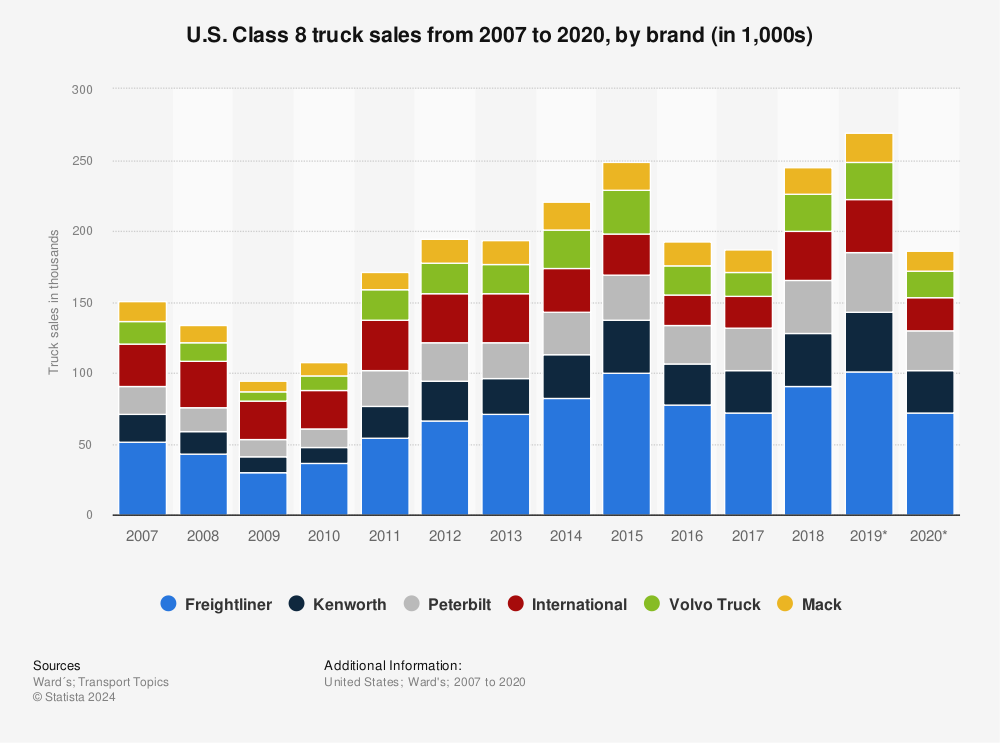
While a production target of 50,000 per year sounds conservative for a company like Tesla — which produces 20,500 vehicles per week in Gigafactory Shanghai this Q4 2022 — such an output would already be incredibly impressive. As could be seen in data from Statista, the US Class 8 trucking market is currently dominated by Freightliner, which sold over 71,000 units in 2020 and about 100,000 units in 2019.
Find more statistics at Statista
Following Freightliner in the No. 2 spot is Kenworth, which typically sells less than 50,000 Class 8 trucks per year. In 2019, for example, Kenworth sold about 42,000 units, and in 2020, the truck maker sold over 30,000 units. Assuming that Kenworth maintains its pace and Tesla succeeds in producing and potentially selling 50,000 Tesla Semi per year in 2024, it would make the EV maker the US’ second largest Class 8 truck maker.
That’s quite a feat, especially if one were to consider the fact that the Tesla Semi would likely be limited by the company’s battery supply in the near future. Elon Musk even noted during the Q3 2022 earnings call that the vehicle’s initial production would not involve the company’s 4680 battery cells. Once Tesla’s 4680 project hits its pace and production of the Semi gets optimized, it would not be surprising if the all-electric truck becomes the best-selling Class 8 hauler in the United States in the coming years.
Don’t hesitate to contact us with news tips. Just send a message to simon@teslarati.com to give us a heads up.


Elon Musk
Trump to hand Elon Musk a top honor that traces back to JFK
Trump will award Elon Musk the National Medal of Science at Thursday’s White House summit.

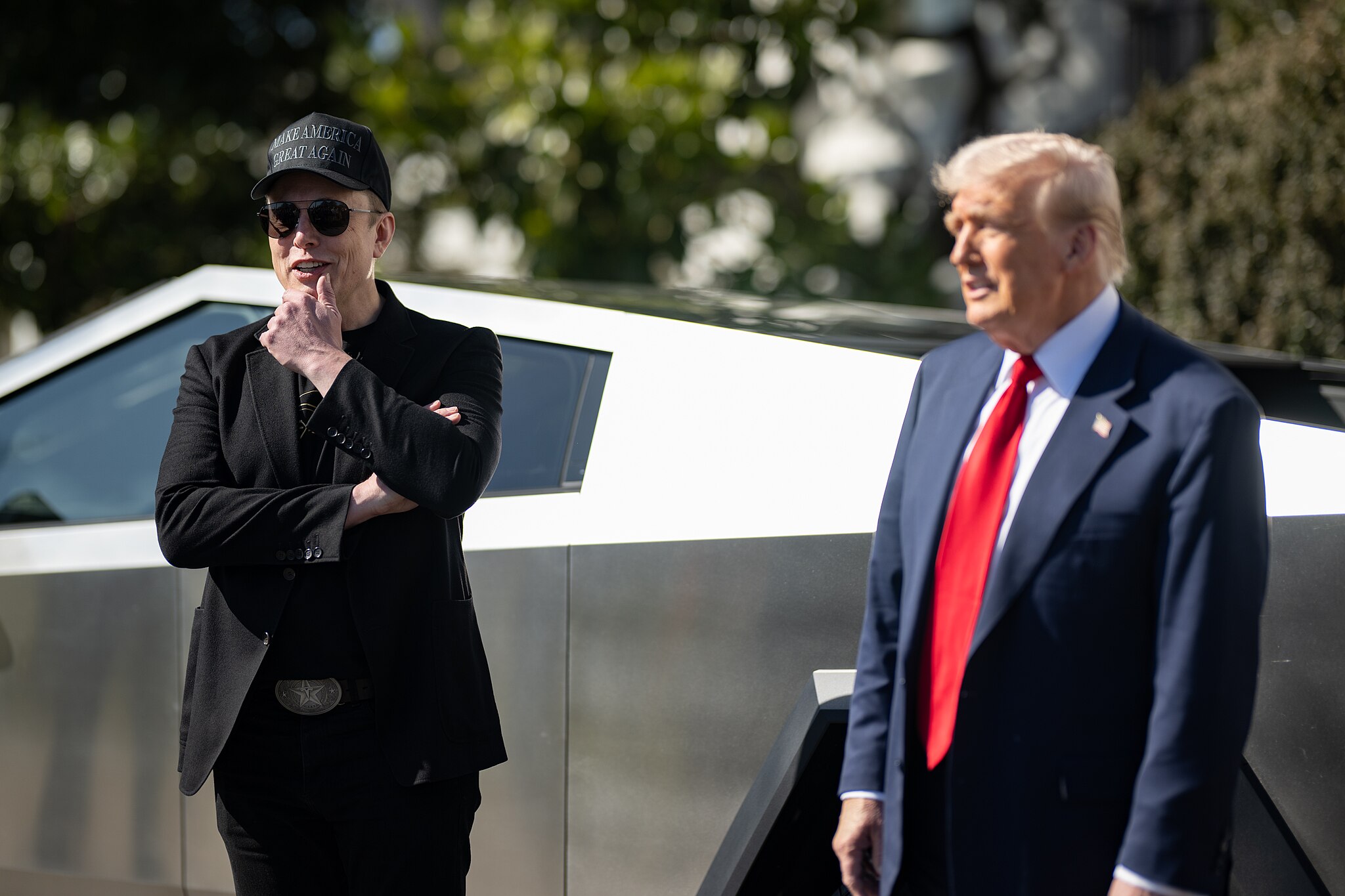
Elon Musk is set to receive the highest honor the U.S. government gives to scientists and engineers.
President Donald Trump will present Musk with the National Medal of Science on Thursday at the White House’s Science: A New Golden Age Summit, Fox News Digital first reported on Wednesday. Google cofounder Sergey Brin, Nvidia CEO Jensen Huang and AMD CEO Lisa Su will receive the same medal, while Dell Technologies CEO Michael Dell and Microsoft CEO Satya Nadella will receive the National Medal of Technology and Innovation. A White House official later confirmed the list to Reuters.
“The Trump administration is grateful for the contributions of these incredible leaders in science and technology. These recipients are helping ensure America keeps leading the world in innovation,” White House spokesperson Liz Huston told Fox News.
FIRST ON FOX: Trump will award Elon Musk the National Medal of Science at the White House Thursday.
Sergey Brin, Jensen Huang and Lisa Su will also receive the science medal, while Michael Dell and Satya Nadella will receive the technology medal.
It marks Trump’s first time presenting the awards across either administration.
Full story here https://t.co/omnrLV0EwS
— Fox News Politics (@foxnewspolitics) October 7, 2026
It will be the first time Trump has presented either medal in his two terms. Congress created the National Medal of Science in 1959, and the National Science Foundation, which administers it, says 529 scientists and engineers have received it since. A presidential committee reviews nominees, but the president makes the final call.
Thursday’s group of medalists run or founded companies, and three of them sit at the center of the Super Intelligence hardware race that Musk competes in. Huang’s Nvidia supplies the GB300 chips filling SpaceX’s Colossus 2 cluster, while Su’s AMD is Nvidia’s biggest rival in data center GPUs.
Worth noting that Trump’s uncle, MIT physicist John G. Trump, received the National Medal of Science from President Ronald Reagan for his work on ionizing radiation and its uses in medicine and industry.
The Pentagon taps Elon Musk to design the battlefield of the future
For Musk, the medal is the latest sign of how far his relationship with Trump has come since their 2025 split over the “Big Beautiful Bill” and his exit from DOGE. Last week, he sat at Trump’s left during a White House lunch where AI executives signed a voluntary safety accord, and Defense Secretary Pete Hegseth named him to help lead the Pentagon’s Project Meridian study on the future of warfare. Musk has also adopted the administration’s new vocabulary, saying on Sunday that SpaceXAI will be renamed SpaceXSI after Trump ordered federal agencies to replace “artificial intelligence” with “super intelligence.”
Musk has collected science honors before, including the Stephen Hawking Medal for Science Communication in 2019.
Lifestyle
Tesla FSD changed its mind mid-intersection, and it may have saved a life
Tesla shares dashcam footage of FSD Supervised stopping mid intersection to avoid a T-bone crash.
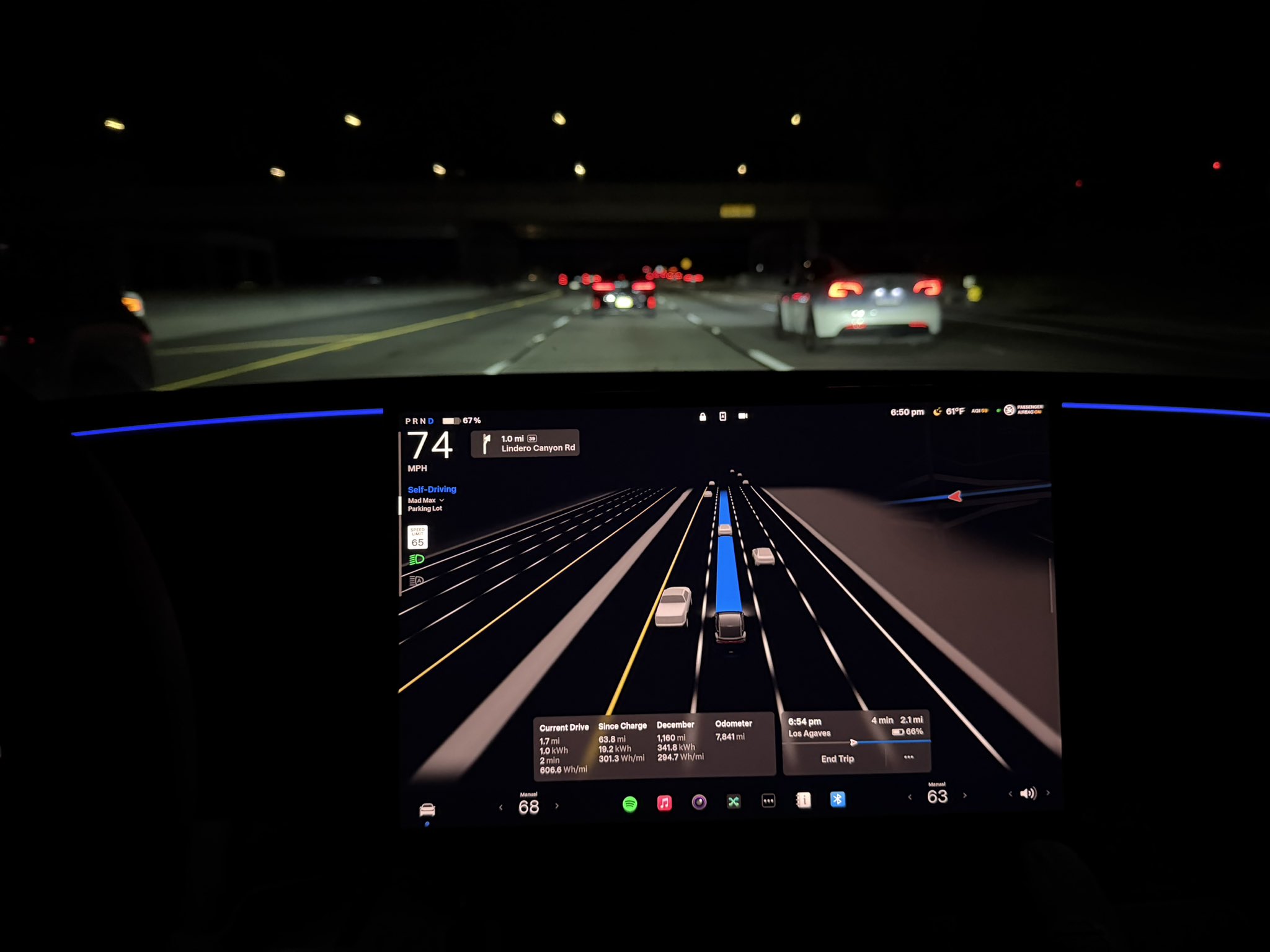
Tesla is putting another Full Self-Driving save in front of its 24.8 million followers on X.
On Tuesday morning, Tesla’s main account shared a dashcam clip with the caption “FSD Supervised preventing T-bone crash.” The footage came from an owner posting as TheNewGrid, who described what happened at a stop sign: “I looked at the car coming to the stop sign figured they would stop, my car went, then came to a stop mid intersection as they flew by. Had I been manually driving this would have resulted in a crash.”
The sequence is the notable part. FSD had already started crossing when the other driver ran the stop sign. Instead of pressing on, the car braked hard in the middle of the intersection and let the crossing vehicle pass in front of it. By the owner’s own account, they had made the same assumption the software initially made, that the other car would stop, and would not have corrected in time.
FSD Supervised preventing T-bone crash
— Tesla (@Tesla) October 6, 2026
The clip is the latest in a run of safety posts Tesla has amplified over the past several days. On Saturday, the company shared a video from Selling Sunset star Jason Oppenheim, who sold his Bentley for a Model Y and said he was buying Teslas with FSD for 10 of his employees. Ashok Elluswamy, who leads Tesla AI, followed up by writing that Tesla self-driving “reacts to other people cutting into your path with super-human response times.” On Monday, a Cybertruck owner posted footage of FSD moving across three lanes from a red light to clear a path for an ambulance approaching from behind.
This recent clip also lands a few weeks after Tesla began shipping Automatic Collision Evasion with FSD v14.3.9, a feature that can activate FSD on the driver’s behalf when a frontal collision is imminent or the driver appears distracted. Elluswamy said in September that “even earlier prediction of hazards, even faster reaction time and overall significantly better safety and collision avoidance” are coming with v15, the release Tesla has tied to round the clock Robotaxi operation.
The safety messaging matters beyond social media. Tesla has said FSD Supervised was 4.1 times less likely to crash than manual driving across 100 million kilometers on European roads, and it has been putting those figures in front of regulators. Eight EU countries have now approved FSD Supervised, with Croatia the most recent, but the EU’s bloc-wide vote originally set for October 6 has been pushed to December at the earliest.
FSD Supervised is still a Level 2 system, and the driver remains responsible at all times. Even heavy users find reasons to step in. Teslarati’s Joey Klender, who uses FSD for about 76 percent of his driving, laid out five recurring issues on Tuesday that still prompt him to intervene. Clips like this one show the other column of that ledger: moments where the software caught a mistake a human was about to make.
Energy
Tesla Model 3 and Model Y can now do what only Cybertruck could
Tesla Model 3 and Model Y can power your home with Powerwall 3 during outages.
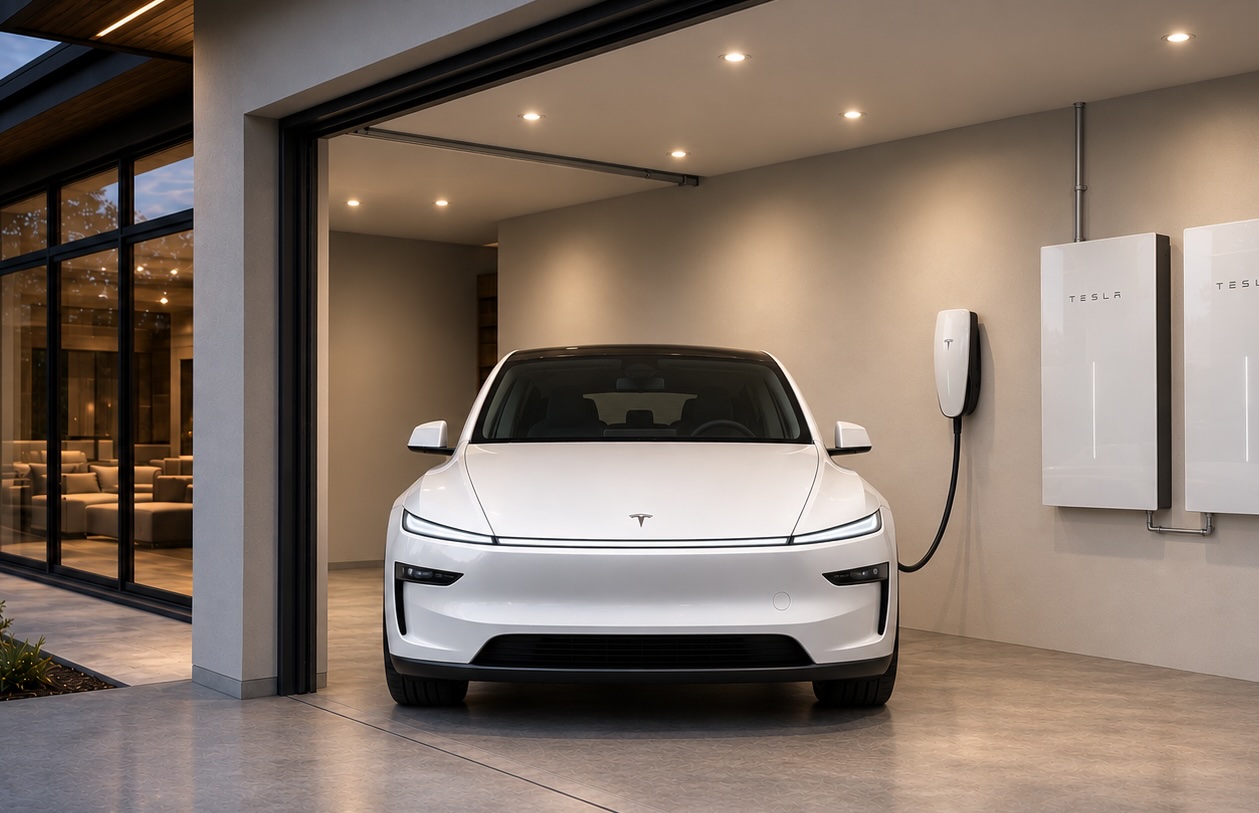
Tesla has turned its two top sellers into backup batteries for the house.
Tesla Energy announced on Tuesday that Powershare Home Backup is now available for new Model 3 and Model Y vehicles paired with a Powerwall 3, saying the car can “extend your home backup by over 2 days.” Minutes later, Tesla’s main account quoted the post with a broader pitch: “With Powerwall 3, every Tesla can now serve as your home’s backup battery.”
Until this week, the Cybertruck was the only Tesla that could send power back into a home, and that capability only began working alongside Powerwall 3 last month, after years of ambitious targets.
Tesla’s updated Powershare page says every Model 3 and Model Y ordered in the U.S. or Puerto Rico on or after October 1, 2026 can use the feature. Some, but not all, earlier cars also qualify. Owners can check on the touchscreen under Software, then Additional Vehicle Information, where a capable car shows “Powershare Support: Enabled.” As Electrek reported, bidirectional power on the two cars runs through an inverter Tesla calls PCS2 Lite, and the company has not said when that part entered production on each trim.
The home side is simpler. A house that already has a Powerwall 3 and either a Wall Connector 3 or Universal Wall Connector needs no additional equipment, and Tesla says compatibility is enabled through a software update. When the grid drops, the Powerwall and the car work together, with up to 11.52 kW of continuous power available. Tesla’s “over two days” estimate assumes a home using 30 kWh per day and a car starting at a 90 percent charge. Standard trims are rated for up to two days, while the Cybertruck adds more than three.
There are limits. Powerwall 2 and Powerwall+ support is listed as “coming soon.” Model S and Model X are not included, and Grid Support, the program that lets Cybertruck owners in Texas send power back to the grid during demand spikes for bill credits, is not available for Model 3 or Model Y.
The rollout also lines up with something Elon Musk said more than three years ago. At Tesla’s March 2023 Investor Day, Musk said, “I don’t think very many people are going to want to use bidirectional charging, unless you have a Powerwall.” Tesla has now shipped the feature for its volume cars with exactly that requirement attached.
The Powerwall pairing was the hard part on Cybertruck. Tesla told owners in December 2025 that Powershare with Powerwall had been pushed to mid 2026, and lead engineer Wes Morrill explained that two devices capable of forming a home’s grid have to negotiate which one leads during an outage, across multiple generations of hardware. With that work done for the truck, Tesla was able to extend it to the Model 3 and Model Y within a month.
Ford and GM have offered home backup from their EVs for several years, but both require a separate inverter and backup hardware. Tesla’s version leans on equipment many Powerwall 3 owners already have on the wall. Powershare for the two cars also ships as part of software update 2026.38.3, the same release that began delivering Halloween Mode on Tuesday.

Trump to hand Elon Musk a top honor that traces back to JFK

Tesla FSD changed its mind mid-intersection, and it may have saved a life


