News
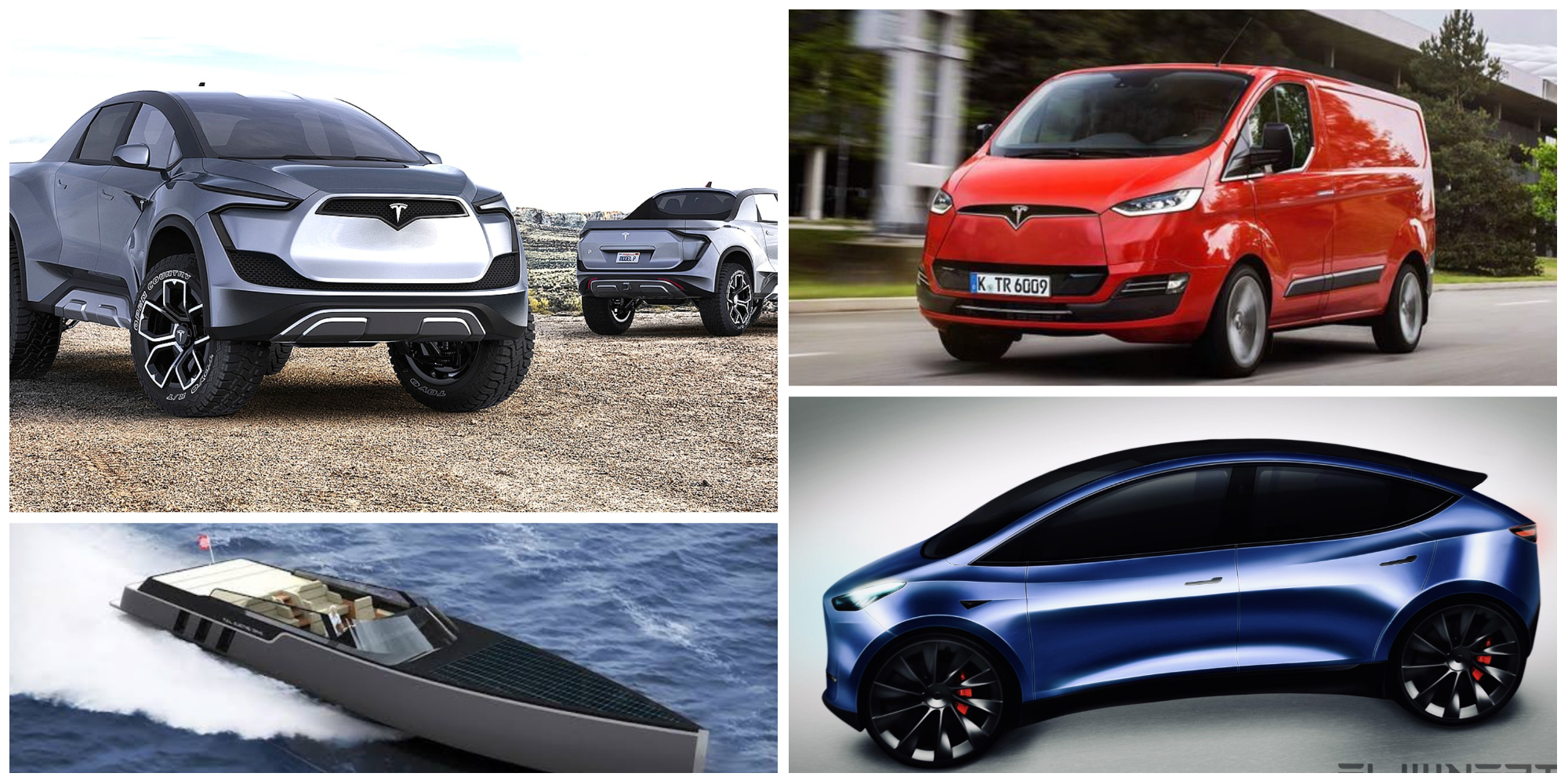
Tesla Van, revised Cybertruck, Tesla Boat — Here’s what could be coming

Tesla CEO Elon Musk confirmed during the company’s most recent Earnings Call on Wednesday that the automaker has “other products” being developed. Of course, Musk did not shed any detail on them, but based on what the company might need, and what others have said in the past, we have an idea of what they could be.
Musk said:
“I should also say that there — we have other products in development. We’re not going to announce them, obviously, but they’re very exciting. And I think it will blow people’s minds when they — when we reveal them. Tesla has the most exciting product road map of any company on earth by a long shot.”
A Tesla Van
A Tesla Van might be in the product roadmap, especially as Musk has hinted toward the idea on several occasions. In late 2018, Musk stated that it may be “interesting to work with Daimler/Mercedes on an electric Sprinter.”
In early 2021, Musk reiterated this point while speaking on the Q4 and Full Year 2020 Earnings Call, stating, “I think Tesla is definitely going to make an electric van at some point.”
While a Tesla Van might be a great idea for some personal applications, this would be something that would undoubtedly be used as a commercial vehicle. To this day, Sprinter vans are utilized by a variety of companies, from auto parts stores, to car detailing businesses. However, Tesla may find the biggest application for it internally.
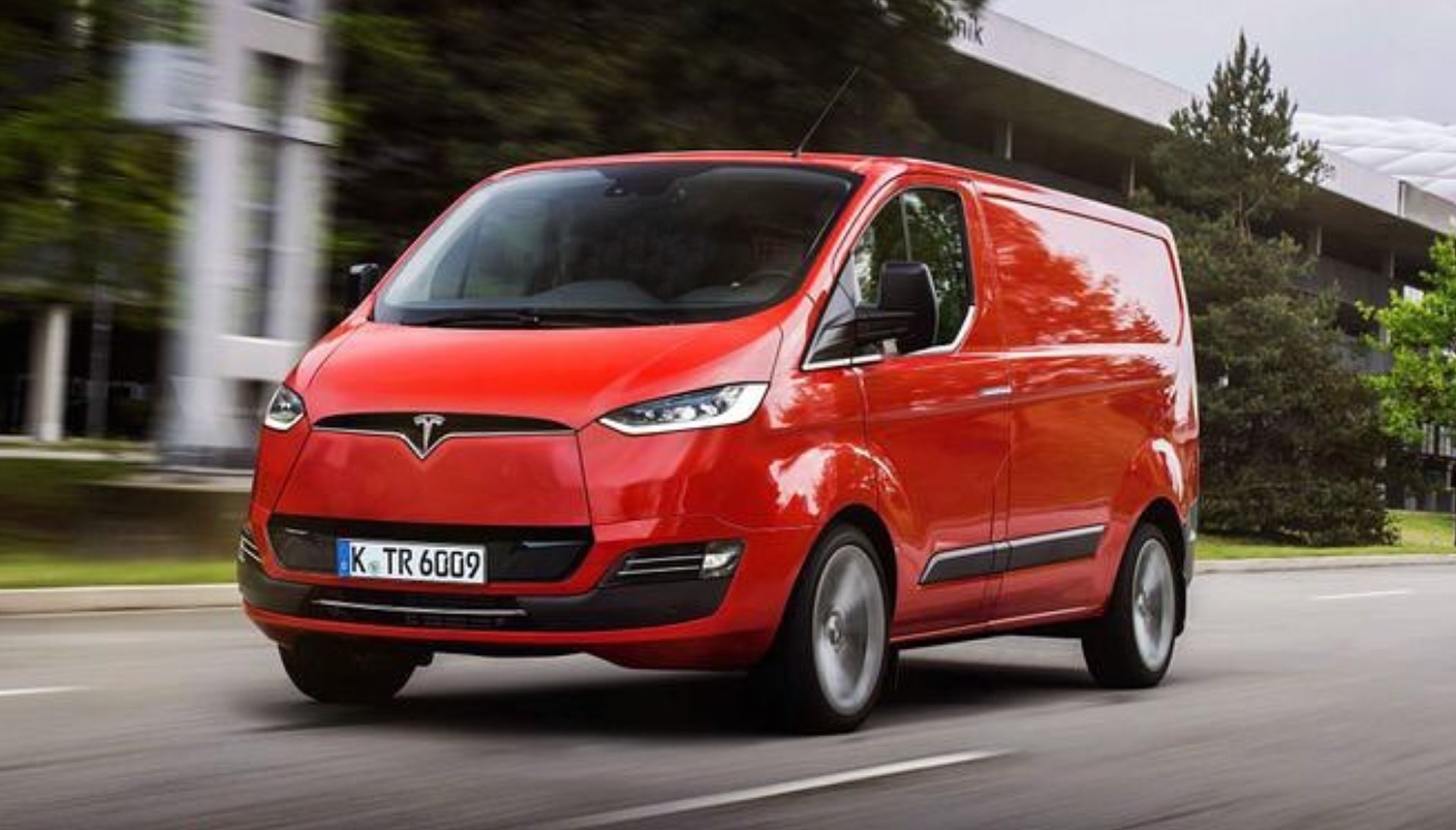
(Credit: teslaguru2/Instagram)
Still utilizing some Ford Transit vans and some Model S and Model X vehicles, among others, for its Mobile Service fleet, Tesla would undoubtedly see several advantages from developing a van. For one, Tesla still struggles with Service, especially at physical locations. With the company delivering over 1.3 million cars last year and only growing its Store and Service locations by 120 this past year, or ten a month, Mobile Service could be the company’s key to improving its overall effectiveness.
The Mobile Service fleet grew 24 percent in 2022 compared to 2021, with 303 additional units added last year alone. However, this could likely increase further if Tesla developed and built its own Service vehicles, and let’s face it, they’d be much more cost-effective than leasing expensive Service locations.
A Tesla Van would also enter a market with relatively small amounts of competition. Currently, the E-Transit holds 73 percent of the segment, with 6,500 sales last year. Offering only 236 miles of range in its Custom offering, the E-Transit could be challenged by a Tesla Van.
A ‘More Traditional’ Pickup
This one is a bit of a long shot, but it could definitely still happen. Musk stated in an interview with Automotive News in 2020 that if the Tesla Cybertruck was a flop, the company could develop a more “traditional” pickup design.
“If it turns out nobody wants to buy a weird-looking truck, we’ll build a normal truck, no problem,” he said.
An artist’s render of the Tesla Pickup Truck. (Credit: Emre Husman)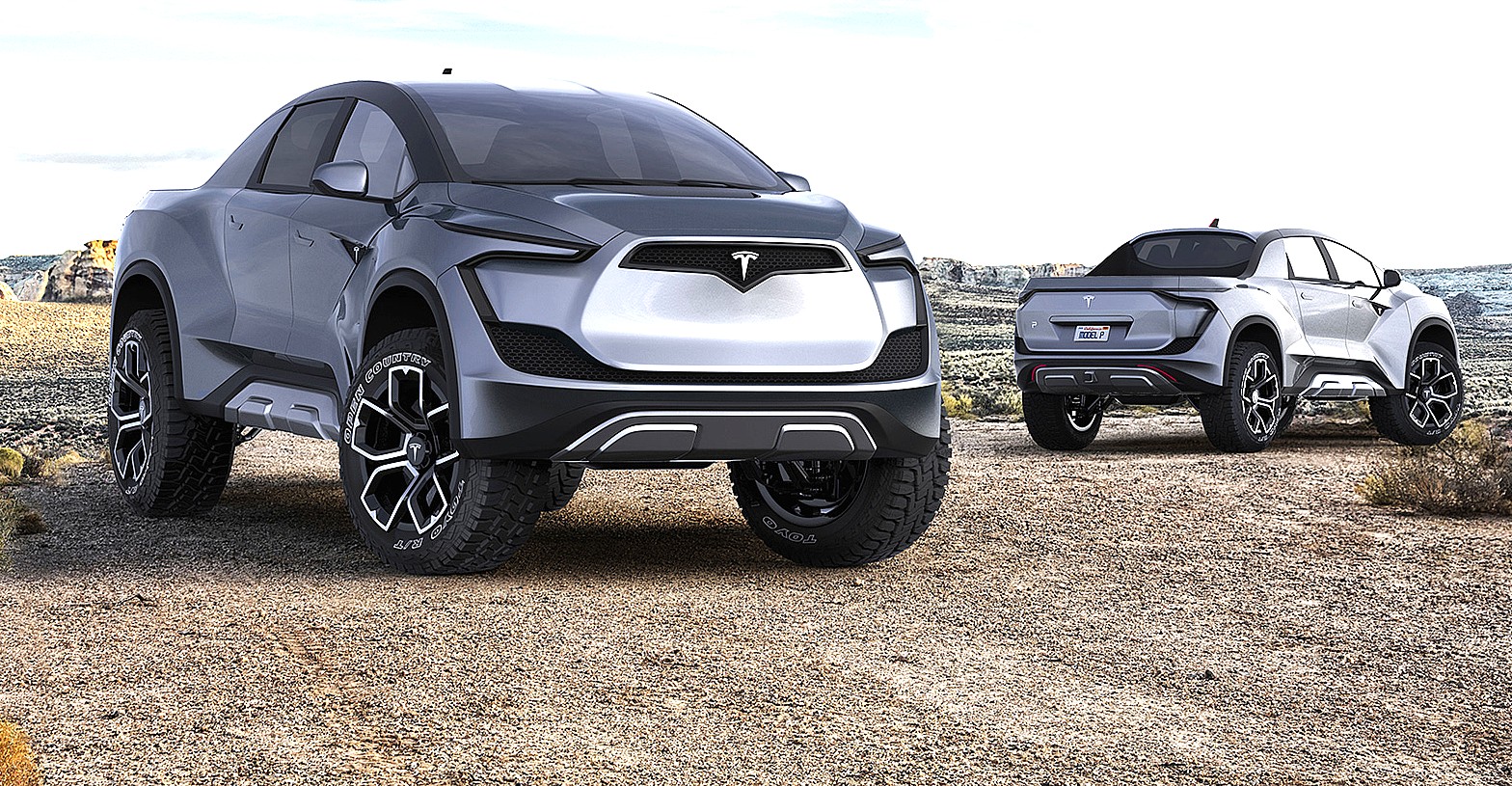
With over a million pre-orders currently, it does not seem as if Tesla will do this, at least not any time in the near future. However, Chief Designer Franz von Holzhausen, who confirmed the Cybertruck design was finalized, did state Tesla never really puts a “pencils down” approach to the subject.
While the whole idea behind the Cybertruck was to break the mold of traditional pickup designs, some may want to continue with Tesla’s expertise in EVs while having something slightly more “normal.” But, in my estimation, don’t hold your breath.
A Tesla Boat
In regards to Tesla’s “ecological paradise,” Musk told us in September that the company filed to expand Gigafactory Texas from the southern portion to make way for this project. Visitors would be able to float down the Colorado River to downtown Austin.
But instead of Tesla Kayaks, Musk said the company could develop “electric Tesla boats with a retro-futuristic Victorian design.”
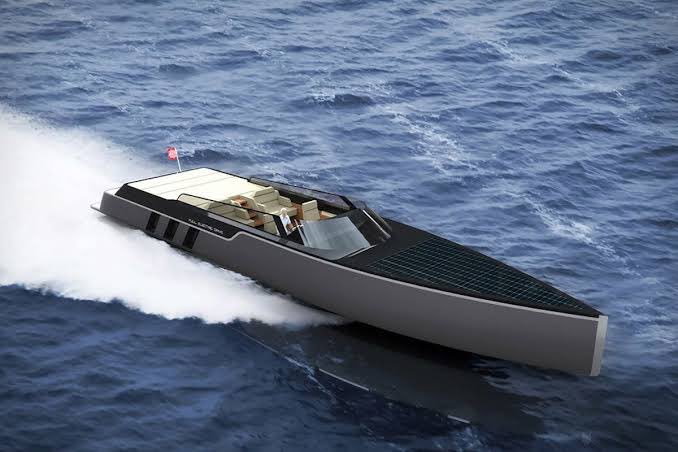
Musk has already hinted that the Cybertruck will likely be able to float and navigate through water, at least to an extent. However, it seems that a boat could be developed for at least the company’s internal projects, like the “ecological paradise” it plans to build outside of the Texas Gigafactory.
$25,000 Mass-Market Sedan
Heavily rumored as a Tesla project for several years, the $25,000 vehicle is the company’s key to mass affordability for many consumers.
When Chevrolet announced huge cuts on the Bolt EV and EUV last year, it became one of the most affordable EVs you can buy, and it was a car that was recognized as a major needle mover in terms of EV adoption simply because it showed consumers that you don’t have to spend upwards of $40,000 on an EV.
Credit: Alwinart/Twitter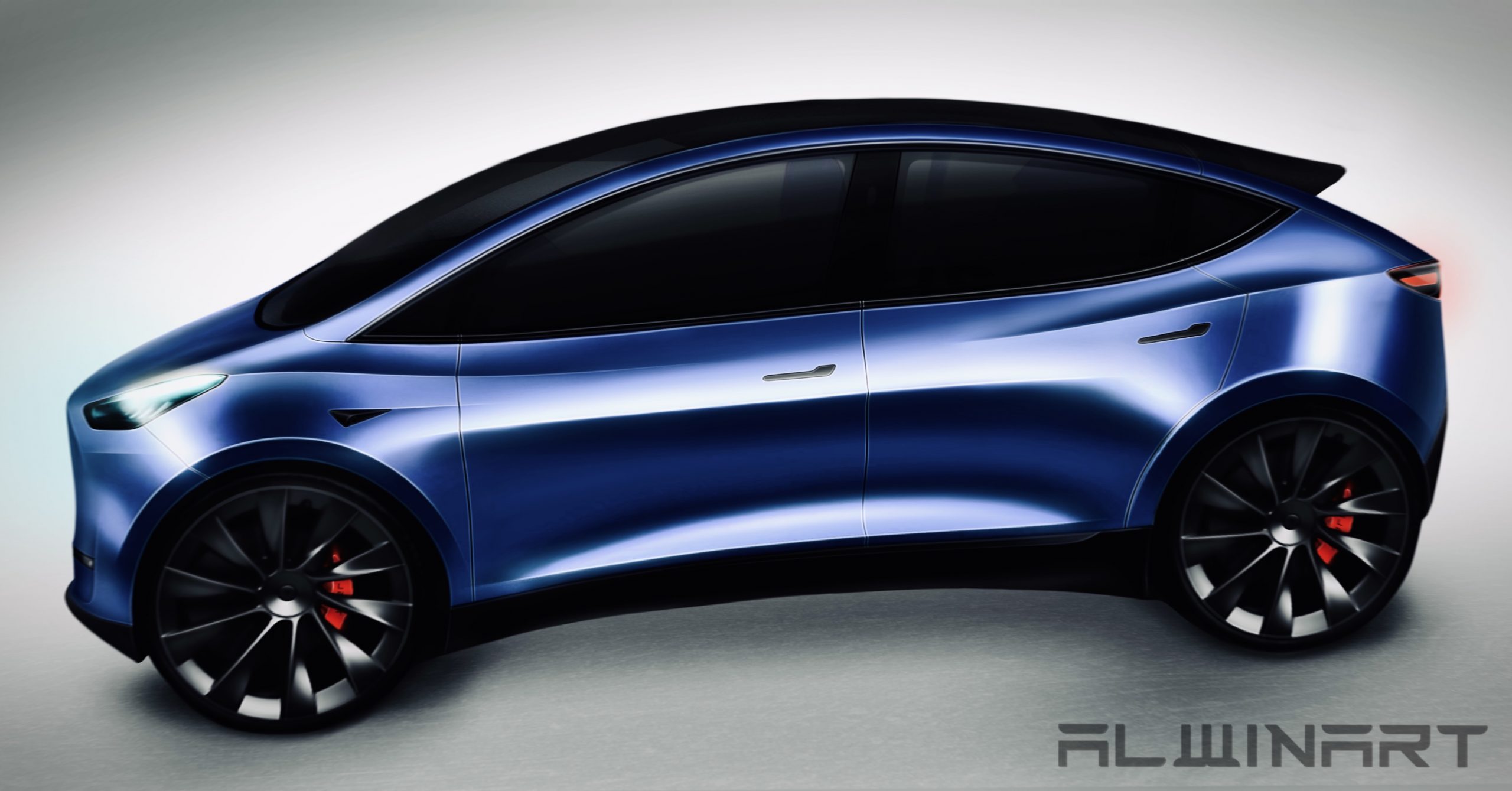
However, the vehicle is not a rumor, and it’s definitely something Tesla is looking toward developing soon. Musk said last year:
“Well, we’re not currently working on the — on a $25,000 car. We — you know, at some point, we will, but we have enough on our plate right now, too much on our plate, frankly. So, you know, at some point, there will be.”
The $25,000 Tesla will likely be a part of the company’s next-gen platform, which will be discussed during the Investor Day on March 1. Musk once again confirmed during the Q4 and Full Year 2022 Earnings Call that this will be on the agenda for the event.
What won’t happen: a Tesla Motorcycle
While Tesla did unveil a Tesla CyberATV at the Cybertruck event in 2019, Musk said Tesla will never develop an electric motorcycle.
“I had a road bike until I was 17 and was almost killed by a truck,” Musk said. “So we’re not going to do motorcycles.”
The Bottom Line
Of course, we already know Tesla is developing a new version of the Model 3 within Project Highland. While this could be more of an internal revamp than anything, just as the Model S and Model X refreshes were, there are undoubtedly plenty of things in the works.
I’d love to hear from you! If you have any comments, concerns, or questions, please email me at joey@teslarati.com. You can also reach me on Twitter @KlenderJoey, or if you have news tips, you can email us at tips@teslarati.com.


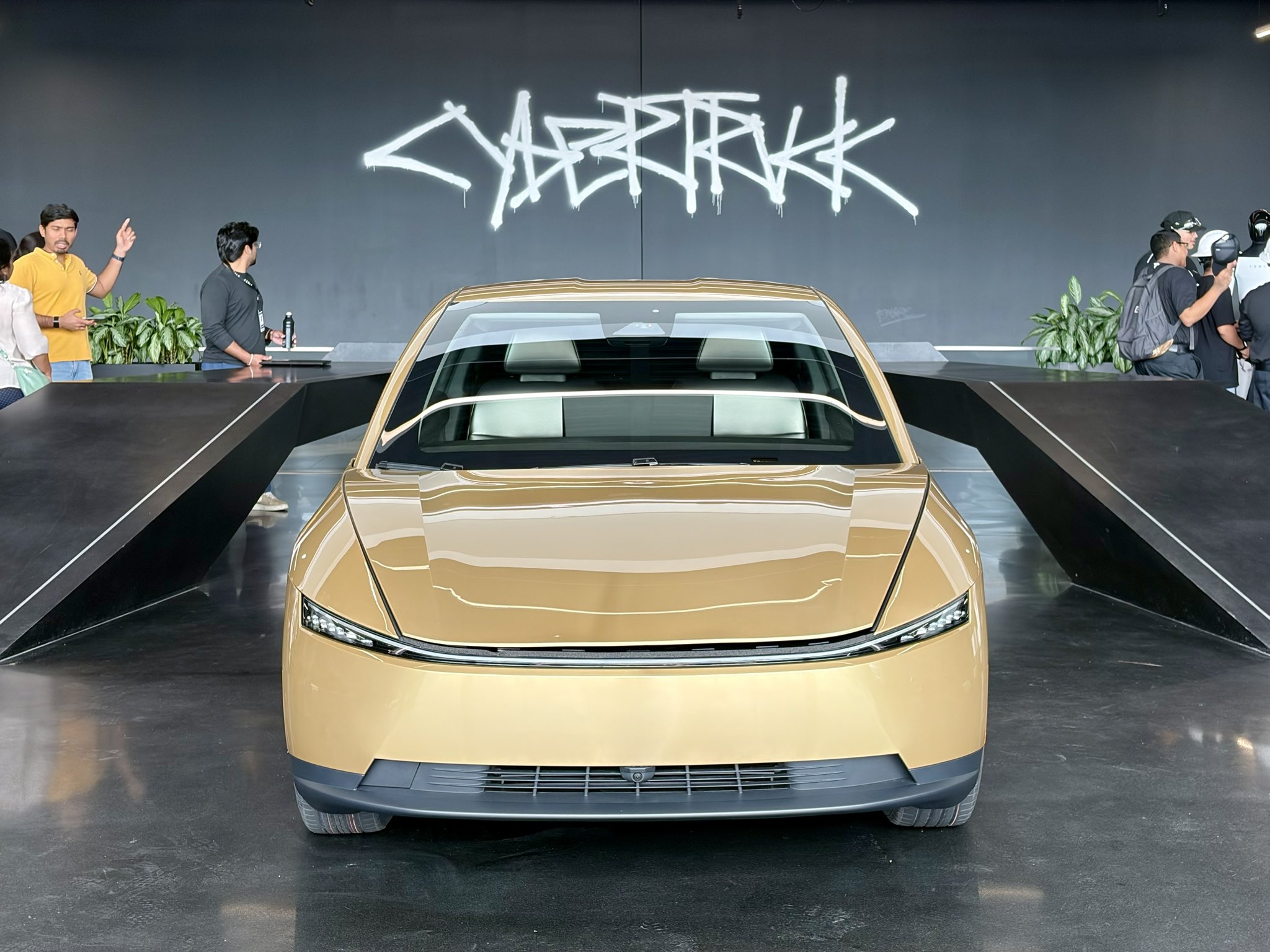
Tesla (NASDAQ: TSLA) reports its earnings for Q3 today. Here’s what to expect, as the company will reveal its balance sheet after the market closes on Wednesday.
Tesla already reported deliveries just after Q3 ended, and it demolished Wall Street consensus estimates of roughly 462,000 vehicles. Tesla delivered 486,532 cars in the third quarter, which was a big beat, but was down 2.1 percent from the same quarter last year. Energy storage deployments were 13.7 GWh, up year-over-year.
Tesla showrooms picked clean ahead of Q3 end as demand looks strong
For the quarter, analysts have already compiled their predictions for what Tesla will report this afternoon:
- Total Revenues: $28.34B
- Non-GAAP EPS: $0.43
- Operating Margin: 2.5%
- Operating Income: $721M
- Free Cash Flow: ~-$4.51B
Here are a few things we are looking forward to hearing about on the call:
Automotive Gross Margin and Overall Profitability
This was 16.3 percent in Q2, down from 19.2 percent in Q1, and was impacted by warranty charges and some fading regulatory credits. Consensus implies overall gross margin near 18 percent, but a miss here would potentially reinforce concerns about pricing pressure on its vehicles.
Pay attention to energy storage margins as well, especially since Tesla missed GWh expectations, although it was still a strong quarter.
Robotaxi/Cybercab, Unsupervised FSD, and Optimus Progress
The Say questions from retail investors usually focus on these types of projects, and this quarter is no different. Scaling the Cybercab fleet beyond Austin amid the open NHTSA safety review, timeline for Unsupervised FSD in customer cars, Robotaxi unit economics, and Optimus cost per unit plus when it could start generating revenue, are all things to be looking for.
Any concrete timelines or regulatory path details will likely move the stock more than the near-term numbers. SpaceX merger speculation, which was detailed during SpaceX’s earnings call last night, may also surface, although the key details were shared last night.
Elon Musk just confirmed the Tesla and SpaceX merger step everyone was waiting for
Say Investor Questions
- How does the Cybercab fleet scale past Austin, and what’s the regulatory path outside Texas given NHTSA’s open safety review?
- When can we anticipate FSD unsupervised in customer cars?
- When will the CyberCab be available for customer purchase/ownership?
- What’s the unit economics per paid robotaxi mile, and how does it compare to the thirty-cent target?
- Tesla has acknowledged that HW3 vehicles cannot support unsupervised FSD. When will owners know whether they can upgrade their hardware for free, and when will Tesla provide a clear plan?
The full Earnings Call will be streamed this evening after market close around 5 p.m. this evening.
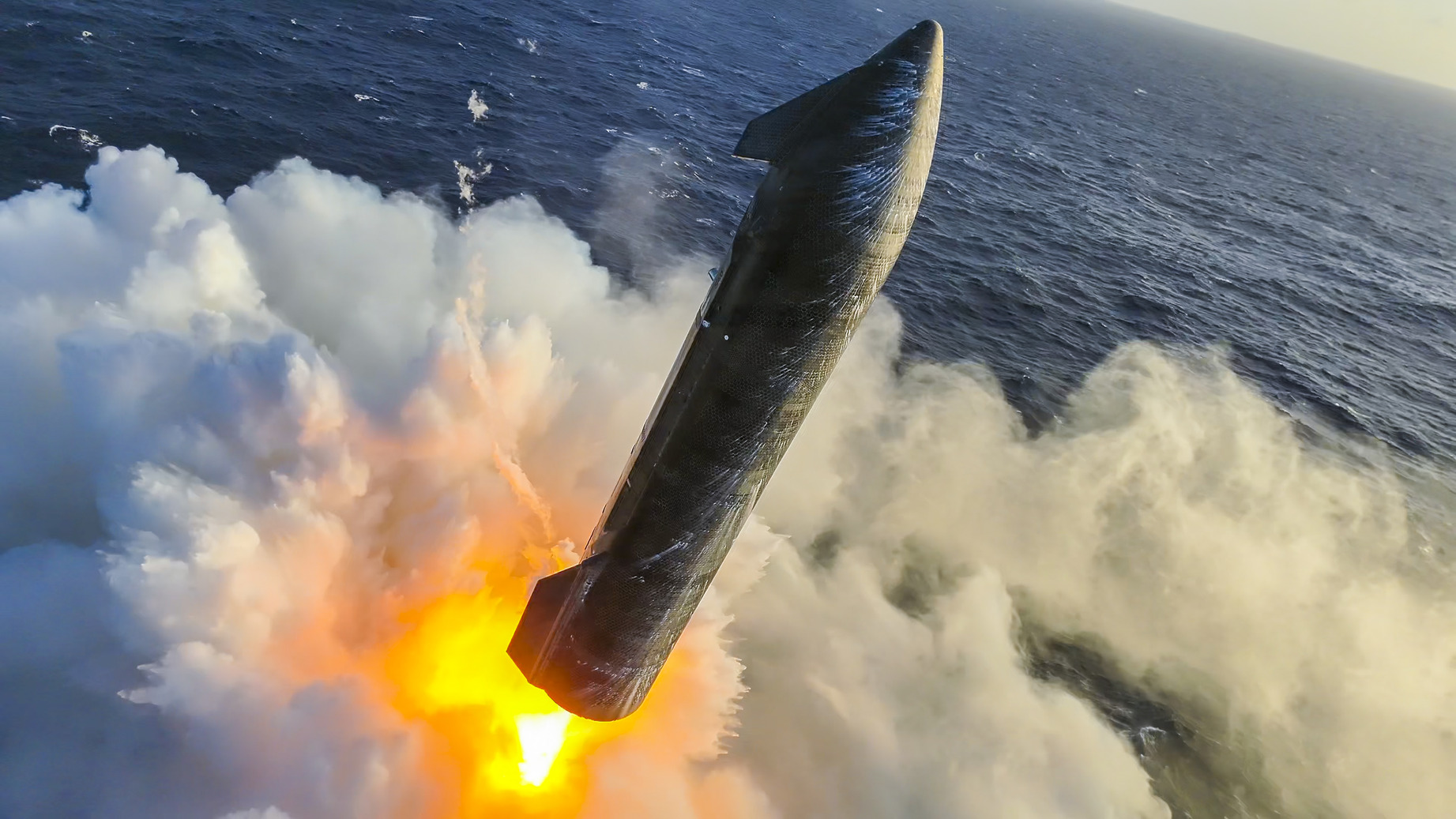
SpaceX confirmed the date of Starship’s 15th launch window with some massive ambitions for the mission, as it will attempt to catch Ship for the first time.
CEO Elon Musk confirmed during SpaceX’s Earnings Call last night on October 20 that it would launch Starship for its 15th test flight in November, and there are some incredible things the company wants to try, making it perhaps the most groundbreaking launch in the program’s history.
SpaceX delivers blockbuster Q3 results as Super Intelligence segment booms
The most major development of the call was SpaceX’s intention to catch Ship alongside catching the Super Heavy Booster, something that has happened in the past. SpaceX showed an animation of the Ship catch, which will be done on the launch tower’s chopsticks:
SpaceX has released a new Starship tower catch animation for the upcoming Flight 15! https://t.co/kStn01Da8u
— Truthful🛰️ (@Truthful_ast) October 20, 2026
This monumental goal is to catch both the Ship and Booster in a dual-catch scenario, an incredible feat since SpaceX has never been able to reuse a Ship after launch. Musk said it would be “the first time that an orbital launch vehicle has been fully recovered,” and said it would be a “profound technology milestone.”
Musk said the odds of success on this first Ship catch attempt are “more likely than not,” but SpaceX is ultimately prepared for more tries moving forward. The SpaceX frontman said that, starting next year, Starship would have a “steady stream” of flights through the end of the year.
The cadence will accelerate in 2027, with Musk stating the company plans to target weekly flights in the first half of 2027 and twice-weekly by year-end.
The Flight 15 attempt follows that of Flight 14, which took off in late September and was Starship’s first orbital mission. It deployed 26 Starlink V3 satellites, accomplished a controlled ocean splashdown of both stages, and shed more light on potential challenges for the program moving forward.
As of now, the Starship program is firing on all cylinders.
Interested in ordering a Tesla? Use my referral code for three free months of Full Self-Driving (Supervised) here.
Wall Street analysts rapidly raised price targets on SpaceX (NASDAQ: SPCX) after the company reported a bullish third quarter for 2026 following the market close on October 20. Shares were sent sharply higher in after-hours and premarket trading.
SpaceX posted revenue of $14.6 billion, a 161 percent year-over-year increase that comfortably topped consensus estimates, which fell near $12.7 billion. The company also posted a net profit of $4.4 billion from a prior-year loss, with adjusted EBITDA reaching $8.8 billion.
More price target movement:
🚀 Cantor Fitzgerald lifted its target to $345 from $246 (Overweight).
🚀 Barclays raised its target to $300 from $254 (Overweight).
🚀 Citi increased its target to $240 from $200 (Buy),
🚀 UBS moved to $230 from $210 (Buy)
🚀TD Cowen raised its target to $224 from $200 (Buy).
🚀Morgan Stanley held an Overweight rating with a $300 target.
🚀Other firms also adjusted higher, including Wells Fargo (to $274 from $214) and Clear Street (to $248 from $217). Analysts broadly cited the strong quarterly print, accelerating AI compute expansion, Starlink progress, and Starship milestones as drivers of higher long-term growth and earnings power.— TESLARATI (@Teslarati) October 21, 2026
Its Super Intelligence (AI) division generated roughly $7.6 billion and became the largest revenue contributor, growing nearly 830 percent year-over-year, while the Connectivity segment delivered $5.2 billion on strong subscriber additions that lifted the consumer base to 13.6 million for Starlink.
The Earnings Call proved especially catalytic, as CEO Elon Musk and CFO Bret Johnsen outlined Q1 2027 revenue guidance of $33 billion to $37 billion, which was far above the roughly $22 billion analysts had modeled, alongside fourth-quarter capital-expenditure plans of $35 billion to $40 billion focused on AI compute infrastructure at sites including Memphis and Southaven.
SpaceX delivers blockbuster Q3 results as Super Intelligence segment booms
Management targets 2.5 to 3 gigawatts of nameplate compute capacity by year-end and discussed pathways to 13 gigawatts or more by the end of 2027. Musk described relentless demand from hyperscalers and other customers, with compute pricing supporting payback periods of less than a year and potentially as short as six months.
Additional highlights included Starship’s recent orbital success and V3 satellite deployment, Starlink pricing and enterprise momentum, rapid Grok Bot adoption, spectrum expansion plans, and the formation of special committees to explore a possible combination with Tesla.
These elements prompted a wave of price-target increases:
- JPMorgan more than doubled its target to $500 from $240 while maintaining an Overweight rating.
- Cantor Fitzgerald lifted its target to $345 from $246 (Overweight).
- Barclays raised its target to $300 from $254 (Overweight).
- Citi increased its target to $240 from $200 (Buy),
- UBS moved to $230 from $210 (Buy), and
- TD Cowen raised its target to $224 from $200 (Buy).
- Morgan Stanley held an Overweight rating with a $300 target.
- Other firms also adjusted higher, including Wells Fargo (to $274 from $214) and Clear Street (to $248 from $217). Analysts broadly cited the strong quarterly print, accelerating AI compute expansion, Starlink progress, and Starship milestones as drivers of higher long-term growth and earnings power.
Shares, which closed at $147.79 on October 20, jumped roughly 8 percent in early premarket trading on October 21 as investors digested the results and the newly elevated Street targets.
The average analyst price target has moved higher, which reflects greater conviction in SpaceX’s trajectory across launch, connectivity, and the Super Intelligence business, even as elevated spending remains a point of focus.

Tesla reports Q3 Earnings today: here’s what to expect

SpaceX confirms Starship 15 launch window with massive ambitions


