News
Stellantis announces RAM 1500 REV and its forthcoming reveal

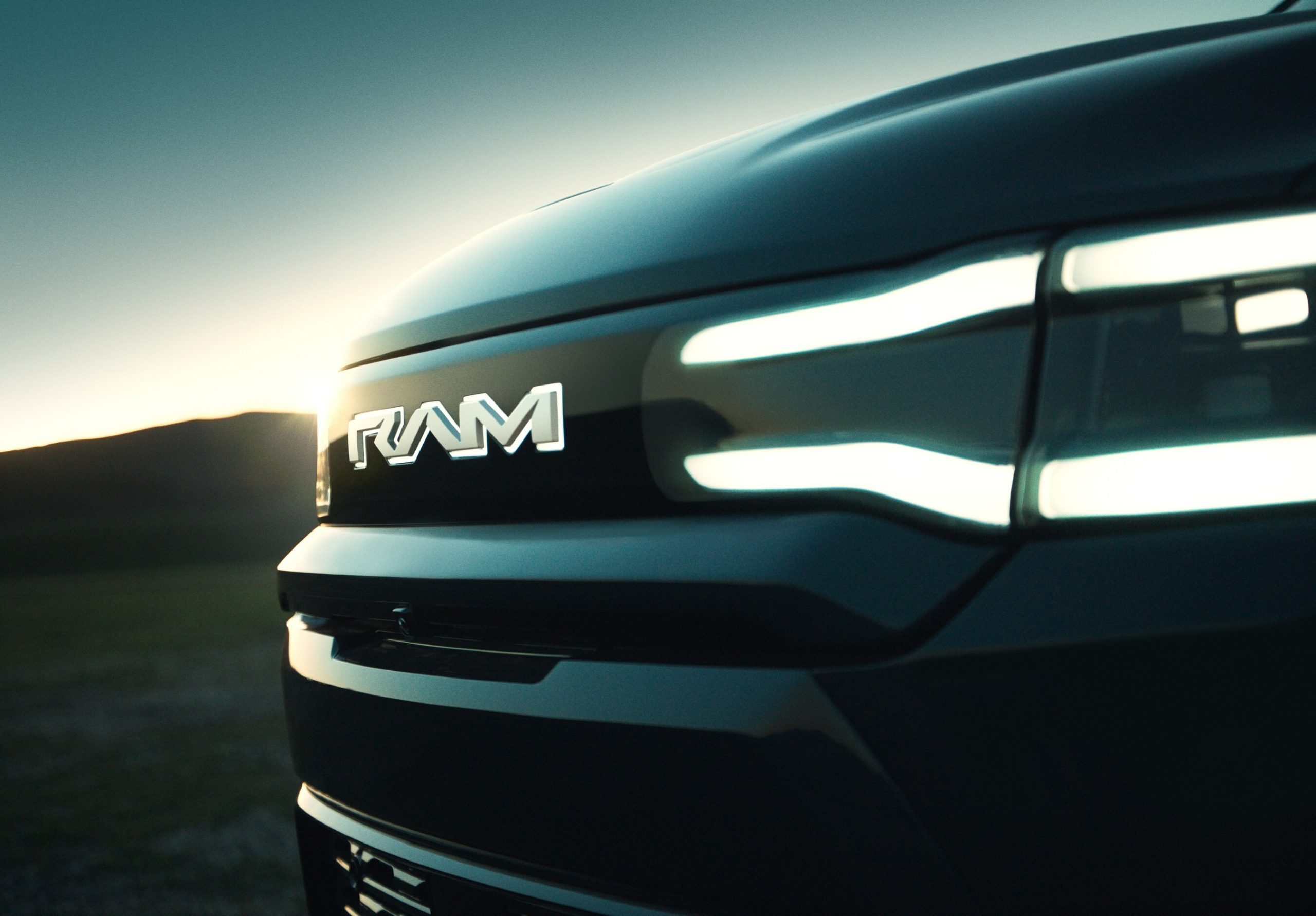
Stellantis has revealed the naming of its upcoming electric pickup truck, the RAM 1500 REV.
As one of the big three original American automakers, and one who dominates within the pickup truck category, it was only a matter of time before Stellantis hopped onto the electric truck bandwagon. Ford and Rivian have more than proved that a market exists for the vehicle, and with General Motors on the cusp of introducing its first electric truck, RAM couldn’t be far behind. That was the thought process behind the RAM Revolution concept that was revealed just a month ago; now, the brand has announced its production version.
The RAM 1500 REV will be the production version of the Revolution concept that so many were drooling over at the beginning of this year. While very little is known about this upcoming truck, RAM has specified that more information will be made available as soon as next week, with a full reveal scheduled for sometime in the coming months.
“At Ram, we started a revolution last year as we invited consumers along on the beginning of our electrification journey, gathering their feedback on exactly what they are looking for in an electric pickup truck,” said Mike Koval Jr., Ram brand CEO – Stellantis. “We look forward to delivering our first EV pickup – the all-new Ram 1500 REV – to those consumers next year. We are confident [it] will push past the competition, offering what will be the leading combination of attributes customers care about the most: range, payload, towing, and charge time.”
Very little is known about the upcoming electric truck offering, but Mr. Koval’s statement on the truck is telling. With a focus on “range, payload, towing, and charge time,” RAM has set a high bar.
Current competitors from Ford and Rivian offer somewhere in the neighborhood of 300 miles or range, just over 2,000 pounds of payload, around 10,000 pounds of towing, and Ford, who is the clear charging winner, states that the F150 Lightning will charge from 10-80% in 40 minutes.
If the 1500 REV were to best any of these challenges, particularly in the range while towing category, it could be set to disrupt a market dominated thus far by Ford’s mass-market truck. However, if RAM can pull off each of these goals while offering the truck a competitive price, it won’t just be a disruptor; it’ll be a world-beater.
What do you think of the article? Do you have any comments, questions, or concerns? Shoot me an email at william@teslarati.com. You can also reach me on Twitter @WilliamWritin. If you have news tips, email us at tips@teslarati.com!


Elon Musk
Tesla made napping in a Robotaxi easier with its latest update
Tesla’s quiet mode reaches Model Y Robotaxis, blacking out the screen for riders wanting rest.

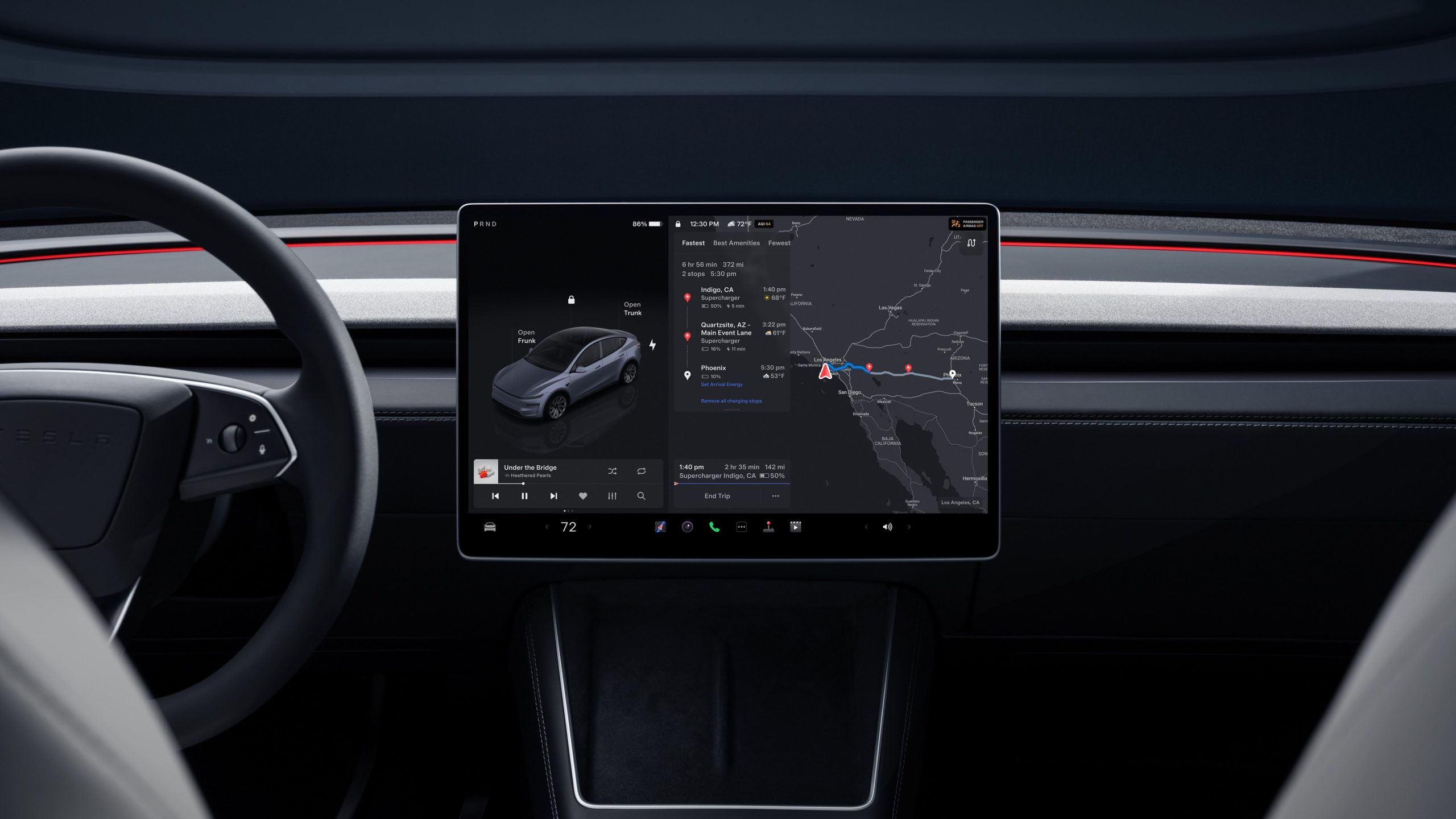
Tesla’s quiet mode, the setting that blacks out the screen for riders who want to rest, has moved beyond the Cybercab. A video posted Thursday by Spencer (@scotsrule08) shows the feature running in a Model Y Robotaxi on a night ride that appears to be in Dallas.
New quiet mode now on @Robotaxi https://t.co/2cM2eM9NeN — Spencer (@scotsrule08) October 29, 2026
The rider taps a small crescent moon icon in the bottom right corner of the map screen. The map, media player, app shortcuts and Grok prompt disappear, leaving a dark display with “Arriving soon,” the destination and a line reading “Tap display to exit quiet mode.” Controls a passenger may still need, including Pull Over, cabin temperature, volume and Support, stay visible. One tap anywhere brings the full map back.
Quiet mode first showed up in the Cybercab last week, which Teslarati reported alongside a new rear camera view. Tesla has been trimming cabin noise in other ways too. On October 25, Spencer reported that Robotaxi turn signals now chime for the first four blinks and then go silent. Tesla has not published release notes for either change.
Elon Musk has been pitching this use for more than a decade. In October 2014, he said that “maybe five or six years from now I think we’ll be able to achieve true autonomous driving where you could literally get in the car, go to sleep and wake up at your destination,”
By 2017 he was setting a higher bar. Speaking at TED, Musk said the hard part was not making self-driving work 99.9 percent of the time, “because, like, if a car crashes one in a thousand times, then you’re probably still not going to be comfortable falling asleep. You shouldn’t be, certainly.”
Owners asked for something similar in their own cars. In December 2019, a Tesla owner requested a Nap Mode that would keep the climate running and wake the occupant with an alarm, and Musk answered “Ok,” as Teslarati covered at the time.
The line returned when the Cybercab was unveiled at the We, Robot event in October 2024. “We’ll move from supervised Full Self-Driving to unsupervised Full Self-Driving, where you can fall asleep and wake up at your destination,” Musk said. On Tesla’s first quarter earnings call in April 2025, he called it the deciding measure: “The acid test is, can you go to sleep in your car and wake up in your destination and I’m confident that will be available in many cities in the US by the end of this year,”
Tesla has run driverless Model Y rides in Dallas and Houston since April, so a passenger dozing off on the way home is now a realistic use of the button. Tesla is also offering new riders a free first trip in both cities, according to an in-app screen shared by tracker Ethan McKanna, and said on its third quarter call that Cybercab rides would launch in Dallas next month.
News
FCC green lights SpaceX’s move to a showdown with Verizon and AT&T
The FCC advanced plans opening 482 MHz to satellite phone service, boosting SpaceX’s Starlink Mobile.
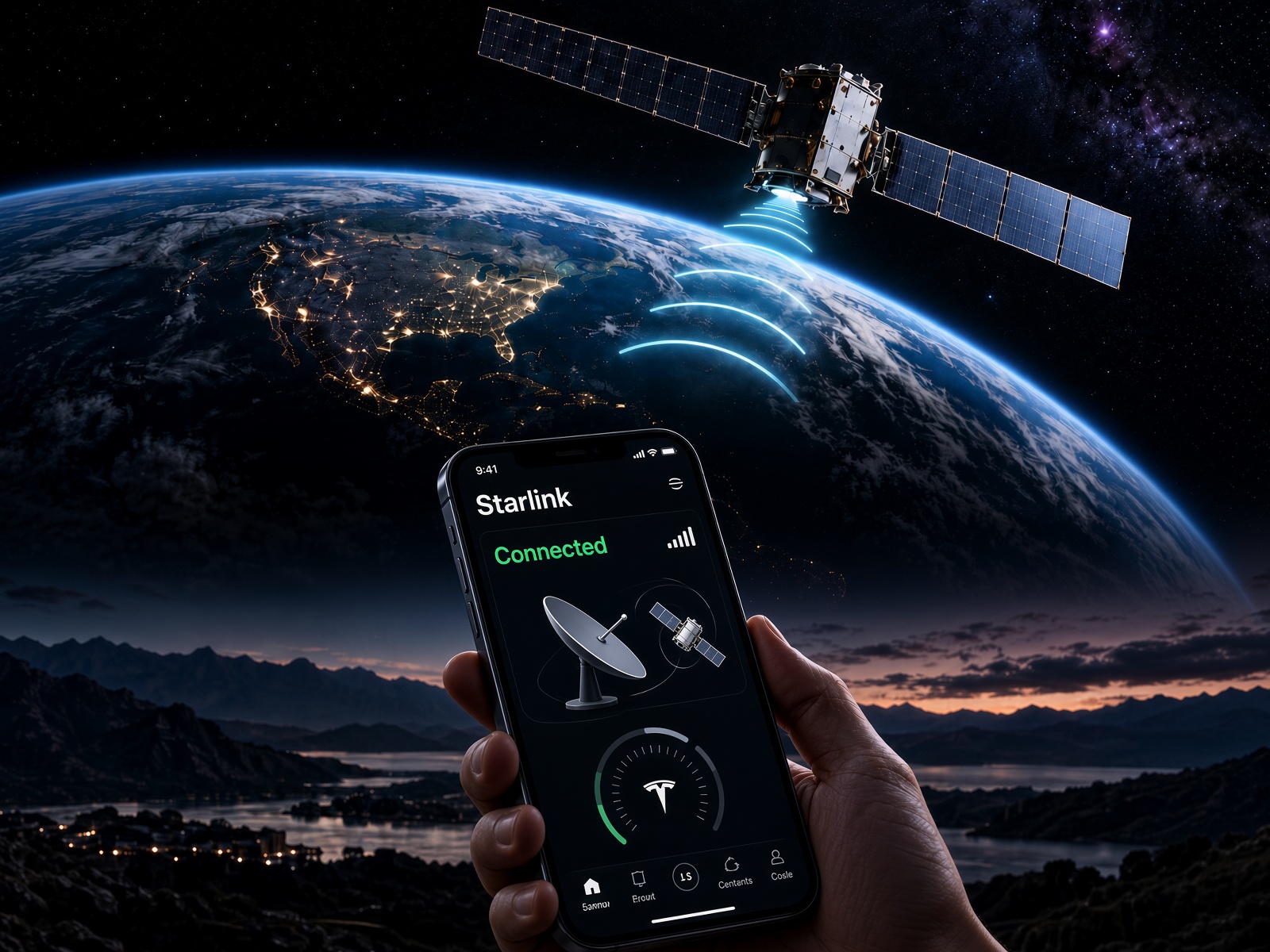
The Federal Communications Commission voted Thursday to move forward with a proposal that would open an additional 482 MHz of spectrum to satellite service beamed directly to ordinary phones, a step that could widen the road for SpaceX’s Starlink Mobile to compete with the country’s largest wireless carriers.
The commission adopted the notice of proposed rulemaking at its October open meeting in Washington, Reuters reported. The proposal would raise the number of bands eligible for Supplemental Coverage from Space from five to 13, according to the FCC fact sheet. Commissioners also advanced a companion item proposing an auction of 25 MHz in the 1675 to 1695 MHz and 2020 to 2025 MHz bands, which could be used for terrestrial service, direct to device service or both.
Thursday’s vote does not hand any spectrum to SpaceX. It opens a public comment period, and final rules will come later. Under the draft, comments would be due 60 days after the notice is published in the Federal Register. The FCC had not released the adopted text at the time of writing, so it is not yet clear whether any bands were changed before the vote.
That question is where the fight now moves. AT&T, Verizon and T-Mobile, through industry group CTIA, asked the FCC to drop the 2.5 GHz and 3.45 GHz bands, which make up 290 MHz of the 482 MHz on the table, as Teslarati reported ahead of the vote. T-Mobile argued satellite interference could wipe out up to 96% of a cell site’s uplink coverage area. SpaceX asked the commission to go the other way and add the 902 to 928 MHz band.
The rule change that matters most to SpaceX may be a structural one. Today, a satellite operator must lease spectrum from every carrier holding co-channel licenses across an entire region such as the contiguous United States. The proposal would replace that with a certification that the operator has coexistence agreements covering only the areas it plans to serve, or that it holds the terrestrial licenses itself.
SpaceX has spent this year building that second path. It bought EchoStar’s AWS-4 and H-block licenses in a deal worth roughly $17 billion, and earlier this month agreed to acquire Grain Management’s nationwide 800 MHz portfolio, which the company said would pave the way for Starlink to become a major US mobile carrier. The FCC approved SpaceX’s purchase of three unused AWS-3 licenses from Tristar on October 21, and cleared its plan for 15,000 next generation direct to cell satellites on October 6.
The regulator has not always sided with SpaceX. In April, the FCC dismissed a SpaceX petition seeking access to Mobile Satellite Service spectrum held by incumbents, and it rejected 2.5 GHz for satellite coverage when it first adopted the framework in 2024.
The carriers are also building their own defenses. In May, the three companies agreed in principle to form a joint venture pooling spectrum for satellite service, and T-Mobile remains SpaceX’s US launch partner for Starlink Mobile even as it leads the push to keep satellites out of 2.5 GHz. SpaceX President Gwynne Shotwell has said service on SpaceX’s own airwaves is targeted for early 2028.
Elon Musk
Tesla’s Roadster appearance at SpaceX has merger watchers talking
Tesla’s next generation Roadster was spotted at SpaceX’s Hawthorne headquarters, two weeks after its unveiling.
Tesla’s next generation Roadster turned up at SpaceX’s headquarters in Hawthorne, California on Wednesday, less than two weeks after the car flew off a ramp at its unveiling in Texas.
Photos shared on X by SpaceX Engineer (@DeannaRiceSPCX) show the new Roadster parked outdoors beside the famed Falcon 9 that stands outside company headquarters at the corner of Crenshaw Boulevard and Jack Northrop Avenue. Rocket B1019 was the first orbital-class booster ever to land after a launch on December 21, 2015 after it sent 11 Orbcomm satellites to orbit and then flew back to Landing Zone 1 at Cape Canaveral, which would be the first landing in what became SpaceX’s reusable rocket program. SpaceX chose not to fly it again. After a test fire in Florida, the booster was shipped to Hawthorne and raised upright as a permanent monument in August 2016, as Teslarati reported at the time. Putting the Roadster, which flies on SpaceX cold gas thrusters, next to the rocket that started SpaceX’s landings is symbolic in itself.
Small car, big rocket ambitions 🚀🚗 #roadster #falcon9 #spacex #tesla https://t.co/H32xUSXoCl
— Deanna Rice (@DeannaRiceSPCX) October 29, 2026
The Thrust and Rocket versions of the Roadster use cold gas thrusters fed by composite overwrapped pressure vessels, the same type of tank SpaceX flies on Falcon 9, and Elon Musk described the car as the work of Tesla and SpaceX engineers working together. Tesla lists 0 to 60 mph in under 0.9 seconds for Thrust and under 0.59 seconds for Rocket, while the base Performance model relies on a fan and ground sealing system for grip, as Teslarati detailed in its breakdown of the three Roadster configurations.
Tesla has kept the car in the spotlight since the October 15 event near Waco. Last week, the company posted a video of the Roadster’s fighter jet inspired cockpit, including a Track Mode screen with a “Thruster · 5,500 PSI” readout, which we covered in our look at the Roadster’s center display. Musk also said owners will be able to ask the car to perform the stunts autonomously, and promised a looping track at Tesla’s Texas headquarters.
The visit comes as special committees at Tesla and SpaceX weigh a possible merger, a step Musk confirmed on SpaceX’s third quarter earnings call. The Roadster, built on SpaceX hardware, has become one of the clearest examples of the two companies already building products together.
Musk said at the unveiling that Roadster production will begin in 2028. Reservations are open with a $50,000 payment, Thrust is listed as a limited release and Rocket is invite only. Tesla says the car is not approved for public road use.

Tesla made napping in a Robotaxi easier with its latest update

FCC green lights SpaceX’s move to a showdown with Verizon and AT&T


