News
Tesla quietly secures new facility, but its purpose remains unclear

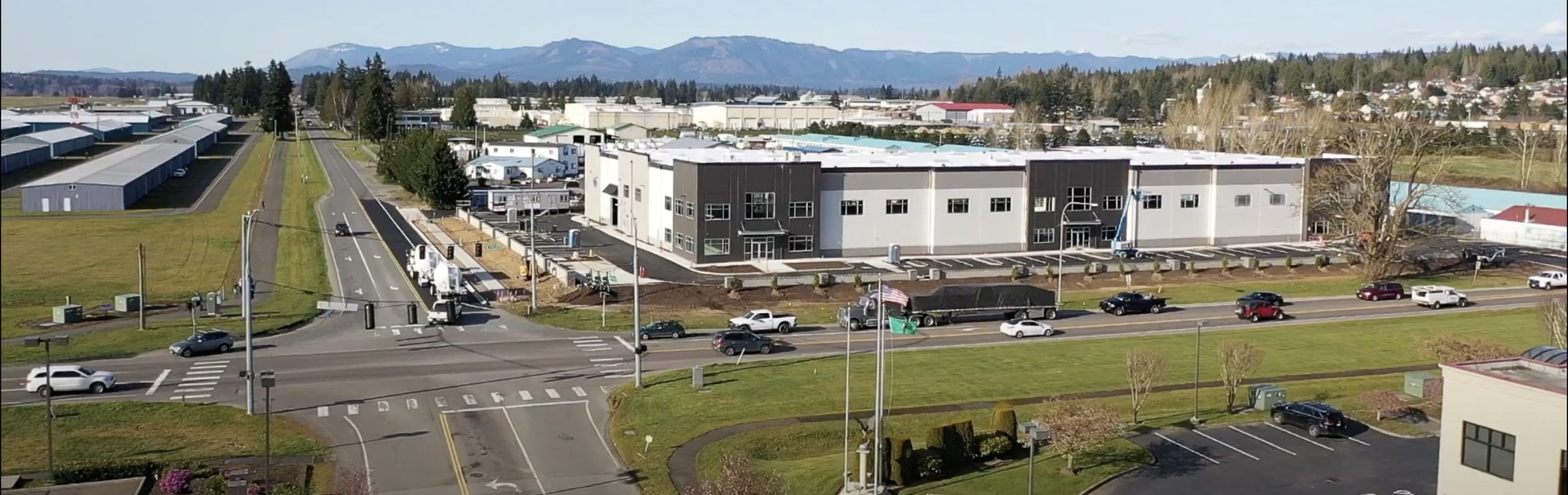
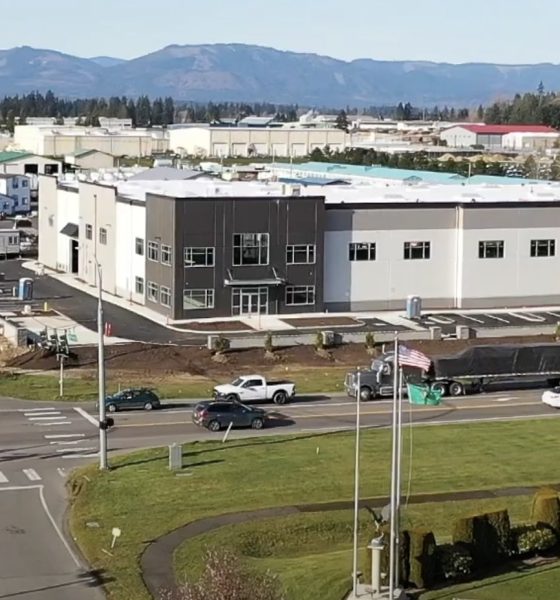
Tesla has acquired a new warehouse location in Marysville, Washington, but has yet to announce what the new facility will be used for.
Since its founding, Tesla has been on a mad dash to ramp production. The automaker started with its Fremont, California facility but now assembles vehicles across three countries, with countless others in the works. Now, Tesla has acquired a new property in the United States, further expanding its footprint in its home market.
The new Tesla facility was initially reported by the Puget Sound Business Journal, which identified the freshly constructed warehouse as Tesla’s after an announcement from the construction company and property owner. According to its reporting, the 245,000-square-foot facility will be used for part assembly, though Tesla has yet to verify these claims. The newly leased facility is the first of many to be part of a massive new 5.1 million square foot manufacturing center home to numerous manufacturers on the West Coast of Washington State.
The idea of a small component supplying facility becoming part of Tesla’s production fleet in the United States certainly fits its MO, especially as it looks to expand battery manufacturing in North America to maintain its EV incentives.
Other hypotheses have already emerged regarding what the new facility could be used for, but they range in probability and practicality. Some have estimated the new warehouse could be used as a component or completed vehicle storage area. However, being so far from the nearest Tesla production facility, that seems impractical. Others have wondered if the new facility could work in conjunction with an upcoming Canadian gigafactory, but considering Tesla’s focus on Quebec and Ontario on the other side of the continent, that seems equally unlikely.
This new warehouse location enters an increasingly extensive portfolio of Tesla properties in the United States that have yet to be retrofitted for their intended purpose. Other locations include a roughly 600,000-square-foot facility just outside St. Louis and a 400,000-square-foot facility in Houston.
What do you think of the article? Do you have any comments, questions, or concerns? Shoot me an email at william@teslarati.com. You can also reach me on Twitter @WilliamWritin. If you have news tips, email us at tips@teslarati.com!


Elon Musk
Elon Musk says he knows how to save Earth for a billion years
Elon Musk says sentient AI satellites launched from the Moon could keep Earth livable forever.

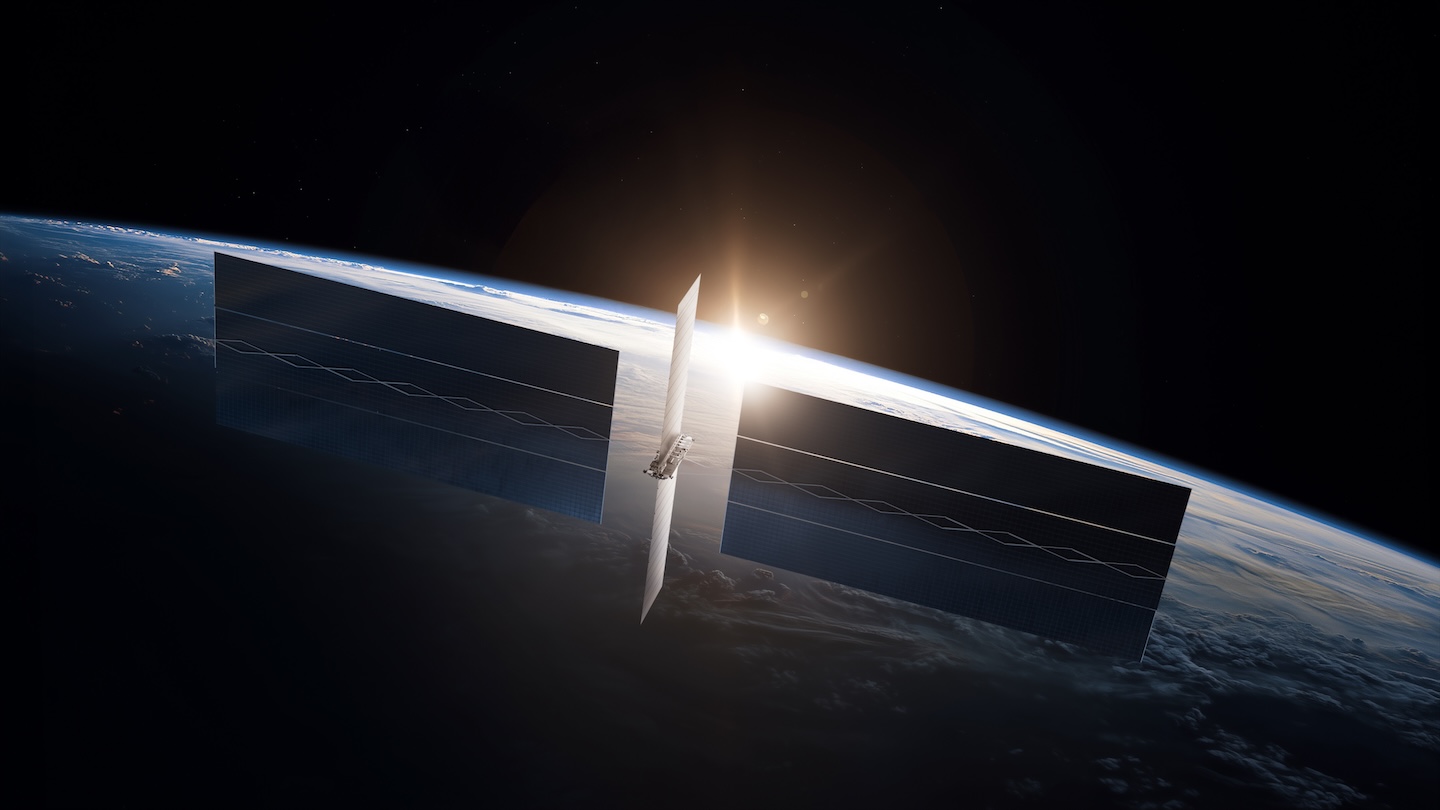
Elon Musk spent part of his weekend describing a plan to keep the planet livable for roughly a billion years, and it starts with satellites that can think for themselves.
In a post on X, Musk argued that swapping fossil fuels for solar and wind power will not be enough to protect humanity from what he called extremely severe extinction events, the kind that occur roughly every 100 million years. His fix is what he called sentient satellites, or solar-powered satellites, controlled by AI, that would sit in a fixed spot between Earth and the Sun after being launched off the Moon using a giant electromagnetic catapult instead of rockets.
The satellites’ onboard AI would make continuous, small adjustments rather than waiting on human instructions. The mass driver is Musk’s proposed way of getting the raw material there cheaply by using an electromagnetic launch track built on the Moon, where lower gravity and no atmosphere make it far easier to fling cargo into space than it is from Earth.
But we do need to act much faster than that if people still want to live where the beach is today. We have about 50 years or so to take action, which should be more than enough time for the space satellites to solve any heating problems. https://t.co/xhrVQALwQw
— Elon Musk (@elonmusk) August 30, 2026
Musk shared a Grok generated estimate suggesting roughly 5 percent of Florida’s land, or about 1.68 million acres, could face regular flooding by 2070 under a high sea level rise scenario, and said humanity has about 50 years to act before coastal living looks very different than it does today.
This is not the first time Musk has floated the idea. He raised a similar concept in November, describing a solar powered AI satellite constellation that could make tiny adjustments to incoming sunlight to fine tune Earth’s temperature. Musk has also tied planetary risk to his broader vision at SpaceX, where his compensation package is explicitly linked to establishing a self-sustaining Mars colony, one he has described as an insurance policy against the kind of extinction event he referenced this weekend, and where he has said humans could set foot within five to seven years.
Elon Musk
OpenAI cites distrust of SpaceX in decision to drop Cursor partnership
OpenAI will cut SpaceX-owned Cursor’s model access in November, citing Musk’s history of broken contracts.
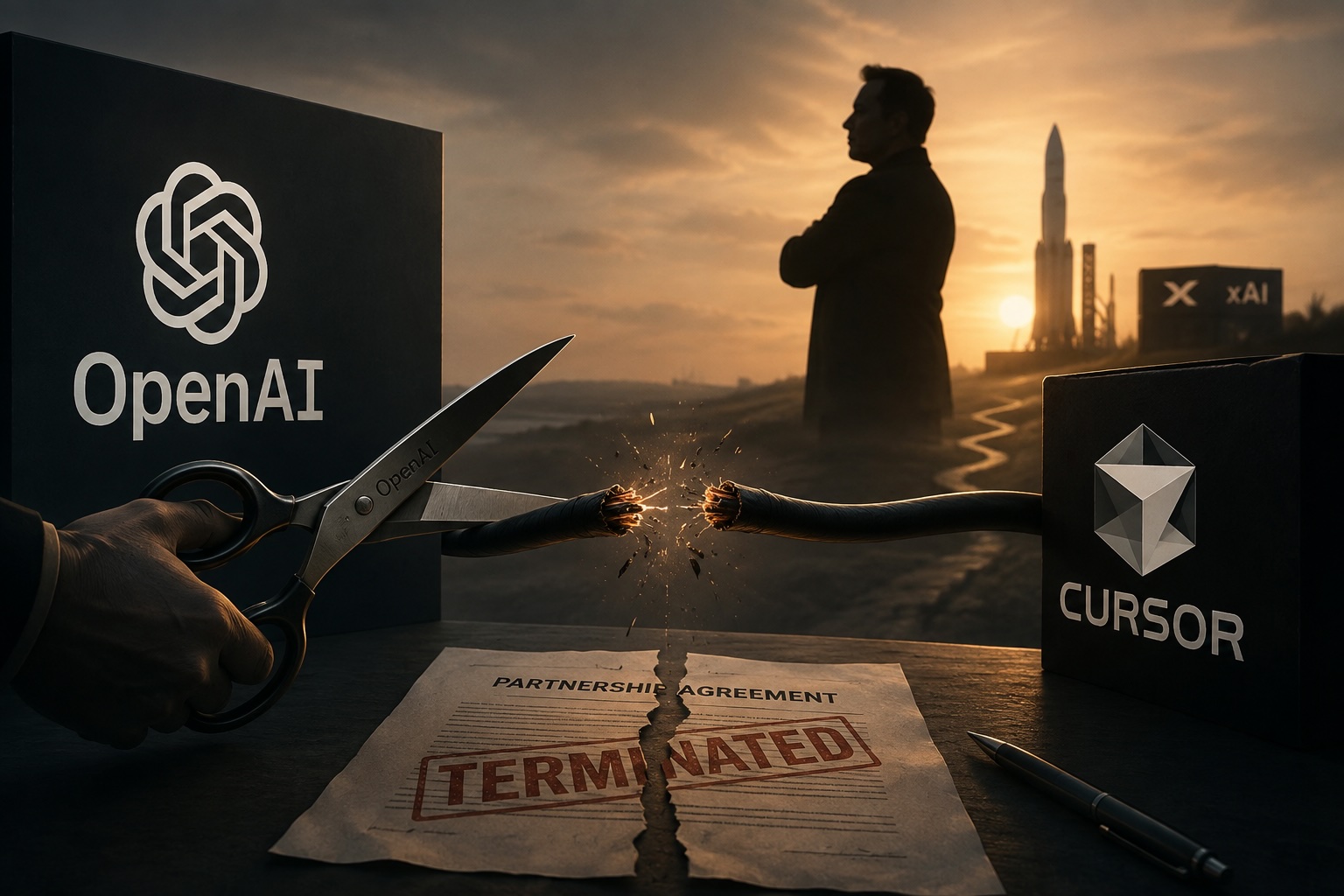
OpenAI, the company behind ChatGPT, announced late Friday that it is ending its partnership with Cursor, cutting off the coding tool’s access to its models on November 12. The move comes two weeks after SpaceX completed its $60 billion acquisition of Cursor’s parent company, Anysphere, folding the popular AI coding assistant into Elon Musk’s growing SpaceXAI division.
In a post on its website, OpenAI said the decision came down to trust, not technology. “We cannot be confident that SpaceX will use our technology within our terms of service, based on our experience with Elon Musk’s companies violating contracts,” the company wrote. OpenAI pointed to two specific incidents: X, now part of SpaceX, allegedly breaking the terms of an existing OpenAI contract after Musk bought Twitter.
That lawsuit is the backdrop for all of this. Musk cofounded OpenAI in 2015, left the board in 2018, and sued Sam Altman and Greg Brockman in 2024, arguing they abandoned the company’s nonprofit mission for profit. A federal jury sided with OpenAI in May, finding Musk waited too long to sue rather than ruling on the merits of his claims. Musk said at the time he would appeal to the Ninth Circuit, calling the outcome a “calendar technicality” rather than a real judgment.
SpaceX’s interest in Cursor predates that verdict by weeks. The company first struck a deal with Cursor in April, securing an option to acquire it for $60 billion or pay $10 billion for joint development work instead. As Teslarati reported at the time, the logic was straightforward: Cursor was paying retail prices to Anthropic and OpenAI, two of its most direct competitors, every time a developer used its product, while SpaceX had idle capacity on its Colossus supercomputer, roughly the equivalent of a million Nvidia H100 GPUs, that Cursor could use to train its own models instead. SpaceX exercised the option in June, days after its own IPO, and the deal closed in mid-August.
Once it closed, Musk moved fast. On an all-hands call with more than 1,000 Cursor employees, he reportedly told staff that SpaceXAI’s Grok was playing catchup in the AI race, unlike Tesla and SpaceX in their own markets, and singled out Anthropic as the company to catch. Cursor CEO Michael Truell now reports directly to Musk inside SpaceXAI.
Losing OpenAI’s models leaves Cursor leaning harder on Anthropic’s Claude, which has its own compute agreement with SpaceX, and on Cursor’s in-house Composer model, the one SpaceX’s compute was supposed to accelerate in the first place. OpenAI framed the November deadline as maximum notice under its contract, and said it wants to “go above and beyond” to help developers through the transition. Whether Anthropic makes the same call is now the open question in AI coding.

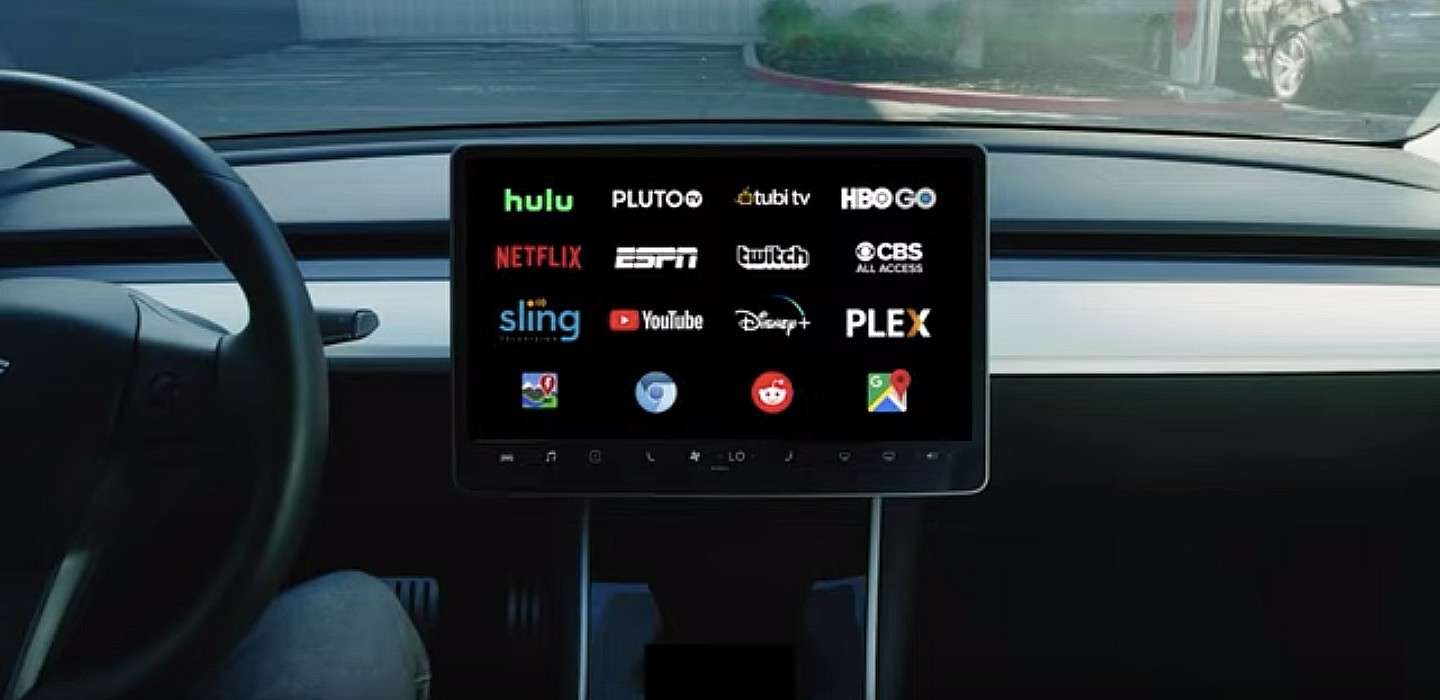
The in-car Tesla Theater is among the most unique features available within the cars. When charging, parked, camping, or just hanging out, vehicle occupants can access a variety of streaming platforms on the large center screen, helping keep them entertained during downtime.
However, the Theater might be getting plenty more streaming platforms, something that owners have requested for some time.
Tesla owners recently discovered that visiting Apple TV in the vehicle browser can launch a fullscreen interface that looks and behaves like a dedicated application rather than an ordinary webpage:
Today I learned that if you go to Apple TV in the Tesla browser, it will open up an actual Apple TV app, fully functional. Not just the site.
Apparently there are more apps than just the few that show on the apps page. pic.twitter.com/os1Ypfm4JR
— Jason W (@jmwilt21) August 20, 2026
The experience drops the usual address bar and browser chrome, presenting catalogs, continue watching rows, and playback controls in the same window Tesla Theater already uses for its listed services. Independent testers soon found similar treatment for HBO Max, Paramount+, Peacock, Disney+, and Prime Video when those sites are opened from the car browser.
This shift is a plausible early signal that Tesla is widening Theater support without a formal software note. Theater has long been a set of web views rather than native applications, so recognizing extra domains and stripping the browser frame is a small server-side change that can expand the catalog quickly.
Owners still lack permanent Theater icons for the newly recognized services, and video remains limited to Park, yet the smoother launch is a meaningful step toward a broader lounge while charging.
Tesla Theater arrived with software version 10 in September 2019. The first video services were Netflix, YouTube, and Hulu, available only while parked and originally tied to WiFi. Spotify arrived in the same era as music rather than Theater video. Disney+ joined officially in July 2021 with the 2021.24 update, giving owners another major catalog on the center screen. Twitch and TikTok later appeared among the default Theater tiles, and Tesla Tutorials remained a persistent educational tile.
Not every addition stayed put. In December 2023, a Holiday software build removed the Disney+ tile for many United States owners after a public dispute involving advertising on X. Hulu stayed visible even though Disney owned it. Visiting disneyplus.com in the browser often restored the tile, which suggested the removal was a recognition list change rather than a complete block. Owners have also reported occasional blank Theater grids after updates, usually fixed by language toggles, resets, or later firmware.
Tesla axes Disney+ from vehicles with Musk-Iger rivalry, but there’s a workaround
Code archives from 2024 listed many unused source names, including Apple TV and Prime Video, that never became official icons, which now looks like groundwork for the current fullscreen browser behavior.
Now that this hint toward an expanded Theater experience has been recognized, Tesla could follow through with these additional shortcuts as a sign that more streaming platforms are available in Teslas than ever before.

Elon Musk says he knows how to save Earth for a billion years

OpenAI cites distrust of SpaceX in decision to drop Cursor partnership


