News
Cruise in hot seat amid Fire Department’s claims that robotaxis delayed responders in fatal incident

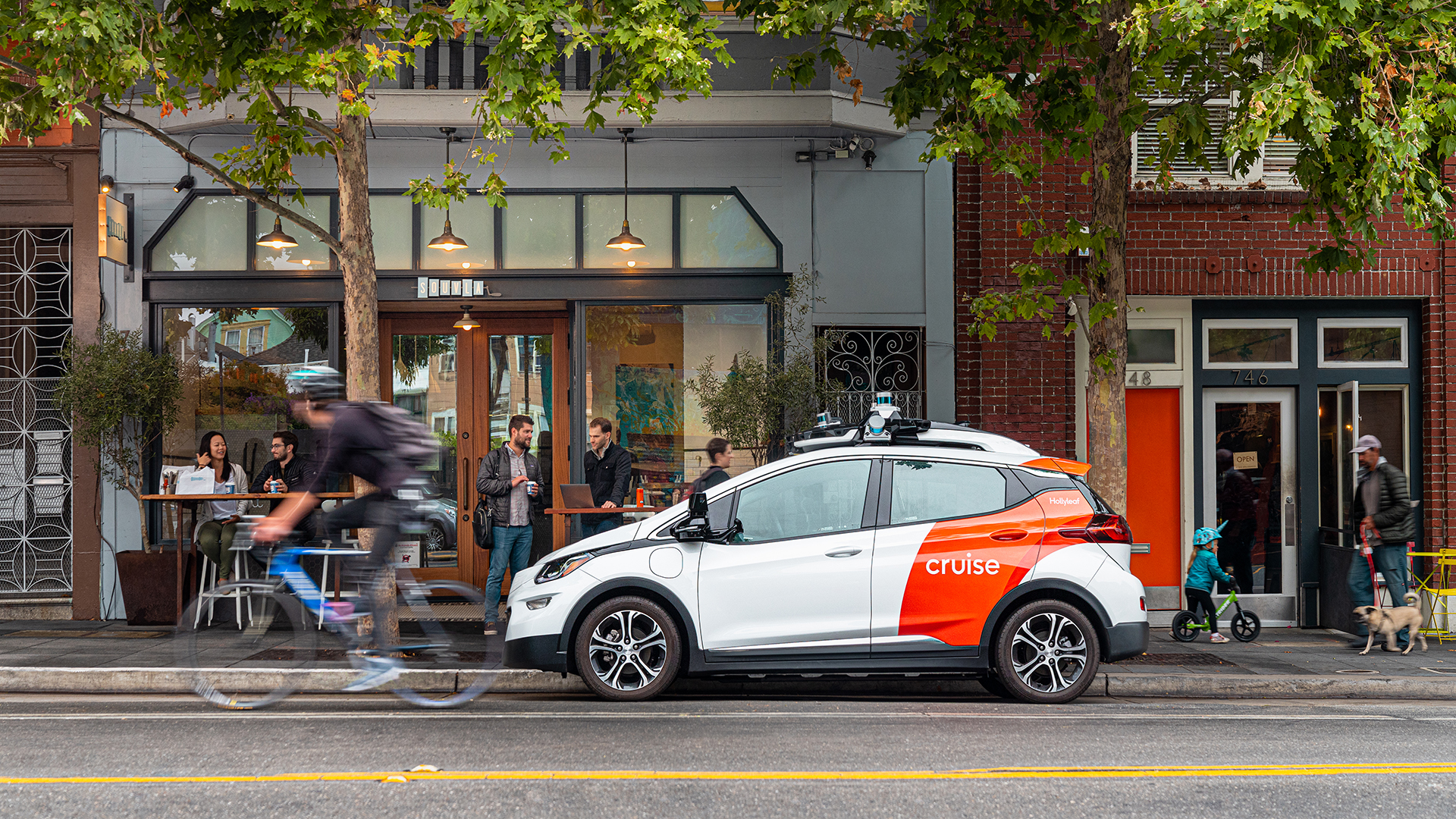
General Motors’ self-driving unit, Cruise, saw protests outside its San Francisco headquarters earlier this week. The protests come amidst the San Francisco Fire Department’s claims that some of the company’s autonomous robotaxis contributed to the tragic death of a pedestrian.
The incident, which happened on August 14, involved a pedestrian who was hit by a car in the South of Market neighborhood of San Francisco. The pedestrian’s injuries were so severe that there was heavy bleeding, and the person was no longer responding to verbal commands. It was evident that the injured pedestrian needed urgent medical care, so it was pertinent to have the person transported to a hospital as early as possible.
Public reports from the San Francisco Fire Department that were obtained by Forbes claimed that the behavior of Cruise robotaxis ended up impeding the workflow of emergency responders, so much so that critical medical care was delayed. One of the Fire Department’s reports about the incident reads as follows.
“On 8/14/2023, I was assigned to Medic 87 and responded to Incident FD23108420, at 7th Street and Harrison, for an auto vs. pedestrian. Harrison Street is 4 lanes of one-way traffic heading westbound. Upon arrival on scene, the victim was found in the (2) left lanes of Harrison Street, suffering from life-threatening injuries. SFPD and E01 had arrived prior to M87’s arrival. SFPD had a vehicle parked in the #1 lane of Harrison, and E01 had positioned its apparatus across the left 2 lanes of Harrison to shield the patient from oncoming traffic. The right 2 lanes of Harrison were blocked by (2) autonomous Cruise vehicles that had stopped and were not moving, blocking ingress and egress to the incident scene.
“The patient was suffering from life-threatening injuries, with a GCS 3, agonal respirations, and absent peripheral pulses. SFPD had applied a tourniquet to the left lower extremity to stop life-threatening bleeding from injuries sustained after being struck by a vehicle. Ventilations were assisted with a BVM, and the patient was packaged for rapid transport to a trauma center.
“While loading the patient to the ambulance, the (2) Cruise vehicles were still stopped in the right 2 lanes of Harrison, prohibiting rapid egress from the scene. SFPD had attempted manual takeover of the autonomous vehicles, but were unsuccessful. This contributed to a delay in transport with a critical trauma patient.
“SFFD members had to locate an SFPD officer and request him to move his vehicle to allow successful egress from the scene, but doing so further delayed patient care. These delays caused by (2) autonomous vehicles blocking a normal egress route from the scene contributed to a poor patient outcome, delaying the definitive care required in severe trauma cases. The patient was pronounced deceased at SFGH approximately 20-30 minutes after arrival due to severe blunt-force trauma.”
Cruise has spoken out against the Fire Department’s account of the event. In a comment to The San Francisco Standard, a Cruise spokesperson noted that “we did not impede the vehicle from getting to the hospital” and “what the fire department said is not accurate.”
“The first vehicle promptly clears the area once the light turns green and the other stops in the lane to yield to first responders who are directing traffic. Throughout the entire duration the AV is stopped, traffic remains unblocked and flowing to the right of the AV. The ambulance behind the AV had a clear path to pass the AV as other vehicles, including the ambulance, proceeded to do so. As soon as the victim was loaded into the ambulance, the ambulance left the scene immediately and was never impeded from doing so by the AV,” Cruise noted in a statement.
Cruise has reportedly provided a video to back up its claims. The video reportedly showed that while one Cruise robotaxi was indeed stopped at an intersection, there was a free lane to its right where traffic was moving. The video, which was reviewed by Forbes, did show numerous vehicles, including a small ambulance, moving through the free lane. However, the publication noted that it was not clear from the footage if the larger SFFD ambulance, which was likely transporting the severely injured pedestrian, could have navigated the area as easily.
Below are incident reports from the San Francisco Fire Department. The case in question is described in Page 68 and 69 of the document.
Cruise San Francisco Reports by Simon Alvarez on Scribd
Don’t hesitate to contact us with news tips. Just send a message to simon@teslarati.com to give us a heads-up.


Investor's Corner
SpaceX’s biggest earnings test yet lands Tuesday, and Tesla shareholders should be watching
SpaceX reports earnings Tuesday as Wall Street watches AI spending, Starlink growth and Tesla merger

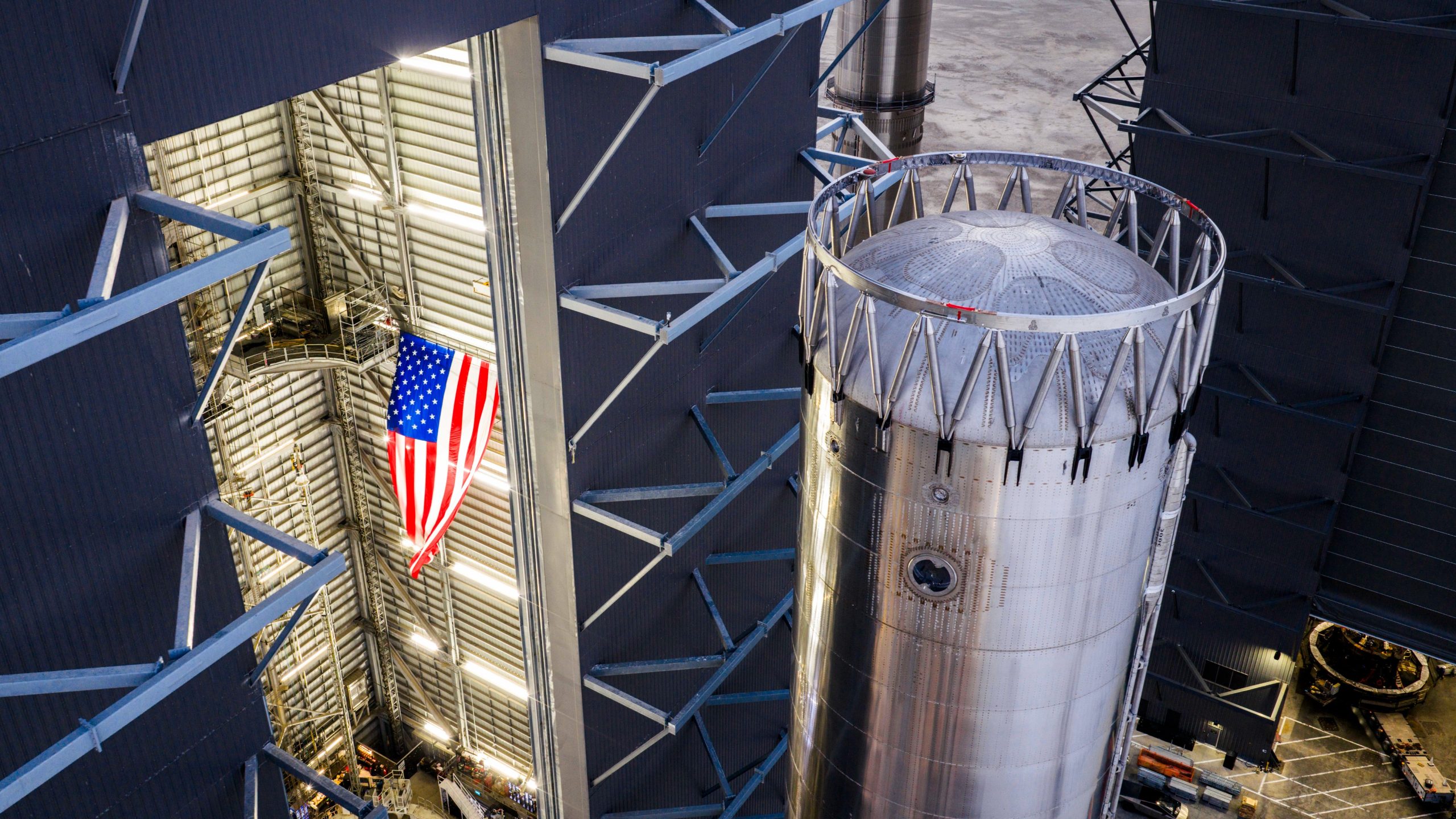
SpaceX reports third quarter results after the market closes Tuesday, with a webcast at 4:30 p.m. ET streamed on X, and Tesla follows a day later. Bloomberg consensus, cited by Pepperstone, calls for revenue of $12.89 billion, adjusted EBITDA of $6.62 billion and adjusted EPS near $0.15. That would be about 65% growth from the second quarter and SpaceX’s first profitable quarter since its IPO. Analysts expect roughly $6.4 billion from AI and $4.9 billion from Starlink, which is projected to reach 14.3 million consumer subscribers. Capital spending is forecast at $19.6 billion, leaving free cash flow near negative $11.6 billion.
The numbers matter because SpaceX has spent months trying to win over a skeptical market. It priced its record IPO at $135, spiked to $225.64, then sank near $105 in early August. Friday’s close of $146.03 sits about 28% below the June high. The Q2 report beat on revenue at $7.8 billion and put Starlink at 12 million subscribers, but $18.4 billion of capex hurt the stock. Since then SpaceX reached orbit on Starship Flight 14 with 26 Starlink V3 satellites, agreed to buy 800 MHz spectrum for about $8 billion as part of its Starlink Mobile push, and signed a fourth compute hosting deal in four months worth roughly $13 billion a year from December. Management is targeting more than 2 gigawatts of compute by year end and a $100 billion annualized revenue run rate. Evercore ISI, which raised its target to $275, said the quarter may be judged more on those targets than the reported figures
All of this sits under the Tesla merger question. Barclays analyst Dan Levy expects an all stock deal in which SpaceX buys Tesla at a premium, using reference values of $2.1 trillion and $1.5 trillion, and said an announcement would need to come by late October or early November to be voted on at Tesla’s December 6 annual meeting. Barclays estimates Musk would hold about 37% of the combined company and 56% of the votes. Musk said in July that combining companies cannot be discussed on an earnings call, but an investor question asking when SpaceX will merge with Tesla is sitting on SpaceX’s Q&A platform, and Teslarati has tracked how the Roadster demo revived the talk.
If a deal happens, Tuesday’s result would effectively set the price Tesla holders would receive. Their shares would convert into SpaceX stock, along with exposure to a company with a heavy investment on AI, while Tesla itself expects 2026 capex above $25 billion. A strong quarter and calmer spending would make that exchange easier to sell. Another round of heavy capex and a falling stock would make it harder.
News
SpaceX’s Gwynne Shotwell just made a quiet gesture toward Tesla
SpaceX president Gwynne Shotwell quietly followed Tesla on X, and merger watchers noticed right away.
SpaceX President and COO Gwynne Shotwell has started following Tesla’s official account on X, a small change that landed in the middle of a very loud merger conversation. Whole Mars Catalog joked about it on Sunday.
A follow is not an announcement, and neither company has said anything about a deal. What gives the moment weight is the timing. Barclays analyst Dan Levy has told clients that an agreement could come before Tesla’s annual meeting, which must be held by December 6, with SpaceX as the buyer in an all stock deal, as we reported after the Roadster unveiling. Wedbush’s Dan Ives has stuck with a 2027 timeline.
“Shit, I better start following their X account if i’m gonna be helping run the company”
— Whole Mars Catalog (@wholemars) October 18, 2026
Shotwell is the executive most worth watching if the two companies do move closer. When Musk was asked at the All In Summit why Tesla and SpaceX remain separate, Shotwell sat next to him and said SpaceX personnel had already moved into xAI to fill leadership and engineering gaps. The businesses were integrating “faster than I thought,” she said, though “not fully integrated yet.” Her responsibilities have also grown since SpaceX absorbed xAI, and she now oversees operations that include Grok and the company’s AI compute buildout.
The financial links are already there. Tesla’s $2 billion xAI investment turned into a stake of less than one percent in SpaceX, the two share the Terafab chip project in Austin, and Musk exercised his 2018 Tesla options a week after SpaceX began trading, a sequence analysts flagged as giving SpaceX public shares to use in a deal. Musk holds about 20 percent of Tesla and controls 85.1 percent of SpaceX’s voting power, according to our earlier breakdown.
The next test is close at hand. SpaceX reports its second earnings as a public company on Tuesday after the close, and Tesla follows on Wednesday. Musk told analysts in July that “we can’t talk about combining companies and that kind of thing on an earnings call,” so a direct answer is unlikely from either stage. Tesla shareholders can still submit and vote on questions through the Say portal until 4 p.m. EDT on Monday, and the merger is a recurring theme in the queue.
Elon Musk
Tesla Roadster owners to get “Flying Stunt Mode” and looping track access
Musk says Roadster owners can command the unveiling stunts autonomously, with a Texas looping track.
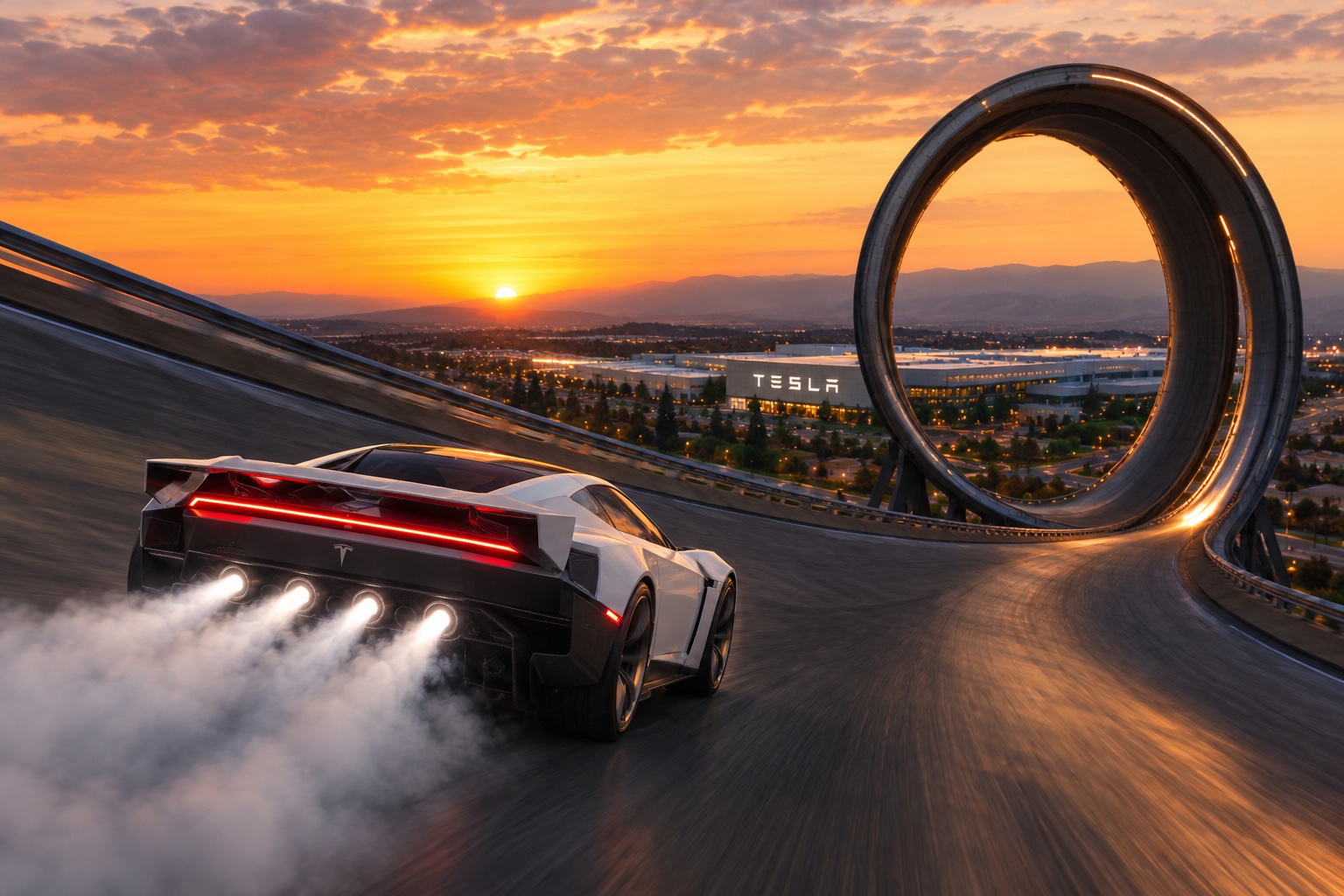
Elon Musk says owners of the new Tesla Roadster will be able to ask the car to perform the stunts Tesla showed at its unveiling, with the car doing the driving itself. Musk made the comment Saturday in a reply on X to tech blogger Robert Scoble, and he added a promise of a looping track at Tesla’s Texas headquarters.
Scoble had argued that the person in the Roadster is not really driving it. In his description, the driver operates a computer that tells another computer what to do, with steering, braking and acceleration all handled by wire. Musk answered, “True. You will be able to ask the Roadster to perform any of the tricks shown autonomously, as it will be sentient. Also, we will have a wild looping track (crazier even than Hot Wheels) at our Texas HQ where you can test out your Roadster.”
@Scobleizer True.
You will be able to ask the Roadster to perform any of the tricks shown autonomously, as it will be sentient.
Also, we will have a wild looping track (crazier even than Hot Wheels) at our Texas HQ where you can test out your Roadster.
— Elon Musk (@elonmusk) October 17, 2026
At the October 15 event outside Waco, the car drove up a curved ramp until it was upside down, flew off on cold gas thrusters, flipped and landed. It also hovered over a Cybercab, Cybertruck, Semi, Model Y and Model 3 while moving. As we noted in our breakdown of the three Roadster configurations, Musk said at the event that the car “literally is just going to puff itself up” to perform the maneuvers whenever an owner wants. Saturday’s reply adds that the car would run them on its own.
Tesla has described some of the hardware that would make that possible. The Roadster uses steer by wire with a yoke, and its cold gas thrusters rely on electric actuators for small adjustments in flight. A fan system under the car creates suction, which Tesla says is strong enough to hold it upside down, a setup we covered in our look at the Roadster’s fan system and thrusters.
Musk did not say when an autonomous stunt feature might arrive, how it would work, or what he means by sentient. He also gave no size, location or opening date for the Texas track. Production is planned for Giga Texas in 2027 or 2028, and Tesla says the car is not approved for public road use. The Rocket version, the one built to fly, is invite only.
The comment follows a week of Musk teasing the event, including his claim that the demo would be a banger, which we covered before the stream. Tesla reports third quarter earnings on October 21, and shareholders can submit and vote on questions through the Say portal until 4 p.m. EDT on October 20, according to our earnings Q&A preview. A question about autonomous Roadster stunts and the Texas track would be a quick way to get specifics from management.

SpaceX’s biggest earnings test yet lands Tuesday, and Tesla shareholders should be watching

SpaceX’s Gwynne Shotwell just made a quiet gesture toward Tesla

Tesla Roadster owners to get “Flying Stunt Mode” and looping track access

SpaceX reveals how its 1 Million AI satellite network will work and prevent space collisions

Tesla Roadster: Three configs, one can fly, 0-60 in 0.8 seconds


