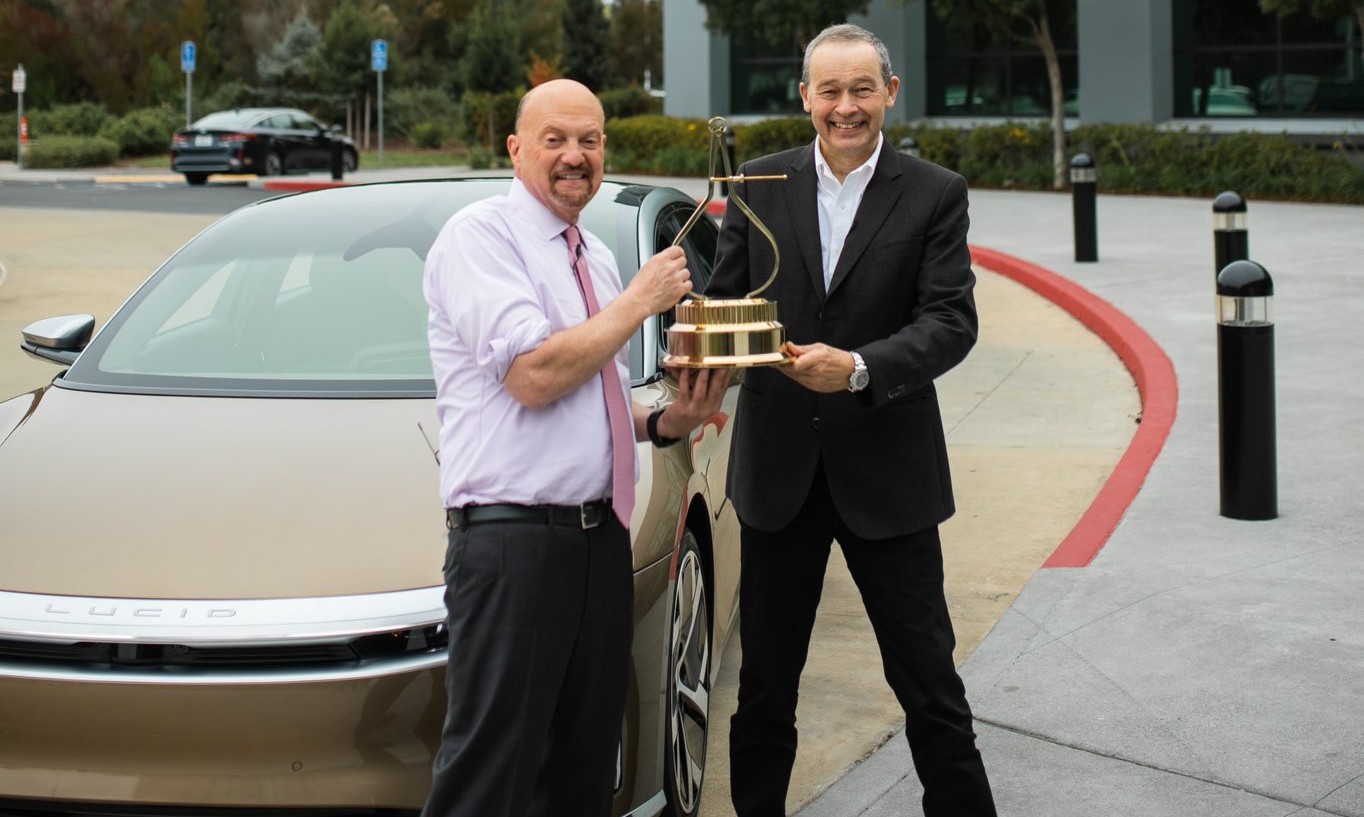

Lucid CEO Peter Rawlinson explained his compensation plan during the luxury electric car maker’s Q4 2023 earnings call. Rawlinson’s comments came amidst criticisms that his compensation plan is notably large, even if Lucid is still yet to make a breakthrough in its vehicle production and sales. For context, Lucid posted revenue of $157.2 million and a net loss of $653.8 million in Q4 2023.
Previous reports have noted that the Lucid CEO is very well paid compared to other chief executives in the auto sector. As noted in a Benzinga report, Rawlinson’s compensation in 2022 reached $379 million, which is quite interesting considering GM CEO Mary Barra had a total compensation of $34 million in 2022, and Ford CEO Jim Farley had a total compensation of $18 million during the same year.
And in a recent 8-K filing, Lucid’s Board members noted that they approved a $6 million cash bonus to the CEO. The Board noted that the bonus was to recognize Rawlinson’s contributions to the unveiling of the Lucid Gravity, the luxury EV maker’s upcoming SUV. Thus, it was no surprise that during the Q4 2023 earnings call, Rawlinson was asked if he was willing to take a pay cut to reduce the company’s losses — or at least if there are plans to buy back shares to improve the health of Lucid stock.
Lucid CEO Peter Rawlinson’s response to the question was as follows.
“Many may not be aware of my founding role in this company as we know it today. I joined the company around 11 years ago, with a clear goal of making the very best electric vehicle and to drive a revolution towards sustainable transportation, which is going to benefit everyone in the planet…
“So in 2021, I received a onetime CEO stock grant, and this was solely determined and approved by the Board of Directors. And a significant portion of that vested due to the company achieving certain market capitalization milestones as we publicly disclosed in 2023. So I think there’s a huge misperception that this onetime grant was received as a salary and somehow we replicate it as my salary in the future.
“In fact, in 2023, at my request, I did not receive a bonus for 2022, nor did I receive any further equity grants in ’22 or ’23. And I just want to assure you, my mission and my dedication is still unwavering. I have not sold a single share of stock in all this time, over 10 years, except what was absolutely necessary for tax purposes. And the company stock I received from the grant remains in the form of company stock. And so I am also directly tied, personally tied, directly and hugely to the company’s performance as a key shareholder.
“And so I’m incentivized that way. My promise is to continue to work tirelessly, day and night, to drive brand awareness, to deliver more cars, to sign up more technology licensing and access agreements, to drive down costs and to bring the Gravity and midsized platform to market. We have an incredible team. We’re driving forward, and I’m incredibly excited about our products and moreover, our future,” Rawlinson said.
Lucid interim CFO Gagan Dhingra also addressed the second part of the question.
“Regarding the second part of the question, we are investing in our future, but we are a growth company. We are also a technology company. and I believe our investments into areas such as our research and development is an advantage and give us the opportunity for higher returns than any other automotive company because we are monetizing the intellectual property through agreements such as the one with Aston Martin.
“When we feel we can’t increase value from reinvesting back into the business, we would consider returning the cash to shareholders via a repurchase program. But we don’t believe this would happen for quite some time,” the interim CFO said.
Don’t hesitate to contact us with news tips. Just send a message to simon@teslarati.com to give us a heads up.



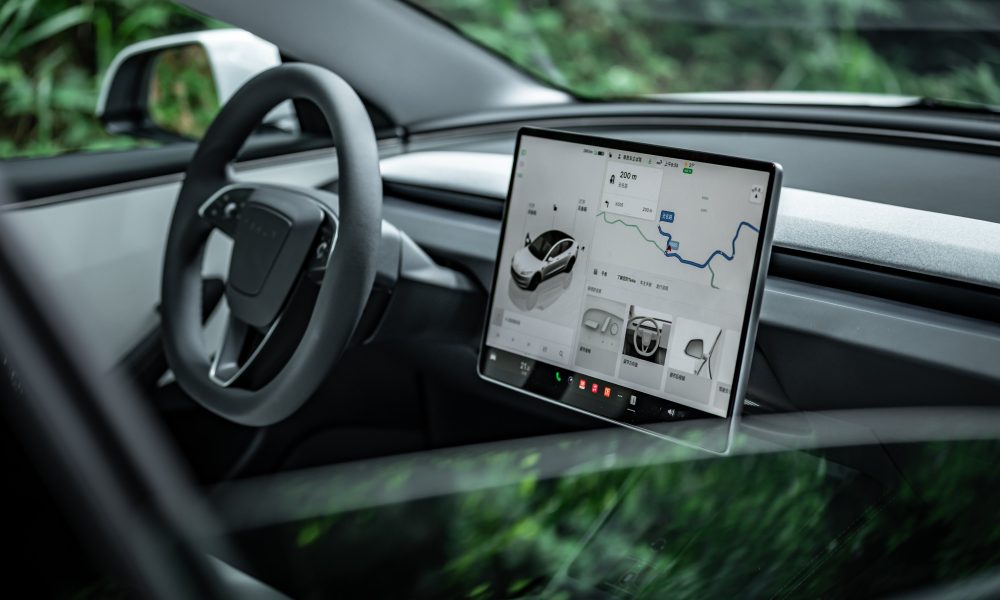
Tesla has expanded its Tesla Assisted Driving (TAD) suite to its tenth European country, as Latvia joined a growing list of European Union member states authorizing the company’s advanced driver assistance technology.
Tesla Europe announced this morning that the system is now approved in Latvia, with a software rollout to begin soon.
The approval and rollout follow recognition of a provisional European type approval originally granted by the Netherlands’ RDW authority on April 10.
🚨 Latvia has just received approval for Tesla Full Self-Driving (Supervised)
This is the 10th country in the EU to gain approval:
1. Netherlands — 10 April 2026 (original RDW approval)
2. Lithuania — 20 May 2026
3. Estonia — 29 May 2026
4. Denmark — 9 June 2026
5. Belgium — 10 June 2026
6. Slovenia — 7 September 2026
7. Czechia — 21 September 2026
8. Croatia — 29 September 2026
9. Slovakia — 16 October 2026— TESLARATI (@Teslarati) October 26, 2026
Latvia’s Road Traffic Safety Directorate (CSDD) evaluated the Dutch documentation, coordinated with the other national authorities, and reviewed updates from Tesla. These included tightened limits on speed offsets, automatic resets of any manual speed adjustments after each trip, and stronger driver monitoring.
In Europe, the feature is marketed as Tesla Assisted Driving after a recent rule change that labeled the name “Full Self-Driving” as misleading.
The system remains an SAE Level 2 driver assistance tool, not unsupervised autonomy. It can control speed, steering, braking, lane changes, and intersections while following a navigation route. Drivers need not keep their hands on the wheel at all times, yet they must continuously monitor the road and be prepared to intervene immediately.
The sequence of EU recognitions began with the Netherlands in April and continued through Lithuania, Estonia, Denmark, Belgium, Slovenia, Czechia, Croatia, and Slovakia. Most have relied on mutual recognition of the single Dutch provisional approval rather than independent national testing.
These national clearances do not yet constitute bloc-wide authorization. An EU-wide decision requires a qualified majority in the Technical Committee on Motor Vehicles: at least 15 of 27 member states representing 65 percent of the EU population. Larger markets, like Germany, France, and Italy, remain under review, and a vote is expected this December.
However, for Latvian Tesla owners with compatible vehicles and software, the imminent rollout expands access to the supervised system while underscoring that attentive human oversight remains essential.
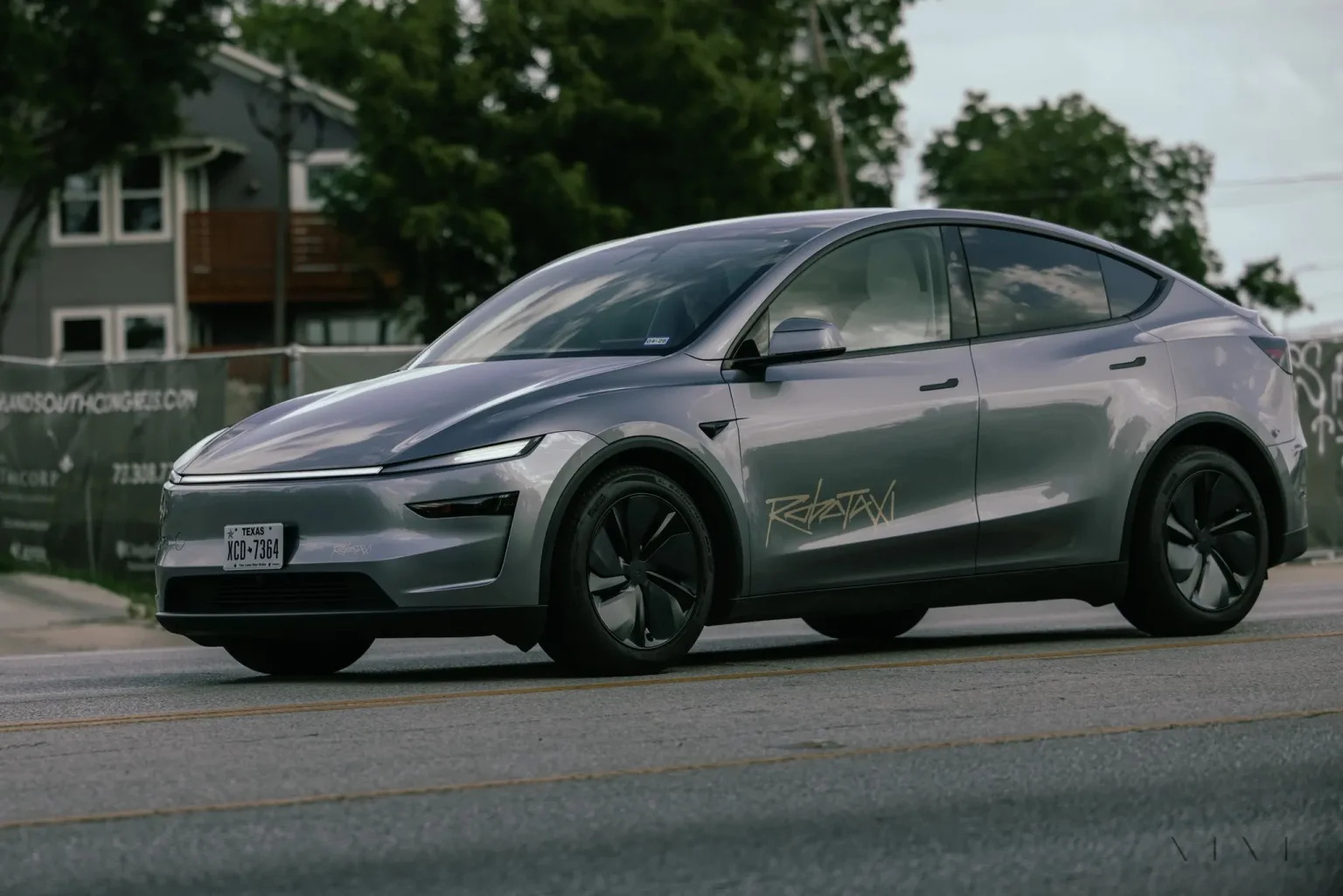
Tesla expanded its Robotaxi geofence in Houston, Texas, today, enlarging the service area and drawing a new rocket-shaped boundary across the city’s northwestern and central parts.
Although CEO Elon Musk said it was just a coincidence, the expansion seems to be an ode to SpaceX and its potential merger with Tesla.
🚨 Tesla has just expanded its Robotaxi geofence in Houston
It looks a lot like a rocket — we all remember the shape in Austin 🤣 https://t.co/cFOPEuiJ4u
— TESLARATI (@Teslarati) October 26, 2026
The official Tesla Robotaxi account announced the change with the lines “Houston, we have liftoff” and “Bigger service area now live,” pairing them with a map overlay.
The prior white geofence, roughly 25 square miles covering Jersey Village, Harvest Bend, and the Willowbrook corridor along U.S. 290 and State Highway 249, now sits inside a larger blue zone that stretches southeast toward Bellair and closer to central Houston.
Houston’s Robotaxi service launched on April 18, 2026, the same day as Dallas, as Tesla’s first unsupervised public expansion beyond Austin. From the start, the vehicles were Model Ys running without anyone in the front seats, booked through the dedicated Tesla Robotaxi app and open to the public inside the geofence.
Trackers measured the initial zone at about 25 square miles; by late September it had not grown substantially. Community and registry data indicated a modest local fleet of unsupervised Model Ys, while dozens to nearly 200 Cybercabs, the purpose-built, steering-wheel-free two-seaters, have been spotted staging and testing in Houston lots, though public Cybercab rides remain limited to Austin for now.
Across the broader Robotaxi program, Tesla began public Robotaxi rides in Austin in June 2025, as a small geofence and vehicles with safety monitors became available for a ride-hailing service. Later on, Tesla removed the monitors and steadily expanded the service area until it covered most of the Austin metro area.
Unsupervised Robotaxi services now run in six cities: Austin, Dallas, Houston, Miami, Orlando, and Tampa. Cumulative driverless miles reported by the company have reached several million. The Cybercab entered public service in Austin in early September 2026 and has scaled rapidly there. The company has also said that Dallas is next for Cybercab rides in November, with further cities and 24/7 hours targeted by year-end, plus fleet-operator sales of the vehicle.
Waymo also operates a fully driverless service in Houston, which has been open to the public since August of this year.
The Houston expansion continues Tesla’s pattern of starting with tightly controlled validation zones before widening coverage as real-world data accumulates, while the rocket motif on the map underscores the company’s habit of injecting visual flair into its autonomy rollout.
Riders inside the new boundary can request unsupervised Model Y trips in the Robotaxi app; exact operating hours and further Cybercab availability remain subject to app updates and company statements.
News
Tesla Cybercabs take over Austin’s F1 weekend
Tesla Cybercabs swarmed Austin’s F1 Grand Prix as sightings hit a record during race weekend.

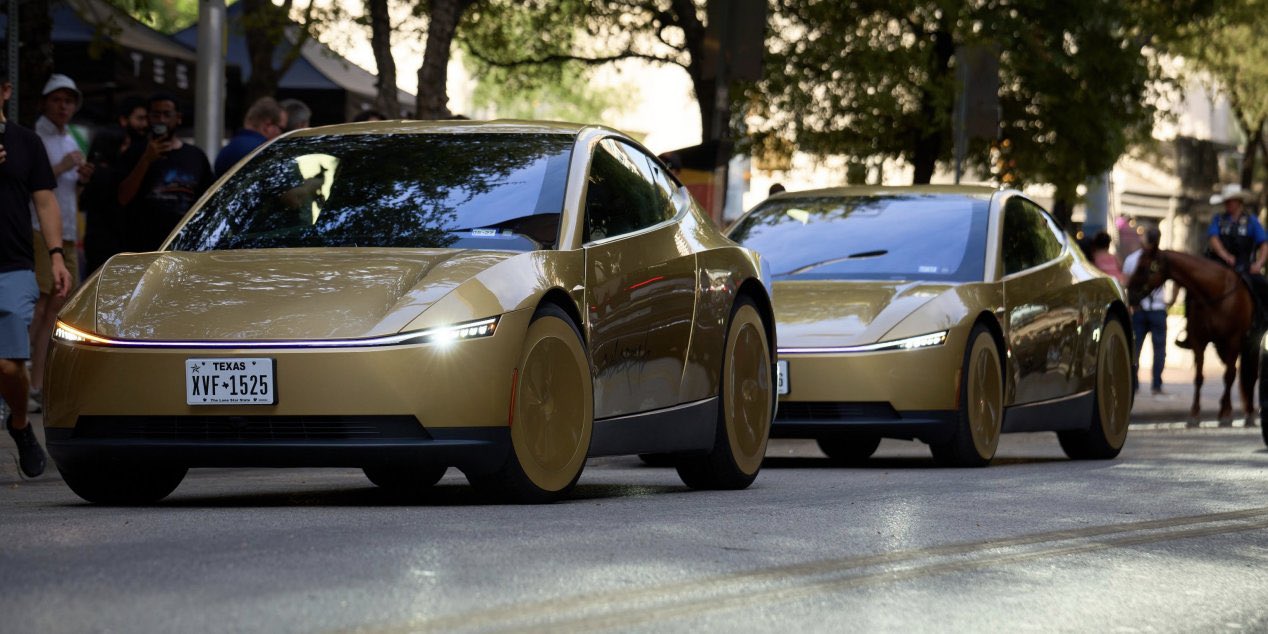
Tesla’s driverless Cybercabs used the Formula 1 United States Grand Prix in Austin as their biggest public stress test yet. On Sunday afternoon, Tesla head of AI software Ashok Elluswamy quoted a photo from X user Ben Steindl showing a long line of gold Cybercabs and Model Y Robotaxis stacked up on a road near Circuit of the Americas. “Robotaxis as far as the eye can see!” Elluswamy wrote. Steindl’s original post was more matter of fact: “@Tesla @robotaxi is busy for the Austin F1.”
The fleet also handled the trip home. The race started at 3 p.m. Central, and once it ended, Cybercab Spotter, an account that logs Cybercab sightings around Austin, posted that “People are requesting Cybercabs to get home.”
Robotaxis as far as the eye can see! 🤩
— Ashok Elluswamy (@aelluswamy) October 25, 2026
Tesla set this up days in advance without announcing it. Late on October 22, rider David Moss posted Robotaxi app screenshots showing the Austin service area wrapping around the track toward Elroy and FM 812, with ride requests open until 1 a.m. A banner in the app read “Last call is 1am · Limited to nearby dropoffs.” Austin rides ended at 11 p.m. as recently as early October, as Teslarati reported, before moving to midnight on October 17.
Not every rider got dropped at the gate. Early app searches showed spots like COTA Karting as “Service blocked,” and one rider who took a Cybercab to the track Friday said the rideshare area was less than a 20 minute walk from the front gate.
The weekend also produced a new activity record. Cybercab Spotter counted 1,250 Cybercab sightings in Austin on Saturday, qualifying day. The previous high was 1,072 on October 16. Sightings count the same car more than once, so they measure how busy the fleet is rather than how big it is. For size, the Texas automated vehicle registry listed 463 Cybercabs at midday Sunday, up from the 300+ Tesla claimed on October 10, when Elluswamy also said Dallas is next for Cybercab.
The track was out of reach for Tesla’s main rival. Waymo runs in Austin only through Uber, and its service area stops well short of COTA. Waymo did not announce any race day service.
Tesla has not said how many rides it gave to and from the circuit, or whether the expanded zone and 1 a.m. cutoff will stay after race weekend. On the third quarter earnings call, Elluswamy said 2 a.m. service is coming “pretty soon” and that Tesla plans to run Robotaxi around the clock before the end of the year. The company is also aiming to hand the first Cybercabs to customers before 2026 ends, which would put cars like these outside Tesla’s own fleet for the first time.

Tesla Assisted Driving expands to tenth EU country

Tesla expands Robotaxi geofence in Houston with an ode to SpaceX merger


