News
Feature: Tesla Model 3 customers share worries about white interior delays and free FSD transfers

When Tesla launched the upgraded Tesla Model 3 in the United States, many EV enthusiasts were excited. The updated all-electric sedan was initially launched in China in late August 2023, so the anticipation for the vehicle in the US was palpable. For a growing number of Tesla Model 3 customers, however, the excitement for receiving their new all-electric sedans is starting to become an experience that’s filled with delays and a growing amount of frustration.
The Upgraded Tesla Model 3
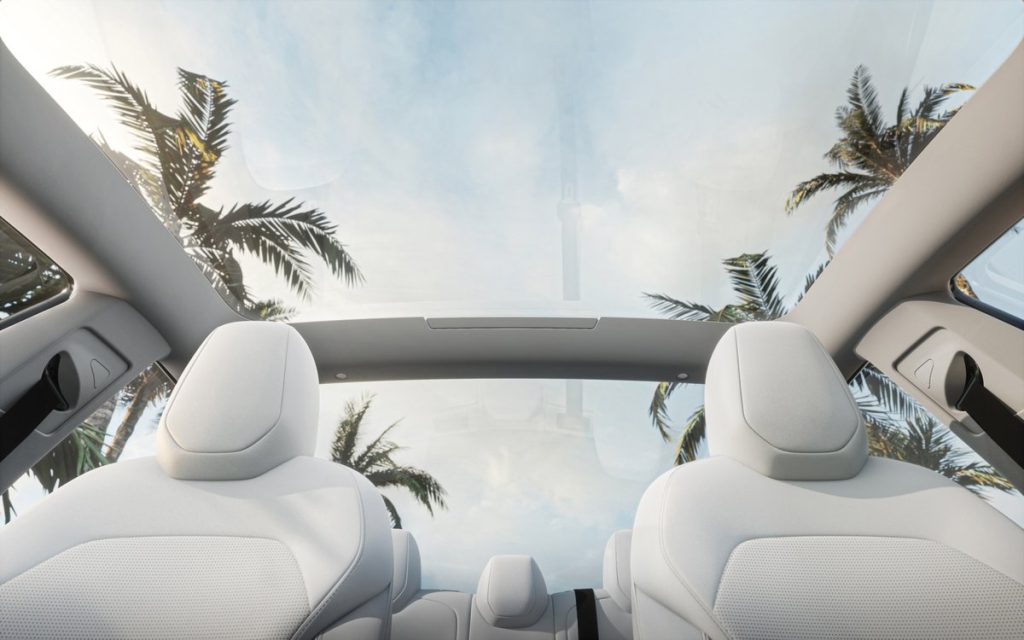
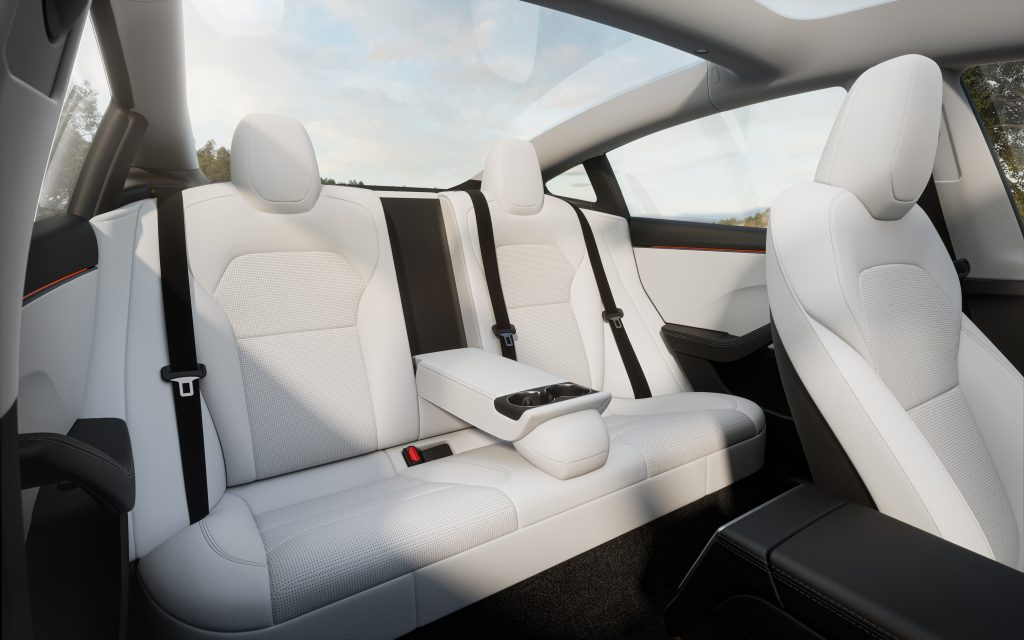
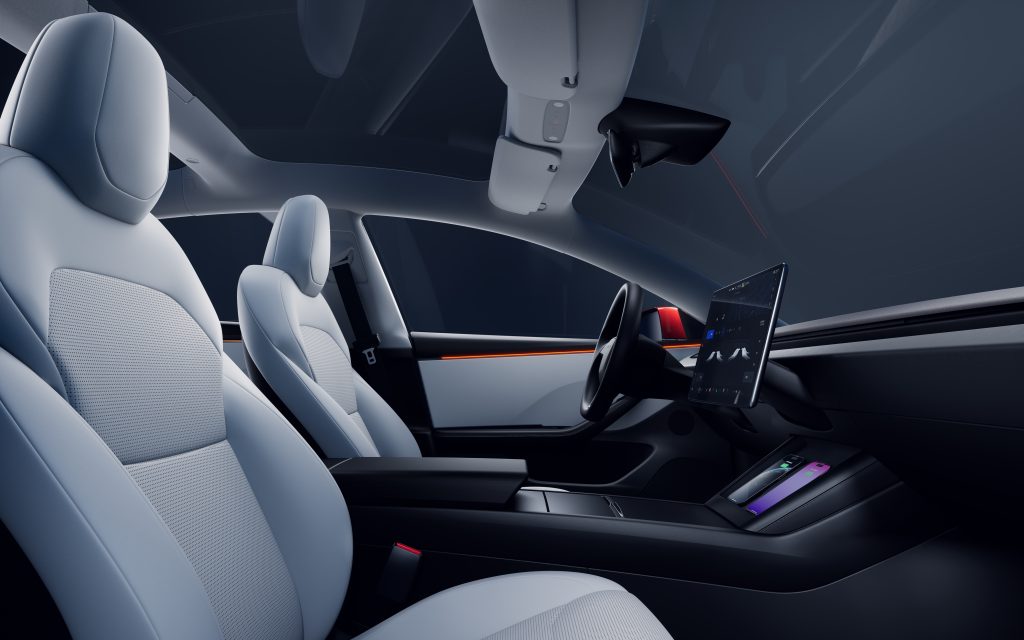
The upgraded Tesla Model 3 is currently only offered in two variants — the Model 3 Rear Wheel Drive (RWD) and Model 3 Long Range All Wheel Drive (AWD). Both vehicles are available with either a free Black interior or Tesla’s popular, futuristic Black and White interior, which is a $1,500 option. Tesla’s Black and White interiors have become iconic over the years for their futuristic, clean, and airy look, so it was no surprise that numerous upgraded Model 3 customers ordered their vehicles with the paid interior option.
But as shared with Teslarati by a number of new Model 3 customers, Tesla has been continually pushing back the expected delivery dates of vehicles that were ordered with Black and White interior. So notable were the delays that some Tesla Model 3 customers are now concerned that they might pass the deadline for free FSD Capability transfers before they could take delivery of their vehicles. Some are also getting hit by a growing number of inconveniences and annoyances due to the delays in their vehicle orders.
Black and White Delays
An overview of the issue could be found in an upgraded Model 3 order tracker aggregated by customers of the revamped all-electric sedan. As could be seen in the community tracker, some new Model 3 customers who ordered their vehicle with a Black and White interior have seen their estimated delivery dates moved back 12 times. This has become quite frustrating for Model 3 customers, especially those who placed an order for the vehicle right after its US launch in January.
For customers who placed an order for an upgraded Model 3 with a Black and White interior in January, the wait for their vehicles has become substantial. And with some estimated delivery dates being pushed back from January/February 2024 to late May 2024, some are seemingly looking at an almost five-month wait for their new Model 3. This is quite a strange situation considering that some members in forums such as the Tesla Motors Club who ordered the new Model 3 with the default Black interior were able to receive their VINs and take delivery relatively quickly.
Free FSD Capability Transfer Concerns
Tesla’s official website notes that customers who take delivery of a new vehicle, including the new Model 3, by the end of Q1 2024 could qualify for a free Full Self-Driving (FSD) Capability transfer. This has caused a considerable amount of stress for upgraded Model 3 customers who ordered their vehicles with Black and White interiors. Tesla did note on its official X account that “any customer who had a timeline shift will be able to take advantage of FSD transfer.” This, however, is not yet reflected in the company’s Full Self-Driving Capability Transfer Agreement, at least as of writing.
Full Self-Driving is steadily becoming more and more refined, so it is no wonder that some upgraded Tesla Model 3 customers opted to order their vehicles to take advantage of the company’s free FSD Capability transfer program. It is then also no surprise that some new Model 3 customers have noted in online forums that they may cancel their vehicle orders if their free FSD Capability transfer is not honored.
Customer Headaches
Perhaps one of the reasons behind the frustration of the new Model 3 customers is Tesla’s reported lack of communication about delays in their vehicle orders. Simply pushing back the new Model 3 with Black and White interior’s estimated delivery dates without communication fosters a bad customer experience, after all, and essentially turning customers’ wait times from what was supposed to be just one to two months into what is now looking to be nearly five months is just as worse.
As per some upgraded Model 3 customers who got in touch with Teslarati, the multiple estimated delivery date delays and overall lack of communication from the EV maker have caught them off guard. Some have reported seeing their financing applications expiring due to the delays, reportedly adversely affecting their credit scores. Others have ended up renting cars for now because they did not expect the delays in their new Model 3 with Black and White interior to be this notable. Others have also noted that they have resorted to borrowing cars from relatives, though one cannot deny that borrowing a car for several months may be a bit of an awkward affair.
“I myself don’t have a vehicle anymore so I am borrowing cars from relatives. Borrowing cars for a month or two is one thing. Borrowing for five months is insane,” one new Tesla Model 3 customer wrote to Teslarati.
Hopefully, Tesla could shed some light on this matter.
Don’t hesitate to contact us with news tips. Just send a message to simon@teslarati.com to give us a heads up.



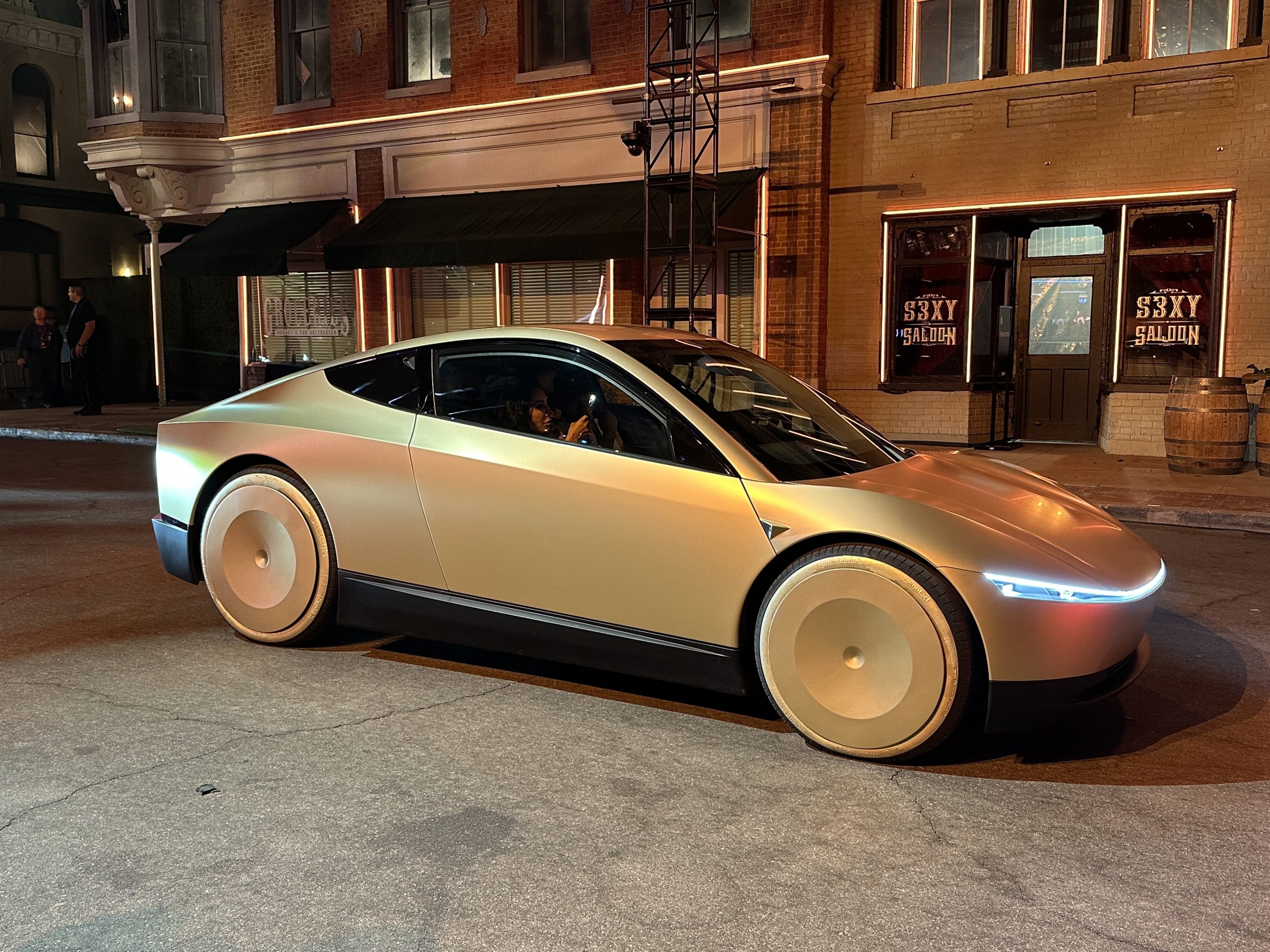
Tesla launched the all-electric, steering wheel-less, and pedal-less Cybercab last night at a quiet and small event in downtown Austin, Texas.
The launch, which marked the beginning of unsupervised ride-hailing for Tesla’s Robotaxi platform with Cybercab, has already caught the attention of the National Highway Traffic Safety Administration (NHTSA) who has more questions.
NHTSA opened an Audit Query (AQ) into the Cybercab’s Federal Motor Vehicle Safety Standards (FMVSS) certification that Tesla gave the vehicle. Manufacturers self-certify vehicles much of the time to avoid excessive regulatory delays.
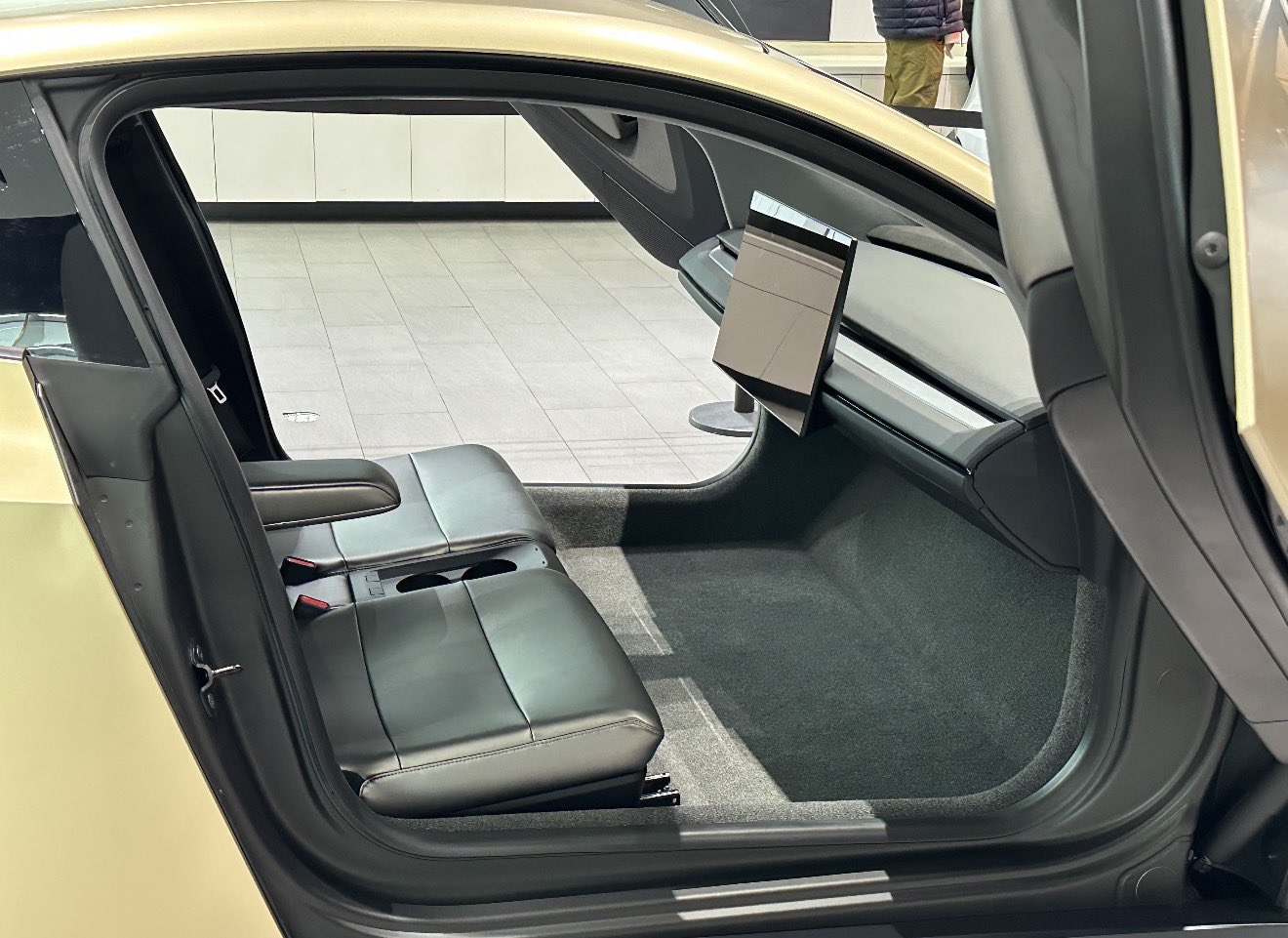
Tesla Cybercab interior, note the lack of steering wheel and pedals. (Credit: @niccruzpatane/X< /a>)
However, the agency needs more information; it said in a summary:
“On September 3, 2026, Tesla began commercial deployment with a small number of its Cybercab vehicles in Austin, Texas. Tesla notified the Agency that it certified those Cybercab vehicles as compliant with all applicable Federal Motor Vehicle Safety Standards (FMVSS). Tesla also notified the Agency that it plans to gradually expand commercial deployment of the Cybercab to include additional vehicles and locations.”
It also went on to state that the Cybercab lacks traditional automotive controls, which is a groundbreaking move. The process is entirely new to the NHTSA, which gives the agency some leverage to put Tesla’s launch under a microscope:
“The vehicles lack permanently attached, conventional manual controls, such as a brake pedal, gas pedal, steering wheel, and mirrors. NHTSA is opening this AQ to examine the process and technical data on which Tesla relied when certifying the Cybercab and related issues. Among other things, NHTSA will consider the extent to which Tesla’s certification depended on determinations that certain FMVSS are inapplicable to the Cybercab.”
Tesla has added 45 Cybercab units to its fleet of Robotaxi-enabled cars in Austin, according to public documents the company submitted to the State of Texas over the past week. Enabling this level of self-driving is something Tesla has worked toward for many years, and now that it is finally here, it seems more than reasonable that regulatory agencies will have some questions.
Many outlets might try to frame this as a negative, but it is truly an agency looking to gain more information about groundbreaking tech that Tesla has been developing for years.
In an effort to keep riders, pedestrians, and property safe, any and all data accumulated from these first days, weeks, and months of rides will likely be shared with the NHTSA to enable broader rollout strategies across the United States and more in the future.
Featured
Tesla Cybercab is coming to Asia this month as US service officially begins
Tesla Asia says Cybercab will be on display in Hong Kong, Tokyo, Beijing and Shanghai this month.

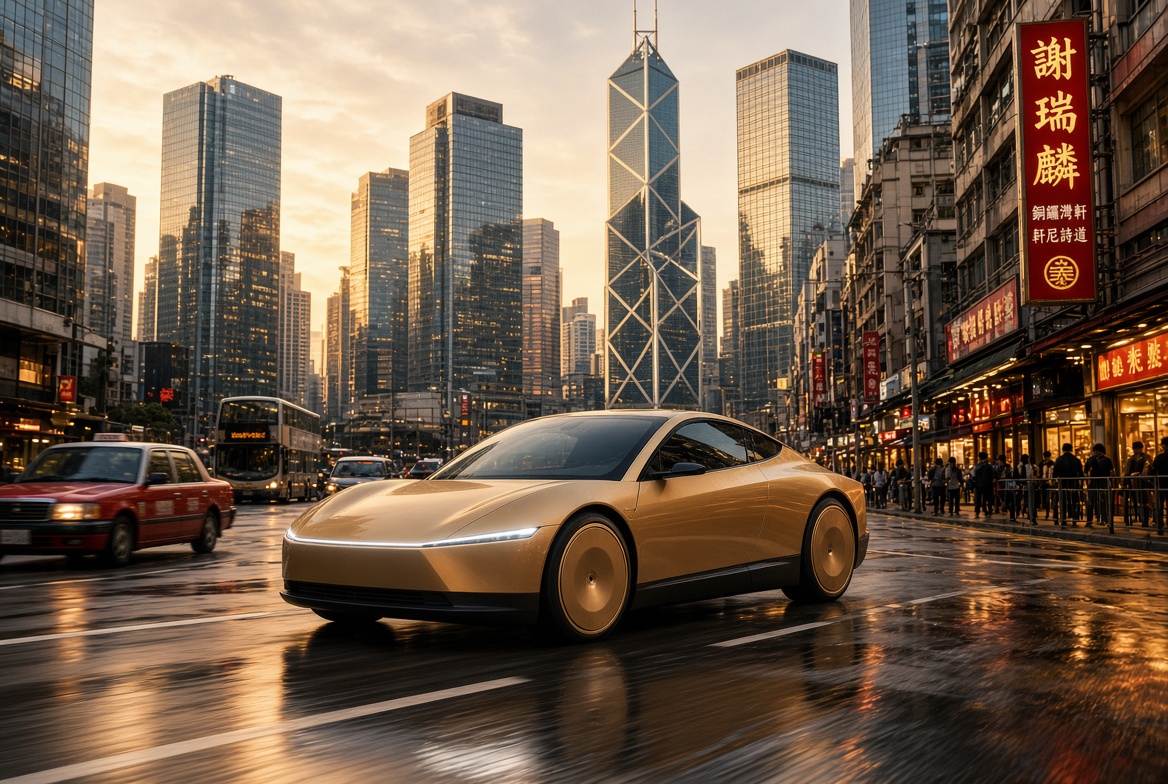
Tesla’s Cybercab is heading to Asia. The official Tesla Asia account posted on X Thursday, inviting Cybercab fans to “Come experience the future of autonomy in Hong Kong, Tokyo, Beijing & Shanghai.” The post went up within hours of Tesla’s own Cybercab milestone in Texas, where the company said Thursday it had begun offering rides in across Austin.
Exact dates and venues for the Asia tour haven’t been released yet, though Tesla Hong Kong replied to the announcement with “Cybercab will be on display in Hong Kong soon,” while Tesla Japan’s response pointed fans to a sign up page for updates. Neither post mentions test rides or a service area, and nothing so far suggests Tesla is launching Robotaxi operations in any of the four cities. Based on how Tesla has run past Cybercab tours, in Europe in late 2024 and at US shopping centers that same December, the Asia stops are almost certainly static displays at Tesla stores or public venues as a means to stimulate buzz for its future driverless ride-hailing service in the big cities.
Cybercab will be on display in Asia this month!
Come experience the future of autonomy in Hong Kong, Tokyo, Beijing & Shanghai. pic.twitter.com/wGmmEastfX— Tesla Asia (@Tesla_Asia) September 4, 2026
The timing lines up with Tesla’s only prior Cybercab appearance in the region, a booth at the China International Import Expo in Shanghai last November, which Teslarati covered at the time. At that event, Tesla’s regional general manager for Shanghai framed the car as evidence of the company’s broader mission, a message Tesla has since formalized in its Master Plan Part IV, which states that “autonomous vehicles have the capacity to dramatically improve the affordability, availability and safety of transportation while reducing pollution, particularly in our increasingly dense global cities.” The same document is where Tesla lays out its “sustainable abundance” framing for Cybercab and Optimus alike, describing the two as the hardware behind an AI driven push to cut the cost of transportation and labor at scale.
Whether Cybercab actually operates as a robotaxi anywhere in Asia remains an open question, considering China has already pushed an autonomous ride-hailing market that’s run on homegrown players like Baidu’s Apollo Go and Pony AI. For now, the four city tour reads as a marketing push timed to Austin’s momentum.
Lifestyle
Tesla Cybertruck targets job site crews with new Tailgate Utility Track and Bed Gear Box accessory
Tesla launched a $350 tailgate track and a $985 lockable Bed Gear Box for Cybertruck.
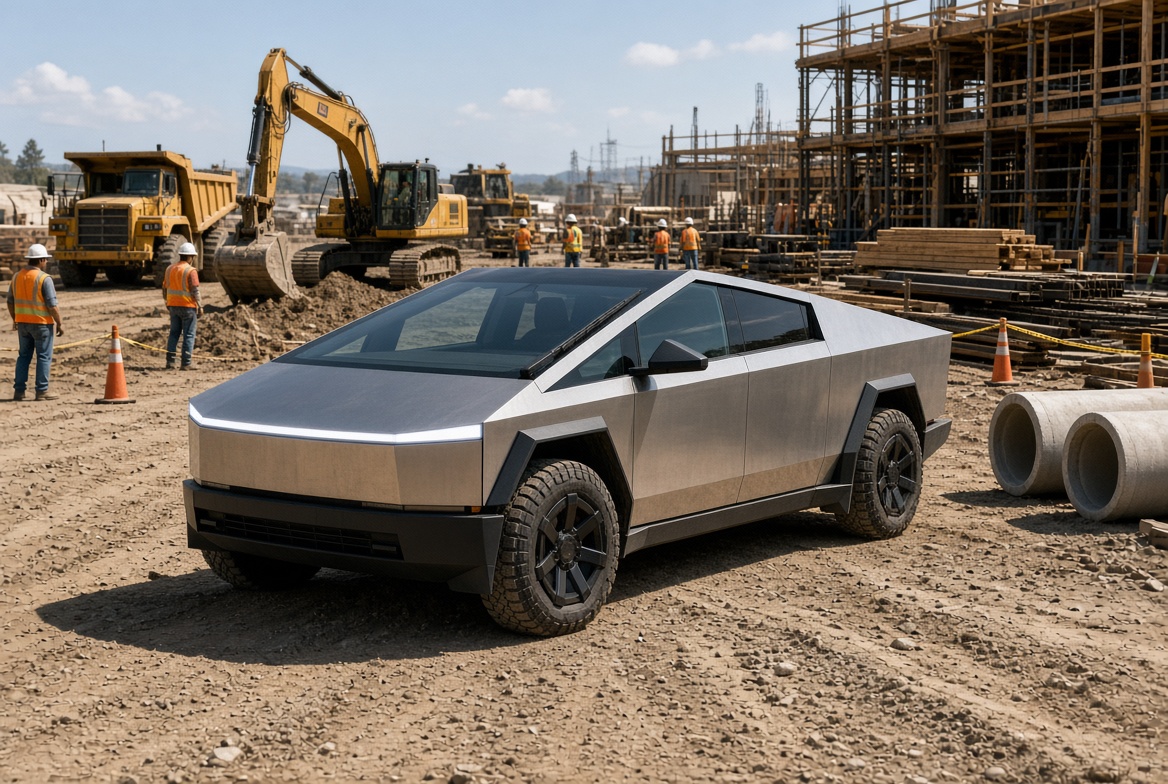
Tesla’s Cybertruck team added two more items to the Tesla Shop, targeting job site crews and owners who use the truck bed for actual work rather than just showing it off. The official Cybertruck X account posted the Tailgate Utility Track and the Bed Gear Box within minutes of each other, part of a five item batch that also included a reflective jacket, a spray paint hat and an updated reflective tee.
The Tailgate Utility Track runs $350 and turns the folded down tailgate into another mounting surface. It’s a single aluminum track with a T-slot for sliding accessories and two L-track attachment points, plus two load stops included in the box. The pitch is straightforward: strap down oversized cargo, like lumber or a cooler, that hangs off the back of the bed without it sliding out mid-drive. It bolts onto the existing tailgate and works on every Cybertruck trim.
Tailgate Utility Trackhttps://t.co/PCAYXlFBvS pic.twitter.com/sCV2NVxf1W
— Cybertruck (@cybertruck) September 3, 2026
The Bed Gear Box costs $985 and is a different kind of accessory. It’s a lockable aluminum storage box, 55.78 inches long, 19.8 inches wide and 7.79 inches tall, that mounts to the bed’s L-track rails and comes with two internal bins for smaller items. According to Tesla, at just over 57 pounds empty, it’s meant to stay in place rather than come in and out with each trip, giving owners a factory-fit alternative to loose totes for tools, recovery gear or emergency supplies. Tesla’s listing notes that Long Range and Dual Motor AWD Cybertrucks need the L-Tracks accessory installed separately before the Gear Box will mount, since L-tracks come standard only on certain configurations.
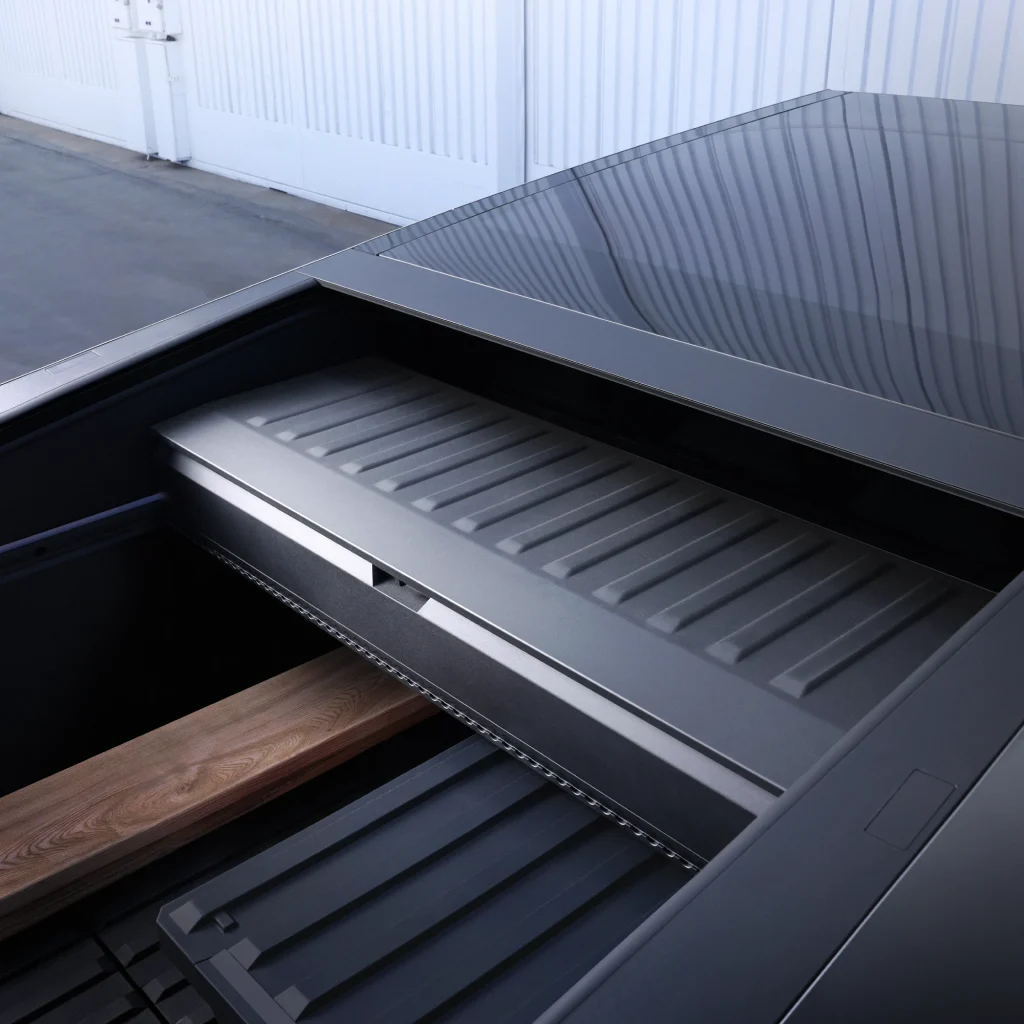
Tesla Cybertruck bed gear box accessory
Both accessories lean on the idea Tesla has been building toward since Elon Musk first described the Cybertruck’s third-party attachment strategy at the 2023 shareholder meeting, when he said the truck would ship with mounting points so outside companies, and Tesla itself, could keep adding gear without redesigning the bed. That’s the same L-track backbone underneath the tailgate shield and jumpseats Tesla launched last year, and the off-road armor package that arrived through the same X account in 2025.
Owners looking to round out the rest of the L-track ecosystem, cargo dividers, MOLLE panels, bed racks and similar gear, can find a wider range of options through our Cybertruck accessories collection.

Tesla Cybercab launch catches NHTSA’s attention who wants to know more

Tesla Cybercab is coming to Asia this month as US service officially begins


