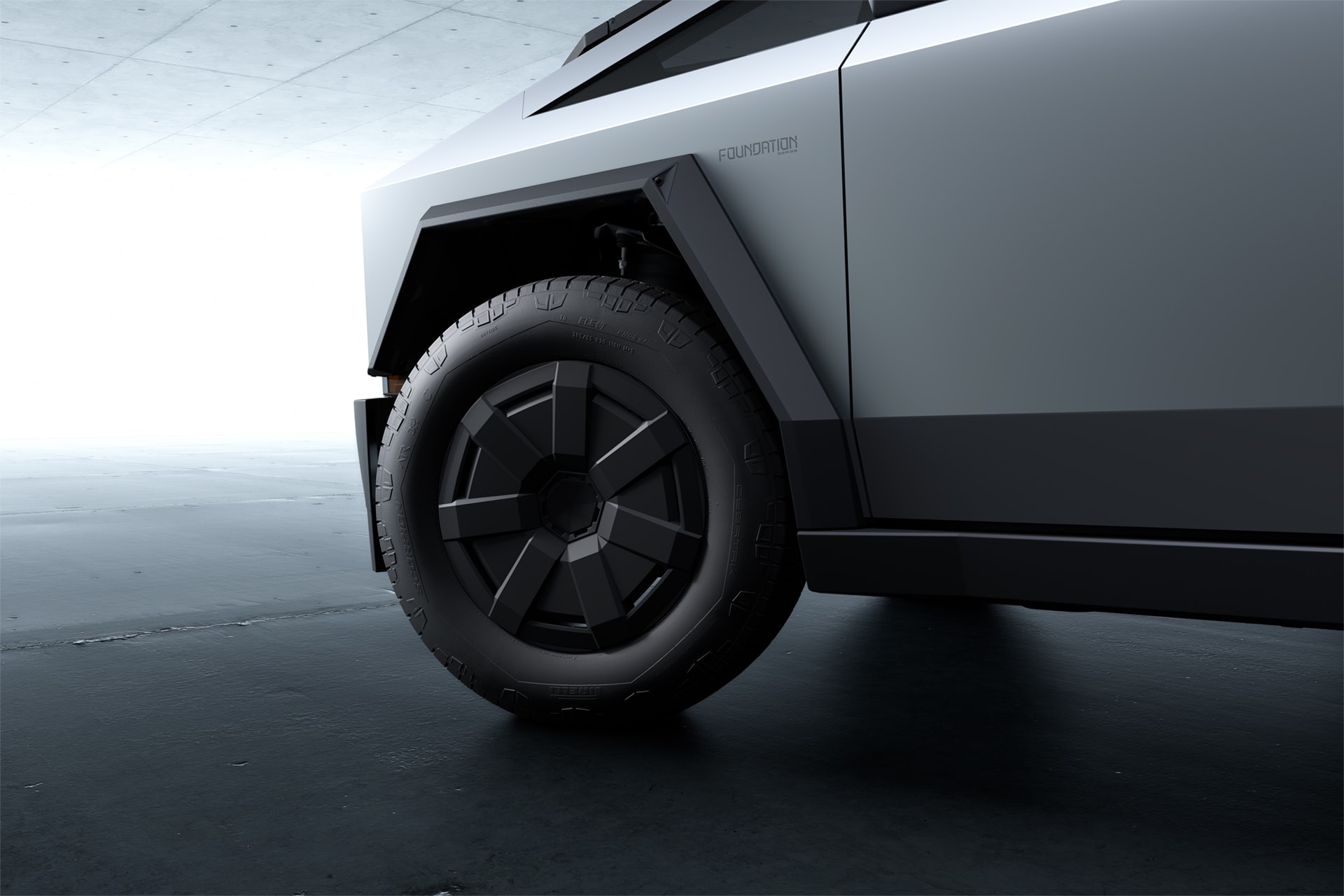

Amidst the multiple fires that have forced an estimated 150,000 people to evacuate, caused fatalities and burned down a significant amount of property, Elon Musk, Tesla and others have shared a few of the relief efforts the company has undertaken.
Musk noted that the companies are utilizing the Cybertruck and Starlink to aid both authorities and evacuees, while others have shared their experiences using the company’s products to keep the lights on, evacuate and more.
Here are a few of the relief efforts Tesla and Musk have put in place, as well as experiences from some of the company’s customers.
Some Tesla Cybertruck deliveries paused to prioritize relief efforts, Starlink offers free service
On Sunday, Musk said on X that some Cybertruck orders would be delayed due to the company using them for relief efforts, in addition to a few other measures the company has announced in the past few days in efforts to help those affected by the fires. The CEO wrote the following message in the afternoon:
Apologies to those expecting Cybertruck deliveries in California over the next few days.
We need to use those trucks as mobile base stations to provide power to Starlink Internet terminals in areas of LA without connectivity.
A new truck will be delivered end of week.
In a follow-up post, Musk added:
We are going to position Cybertrucks with Starlinks and free WiFi in a grid pattern in the areas that most need it in the greater LA/Malibu area
After the posts, multiple users reached out to Teslarati requesting some of these support Cybertrucks in Pasadena. We asked Musk if it would be possible for victims to request help in certain areas, in addition to those he mentioned previously, though he hasn’t yet responded to whether this area will be covered at the time of writing.
Hey @elonmusk, we’ve gotten a few folks in Pasadena who are in need as well.
Is there a way you or @Tesla could set up a way for victims to request help in certain areas of LA? 🙏 https://t.co/2WkaChSfmW
— TESLARATI (@Teslarati) January 12, 2025
In an email that was sent to Starlink customers last week that was seen by Teslarati, SpaceX announced that it was temporarily providing one month of free Starlink service to customers, writing that it was being proactively added to accounts without requiring anything from the consumer. Musk followed up and echoed the sentiment on Wednesday.
“SpaceX will provide free Starlink terminals to affected areas in LA tomorrow morning,” he he wrote.
Tesla donates Cybertrucks to be used as battery banks in Altadena
Along with deploying Cybertrucks equipped with SpaceX’s Starlink satellite internet over the weekend and SpaceX making the service free, Tesla also donated some of the electric trucks to be used to power buildings for authorities involved in fighting the fire, as was highlighted on Saturday. In a post on Instagram, the Altadena Mountain Rescue account shared photos of a few Cybertrucks in a parking lot, saying that they were being used as battery banks amid outages.
The account writes:
A donation of Cyber Trucks from Tesla Motors to be utilized as battery banks at the station until power is restored to the station.
This will greatly help the team to power radios, computers and lights as we work into the dark.
Credit: Altadena Mountain Rescue | Instagram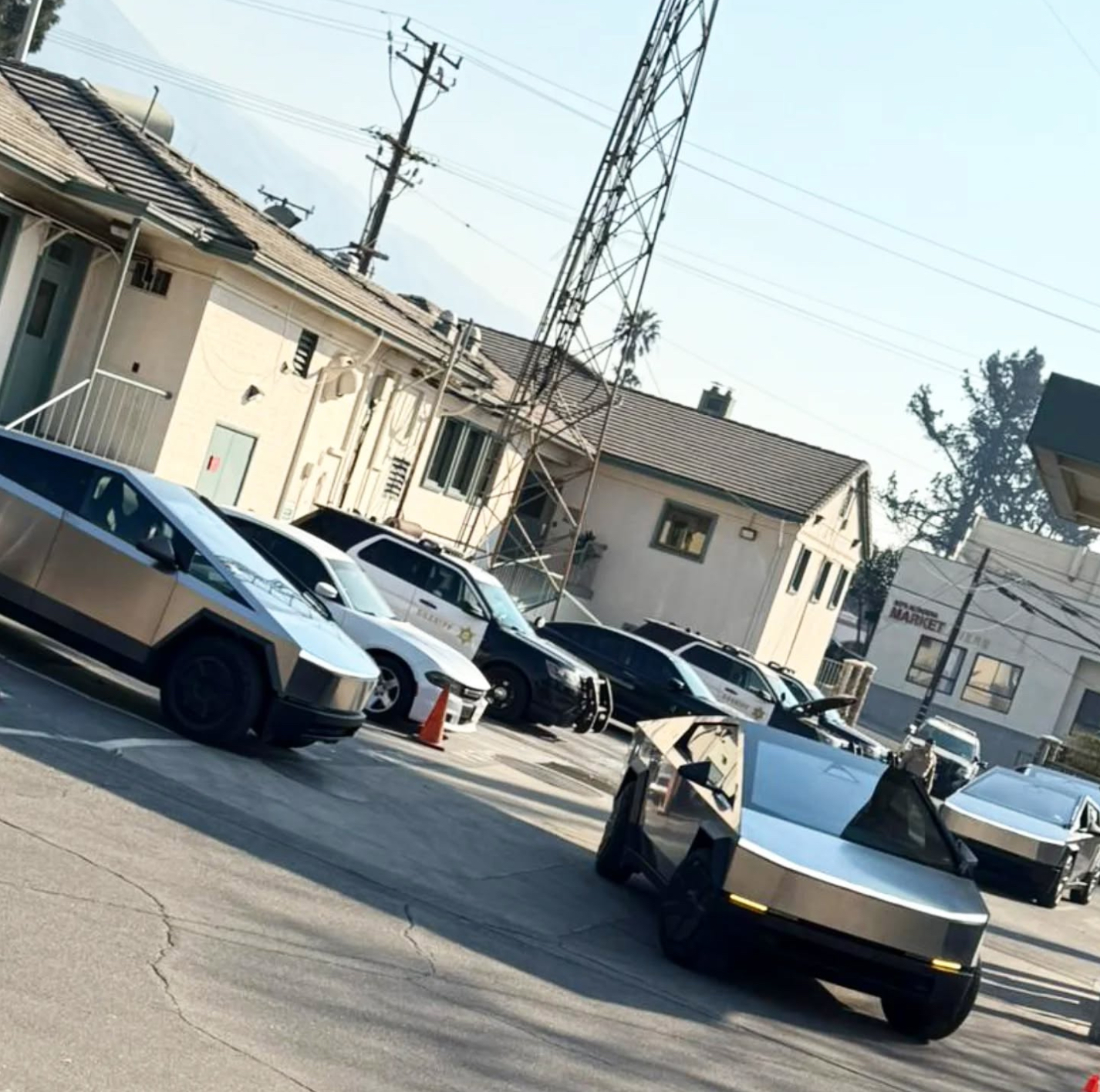
Tesla also outlined the Altadena Cybertrucks and a wide range of other things it’s doing in a post on X on Sunday, including mobile Megapack charging stations and Powerwalls for Starlink:
Summary of efforts Tesla has done to support employees & communities impacted by the LA fires
Impacted employees (home lost or destroyed by fires) We’re covering housing accommodations & supporting employees with transportation & meals.
Superchargers
All our Supercharger sites are back online, except Pasadena Supercharger, which was in the middle of the fire.
Megapack Chargers (MPCs)
2 units deployed Friday 1/10 to relieve congestion in Thousand Oaks for evacuation & families losing power due to Public Safety Power Shutoffs (PSPS).
1 unit deployed Saturday 1/11 in Altadena at the Sheriff’s Station for first responder support, providing power & Starlink connectivity. It’s located within their closed perimeter with utility power currently down.
2 mobile switchgear units with step down transformers that enable an MPC to support powering up 208V buildings (vs only 480V) & more utility than charging up EVs.
2 units in San Bernadino
We’re also working on deploying units in the Palisades directly
Mobile Powerwall Units (MPUs)
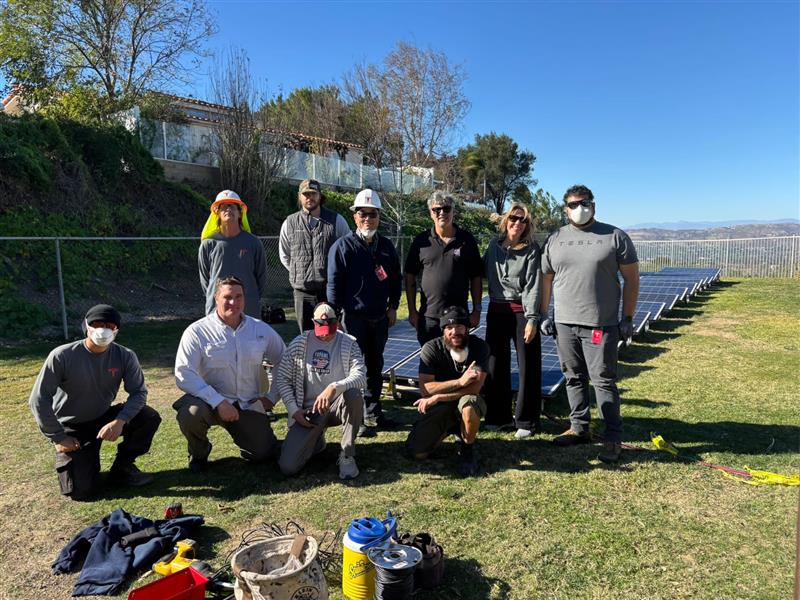
Deployed with support from 3rd party non-profits in Altadena & Topenga Canyon with Starlink & power for devices & fridges.
Cybertrucks (all with Starlinks installed)
3 Cybertrucks are now located at Los Angeles Sheriff’s Department in Altadena (+ bed filled with water & snacks) 2 in Pasadena 3 in Zuma Beach & Malibu
Mobile Superchargers powered by Megapacks deployed at Thousand Oaks, CA – West Hillcrest Drive Supercharger.
- Up to 16 stalls at 250kW
- Free Wi-Fi for anyone through Starlink
- Charging available for all EVs
- We’re monitoring where else they’re safe to deploy and helpful.
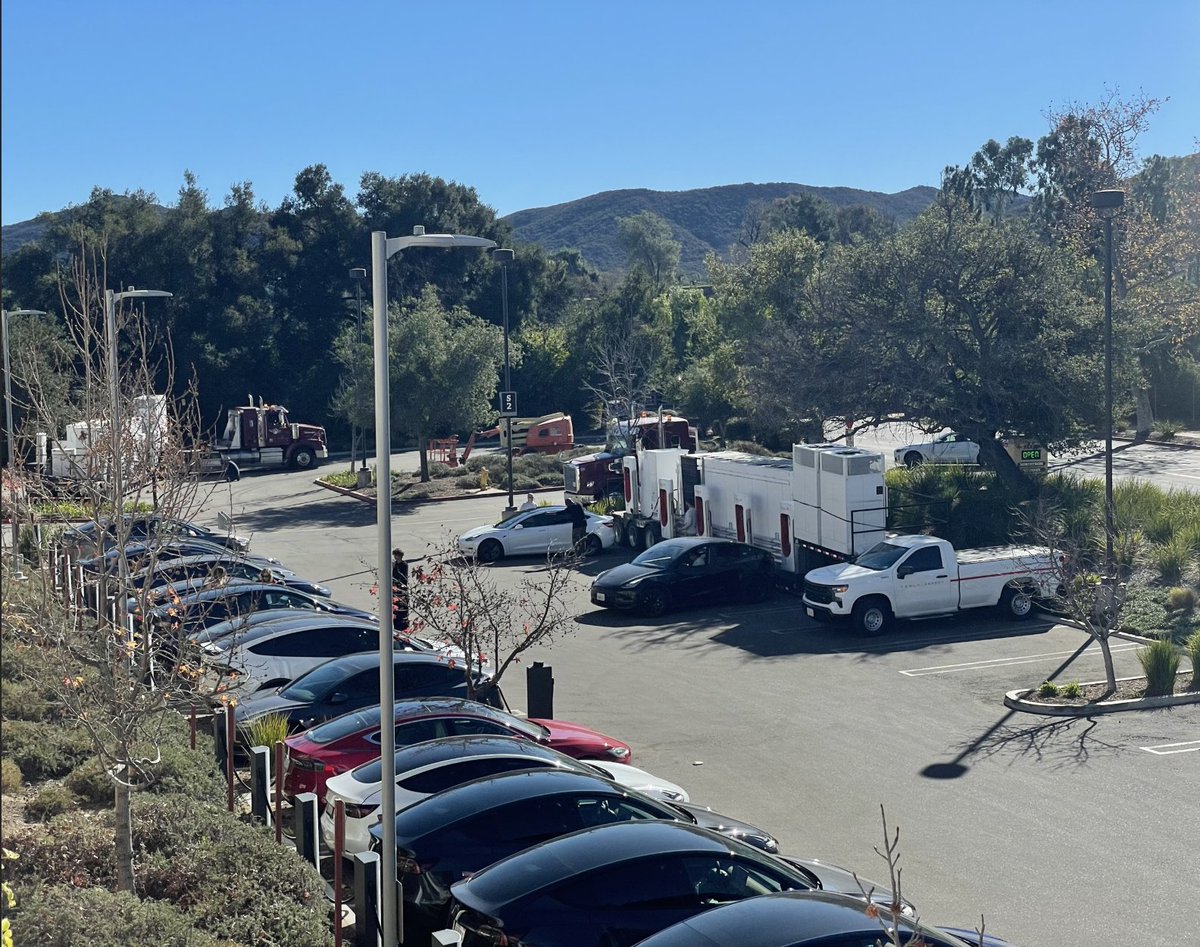
Credit: Tesla | X
MegapackCharger deployed at Altadena Sheriff’s Station for power & connectivity
Credit: Tesla | X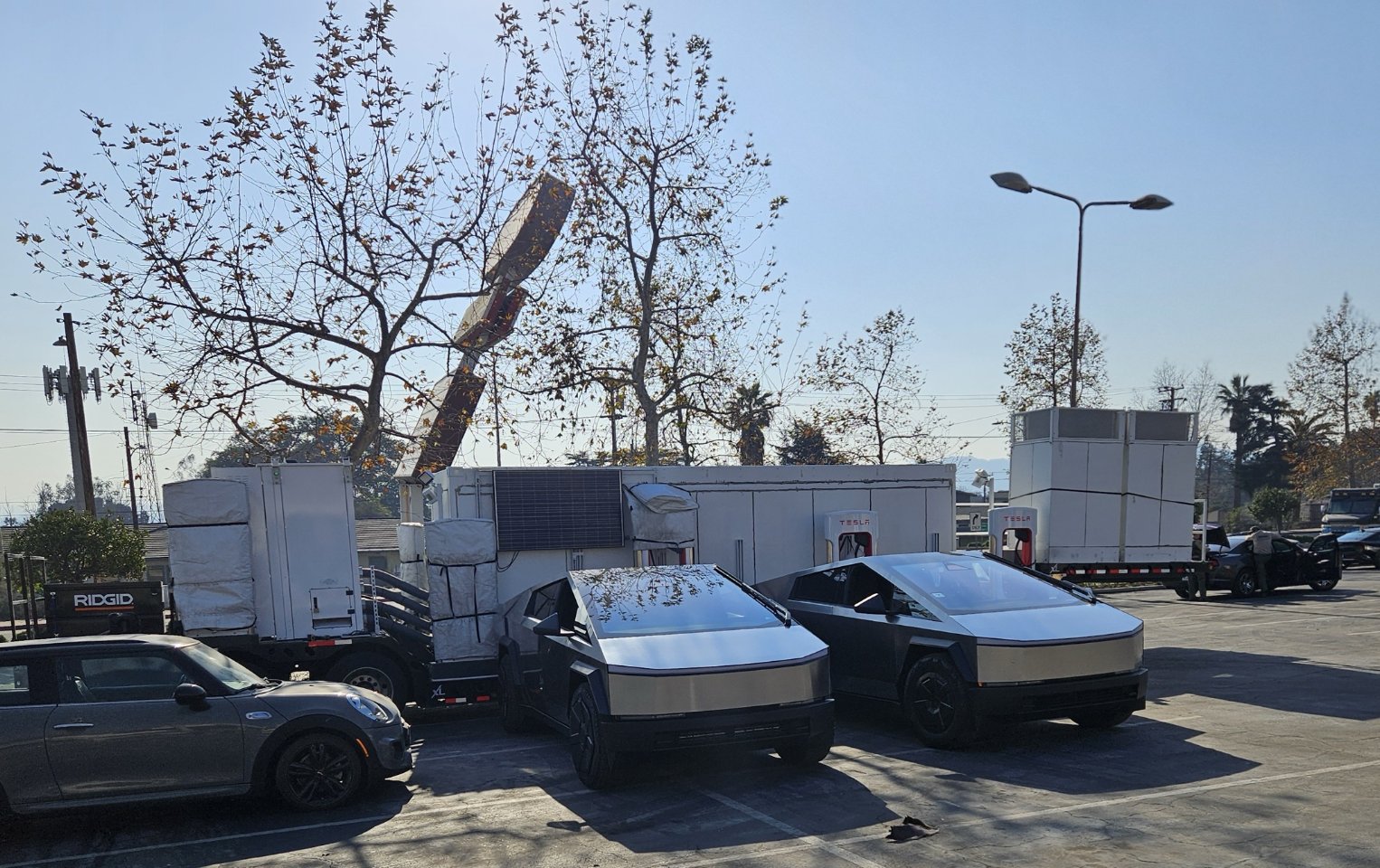
MPUs in Topenga Canyon + team installing them
Credit: Tesla | X Credit: Tesla | X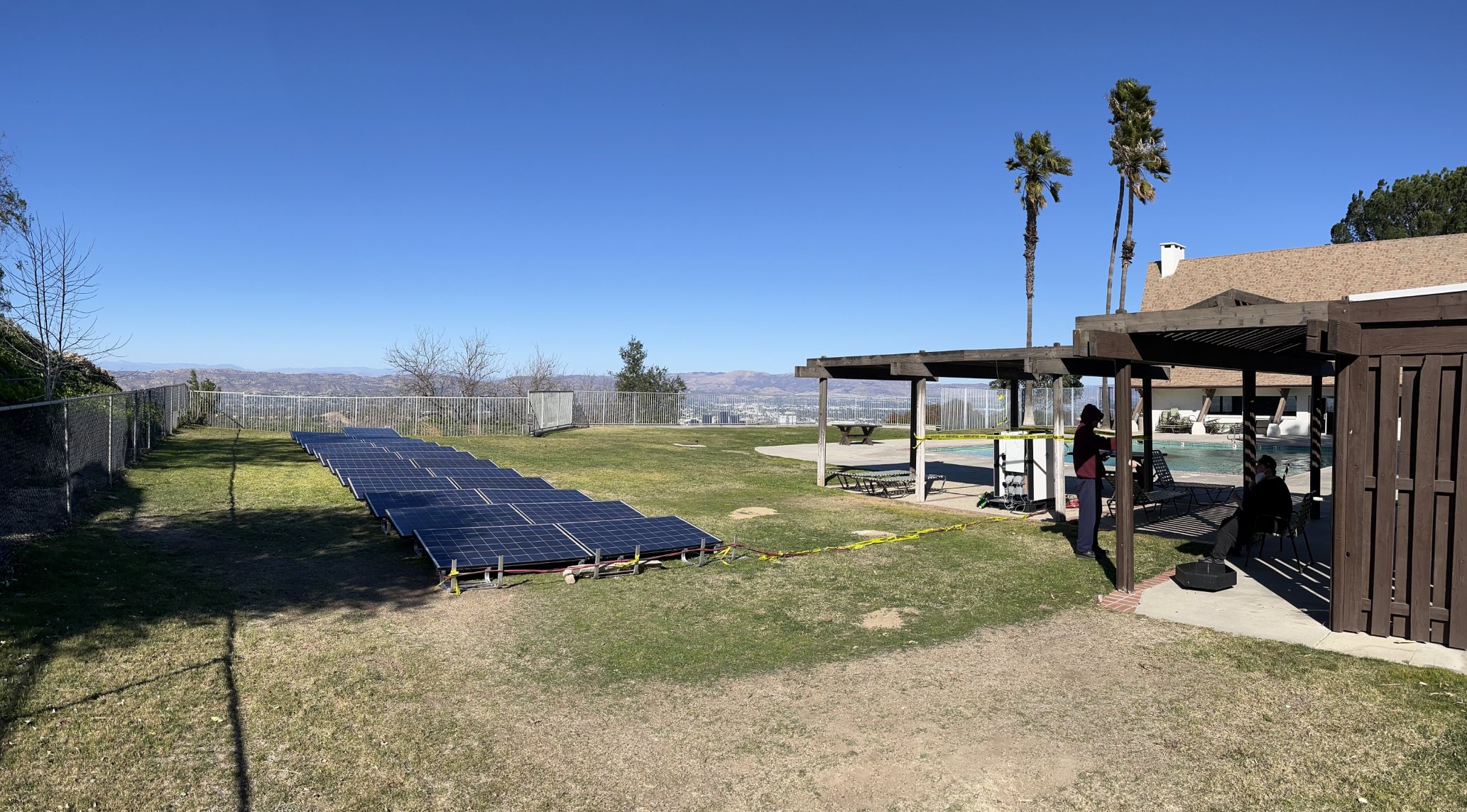
Cybertrucks at Altadena Sheriff’s Station
Credit: Tesla | X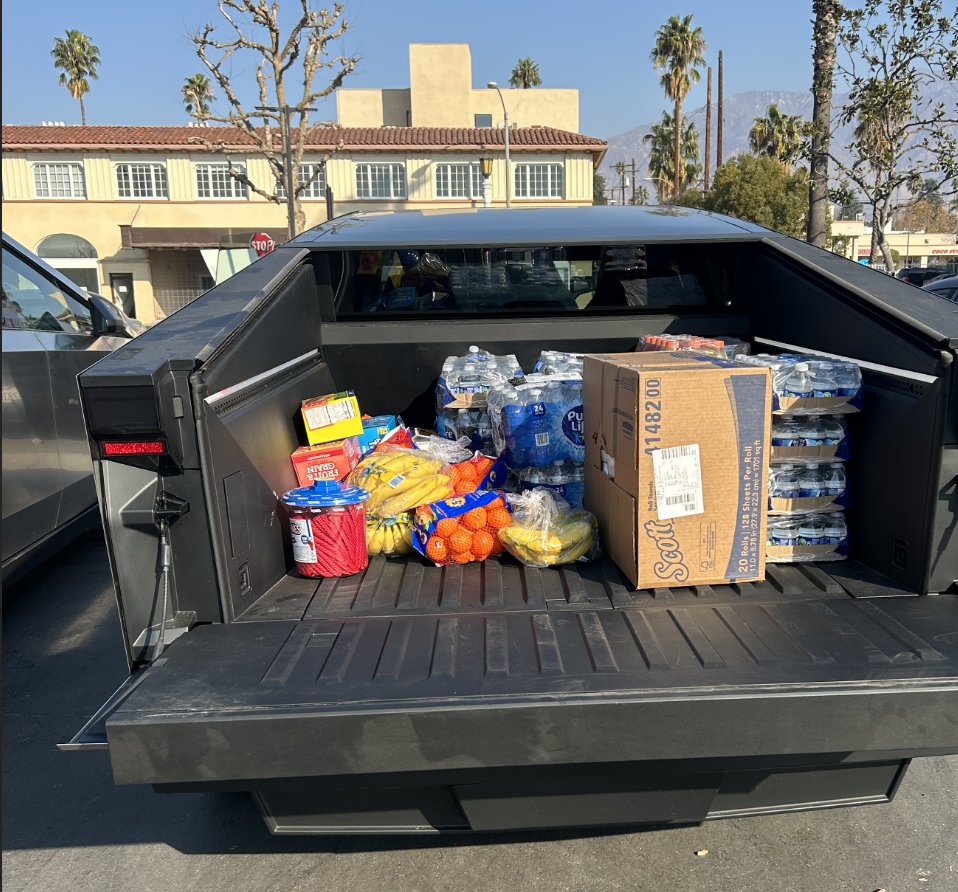
READ MORE ON TESLA CYBERTRUCK CLIMATE DISASTER RELIEF: Tesla Cybertruck owners share insights after Hurricane Helene encounter
Tesla forgives Autopilot and FSD Supervised strikes in California for those evacuating
On Thursday, Tesla’s North America account on X also posted about one of the company’s relief initiatives, officially announcing that it would forgive all Autopilot and Supervised Full-Self Driving (FSD) strikes in the state of California to help aid those evacuating.
“To support people evacuating from the fires in the LA area, all Autopilot & FSD Supervised strikes are being forgiven in the state of California,” Tesla wrote in the post.
One Tesla owner shares Cybertruck Powershare experience
Along with Tesla’s fire relief efforts, one Cybertruck owner has shared an experience using the electric vehicle (EV) to keep a household powered during outages using Powershare—not unlike how it was used by the Altadena Mountain Rescue team.
In the post on the Cybertruck Owner’s Club forum on Wednesday, the user located in Orange County described using the Cybertruck’s Powershare to keep his household with electricity, saying that he had used about 25 miles of range from the EV about six hours into using it. As can be seen in the user’s screenshot of the Tesla app, the vehicle shows 202 miles of range remaining, saying that it still has over a day’s worth of energy.
Credit: MilliM | Cybertruck Owner’s Club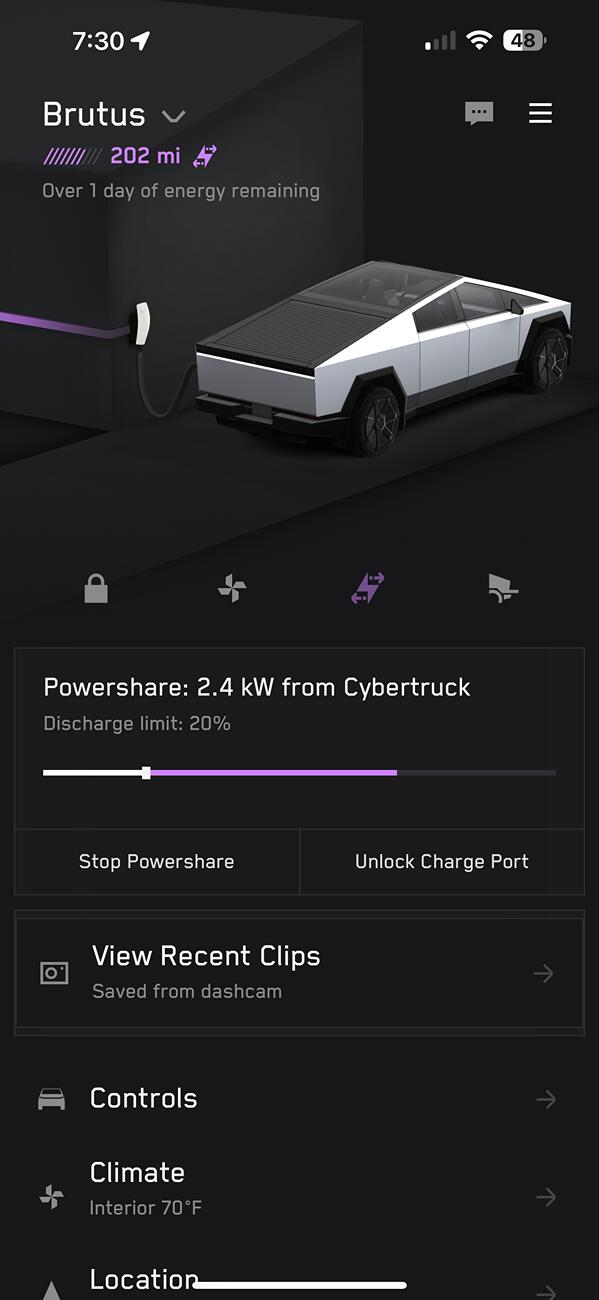
What are your thoughts? Were you or someone you know affected by the fires and used one or more of Tesla’s products to help with evacuation or power outages? Let me know at zach@teslarati.com, find me on X at @zacharyvisconti, or send us tips at tips@teslarati.com.
FEMA deploys Starlink in North Carolina for disaster relief operations
Need accessories for your Tesla? Check out the Teslarati Marketplace:



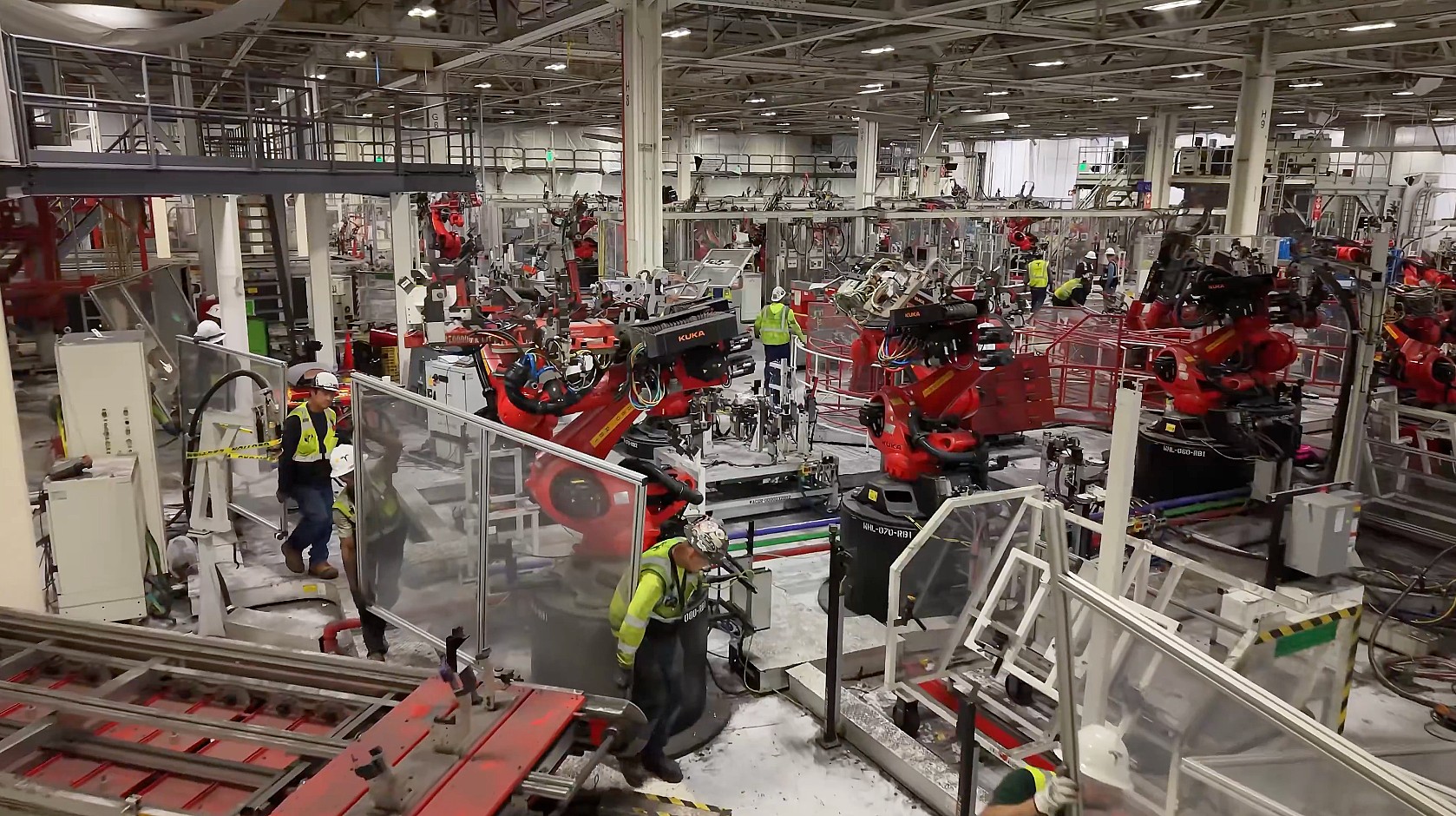
Tesla shared a striking video showcasing the decommissioning of the original Model S and Model X assembly line at its Fremont Factory in Northern California. Completed in just 46 days, the teardown involved heavy machinery dismantling concrete pits, removing robotic arms and conveyors, and clearing the space for new production.
The post, captioned “End of an era,” captured both the end of a historic chapter and Tesla’s aggressive pivot toward its next major initiative, Optimus.
End of an era: Decommissioning the original Model S & X assembly line in just 46 days pic.twitter.com/kGEdfhl62h
— Tesla Manufacturing (@gigafactories) July 10, 2026
The decision to retire the Model S and Model X originated during Tesla’s Q4 2025 Earnings Call in late January 2026. CEO Elon Musk announced that production of the company’s flagship sedan and SUV would wind down by the end of Q2 2026, describing it as bringing the programs to an “honorable discharge.”
Custom orders ceased around early April 2026, with the final vehicles rolling off the line in early May. A special signature delivery ceremony on May 20 marked the emotional close for these vehicles, which had defined Tesla’s early success and luxury EV segment since the Model S launch in 2012.
The primary reason for tearing down the lines was to repurpose the valuable factory floor space for high-volume production of Tesla’s Optimus humanoid robot. Musk had indicated on Earnings Calls that the Fremont S/X line would be replaced by a dedicated Optimus manufacturing line targeting a capacity of one million units per year.
This move aligns with Tesla’s broader strategic shift from traditional vehicle manufacturing toward robotics and artificial intelligence, leveraging the company’s expertise in autonomy, AI training, and high-volume production.
Optimus, Tesla’s general-purpose humanoid robot, is designed to perform repetitive or dangerous tasks in factories, warehouses, and eventually homes. Powered by Tesla’s AI and Neural Networks, it aims to be a versatile, affordable platform. Production of Optimus Gen 3 is already underway in limited form at Fremont, with full-scale output on the converted line expected to begin in late July or August.
Tesla is targeting rapid scaling, with internal ambitions pointing toward tens or even hundreds of thousands of units annually by the end of 2026.
Longer-term, Tesla is constructing a much larger second-generation Optimus facility at Giga Texas, with potential capacity reaching millions of units per year. The company views Optimus as a transformative product that could eventually surpass its automotive business in scale and value, enabling widespread deployment of useful robots across industries. CEO Elon Musk has even predicted it would be the most popular product of all-time.
As one era closes at Fremont, another is rapidly taking shape.
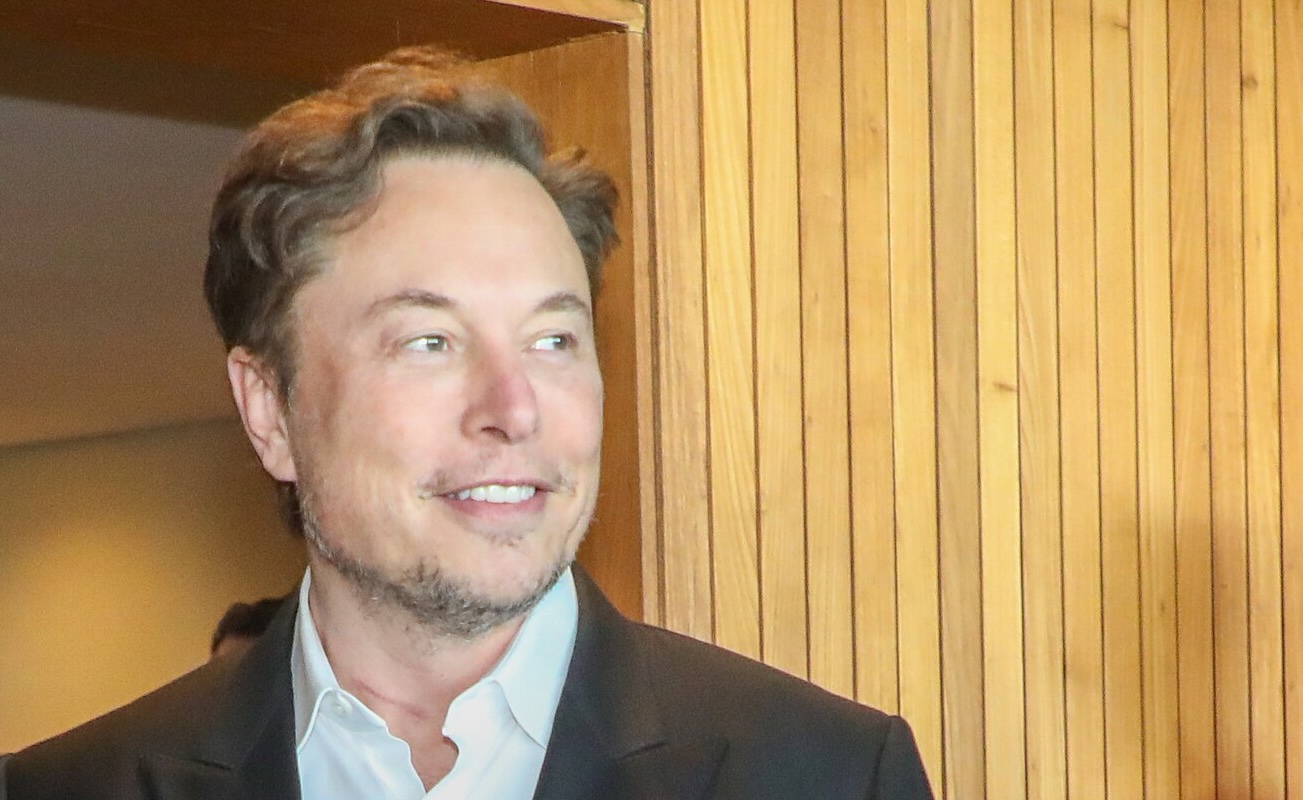
Elon Musk posted a candid admission on his social media platform X on June 9, declaring that he had been “clearly wrong” about Anthropic. The statement marked a notable reversal from his earlier skepticism toward the AI company.
In September, Musk had written, “Winning was never in the set of possible outcomes for Anthropic,” reflecting his view at the time that the startup had lacked the foundation or even the trajectory to succeed in what is an incredibly intense race for advanced artificial intelligence.
Musk’s latest post came amid discussion of Anthropic’s reliance on external compute resources. He praised the company’s progress, stating that Anthropic is “obviously currently the leader in AI” and that “no company has released a model as good as Mythos/Fable,” with expectations of a strong follow-up in Mythos 2.
The tone shifted dramatically from dismissal to acknowledgement of superior performance.
I was clearly wrong about Anthropic. They are obviously currently the leader in AI. No company has released a model as good as Mythos/Fable and they will undoubtedly have Mythos 2 ready soon.
And I would never cut them off in a way that hurt them badly, even as a competitor.…
— Elon Musk (@elonmusk) July 9, 2026
The context of Musk’s comments added significance. Anthropic has been operating under a recent compute deal with SpaceXAI, Musk’s AI infrastructure-focused venture. The pair entered a short-term GPU lease agreement initiated in May, providing Anthropic access to critical computing power for training and deploying its frontier models.
SpaceXAI signs agreement with Anthropic for massive AI supercomputer access
Some observers had speculated that Musk could leverage this dependency to disadvantage a rival. Musk directly addressed the possibility, writing, “I would never cut them off in a way that hurt them badly, even as a competitor. That’s not my style.”
To support his commitment to ethical competition, Musk referenced concrete examples from his other companies. Tesla famously open-sourced its entire portfolio of electric vehicle patents in 2014. The move was designed to accelerate the global adoption of sustainable transportation technology rather than protect proprietary advantages.
Tesla also made its Supercharger network available to competing electric vehicle manufacturers, transforming what could have remained an exclusive charging ecosystem into a shared infrastructure that benefits the broader industry and reduces barriers for EV adoption.
Musk further pointed to SpaceX’s practices, noting that the company launches satellites for competing commercial systems “with no increase in price or use of unfair terms.” He extended the principle to his social platform, observing that “even my worst enemies attack me on this platform,” underscoring preference for open discourse over retaliation.
These examples have illustrated Musk’s long-standing philosophy that long-term technological progress is best served by open competition and infrastructure sharing rather than leveraging market power to stifle rivals. In the fast-evolving AI sector, where compute resources and model capabilities determine leadership, Musk’s stance suggests a willingness to compete on innovation and performance alone.
Musk’s admission arrives as SpaceXAI itself advances its own frontier models while maintaining business relationships across the ecosystem. By publicly correcting his earlier assessment and reaffirming principles of fair play, Musk highlights a model of competition that prioritizes advancement of the field over short-term tactical advantages.
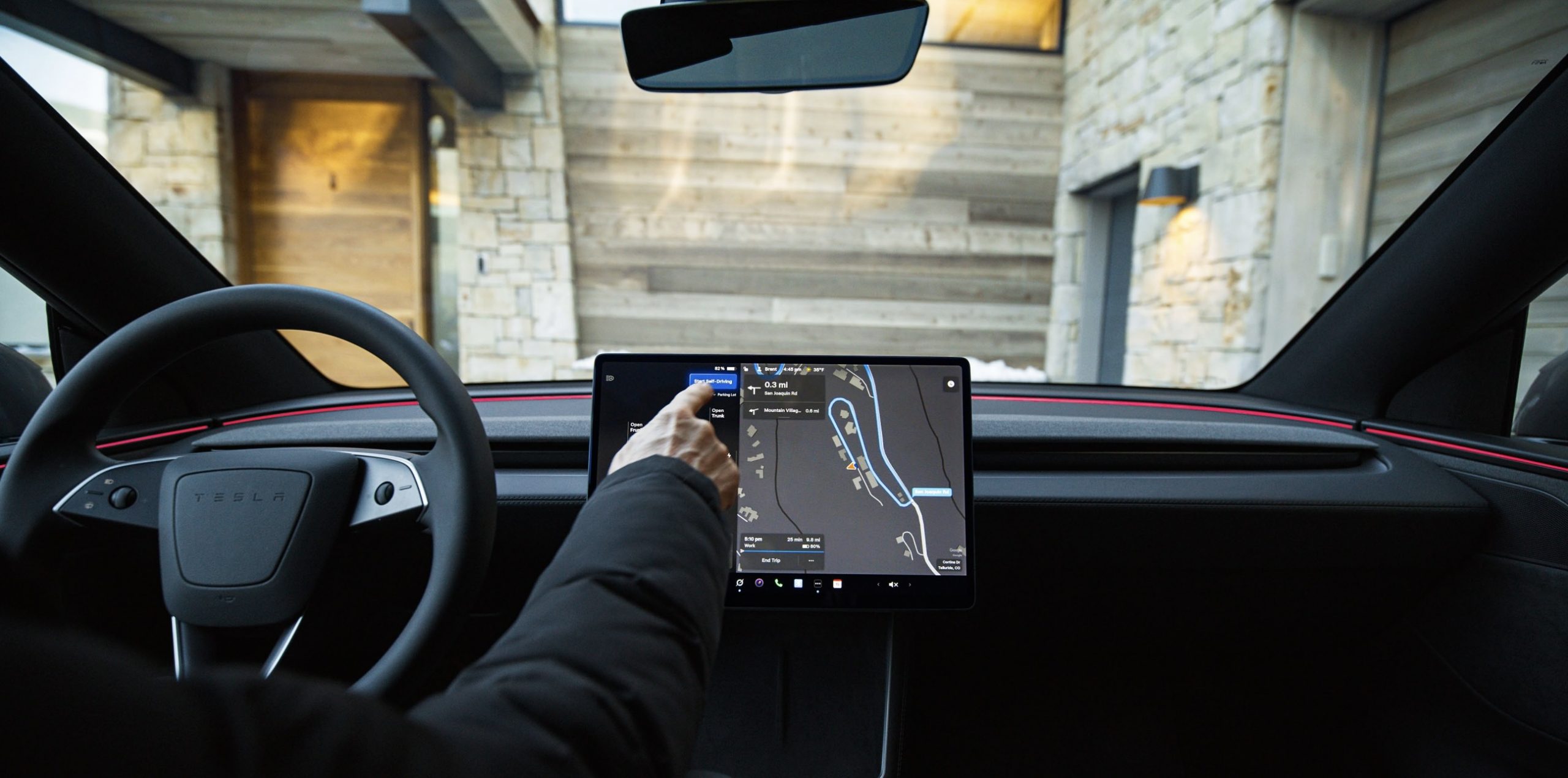
A Tesla analyst believes the company’s Full Self-Driving suite is close to an “inflection point,” where people will finally realize that it is more than what it appears, similar to how many view the iPhone.
Pierre Ferragu, an analyst who has covered Tesla for many years at New Street Research, says the Full Self-Driving suite is one piece of evidence supporting the view that a Tesla is more than a car. He compared it to the iPhone and noted that the high price tag seemed like a lot for a phone early on. Then people realized the iPhone was more than just something you make calls with. It made their lives simpler.
🚨 Analyst @p_ferragu says Tesla Full Self-Driving is at an “inflection point” in a recent commentary:
“A Tesla is not a car, the same way an iPhone was not a phone. As a tool that gets you to work peacefully every morning, it is not expensive. Give us 2 more quarters to see… pic.twitter.com/tm6xFrjVPV
— TESLARATI (@Teslarati) July 10, 2026
Suddenly, that price tag was justified.
Tesla offers several models under the average transaction price for a new vehicle, which was above $49,000, according to Kelley Blue Book. However, that does not take into account that many people can still not afford a $35,000 vehicle. Ferragu offers his thoughts:
“Remember when the addressable market of the iPhone was 10 million units? Then people realized how good it was, and now, nearly 250m are sold every year.
A similar evolution for Tesla is still on the table. A Tesla is not a car, the same way an iPhone was not a phone.
A model 3 at $35k + $100 per month is too expensive for most, but only as a car, the same way a $600 iPhone was too expensive for most, until most realized it was much more than a phone.
As a tool that gets you to work peacefully every morning, it is not expensive.”
This point is valid, especially considering the iPhone’s impact on the cell phone market. There are still a handful of players, but most people you know have an iPhone. The iPhone ties into Apple’s other ecosystem of products.
This is how Tesla plans to infiltrate the automotive market, and once the company offers a fully autonomous suite, or something that can allow for unsupervised self-driving, more and more people will flock to Tesla.
Ferragu believes Tesla needs two additional quarters of development before things will truly change. He didn’t elaborate on what will happen in two quarters, but he said it will give us all time to “see where this is heading.”
It is really quite interesting to see people’s reactions when they find out what a Tesla is capable of. Full Self-Driving is a great tool for taking stress out of travel; I use it daily, and it has made it really difficult to consider taking any other car on a drive of practically any length.
To me, it is really hard to believe that people will not at least seriously consider a Tesla as their next car if they experience Full Self-Driving. This is a major point for those who argue that Tesla should advertise in some way.

Tesla shows rapid teardown of Model S and X lines, paving the way for Optimus at Fremont

Elon Musk admits he was ‘clearly wrong’ about Anthropic


