News
Tesla Model Y Standard Full Review: Is it worth the lower price?

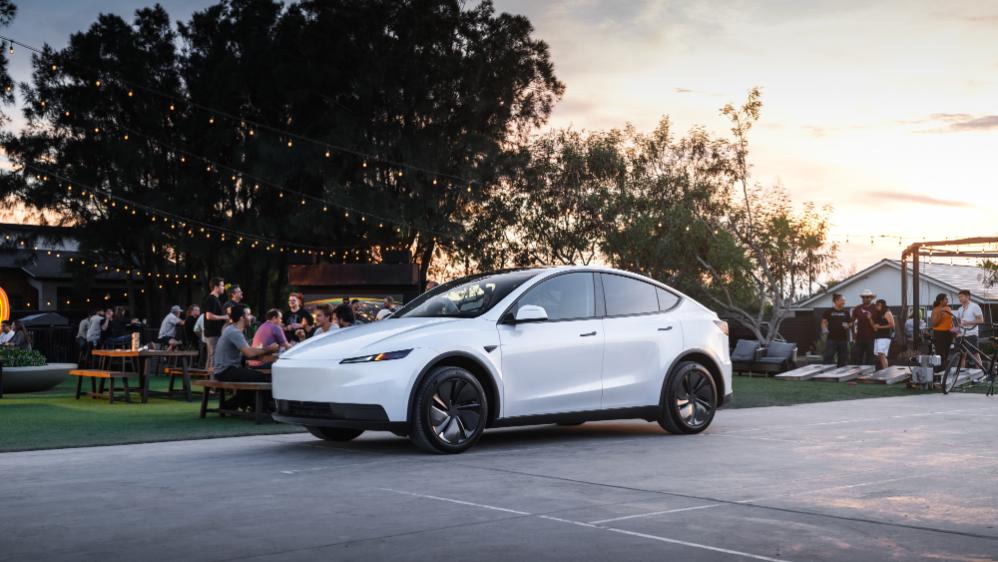
Tesla launched the Model Y Standard as an attempt to offer affordable electric vehicles to consumers now that the $7,500 EV tax credit is gone. We were able to spend four days with the car, and it was more than enough time to determine whether or not the car was worth the $9,000 discount compared to the Premium All-Wheel-Drive configuration, which is what I drive daily.
The Model Y Standard was stripped of some of the features that are present in the Premium trims of the Model Y: no glass roof, a sound system with roughly half the speakers, fewer acoustic-lined glass windows, less storage, and less functionality from an interior standpoint.
However, there are some real advantages to purchasing a Standard Model Y, and there are a handful of situations where this car would be well-suited.
Do I think it is worth the lower price? Well, I’ll get to that later in this article.
Initial Thoughts
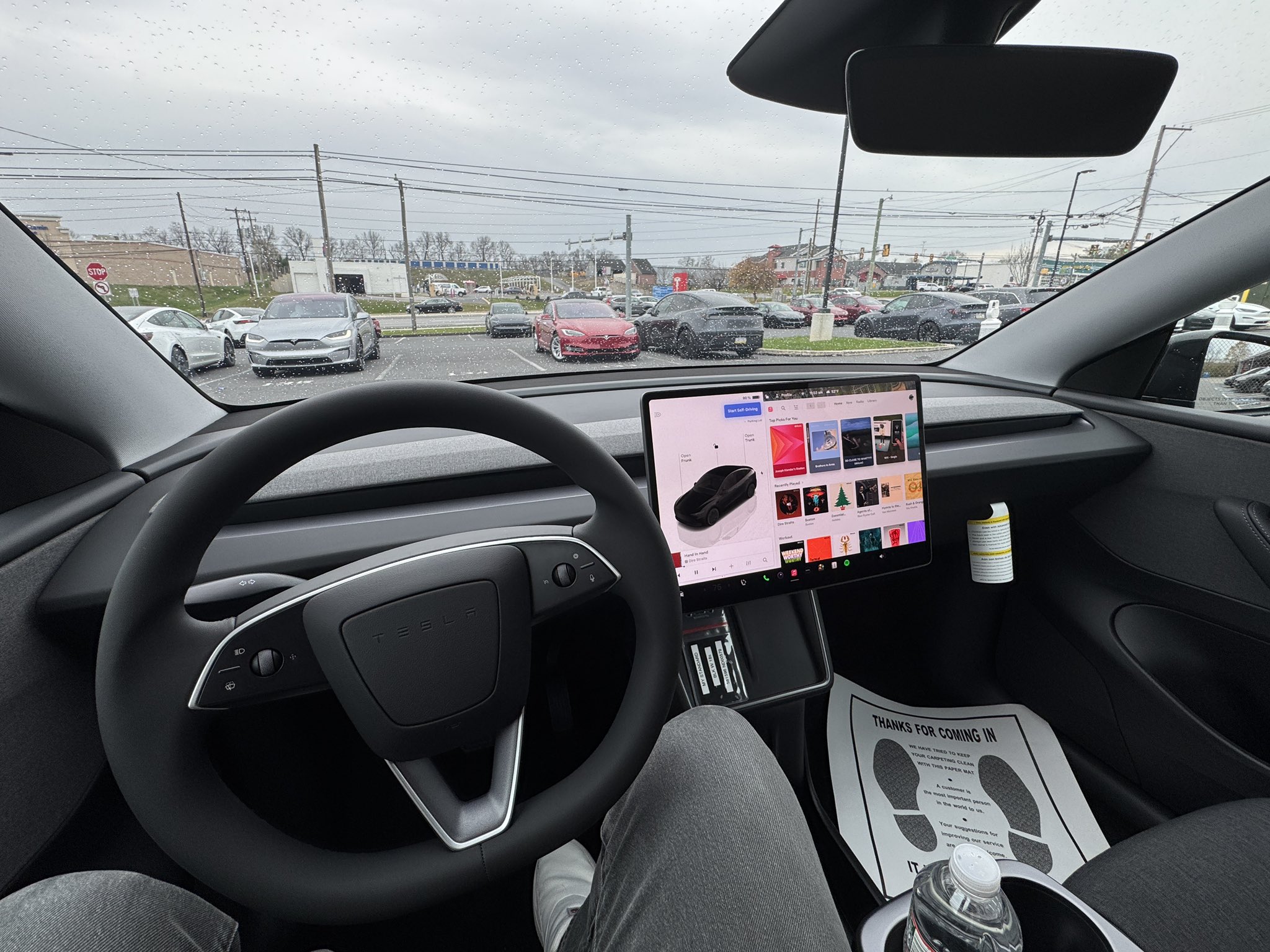
In my first impressions review of the Model Y Standard, I talked about the face-value differences between my Model Y Premium and the new, more affordable trim. You will first notice the lack of storage between the front two seats, as the cupholder and additional storage bin sliding doors are void. You still get the cupholders, but they are exposed, which isn’t a huge deal, but it definitely takes away from the sleek look the Premium trim offers.
Additionally, the textile seats replace those of the vegan leather that is available in the upper-level trims. I mentioned previously that I could take or leave the vegan leather for the textile seats, as they are easy to clean, quick drying, and hide oils from your skin much better than leather does.
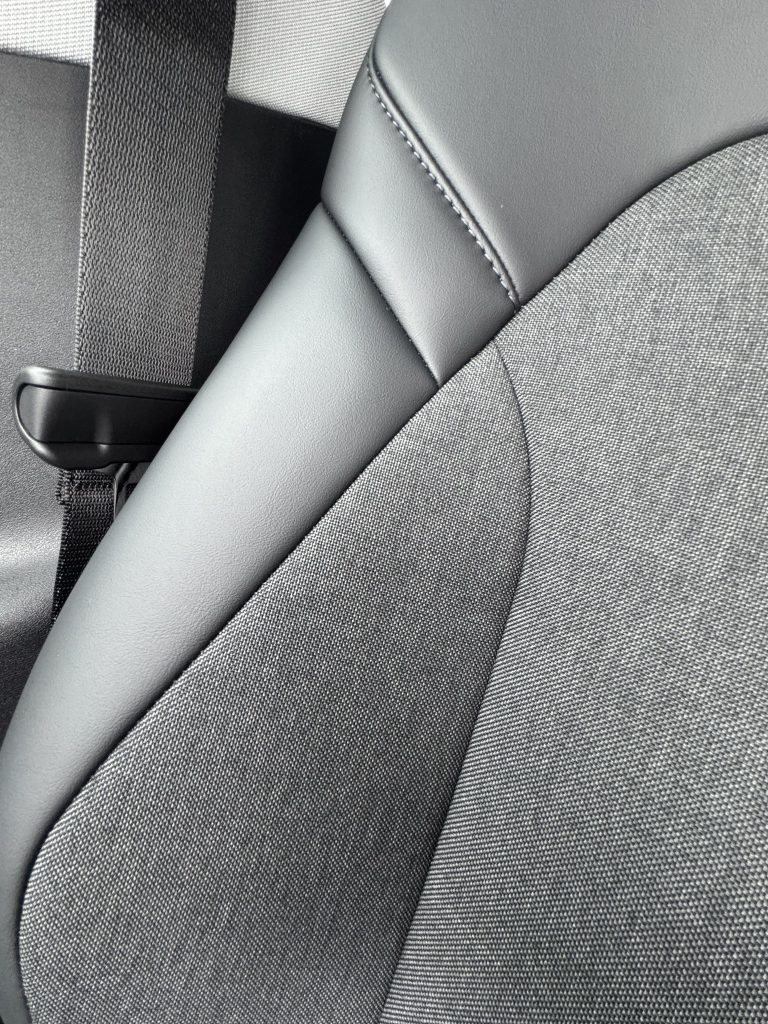
However, there comes one big sacrifice that I have been spoiled by, as the textile seats are not ventilated, so say goodbye to cooling your keister in the Summertime.
The lack of a glass roof is something many owners might not even notice. However, I have been spoiled by the glass roof in my car, and I look out of it every time I’m in my car. It is one of my favorite features, without a doubt. While it would not be a dealbreaker for me, it would be something I would miss terribly.
Things I Noticed After Several Days
Cabin Noise
One of the biggest things I noticed after the first two days in the Model Y Standard is that the cabin is much louder than the Premium. This is because Tesla did not acoustically line all of the glass in the Standard configuration, as it did in the Premium. The side windows are not treated, just the windshields. Therefore, you notice the noise level in the cabin is louder than in the Premium.
If you had not been driving in a Premium trim for a few months, you might not notice it. However, it is something that is a big sacrifice when moving to a different trim level, especially one that is less premium than what you might currently drive.
I have always been so shocked at how amazingly quiet the Premium trim’s cabin is; my Model Y is extremely peaceful, even when I’m sitting in bumper-to-bumper traffic, and people have modified mufflers and exhaust systems, tractor-trailers are going by, or crotchrockets are zipping by on the interstate.
This is a huge difference between the two cars, and it is something that is really hard to get used to. I know, first-world problems, right? But when you’re paying between $39,990 and $48,990 for a car, those little things truly do matter.
Stereo System Differences
Another thing I was very aware of was how weak the sound system is. I think if I had bought a Standard Model Y, I would have looked at having the speakers and subwoofers upgraded; I was almost disappointed in how much of a change it was between the two cars.
When I finally picked up my Model Y Premium on Friday (which had been detailed by the awesome team at Tesla Mechanicsburg), the first thing I did was crank up the volume and listen to some music. I really missed having a premium sound system.
Ride Quality
There are virtually no differences between the two cars in terms of ride quality. They are both extremely fun to drive, and the suspension in the Model Y Standard feels perhaps a little bit stiffer than the Premium. Regardless, I didn’t truly notice all that much of a change.
Driving this car around windy roads and tight turns was just as fun as my Model Y Premium. It was a blast to test out, and the slight change in feel was welcome. It’s always fun to drive new cars.
Performance
This is the first EV I’ve ever ridden in where I did not feel that awesome sensation of instant torque. It’s still a quick car, but it is missing that pep in its step that many of us have become accustomed to.
If you want to get someone’s true reaction to EV acceleration, let me just put it this way: This is not the car to do it in.
Some Little-Known Facts About the Model Y Standard
Most of us know that the Model Y Standard has a glass roof, but it is opaque, so even if you took out the headliner, you still would not see out of it. However, there is an interesting little tidbit from a Service perspective that does not make much sense.
If the Model Y glass roof cracks or is broken and needs to be replaced, Service is required to pull off the entire headliner and topside interior to access the glass. It cannot be replaced from the outside. In the Premium, because the glass is exposed, it is a much simpler process to replace the glass. This was an interesting thing I learned.
Additionally, the seat controls are only available on the center screen, which makes it difficult to adjust the seat if you are larger than the person who sat in the car previously. In order to adjust the seat, you’ll have to lean over the chair, access the controls from the screen, and adjust it manually before getting in.
Is the Tesla Model Y Standard Worth the Cheaper Price?
For an additional $9,000 to buy the Model Y Premium AWD, you would get a more capable powertrain, a quieter cabin, better performance, an upgraded interior, more storage, a better sound system, and more luxury features.
To me, the Standard is a car that seems extremely ideal for a teenager’s first vehicle (I got a $1,500 1998 VW Jetta K2 with 200,000 miles when I was 16), or a fleet vehicle. This would be the perfect car for salespeople to use: it does not have all the bells and whistles, it is efficient, and it is just what is needed to drive around to meetings.
For a personal car, it really depends on what you think you need. Admittedly, I’ve been spoiled by the Premium configuration, and personally, I wouldn’t go down to the Standard after owning a Premium trim.


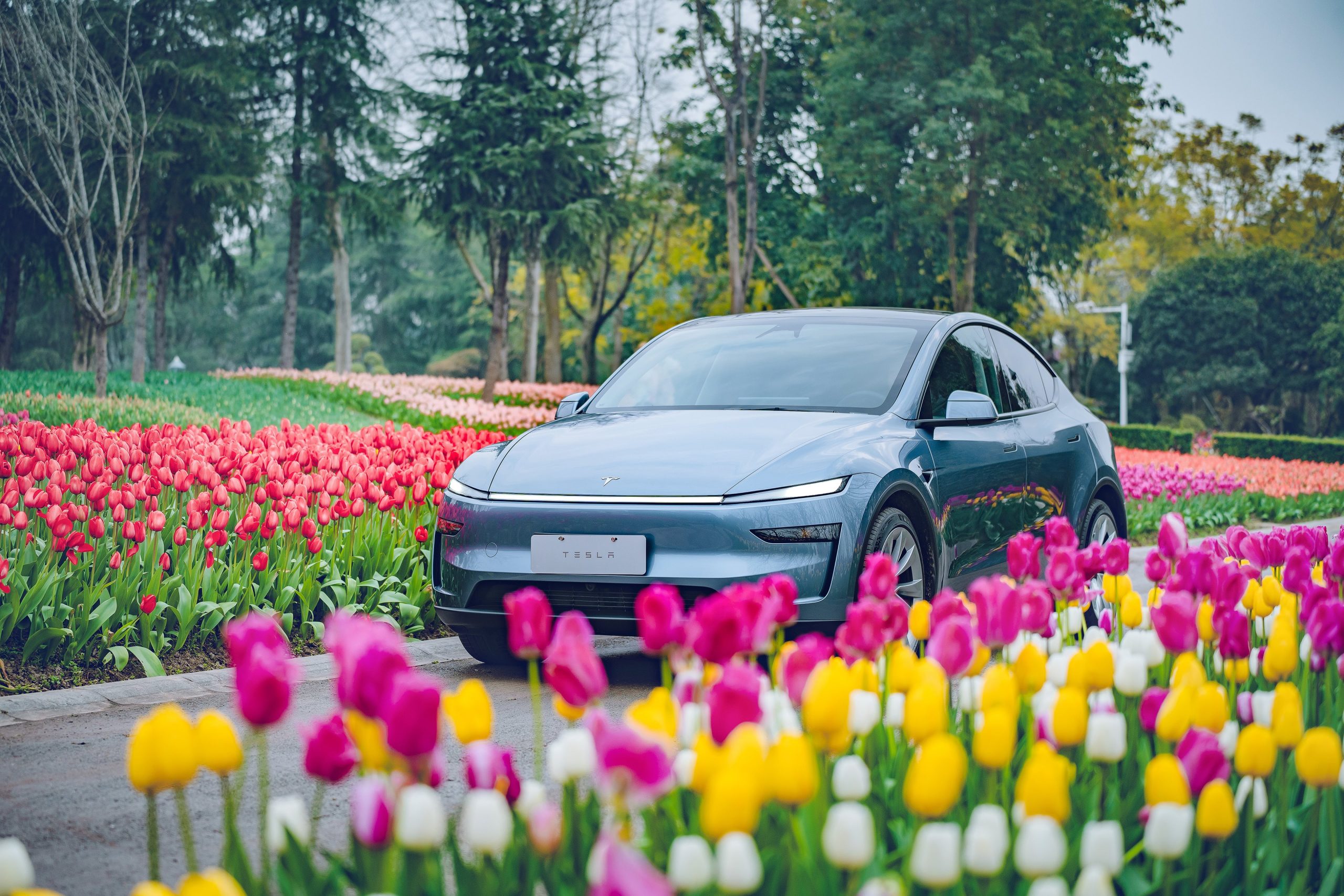
Tesla is looking to expand into a new Asian market, strengthening its presence in a region that has been bullish on electric vehicles as a whole.
Tesla officially filed to establish a subsidiary of its business in Vietnam, a report from Reuters suggests. Tesla named the entity “Tesla Motors Vietnam Limited Liability Company.”
The planned entrance into the Vietnamese market is a good sign and move for Tesla, as it has become one of the fastest-growing EV markets in Southeast Asia. It is already among the leaders in the region in both volume and electrification rate. In the first half of this year, Vietnam led Southeast Asia in battery-electric passenger car sales at about 116,000 units, up about 71 percent year over year.
Currently, Vietnamese EV drivers rely on VinFast’s V-Green network, which has about 150,000 ports, but these are primarily reserved for VinFast vehicles. Public third-party charging is fragmented and unreliable for those who do not own chargers that are dedicated to a certain manufacturer’s vehicles.
Tesla has had mixed results in Asia as a whole, and as China remains the core part of its story in Asia, the company is evidently working on expanding its footprint on the continent. Tesla’s domestic retail deliveries fell about 12 percent year over year through the first eight months of 2026.
Model Y remains a standout individual product, holding its position as one of, if not the, best-selling vehicles in the world. However, Model 3 has been weaker than it has been in past years.
Gigafactory Shanghai, the company’s Chinese production facility, still performs very well. Wholesale volumes in terms of exports have more than doubled and now exceed domestic retail sales; Giga Shanghai builds vehicles for Europe, South Korea, Japan, Australia, and other markets. South Korea has been an explicit bright spot, with registrations doubling year-to-date and Tesla frequently appearing as the top imported brand.
Tesla just did something in South Korea that no foreign carmaker has ever done
Tesla’s entrance into Vietnam signals a broader effort to take over the Asian market and grab more market share from rivals.
Elon Musk
Elon Musk’s companies made up with Apple but OpenAI still on the hook
Elon Musk’s X Corp and SpaceXAI dropped their Apple antitrust suit, leaving OpenAI as defendant.

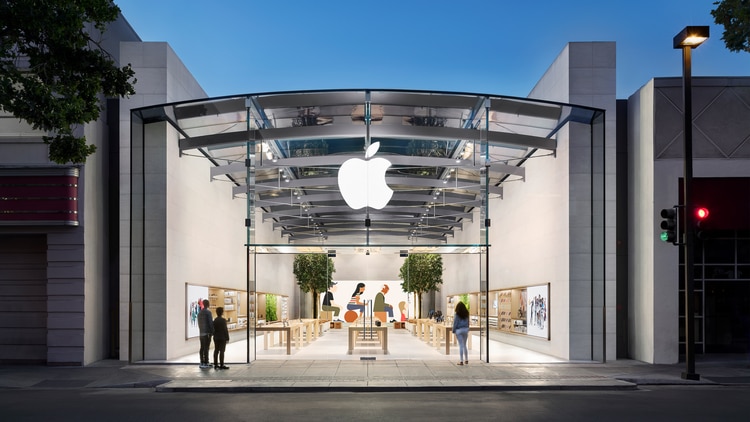
X Corp and SpaceXAI, Elon Musk’s social platform and AI venture, have dropped Apple from the antitrust lawsuit that they filed against the iPhone maker and OpenAI last year. In a filing in the U.S. District Court for the Northern District of Texas, attorneys for X and SpaceXAI moved to dismiss the Apple portion of the case, first reported by Reuters. The filing does not explain why the companies are dropping Apple or say whether a settlement was reached.
X and SpaceXAI say they intend to keep pursuing the case against OpenAI, which remains a defendant. That resolves the dispute with one company while leaving the core allegation intact against the other, with no public accounting of what changed in between.
The lawsuit dates to August 2025, when xAI and X sued Apple and OpenAI, arguing that Apple’s decision to make ChatGPT the only generative AI chatbot built into iOS gave OpenAI an unfair structural advantage. The complaint claimed ChatGPT controlled roughly 80 percent of the chatbot market at the time, while Grok held only a few percent. It sought billions of dollars in damages and asked the court to unwind the arrangement.
Elon Musk’s xAI and X file antitrust suit against Apple and OpenAI over AI exclusivity
The filing followed weeks of Musk publicly complaining that Grok and X weren’t appearing in Apple’s “Must Have” App Store section, though Grok ranked second in the Productivity category and X ranked first in News at the time. He accused Apple of “playing politics” and warned of immediate legal action before following through days later.
Apple and OpenAI tried to get the case thrown out, but a federal judge denied both motions in November, ruling the dispute was better suited to summary judgment than an early dismissal. That decision sent the case into discovery, which is presumably what led to Monday’s filing.
Hey @Apple App Store, why do you refuse to put either 𝕏 or Grok in your “Must Have” section when 𝕏 is the #1 news app in the world and Grok is #5 among all apps?
Are you playing politics? What gives? Inquiring minds want to know. https://t.co/3wenLZGtwG
— Elon Musk (@elonmusk) August 11, 2025
The timing is notable given how Musk’s sentiment toward Apple has shifted, with Musk noting that he was open to letting Grok power a revamped Siri after a user suggested Apple replace its aging assistant with xAI’s model.
xAI, the AI venture Musk folded into X Corp last year, has since combined with SpaceX under the SpaceXAI brand. That structure now puts X, Grok and SpaceX’s rocket and satellite businesses under one roof as Musk pushes his AI ambitions beyond chatbots.
OpenAI remains the sole defendant going forward, and Musk’s companies have not said if there’s any changes to those original claims. Apple and OpenAI did not immediately respond to requests for comment on the filing.
News
Why SpaceX is finishing another space-internet system that isn’t Starlink
SpaceX launched three final O3b mPower satellites Sunday, finishing a lesser known SES satellite network.
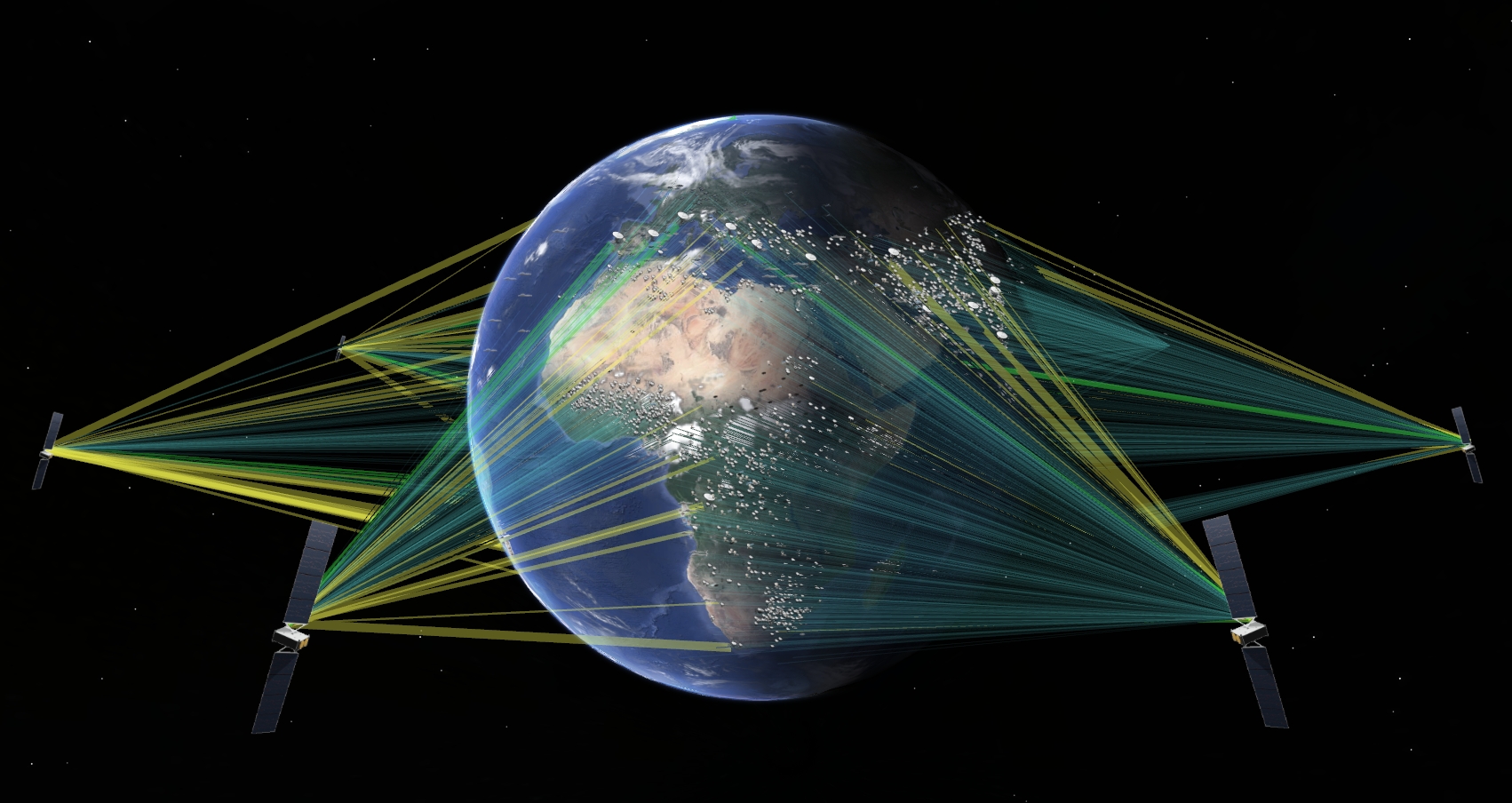
SpaceX had an 87 minute window opening at 2:49 p.m. Eastern on Sunday to fly a Falcon 9 out of Cape Canaveral carrying the final three satellites for SES’s O3b mPower constellation, a project that has taken more than a decade to finish since Boeing and SES first signed SpaceX on for the work.
Unlike the thousands of Starlink satellites SpaceX has stacked into orbit over the years, O3b mPower flies in a different neighborhood entirely. The three new satellites, tagged F11, F12 and F13, are headed for medium Earth orbit at roughly 5,000 miles up, more than ten times higher than Starlink’s shell around 340 miles but still a small fraction of the 22,000 miles where old school geostationary satellites sit. That middle position is the whole point, because a satellite that far out needs far fewer siblings to blanket the globe than a low orbit constellation does. Essentially, SES only needed 13 satellites total to build a network offering quick, steady service that used to require thousands of spacecraft.
With most people having heard plenty about Starlink and almost nothing about O3b mPower, SES and SpaceX already blend the two networks for some customers. Both SpaceX and SES sell satellite broadband, but they’re aimed at different buyers. Starlink is built for volume, direct to consumers, RVs, homes, small businesses, plus a growing aviation and maritime business. O3b mPower skips consumers entirely and sells enterprise grade connectivity to airlines, cruise lines, offshore energy operators, telecoms needing backhaul, and governments, priced and provisioned more like a dedicated circuit.
A 2023 partnership lets cruise ships combine Starlink’s speed with O3b mPower’s steady capacity depending on what a ship needs at a given moment. Sunday’s completed 13 satellite constellation effectively finishes the medium orbit half of that pairing, years after.
Sunday’s mission was already a something on SpaceX’s manifest well before O3b mPower entered the picture. This flight marked its 29th trip to orbit, a history that includes two crewed Axiom missions, the European Space Agency’s Euclid telescope and 22 separate Starlink batches. SpaceX has landed boosters on the droneship A Shortfall of Gravitas so often that Sunday’s touchdown attempt, if it went as planned, was set to be the 661st successful Falcon booster landing to date.
For a company that pushed the Starlink constellation past 11,000 satellites back in August, almost entirely through bulk launches from California, Sunday’s flight was a reminder that SpaceX’s schedule still has room for someone else’s satellites too. SES gets a finished network built for a narrower set of customers, and Falcon 9 gets one more line on an already long resume.

Tesla looks to expand into new Asian market, strengthening presence

Elon Musk’s companies made up with Apple but OpenAI still on the hook


