News
Tesla begins deliveries of its affordable Model Y Standard
The ‘Standard’ Model Y is now getting ready to fall into customer hands, according to some owners, who are preparing for or have already taken delivery of the new model.

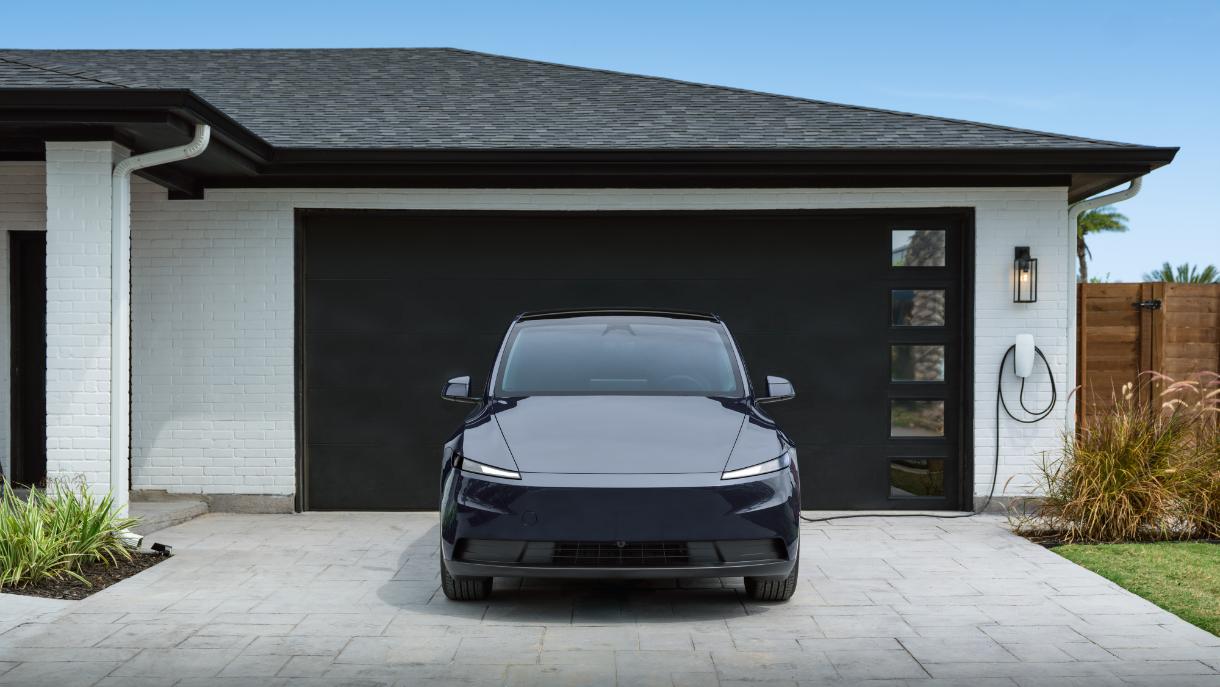
Tesla has officially started deliveries of the affordable Model Y ‘Standard’ less than three weeks after the company launched it on October 8.
Following the loss of the $7,500 electric vehicle tax credit, Tesla launched the Model 3 and Model Y ‘Standard’ trims, both coming in at sub-$40,000 starting prices, but being stripped of many of the features that come in the ‘Premium’ configuration levels.
Tesla launches two new affordable models with ‘Standard’ Model 3, Y offerings
The vehicles are Tesla’s answer to the loss of the tax credit, which was phased out by the Trump Administration. Tesla said it has been developing these models for over a year, as it revealed in early 2024 that it was working to create new vehicles that would be more affordable.
It also said it was developing vehicles to be built on a new-generation platform, which is a likely reference to the Cybercab, which has also been spotted at both Gigafactory Texas and the Fremont Factory.
The ‘Standard’ Model Y is now getting ready to fall into customer hands, according to some owners, who are preparing for or have already taken delivery of the new model:
Delivery day fr fr 🤙🏽 https://t.co/2xHAqjgL50 pic.twitter.com/OkKLZRJlJk
— TESBROS (@teslabros) October 21, 2025
Tesla slated deliveries for November when the two vehicles launched on October 8, but that seems to be an underpromise and overdeliver type of situation.
The new features for the Model Y include:
- New athletically tuned exterior and new alloy wheels to improve aerodynamics
- 15.4″ touchscreen in the front, the same as the other trims
- Available in three colors: Stealth Grey (free), White ($1,oo0 extra), Diamond Black ($1,500 extra)
- Textile and vegan leather interior
- Range sits at 321 miles
- New front fascia
- Covered glass roof (textile on inside)
- Windows are not acoustically laminated for a quieter cabin
- Manual mirrors and seats
- Smaller frunk
- No rear infotainment screen
- No basic Autopilot
- 69 kWh battery
- New 19″ Aperture wheels
- 0-60 MPH in 6.8 seconds
- 7 speaker stereo, down from 15 speakers in premium models
@teslarati 🚨 Tesla’s Affordable Models are here! Let’s talk about them! #tesla #fyp #viral #teslaev #elonmusk ♬ Natural Emotions – Muspace Lofi


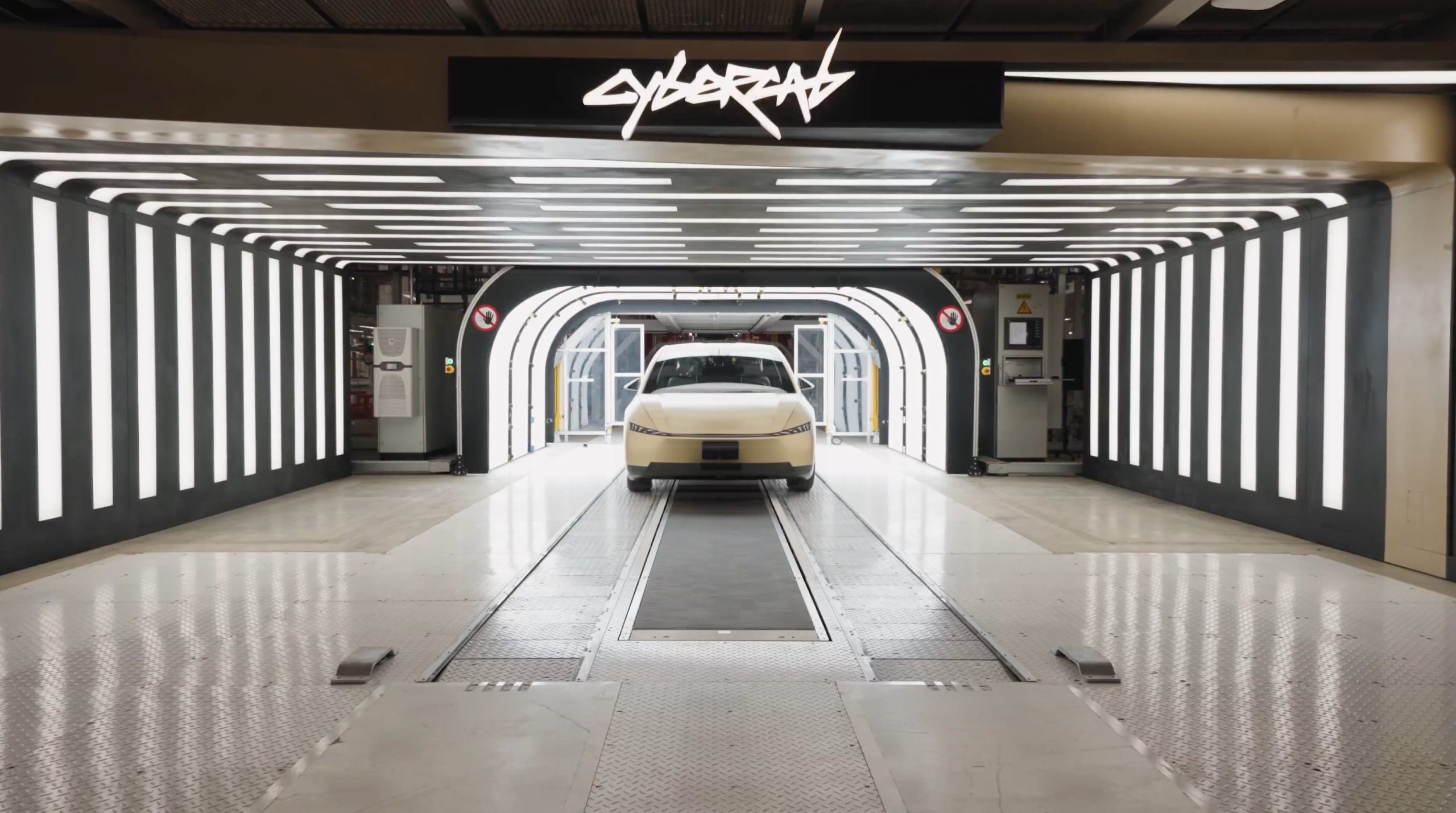
Tesla’s long-promised Cybercab is finally available for personal purchase, at least for a select few in the Austin area. But it’s far from a straightforward ownership experience.
The $29,990 price tag comes with a stack of restrictions that redefine what “owning” the vehicle actually means. The two-seat, steering-wheel-free Robotaxi, previously limited to Tesla’s own fleet, now carries contractual terms that limit where it can go, how it can be used, and whether it can even move without an active paid subscription.
Opening Night of Orders
Late on November 13, Tesla announced that select customers were being invited to order a Cybercab for personal use.
Tesla Cybercab goes on sale for $29,990, slated for December deliveries
The estimated purchase price is $29,990 before taxes, paired with a non-refundable $1,000 deposit and an estimated December 2026 delivery in Austin, Texas. The first month of the required :Autonomy Subscription,” priced at $299 per month is included.
After that, the vehicle needs an active subscription to operate at all. The announcement confirmed that customer sales had begun, albeit on an invite-only basis rather than a public order page.
The Fine Print for Buyers
BREAKING: Tesla’s Cybercab Autonomy Subscription terms are now live. A paid monthly subscription is required.
1/12 Tesla: “Your Cybercab will not operate without an active Autonomy Subscription. 🧵 https://t.co/umVk6DJE2x— Spencer (@scotsrule08) November 13, 2026
For those invited to order, the agreements (Cybercab Order Agreement, Terms of Use, and Autonomy Subscription Agreement) impose significant constraints. Major points include:
- A mandatory Autonomy Subscription (currently listed at $299 per month on the order screen, first month included) is required; without it, the Cybercab will not operate.
- Personal, non-commercial use only; ride-hailing, Robotaxi network participation, delivery, or rental requires separate written authorization or product enablement from Tesla.
- Operation restricted to Tesla-enabled Robotaxi geofences and supported service areas, which the company can expand, shrink, or alter; the vehicle may be technologically prevented from operating outside them.
- No unauthorized modifications (including wraps, window tint, or wheel changes) without Tesla or an authorized provider.
- Restricted resale and transfer: written permission required, with contractual damages of at least $50,000 (or full transaction value if higher) for unauthorized sales; Tesla also reserves repurchase rights at a company-determined fair market value, with the owner covering return costs.
- Safety or improper-use “strikeouts” (three or more) can trigger a one-week suspension of autonomous features without prorated refund.
- Owners remain responsible for insurance, registration, charging, parking, and general cleaning; the subscription covers certain maintenance items such as tires, windshields, filters, and camera cleaning, plus limited towing.
- Manual controls on the touchscreen allow only short-distance movement up to about 2 mph and require a valid driver’s license; they are not for public-road driving.
Why These Terms Might Exist
Tesla’s approach prioritizes control over a vehicle designed without traditional human controls and intended primarily as transport-as-a-service, something that Musk has hinted toward for some time now. Restricting commercial use and modifications could be as much of a software integrity, safety, and data collection effort as it is a safety effort.
Fleet consistency could also be in regulatory scrutiny early on in the Cybercab’s days of public operation.
The subscription model generates ongoing revenue beyond the low vehicle price and ensures the car remains connected and updatable, something that will keep the Cybercab as safe as possible as new updates roll out.
Buyback and resale limits reduce the risk of vehicles circulating outside Tesla’s operational and service ecosystem.
It apperas that personal ownership is secondary to the broader Robotaxi network strategy, as Musk has previously stated that the vast majority of Cybercabs would remain Tesla-owned.
Pickup Locations and Musk’s Pricing View
Initial deliveries are estimated for Austin, but personal vehicles are able to operate in any of Tesla’s Robotaxi geofences:
It’ll work unsupervised inside all the same geo locations as @robotaxi, just serving the owners’ needs.
— Ashok Elluswamy (@aelluswamy) November 14, 2026
Those who have been invited to order can also have their personal Cybercab delivered to numerous locations in Texas, including:
- Austin
- Dallas
- Houston
- San Antonio
- Fort Worth
Interesting that you can choose a delivery city https://t.co/SknDz9rFzo
— Whole Mars Catalog (@wholemars) November 14, 2026
As far as the monthly “Autonomy Subscription,” it appears Musk already wants it to be low. He acknowledged last night on X that the subscription price is too high. Along with detailing that the Cybercab will be available nationwide as regulatory approval is received, Musk said the monthly fee should match the cost of FSD and Premium Connectivity, which is about $115 per month.
The launch marks a milestone for unsupervised personal autonomous vehicles, but the fine print makes clear that buyers are purchasing a highly constrained asset whose usefulness is tightly bound to Tesla’s software, service network, and geographic approvals.
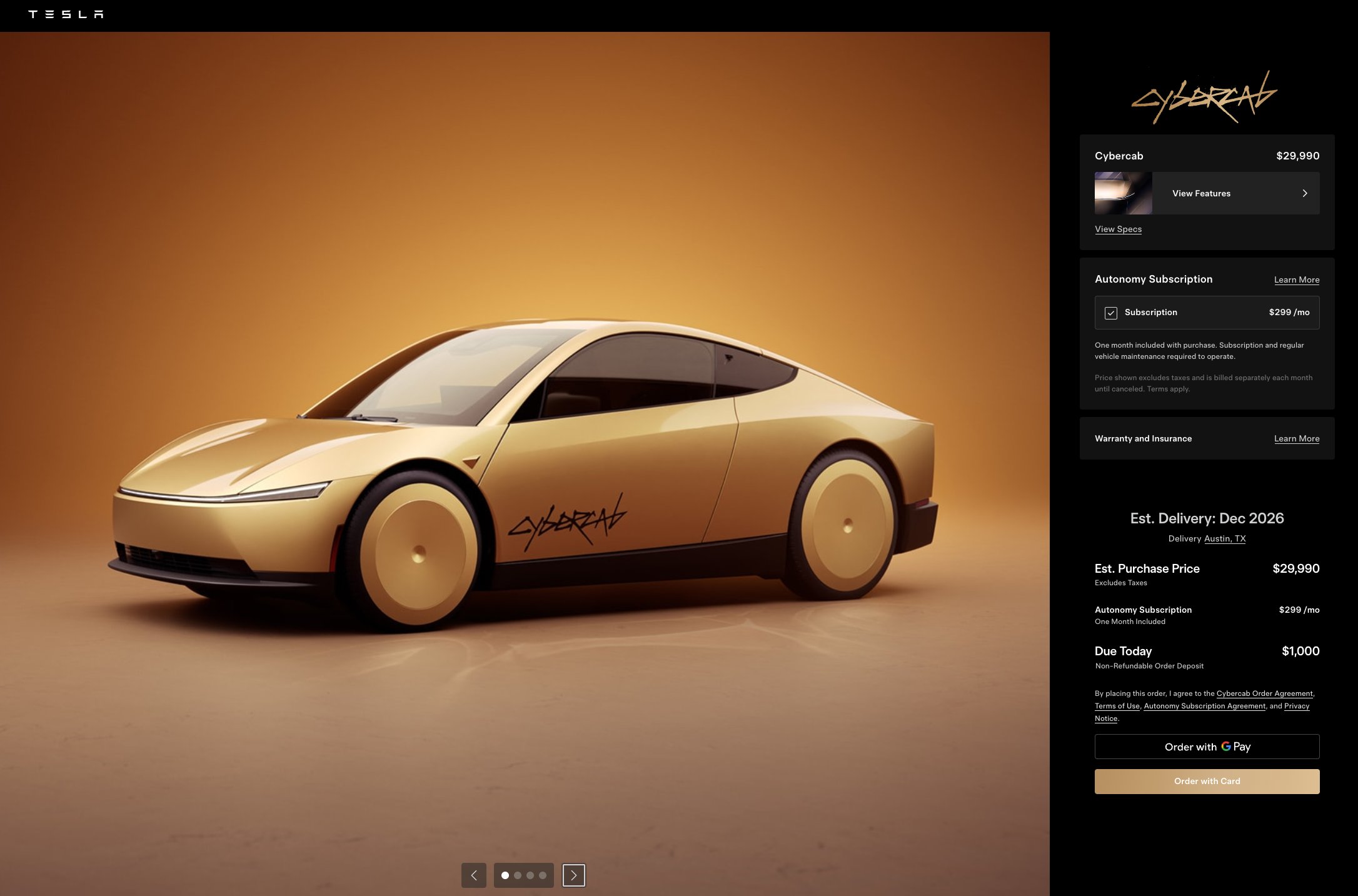
Tesla has officially put the Cybercab up for sale, revealing a bargain price and a $299 per month “Autonomy Subscription” that could hit customer hands as soon as December.
The offer requires a $299 monthly Autonomy Subscription, with the first month included in the purchase price, along with a $1,000 non-refundable order deposit. Tesla’s ordering interface shows deliveries targeted for Austin, Texas.
Tesla says that the Cybercab is making transportation more efficient, affordable and accessible than ever before, and that buyers can order their own Cybercab for personal use.
🚨🚨🚨 BREAKING: Tesla Cybercab is officially on sale for $29,990 with a $299/mo “Autonomy Subscription”
Delivery slotted for December! HUGE!
— TESLARATI (@Teslarati) November 13, 2026
The Cybercab is Tesla’s dedicated robotaxi, a gold-finished, two-passenger vehicle without a steering wheel or pedals, designed from the outset for unsupervised autonomous operation. It has been in limited Robotaxi service in Austin since September 2026, operating alongside Tesla’s larger fleet of Model Y vehicles.
Production takes place at Gigafactory Texas, which launched earlier this year. Tesla has stated for some time that it planned to put Cybercabs on sale by the end of the year, and it looks like they will come through on that promise if everything goes according to plan.
The Autonomy Subscription is mandatory for the vehicle to operate because it is void of a steering wheel and pedals. Tesla notes that the subscription and regular vehicle maintenance are required, indicating that personal owners will depend on the company’s software and service infrastructure rather than traditional ownership models.
One month of the subscription is included with purchase and subsequent months are billed separately until canceled.
This limited personal-sales opening marks a shift from Tesla’s earlier emphasis on fleet and transport-as-a-service operations. During the Q3 2026 Earnings Call, executives indicated that the vast majority of Cybercabs would remain Tesla-owned and used for rideshare service, while still aiming to place some vehicles with customers by year-end.
Elon Musk has previously targeted a price below $30,000, which was a huge point of emphasis for the Cybercab being the central point of Tesla’s “transportation-as-a-service” model.
Availability remains restricted to invited customers rather than a public order page, and the initial deliveries are expected only in the Austin area where unsupervised Robotaxi operations are already active. Buyers will need to accept the geographic and operational constraints of current autonomous deployment, as the vehicle cannot be driven manually outside supported zones.
The move gives a small number of early buyers the chance to own Tesla’s dedicated autonomous vehicle at the long-discussed sub-$30,000 price point, while the bulk of production continues to support the company’s expanding Robotaxi network.
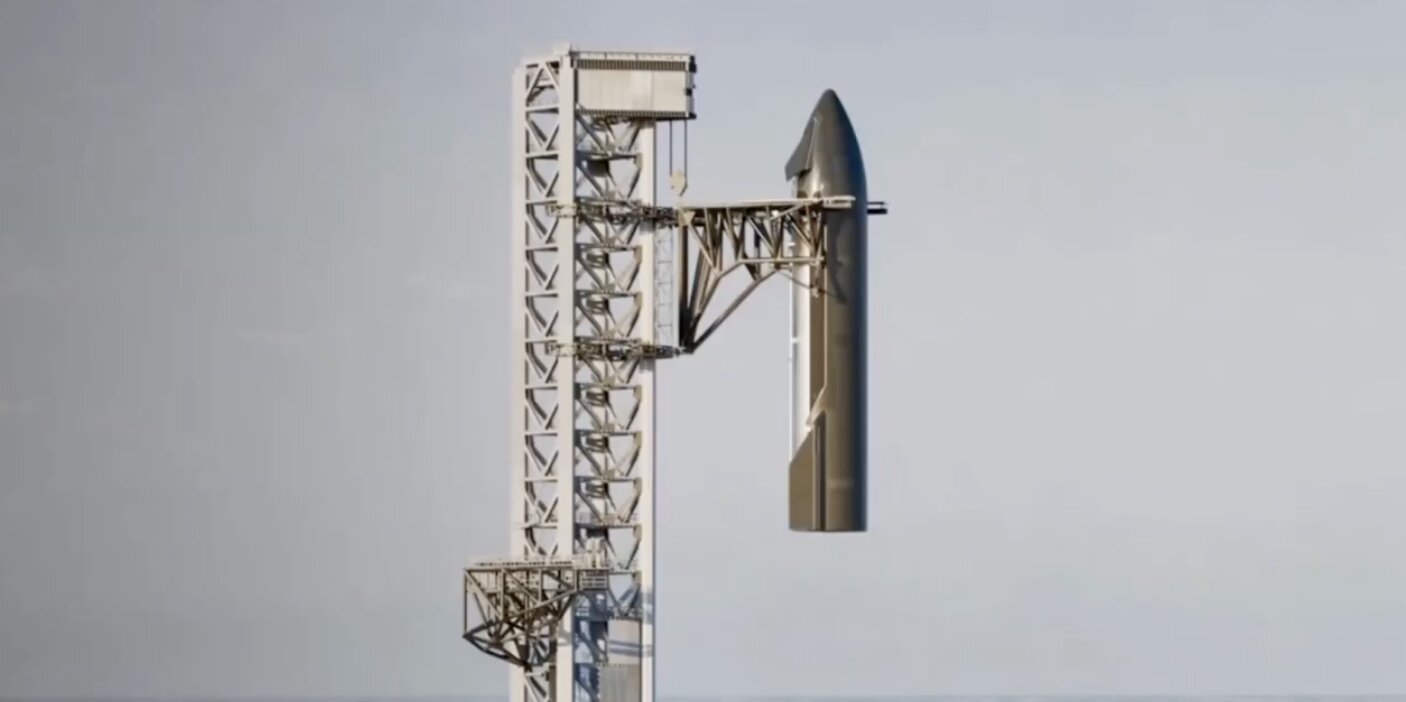
UPDATE: The FAA has granted the license for Starship Flight 15.
Starship Flight 15 License has been granted by the FAA!
Let’s go! https://t.co/DugsgjvYAe
— TESLARATI (@Teslarati) November 13, 2026
SpaceX is set to attempt its 15th test flight of Starship this evening from Starbase, Texas.
SpaceX is targeting Starship Flight 15 for a launch as soon as today, Friday, November 13, pending an FAA Flight License, during a 75-minute window that opens at 4:45 p.m. CT (5:45 p.m. ET) from Orbital Launch Pad 2 at Starbase, Texas. The flight remains pending final regulatory approval.
WATCH Starship Flight 15 here:
https://t.co/C6GnCHyF8p
— TESLARATI (@Teslarati) November 13, 2026
The mission, using Booster 22 and Ship 42, aims to achieve the first full recovery of an orbital launch system. Primary objectives include a tower catch of the Super Heavy booster roughly six and a half minutes after liftoff and the first-ever tower catch of a Starship upper stage after more than 22 hours in space.
SpaceX will perform Starship double catch attempt with Flight 15
Between those catches, Ship 42 is planned to enter a low Earth orbit of about 275 km, complete roughly 14 orbits, and deploy 26 next-generation Starlink V3 satellites (Starlink Group 31-2). Three of those satellites carry cameras to inspect the ship’s heat shield in orbit and help controllers decide whether the vehicle is healthy enough for a return to the tower.
Contingency ocean splashdown options exist if either stage is not cleared for catch.
To watch the attempt, check the link to the broadcast in both X posts in this article. The live webcast is scheduled to begin about 30 minutes before liftoff and is planned to continue through the ship catch the next day, with the possibility of extended onboard views during the orbital coast via Starlink.
Because the schedule is dynamic, check back here or on our social media channels for the latest updates on window timing and regulatory status. A successful dual catch would mark a major milestone toward making Starship a rapidly reusable rocket capable of frequent flights.
WATCH Starship Flight 15 here:
https://t.co/C6GnCHyF8p
— TESLARATI (@Teslarati) November 13, 2026

Tesla Cybercab ownership will come with plenty of strings attached

Tesla Cybercab goes on sale for $29,990, slated for December deliveries


