News
Tesla quietly flexes FSD’s reliability amid Waymo blackout in San Francisco
“Tesla Robotaxis were unaffected by the SF power outage,” Musk wrote in his post.

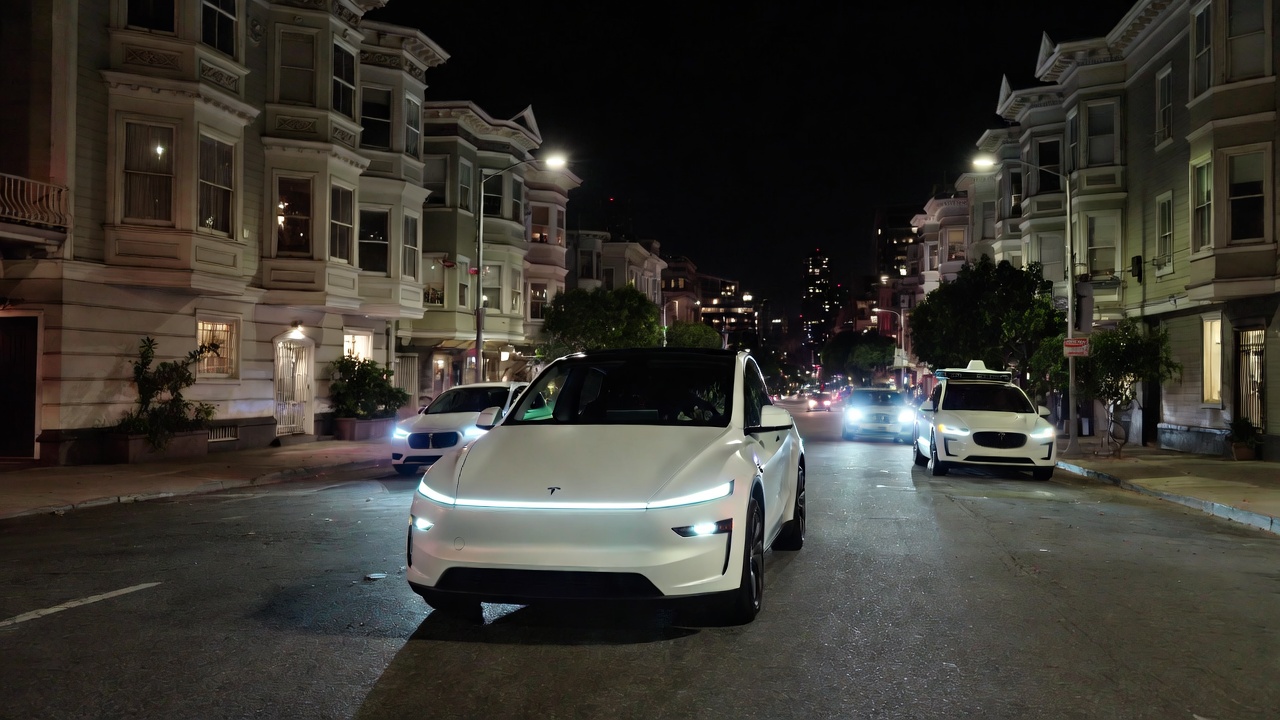
Tesla highlighted its Full Self-Driving (Supervised) system’s robustness this week by sharing dashcam footage of a vehicle in FSD navigating pitch-black San Francisco streets during the city’s widespread power outage.
While Waymo’s robotaxis stalled and caused traffic jams, Tesla’s vision-only approach kept operating seamlessly without remote intervention. Elon Musk amplified the clip, highlighting the contrast between the two systems.
Tesla FSD handles total darkness
The @Tesla_AI account posted a video from a Model Y operating on FSD during San Francisco’s blackout. As could be seen in the video, streetlights, traffic signals, and surrounding illumination were completely out, but the vehicle drove confidently and cautiously, just like a proficient human driver.
Musk reposted the clip, adding context to reports of Waymo vehicles struggling in the same conditions. “Tesla Robotaxis were unaffected by the SF power outage,” Musk wrote in his post.
Musk and the Tesla AI team’s posts highlight the idea that FSD operates a lot like any experienced human driver. Since the system does not rely on a variety of sensors and a complicated symphony of factors, vehicles could technically navigate challenging circumstances as they emerge. This definitely seemed to be the case in San Francisco.
Waymo’s blackout struggles
Waymo faced scrutiny after multiple self-driving Jaguar I-PACE taxis stopped functioning during the blackout, blocking lanes, causing traffic jams, and requiring manual retrieval. Videos shared during the power outage showed fleets of Waymo vehicles just stopping in the middle of the road, seemingly confused about what to do when the lights go out.
In a comment, Waymo stated that its vehicles treat nonfunctional signals as four-way stops, but “the sheer scale of the outage led to instances where vehicles remained stationary longer than usual to confirm the state of the affected intersections. This contributed to traffic friction during the height of the congestion.”
A company spokesperson also shared some thoughts about the incidents. “Yesterday’s power outage was a widespread event that caused gridlock across San Francisco, with non-functioning traffic signals and transit disruptions. While the failure of the utility infrastructure was significant, we are committed to ensuring our technology adjusts to traffic flow during such events,” the Waymo spokesperson stated, adding that it is “focused on rapidly integrating the lessons learned from this event, and are committed to earning and maintaining the trust of the communities we serve every day.”



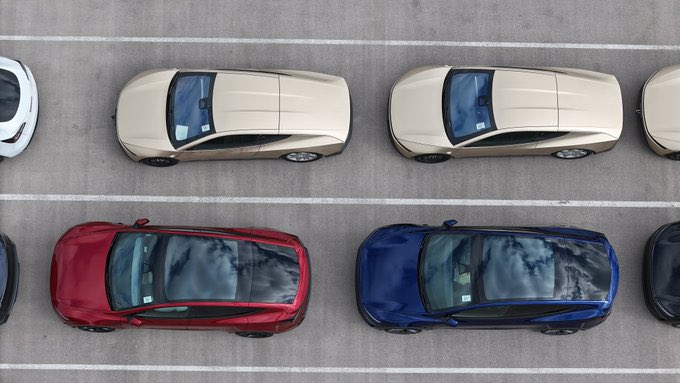
Tesla has updated its Robotaxi app so riders can pick which vehicle they want before they book. The latest in-app screens now show two options side by side: the two-seat Cybercab and the four-seat Model Y.
A screenshot circulating Thursday shows the change in practice. In Austin, a rider could choose a gold Cybercab for two people or a Model Y for four. Tesla’s updated description calls Cybercab “our first purpose-built autonomous vehicle,” designed for safety, accessibility, and comfort, and says the lineup is available only through the Robotaxi app.
Tesla has updated their Robotaxi page in the App Store. You’ll be able to select if you want a Cybercab or Model Y Robotaxi.
“Our Robotaxi vehicle lineup now includes Cybercab, our first purpose-built autonomous vehicle. Designed for safety, accessibility and comfort, Cybercab… pic.twitter.com/Jff4klilDr
— Sawyer Merritt (@SawyerMerritt) September 3, 2026
The distinction is more than cosmetic, and it’s important to note that Robotaxi refers to the platform, while Cybercab refers to a vehicle.
Model Y Robotaxis have carried the service since it opened in Austin in mid-2025 and later expanded to Dallas, Houston, and parts of Florida. Those vehicles are converted production SUVs that still have steering wheels and pedals.
Cybercab is different. It has no driver controls, butterfly doors, a low seat height meant to work with wheelchairs, extra trunk space for assistive devices, and braille on the handles. Tesla has registered dozens of the two-seaters with Texas regulators in the days leading up to its September 3 Austin event.
Giving riders a choice lets Tesla match the vehicle to the trip. Most rides involve one or two people, which is where Cybercab is meant to be cheaper and more efficient to operate. Groups of three or four, or anyone who needs more space, can still request a Model Y.
The same app handles booking, payment, cabin settings, and, on Cybercab, features such as phone-based door opening and in-cabin voice controls.
The update does not mean every city suddenly has both cars available. Cybercab support is listed for Austin first, and the purpose-built fleet is still small compared with the existing Model Y roster. Even so, the app change marks a shift from a single-vehicle pilot to a mixed fleet.
Riders can now choose between the compact, purpose-built robotaxi and the familiar SUV that launched the service.
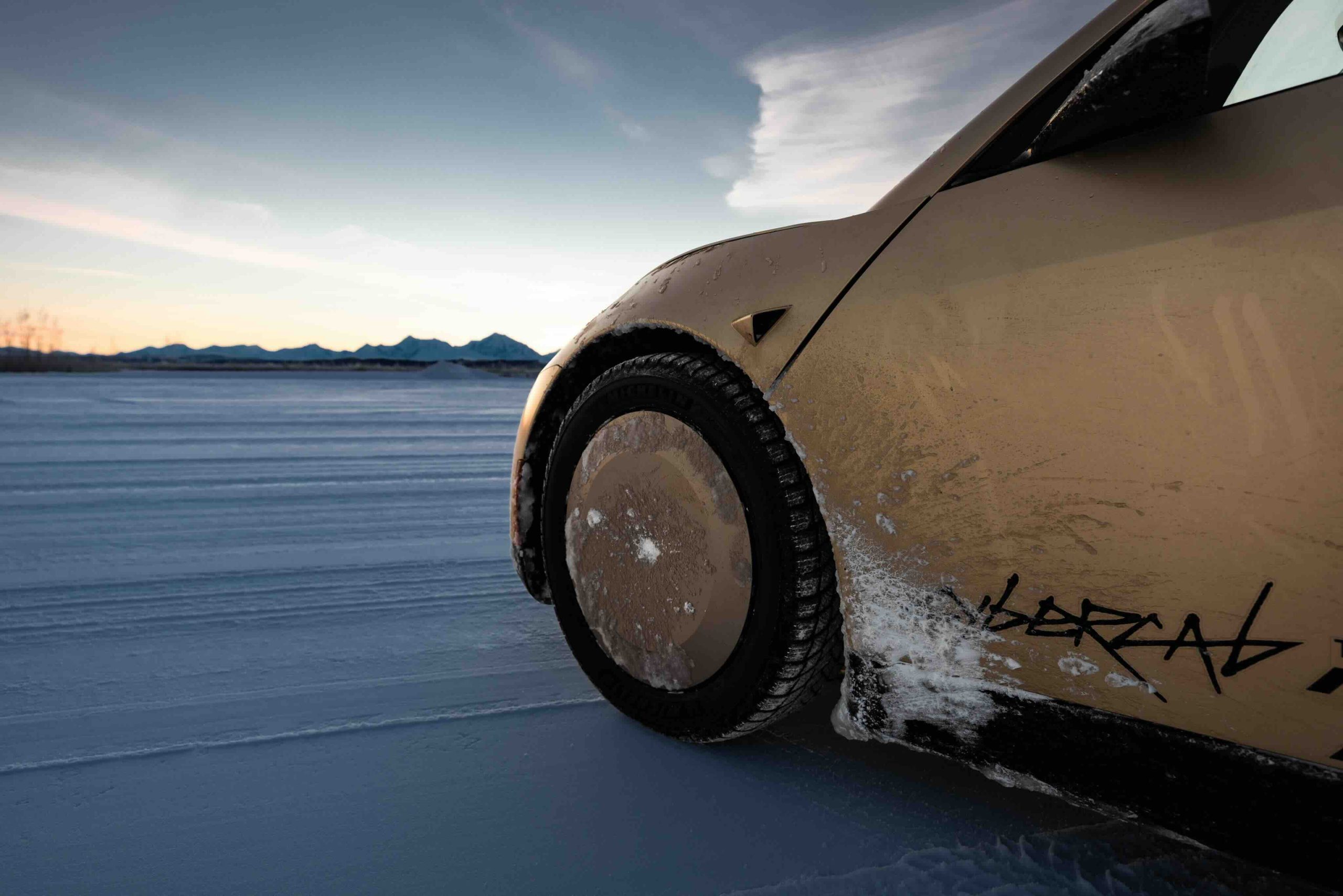
Tesla Cybercab sightings are broadening far and wide, well outside of downtown Austin, Texas, with autonomy in focus as the company plans to launch the all-electric, two-seater this evening in the Lone Star State.
Tesla is set to launch Cybercab to a small group of people this evening in a dedicated event in Austin, Texas. Public details on the event are relatively slim.
However, Tesla’s focus on Cybercab falls well outside of the downtown Austin area and is expanding well across the United States as things continue to move quickly with the company’s autonomous efforts in 2026. Today, various images of Cybercab fleets in interesting locations have started to circulate.
The most notable is a fleet of at least 20 Cybercabs at Miami International Airport in Florida. Spotted last night, the fleet is expansive and is indicative of a looming release of Cybercabs once regulatory boxes are checked off.
Tesla has already been operating the Robotaxi platform in Miami for several months, but this Cybercab fleet at the airport could be joining the ride-hailing platform as approvals arrive:
20+ Cybercabs spotted near Miami international airport. pic.twitter.com/ORLsw8yFhf
— Sawyer Merritt (@SawyerMerritt) September 3, 2026
Another fleet of Cybercabs was spotted at the Devon, PA showroom just outside of Philadelphia. We have seen several Cybercab units testing around the Philadelphia Metro Area, which is interesting considering Tesla does not have any active Robotaxi geofence in Pennsylvania.
Cybercab at the Devon location in PA has multiplied over the weekend. Seeing a few more test vehicles in the lot 👀 pic.twitter.com/DhJT4P1EkU
— Billy (@billykyle) August 22, 2026
Philadelphia would be an ideal location to test ride-hailing due to its dense tourist population, large, sprawling city layout, and to compete with other ride-hailing companies that operate in the city.
Expansive fleets of Cybercabs will be popping up in and around major cities throughout the rest of the year, if we were betting on it. Tesla has made it obvious that the Cybercab rollout will be aggressive and fast-paced, but within reason. Tesla is still prioritizing safety, so these testing phases will likely go on for some period of time before more members of the public are able to snag a Cybercab for a personal chariot.
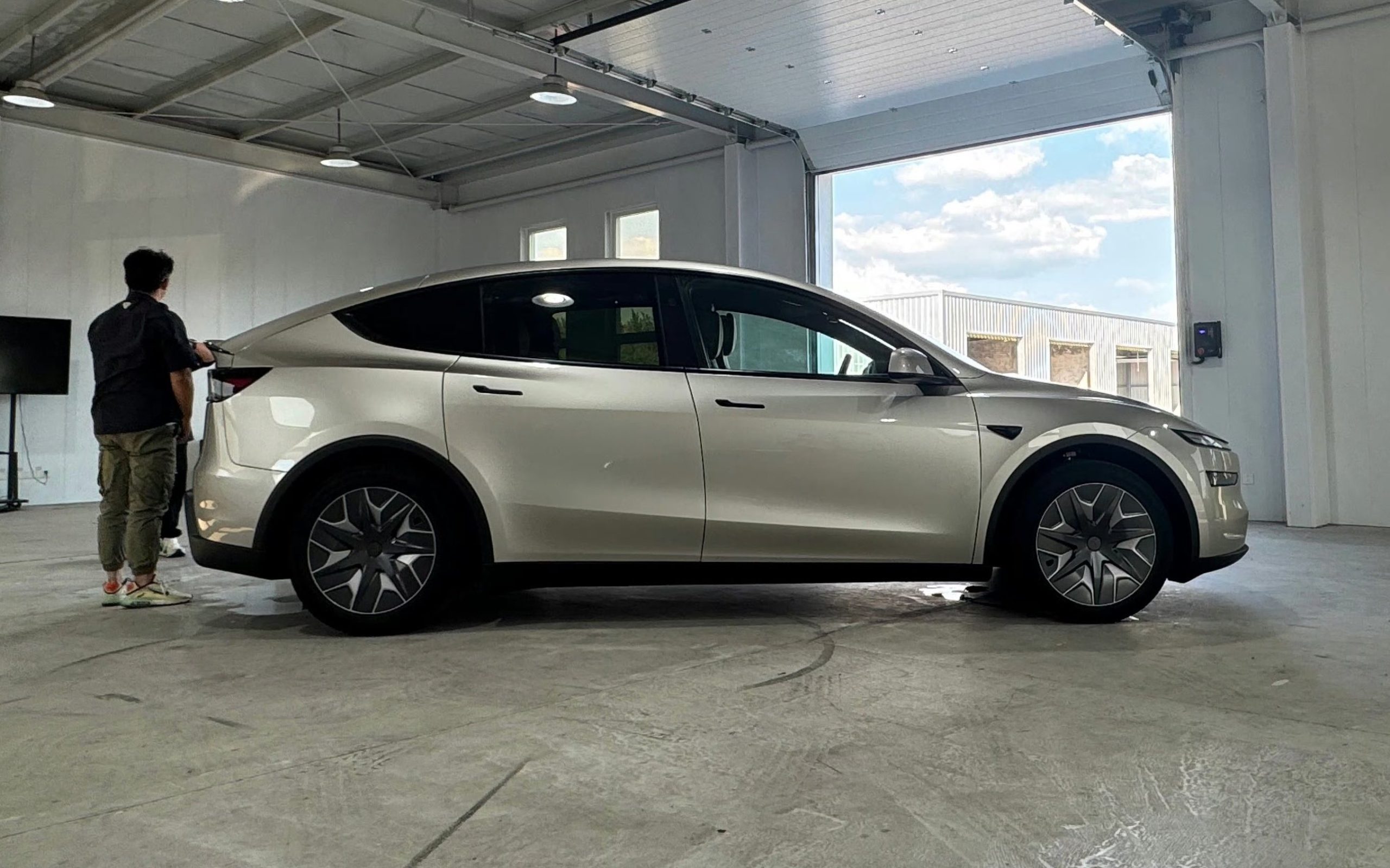
The Tesla Model Y L is arguably the most hyped trim of the all-electric crossover, other than the Performance configuration that comes with white-knuckle speed and sports car-level handling.
However, it is not all perfect. Tesla owners in China who took delivery of the Model Y L, denoted with an L to highlight its longer wheelbase, are experiencing what they are referring to as “collapsing” of the rear wheels, as suspension issues appear to be an issue with some of the builds.
🚨 Model Y L owners in China report rear suspension sag
• Six-seat long-wheelbase Y. Shanghai. On sale since August 2025
• Owners say the rear tire-to-arch gap shrinks after mileage or a full load. Some cases after about 9,000 km loaded. Others near 30,000 km
• Tesla service… pic.twitter.com/Lr6i5Tbi07— Joe Hansen (@joehansen) September 1, 2026
The gap between the wheel arch and tire has narrowed to the point that “not even a single finger” could fit, according to a report from Car News China. The failures are not tied to a specific mileage, as one owner said that after just 9,000 kilometers (5,600 miles), they noticed the suspension issue when their car was fully loaded.
Another one had the issue at 30,000 kilometers (18,640 miles) and noticed that the wheel gap shrank to two fingers, so not as drastic as the person who reported a similar issue at 9,000 km.
Tesla Model Y L is gaining momentum in China’s premium segment
Along with the visual recognition of the issue, others are saying the sagging is causing abnormal wear on the inside of the tires. Extra weight and instant torque already provide additional stress on the tires in electric vehicles during normal operation, so it is no surprise that this is another complaint.
There has been no recall issued by Tesla, and the company has not yet publicly acknowledged the issue.
Some are suggesting that owners use a “finger test” to self-diagnose whether there is an issue with the suspension. There should be four fingers between the tire and the wheel well; anything less than that starts to get dicey.

Tesla Robotaxi riders will face the best dilemma when booking a ride

Tesla Cybercab sightings broaden well outside of Austin with autonomy in focus


