News
Ron DeSantis calls out media bias in Tesla crash coverage

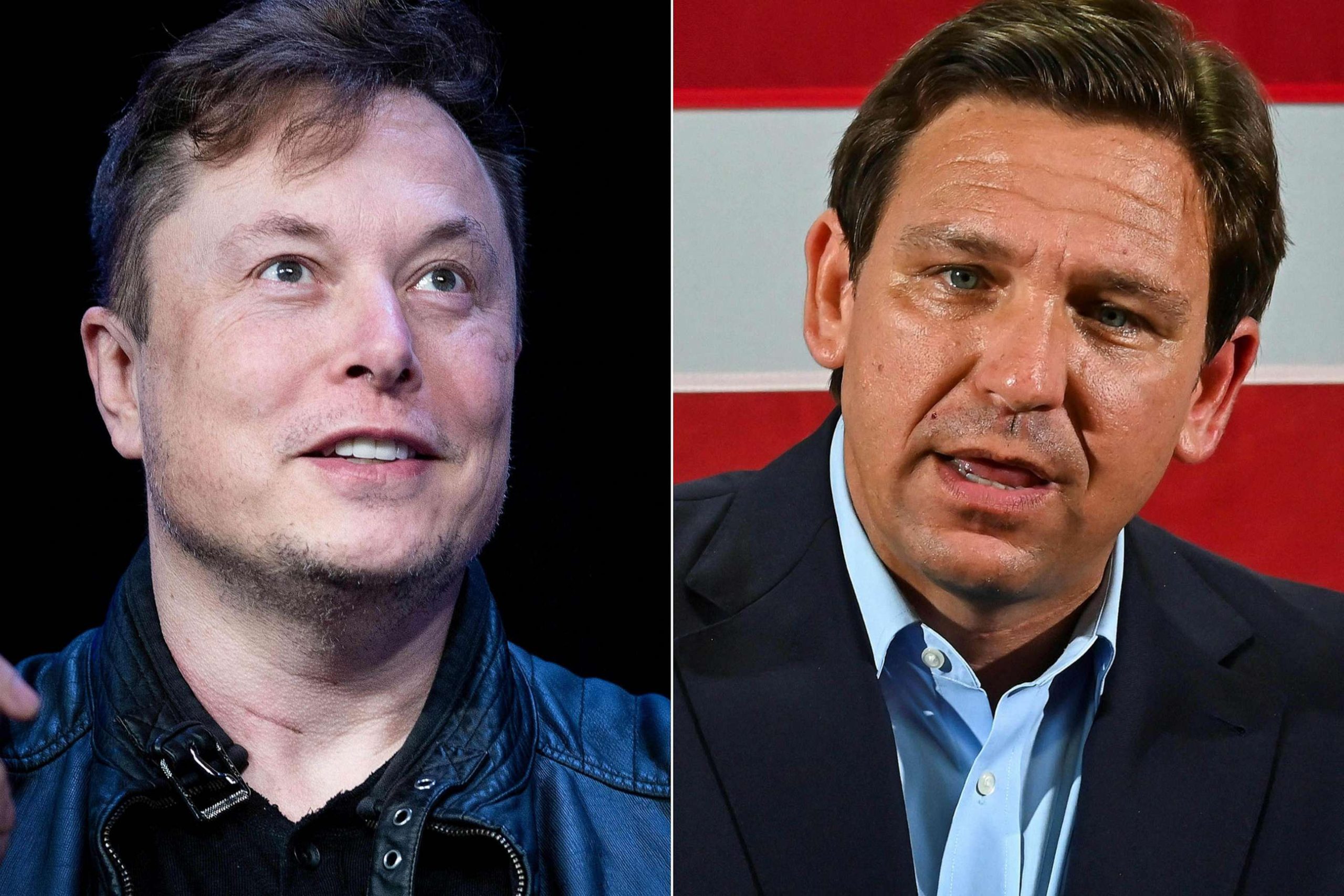
Florida Governor Ron DeSantis has sharply criticized legacy media outlets for what he describes as selective and biased reporting on vehicle accidents involving Tesla. In a recent X post, DeSantis questioned why headlines routinely spotlight the Tesla brand in crash stories, even when human error is the clear cause, while similar incidents with other automakers often receive generic treatment.
A prime example is the June 19, 2026, fatal crash in Katy, Texas. A Tesla Model 3 driven by Michael Butler struck a brick home at high speed, killing 76-year-old Martha Avila inside. Initial reports and headlines prominently featured “Tesla crash” and referenced the driver’s claim that an automated driving-assistance system was engaged.
Many outlets quickly speculated that Full Self-Driving or Autopilot were the cause of the crash, immediately blaming the suites for the accident shortly after it happened.
However, Tesla responded shortly after the accident with vehicle data that showed Butler manually overrode the system by pressing the accelerator to 100 percent, reaching 73 MPH in a residential area, more than double the speed limit. The accelerator remained floored after impact.
Tesla finally clarifies fatal Texas crash, confirms driver manually overrode acceleration
The National Transportation Safety Board (NTSB) later confirmed these findings, and Butler now faces manslaughter charges. His phone searches also included queries like “Tesla FSD too timid,” suggesting he may have intervened aggressively. Despite this, many headlines continued to center Tesla’s technology rather than the driver’s actions.
DeSantis highlighted a Washington Post headline, which was labeled, “Newly released photo shows wreckage of Tesla crash that killed grandmother.”
Do legacy media outlets typically use headlines involving the make of a car in a crash or is that only for Tesla?
It would be one thing if the self-driving malfunctioned but the crash was purely human-induced.
Seems like these outlets want to associate Tesla with crashes as… pic.twitter.com/EmfyeYiuv6
— Ron DeSantis (@RonDeSantis) July 17, 2026
The subheadline noted the driver overrode assistance and floored the accelerator, yet the brand name dominated the framing. He asked whether legacy outlets typically name the make of a car in routine crashes or reserve that treatment for Tesla to push a narrative.
This pattern appears widespread. Crashes involving Ford, Chevrolet, or Toyota vehicles frequently appear as “pickup truck slams into home” or “fatal car crash kills pedestrian” without brand specifics, especially absent new technology angles.
High-profile Ford F-150 or Chevy Silverado incidents tied to large sales volumes often escape brand-callout scrutiny. In contrast, Tesla stories consistently lead with the manufacturer, amplifying perceptions of risk despite data showing strong overall safety performance:
🚨 Why do Tesla Owners get so defensive over the narrative of crashes involving Teslas? https://t.co/aX7ogtjTCR pic.twitter.com/KO4QWaLOKl
— TESLARATI (@Teslarati) June 24, 2026
Tesla’s own 2025 Impact Report indicates vehicles using FSD logged 0.19 major incidents per million miles, roughly eight times fewer than the U.S. average. Models like the Model Y also rank among the safest in IIHS and NHTSA testing for occupant protection. Critics argue disproportionate coverage ignores these statistics and driver behavior factors, such as younger or more aggressive Tesla owners in some studies.
DeSantis frames this as part of a broader political agenda against innovative American companies like Tesla. By consistently naming Tesla while downplaying others, media outlets risk eroding public trust and shaping perceptions detached from the evidence of human error in most cases.
As autonomous technology evolves across the industry, consistent and factual reporting will be essential to separate real safety concerns from narrative-driven coverage.


Elon Musk
SpaceX’s next Starship flight set to make history on Friday the 13th
SpaceX is targeting Friday, November 13 for Starship Flight 15 and its first ship catch.

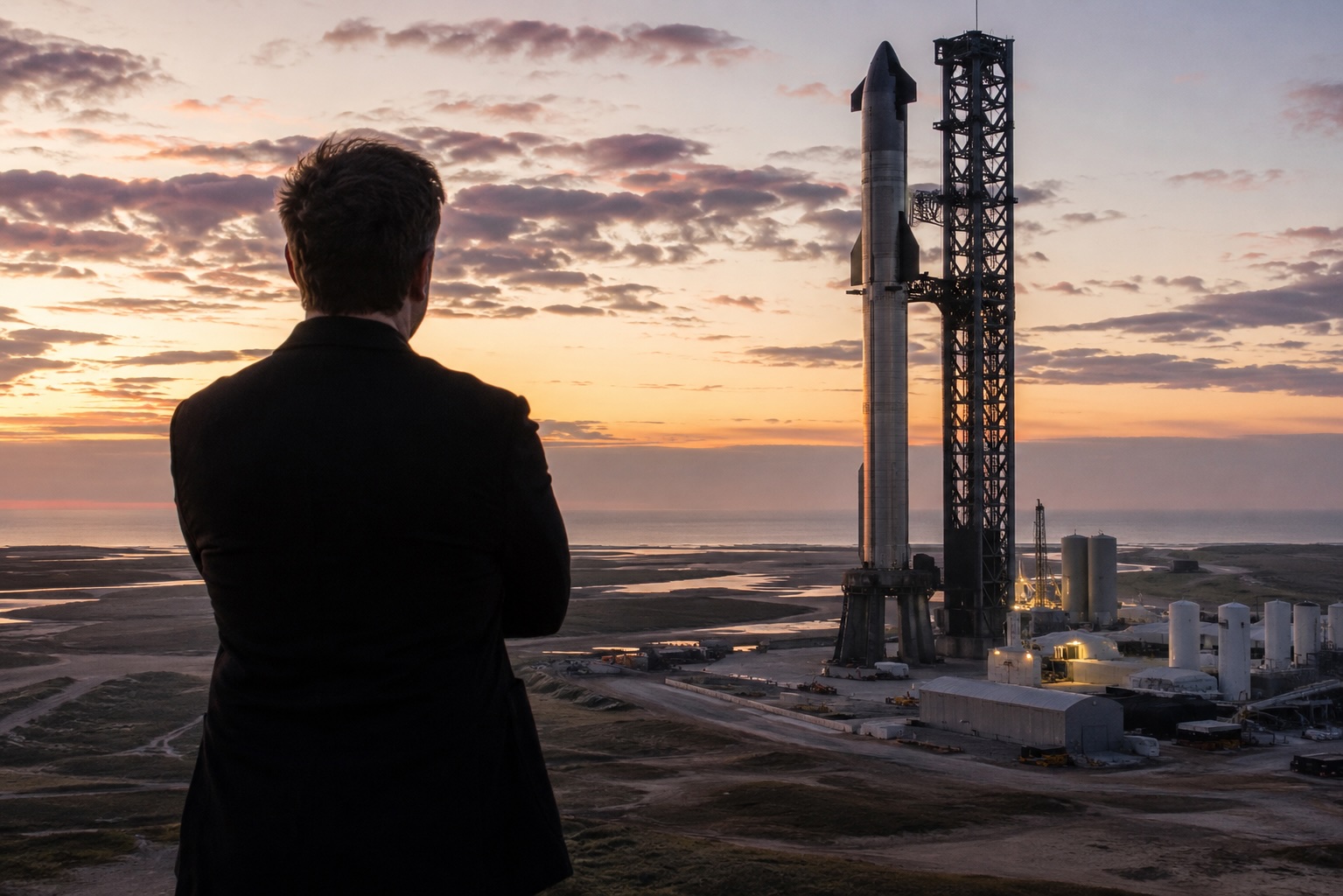
SpaceX is targeting Friday, November 13 for Starship Flight 15, the mission the company plans to use for its first attempt at catching the ship itself with the launch tower.
SpaceX Vice President of Launch Kiko Dontchev shared the date on stage at the UP.Summit on Thursday, according to Ars Technica’s Eric Berger, who was in attendance. It is the first launch target to come directly from a SpaceX executive. Until now, the public schedule had relied on FAA air traffic planning slides, which listed Flight 15 for no earlier than November 8 and later November 12. SpaceX has not posted an official mission page yet, and no launch time has been shared.
The date lands inside the window Elon Musk sketched out last month. Speaking at Giga Texas on October 10, Musk said the flight would “probably launch a little bit before Thanksgiving,” as Teslarati reported. On SpaceX’s third quarter earnings call ten days later, he confirmed that Flight 15 would try to catch both the Super Heavy booster and the ship, and put the odds of a successful ship catch at “more likely than not.” SpaceX also aired an animation of the maneuver during that webcast, showing the ship swinging vertical over Starbase before dropping into the tower’s chopsticks.
The hardware is ready. Booster 22 fired all 33 of its Raptor engines for a full duration static fire at Pad 2 on October 25. Ship 42 followed with a single engine burn simulating a deorbit maneuver on October 26 and a 60 second firing of all six engines the next day, according to NASASpaceflight. Ship 42 had already rehearsed the catch in September, when the Pad 2 arms lifted it into position and crews connected the quick disconnect arm while the vehicle hung from the tower.
The remaining hurdle is regulatory. The FAA’s Starship page does not yet list a Flight 15 license. SpaceX President Gwynne Shotwell said in October that, after “significant constructive engagement with the FAA,” she expects the license to cover a return to the launch site and a tower catch for both stages. Bringing the ship home means a reentry path that heads toward land, rather than ending over open ocean as every Starship flight so far has.
SpaceX has caught Super Heavy three times, on Flights 5, 7 and 8, but the ship comes back from orbital velocity and has never been caught. Flight 14 on September 28 was the first Starship to reach orbit, deploying 26 Starlink V3 satellites before splashing down despite an early engine shutdown that Musk blamed on engine computer software.
Musk has called a successful ship catch “the first time that there’s been full recovery of an orbital class rocket,” and he has already named the step after it: a Flight 16 where both the booster and the ship fly again. NASASpaceflight reports that Ship 43, the next vehicle in line, is set for static fire testing in December.
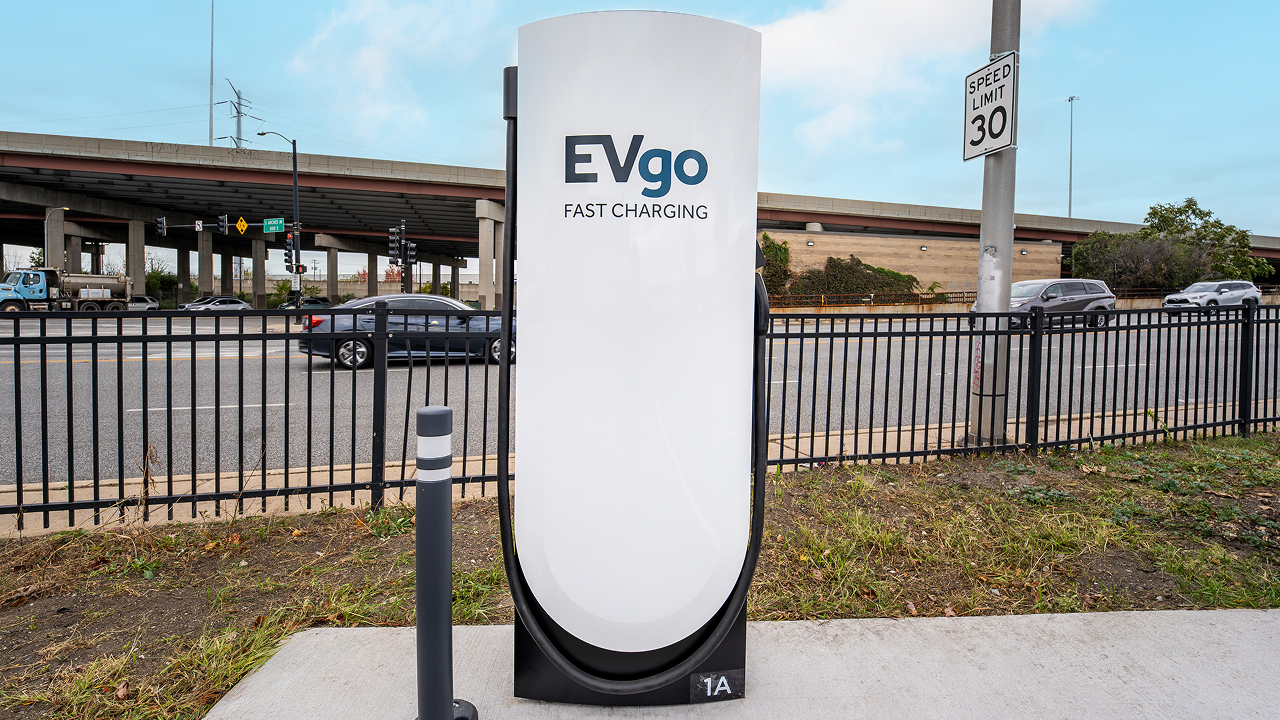
EVgo has tapped Tesla Superchargers for its most recent efforts to expand its charging presence in the United States, a move that seems logical based on the effectiveness of the automaker’s own infrastructure.
EVgo opened its first Supercharger site in Illinois, a 12-stall station near downtown Chicago at 3145 South Ashland Avenue in the Riverside Square & River’s Edge center, right beside a grocery store. This marks the start of the company’s plan to deploy hundreds of Supercharger stalls across the United States, primarily at grocery-anchored Regency Centers properties where drivers can shop, eat, or run errands while they charge.
We’ve opened our first EVgo Supercharger location in Illinois, marking the start of our plan to add hundreds of Supercharger stalls across the U.S.
Designed for both NACS and CCS vehicles with Magic Dock technology, these new sites help make fast charging more accessible and convenient for all EV drivers. Learn more: https://t.co/V92t5FDryQ
— EVgo Fast Charging Network (@evgonetwork) November 5, 2026
The new location uses Tesla’s Magic Dock technology so both NACS and CCS vehicles can plug in natively without drivers needing to carry their own adapters. Peak power reaches 325 kW at this site, with pricing set between $0.25 and $0.35 per kWh depending on the hour—the same rate for Tesla and non-Tesla drivers.
The stalls also appear in Tesla’s in-car navigation and Trip Planner, making them easy for Tesla owners to find and route to. Illinois has seen EV registrations rise nearly 60 percent over the past two years, and EVgo’s broader network has experienced more than 700 percent growth in charging demand over three years, so the timing fits the market’s trajectory.
Choosing Tesla hardware through the Supercharger for Business program turns out to have been a smart, practical move.
Tesla’s V4 stalls and cabinets deliver high, reliable power with a proven track record of strong uptime, while Magic Dock delivers true dual-standard compatibility in one package. Because the sites show up in Tesla’s navigation tools, EVgo instantly gains visibility among millions of existing Tesla drivers, which should raise utilization and help the company double its addressable market as more vehicles adopt NACS. EVgo still owns the stations and sets pricing, yet benefits from Tesla’s established hardware, longer cables, and operational support.
The result is faster, lower-risk infrastructure expansion that serves every EV driver—Tesla or otherwise—with convenient, high-power charging at everyday retail locations. For drivers, that means fewer adapters, more predictable stops, and a denser network just as electric vehicles become everyday transportation.
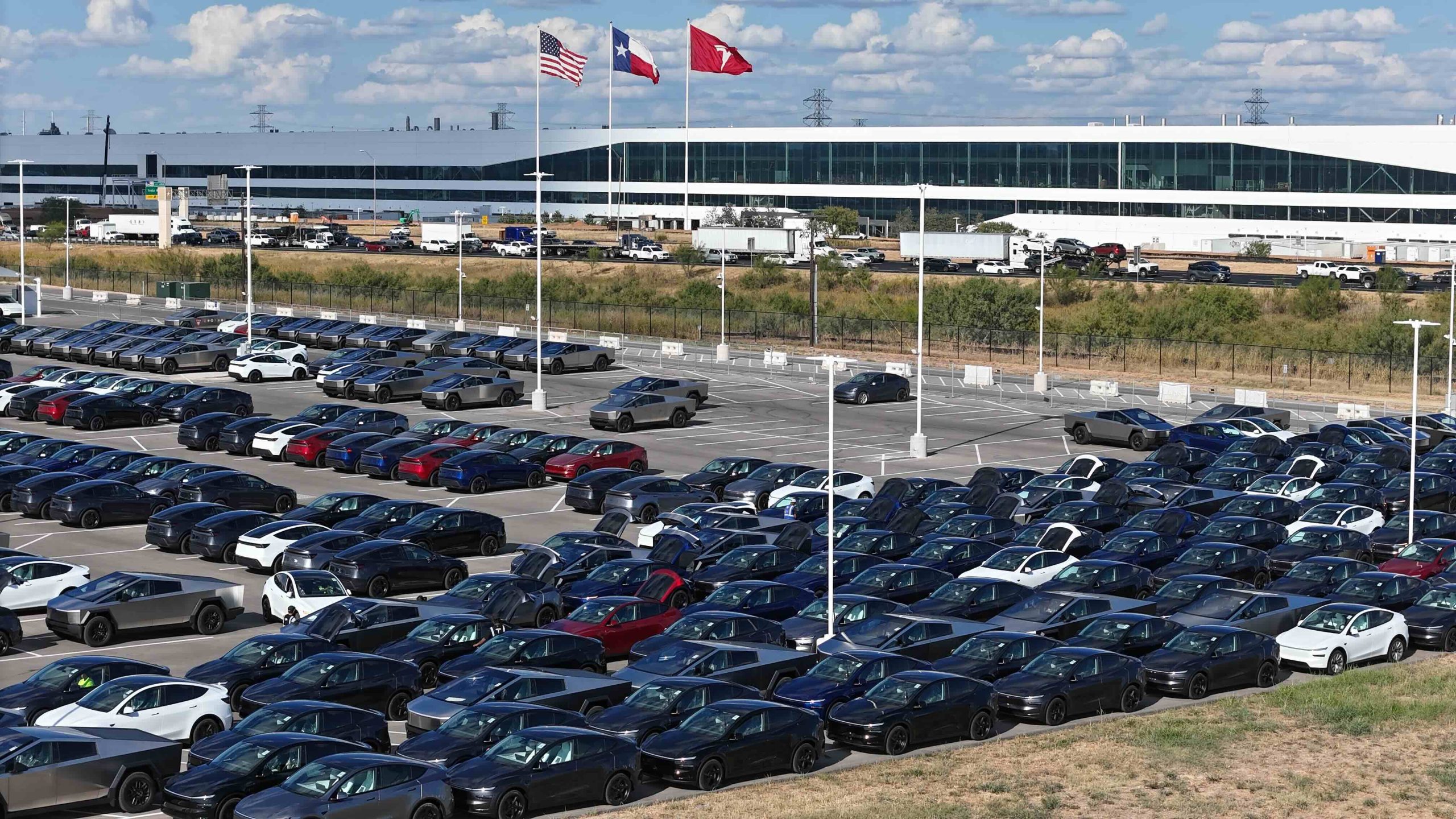
Tesla’s Austin Gigafactory is reportedly shifting to round-the-clock vehicle production through the end of 2026, according to longtime drone observer Joe Tegtmeyer.
In his November 2 update, Tegtmeyer, widely regarded as one of the most reliable independent sources on Giga Texas activity (we call him the Drone GOAT), stated that the plant has added a night shift, creating two 12-hour production shifts.
Tegtmeyer said in his video:
“Now, I do have some interesting news about that when it comes to the production schedule here at Giga Texas, and things are actually looking pretty good, especially when you think about what the demand is and the delivery numbers that they’re looking for and what they’re expecting. So, normally they have shifts Monday through Friday. It’s a day shift and it’s about 10 hours long or so, give or take. But now they’re on day and night shifts and they’re going to 12-hour days. So they’re going to be adding or they have another shift. They have 12 hours for both of them. In addition to that, the typical downtime that we’re going to be seeing around the holidays, specifically Thanksgiving and Christmas to the New Year time frame is actually changed. And we’re not going to see those big several day events where there is no production. At least that’s what the plan is right now. So, it’s really a great sign, I think, when we consider what they’ve done in the past and what production and the deliveries have been so far. So, maybe it’s shaping up to be a really strong quarter.”
Previously, General Assembly typically operated on a single roughly 10-hour day shift, Monday through Thursday or Friday. The new arrangement keeps General Assembly on its Monday-to-Thursday schedule while adding overnight capacity, and most other areas of the factory continue working the full week with some weekend activity.
Notably, the plant is also forgoing the multi-day shutdowns around Thanksgiving and the Christmas–New Year period that have occurred in prior years
Giga Texas currently builds the Model Y, the larger Model Y L, the Cybertruck, and the Cybercab robotaxi. Tesla has not confirmed the shift change or specified which lines will receive the extra output. Recent comments suggest Cybercab production has been constrained by the pace at which the Robotaxi fleet can absorb new vehicles, making the Model Y and Model Y L the more likely beneficiaries as the company works through order backlogs.
Tegtmeyer’s November 2 footage and commentary also highlighted broader site progress. Cortex 2 continues to expand, with additional compute coming online, a roughly 25 percent lengthening of the structure on the north end, and work on a third cooling plant.
The Boring Company tunnel site showed increased activity in the large launch pit, while the Advanced Technology Chip Fab (a SpaceX–Tesla joint R&D facility) continued steel superstructure and heavy truss installation, along with concrete pours.
The reported capacity increase arrives as Tesla aims for a strong fourth quarter following solid third-quarter results. While unconfirmed by the company, the information aligns with Tegtmeyer’s consistent track record of accurate on-site observations.
If Tesla makes the decision to sustain the all-day production plans, the dual 12-hour shifts would meaningfully raise weekly output potential at one of Tesla’s most important manufacturing hubs.

SpaceX’s next Starship flight set to make history on Friday the 13th

EVgo taps Tesla Superchargers for mass charging expansion


