Investor's Corner
Journalist in Twitter scuffle with Tesla’s Elon Musk spills details to CNBC

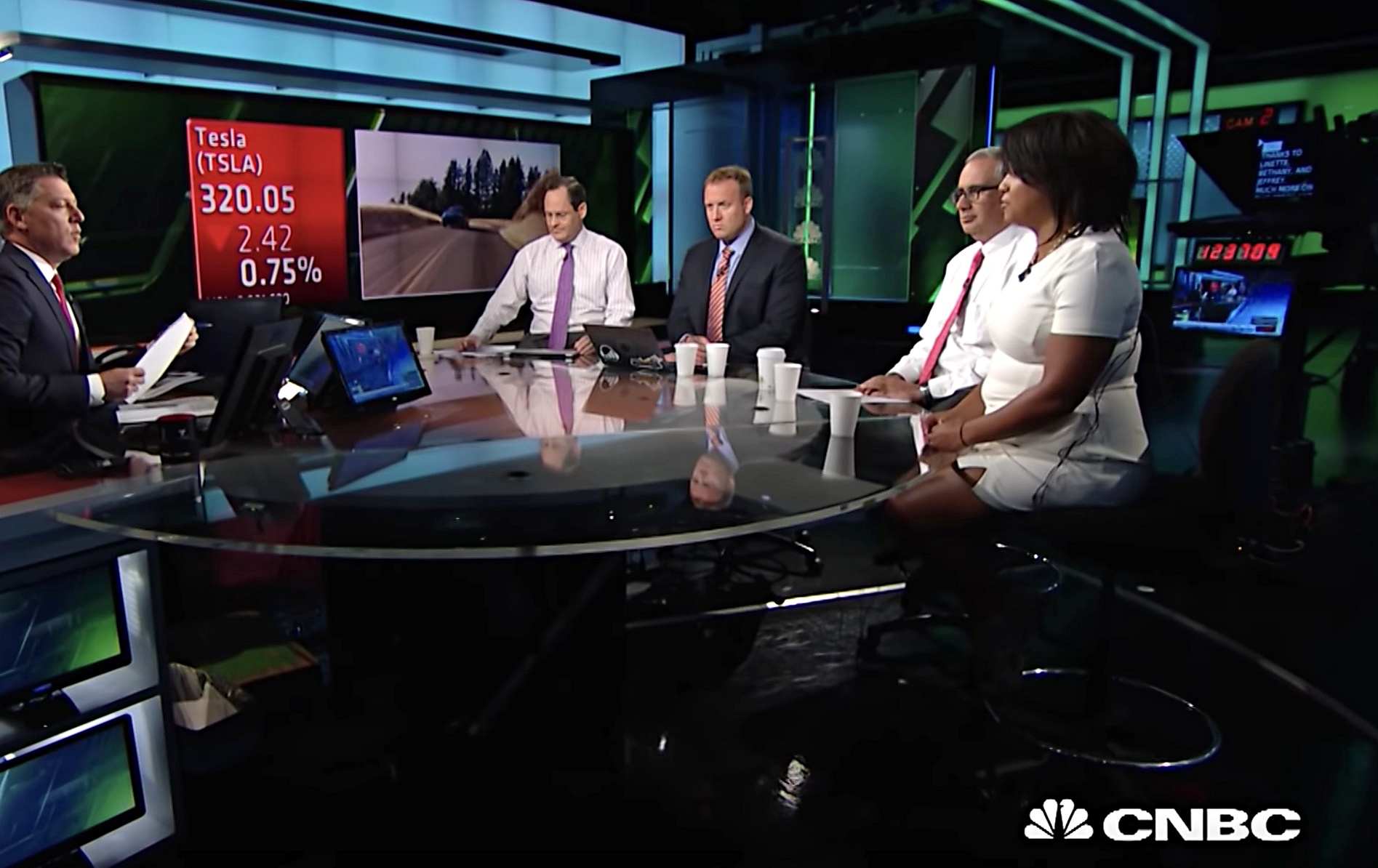
A journalist who recently caught the ire of CEO Elon Musk on Twitter defended her coverage in a recent interview. During a segment on CNBC‘s Halftime Report, Business Insider senior finance correspondent Linette Lopez told her side of the story, confirming that former Tesla employee and alleged saboteur Martin Tripp did provide her with information, and denying any financial connections with noted Tesla short-seller Jim Chanos.
“It’s up to shareholders to decide whether or the CEO of a $50 million (sic) company should spend his time yelling at reporters on Twitter. What my reporting indicates is that the mission of Tesla is not really quite in line with the manufacturing of Tesla. Elon Musk has, for years, a high-quality car that is environmentally-friendly and what we’re seeing coming out of both Tesla factories is not exactly that,” Lopez said.
Lopez was joined in her segment in CNBC‘s Halftime Report by Bethany McLean of Vanity Fair and Yale’s Jeffrey Sonnenberg. McLean, who is noted as one of the reporters who was involved in the Enron investigations, stated that Musk’s actions against Lopez on Twitter are uncharacteristic of a CEO that is confident of his company’s numbers. McLean also commended the Business Insider reporter for following her story.
“I think Musk should be ashamed of himself and shareholders should think about running for the hills. Given the ugliness on Twitter where somebody like Elon Musk starts to lead a pack and the pack takes that as an excuse to behave in an extremely ugly manner, and I think that brings out the worst in human nature. Even if you’re right and you’re on to something, it’s pretty hard to sit on the other side of that and not have it get to you. So, I commend Linette for her courage,” McLean said.
Ultimately, the Business Insider correspondent concluded that she would continue covering the electric car maker in her reports. Lopez also noted that she still has sources, and she still has stories to tell.
“Of course, there’s no question. I will continue to cover Tesla. I will continue to work very hard. I am not out of sourcing, and I am not out of stories,” Lopez said.
Linette Lopez has been covering Tesla for a while now, and a good number of her articles are pointedly negative. Articles such as “Elon Musk doesn’t care about you” and “Internal documents reveal Tesla is blowing through an insane amount of raw material and cash to make Model 3s, and production is still a nightmare,” after all, invoke an air of subjectivity. Her favorable articles featuring Tesla’s most notable short-seller, Jim Chanos, also gives an impression that she already has a clear stance on Tesla.
Nevertheless, McLean’s statements about Twitter bringing out the ugly side of human beings is pretty much on target as well. Some members of the online community, after all, have resorted to below-the-belt attacks on Lopez, and that is not okay. Musk is no stranger to online hate, either, as proven by the criticism he received after his team built a mini-submarine for the stranded Wild Boar soccer team in Thailand. Musk received a lot of flak for allegedly being a “narcissist” and attempting to take credit away from the divers who rescued the children and their coach. Recent Twitter updates by Musk, however, proved that the team conducting the rescue operations were in active communication with the Tesla CEO. Social media posts from Thailand also confirmed that they appreciated Musk and his team’s efforts to help (the minisub is now part of the country’s rescue equipment), but the vitriol is still there.
Ultimately, if there is one thing that Musk could to silence his critics and prove members of the media like Lopez and McClean wrong, it would be through Tesla’s numbers in the quarters and years to come. If the numbers at the end of Q2 2018 and its recent strategies with the Model 3, such as its new test drive program and its 5-minute Sign & Drive delivery process are any indication, it seems like Tesla is now actively fighting critics with its results. With Tesla expecting China’s Gigafactory 3 to begin vehicle production within two years of the facility’s construction, the time might soon come when Elon Musk would just have to sit back and let his company’s numbers do the talking.
Watch a part of Linette Lopez’s segment in CNBC‘s Halftime Report in the video below.


Investor's Corner
New drone video shows Tesla’s Optimus Factory reaching a turning point
New drone footage shows Tesla’s dedicated Optimus factory steel frame nearing completion at Giga Texas.

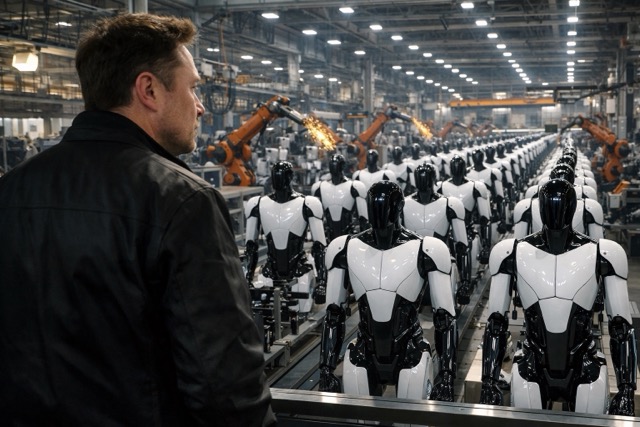
Tesla’s dedicated Optimus factory at Gigafactory Texas is closing in on a finished steel frame, according to drone footage posted Thursday afternoon by longtime site observer Joe Tegtmeyer. In the video, Tegtmeyer said structural steel assembly is now about five column grids away from reaching the building’s north perimeter beam, putting the primary skeleton in its final stretch roughly six months after Tesla broke ground on the North Campus site in late March.
The Giga Texas Optimus Factory latest update … construction keeps moving fast!
Steel assembly is now only about 5 column grids from the north perimeter beam. Concrete is going in on the three upper floors, rebar is still being laid for more pours, and footing / grade-beam work… pic.twitter.com/qvFPvwnYzW
— Joe Tegtmeyer 🚀 🤠🛸😎 (@JoeTegtmeyer) September 17, 2026
Tegtmeyer’s footage shows concrete already going in on three upper floors while crews continue laying rebar and pouring grade beam footings at ground level. That kind of parallel work, steel rising at one end of the site while concrete sets at the other, is a scheduling approach Tesla used at the original Giga Texas building and appears to be repeating here to save time before the plant’s targeted 2027 production start.
Teslarati has tracked the building’s progress since Tesla confirmed construction was officially underway in May, when the first steel structure went up on what was then bare, reclaimed land. The facility is part of a more than 5.2 million square foot expansion of Giga Texas’s North Campus that Tesla has said will eventually run nearly the length of the existing vehicle factory, over 4,000 feet, while sitting somewhat narrower. Musk has pegged the long term output target at 10 million Optimus units a year once the line is running at full capacity, a volume that would dwarf the one million unit pilot line Tesla is standing up separately at its Fremont, California factory.
Tesla Giga Texas to feature massive Optimus V4 production line
The Texas facility sits alongside another major buildout on the same campus. Terafab, the joint Tesla and SpaceX chip fabrication plant that will eventually supply the silicon running Optimus units in the field. Housing robot assembly and chip production on the same grounds is a deliberate supply chain decision, cutting down on the shipping and lead time that would otherwise sit between the two.
Tesla has not given an updated timeline beyond its previously stated goal of bringing high volume Optimus production online at the site in the summer of 2027. Fremont’s smaller pilot line began mass producing the current Gen 3 robot in January, with that plant expected to build tens of thousands of units this year primarily to generate the real world data Tesla needs to refine the robot’s software before Giga Texas ramps up. Six months of visible construction progress, tracked almost entirely through Tegtmeyer’s recurring drone flights, gives the clearest outside look yet at how seriously Tesla is treating that 2027 deadline.
Investor's Corner
Tesla and SpaceX take “Terafab” Trademark fight to Federal Court
Tesla and SpaceX sue a small Illinois firm after cease and desist letters over Terafab.

Tesla and SpaceX are asking a federal judge to rule that their planned Terafab chip factory does not infringe a small Illinois company’s trademark, a request that arrives only after months of quiet negotiation broke down this summer.
The dispute traces to May 18, when Tesla filed three U.S. trademark applications for “Terafab” and “Tesla Terafab,” covering semiconductor chips and related chip making services. TERA-print LLC, a nanotechnology company that has held a federal trademark for “Tera-Fab” since 2021, responded five days later with a cease and desist letter. According to the lawsuit, first reported by Reuters, TERA-print argued that Tesla and SpaceX’s use of “Terafab” would confuse consumers familiar with its own trademark, which covers a desktop photolithography printer sold to researchers for sensor and bioengineering work.
What stands out in the filing is the timing of TERA-print’s own paperwork. One day before sending that cease and desist letter, on May 22, TERA-print applied to expand its existing registration to cover semiconductor materials, silicon chips, nanoelectronic devices and AI design services, categories it had not previously claimed. Tesla and SpaceX call that filing opportunistic in their complaint, noting it arrived two months after Tesla’s public Terafab announcement and just days after Tesla’s own trademark applications went in.
Elon Musk launches TERAFAB: The $25B Tesla-SpaceXAI chip factory that will rewire the AI industry
By June 10, TERA-print was threatening to sue for federal trademark infringement, false designation of origin and unfair competition, the complaint states. Rather than wait to be sued, Tesla, SpaceX and SpaceXAI met with TERA-print six separate times between June and August trying to resolve the dispute directly. Those talks collapsed, and the companies filed for declaratory judgment this week in the U.S. District Court for the Western District of Texas, asking a judge to find that “Terafab” does not infringe TERA-print’s mark before TERA-print can file a claim of its own.
TERA-print isn’t backing down. The company told PCMag it discussed a settlement with Tesla as recently as September 2 and feels misled by what it called Tesla’s professed interest in settling. Its CTO, Andrey Ivankin, said TERA-print holds a Defense Department contract to fabricate semiconductors and partially owns Mattiq Inc., an AI company built on TERA-print’s products, and that the company will vigorously defend its rights.
Tesla and SpaceX argue the overlap is superficial. Terafab is planned as a $16.8 billion complex spanning roughly 100 million square feet at the Grimes County site SpaceX confirmed last month, built to produce chips for Optimus robots, Tesla’s AI computing needs and SpaceX’s orbital data center ambitions, a scale and purpose the companies say no reasonable consumer would confuse with a tabletop lab printer. TERA-print’s product line has stayed focused on lithography tools for biological and sensor research since it registered its mark in 2021.
The trademark fight is the second legal dispute tied to the Terafab project in the past week, following a separate SpaceX suit aimed at keeping company records about the facility out of public view, as KBTX reported. Whether construction proceeds under the Terafab name now depends on a federal judge in Austin.

In a new interview on Wednesday, Tesla uber bull Ron Baron said that anyone looking to buy the company’s stock should do so as soon as they can.
Baron, founder and CEO of Baron Capital and one of Tesla’s most persistent institutional bulls, used a CNBC Squawk Box appearance on Wednesday to deliver a familiar message with fresh urgency: In his opinion, Tesla stock is a buy:
“The time to buy the stock is now. FSD is catching on, and it’s going to be bigger and bigger. 55% of new buyers are buying it (Teslas) with FSD. It’s going to be everywhere. It’s safer.”
The Baron Capital frontman’s case is built around Full Self-Driving. Tesla reported 1.48 million active FSD subscriptions in the second quarter, up 56 percent year over year, and company officials have said roughly 55 percent of new North American deliveries left with a subscription enabled.
Baron framed that attach rate as proof the product is moving from enthusiast extra to default expectation, and as a reason software, not just vehicle volume, should drive the next phase of value.
His conviction on Tesla shares is not theoretical, as Baron Capital made its first Tesla investment in 2014, after years of meetings that began around the 2010 IPO roadshow. The firm later built a large SpaceX position starting in 2017.
Ron Baron today in new interview on Tesla:
“The time to buy the stock is now. FSD is catching on, and it’s going to be bigger and bigger. 55% of new buyers are buying it (Teslas) with FSD. It’s going to be everywhere. It’s safer.” pic.twitter.com/Rv5PB0bVZ2
— Sawyer Merritt (@SawyerMerritt) September 16, 2026
Baron said those Musk-led bets have generated about $30 billion of the $71 billion in profits Baron Capital has produced for clients. He put the firm’s current exposure at roughly $25 billion in SpaceX and $5 billion in Tesla. Personally, he described SpaceX as his largest holding, at about $5 billion, with about $1.5 billion in Tesla and additional Tesla exposure through the firm’s funds.
That concentration is also a statement of loyalty. Asked about talk of a SpaceX-Tesla combination, Baron said he had already walked Elon Musk through arguments for and against a deal, then declined to repeat them on air. His public position was simpler: “Whatever you decide is better is what I’m going to support,” he said to Musk.
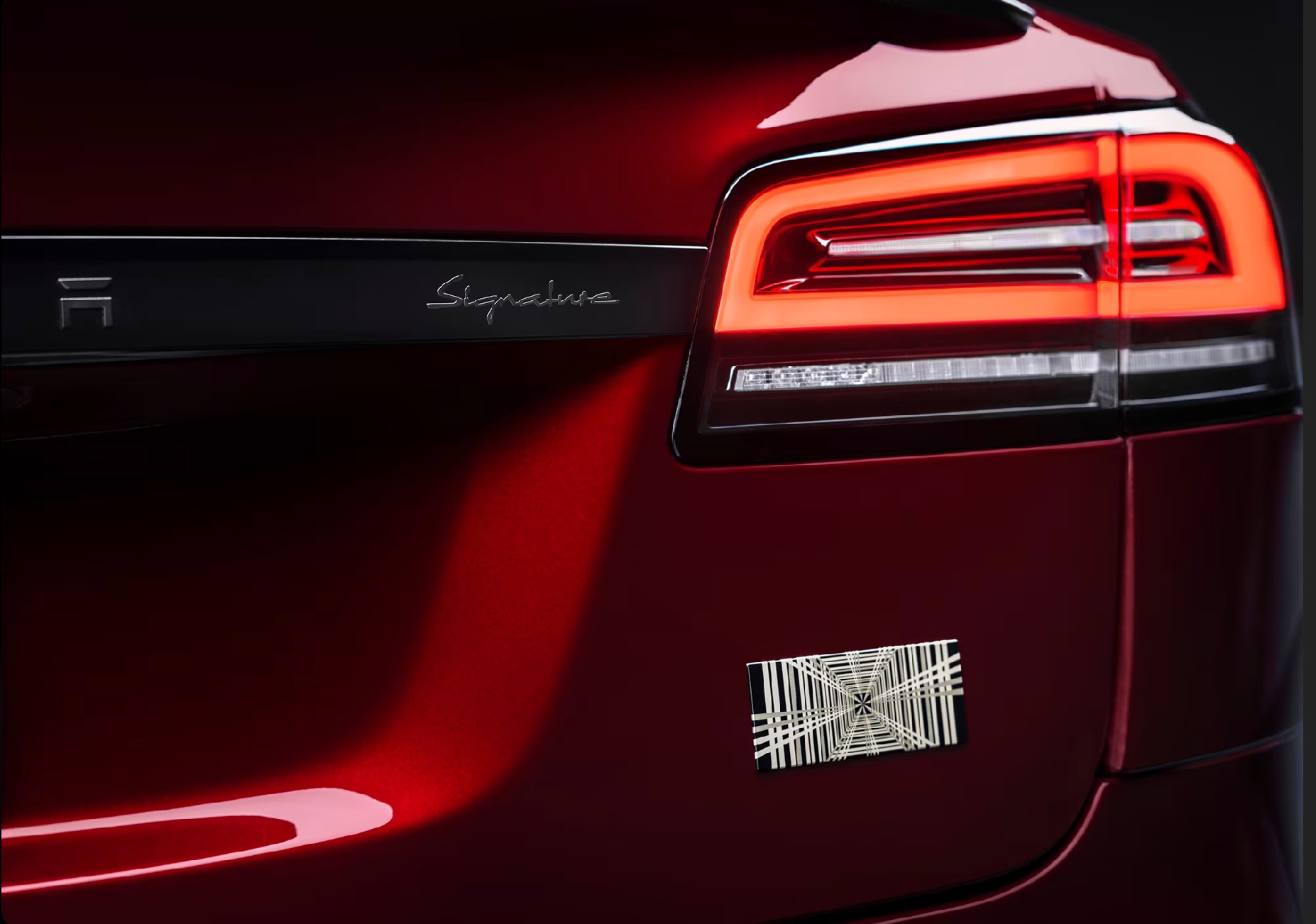
Baron also said that he picked up the farewell edition of the Model S after Tesla decided to sunset the vehicle earlier this year, calling it his favorite car he’s ever driven.

NASA taps SpaceX for more astronaut missions as Boeing Starliner remains grounded

New drone video shows Tesla’s Optimus Factory reaching a turning point


