SpaceX
SpaceX will build and launch Starship/Super Heavy in Texas and Florida, says Musk

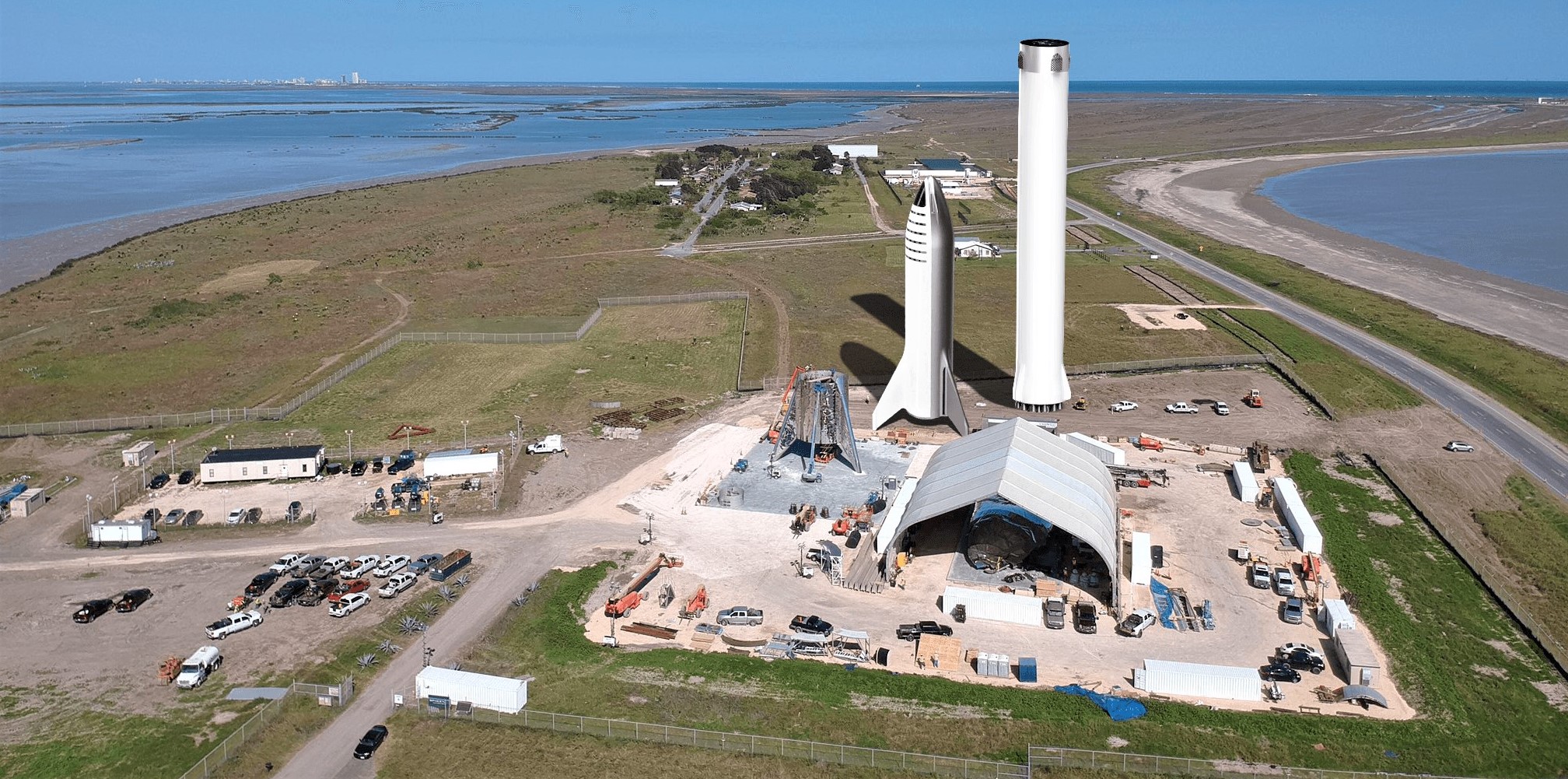
According to SpaceX CEO Elon Musk, the company has plans to both build and launch BFR’s Starship upper stages and Super Heavy boosters at facilities located in Boca Chica, Texas and Cape Canaveral, Florida.
Indicative of SpaceX and Musk’s rapidly evolving plans for the next-generation, ultra-reusable launch system, the to stainless steel over carbon composites appears to continue to have a range of trickle-down consequences (or benefits) throughout the rocket’s design, production, launch, and operations. Given the 3+ radical, clean-sheet design changes the BFR program has undergone in about as many years, it’s hard to definitively conclude much about the latest iteration. Nevertheless, Musk’s indication that stainless steel BFRs may now be built simultaneously at multiple locations suggests that the construction of steel Starships and Super Heavies could be radically easier (and cheaper) than their composite predecessors.
Over the last several months, SpaceX’s manufacturing plans for the massive Starship and Super Heavy vehicles have effectively been up in the air from a public perspective. Official statements provided in January suggested that the first prototypes would be built in-situ after word broke that SpaceX had prematurely terminated a lease with the Port of Los Angeles, where the company had – throughout 2018 – been planning to construct a dedicated seaside BFR factory.
Likely for a variety of reasons, all of which are unknown, SpaceX apparently no longer has a pressing need for dedicated traditional manufacturing facilities at this point in time. Instead, the company is relying extensively on the largely unprecedented practice of building its first suborbital and orbital Starship and Super Heavy vehicles outdoors, much to the visible discomfort of aerospace industry practitioners, followers, and fans alike.
At a bare minimum, SpaceX’s decision to fabricate and assemble large-scale methalox rocket stages with quite literally zero protection from the elements may be one of the most ‘nontraditional’ things the habitually disruptive company has ever done. At the opposite end of the spectrum, building rockets outside could be perceived as an unfathomably foolish endeavor, radically increasing the risk of dangerous manufacturing defects, foreign objects debris (FOD) mitigation, and – ultimately – major vehicle failures. From such an external perspective, wholly lacking any insight from SpaceX itself, it’s difficult to conclude much of anything.
On the one hand, a highly-disciplined adherence to the tenets of best aerospace industry practices and responsible engineering could probably mitigate the risks of en 

Given that the production of orbital-class, super-heavy lift rockets has really only been attempted twice (Saturn V and Russia’s N1), both times with custom-built, environmentally-controlled factories, it’s likely that SpaceX is already suffering from the inherent uncertainty of the tasks at hand; forging new ground – especially in highly technical fields – is rarely easy or forgiving. Given the aforementioned challenges of building large and reliable rockets at all, challenges that regularly topple vehicles built in traditional factories, it will likely remain an open question if SpaceX can consistently build reliable, technologically-advanced rockets and spacecraft outside until those vehicles have quite literally proven themselves in orbit.
Toot Toot! Hopper is chomping at the bit today!
?@BocaChicaGal https://t.co/0ZEXcKOWwH pic.twitter.com/PEm7c12KTi— Chris B – NSF (@NASASpaceflight) March 18, 2019
Difficulties aside, it’s easy to understand why SpaceX (or maybe just Elon) is willing to at least attempt something that has never been done before. If the company could find a way to reliably build complex, high-performance rockets without the need for expensive factories, it could radically change the paradigm of rocketry by reducing the often eye-watering upfront costs of building giant launch vehicles. The ability to build rockets almost independently of dedicated factories or assembly facilities would also allow SpaceX to – as Musk said – build their vehicles where they launch, further minimizing the significant challenges and costs of transporting extremely large structures more than a couple of miles.
Regardless of the major challenges standing between SpaceX and its stainless steel Starship/Super Heavy aspirations, Elon Musk appears to be as confident as ever, frankly stating that Starship’s rate of progress “far exceeds” that of Falcon and Dragon. In other words, the apparent instability of the BFR program may actually end up being to its benefit, potentially resulting in a finished product that simultaneously takes less time to come to fruition and is ultimately much closer to its original design intent. At risk of putting the wrong words into Musk’s mouth, it seems that he believes that SpaceX might be able to arrive at a Starship/Super Heavy combo much closer to Falcon 9 Block 5 than Falcon 9 V1.0 and do so far sooner than most believe is possible.
Only time will tell. In the meantime, there will be plenty of fireworks, beginning as early as this week with the first static fire test – and potential hops – of SpaceX’s massive Starship Hopper. Stay tuned for updates!
Check out Teslarati’s Marketplace! We offer Tesla accessories, including for the Tesla Cybertruck and Tesla Model 3.


Elon Musk
Elon Musk follows Trump’s lead, says a SpaceX name change is coming
Elon Musk says SpaceXAI will become SpaceXSI, marking its second rebrand in under three months.

Elon Musk wants to rename his artificial intelligence company again, less than three months after its last rebrand.
In a string of posts on X early Sunday morning, Musk wrote “No more AI,” followed by “SI” and “It’s better.” He then added, “SpaceX is a super intelligence company.” When a user asked whether SpaceXAI could become SpaceXSI, Musk replied, “Yes, we will make that change.”
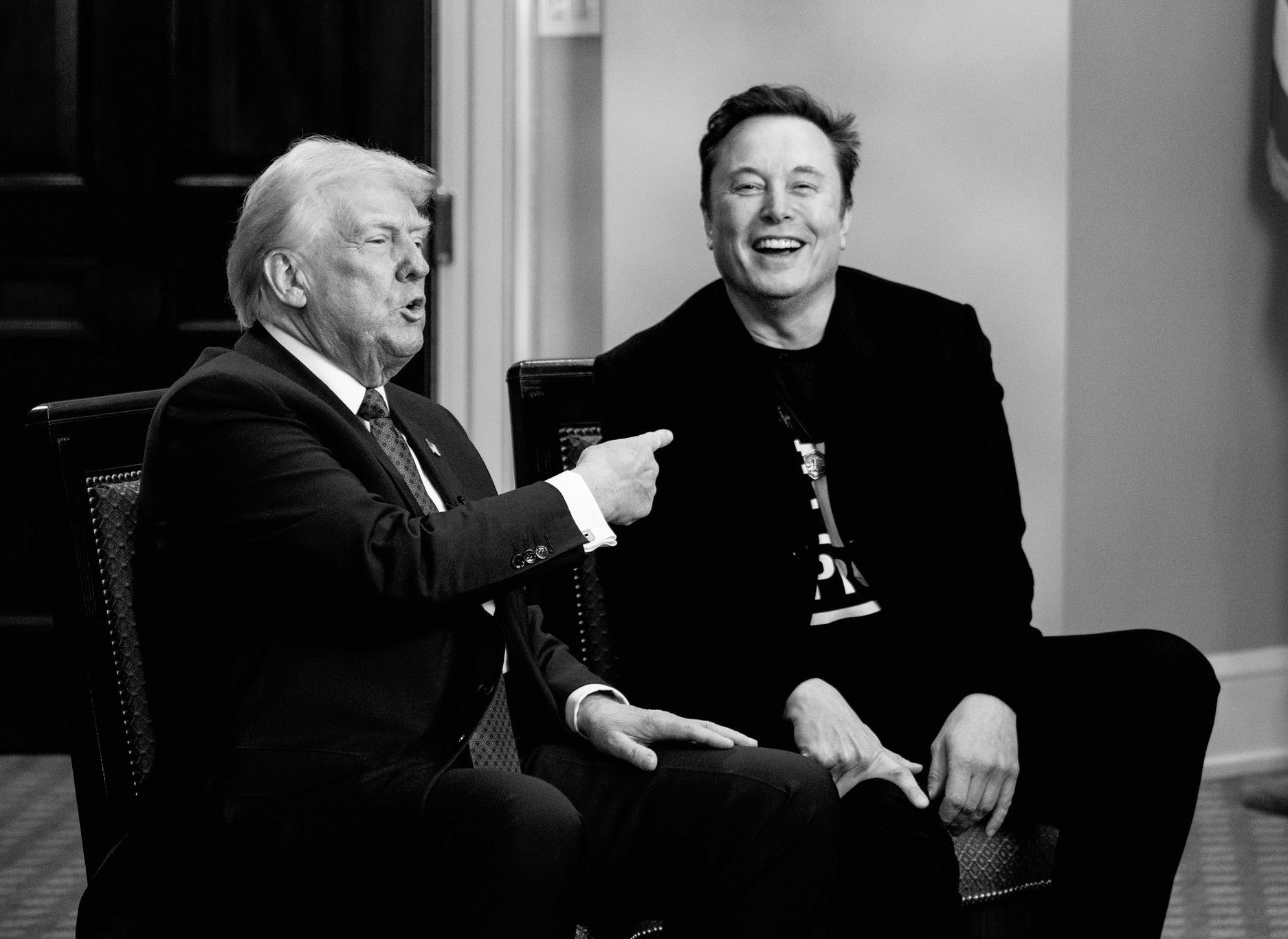
The posts extend a terminology push that began at the White House last week. On September 29, President Donald Trump signed an executive order directing federal agencies to replace “artificial intelligence” and “AI” with “Super Intelligence” and “SI” on government websites, policy documents and press releases. The same day, Musk sat beside Trump as the heads of the largest AI companies signed a voluntary safety accord, as Teslarati reported. Speaking to reporters afterward, Musk caught himself mid sentence: “I think it is worth highlighting the positive benefits of A.I. … S.I., pardon me.”
Elon Musk and Trump are closer than ever, and Tesla could be the big winner
SpaceXSI would be the third name for the business since February. SpaceX acquired xAI on February 2 in a deal that valued the combined company at $1.25 trillion. In May, Musk said xAI would be dissolved as a separate company, and on July 6 the division adopted the SpaceXAI name and a new logo that placed the xAI letters inside the SpaceX identity.
Musk gave no timeline. He did not say whether SpaceXSI would be a legal name change or a branding update, whether the @SpaceXAI handle on X would change, or how the shift would apply to products like Grok. The company had not issued a formal announcement as of Sunday morning.
The change would reach well beyond a chatbot. SpaceXAI now houses Grok, the X platform, the Colossus training clusters in Memphis and the coding tool Cursor, which SpaceX acquired in August. It also runs the orbital compute effort SpaceX is building around Nvidia hardware, which Musk said during the company’s first earnings call would be exclusive to Nvidia.
It’s unclear if rivals like Anthropic, OpenAI, Google, Meta and Nvidia have plans to also rename their companies or products. OpenAI CEO Sam Altman has continued to say “AI” in public, while Nvidia CEO Jensen Huang has gone partway, describing data centers as “super intelligence factories.”
The rename would also line up SpaceX’s AI branding with the federal government’s language as Musk takes on a new advisory role at the Pentagon, where he is helping lead the Project Meridian study on the future of warfare.

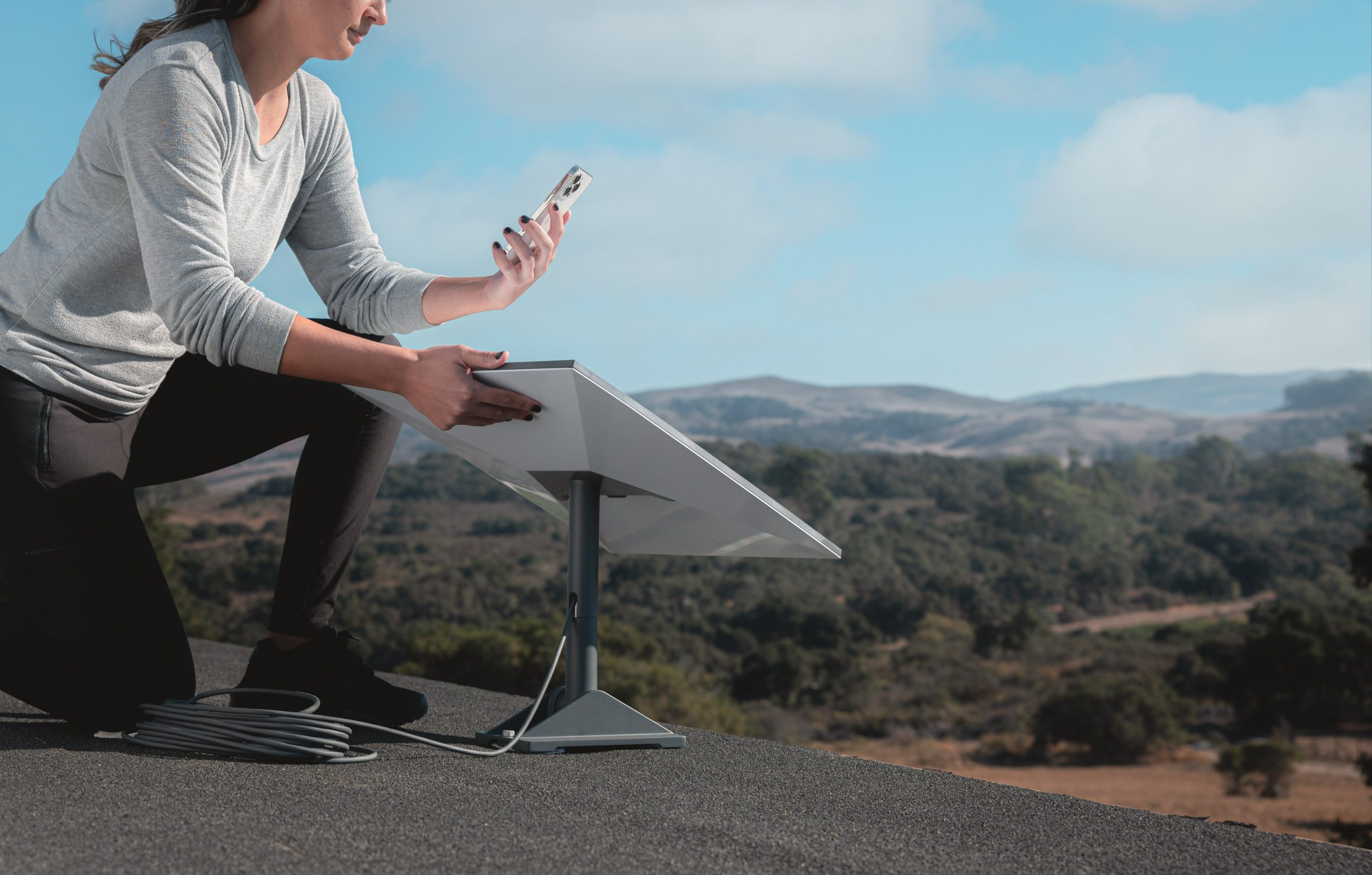
Starlink is launching a new beta path for ordinary property owners and local operators to turn a single Starlink kit into a small shared-access business for passive income.
Under the Starlink for Communities program, a host installs one dish and router setup in a location with nearby demand: an apartment complex, campground, rural crossroads, or event site. Neighbors or local users can buy short-term passes rather than full individual subscriptions, giving the Starlink provider a potential path to passive income.
Hour, day, and week passes cover one device. A month pass covers up to four. Starlink handles account creation, payments, access controls, and the satellite link itself. The host’s role is mainly placement, power, and basic upkeep, with earnings tied to each paid connection.
Big news! SpaceX is introducing a new @Starlink for Communities program that lets you earn money by providing Starlink internet to your neighbors or people nearby, who can pay for access by the hour, day, week, or month.
Neighbors pay for the access they need, while the person… pic.twitter.com/DtOUs0Ekvt
— Sawyer Merritt (@SawyerMerritt) October 1, 2026
The model echoes the passive-income vision long attached to Tesla’s Robotaxi plans, and it seems like it’s something Musk has hinted toward in the past as he believes AI will make the need to work relatively optional. In both cases, the platform owns the hard parts of matching, billing, and network management, while an individual supplies a physical asset that sits idle much of the time.
A Starlink host’s dish can serve multiple nearby users without each household buying and installing its own terminal. A Tesla owner, under the stated Robotaxi concept, would leave a vehicle enrolled in the fleet during unused hours so the car generates rides while the owner is at work or asleep.
Both arrangements convert under-utilized hardware into a revenue stream. They also let the company scale coverage or capacity without owning every endpoint.
Differences are practical. A Starlink kit is a fixed, relatively low-cost terminal whose main constraint is local congestion and line-of-sight. A Tesla Robotaxi is a mobile, high-value vehicle whose earnings depend on demand density, utilization rates, insurance, cleaning, and charging.
Starlink’s program is already accepting host applications in multiple countries and describes the revenue split as ongoing. Tesla’s owner-network version remains more aspirational.
The company currently operates a limited company-controlled robotaxi service in select areas and has solicited interest from fleet buyers for Cybercab vehicles, while private Full Self-Driving owners have not yet been able to dispatch their own cars for paid rides at scale.
Tesla primes Cybercabs for 4K streaming and high bandwidth gaming with Starlink integration
Starlink is a satellite broadband service operated by SpaceX that uses a constellation of low-Earth-orbit satellites to deliver internet to locations where terrestrial broadband is slow, expensive, or absent. It has grown to millions of subscribers worldwide by selling direct residential, mobile, and enterprise terminals, and have become widely available at a wide array at retail locations like Target and Best Buy.
The Communities program extends that reach by letting hosts resell short bursts of capacity to people nearby, while also providing high-speed internet access to those who are simply around a Starlink user.
News
SpaceX’s midnight spy satellite launch quietly set a new record
Falcon Heavy launched its first NRO mission while SpaceX landed four boosters in one day.
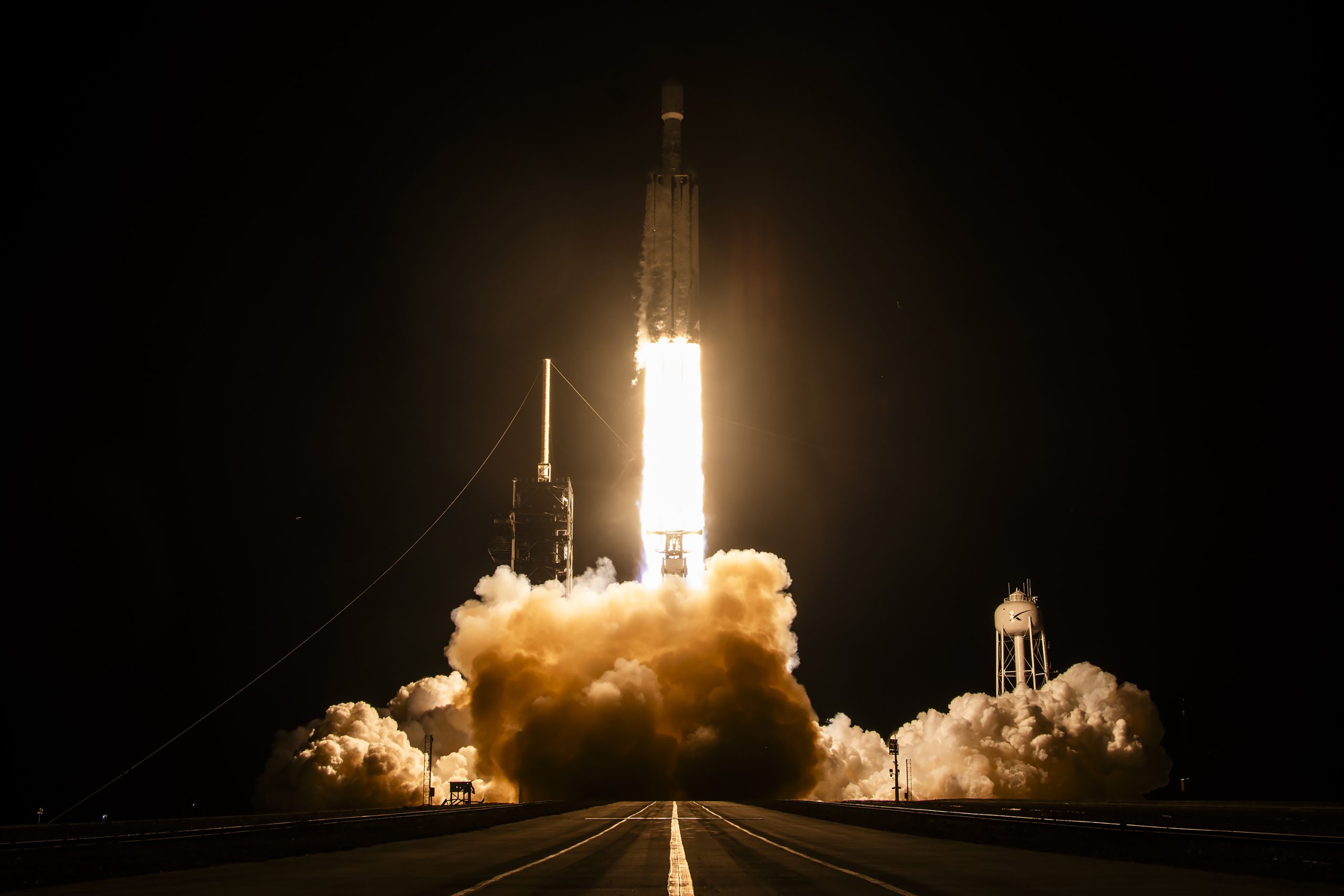
SpaceX closed out one of its busiest days ever with a midnight Falcon Heavy launch from Florida, and the rocket’s two side boosters came home to finish off a landing record the company had never set before.
Falcon Heavy lifted off from Launch Complex 39A at NASA’s Kennedy Space Center at 11:54 p.m. ET Thursday carrying NROL-97, a classified payload for the National Reconnaissance Office. It was the first time the NRO has flown on Falcon Heavy after 22 missions on Falcon 9, and the first NRO mission bought through the National Security Space Launch Phase 3 Lane 2 contract awarded in 2025, according to Spaceflight Now.
Falcon Heavy lifts off from pad 39A in Florida for the 14th time! pic.twitter.com/uuZLKNTdD7
— SpaceX (@SpaceX) October 2, 2026
Roughly eight minutes after liftoff, side boosters B1104 and B1072 touched down at Landing Zones 1 and 2 at Cape Canaveral Space Force Station, setting off double sonic booms across Brevard County. B1104 was flying for the second time and B1072 for the fourth. Both last flew on August 30 on NASA’s Nancy Grace Roman Space Telescope, making NROL-97 the quickest turnaround between Falcon Heavy missions to date. The brand new center core, B1106, was expended in the Atlantic so the payload could reach its high energy orbit, and SpaceX’s mission page noted the fairing had previously flown on the NROL-95 mission in July.
The two landings capped a record for SpaceX. Earlier Thursday, Falcon 9 booster B1101 returned to Landing Zone 40 after sending the Crew-13 astronauts to the International Space Station, and another Falcon 9 launched the Transporter-18 rideshare with 130 payloads from Vandenberg Space Force Base in California. Spaceflight Now reported it was the first time SpaceX has landed four boosters in a single day, wrapping up the triple header Teslarati previewed on Wednesday.
Falcon Heavy’s side boosters land on LZ-1 and LZ-2 pic.twitter.com/dBPcNeggFx
— SpaceX (@SpaceX) October 2, 2026
The mission also brought Landing Zone 1 back for what may be its final landing. SpaceX first landed an orbital class booster there in December 2015, but its lease on the former Launch Complex 13 site ended in 2025 as the company moved Florida landings to new pads at its own launch complexes. With LZ-40 already holding the Crew-13 booster, SpaceX brought LZ-1 back into service for one more night. Launch tracker Next Spaceflight listed NROL-97 as the final expected landing at the site.
NROL-97 adds to a fast growing stack of national security work for SpaceX. The company has flown four Space Force missions from Vandenberg since mid August, several believed to carry Starshield satellites, pushing its Pentagon contract total for 2026 past $8 billion. Elon Musk was also named this week to help lead the Pentagon’s Project Meridian study on the future of warfare.
The Florida doubleheader stood out for another reason. The Space Coast saw only one launch in all of September as SpaceX shifts more of its East Coast infrastructure toward Starship, which reached orbit for the first time on Flight 14 just three days earlier.

Tesla wins over Netflix’s Selling Sunset star, who’s now ditching his Bentley

Elon Musk follows Trump’s lead, says a SpaceX name change is coming


