Investor's Corner
Tesla’s new chairman stands behind Elon Musk’s Twitter use: ‘He uses it wisely’

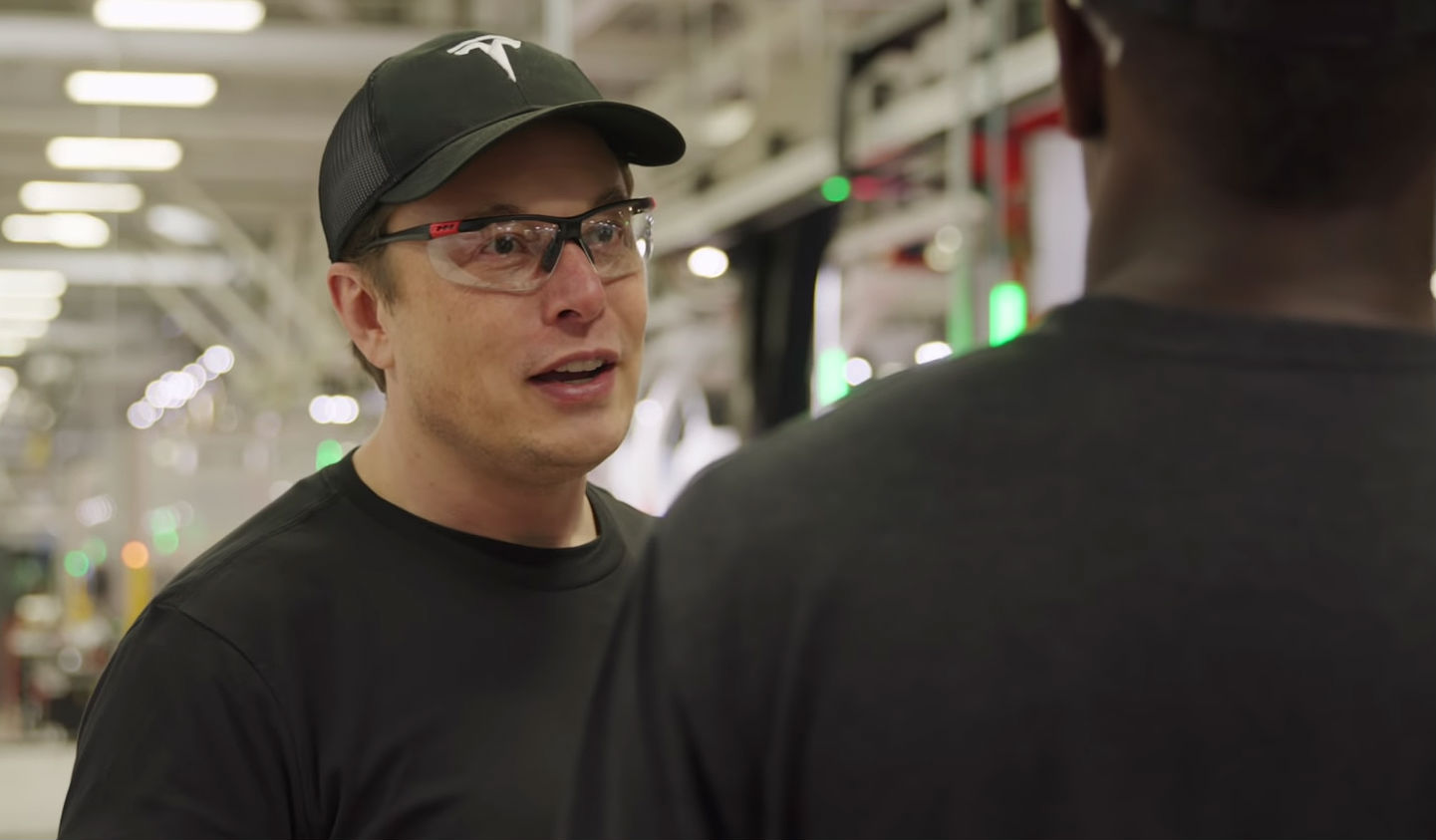
Tesla Chairman Robyn Denholm is speaking out in support of CEO Elon Musk and his polarizing Twitter use. In a rare interview, the new chair of Tesla’s board of directors defended Musk, stating that from her point of view, the CEO’s behavior on Twitter has been satisfactory.
“Twitter is part of everyday business for many executives today. From my perspective, he uses it wisely,” she said.
Denholm’s comments about the Tesla CEO followed a speech at the American Chamber of Commerce in Sydney, Australia on Wednesday. Addressing the ongoing issue between Elon Musk and the Securities and Exchange Commission, Denholm noted that she believes Tesla has been doing its best to comply with the terms of last year’s settlement with the agency.
“We believe we’ve done everything that we need to do under the settlement, but obviously it’s going to the court and it will go from there. I don’t think he poses any challenges. The company is running very well, and the board itself is very engaged. We meet with him all the time,” she added.
The new Tesla chair was appointed by the company last November following Elon Musk and the SEC’s settlement over the CEO’s now-infamous “funding secured” tweet, which resulted in a short-lived attempt to take the company private. As part of the agreement, Musk agreed to relinquish his position as chairman of Tesla’s board of directors.
Denholm, a member of the company’s board since 2014, was selected as Musk’s replacement, though she has largely remained under the radar until her recent comments. Denholm is still serving as the chief financial officer of Australian telecom firm Telstra, a position she is set to relinquish on May 6. She is expected serve as Tesla’s Chairman on a full-time basis after.
Denholm’s words of support for Elon Musk comes amidst the CEO and the SEC’s ongoing skirmish. The SEC has argued that Musk must be held in contempt over a tweet posted last February 19 which stated that Tesla would make “around 500k cars” this year. The figure echoed Musk’s statements from the Q4 2018 earnings call last January, but the CEO nonetheless explained in a follow-up tweet that the 500k estimate would be true for Tesla’s annualized run rate.
The SEC has claimed that the Twitter post violates Musk’s settlement last September, which demanded that tweets with material information to Tesla shareholders must go through a review process before they are posted. Musk’s legal team countered that the CEO’s estimates in the February 19 tweet are not material information at all, since the estimated figures have been made public since the fourth quarter earnings call.


Investor's Corner
Tesla Optimus Gen 3 shows off a cleaner, factory-ready design in new app discovery
Renders hidden inside Tesla’s Android app show Optimus Gen 3’s design before any official reveal.

![Tesla Optimus Gen 3 [Credit: Tesla]](https://www.teslarati.com/wp-content/uploads/2026/03/tesla-optimus-gen3-diner.jpg)
Tesla may have accidentally given a first look at its newest Optimus Gen 3 humanoid robot when photos were found in the Tesla smartphone app.
Design files tucked inside a recent Android version of the Tesla app appear to show the third generation humanoid robot next to the older Gen 2.5 prototype. The assets were extracted from the app package by Tesla community member @wholemars, who posted the renders on X late Tuesday night before deleting them. The Tesla Newswire reshared the side by side comparison on Wednesday, and the images have circulated widely since.
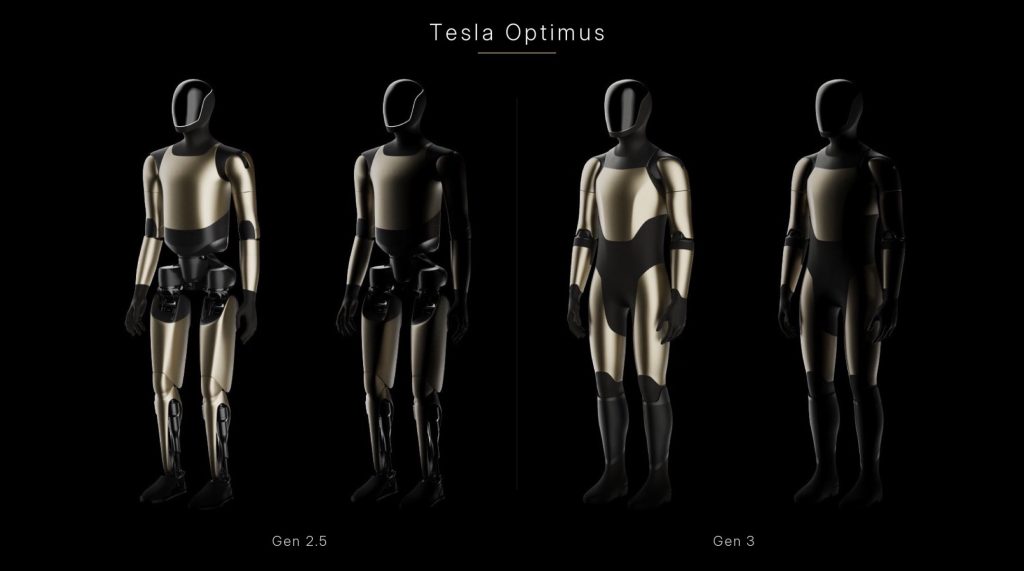
Tesla Optimus Gen 2.5 vs Gen 3 comparison via @WholeMars on X
The files are labeled “gen3” and were built as models for Tesla app’s own interface, as validated directly by Grok to be official.
The comparison shows a robot that looks built for a factory line rather than a lab bench. Gen 2.5’s exposed mechanical linkages and gold plating on the knees and shins are gone. In their place, Gen 3 uses matte black fairings on the lower legs, paired with a more contoured champagne gold body. Flexible covers now seal the joint where the torso meets the upper thighs, keeping bearings and moving parts sealed from debris and unnecessary contact.
The body panels fit more tightly, and the hands, which Tesla has said carry 22 degrees of freedom, look far more refined than those on earlier units.
This most recent leak fills a gap Tesla has left open for most of the year. Elon Musk said on March 31 that Optimus 3 was walking around but needed “some finishing touches” before it could be shown, a delay Teslarati covered when Tesla missed its first quarter reveal target. Musk later said Tesla would hold the design back until closer to production, partly to keep competitors from copying it. No reveal date has been announced.
The app itself has been preparing for Optimus for months. In July, code in the Tesla app pointed to a dedicated robot phone key, a consent screen for collecting video and spatial data while Optimus works inside a home, and an alert system for low battery and mechanical faults. Finished 3D models of Gen 3 suggest the interface owners will eventually use is moving past placeholder code toward something Tesla intends to ship.
Manufacturing is moving in parallel. Tesla tore out the original Model S and Model X lines at Fremont this summer to make room for Optimus production, with a planned capacity of one million robots a year. At Giga Texas, the steel frame of a dedicated Optimus factory is nearing completion ahead of a targeted 2027 start, with Musk pointing to an eventual output of 10 million units annually.
Elon Musk
X changed how everyone gets paid, and this lawsuit shows why
X sued a Bitcoin account network over fake payouts as its creator pay model shifts
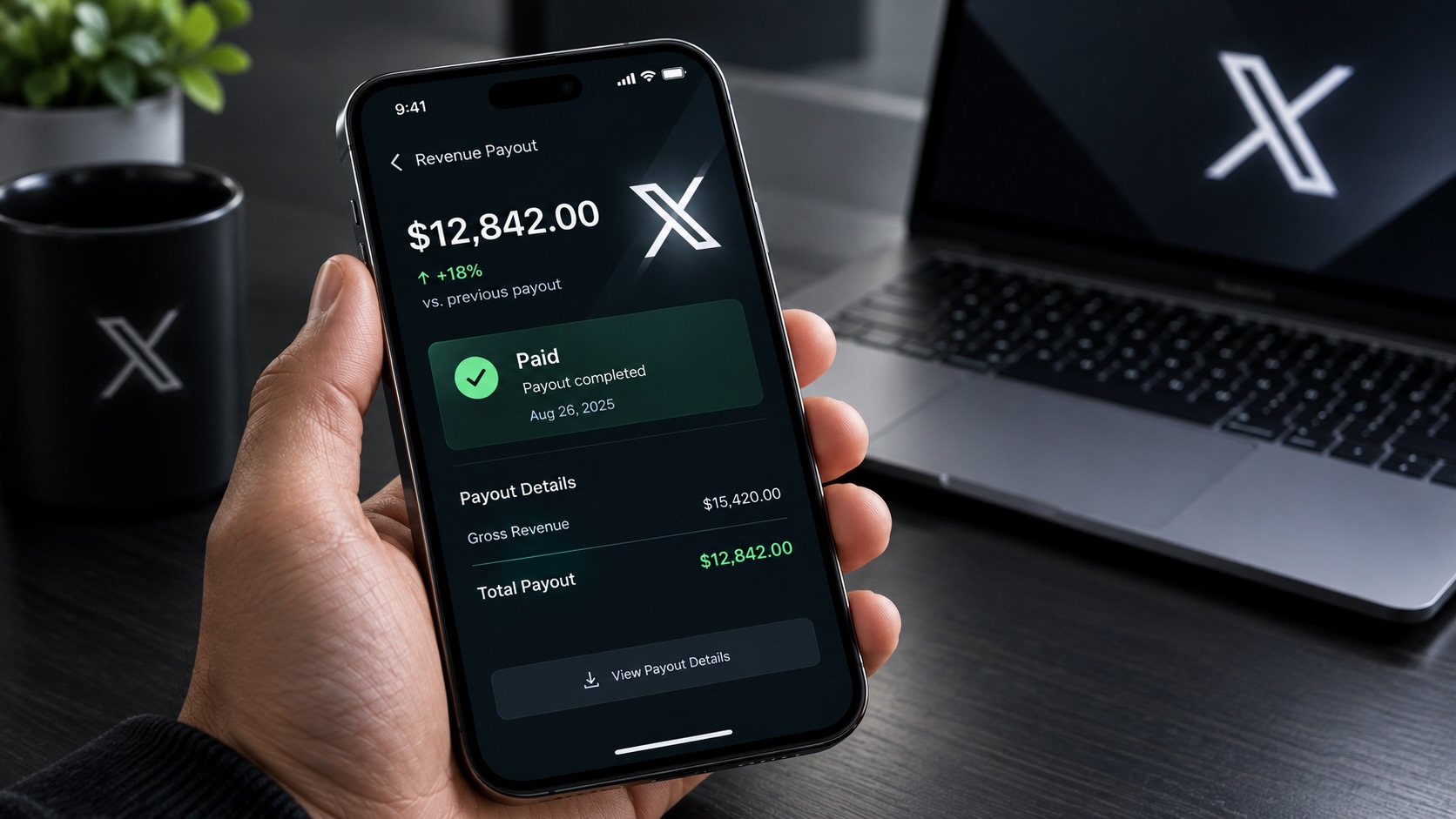
Elon Musk’s X has taken a Bitcoin-focused engagement ring to court, and the case doubles as a receipt for how differently the platform pays creators today. The company filed suit in the High Court of England and Wales against Vivek Kumar Sen and Zamyang Sherpa, alleging the pair ran six accounts, including @Vivek4real_, @Bitcoin_Teddy and @TrendingBitcoin, as one coordinated operation to fake the kind of engagement that used to translate directly into money.
According to the filing, first reported by Gizmodo, the accounts posted near identical “BREAKING” crypto headlines seconds apart, in one case 11 seconds, then had three more handles like, reply to and repost the material to manufacture what X called “a false appearance of genuine, human communication and interaction.” X says the scheme pulled in at least £207,384, about $278,000, and pegs its own investigation and remediation costs at another £75,000. The accounts were suspended August 18. X general counsel James Burnham announced the case on X last weekend, writing that the company “will act forcefully to protect our platform and the earnings of genuine creators.” Musk’s own reaction, posted shortly after, was three words: “Don’t mess with 𝕏.”
Don’t mess with 𝕏 https://t.co/HSmd5hL6aQ
— Elon Musk (@elonmusk) September 21, 2026
The timing lines up with a a recent update to how X pays its creators. The program these accounts allegedly gamed, Creator Revenue Sharing, launched in mid 2023 and paid out based on how much a post got engaged with. Originality was never part of the formula, which is exactly how the platform ended up flooded with recycled clips, copy pasted “BREAKING” posts and replies engineered purely to farm reactions from paying subscribers.
X tried patching the model more than once, including an April cut to aggregator payouts and a March regional weighting change that Musk personally paused hours after it was announced. X retired Creator Revenue Sharing for good on September 7 and opened its replacement, Original Content Rewards, the next day.
Today, we’re launching Original Content Rewards.
The reality is that Revenue Sharing had reached a point where its incentives were misaligned. Creators should be focused on bringing net new content to the platform instead of maximizing payouts. We could have kept adding more… pic.twitter.com/VJIxqlPrjm
— Allegra Jacchia (@allegrajacchia) August 7, 2026
The new math is stricter. Payouts now come only from qualified impressions, meaning unique Home Timeline views from Premium subscribers where at least half the post is visible, and replies no longer count toward eligibility at all. Copied posts, reuploaded media and reposts without meaningful changes are explicitly excluded. Allegra Jacchia, senior product manager for Creators at SpaceXAI, which now runs X’s product and AI work following xAI’s acquisition of the platform, put it bluntly, saying the goal is to reward creators who bring original ideas and perspective, “not those who have become best at gaming the system.”
Read that way, the lawsuit isn’t really about six crypto accounts. It’s X putting a dollar figure on what the old incentive structure cost, then suing to collect it right as the new one goes live. For live updates on how the case and the new rewards program shake out, follow @Teslarati on X.
Elon Musk
Why automakers keep turning down Elon Musk’s Tesla Full Self-Driving offer
Elon Musk confirms no automaker has ever accepted Tesla’s offer to license Full Self-Driving software.
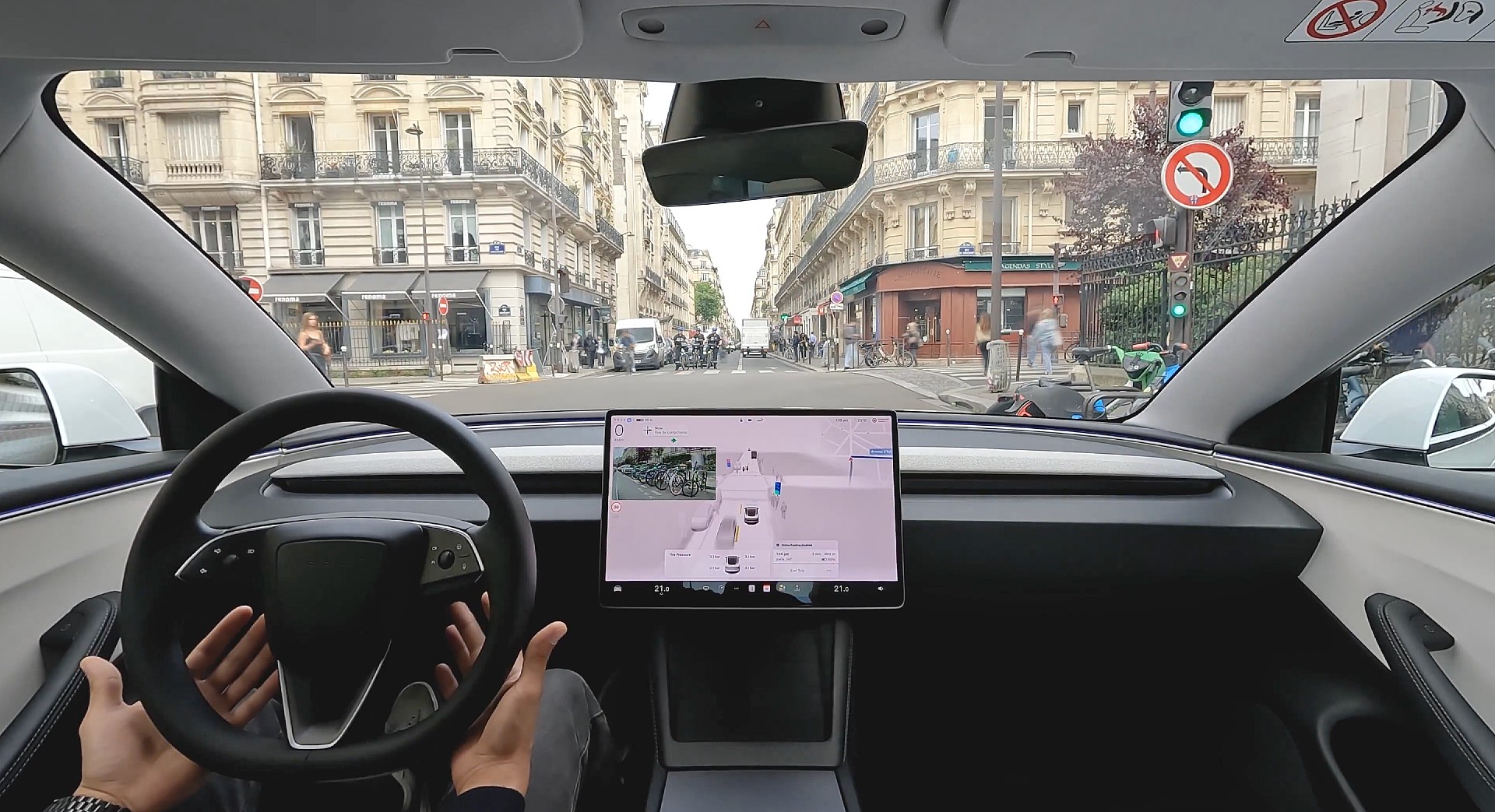
Elon Musk gave a brief answer on X Monday that confirmed that Tesla’s standing offer to license Full Self-Driving to other automakers still has zero takers. Sawyer Merritt wrote that “Tesla has for years openly invited other automakers to license FSD. None of them have accepted,” responding to a prediction from Boom Supersonic founder Blake Scholl that Tesla would eventually open FSD the way it opened its Supercharger network to rival brands. Musk’s reply to Merritt was one word: “Exactly.”
It is not the first time Musk has made this point. He said something similar in November, when he called legacy automakers reluctance to adopt FSD “crazy,” and Tesla has floated the offer publicly since at least 2021. Scholl’s prediction touches on something real. Once NACS became the de facto charging standard, adoption from Ford, GM, Rivian and others followed within about a year. FSD licensing was supposed to work the same way once Tesla built enough of a lead that switching made sense for everyone.
Tesla has for years openly invited other automakers to license FSD. None of them have accepted. https://t.co/kgz4idpoUM
— Sawyer Merritt (@SawyerMerritt) September 22, 2026
The case for licensing now is stronger than it was two years ago. Waymo and Zoox are logging hundreds of thousands of unsupervised autonomous miles, along with Tesla’s own Robotaxi fleet. Every automaker still selling driver assist systems that lag FSD has given the robotaxi conversation to Tesla, Waymo and Zoox by default. Licensing FSD would let a GM or a Ford compete on the same field without spending a decade and billions of dollars building a stack from scratch, the same argument Tesla made when it opened the Supercharger network to bring more EVs onto its chargers.
But FSD is not a connector standard. As one reply to Musk’s post pointed out, licensing FSD is not a software license the way NACS was a plug spec. It requires adopting Tesla’s eight camera layout and its onboard compute architecture, meaning a licensee’s cars would effectively become Tesla hardware wearing someone else’s badge. That is the visible obstacle. The less visible one is data. A licensed FSD stack would report back the same telemetry Tesla collects from its own fleet, giving Tesla a continuous read on how a competitor’s cars are actually driven, where they struggle, and how often drivers intervene. For an automaker trying to build its own autonomy program, or simply trying to keep its build quality and safety record private, handing Tesla that visibility could be a bigger cost than the hardware bill. It is the reason the Supercharger comparison only goes so far. Opening a charging plug cost Tesla very little. Opening FSD would cost a rival something it cannot get back.
![Tesla Optimus Gen 3 [Credit: Tesla]](https://www.teslarati.com/wp-content/uploads/2026/03/tesla-optimus-gen3-diner-80x80.jpg)
Tesla Optimus Gen 3 shows off a cleaner, factory-ready design in new app discovery

Tesla Semi lands the biggest electric truck deal in U.S. history


