Investor's Corner
Is it time for Tesla to partner up with another automaker? I think so.

This is a free excerpt of our weekly member-only Newsletter. Each week, we give you our take on the biggest stories of the week, our favorite photos & videos and much more. Sign up for Teslarati’s newsletters to receive a preview of our membership program.
Tesla’s stock has continued to slide over the last month, and not for one particular reason. The company has, by far, the best electric vehicles in the world, with the Model S, Model X, and Model 3 leading their segments by miles. Despite this, investors believe that the company is under immense pressure.
Elon Musk hasn’t really gotten the message. He’s plowing ahead with the multi-billion dollar Gigafactory in China, aggressively expanding the Model 3 to new countries, and doubling down on commitments to the super-delayed (but incredible) solar roof. Most other executives would throttle back expansion, allowing the company to widen profits and make investors happy. Musk isn’t like most executives (if you didn’t know that already?). He ignores the idea of ‘corporate strategy,’ and is far more interested in pushing the limit on what is possible. But, with over 40,000 employees and annualized production nearing 400,000 units, the company is entering a period in time in which long-term strategic planning would add tremendous value.
Time to deploy some strategery.
Let’s start with the Model Y. Or I should say, let’s begin with Tesla’s most important vehicle. The SUV market is exploding, and it’s not showing any signs of slowing down. The global SUV market grew from 9.8M units in 2013 to an estimated 23.8M units in 2020. That’s nearly 14% annualized growth over the last seven years. While Tesla has the Model X, it’s priced well above the average consumer’s budget and targets the highest-end of the market.
On the other hand, the Model Y is poised to enter the hottest market in the world: mid-sized crossovers. With world-class technology and an affordable price, it is certainly going to be Tesla’s most popular vehicle. To meet demand, Tesla is going to need to scale production faster and more efficiently than ever before. The only problem? Tesla is already busting out of their massive Fremont facility, and their new facility in China will likely only feed the Asian market (remember the last Chinese-built car you saw on US or European roads? Me neither).
So what does the company do? Build a car in the Gigafactory? Expand Fremont further? Both options aren’t cheap or super fast. Well, let’s jump back to that point I made about long-term corporate strategy. Tesla is at a point where it can’t afford (without raising more cash) to start construction on another US or European factory, the company is already building a Chinese factory to meet existing demand is near cash-strapped. So what should they do? It’s time to partner up with another automaker, specifically Fiat Chrysler.
An Unlikely Marriage.
Fiat Chrysler (FCA) is one of the only automakers holding out on large investments into EV technology, GM is betting big and VW is betting even bigger. With Tesla’s cutting edge motor and battery technology, FCA could leap ahead of their rivals and electrify their fleet. First, the company could start by underpinning a vehicle -platform with Tesla’s powertrain, bringing more scale to Tesla battery operations and forgoing the multi-billion dollar expansion into the technology. Automakers have done these sort of partnerships for years. FCA already shares some diesel engines with GM, Daimler has borrowed VW engines, and most recently Toyota is borrowing a BMW engine for the iconic Supra.
(Photos: Tesla, Ram; Graphic: Christian Prenzler)
So what’s in it for Tesla? Let’s start with the main stage: cash. Musk isn’t interested in slowing down his global expansion, and he shouldn’t be. The company has tremendous demand and is on the cusp of launching several new products: Model Y, Semi, Roadster, and the Solar Roof. A large infusion of cash would allow the company to continue pushing the pedal to the metal. FCA has over $12B in cash, so the company could invest several billion dollars into Tesla. Outside of cash, FCA can lend some much-needed expertise in manufacturing and even some production capacity at one of the company’s two-dozen factories in North America.
I get it, teaming up with FCA doesn’t sound S3XY. But by teaming up with one of the largest automakers, Tesla gains a leg up in manufacturing and an infusion of cash that would allow Musk to continue investing heavily in expansion. What did you think of Tesla partnering with FCA?
Don’t miss this weekly column, our weekly commentary on the biggest stories, exclusive photos and much more. Become a member today for just $3/month.
Disclaimer: This column does not necessarily reflect the opinion of Teslarati and its owners. Christian Prenzler does not have a position in Tesla Inc. or any of its competitors and does not have plans to do so in the next 30 days.


Elon Musk
Tesla Cybercabs narrowly miss deadly Amazon cargo plane crash
An Amazon cargo plane crash near Miami’s airport stopped feet from dozens of Tesla Cybercabs.

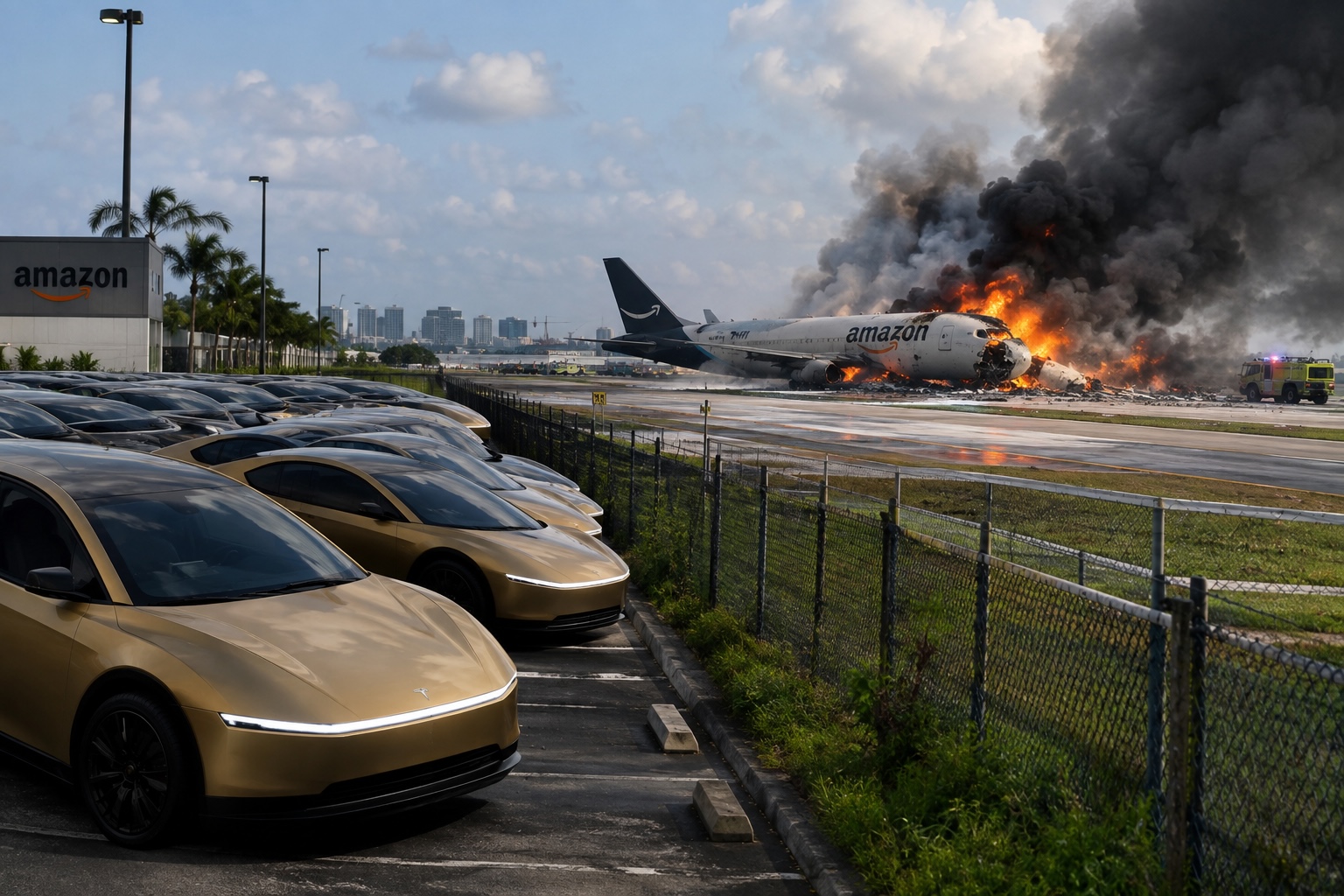
An Amazon Prime Air Boeing 767 cargo jet overran the runway at Miami International Airport on Sunday afternoon, killing five people and injuring five more. The jet, operated by North Carolina based carrier 21 Air as Flight 7598, touched down around 2 p.m. after arriving from San Juan, Puerto Rico, then crossed the airport perimeter, plowed across NW 67th Avenue and struck multiple vehicles before catching fire, according to the Associated Press.
Photos and video from the scene show the aircraft’s nose stopped within meters of a fenced staging lot holding dozens of gold painted Tesla Cybercabs, the steering wheel free robotaxi Tesla began putting on public roads in Austin last week. Miami-Dade Fire Rescue has confirmed the plane struck “multiple vehicles” but has not said whether any Cybercabs were among them, and neither Tesla nor airport officials have addressed the fleet directly.
The Cybercabs had not yet entered commercial service in Miami. Tesla’s existing Robotaxi operation there runs on modified Model Y vehicles and has been unsupervised since Ashok Elluswamy confirmed the detail on X in July.
Footage of the plane crash from earlier today | #ONLYinDADE pic.twitter.com/iGoOtnd6cD
— ONLY in DADE (@ONLYinDADE) September 6, 2026
Elon Musk offered the briefest of reactions. Replying to a Zero Hedge post about the Cybercabs sitting so close to the wreckage, he wrote a single word: “Weird.” He has not commented further, and Tesla has not issued a statement.
The timing puts Tesla’s newest vehicle near an unrelated but highly visible tragedy just days after its Austin debut, a launch that had already drawn scrutiny from federal regulators. The National Highway Traffic Safety Administration opened an audit how Tesla certified the Cybercab as compliant with federal vehicle safety standards, a process Teslarati covered after the vehicle’s September 3 launch event. That inquiry concerns the car’s lack of a steering wheel and pedals, not the Miami crash.
Investigators from the FAA and NTSB are focused on the plane, not the parking lot beside it. Flight data reviewed by outlets including Simple Flying show the 767 touched down around 170 knots, well above the 135 to 140 knot range typical for the aircraft, though investigators have not determined a cause. Amazon said it is working with authorities and that its priority is the safety of everyone affected.
Whether any Cybercabs were damaged, and what Tesla plans for the fleet parked near one of the country’s busiest airports, remain open questions.
Featured
Tesla Cybercab is coming to Asia this month as US service officially begins
Tesla Asia says Cybercab will be on display in Hong Kong, Tokyo, Beijing and Shanghai this month.
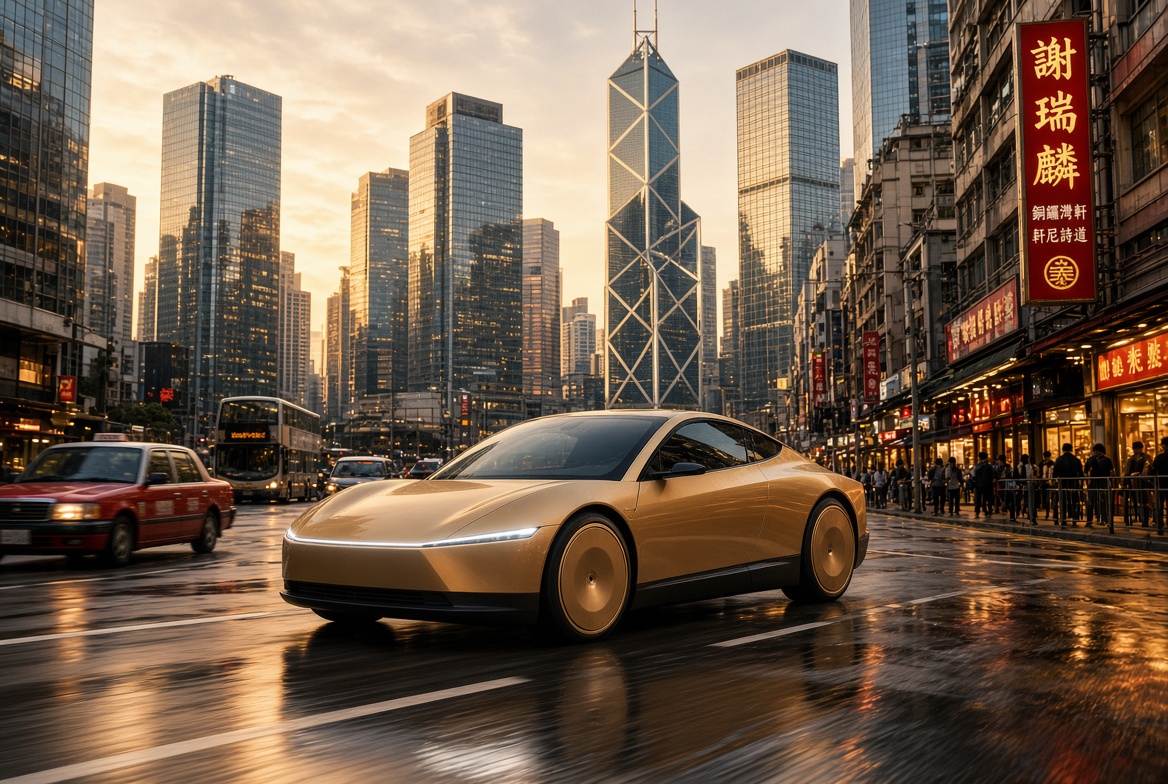
Tesla’s Cybercab is heading to Asia. The official Tesla Asia account posted on X Thursday, inviting Cybercab fans to “Come experience the future of autonomy in Hong Kong, Tokyo, Beijing & Shanghai.” The post went up within hours of Tesla’s own Cybercab milestone in Texas, where the company said Thursday it had begun offering rides in across Austin.
Exact dates and venues for the Asia tour haven’t been released yet, though Tesla Hong Kong replied to the announcement with “Cybercab will be on display in Hong Kong soon,” while Tesla Japan’s response pointed fans to a sign up page for updates. Neither post mentions test rides or a service area, and nothing so far suggests Tesla is launching Robotaxi operations in any of the four cities. Based on how Tesla has run past Cybercab tours, in Europe in late 2024 and at US shopping centers that same December, the Asia stops are almost certainly static displays at Tesla stores or public venues as a means to stimulate buzz for its future driverless ride-hailing service in the big cities.
Cybercab will be on display in Asia this month!
Come experience the future of autonomy in Hong Kong, Tokyo, Beijing & Shanghai. pic.twitter.com/wGmmEastfX— Tesla Asia (@Tesla_Asia) September 4, 2026
The timing lines up with Tesla’s only prior Cybercab appearance in the region, a booth at the China International Import Expo in Shanghai last November, which Teslarati covered at the time. At that event, Tesla’s regional general manager for Shanghai framed the car as evidence of the company’s broader mission, a message Tesla has since formalized in its Master Plan Part IV, which states that “autonomous vehicles have the capacity to dramatically improve the affordability, availability and safety of transportation while reducing pollution, particularly in our increasingly dense global cities.” The same document is where Tesla lays out its “sustainable abundance” framing for Cybercab and Optimus alike, describing the two as the hardware behind an AI driven push to cut the cost of transportation and labor at scale.
Whether Cybercab actually operates as a robotaxi anywhere in Asia remains an open question, considering China has already pushed an autonomous ride-hailing market that’s run on homegrown players like Baidu’s Apollo Go and Pony AI. For now, the four city tour reads as a marketing push timed to Austin’s momentum.
Elon Musk
OpenAI cites distrust of SpaceX in decision to drop Cursor partnership
OpenAI will cut SpaceX-owned Cursor’s model access in November, citing Musk’s history of broken contracts.
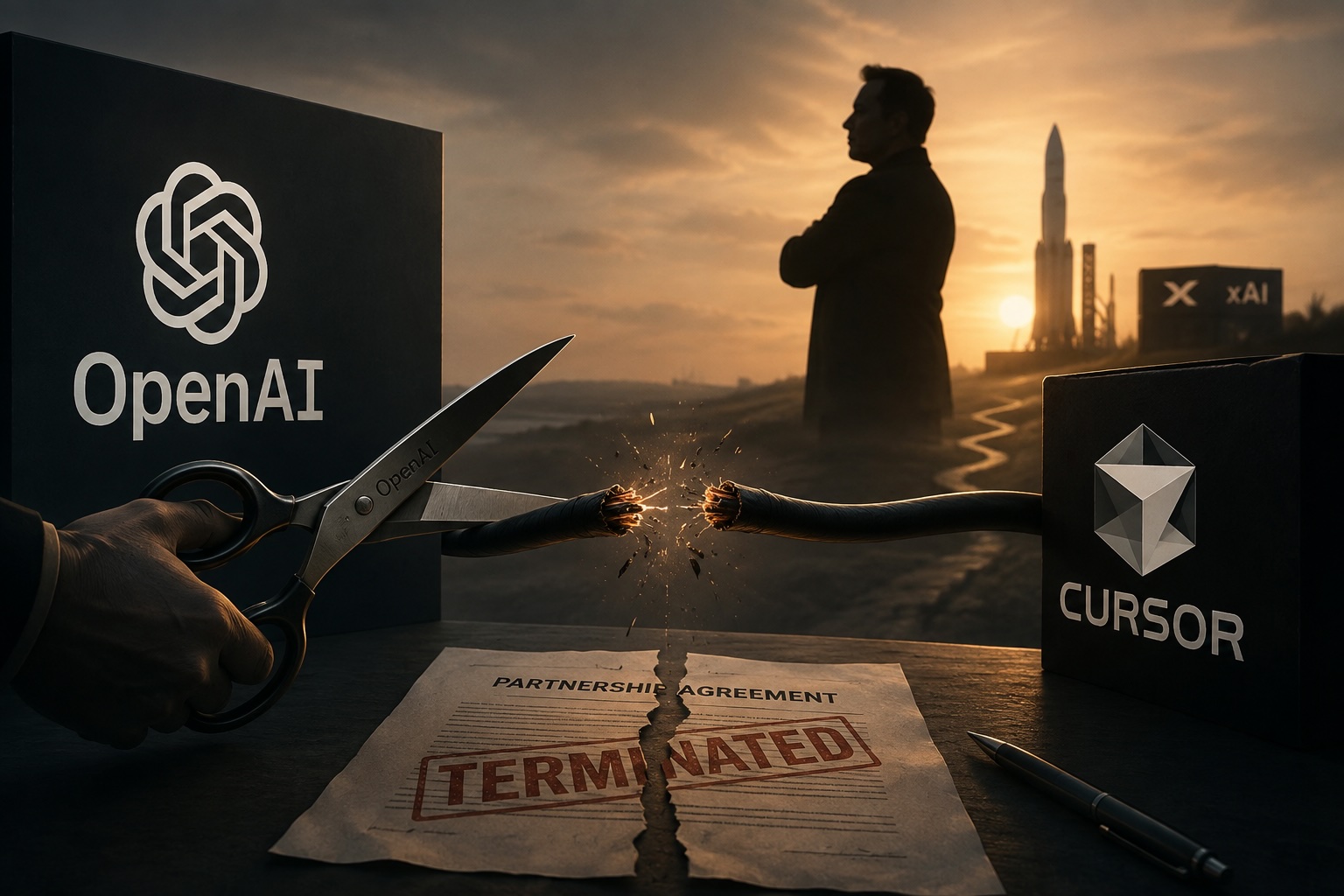
OpenAI, the company behind ChatGPT, announced late Friday that it is ending its partnership with Cursor, cutting off the coding tool’s access to its models on November 12. The move comes two weeks after SpaceX completed its $60 billion acquisition of Cursor’s parent company, Anysphere, folding the popular AI coding assistant into Elon Musk’s growing SpaceXAI division.
In a post on its website, OpenAI said the decision came down to trust, not technology. “We cannot be confident that SpaceX will use our technology within our terms of service, based on our experience with Elon Musk’s companies violating contracts,” the company wrote. OpenAI pointed to two specific incidents: X, now part of SpaceX, allegedly breaking the terms of an existing OpenAI contract after Musk bought Twitter.
That lawsuit is the backdrop for all of this. Musk cofounded OpenAI in 2015, left the board in 2018, and sued Sam Altman and Greg Brockman in 2024, arguing they abandoned the company’s nonprofit mission for profit. A federal jury sided with OpenAI in May, finding Musk waited too long to sue rather than ruling on the merits of his claims. Musk said at the time he would appeal to the Ninth Circuit, calling the outcome a “calendar technicality” rather than a real judgment.
SpaceX’s interest in Cursor predates that verdict by weeks. The company first struck a deal with Cursor in April, securing an option to acquire it for $60 billion or pay $10 billion for joint development work instead. As Teslarati reported at the time, the logic was straightforward: Cursor was paying retail prices to Anthropic and OpenAI, two of its most direct competitors, every time a developer used its product, while SpaceX had idle capacity on its Colossus supercomputer, roughly the equivalent of a million Nvidia H100 GPUs, that Cursor could use to train its own models instead. SpaceX exercised the option in June, days after its own IPO, and the deal closed in mid-August.
Once it closed, Musk moved fast. On an all-hands call with more than 1,000 Cursor employees, he reportedly told staff that SpaceXAI’s Grok was playing catchup in the AI race, unlike Tesla and SpaceX in their own markets, and singled out Anthropic as the company to catch. Cursor CEO Michael Truell now reports directly to Musk inside SpaceXAI.
Losing OpenAI’s models leaves Cursor leaning harder on Anthropic’s Claude, which has its own compute agreement with SpaceX, and on Cursor’s in-house Composer model, the one SpaceX’s compute was supposed to accelerate in the first place. OpenAI framed the November deadline as maximum notice under its contract, and said it wants to “go above and beyond” to help developers through the transition. Whether Anthropic makes the same call is now the open question in AI coding.

Tesla gives the Roadster an official “Go for launch” demonstration date

Tesla plans big safety improvements for Full Self-Driving v15


