SpaceX
SpaceX CEO Elon Musk proposes Starship, Starlink tech for Solar System tour

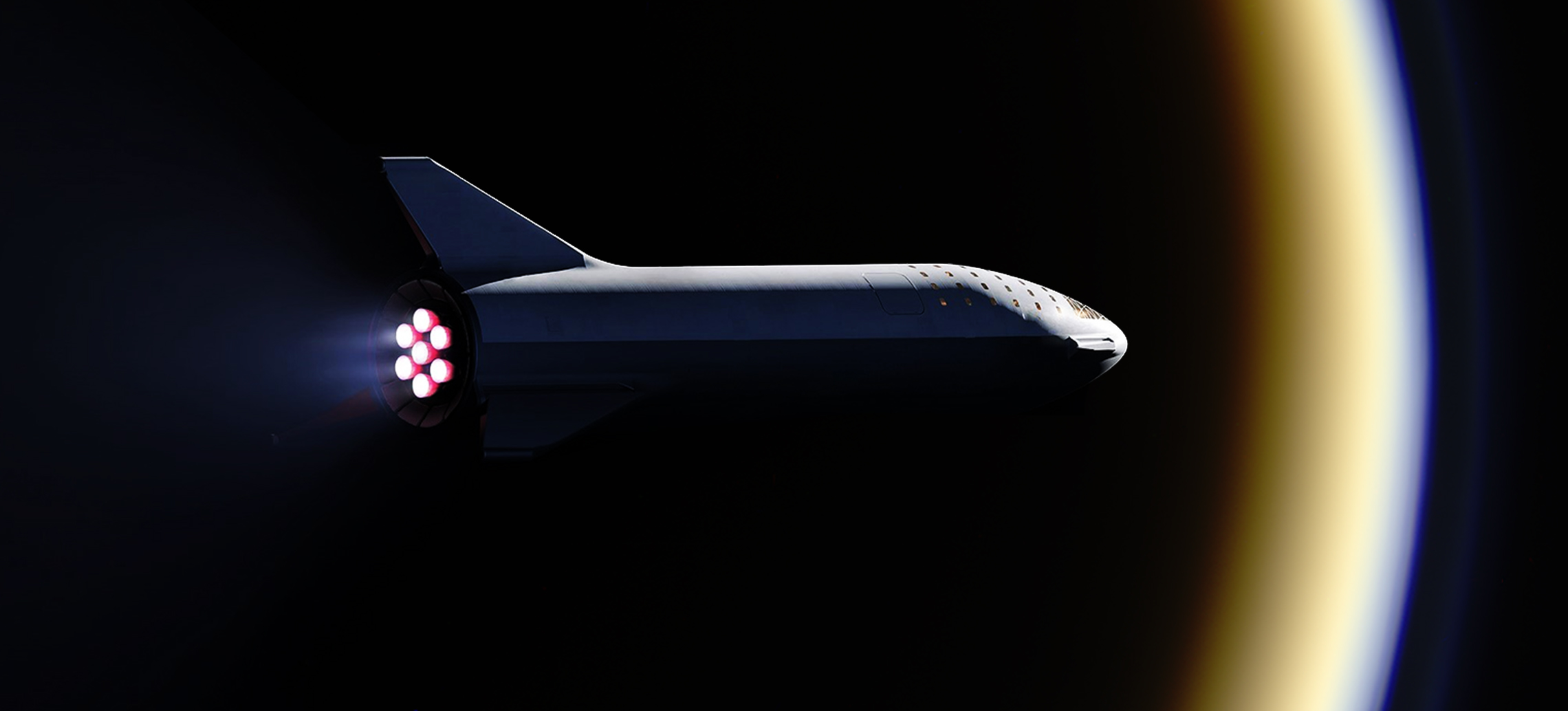
SpaceX CEO Elon Musk has proposed an unusual approach to conducting a robotic survey of the Solar System’s major outer planets, asteroids, and comets, requiring a stripped-down Starship with a minimalist payload of Starlink satellites modified for interplanetary cruises and high-resolution cameras.
To enable this arrangement, it sounds like an expendable variant of Starship would have to be designed and built, cutting as much extraneous mass as possible to put as much energy as physically possible into its payloads. Outer planets – those lying beyond the Solar System’s main asteroid belt – are a minimum of 400 million miles (~650 million km) from Earth and stretch out to bodies like 2014 MU69 (below) at 4+ billion miles (6.8+ billion km) beyond Earth’s orbit. To travel those truly absurd distances, the time-to-destination can often be measured in decades, a timeframe that is physically impossible to shrink without hugely powerful rockets like BFR. Even then, SpaceX would face major hurdles to pull off Musk’s impromptu mission design.
New Horizons, the tiny but amazing spacecraft responsible for the first-ever close-up photos of Pluto and (more recently) the bizarre MU69 comet/asteroid, is perhaps the best categorical example of what Musk is proposing. Weighing less than 480 kg (1060 lb) and powered by a radioisotope generator (RTG), the spacecraft was launched in January 2006 and – after a single gravity assist around Jupiter – flew by Pluto a bit less than ten years later in July 2015, traveling a blistering ~13.8 km/s (8.6 mi/s).


Coincidentally, at least the first prototypes of SpaceX’s Starlink satellite constellation weighed around 400 kg (880 lb) during their March 2018 launch, just shy of New Horizons’ own dry mass. Major differences abound, however. Most notably, Starlink satellites will be powered by solar arrays optimized for energy generation at Earth’s distance from the sun, compared to New Horizons’ RTG reactor. At distances beyond Saturn, reliance on solar power would be an extraordinary challenge for any spacecraft hoping to do more than simply survive. For example, due to certain unforgiving laws of physics, New Horizons would receive – quite literally – 0.06% the solar energy per unit of area at Pluto.
To produce the scant ~300 Watts New Horizon receives from its nuclear power source, a single Starlink satellite would need a minimum of 1400 m^2 (~15,000 ft^2) of high-efficiency solar panels to survive and power a minimal suite of instruments and communications hardware. Assuming an extraordinary 170 g/m^2 solar array as proposed by Alta Devices, a Starlink satellite would need solar cells weighing no less than 250 kg (550 lb) total to operate at Pluto, a mass that absolutely does not factor in the complex mechanisms necessary to deploy a third of an acre of solar panels from an area of just a few cubic meters.
Frankly put, solar-powered exploration beyond the orbit of Jupiter and perhaps Saturn becomes almost inconceivably difficult. Further, the above numbers don’t even take into account each Starlink spacecraft’s electric thrusters, which would need several times more solar panels or massive batteries (themselves needing heaters) to operate at an optimal power level for long, uninterrupted periods of time, a necessity for electric propulsion. Several billion miles closer to the sun, in the main asteroid belt or around the gas giants Jupiter and Saturn, solar power is still extremely challenging but not impossible. NASA’s Juno spacecraft, the first solar-powered vehicle to visit the outer planets, 
At the end of the day, SpaceX’s Starlink satellites and Starship-based boost stage would need to undergo radical (and thus expensive) redesigns to accomplish such an ambitious ‘tour’ of the Outer Solar System, quite possibly also requiring the development and integration of wholly new technologies and exploration strategies to get off the ground. While the challenges are immense, the fact that Mr. Musk is already expressing interest in supporting such an exploratory, science-focused mission inspires confidence in the many future benefits that could soon be derived from Starlink and Starship, if successfully developed. Assuming missions that remain within the Inner Solar System, an exploration architecture as described by Musk is already readily doable and wouldn’t need the major modifications and leaps necessary for Outer Solar System ventures. Possible destinations where it could be practical include the Moon, Mars, Venus, the main asteroid belt (i.e. Ceres, Vesta, etc.), and many others.
If SpaceX can find a way to get both Starlink and Starship off the ground and into operational configurations, the future of space exploration – both human and robotic – could be extraordinarily bright.

Check out Teslarati’s Marketplace! We offer Tesla accessories, including for the Tesla Cybertruck and Tesla Model 3.


News
SpaceX tells the FCC that Starship Flight 14 is going to orbit
SpaceX filed with the FCC for Starship Flight 14, its first true orbital launch attempt.

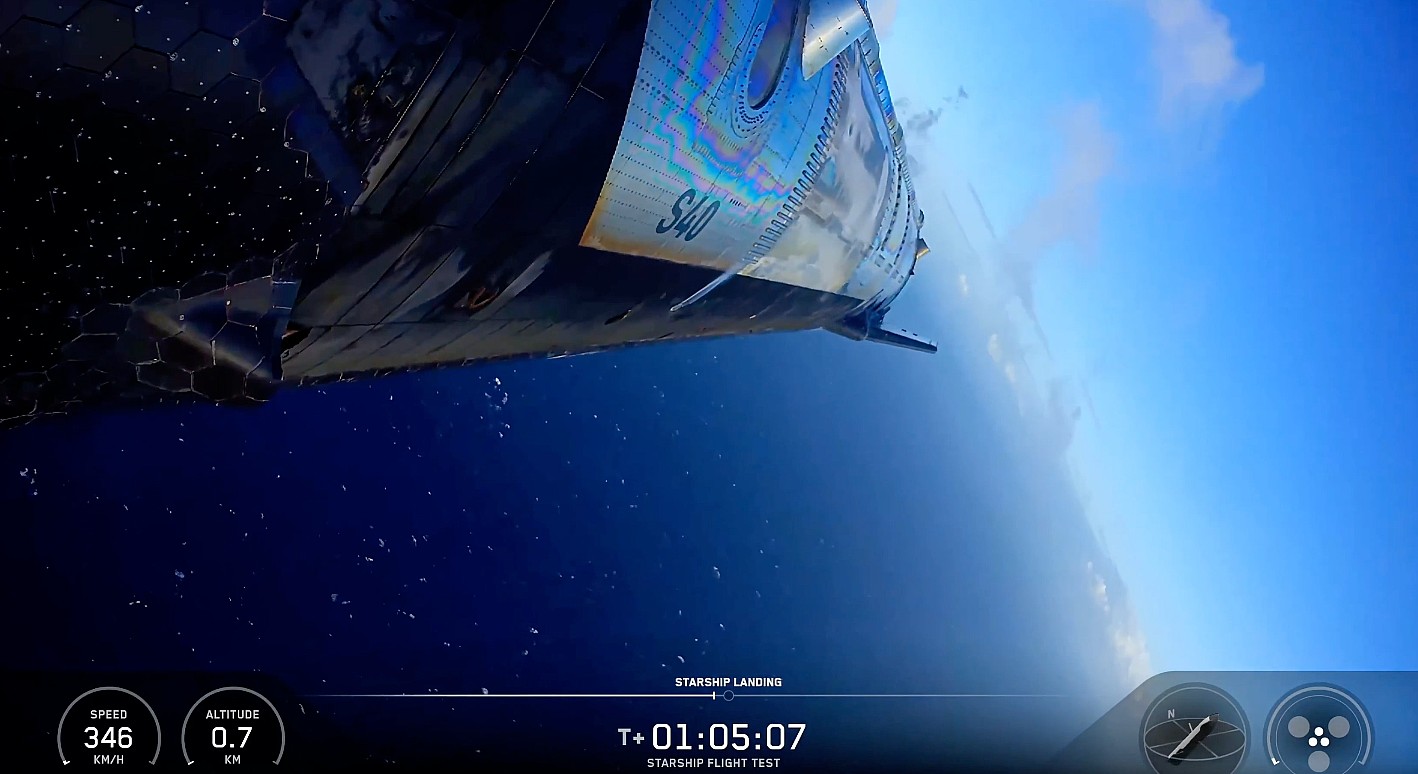
SpaceX has asked the Federal Communications Commission for permission to fly Starlink terminals during Starship’s fourteenth flight test, and the filing lays out a genuine trip to orbit, something the program has never attempted.
Every Starship flight so far, including Flight 13’s successful splashdown in the Indian Ocean on July 24, has flown a suborbital arc that ends with the ship reentering the atmosphere within the same hour it launches. The FCC paperwork describes a mission profile built around an actual orbital insertion instead.
The payload is the other half of the story. Flight 13 carried 20 production Starlink V3 satellites, but because that mission never reached orbit, the satellites reentered along with the ship rather than joining the constellation, something Teslarati covered in detail after SpaceX released footage shot from one of those satellites as it drifted away from Starship in space. Flight 14 is designed to close that gap. If the orbital insertion holds, the roughly 20 V3 satellites onboard would separate into an operational orbit and could eventually go into service, each one rated for about 1 terabit per second of downlink capacity by SpaceX’s own account.
SpaceX announces new Starbase for ‘thousands of Starship launches annually’
Elon Musk first flagged the orbital attempt during SpaceX’s August 4 earnings call, the company’s first as a public entity following its June IPO under the ticker SPCX. He also floated catching the ship with the Starbase tower on the same flight, an idea he walked back on August 20, saying the catch attempt would more likely come “in a few months,” as Teslarati reported at the time. Flight 14 will instead target a splashdown for the ship in the Indian Ocean, the same recovery method used since Flight 12.
Hardware has been catching up to the ambition. Booster 21 completed a full 33-engine static fire on August 28, and Ship 41 finished its own six-engine test the week before. An airspace briefing circulated to pilots on August 20 listed September 15 as the target date, later than the end of August window Musk mentioned on the earnings call, though SpaceX has not confirmed a launch date publicly and Starship schedules routinely slip while hardware and FAA paperwork line up.
The FCC filing itself does not guarantee a launch date. It covers communications authority, and not flight readiness, considering SpaceX still needs Ship 41 fully stacked and cleared by the FAA before Flight 14 can fly. But the filing is a real marker of intent and it puts a specific regulatory process behind what had so far only been Musk’s word on the earnings call.

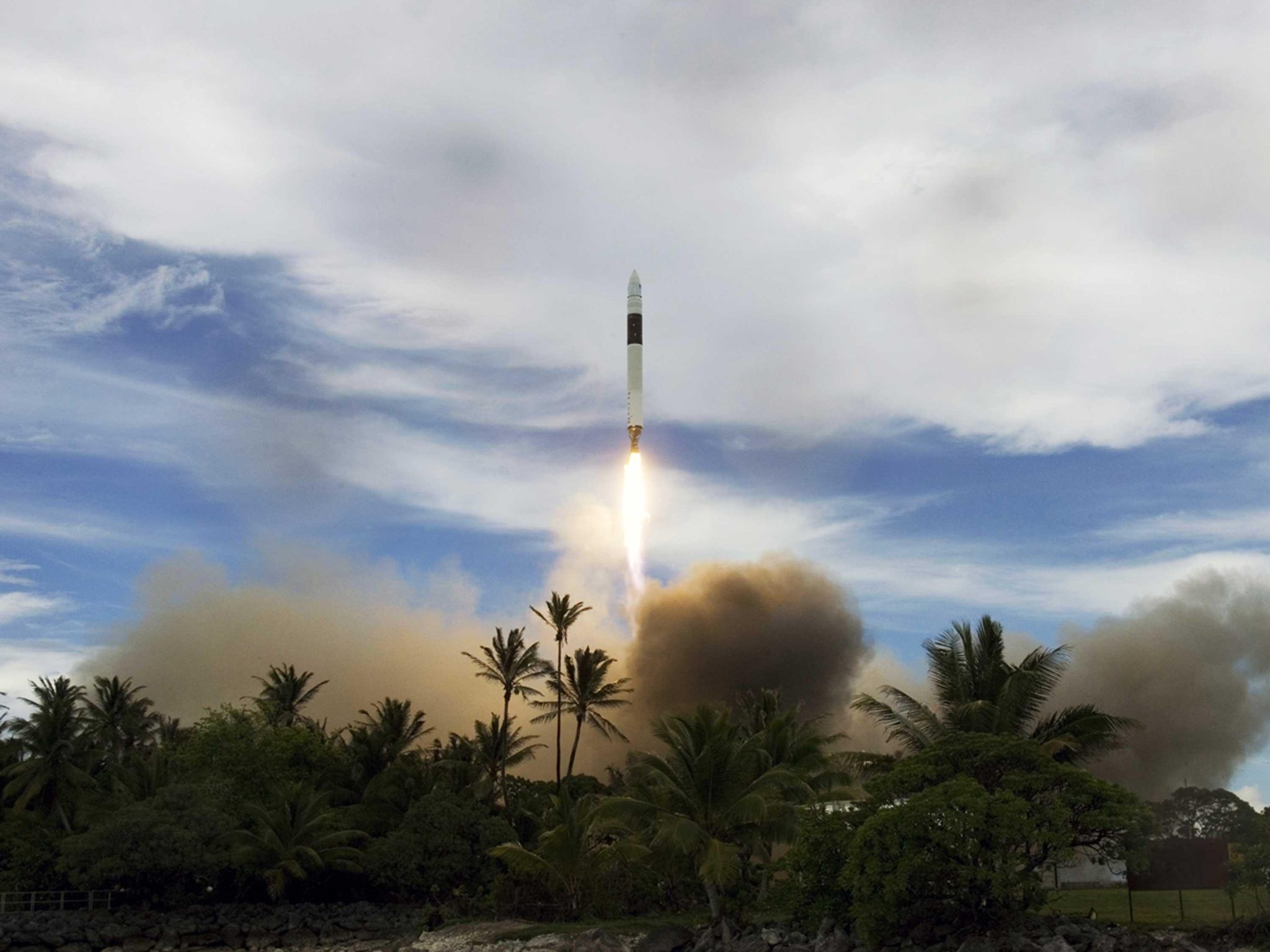
Elon Musk recently restated a fact that still defines SpaceX’s origin story: if Falcon 1’s fourth launch had failed, the company would not exist. The comment answered a reminder that after three consecutive losses, SpaceX had money for only one more attempt.
On X, Peter Diamandis said that the present-day acknowledgement of SpaceX’s success does not discount the rough start the company had. “Almost nobody remembers that Elon’s first rocket failed three times, and there was money for exactly only one more attempt.”
Musk said, “If the 4th launch had failed, SpaceX would not exist.”
If the 4th launch had failed, SpaceX would not exist
— Elon Musk (@elonmusk) August 30, 2026
In late 2008, the firm was nearly out of cash. Another failure would have ended payroll, closed the Hawthorne factory, and left the Falcon 9 and Dragon programs as unfinished drawings.
The first flight lifted off from Omelek Island on 24 March 2006. Thirty-three seconds later, a corroded aluminum fitting on a fuel line leaked. Kerosene ignited around the Merlin engine, control was lost, and the vehicle came apart. The small DARPA payload, FalconSAT-2, survived the short flight only to land on a storage shed near the pad. Investigators later traced the fitting to a materials mix-up that should never have reached the rocket.
Flight 2, on 21 March 2007, looked far better at first. The first stage burned cleanly and handed off to the Kestrel-powered upper stage. The vehicle crossed 100 kilometers and reached a peak of about 289 kilometers. Then propellant slosh in the second-stage tank started a circular coning motion that grew until the engine shut down. Telemetry faded as the stage tumbled, and SpaceX had reached space but not orbit. Over the next year, the team redesigned everything from the ground up, including tanks, baffles, and the new regeneratively cooled Merlin 1C.
That engine flew on Flight 3 on 2 August 2008. The first stage performed almost perfectly and reached 217 kilometers. After main-engine cutoff, leftover fuel in the cooling channels produced a faint residual thrust, roughly 10 pounds per square inch of chamber pressure. On a Texas test stand, the effect was invisible beneath ambient air pressure. In vacuum it was enough to push the spent first stage back into the second stage after separation. The stages collided, the upper stage spun, and the mission was lost. Musk later said a slightly longer delay before staging would have saved the flight.
Six weeks later, the team assembled Flight 4 from remaining parts and flew it on 28 September 2008 at 23:15 UTC. The payload was Ratsat, a 165-kilogram aluminum mass simulator built in-house. Staging was delayed so residual thrust could decay. The Kestrel ignited, the fairing split away, and nine and a half minutes after liftoff the vehicle was in orbit. After a coast, the second stage restarted, settling into a 621-by-643-kilometer path at 9.35 degrees inclination. Falcon 1 became the first privately developed liquid-fueled rocket to reach Earth orbit. Musk called the insertion “middle of the bull’s-eye.”
SpaceX restores a Falcon 1 rocket for 10th anniversary of first launch success
That success unlocked NASA’s Commercial Resupply Services award later that year. Without it, there would have been no Falcon 9, no reusable first stages, and no Dragon cargo or crew flights to the International Space Station. Launch prices would have remained far higher. Starlink’s constellation would not exist; broadband from low Earth orbit would still be a paper concept.
Ride-share markets, high launch cadence, and the current pace of lunar and Mars hardware would be years behind. Communications, Earth observation, and the cost of putting anything into space would look more like the 2000s than the 2020s.
One extra second of residual thrust in August 2008 would have written a different decade.
Elon Musk
OpenAI cites distrust of SpaceX in decision to drop Cursor partnership
OpenAI will cut SpaceX-owned Cursor’s model access in November, citing Musk’s history of broken contracts.
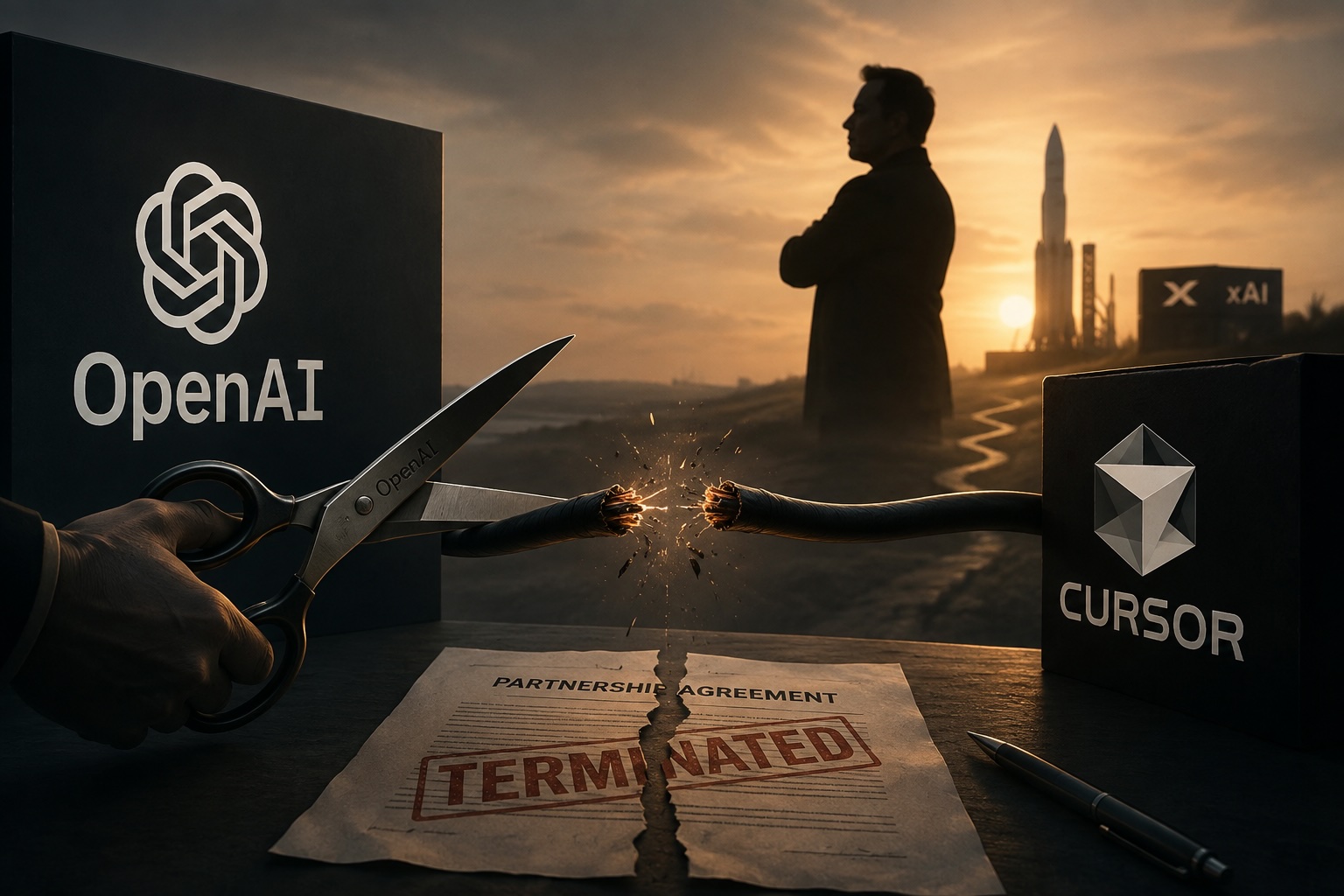
OpenAI, the company behind ChatGPT, announced late Friday that it is ending its partnership with Cursor, cutting off the coding tool’s access to its models on November 12. The move comes two weeks after SpaceX completed its $60 billion acquisition of Cursor’s parent company, Anysphere, folding the popular AI coding assistant into Elon Musk’s growing SpaceXAI division.
In a post on its website, OpenAI said the decision came down to trust, not technology. “We cannot be confident that SpaceX will use our technology within our terms of service, based on our experience with Elon Musk’s companies violating contracts,” the company wrote. OpenAI pointed to two specific incidents: X, now part of SpaceX, allegedly breaking the terms of an existing OpenAI contract after Musk bought Twitter.
That lawsuit is the backdrop for all of this. Musk cofounded OpenAI in 2015, left the board in 2018, and sued Sam Altman and Greg Brockman in 2024, arguing they abandoned the company’s nonprofit mission for profit. A federal jury sided with OpenAI in May, finding Musk waited too long to sue rather than ruling on the merits of his claims. Musk said at the time he would appeal to the Ninth Circuit, calling the outcome a “calendar technicality” rather than a real judgment.
SpaceX’s interest in Cursor predates that verdict by weeks. The company first struck a deal with Cursor in April, securing an option to acquire it for $60 billion or pay $10 billion for joint development work instead. As Teslarati reported at the time, the logic was straightforward: Cursor was paying retail prices to Anthropic and OpenAI, two of its most direct competitors, every time a developer used its product, while SpaceX had idle capacity on its Colossus supercomputer, roughly the equivalent of a million Nvidia H100 GPUs, that Cursor could use to train its own models instead. SpaceX exercised the option in June, days after its own IPO, and the deal closed in mid-August.
Once it closed, Musk moved fast. On an all-hands call with more than 1,000 Cursor employees, he reportedly told staff that SpaceXAI’s Grok was playing catchup in the AI race, unlike Tesla and SpaceX in their own markets, and singled out Anthropic as the company to catch. Cursor CEO Michael Truell now reports directly to Musk inside SpaceXAI.
Losing OpenAI’s models leaves Cursor leaning harder on Anthropic’s Claude, which has its own compute agreement with SpaceX, and on Cursor’s in-house Composer model, the one SpaceX’s compute was supposed to accelerate in the first place. OpenAI framed the November deadline as maximum notice under its contract, and said it wants to “go above and beyond” to help developers through the transition. Whether Anthropic makes the same call is now the open question in AI coding.

Tesla Cybercab launch catches NHTSA’s attention who wants to know more

Tesla Cybercab is coming to Asia this month as US service officially begins


