Elon Musk said in late November that he’s “tried to warn” legacy automakers and “even offered to license Tesla Full Self-Driving, but they don’t want it,” expressing frustration with companies that refuse to adopt the company’s suite, which will eventually be autonomous.
Tesla has long established itself as the leader in self-driving technology, especially in the United States. Although there are formidable competitors, Tesla’s FSD suite is the most robust and is not limited to certain areas or roadways. It operates anywhere and everywhere.
The company’s current position as the leader in self-driving tech is being ignored by legacy automakers, a parallel to what Tesla’s position was with EV development over a decade ago, which was also ignored by competitors.
The reluctance mirrors how legacy automakers initially dismissed EVs, only to scramble in catch-up mode years later–a pattern that highlights their historical underestimation of disruptive innovations from Tesla.
Elon Musk’s Self-Driving Licensing Attempts
Musk and Tesla have tried to push Full Self-Driving to other car companies, with no true suitors, despite ongoing conversations for years. Tesla’s FSD is aiming to become more robust through comprehensive data collection and a larger fleet, something the company has tried to establish through a subscription program, free trials, and other strategies.
Tesla CEO Elon Musk sends rivals dire warning about Full Self-Driving
However, competing companies have not wanted to license FSD for a handful of speculative reasons: competitive pride, regulatory concerns, high costs, or preference for in-house development.
Déjà vu All Over Again
Tesla tried to portray the importance of EVs long ago, as in the 2010s, executives from companies like Ford and GM downplayed the importance of sustainable powertrains as niche or unprofitable.
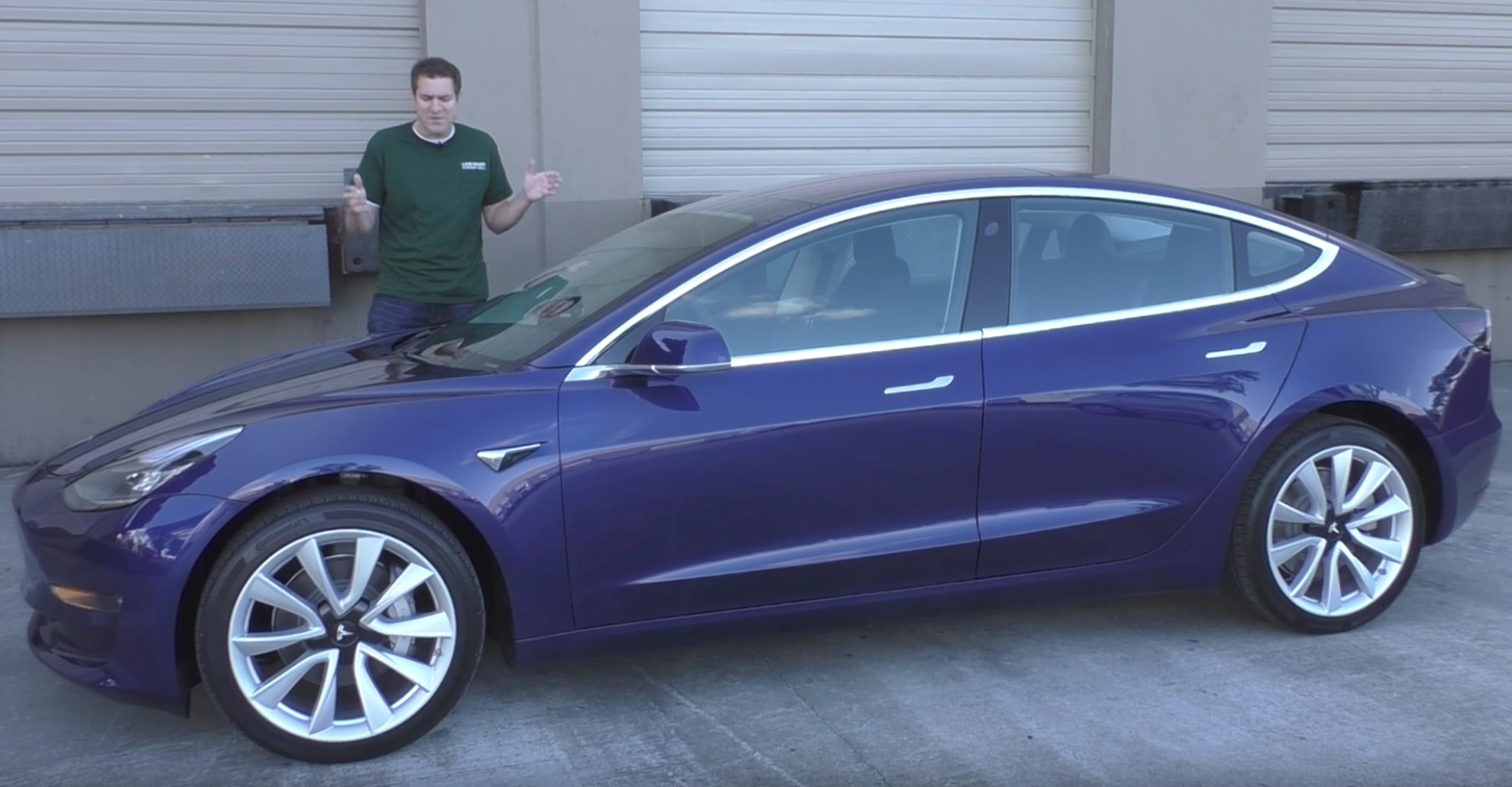
Musk once said in a 2014 interview that rivals woke up to electric powertrains when the Model S started to disrupt things and gained some market share. Things got really serious upon the launch of the Model 3 in 2017, as a mass-market vehicle was what Tesla was missing from its lineup.
This caused legacy companies to truly wake up; they were losing market share to Tesla’s new and exciting tech that offered less maintenance, a fresh take on passenger auto, and other advantages. They were late to the party, and although they have all launched vehicles of their own, they still lag in two major areas: sales and infrastructure, leaning on Tesla for the latter.
Musk’s past warnings have been plentiful. In 2017, he responded to critics who stated Tesla was chasing subsidies. He responded, “Few people know that we started Tesla when GM forcibly recalled all electric cars from customers in 2003 and then crushed them in a junkyard,” adding that “they would be doing nothing” on EVs without Tesla’s efforts.
Companies laughed off Tesla’s prowess with EVs, only to realize they had made a grave mistake later on.
It looks to be happening once again.
A Pattern of Underestimation
Both EVs and self-driving tech represent major paradigm shifts that legacy players view as threats to their established business models; it’s hard to change. However, these early push-aways from new tech only result in reactive strategies later on, usually resulting in what pains they are facing now.
Ford is scaling back its EV efforts, and GM’s projects are hurting. Although they both have in-house self-driving projects, they are falling well behind the progress of Tesla and even other competitors.
It is getting to a point where short-term risk will become a long-term setback, and they may have to rely on a company to pull them out of a tough situation later on, just as it did with Tesla and EV charging infrastructure.
Tesla has continued to innovate, while legacy automakers have lagged behind, and it has cost them dearly.
Implications and Future Outlook
Moving forward, Tesla’s progress will continue to accelerate, while a dismissive attitude by other companies will continue to penalize them, especially as time goes on. Falling further behind in self-driving could eventually lead to market share erosion, as autonomy could be a crucial part of vehicle marketing within the next few years.
Eventually, companies could be forced into joint partnerships as economic pressures mount. Some companies did this with EVs, but it has not resulted in very much.
Self-driving efforts are not only a strength for companies themselves, but they also contribute to other things, like affordability and safety.
Tesla has exhibited data that specifically shows its self-driving tech is safer than human drivers, most recently by a considerable margin. This would help with eliminating accidents and making roads safer.
Tesla’s new Safety Report shows Autopilot is nine times safer than humans
Additionally, competition in the market is a good thing, as it drives costs down and helps innovation continue on an upward trend.
Conclusion
The parallels are unmistakable: a decade ago, legacy automakers laughed off electric vehicles as toys for tree-huggers, crushed their own EV programs, and bet everything on the internal-combustion status quo–only to watch Tesla redefine the industry while they scrambled for billions in catch-up capital.
Today, the same companies are turning down repeated offers to license Tesla’s Full Self-Driving technology, insisting they can build better autonomy in-house, even as their own programs stumble through recalls, layoffs, and missed milestones. History is not merely rhyming; it is repeating almost note-for-note.
Elon Musk has spent twenty years warning that the auto industry’s bureaucratic inertia and short-term thinking will leave it stranded on the wrong side of technological revolutions. The question is no longer whether Tesla is ahead–it is whether the giants of Detroit, Stuttgart, and Toyota will finally listen before the next wave leaves them watching another leader pull away in the rear-view mirror.
This time, the stakes are not just market share; they are the very definition of what a car will be in the decades ahead.