

Elon Musk
Elon Musk’s ‘Dexit’ sparks corporate exodus, threatens Delaware’s business throne

Delaware’s corporate grip seems to be slipping. Frustrated CEOs, echoing Elon Musk’s frustrations with the state, are ditching the state’s Chancery Court and reincorporating elsewhere—a movement that has been colloquially dubbed as “Dexit.”
The “Dexit” Exodus:
- Meta, Dropbox, Pershing Square, Trade Desk, Fidelity National Financial, and Sonoma Pharmaceuticals have drafted up plans to potentially exit Delaware and incorporate somewhere else, as noted in a Yahoo Finance report.
- These companies, if they do leave, would join Elon Musk’s Tesla, SpaceX, Boring Company, Neuralink, and X.
- The trend has been informally dubbed as “Dexit.”
- Musk’s companies left the state after Delaware Judge Chancellor Kathaleen McCormick struck down the CEO’s 2018 pay package after all its targets had already been achieved.
Musk’s warning:
- Musk has been very open about his disdain over Delaware’s courts. “Never incorporate your company in the state of Delaware,” he posted on X in January 2024.
- Musk’s frustration with Delaware became even more evident after Chancellor McCormick refused to consider the decision of TSLA shareholders, who ratified the CEO’s pay package during its 2024 Annual Meeting of Stockholders.
- Tesla shareholders have voted to reincorporate the company in Texas instead of Delaware during its last annual meeting.
Experts Weigh In:
- “I think there is a lot of pressure on Delaware,” said University of Virginia Law School professor Michal Barzuza. “And I think the more moving, the easier it becomes for others to move.”
- Pershing Square CEO Bill Ackman was among the entrepreneurs who have opted to leave Delaware. In a post on X, he announced that he is leaving the state for Nevada.
- “We are reincorporating our management company in Nevada for the same reason. Top law firms are recommending Nevada and Texas over Delaware,” Ackman wrote.
- Coinbase chief legal officer Paul Grewal shared similar sentiments in recent weeks.
- “I’ve tried cases to Delaware juries, enjoyed friendships with Delaware judges, and taught classes to Delaware lawyers. The Hotel DuPont is a familiar stay, and I’ve bought too many shirts and ties to count at Wright & Simon in Wilmington. And so I share this with affection, not animosity: Delaware is at serious risk of losing its standing as the leading state of incorporation for American companies,” Grewal wrote.
The Stakes for Delaware:
- For roughly a century, Delaware has lured companies with business-friendly laws, a specialized court, and easy filings. Due to these, the state hosts over two-thirds of Fortune 500 firms.
- Incorporation fees are a notable part of Delaware’s economy. In 2024, incorporation fees brought $1.33 billion to the state.
- Delaware rivals like Nevada, Texas, and Wyoming are now muscling in with their own pro-business pitches.
- New Delaware Gov. Matt Meyer is digging into Chancery complaints.
- “I’m hearing something similar from a number of Delaware companies and attorneys. That they feel like they get the same judge every time when they come to Delaware business court, and they don’t feel like they are getting a fair hearing,” he told CNBC.
Don’t hesitate to contact us with news tips. Just send a message to simon@teslarati.com to give us a heads up.





Elon Musk
Tesla ups Robotaxi fare price to another comical figure with service area expansion
Tesla upped its fare price for a Robotaxi ride from $4.20 to, you guessed it, $6.90.

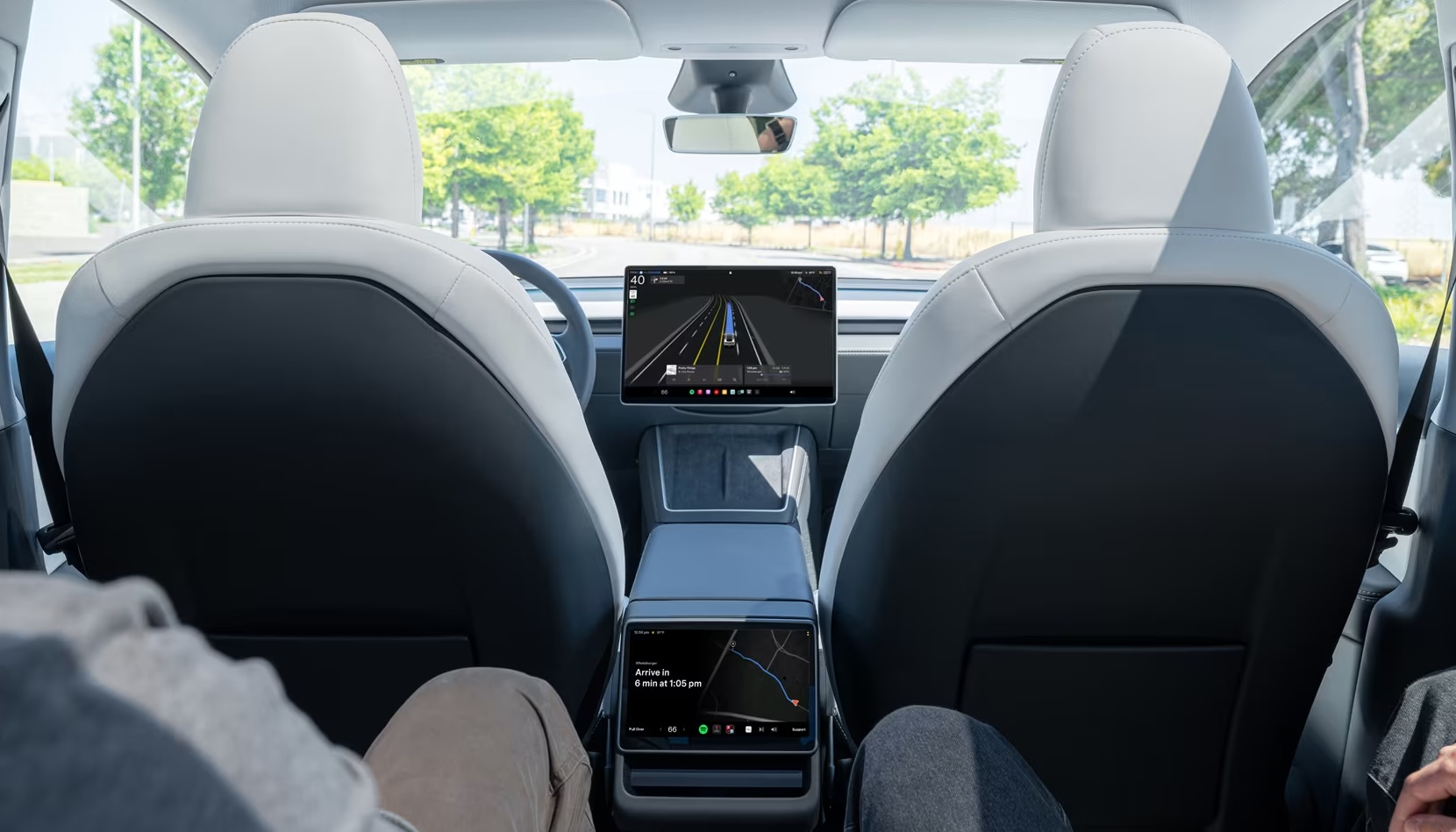
Tesla has upped its fare price for the Robotaxi platform in Austin for the first time since its launch on June 22. The increase came on the same day that Tesla expanded its Service Area for the Robotaxi ride-hailing service, offering rides to a broader portion of the city.
The price is up from $4.20, a figure that many Tesla fans will find amusing, considering CEO Elon Musk has used that number, as well as ’69,’ as a light-hearted attempt at comedy over the past several years.
Musk confirmed yesterday that Tesla would up the price per ride from that $4.20 point to $6.90. Are we really surprised that is what the company decided on, as the expansion of the Service Area also took effect on Monday?
But the price is now a princely $6.90, as foretold in the prophecy 😂
— Elon Musk (@elonmusk) July 14, 2025
The Service Area expansion was also somewhat of a joke too, especially considering the shape of the new region where the driverless service can travel.
I wrote yesterday about how it might be funny, but in reality, it is more of a message to competitors that Tesla can expand in Austin wherever it wants at any time.
Tesla’s Robotaxi expansion wasn’t a joke, it was a warning to competitors
It was only a matter of time before the Robotaxi platform would subject riders to a higher, flat fee for a ride. This is primarily due to two reasons: the size of the access program is increasing, and, more importantly, the service area is expanding in size.
Tesla has already surpassed Waymo in Austin in terms of its service area, which is roughly five square miles larger. Waymo launched driverless rides to the public back in March, while Tesla’s just became available to a small group in June. Tesla has already expanded it, allowing new members to hail a ride from a driverless Model Y nearly every day.
The Robotaxi app is also becoming more robust as Tesla is adding new features with updates. It has already been updated on two occasions, with the most recent improvements being rolled out yesterday.
Tesla updates Robotaxi app with several big changes, including wider service area
Elon Musk
Tesla’s Robotaxi expansion wasn’t a joke, it was a warning to competitors
Tesla might have made a joke with its first Robotaxi service area expansion, but it was truly a serious warning to its competitors.
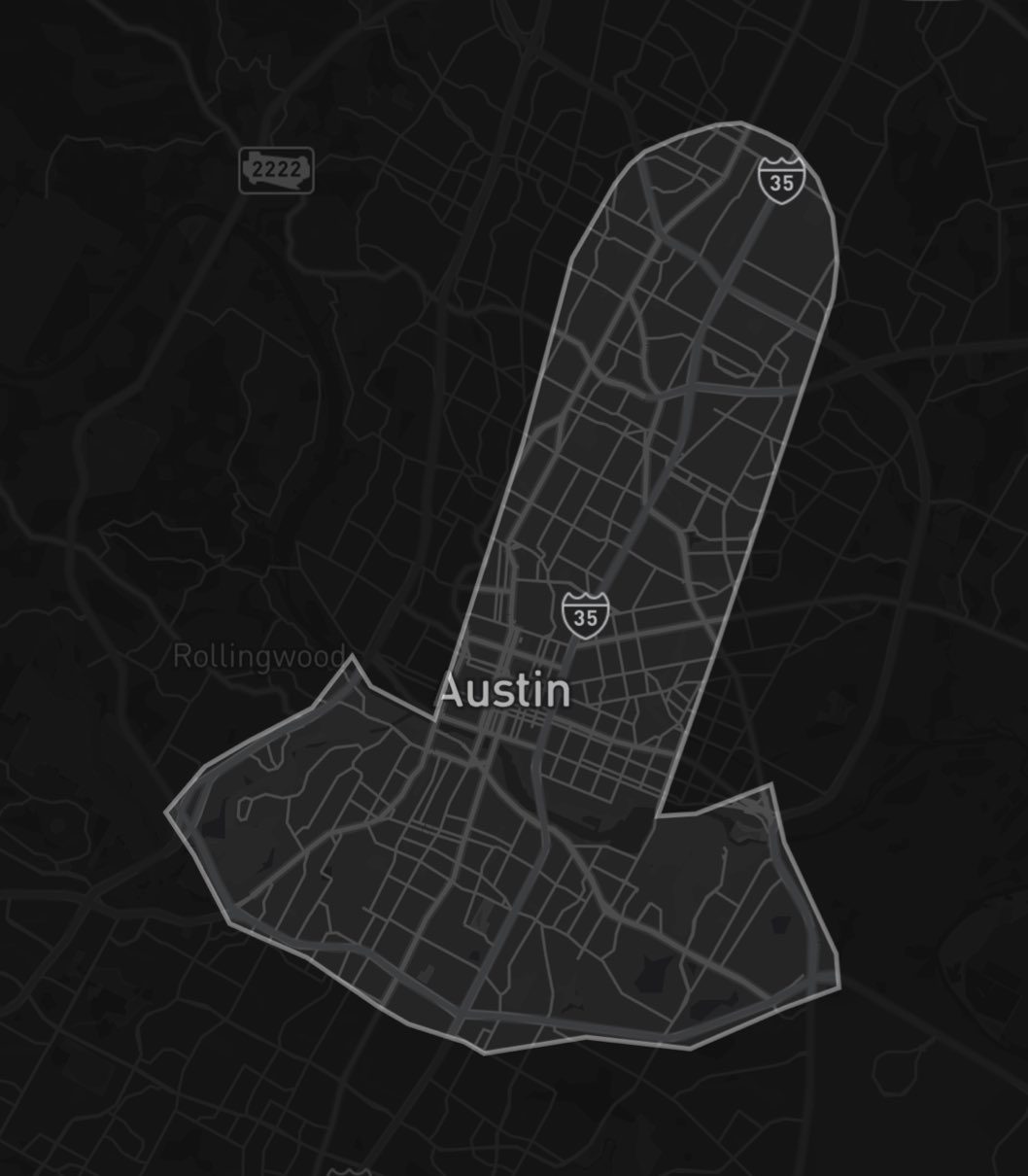
Tesla’s Robotaxi expansion occurred for the first time on Monday, and while the shape of its new service area might be “cocky,” it surely is not a joke. It’s a warning to competitors.
Robotaxi skeptics and Tesla opponents are sitting around throwing hate toward the company’s expansion appearance. Some called it “unserious,” and others say it’s “immature.” The reality is that it has a real meaning that goes much further than the company’s lighthearted and comical attitude toward things.
Proudly unserious
— Tesla (@Tesla) July 14, 2025
For context, Tesla has routinely used the number 69 as a way to price things it sells. 420 is another, an ode to cannabis culture. A few years back, it actually priced its Model S flagship sedan at $69,420. The first rides of the Robotaxi fleet were priced at $4.20. They are now being increased to $6.90.
Some call it childish. Others call it fun. The truth is, nobody is doing it this way.
Tesla updates Robotaxi app with several big changes, including wider service area
But today’s expansion of the Robotaxi service area in Austin is different. Tesla did not expand its shape to different neighborhoods or areas of the City of Austin. It did not expand it by broadening the rectangle that was initially available. Instead, it chose a different strategy, simply because it could:
🚨 Tesla’s new Robotaxi geofence is…
Finish the sentence 🥸 pic.twitter.com/3bjhMqsRm5
— TESLARATI (@Teslarati) July 14, 2025
Tesla could have done anything. It could have expanded in any direction, in any way, but it chose this simply because it has gotten Robotaxi to the point that it can broaden its service area in any direction. It chose this shape because it could.
Other companies might not have the same ability. Of course, many companies probably would not do this even if it could, simply because of the optics. Tesla doesn’t have those concerns; it has been open about its ability to be funny, and yes, immature, at times.
But in reality, it was a stark warning to competitors. “We can go anywhere in Austin, at any time, and we’re confident enough to make a joke about it.”
Tesla’s Robotaxi geofence in Austin grows, and its shape is hard to ignore
As Tesla is already aiming to expand to new states and high-population areas, and with applications filed in Arizona and California, Robotaxi will be in new regions in the coming weeks or months.
For now, it remains in Austin, and Tesla is sending a message to other companies that it is ready to go in any direction. The driverless Robotaxi fleet, bolstered by billions of miles of data, is ready to roam without anyone at the wheel.
Elon Musk
Tesla updates Robotaxi app with several big changes, including wider service area
Tesla’s Robotaxi app has gotten another update, and this time it offers a wider service area, but there are a lot of other changes, too.
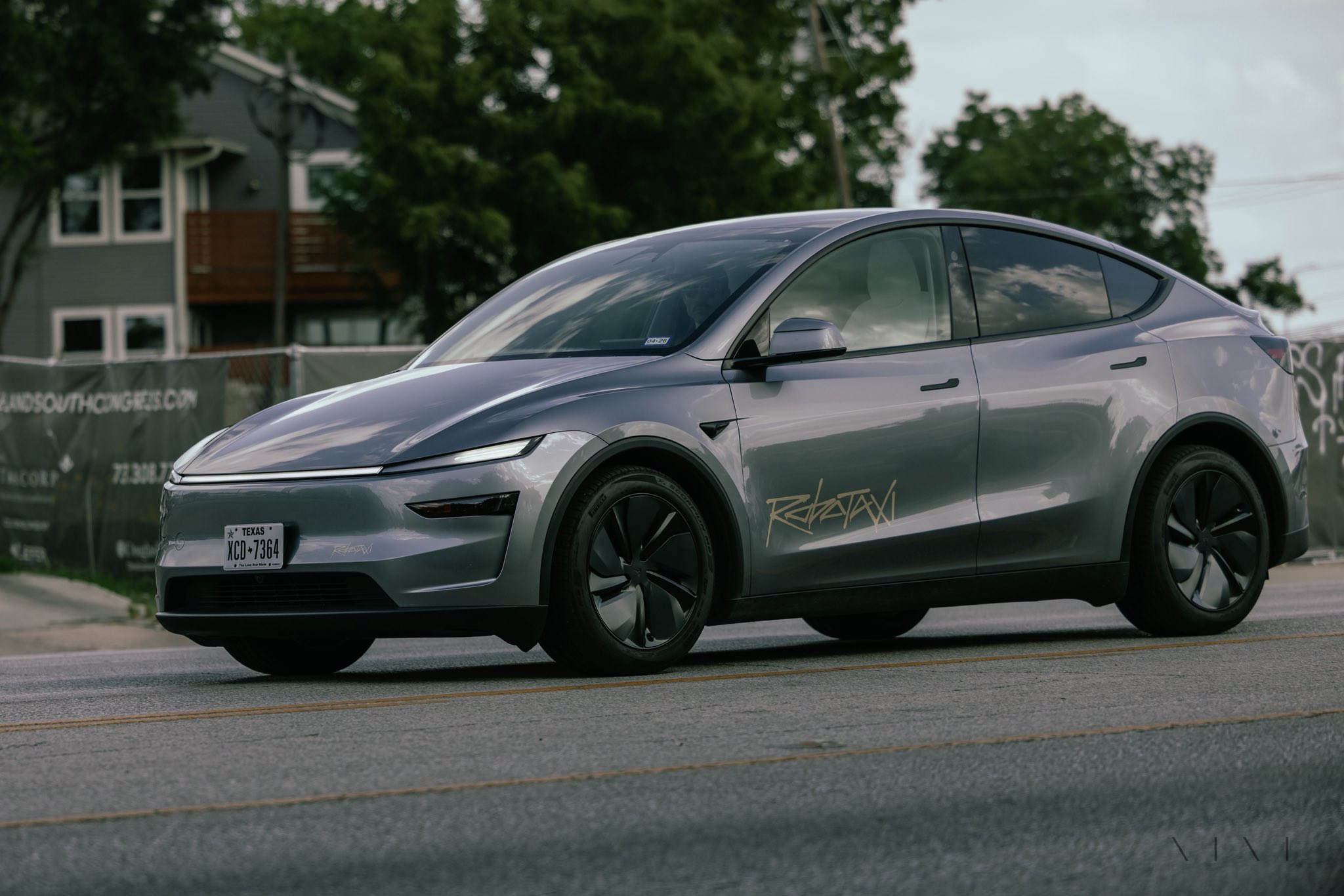
Tesla is rolling out its second update to its Robotaxi app after it launched the driverless ride-hailing service less than a month ago in Austin.
Among the changes, Tesla has expanded its service area, added walking directions to both the pickup and dropoff areas, added closing times for dropoff destinations, and allowed editing of your destination after booking a ride.
The new app version, Robotaxi 25.7.5, was rolled out on Monday morning. The biggest change is the near doubling of the service area, as Tesla expanded the possible travel region by a significant margin:
Tesla’s Robotaxi geofence in Austin grows, and its shape is hard to ignore
It’s no surprise Tesla decided to push the envelope with a new, interesting shape to the geofenced area that is hard to ignore.
The new region includes notable points of interest in Austin, most notably is the University of Texas at Austin. Tesla included the school, which has over 53,000 students, in this expansion, and it could be pushing the app and service to some of them in the coming weeks.
It’s a great addition as it is a highly concentrated area of the city, full of students and visitors.
Robotaxi app changes outside of new service area
Tesla has also added a handful of new changes. With its first update of the Robotaxi app, Tesla addressed several highly requested changes, including the ability to adjust the pickup location instead of being fixed to a default spot.
Walking Directions to Pickup and Destination
In congested and large metro areas, ride-sharing pickups are sometimes confusing to navigate to. When it comes to dropoff at your destination, exiting the vehicle at the front door is not always possible (many in Austin noticed this at Terry Black’s BBQ).
Tesla Robotaxi’s biggest challenge seems to be this one thing
Now, the app will guide you on how to reach your Robotaxi and your destination when pickup and dropoff are not available at the entrances of the establishments you’re visiting.
Search Results now show closing times
If you’re going to arrive at an establishment close to its closing time, the Robotaxi app will now warn you that you could arrive with only a few minutes to spare, or you could miss it altogether.
This is a nice touch because there’s nothing worse than craving some ice cream at 10 p.m., only to arrive and see the doors are locked and the lights are off.
Many navigation apps have this integrated to eliminate any confusion about closing times.
Destination editing after booking
This feature could go hand-in-hand with the closing times. As a business might close shortly after your arrival, you might find it advantageous to visit another establishment that has more time to serve you.
You can now pivot your destination after you have entered your Roobtaxi.

Tesla launches in India with Model Y, showing pricing will be biggest challenge

Tesla ups Robotaxi fare price to another comical figure with service area expansion

Tesla Model Y and Model 3 dominate U.S. EV sales despite headwinds


-
 News3 days ago
Tesla debuts hands-free Grok AI with update 2025.26: What you need to know
-
 Elon Musk1 week ago
Elon Musk confirms Grok 4 launch on July 9 with livestream event
-
 Elon Musk6 days ago
xAI launches Grok 4 with new $300/month SuperGrok Heavy subscription
-
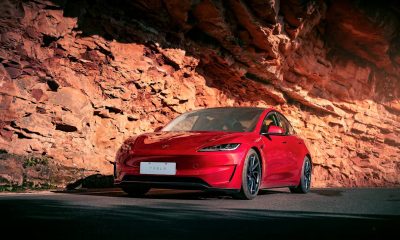 News2 weeks ago
Tesla Model 3 ranks as the safest new car in Europe for 2025, per Euro NCAP tests
-
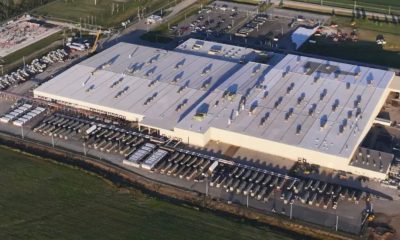
 Elon Musk2 weeks ago
xAI’s Memphis data center receives air permit despite community criticism
-
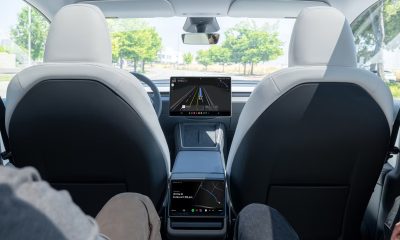 News5 days ago
Tesla begins Robotaxi certification push in Arizona: report
-
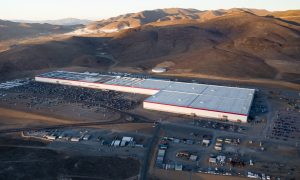
 Elon Musk2 weeks ago
Tesla reveals it is using AI to make factories more sustainable: here’s how
-
 Elon Musk2 weeks ago
Tesla scrambles after Musk sidekick exit, CEO takes over sales