Lifestyle
Elon Musk and SpaceX featured in Nat Geo MARS mini-series

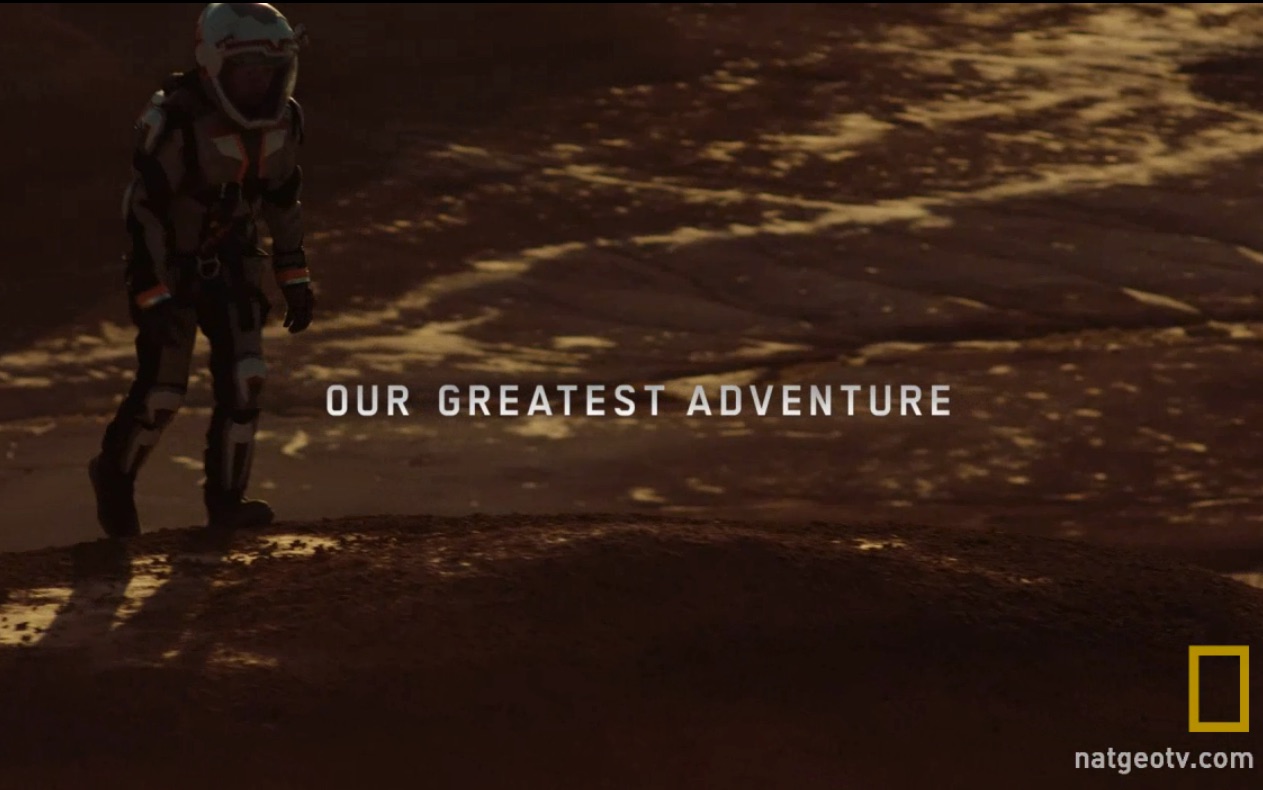
National Geographic (“NatGeo”) has launched their MARS mini-series to be aired every Monday evening for a total of six weeks. It’s a fictional drama set in the year 2033 imagining the first human mission to the surface of Mars with a huge focus on the scientific accomplishments necessary to make such a journey reality. Cut in with the drama are interviews with scientists explaining the complexities of the mission being imagined including, of course, our favorite Mars-bound-humanity-game-changer, Elon Musk.
Elon’s role in the first episode was to talk about the “big picture” challenges immediately apparent in a Mars mission:
- The risks of getting to Mars
- The adventure of it all
- The historical significance of launching from Pad 39A
- Why Mars is a goal to begin with
- Why landing on Mars is hard
- The importance of rocket reusability
- How fast we could establish a Mars colony
There’s been critique that the NatGeo series was essentially a big commercial for SpaceX and Elon. While the intention was (probably) not such, I can’t really argue that the impact (outcome?) wasn’t similar to a commercial. Elon wasn’t significantly over-featured versus others, but all of the modern-day rocket footage they used featured Falcon 9 and the SpaceX facilities.
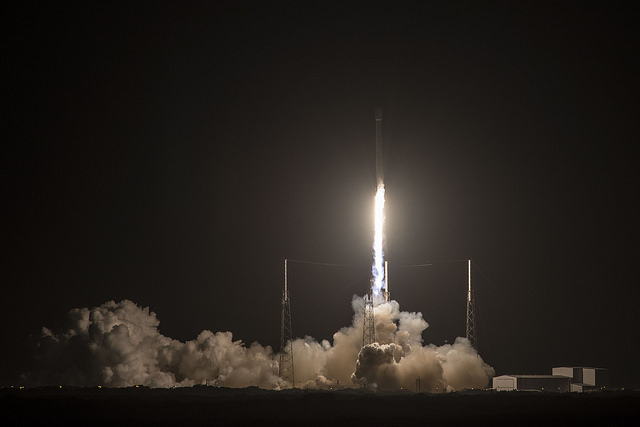
Falcon 9: A big star in NatGeo’s MARS series | Credit: SpaceX
Honestly though, when you’ve been both leading the charge and are arguably the biggest player (i.e., rocket company) in the Mars game, a realistic drama series featuring humanity’s first trip to the red planet is probably going to include you in a major way. And seriously, how awkward would it be pretending otherwise?
Prequels to the NatGeo MARS Series
In the weeks leading up to the premiere of their MARS series debut, NatGeo published plenty of relevant videos in order to keep curious minds, well, curious and in anticipation for the series. There were three videos that stood out most to me:
- “Before MARS”
Featuring twin girls that become significant players in the main MARS series, this video gave a short coming-of-age backstory wherein one of the sisters embraces her interest in space science via a ham radio/wise neighbor experience. I thought it was well done and a sweet tale, but kind of missed the “feels” it was supposed to inspire. Perhaps as the girls’ characters are fleshed out in the coming episodes, it will have more impact.
- “Is it okay to touch Mars?” by Vsauce1 (YouTube channel)
This video wasn’t published by NatGeo, but is was sponsored by them and host Michael Stevens promoted the MARS series throughout while discussing the science behind it. There were plenty of interesting Mars topics not generally discussed such as space “bugs” infecting the Earth and rover scientists living by “Mars time”. I found it to be a good primer for the series.
- “NatGeo Live | Sending Humans to Mars: How will we do it?”
This video featured a panel of three scientists answering questions about the challenges of a Mars mission after showing clips from the series. Automation, 3D printing, and terraforming were the primary featured topics after general discussion of mission requirements. There was disagreement on the topic of terraforming Mars that I thought was very interesting and recommend watching.
Fun Trivia
After watching and reading through most of the material published on this series, there were a few interesting things I noted and wanted to share for fun:
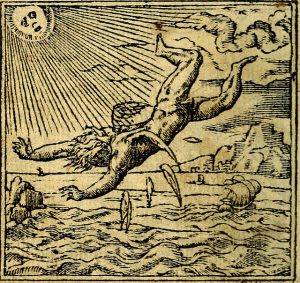
“Flight of Icarus” | Credit: Internet Archive Book Image
- The spaceship carrying the Mars astronauts in the series is called “Daedalus”, named after the Greek god who fathered the infamous waxed-wing god Icarus (great Iron Maiden song, too). In the 1986 movie “Space Camp” (starring Kate Capshaw and Leah Thompson), the space station whose oxygen tank reserves save the kids from certain death in space is also called “Daedalus”. Uh, sorry for the spoiler.
- Mars already has an unofficial flag: A tricolor rectangle of red, green, and blue. Each color represents the stages of terraforming the planet from its current red state, to green from vegetation, and finally to blue like Earth. The colors were also inspired by Kim Stanley Robinson’s trilogy Red Mars, Green Mars, and Blue Mars.
- In the “Before Mars” video, ham/amateur radio is a big feature, even allowing one of the girls to communicate with the International Space Station. It actually is possible to communicate with the ISS via ham radio. Astronauts reach out on their free time regularly.
Overall, I thought NatGeo did a great job on the series, intertwining drama with the science to give the viewer an understanding of where we are, where we are going, and why it’s so tough to do it. The series especially shines if you’re looking for a kind of “one-stop” place for all that information in an entertaining way. Unfortunately though, if you’ve been reading about the march towards Mars for some time now, there isn’t much added other than a different perspective and storyline to consider.
I’m looking forward to the coming episodes and, of course, seeing what else Elon has to say along the way. Next up on my playlist: NatGeo’s “Before the Flood” starring Leonardo DiCaprio and featuring our guy Elon.
Onwards.


Lifestyle
Tesla saves its passengers again – This time after a 300-foot cliff fall in Malibu
A Tesla Model 3 fell 300 feet off a Malibu cliff and both passengers survived.

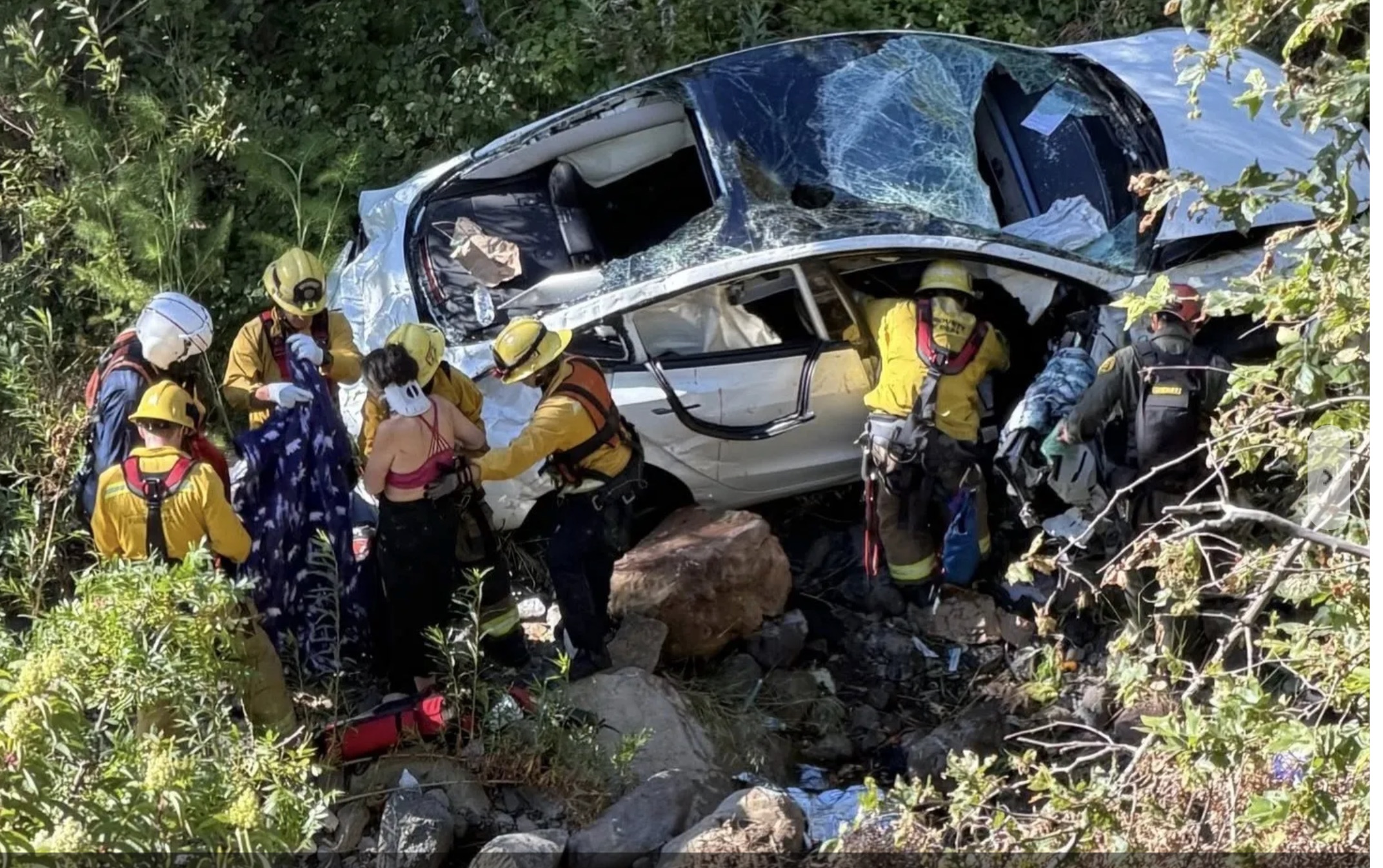
A Tesla Model 3 plunged roughly 300 feet off a cliff on Mulholland Highway in Malibu on Friday morning, May 29, 2026, and both occupants survived. The crash was reported at approximately 7:30 a.m. near the 2500 block of Mulholland Highway, triggering a multi-agency rescue operation involving Malibu Search and Rescue, the Los Angeles County Fire Department, the California Highway Patrol, and McCormick Ambulance.
When first responders arrived, the male driver was outside the vehicle shouting for help while the female passenger remained pinned inside the Tesla. Rescue crews rappelled down the cliffside on ropes to reach the wreckage. A flight medic was lowered by helicopter to begin treating both victims, and the driver was hoisted up to the roadway before crews used the Jaws of Life to free the trapped passenger. Both were airlifted to a local trauma center with moderate injuries despite a remarkable result for a fall that steep.
The outcome is not surprising, considering Model 3 earned an overall 5-star rating from NHTSA in every category and sub-category, and recorded the lowest probability of injury of any car ever evaluated by the U.S. New Car Assessment Program. The absence of a traditional engine in the front of the vehicle creates a longer crumple zone that absorbs impact energy before it reaches occupants, and the battery pack running along the floor gives the car an unusually low center of gravity that reinforces structural rigidity.
This is not the first time a Tesla has kept passengers alive after going off a cliff. A Tesla Model Y carrying a family of four survived a plunge off a cliff at Devil’s Slide near San Francisco in January 2023, with two adults and two children walking away from a 250-foot fall. That incident drew widespread attention to how the structural integrity of Tesla’s electric platform performs in extreme crash scenarios that most vehicles would not survive.
Tesla Model Y driver who drove off cliff with family attempts to avoid criminal conviction
Elon Musk
NASA’s first human outpost on the Moon starts now – SpaceX on deck
NASA named the rovers, landers, and vendors that will build America’s first Moon Base.
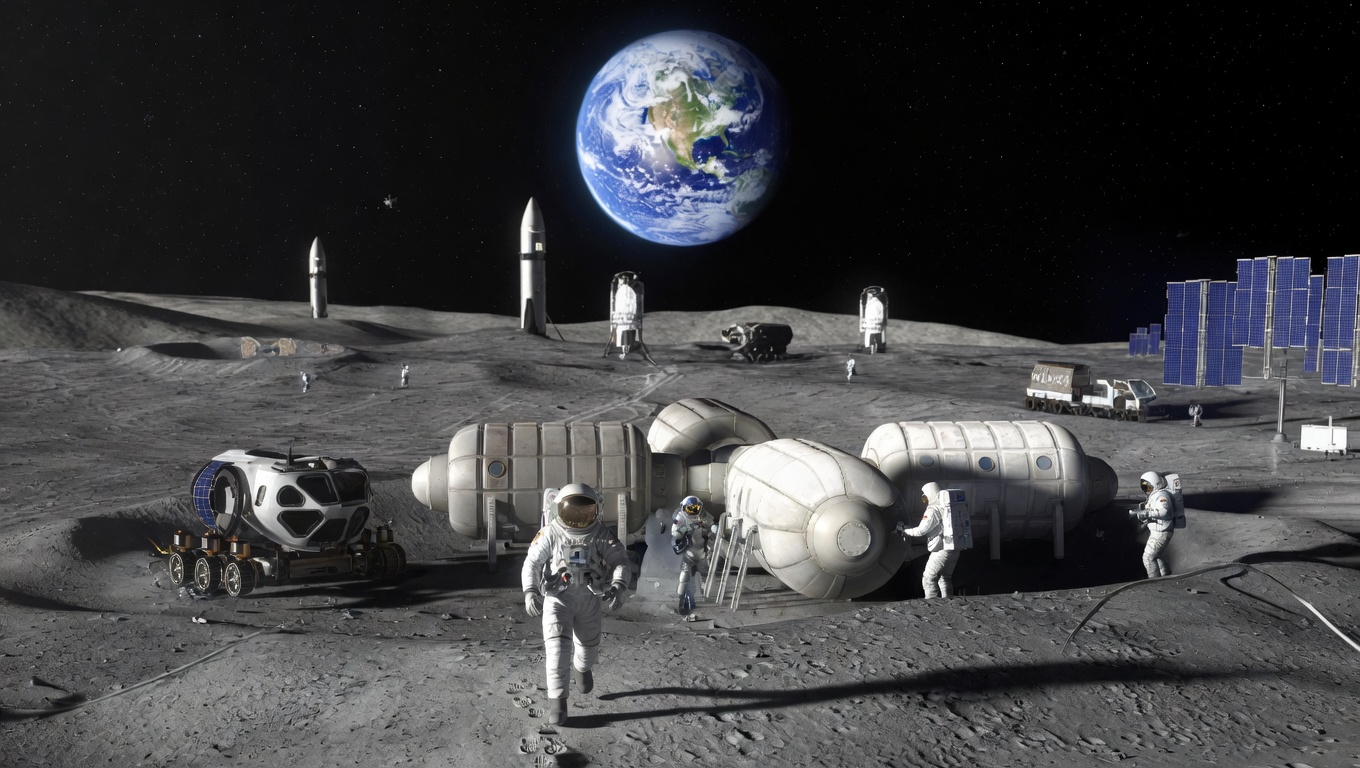
NASA has laid out its most detailed Moon Base plan to date, describing a permanent outpost near the Moon’s south pole that the agency intends to build over the coming decade as a direct stepping stone to Mars. “The Moon Base will be America’s and humanity’s first outpost on another celestial world,” NASA Administrator Jared Isaacman said, adding that every mission crewed and uncrewed “will be a learning opportunity as we return to the lunar surface, build the infrastructure to stay, and master the skills required to live and operate in one of the most demanding and dangerous environments imaginable.”
The plan is structured in three phases involving both uncrewed and crewed missions to deliver equipment, vehicles, and infrastructure to the surface, with the first three moon base missions targeted to launch before the end of 2026.
Moon Base I, targeting fall 2026, will use Blue Origin’s Blue Moon Mark 1 lander to deliver scientific instruments to the Shackleton Connecting Ridge, the same region where Artemis astronauts will land. Moon Base II will send Astrobotic’s Griffin lander carrying more than 1,100 pounds of cargo including Astrolab’s FLIP rover to begin developing mobility systems on the surface. Moon Base III will carry the Lunar Vertex science mission on Intuitive Machines’ Nova-C Trinity lander to study lunar swirls near the south pole, with ESA and Korean science payloads aboard.
On the rover side, NASA awarded Astrolab $219 million and Lunar Outpost $220 million to build the first phase of Lunar Terrain Vehicles, with both rovers targeted for deployment to the lunar surface by 2028. Astrolab’s crewed rover weighs roughly 2,000 pounds and can reach over 6 mph. Lunar Outpost’s Pegasus rover can operate autonomously or via remote control at over 9 mph. Blue Origin separately received $188 million with an option worth $280.4 million to deliver cargo landers for rover transport.
NASA also confirmed that MoonFall, a mission deploying four survey drones to scout Artemis landing sites, has selected Firefly Aerospace to build the transport spacecraft, with a 2028 launch target.
SpaceX sits at the center of that commercial layer. SpaceX holds the NASA Human Landing System contract for the Starship-derived lander that will put astronauts on the surface under Artemis IV, currently targeting 2028. Before that can happen, SpaceX must demonstrate in-orbit propellant transfer at scale, a process requiring multiple Starship tanker launches to fuel a single mission. Water ice at the lunar south pole is central to the base’s long-term viability, as it can be converted into drinking water, breathable oxygen, and rocket fuel, directly reducing dependence on Earth resupply. That resource loop becomes far more practical if Starship can land and be refueled on or near the Moon itself.
Elon Musk has publicly stated that Starship V3, which recently completed its first flight, should be capable enough for initial Mars missions. The Moon Base plan announced Tuesday is the infrastructure layer that connects everything between those two ambitions, and SpaceX is the only American company currently contracted to build the rocket that gets humans to either destination.
Elon Musk
Tesla ditches India after years of broken promises
Tesla has ditched its plans to build a factory in India after years of failed negotiations.

Tesla’s long-running effort to establish a manufacturing presence in India is officially over. India’s Minister of Heavy Industries H.D. Kumaraswamy confirmed on May 19, 2026 that Tesla has informed authorities it will not proceed with a manufacturing facility in the country.
Tesla first signaled serious interest in India around 2021, when it began hiring local staff and lobbying the Indian government for lower import tariffs. The ask was straightforward: reduce duties enough for Tesla to test the market with imported vehicles before committing capital to a local factory. India’s position was equally firm, with an ask of Tesla to commit to manufacturing first, then receive tariff relief. Neither side moved, and the talks quietly collapsed.
Tesla to open first India experience center in Mumbai on July 15
India had offered a policy that would reduce import duties from 110% down to 15% on EVs priced above $35,000, provided companies committed at least $500 million toward local manufacturing investment within three years. Tesla declined to participate. The tariff standoff was only part of the problem. Analysts pointed to significant gaps in India’s local supply chain, inadequate industrial infrastructure, and a mismatch between Tesla’s premium pricing and the purchasing power of India’s automotive market as additional factors that made the investment difficult to justify.
First signs of an unraveling relationship came in April 2024, when Musk abruptly cancelled a planned trip to India where he was set to meet Prime Minister Modi and announce Tesla’s market entry. By July 2024, Fortune reported that Tesla executives had stopped contacting Indian government officials entirely. The government at that point understood Tesla had capital constraints and no plans to invest.
The more fundamental issue is that Tesla’s existing factories are currently operating at approximately 60% capacity, making a commitment to building new manufacturing capacity in a new market difficult to defend to investors. Tesla will continue selling imported Model Y vehicles through its existing showrooms in Mumbai, Delhi, Gurugram, and Bengaluru, but local production is no longer part of the plan.

Tesla piggybacks recent Supercharger feature with update that takes it further

Tesla Full Self-Driving v14.3.3 driver monitoring: We tested it


