Lifestyle
Elon Musk hires Tesla interns who helped solve Model 3 production issues

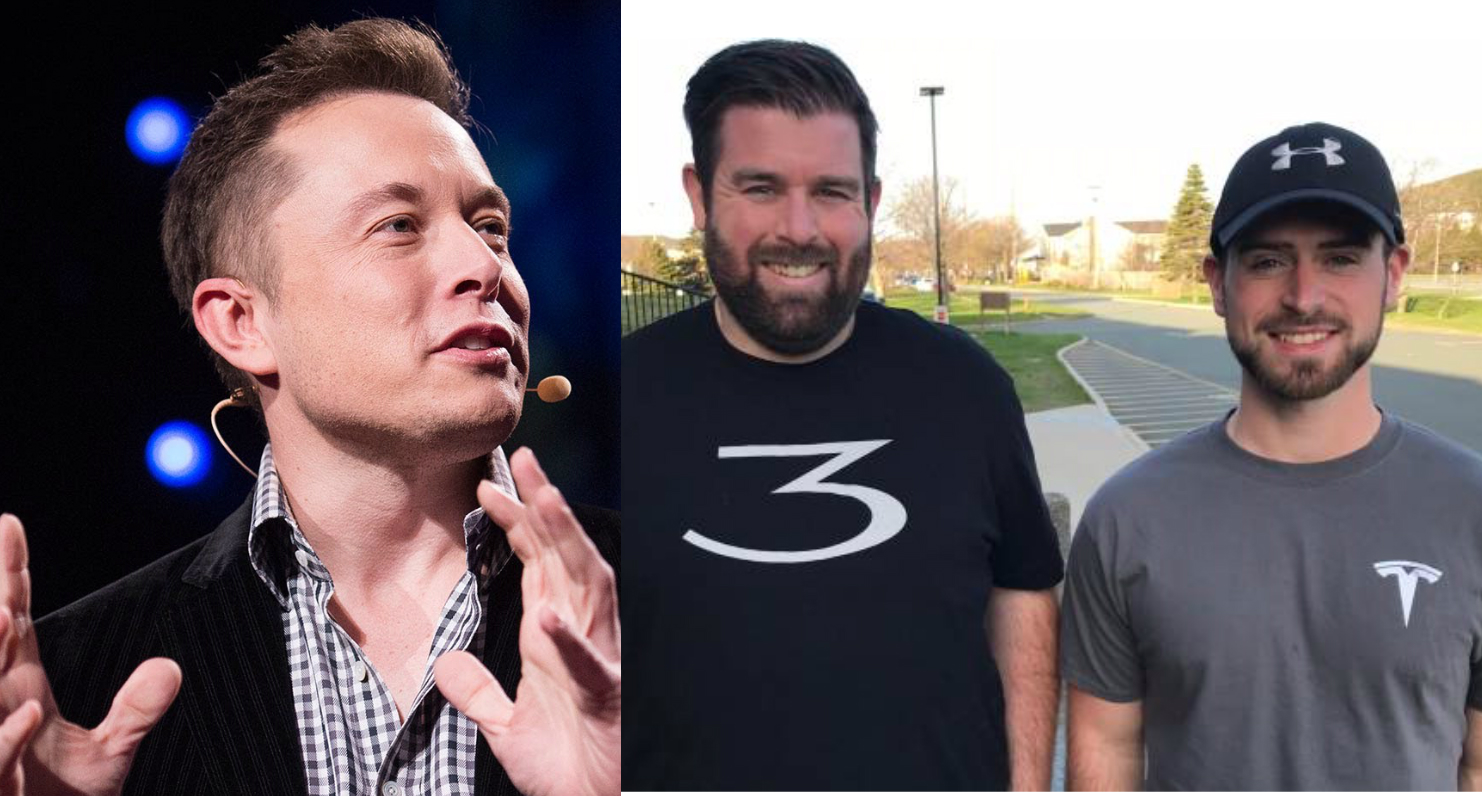
Mark Comeau and Matthew Lane from the Memorial University of Newfoundland were serving as interns at Tesla when they spotted a point for improvement in the Model 3 production line. Less than two months later, the pair were personally invited by Elon Musk to join the electric car maker.
Matthew and Mark were no strangers to Musk’s projects. The pair had worked on the SpaceX Hyperloop competition in the past, and this year, they are returning to help judge the 2018 competition in July. The engineering students started their Tesla internship in January, where they worked at both the Fremont factory in California and at the Gigafactory in Nevada.
In an interview at CBC Radio’s St. John’s Morning Show, the pair described the series of events that transpired which eventually led to their hiring. According to Matthew, it all started when he and Mark came up with a solution to a gating problem in the Model 3 line.

Engineering students Mark Comeau and Matthew Lane were personally hired by Elon Musk after the pair solved a problem in the Model 3’s production line. [Credit: Paula Gale/CBC]
“Essentially, it was a gating problem with the Model 3 production ramp. What had happened was we saw an opportunity to solve the problem. We came up with our own idea, and we actually sort of crashed the meeting with Elon himself and presented the idea. And, after speaking with him and one of his VPs, Doug Field, they essentially said ‘This is a good idea, but here’s the problem we are facing right now, so you guys go talk with us.’ And it snowballed from there,” he said.
Much to the pair’s surprise, Musk opted to follow through on their suggestions. Matthew and Mark worked on their solution to the Model 3 line’s gating problem, and not long after bringing things online, they were eventually called to the Gigafactory to address a new set of challenges.
“So about a month and a half after that, we worked on this issue, brought things online. And then, literally at 10 a.m. Monday morning, the week after we’re finished, we received a message saying ‘Hey, head to Nevada to the Gigafactory.’ And, a five-hour car drive later, we arrived in Nevada, with a whole new situation and a whole new set of problems to address,” Mark said.
It was after they were able to address the issues in Gigafactory 1 that Musk suggested that they stay with the company. Mark elaborated on their encounter with Elon Musk at the Nevada factory.
“Elon is the type of CEO that is actually hands-on in the factory floor. He’s not one of those that sits on the ivory tower and just gets reports. He’s actually on the line, seeing the issues himself in person, and seeing what contributions people are making, and what the issues are. He doesn’t like to hear things second-hand. He likes everything first-hand knowledge.
“So this issue had caused some delays with the production, so of course it was one thing that was always on his radar, and once we had figured it out and got it up and running reliably, he came by, and he had us walk through it. It’s probably one of the most unnerving experiences ever, because he’s the CEO of the company and here we are, just two interns. And, he’s basically like ‘Yep, you’ve got to stay.’”

The Tesla Model 3 gets assembled. [Credit: Tesla]
Mark is now hired as a special projects engineer for Tesla. Matthew will be returning to school for the summer semester, but he’ll be back at the electric car maker for the fall. The pair sees themselves as firefighters, deployed to areas in the company where there are issues that await solutions.
Ultimately, the story of how Mark Comeau and Matthew Lane got personally hired by Elon Musk is a testament to Tesla’s practice of allowing communication to travel through the shortest path necessary. The pair, after all, were engineering interns, and in any other company setting, it would have taken a lot of red tape before the pair would have been able to propose their solution to the CEO. This particular culture was highlighted by Musk in a leaked email last month, when he specifically stated that communication through “chain of command” should never be done.
“Communication should travel via the shortest path necessary to get the job done, not through the ‘chain of command.’ A major source of issues is poor communication between depts. The way to solve this is allow free flow of information between all levels. If, in order to get something done between depts, an individual contributor has to talk to their manager, who talks to a director, who talks to a VP, who talks to another VP, who talks to a director, who talks to a manager, who talks to someone doing the actual work, then super dumb things will happen. It must be ok for people to talk directly and just make the right thing happen,” Musk wrote.


Elon Musk
Tesla ditches India after years of broken promises
Tesla has ditched its plans to build a factory in India after years of failed negotiations.

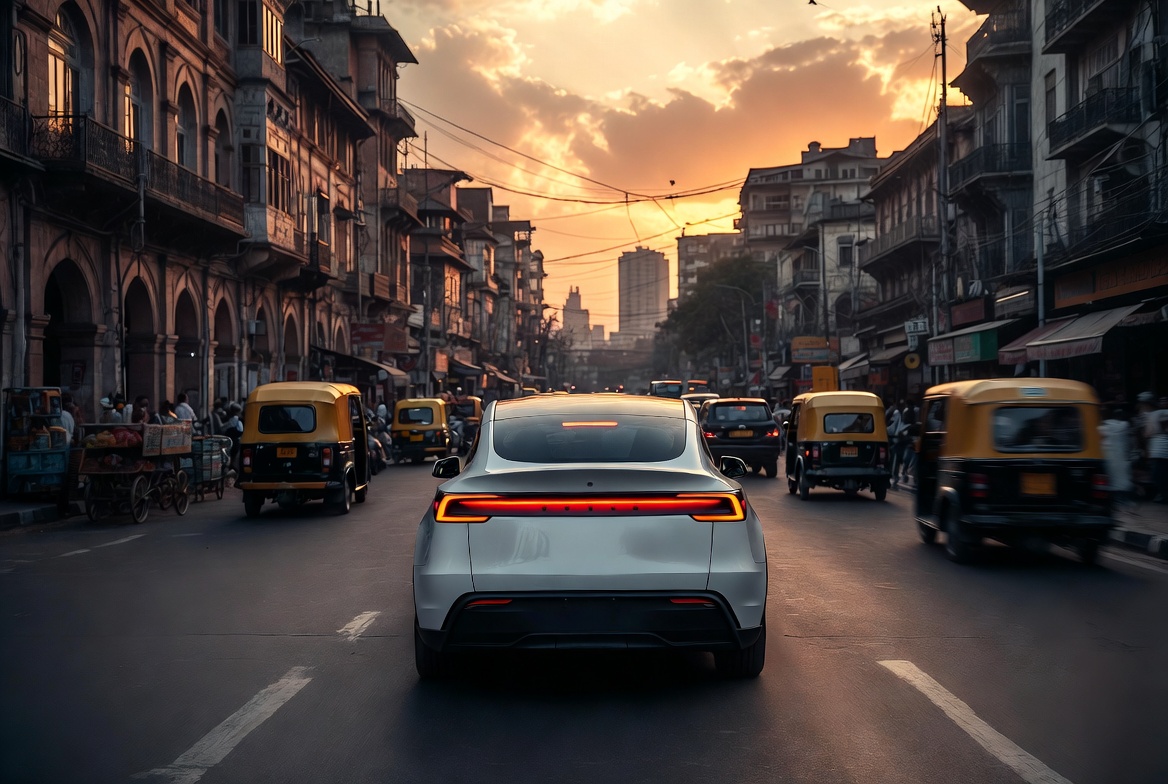
Tesla’s long-running effort to establish a manufacturing presence in India is officially over. India’s Minister of Heavy Industries H.D. Kumaraswamy confirmed on May 19, 2026 that Tesla has informed authorities it will not proceed with a manufacturing facility in the country.
Tesla first signaled serious interest in India around 2021, when it began hiring local staff and lobbying the Indian government for lower import tariffs. The ask was straightforward: reduce duties enough for Tesla to test the market with imported vehicles before committing capital to a local factory. India’s position was equally firm, with an ask of Tesla to commit to manufacturing first, then receive tariff relief. Neither side moved, and the talks quietly collapsed.
Tesla to open first India experience center in Mumbai on July 15
India had offered a policy that would reduce import duties from 110% down to 15% on EVs priced above $35,000, provided companies committed at least $500 million toward local manufacturing investment within three years. Tesla declined to participate. The tariff standoff was only part of the problem. Analysts pointed to significant gaps in India’s local supply chain, inadequate industrial infrastructure, and a mismatch between Tesla’s premium pricing and the purchasing power of India’s automotive market as additional factors that made the investment difficult to justify.
First signs of an unraveling relationship came in April 2024, when Musk abruptly cancelled a planned trip to India where he was set to meet Prime Minister Modi and announce Tesla’s market entry. By July 2024, Fortune reported that Tesla executives had stopped contacting Indian government officials entirely. The government at that point understood Tesla had capital constraints and no plans to invest.
The more fundamental issue is that Tesla’s existing factories are currently operating at approximately 60% capacity, making a commitment to building new manufacturing capacity in a new market difficult to defend to investors. Tesla will continue selling imported Model Y vehicles through its existing showrooms in Mumbai, Delhi, Gurugram, and Bengaluru, but local production is no longer part of the plan.
Elon Musk
Trump’s invite for Elon just reshuffled Tesla’s big Signature Delivery Event
Tesla rescheduled its final Model S farewell to May 20 after Musk joined Trump in China.
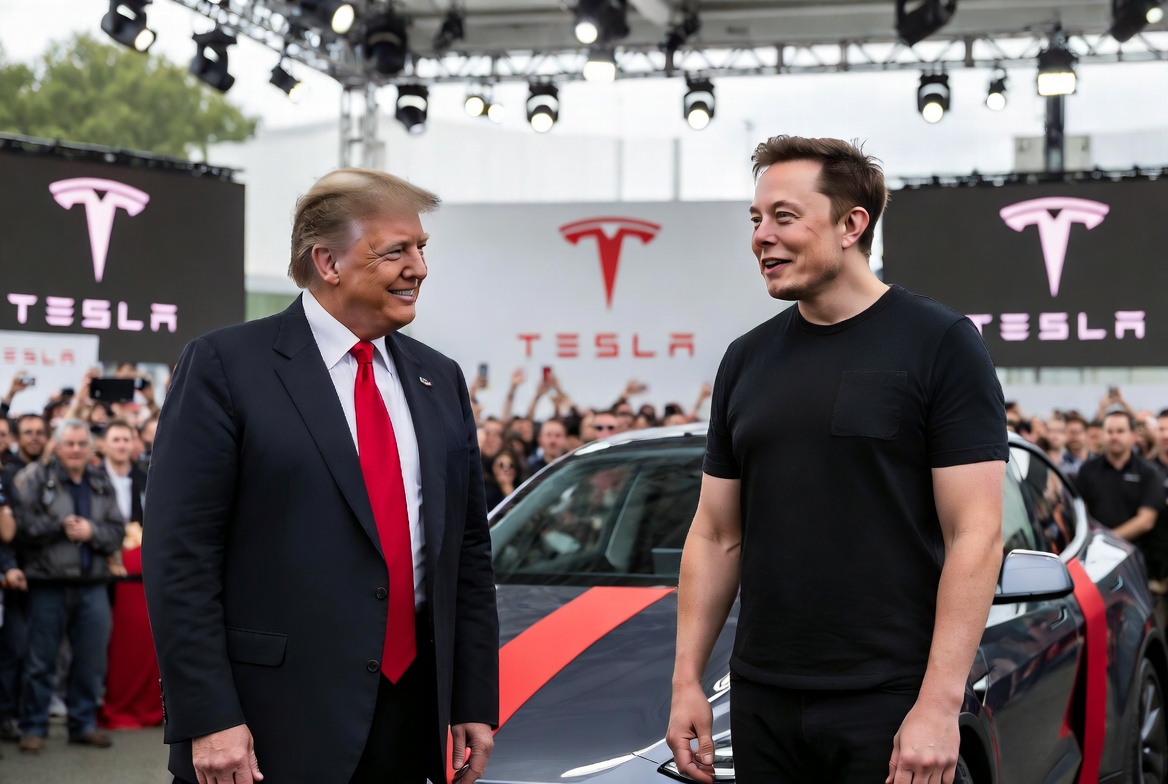
Tesla has rescheduled its Model S and Model X Signature Edition delivery event to Wednesday, May 20, 2026, after abruptly calling off the original May 12 celebration. The event will take place at Tesla’s factory at 45500 Fremont Boulevard in Fremont, California, the same location where the Model S first rolled off the line in 2012. Invitees received a follow-up email asking them to reconfirm attendance and download a new QR code ticket, with Tesla noting that all travel and accommodation expenses remain the buyer’s responsibility.
The reason behind the original cancellation came into focus the same day it was announced. President Trump invited Elon Musk, Apple’s Tim Cook, BlackRock’s Larry Fink, Boeing’s Kelly Ortberg, and executives from Goldman Sachs, Blackstone, Citigroup, and Meta to join his trip to China this week for a summit with President Xi Jinping. The agenda covers trade, artificial intelligence, export controls, Taiwan, and the Iran war, following weeks of escalating friction between Washington and Beijing over AI technology, sanctions, and rare earth exports. Trump wrote on Truth Social, “I am very much looking forward to my trip to China, an amazing Country, with a Leader, President Xi, respected by all.”
Tesla launches 200mph Model S “Gold” Signature in invite-only purchase
The vehicles at the center of all this are the last Model S and Model X units Tesla will ever build. Priced at $159,420 each, the 250 Model S and 100 Model X Signature Edition units come finished in Garnet Red with a one-year no-resale agreement, giving Tesla right of first refusal if the owner decides to sell. As Teslarati reported, the Model S defined Tesla’s early identity as a serious luxury automaker, and the Fremont factory line that built it is now being converted to manufacture Optimus humanoid robots.
Musk’s inclusion in the China delegation drew attention given his very public relationship with Trump, and the invitation signals the two have moved past and past grievances. Trump originally brought Musk on to lead the Department of Government Efficiency following his inauguration, and despite a sharp public dispute in mid-2025, the two have appeared together repeatedly in recent months. A seat on the China trip, the most diplomatically consequential visit of Trump’s current term, puts Musk back at the table on U.S. economic policy at a moment when Tesla’s China revenue remains one of the company’s most important financial pillars.
Lifestyle
Tesla Semi hauls fresh Cybercab batch as Robotaxi era takes hold
A Tesla Semi was filmed hauling Cybercab units out of Giga Texas for the first time.
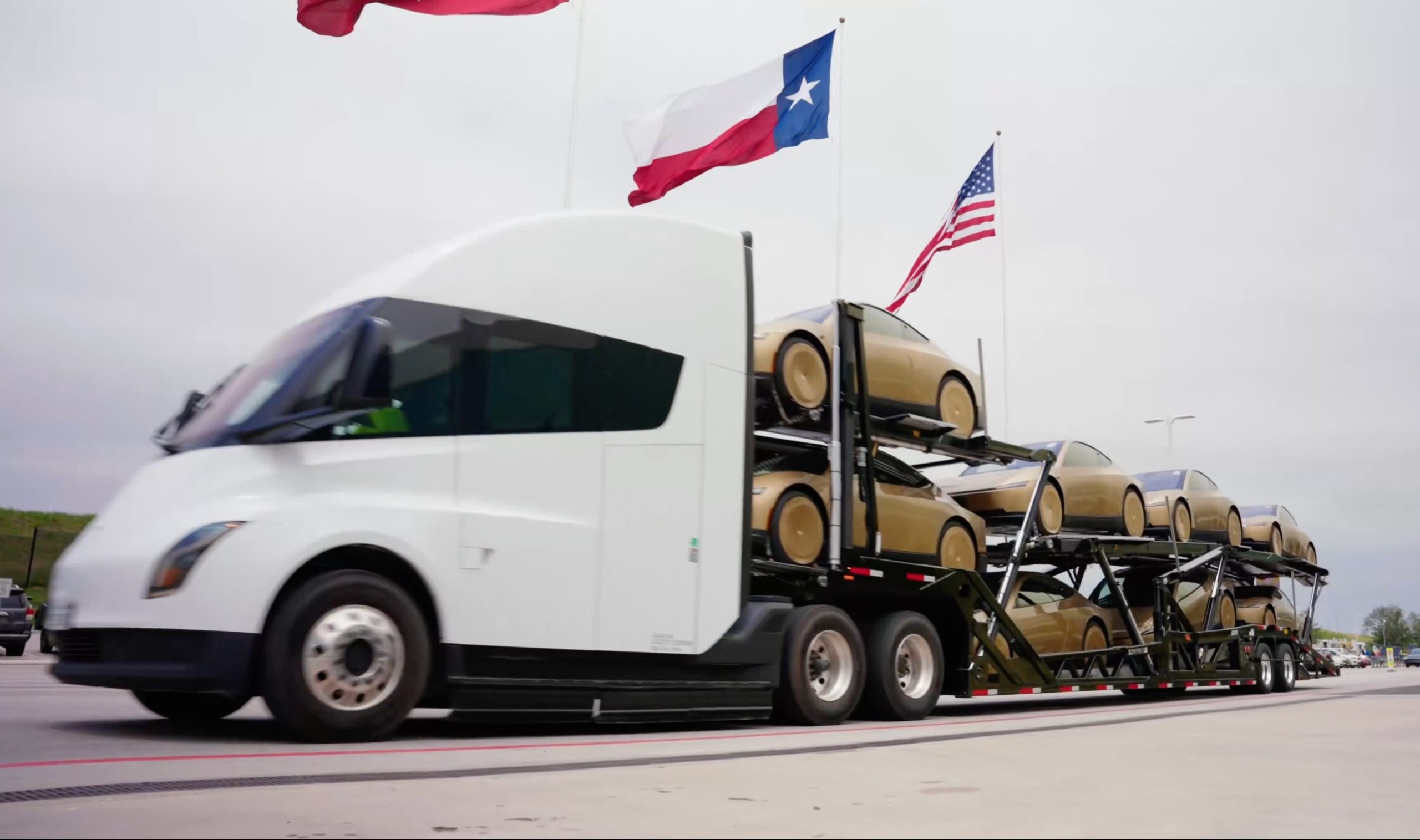
A Tesla Semi loaded with Cybercab units was recently filmed leaving Gigafactory Texas, marking what appears to be the first documented delivery run of Tesla’s autonomous two-seater. The footage shows multiple Cybercabs secured on a flatbed trailer being hauled by a production Tesla Semi, a truck rated for a gross combination weight of 82,000 lbs. The location is consistent with Giga Texas in Austin, where Cybercab production has been ramping since February 2026.
The sighting follows a wave of Cybercab activity at the Austin facility. In late April, drone operator Joe Tegtmeyer spotted approximately 60 Cybercabs parked in two organized groups in the factory’s outbound lot, the largest concentration observed to date. Units being staged in an outbound lot is a standard pre-delivery step, and the Semi footage is the logical next frame in that sequence.
En route with @tesla_semi pic.twitter.com/ZfuOjaeLH1
— Tesla Robotaxi (@robotaxi) May 7, 2026
This is not the first time Tesla has used its own Semi to move Tesla products. When the Semi was unveiled in 2017, Musk noted it would be used for Tesla’s own operations, and over the years Semi prototypes were spotted carrying cargo ranging from concrete weights to Tesla vehicles being delivered to consumers. In 2023, a Semi was photographed transporting a Cybertruck on a trailer ahead of that vehicle’s delivery launch.
The Cybercab itself was first revealed publicly at Tesla’s “We, Robot” event on October 10, 2024, at Warner Bros. Studios in Burbank, where 20 pre-production units gave attendees rides around the studio lot. Musk stated at the event that Tesla intends to produce the Cybercab before 2027. The first production unit rolled off the Giga Texas line on February 17, 2026, with Musk posting on X: “Congratulations to the Tesla team on making the first production Cybercab.”
Tesla’s annual production goal is 2 million Cybercabs per year once multiple factories reach full design capacity, with the company targeting a price under $30,000 per unit. Tesla has confirmed plans to expand its robotaxi service to seven cities in the first half of 2026, including Dallas, Houston, Phoenix, Miami, Orlando, Tampa, and Las Vegas, building on the unsupervised service already running in Austin. Musk has said he expects robotaxis to cover between a quarter and half of the United States by end of year.

Tesla patent reveals strategy for solving major Full Self-Driving, Optimus issue

SpaceX Starlink gets its latest airline adoptee, grabbing three of the ‘Big Four’


