Lifestyle
Review: Choosing a Portable Bluetooth Speaker

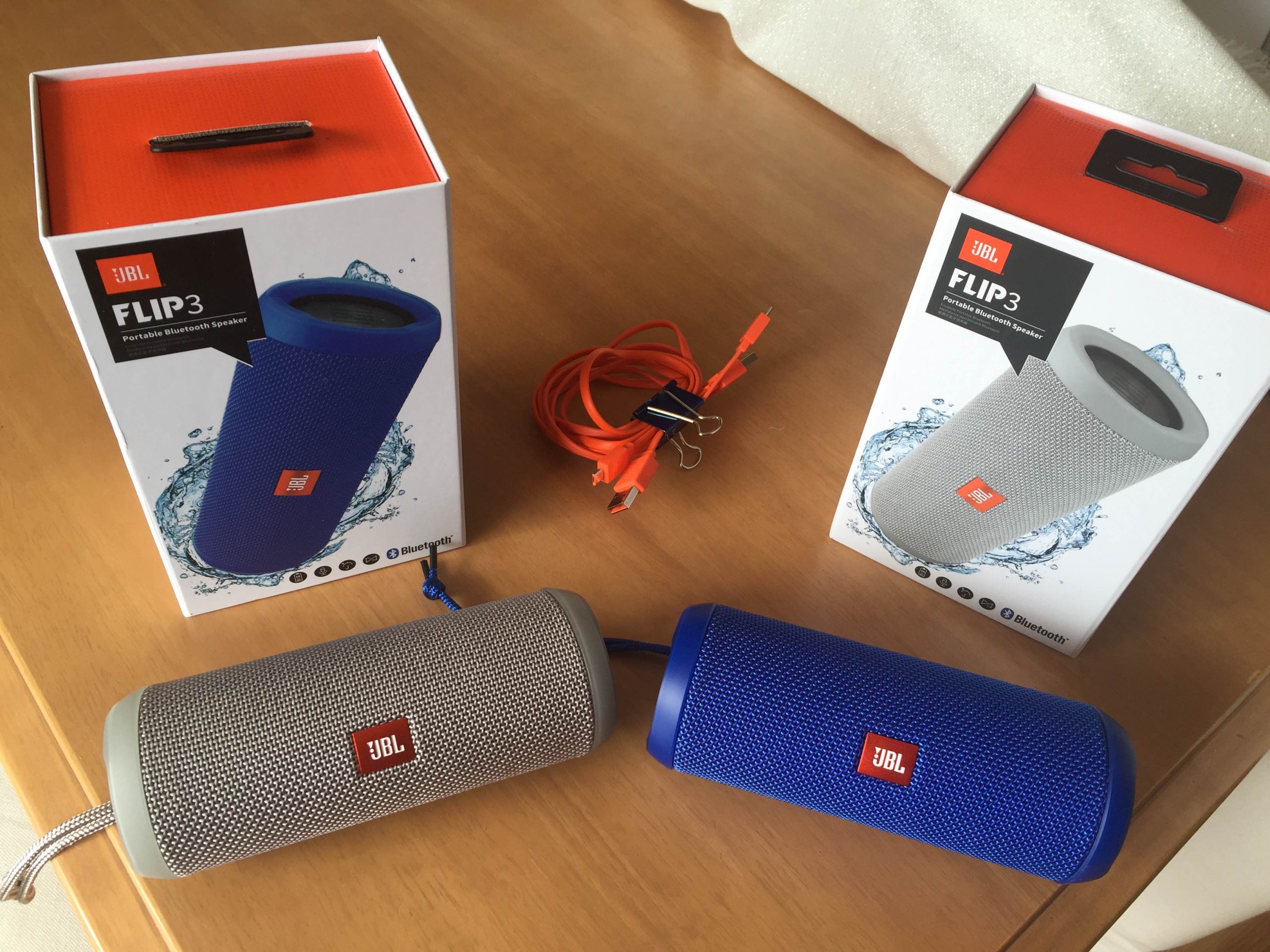
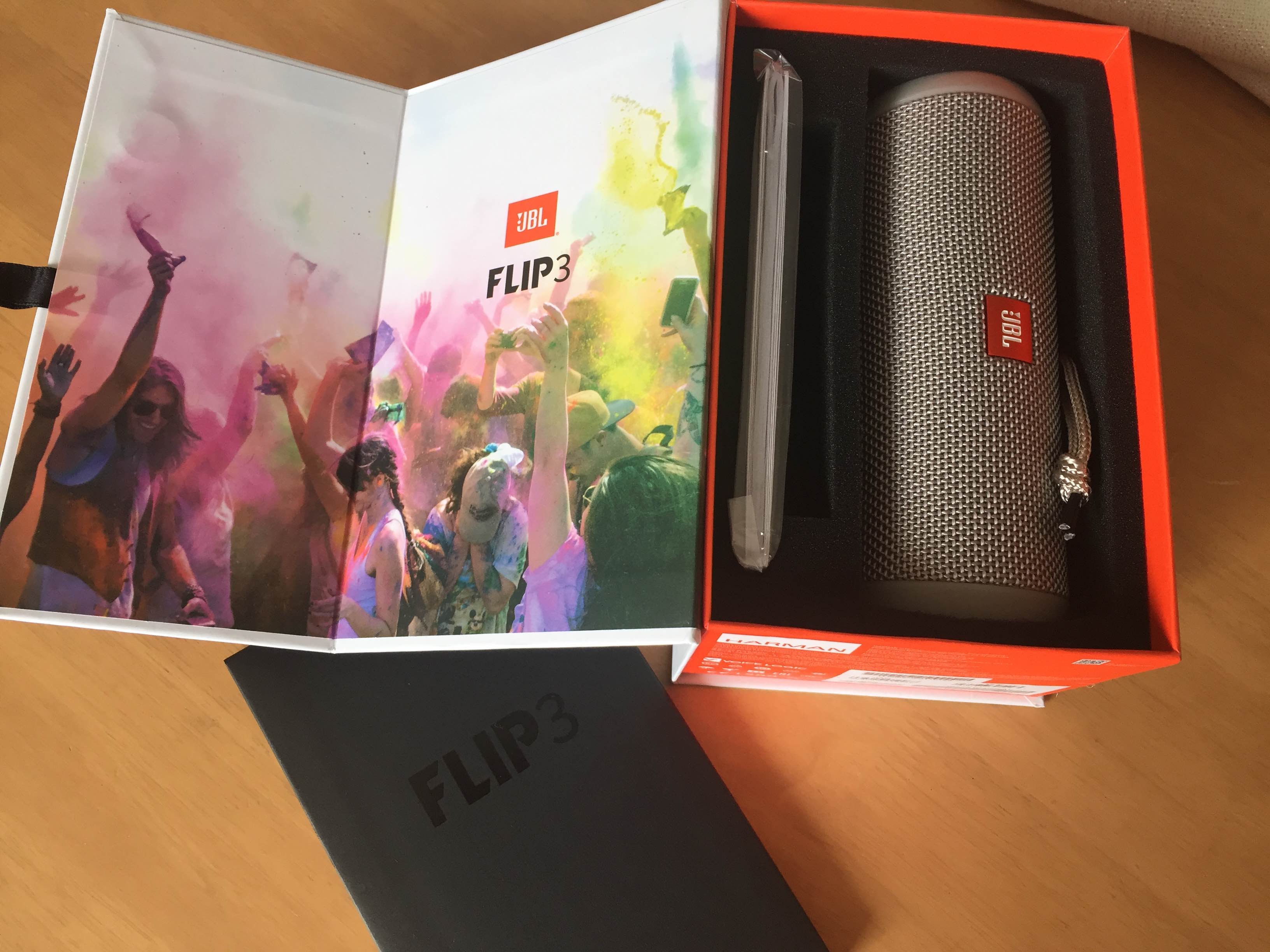
JBL Flip 3 Portable Bluetooth Speaker
These days, everyone seems to have a portable Bluetooth speaker at home. Since Christmas, my father-in-law has been one of those people. It sits nicely on top of the wooden and glass enclosure for the 30+ year old stereo system he will never part with. Considering that we purchased it for him to pair with the iPad we forced upon he and mom last Christmas, my husband and I started to wonder why we didn’t have one ourselves. We already own a not-so-portable computer speaker set that we lug back and forth outside during pool season and a cute but poor quality floating speaker from Brookstone, which is nearly unusable in our pool. Those things in mind, I debated the need for another speaker but was really drawn to the ease of use and quality of the speaker we purchased for Dad. It is made by Best Buy’s own Insignia brand and was purchased on sale for $25. It is easy enough for my self-proclaimed tech unsavvy in-laws to use.
Decisions, Decisions
As is the modern world we live in, both my husband and I started comparison shopping online. The options were staggering. You can spend $15 on a small clip or $400 on a big name device. Then came the features. Some can charge your mobile device while others can be linked to a partner speaker for surround sound. Some are water proof, others shock and drop proof. Ideally, you should know which features you desire before you dive into comparing the dizzying amount of options. The Insignia speaker we had purchased for dad came with the ability to act as a power bank to charge a mobile device. Ultimately, we decided that was nifty but not a requirement. Similarly, have a price range in mind. Not having one is what made our choice so hard, since it didn’t narrow down anything. We had been willing to pay more if something really impressed us.
After some back and forth we thought hard about where and how we would use this speaker. For general use in the house, almost any option would do so we set out to our local Best Buy to have a listen. This small $40 jam plus speaker packed in generous volume. Bose and Beats options both proved to have unsurprising and undeniable sound quality, but we got the feeling early on that a good portion of their high price tag was related to the brand name. The Harman Kardon Esquire Mini was practically a fashion statement in its metallic casing, as were the various Kate Spade speakers that come with their own purse-like carrying case. The UE Boom 2 seemed like the speaker to beat for what ultimately ended up as our preference: A medium sized, portable but loud speaker with a price point somewhere in the middle of the pack. Something about the look of this speaker bothered me, so I was noncommittal. My husband already knew he wanted to hear the JBL Flip 3 but was disappointed to find that Best Buy did not have it on display. That being said, our mission to listen to all possible options to buy the speaker that offered the best combination of price and sound hadn’t been a full success. We walked out of Best Buy empty handed but knowing at least that we ruled out some speakers on the highest and lowest end of the price spectrum.
Just Do It
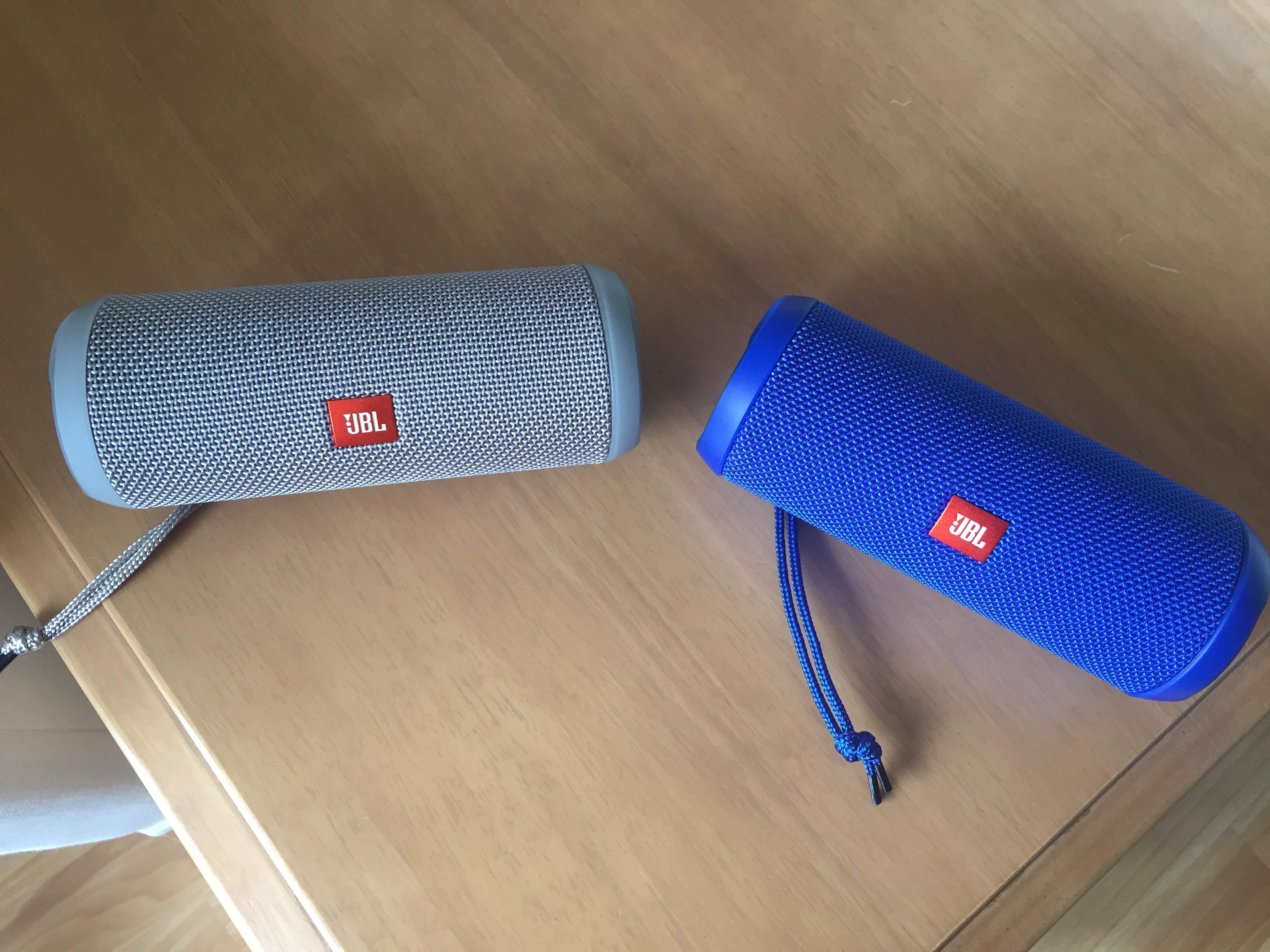
Indecision gets old quickly, especially when you’re seeking to buy a new gadget to play with. After pouring over more reviews and comparisons, it came down to the JBL Flip 3 and the UE Boom. The latter option costs nearly double but is water, dirt and shock proof. It clams a 15 hour battery life compared to the Flip 3’s 10 hour life. Again I went back to the look of the thing (how the buttons make what looks like a cross) and how much this speaker was worth to me. We both decided that for $100 cheaper, the JBL Flip 3 was our winner. We purchased it on Amazon, sound unheard, and hoped for the best.
Double Time
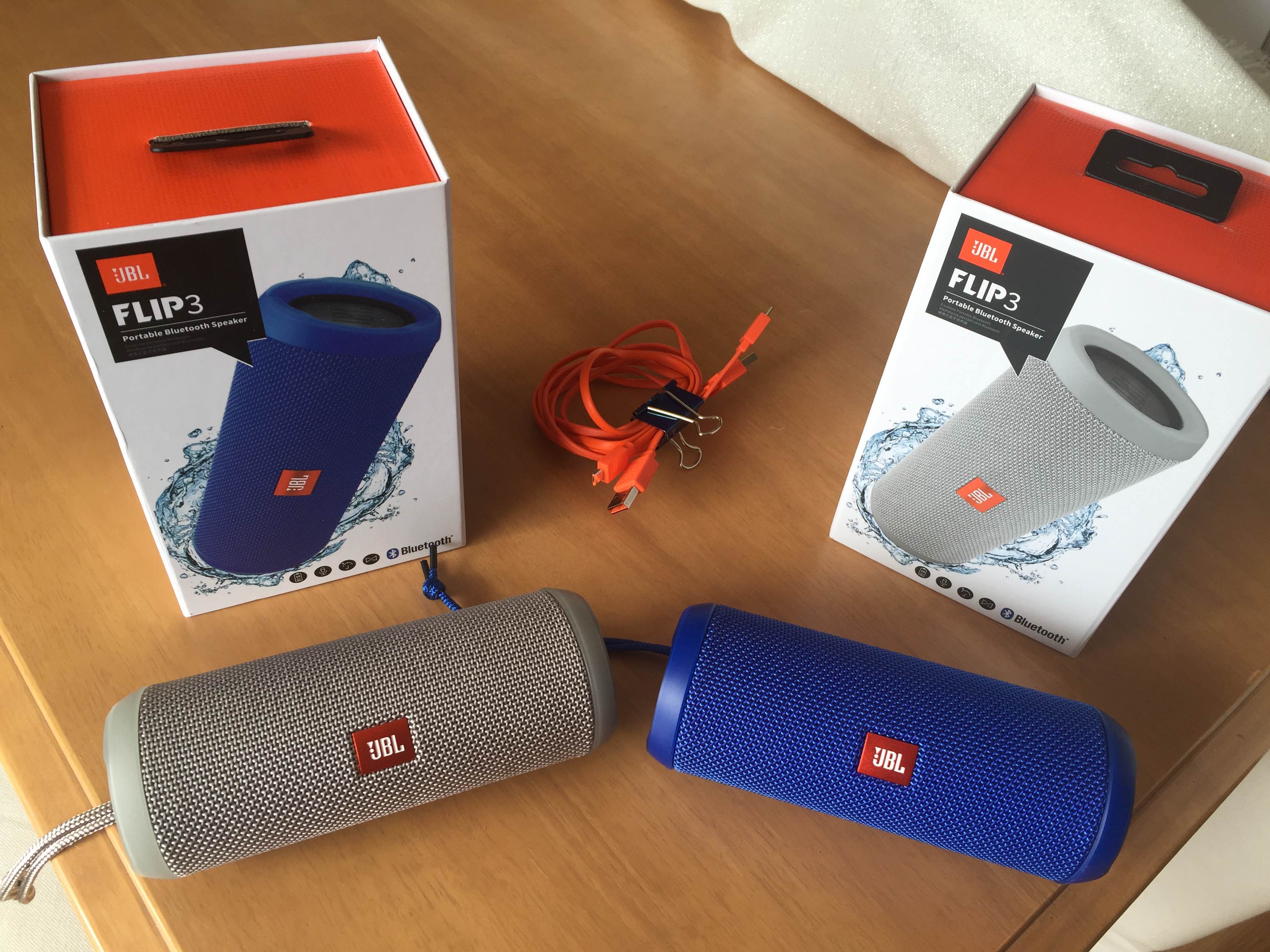
Long story short, it only took a matter of days for us to order a second speaker. The JBL Up 3 sounded great and offered the ability to connect two speakers to one source, providing multi-room or surround sound use. Since we were to be having a party soon that we knew would bring guests to both the main floor and basement, the decision was quick.
Set up and Use
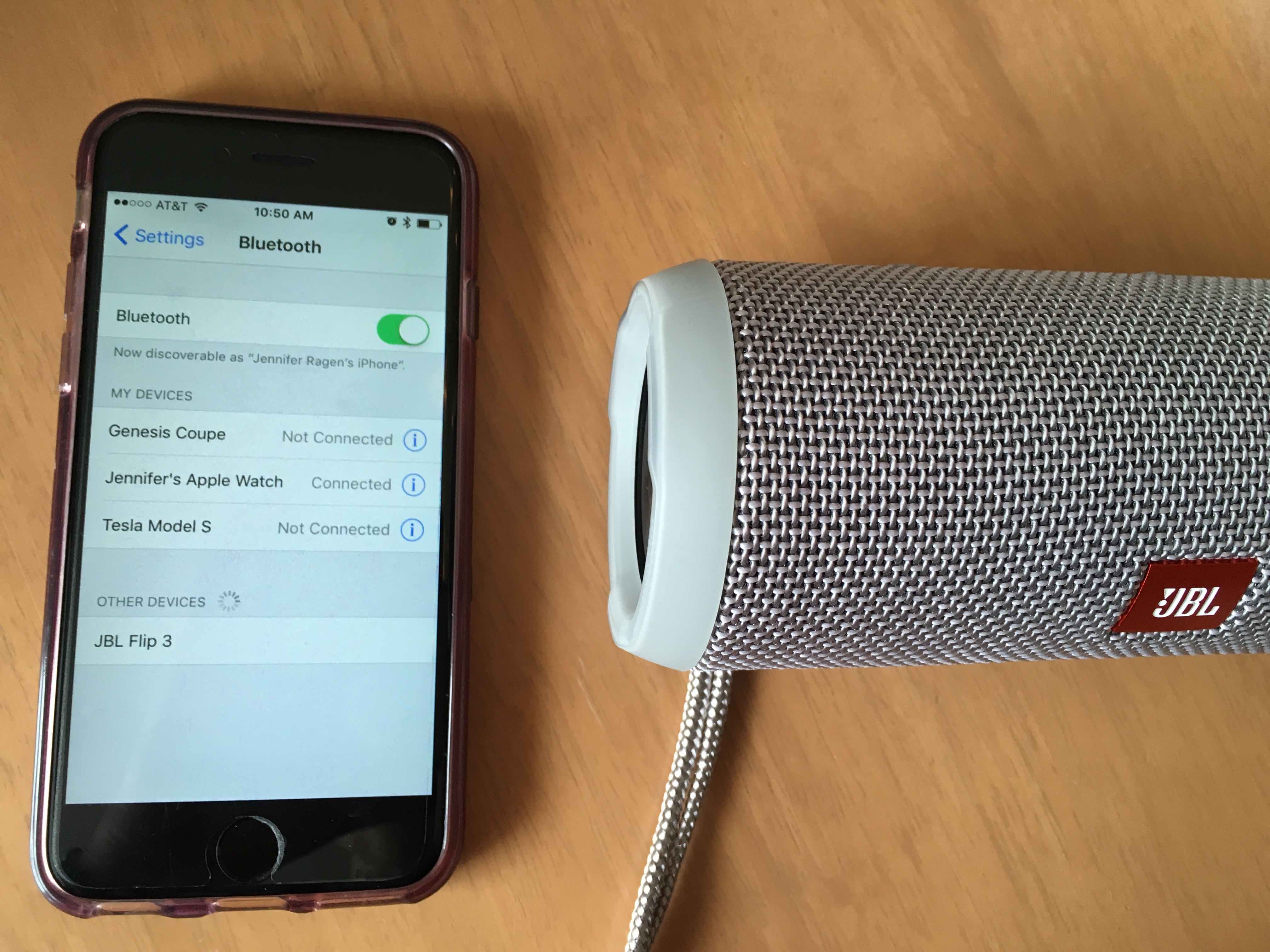
Like most other bluetooth devices on the market, pairing the speaker to an iPhone or iPad was easy and only took a few moments. I did not need to read any instructions. Simply turn on the speaker and navigate to your device’s Bluetooth screen. Press the bluetooth button on the speaker (noted by its symbol) to make it discoverable and watch it pop up on your screen. Press it and within 15 seconds, you’ll hear a pleasant chime on the speaker to let you know it worked. The speaker comes with a generously long charge cable and a series of 5 small lights show you your charge level, so you should be able to start use right out of the box or after a very short charge.
Features
This speaker has some of the common features we saw when comparison shopping. It can be used as microphone for calls, can be paired with another speaker and is splash proof. Using it for calls sounded appealing for the thought of my husband taking a conference call on the rare days he works from home but it wasn’t a required feature. A note of caution for phone pairing – the speaker will play your other sounds. I quickly learned that listening to music from my iPhone meant interruptions for the sound of my typing clicks or unlock sound. I also inadvertently hijacked the sound with a quick social media scroll that led me to a video. Being at least splash proof was important to us. We plan on using it outside near our pool and while we don’t run much a risk of the speaker being submerged, we envision using the controls with wet hands or walking near it with wet legs.
Sound
One part of this speaker that I like it its funky sounds it makes to let you know it’s turned on or off.
But that’s not what’s important. What you really need to know is how it sounds. Keep in mind our ears probably hear it better than the iPhone I used to take this video and the air in our home transmits better than whatever you are using to listen right now. That being said, I’m still pretty impressed at even the sound in this video.

The Starting Line. “Anyways.” 2016
I’ve found the sound to be clear and generously loud no matter what type of music is playing. I’m no pro and those out there who are may beg to differ but for a $100 portable bluetooth speaker for casual in-home use, the JBL Flip 3 is a winner.
Verdict
This is a recommended buy for a solid portable Bluetooth speaker with a moderate price. It is missing a few features compared to competitors but provides an excellent overall value.


Lifestyle
Tesla saves its passengers again – This time after a 300-foot cliff fall in Malibu
A Tesla Model 3 fell 300 feet off a Malibu cliff and both passengers survived.

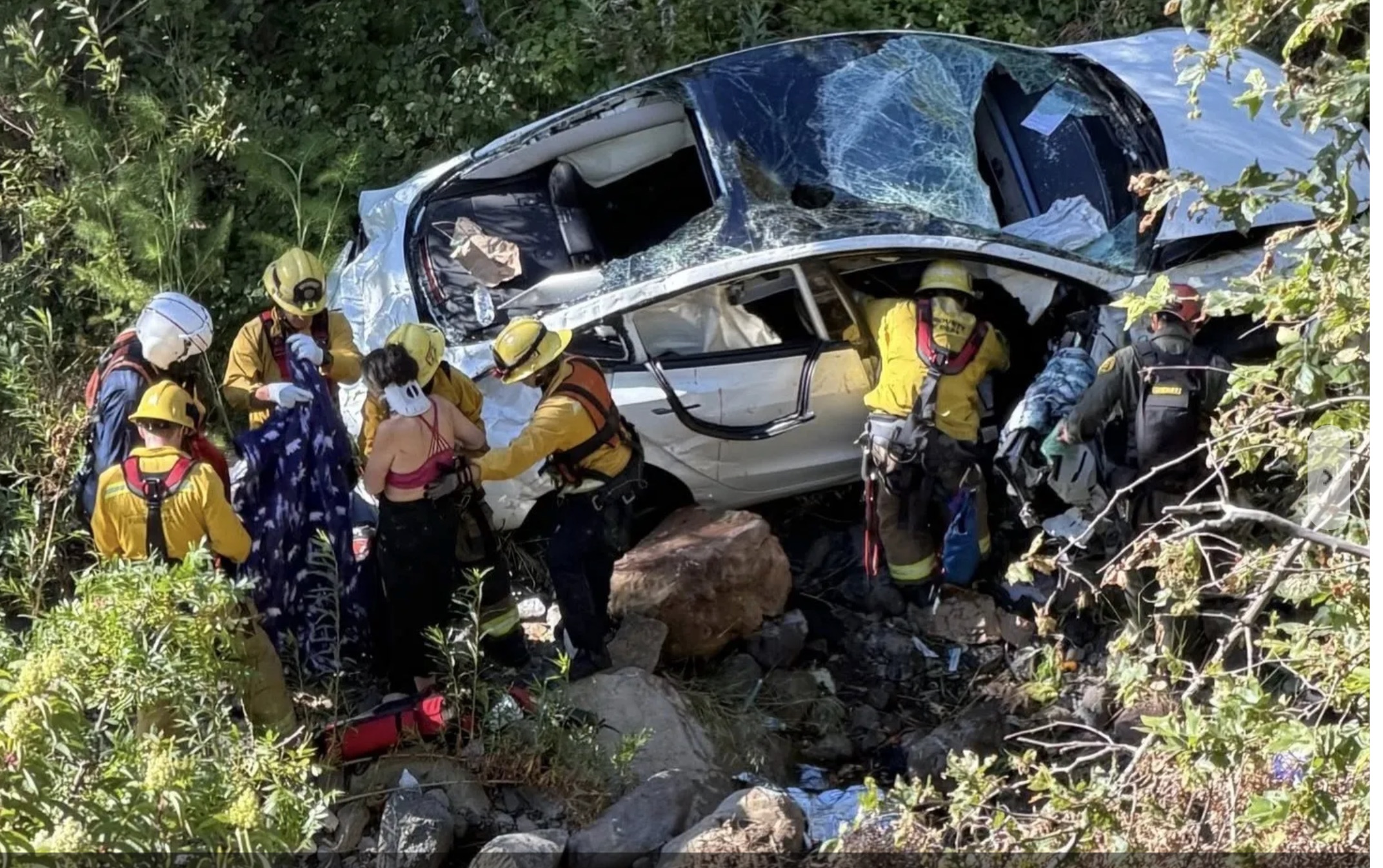
A Tesla Model 3 plunged roughly 300 feet off a cliff on Mulholland Highway in Malibu on Friday morning, May 29, 2026, and both occupants survived. The crash was reported at approximately 7:30 a.m. near the 2500 block of Mulholland Highway, triggering a multi-agency rescue operation involving Malibu Search and Rescue, the Los Angeles County Fire Department, the California Highway Patrol, and McCormick Ambulance.
When first responders arrived, the male driver was outside the vehicle shouting for help while the female passenger remained pinned inside the Tesla. Rescue crews rappelled down the cliffside on ropes to reach the wreckage. A flight medic was lowered by helicopter to begin treating both victims, and the driver was hoisted up to the roadway before crews used the Jaws of Life to free the trapped passenger. Both were airlifted to a local trauma center with moderate injuries despite a remarkable result for a fall that steep.
The outcome is not surprising, considering Model 3 earned an overall 5-star rating from NHTSA in every category and sub-category, and recorded the lowest probability of injury of any car ever evaluated by the U.S. New Car Assessment Program. The absence of a traditional engine in the front of the vehicle creates a longer crumple zone that absorbs impact energy before it reaches occupants, and the battery pack running along the floor gives the car an unusually low center of gravity that reinforces structural rigidity.
This is not the first time a Tesla has kept passengers alive after going off a cliff. A Tesla Model Y carrying a family of four survived a plunge off a cliff at Devil’s Slide near San Francisco in January 2023, with two adults and two children walking away from a 250-foot fall. That incident drew widespread attention to how the structural integrity of Tesla’s electric platform performs in extreme crash scenarios that most vehicles would not survive.
Tesla Model Y driver who drove off cliff with family attempts to avoid criminal conviction
Elon Musk
NASA’s first human outpost on the Moon starts now – SpaceX on deck
NASA named the rovers, landers, and vendors that will build America’s first Moon Base.
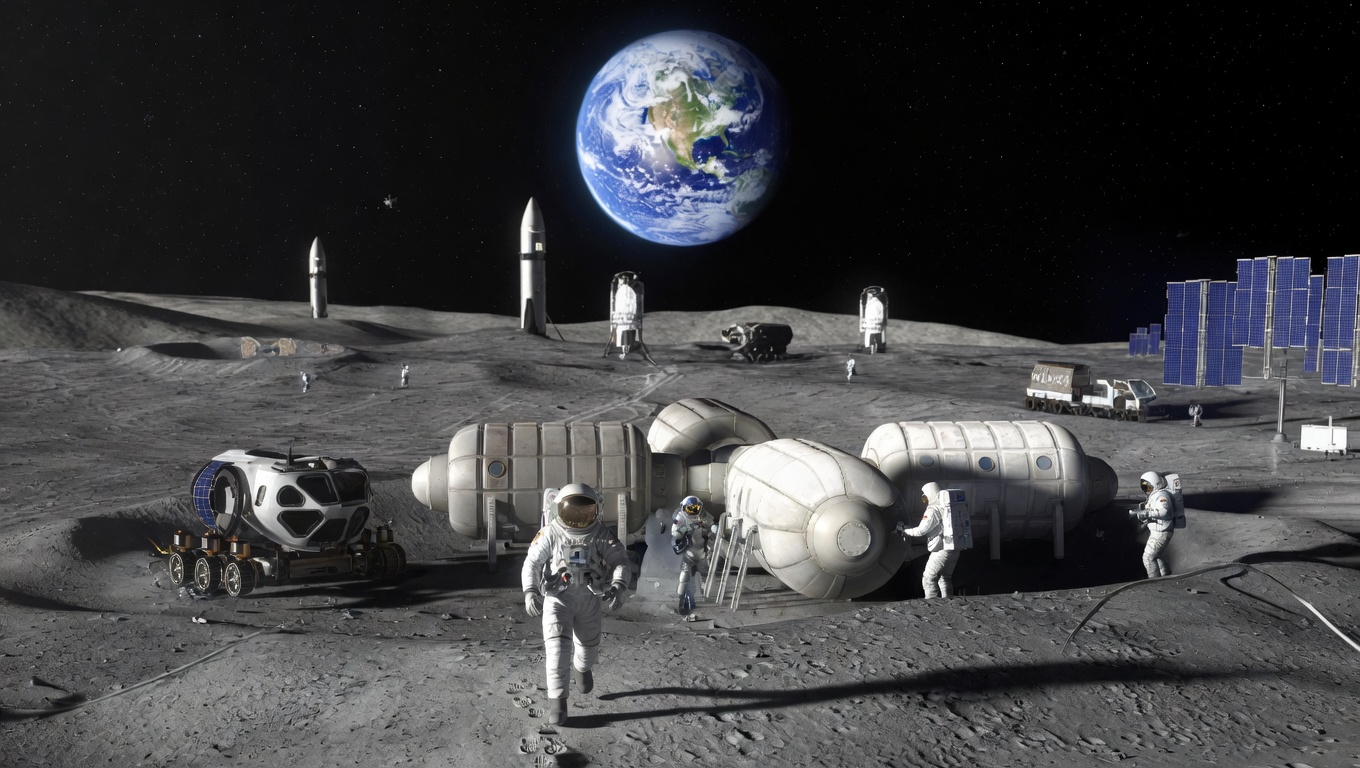
NASA has laid out its most detailed Moon Base plan to date, describing a permanent outpost near the Moon’s south pole that the agency intends to build over the coming decade as a direct stepping stone to Mars. “The Moon Base will be America’s and humanity’s first outpost on another celestial world,” NASA Administrator Jared Isaacman said, adding that every mission crewed and uncrewed “will be a learning opportunity as we return to the lunar surface, build the infrastructure to stay, and master the skills required to live and operate in one of the most demanding and dangerous environments imaginable.”
The plan is structured in three phases involving both uncrewed and crewed missions to deliver equipment, vehicles, and infrastructure to the surface, with the first three moon base missions targeted to launch before the end of 2026.
Moon Base I, targeting fall 2026, will use Blue Origin’s Blue Moon Mark 1 lander to deliver scientific instruments to the Shackleton Connecting Ridge, the same region where Artemis astronauts will land. Moon Base II will send Astrobotic’s Griffin lander carrying more than 1,100 pounds of cargo including Astrolab’s FLIP rover to begin developing mobility systems on the surface. Moon Base III will carry the Lunar Vertex science mission on Intuitive Machines’ Nova-C Trinity lander to study lunar swirls near the south pole, with ESA and Korean science payloads aboard.
On the rover side, NASA awarded Astrolab $219 million and Lunar Outpost $220 million to build the first phase of Lunar Terrain Vehicles, with both rovers targeted for deployment to the lunar surface by 2028. Astrolab’s crewed rover weighs roughly 2,000 pounds and can reach over 6 mph. Lunar Outpost’s Pegasus rover can operate autonomously or via remote control at over 9 mph. Blue Origin separately received $188 million with an option worth $280.4 million to deliver cargo landers for rover transport.
NASA also confirmed that MoonFall, a mission deploying four survey drones to scout Artemis landing sites, has selected Firefly Aerospace to build the transport spacecraft, with a 2028 launch target.
SpaceX sits at the center of that commercial layer. SpaceX holds the NASA Human Landing System contract for the Starship-derived lander that will put astronauts on the surface under Artemis IV, currently targeting 2028. Before that can happen, SpaceX must demonstrate in-orbit propellant transfer at scale, a process requiring multiple Starship tanker launches to fuel a single mission. Water ice at the lunar south pole is central to the base’s long-term viability, as it can be converted into drinking water, breathable oxygen, and rocket fuel, directly reducing dependence on Earth resupply. That resource loop becomes far more practical if Starship can land and be refueled on or near the Moon itself.
Elon Musk has publicly stated that Starship V3, which recently completed its first flight, should be capable enough for initial Mars missions. The Moon Base plan announced Tuesday is the infrastructure layer that connects everything between those two ambitions, and SpaceX is the only American company currently contracted to build the rocket that gets humans to either destination.
Elon Musk
Tesla ditches India after years of broken promises
Tesla has ditched its plans to build a factory in India after years of failed negotiations.
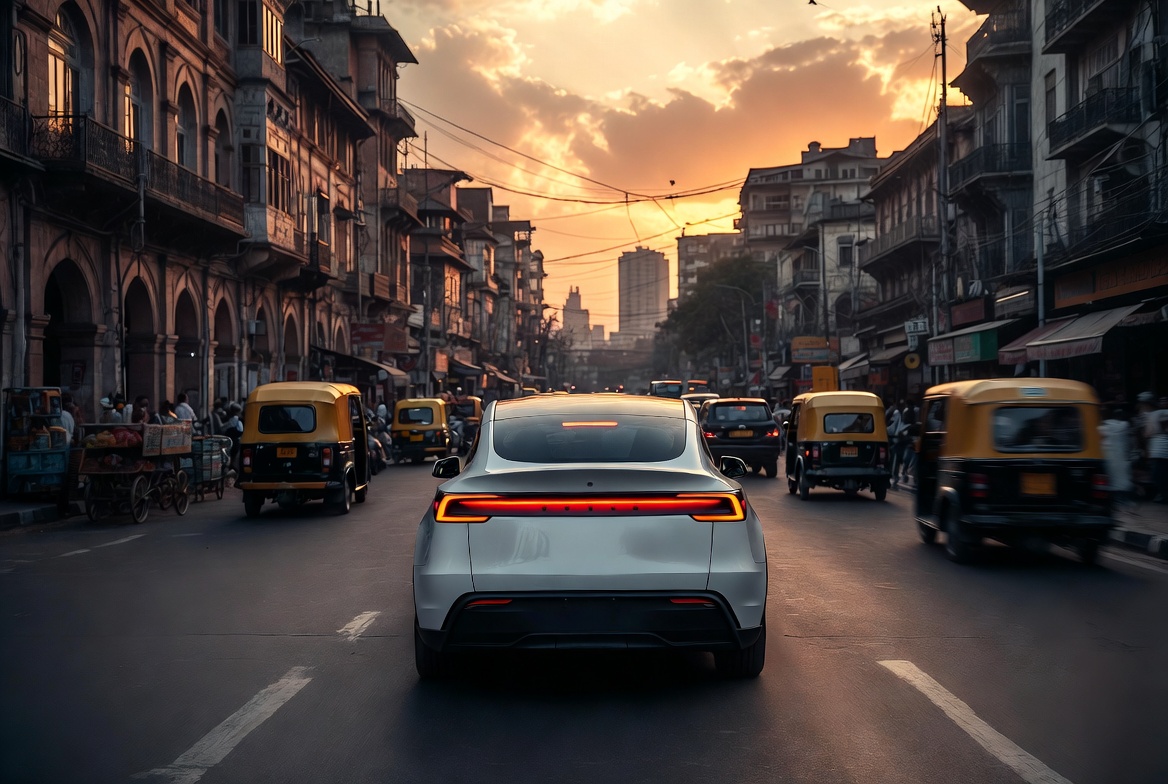
Tesla’s long-running effort to establish a manufacturing presence in India is officially over. India’s Minister of Heavy Industries H.D. Kumaraswamy confirmed on May 19, 2026 that Tesla has informed authorities it will not proceed with a manufacturing facility in the country.
Tesla first signaled serious interest in India around 2021, when it began hiring local staff and lobbying the Indian government for lower import tariffs. The ask was straightforward: reduce duties enough for Tesla to test the market with imported vehicles before committing capital to a local factory. India’s position was equally firm, with an ask of Tesla to commit to manufacturing first, then receive tariff relief. Neither side moved, and the talks quietly collapsed.
Tesla to open first India experience center in Mumbai on July 15
India had offered a policy that would reduce import duties from 110% down to 15% on EVs priced above $35,000, provided companies committed at least $500 million toward local manufacturing investment within three years. Tesla declined to participate. The tariff standoff was only part of the problem. Analysts pointed to significant gaps in India’s local supply chain, inadequate industrial infrastructure, and a mismatch between Tesla’s premium pricing and the purchasing power of India’s automotive market as additional factors that made the investment difficult to justify.
First signs of an unraveling relationship came in April 2024, when Musk abruptly cancelled a planned trip to India where he was set to meet Prime Minister Modi and announce Tesla’s market entry. By July 2024, Fortune reported that Tesla executives had stopped contacting Indian government officials entirely. The government at that point understood Tesla had capital constraints and no plans to invest.
The more fundamental issue is that Tesla’s existing factories are currently operating at approximately 60% capacity, making a commitment to building new manufacturing capacity in a new market difficult to defend to investors. Tesla will continue selling imported Model Y vehicles through its existing showrooms in Mumbai, Delhi, Gurugram, and Bengaluru, but local production is no longer part of the plan.

Tesla saves its passengers again – This time after a 300-foot cliff fall in Malibu

Tesla Full Self-Driving expansion in Europe continues with new addition


