
News
Rivian CEO outlines ‘master plan’ in new interview

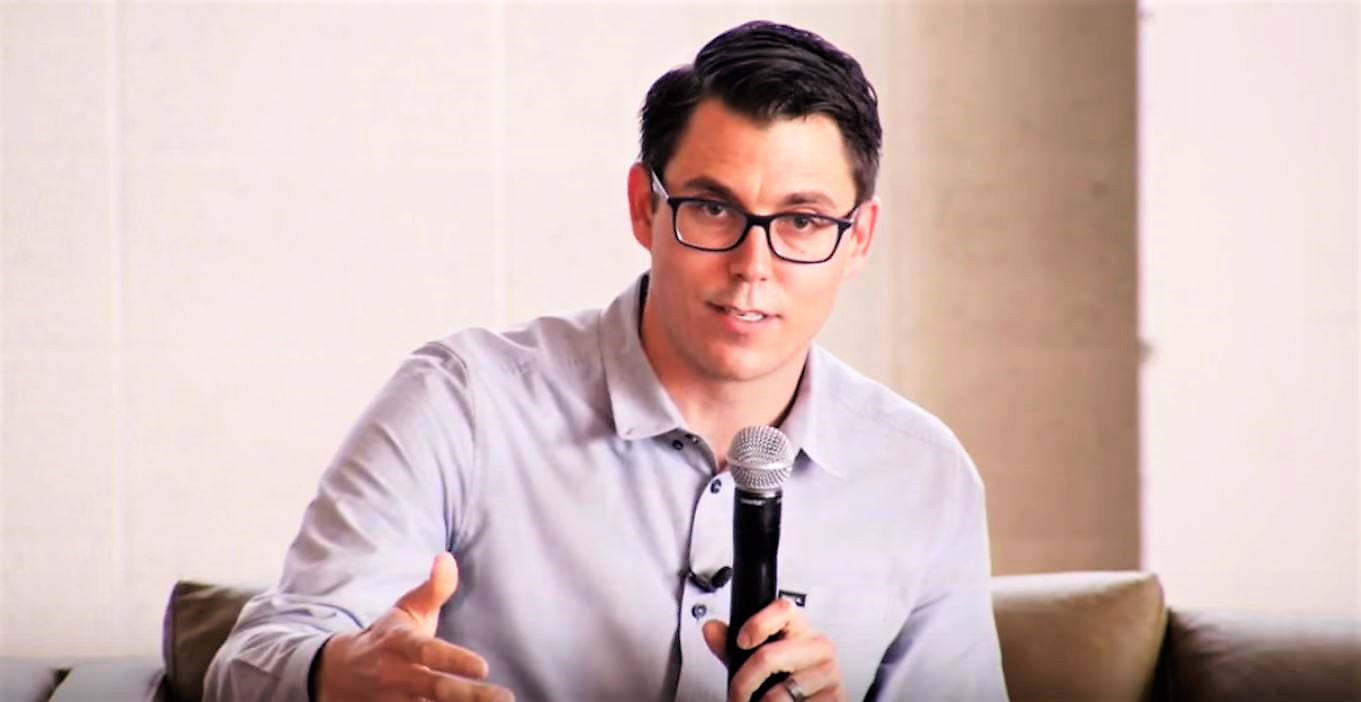
Rivian CEO RJ Scaringe has outlined his plans for the automaker in a new interview with YouTuber Marques Brownlee.
Despite countless production and financial hurdles over the past 12 months, Rivian has made it out swinging and is headed toward its most productive year yet, aiming to produce 50,000 vehicles. But as the company matures, investors seek a clearer view of the future than ever before. Luckily, Rivian CEO RJ Scaringe has provided just that in a new video interview with YouTuber Marques Brownlee.
MKBHD’s interview with RJ Scaringe was posted late last week, highlighting the CEO’s “master plan” for Rivian and its future vehicles and products.
Outside of the incredible insight that Scaringe shares in the interview, the most notable points he covers revolve around the future of the business. Paramount, Rivian’s future products, took center stage.
The first product Rivian fans can look forward to is the brand’s R2 line of vehicles, which the CEO distilled very well, pointing out that they will be a more affordable offering than the R1 vehicles currently for sale. However, they will still embody the same “persona” and maintain Rivian’s brand image, helping people stay adventurous.
More specifically, Scaringe points out the incredible struggle of making decisions that will help the vehicle be affordable for a larger number of customers, mostly involving the removal of fluff and focusing on core elements. The CEO explains that while future Rivian trucks may lack the door-mounted flashlight or luxurious interior touches found on the R1 vehicles, they will still maintain capability, specifically offroad.
Interestingly, besides nodding at the potential of future form factors, Scaringe did not comment on the possibility of a Rivian e-bike, which has been recently rumored to be in development.
One final point echoed throughout the interview focused on software and its place within vertical integration. Tesla has been the brand that best exemplifies the benefits of verticle integration, and nowhere has that been seen better than in its software, which has been implemented at the exclusion of traditional alternatives, Android Auto and Apple CarPlay. The Rivian CEO agreed with this approach wholeheartedly.
What do you think of the article? Do you have any comments, questions, or concerns? Shoot me an email at william@teslarati.com. You can also reach me on Twitter @WilliamWritin. If you have news tips, email us at tips@teslarati.com!


Elon Musk
Tesla’s Semi truck factory is open with a detail that changes everything
Tesla’s dedicated Nevada Semi factory has opened, targeting 50,000 trucks per year as fleet adoptions accelerate nationwide.

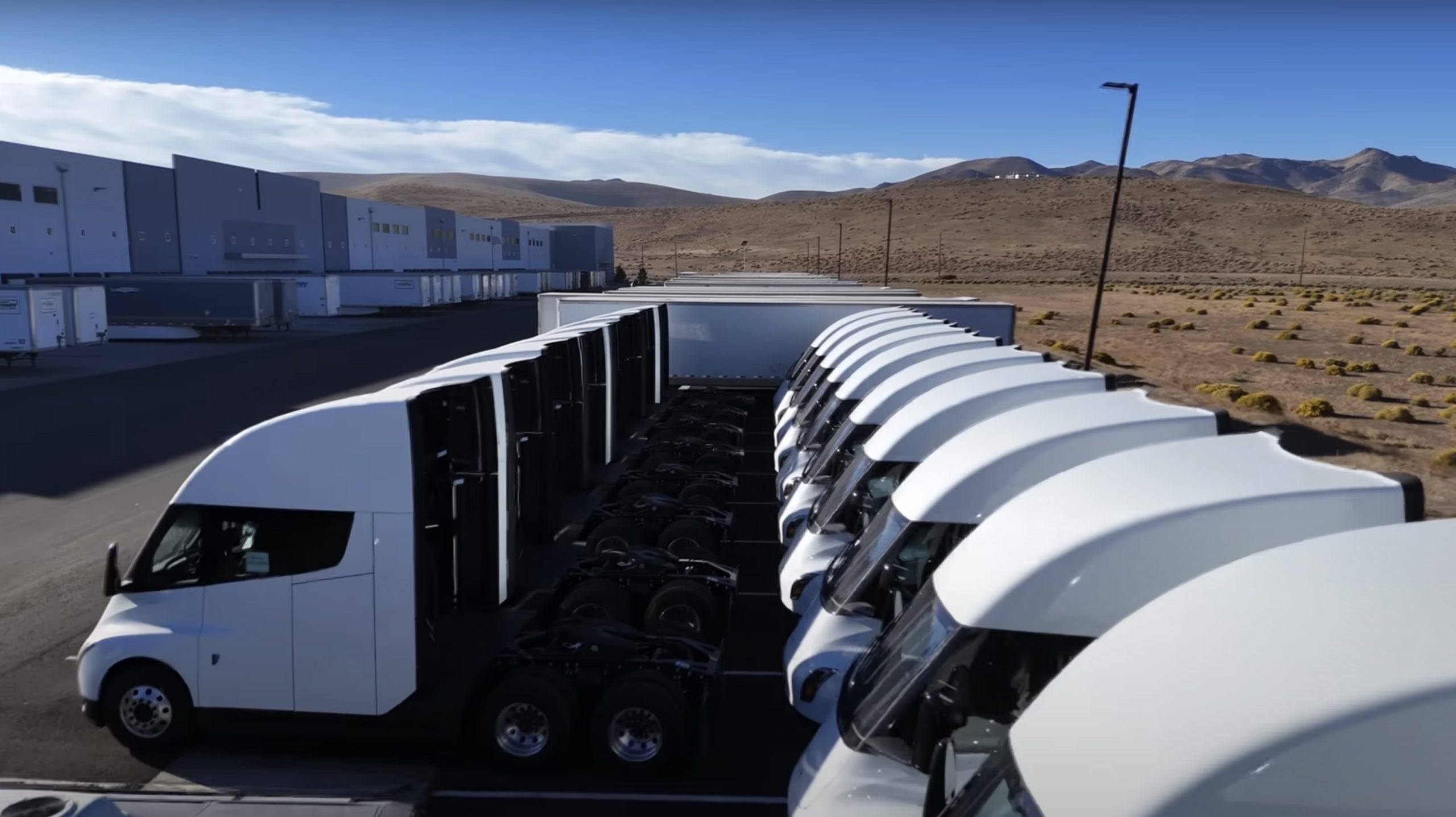
Nearly nine years after Elon Musk unveiled the Tesla Semi in November 2017, the company is now opening a dedicated factory just outside of Reno, Nevada, and ramping toward mass production of 50,000 trucks per year.
Volume production began in March 2026 at the new Tesla Semi factory, with the competitive advantage not being the factory itself. Rather, it’s where Tesla built it. By constructing the 1.7 million square foot facility directly adjacent to Gigafactory Nevada in Sparks, Tesla closed the one supply chain loop that had delayed the Semi program for years. The 4680 battery cells that power the Semi are manufactured in the same complex, which significantly streamlines supply logistics. That single decision eliminates the bottleneck that forced Tesla to prioritize battery supply for passenger cars over the Semi throughout 2020, 2021, and 2022, which is precisely why the first deliveries slipped three years past the original target. Every other electric truck manufacturer sources its battery cells from a separate supplier, ships them to a separate factory, and absorbs the cost and delay that comes with that. Tesla built its Semi factory around its battery factory, and that vertical integration is what makes 50,000 trucks per year a realistic number rather than an aspirational one.
At the 2025 Annual Shareholder Meeting, Musk was direct about where things stood, stating “Starting next year, we will manufacture the Tesla Semi. We already have a lot of prototype Semis in operation – PepsiCo and other companies have been using them for some time. But in 2026, we’ll begin volume production at our Northern Nevada factory.” Full ramp to volume output is targeted before June 30, 2026.
🚨 Awesome new video showing the new Tesla Semi factory in Sparks, Nevada
The future of sustainable logistics is being built here: pic.twitter.com/dbiGV8FYn3
— TESLARATI (@Teslarati) April 10, 2026
The first limited deliveries happened in December 2022 to PepsiCo, which eventually doubled its fleet to 50 trucks out of its California distribution facility. Since then the Semi has been showing up in more corporate fleets. As Teslarati noted in March, a Ralph’s Supermarkets branded Semi was spotted on a Los Angeles highway, confirming Kroger’s partnership with Tesla to deploy up to 500 electric Semis. Walmart, Costco, Sysco, US Foods, DHL, Hight Logistics and WattEV are among the companies actively running or receiving units. DHL logged real-world efficiency of 1.72 kWh per mile under a full 75,000 pound load over 388 miles, matching Tesla’s targets closely.
The 2026 production model arrives with meaningful upgrades over the original, with a 1,000 pound weight reduction, updated aerodynamics, and support for 1.2 MW Megacharger speeds that can restore 60% of range in around 30 minutes during a mandatory driver rest break. Tesla opened its first public Megacharger in Ontario, California in March, positioned near the I-10 and I-15 interchange serving the Ports of Los Angeles and Long Beach. The company plans 37 Megacharger sites by end of 2026 and 66 total across 15 states by early 2027, with construction beginning at the nation’s largest truck stop operator in the first half of this year.
Tesla reveals various improvements to the Semi in new piece with Jay Leno
Musk has described the Semi’s economics as a straightforward case. “The Semi is a TCO no-brainer,” he said, noting the total cost of ownership is “much, much cheaper than any other transportation you could have.” At under $300,000, the truck costs roughly double a comparable diesel, but California’s $200,000 per vehicle subsidy has driven over 1,000 state orders alone. As Teslarati has tracked, the prototype fleet accumulated over 13.5 million miles with 95% fleet uptime before production ever scaled. The factory opening now turns that proof of concept into a production program.
News
Tesla Full Self-Driving gets first-ever European approval
Tesla owners in the Netherlands with a Full Self-Driving subscription will receive a software update “shortly,” the company said, activating the operation of the company’s semi-autonomous driving tech for the first time in Europe.

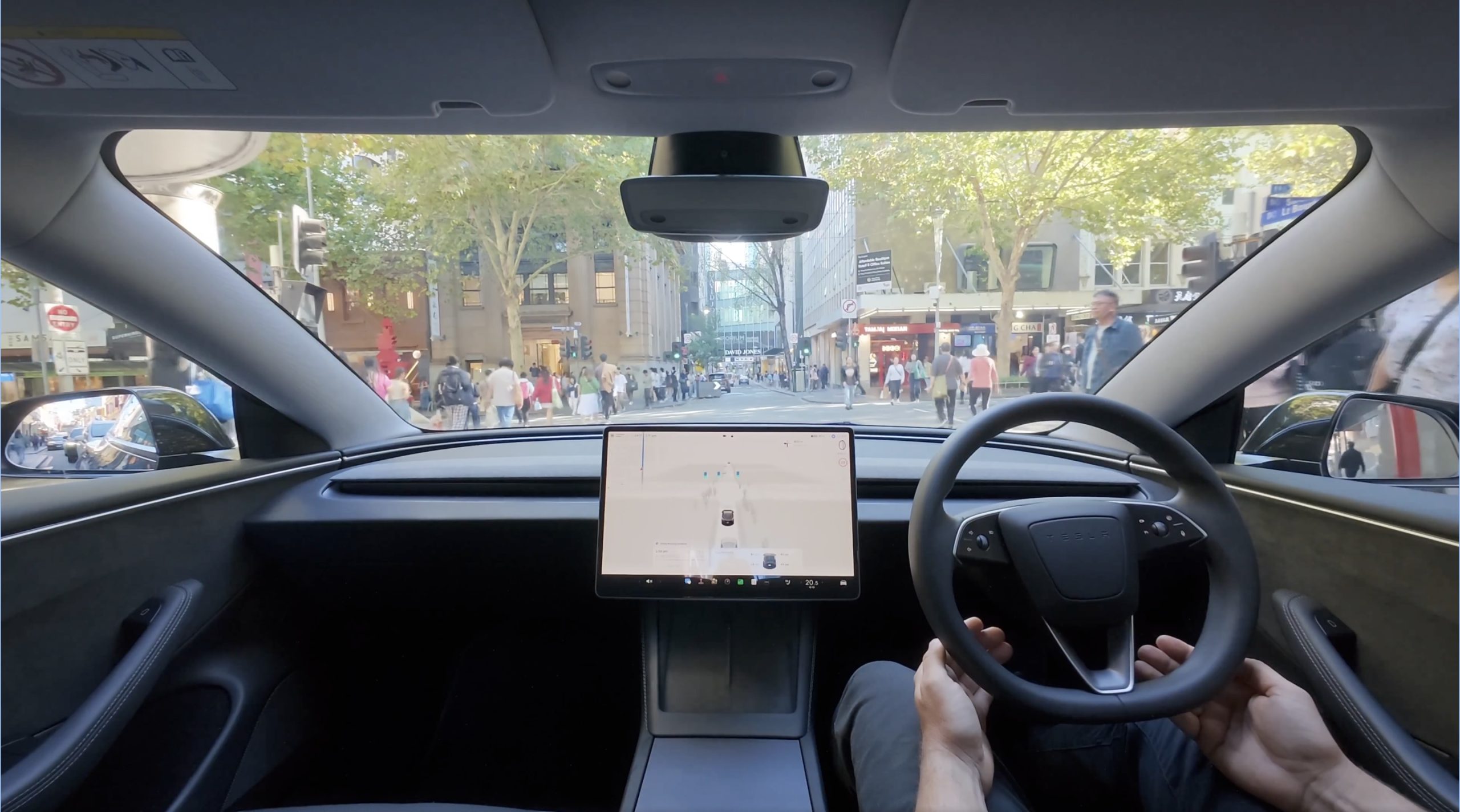
Tesla Full Self-Driving (Supervised) got its first-ever European approval, as the Netherlands gave the suite the green light to begin operation.
Tesla owners in the Netherlands with a Full Self-Driving subscription will receive a software update “shortly,” the company said, activating the operation of the company’s semi-autonomous driving tech for the first time in Europe.
The Dutch vehicle authority RDW granted the type approval after more than 18 months of rigorous testing on both closed tracks and public roads. FSD Supervised complies with UN R-171 standards and benefits from Article 39 exemptions under EU Regulation 2018/858. Importantly, it is not a fully autonomous vehicle.
The RDW stressed that the driver remains fully responsible and must maintain attention at all times. “Safety is paramount for the RDW,” the authority stated. “Proper use of this driver assistance system contributes positively to road safety.” Sensors monitor driver alertness, issuing warnings if eyes leave the road or hands are unavailable to take control immediately.
CEO Elon Musk also commented on the approval in a post on X, saying:
“First (supervised) FSD approval in Europe! Congratulations to the Tesla team and thank you to the regulatory authorities in the Netherlands for all of the hard work required to make this happen.”
First (supervised) FSD approval in Europe!
Congratulations to the Tesla team and thank you to the regulatory authorities in the Netherlands for all the hard work required to make this happen. https://t.co/8hidEOPSxm
— Elon Musk (@elonmusk) April 10, 2026
Trained on billions of kilometers of real-world driving data, FSD Supervised allows the vehicle to handle residential streets, dense city traffic, and highways under constant supervision. Tesla’s post declared:
“It can drive you almost anywhere under your supervision – from residential roads to city streets & highways. No other vehicle can do this.”
The company added that it is “excited to bring FSD Supervised to more European countries soon.”
This national approval paves the way for broader EU adoption. Other member states can recognize the Dutch certification individually, with a potential bloc-wide rollout via European Commission committee vote anticipated by this Summer. The decision underscores Europe’s stricter safety and documentation requirements compared to U.S. self-certification.
Tesla Europe shares FSD test video weeks ahead of launch target
The Netherlands’ approval represents a pivotal step for Tesla in Europe, where complex regulations and mixed traffic have delayed rollout. Musk added that the RDW was “rigorous” in its assessment of FSD.
By proving the system’s safety in one of the continent’s most bicycle- and tram-heavy nations, Tesla positions itself to transform mobility across the EU—delivering greater convenience while keeping drivers firmly in control.
As the first domino falls, anticipation builds for FSD Supervised to reach additional countries soon.
News
Tesla is using a redesigned Cybertruck battery cell to mitigate Semi challenges
It is perhaps the most recent example of Tesla using unique engineering prowess and cross-pollinating vehicle elements to solve common problems, something it does better than most companies out there.
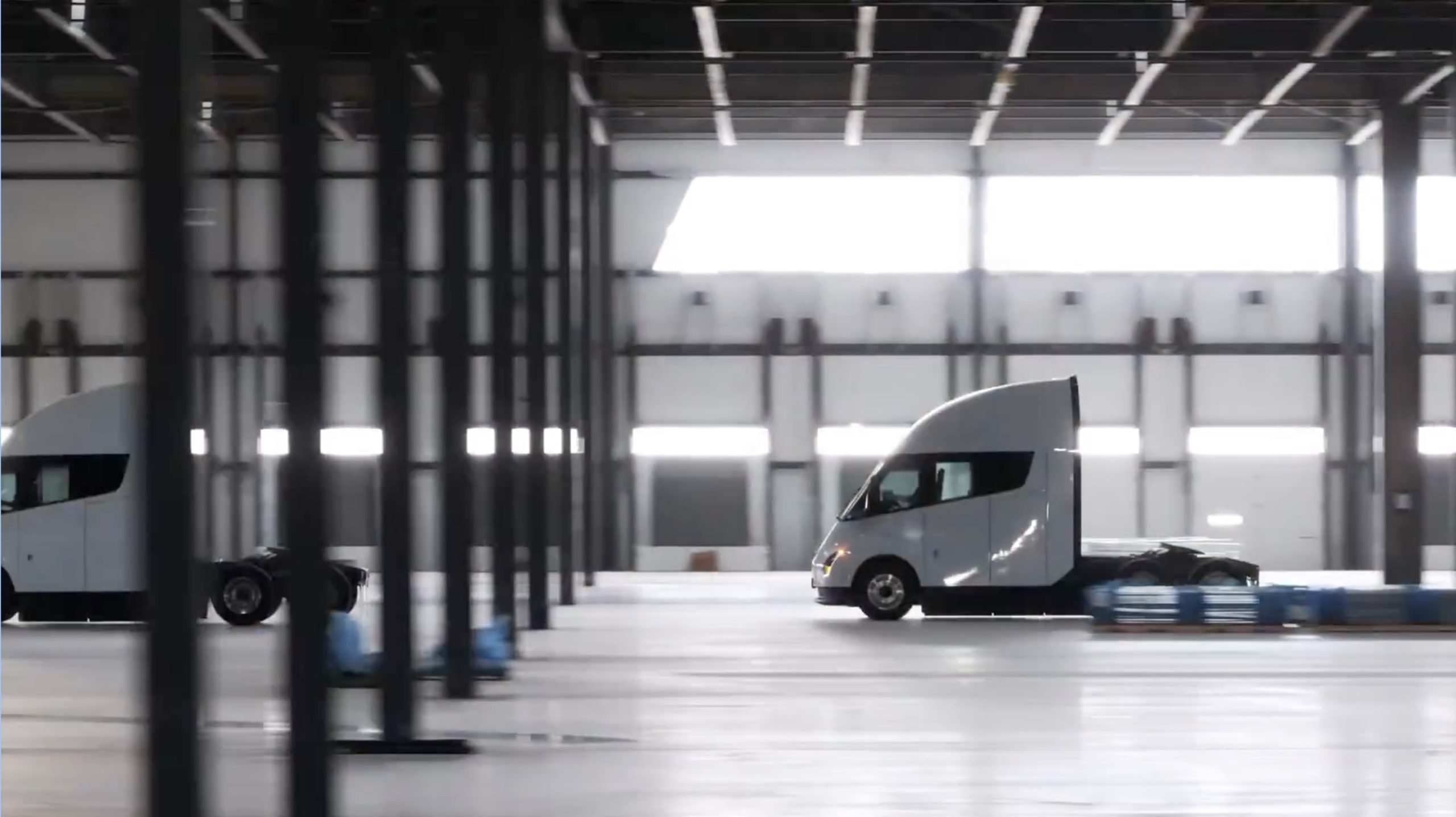
Tesla revealed that it is utilizing redesigned Cybertruck battery cells in its Long Range Semi to mitigate some pertinent challenges that come with long-haul logistics.
It is perhaps the most recent example of Tesla using unique engineering prowess and cross-pollinating vehicle elements to solve common problems, something it does better than most companies out there.
Tesla’s long-awaited Semi truck is entering production at its Nevada Gigafactory, and fresh factory footage reveals a clever evolution in its battery technology.
The Long Range variant, designed for up to 500 miles of real-world range, relies on a structural battery pack that uses the same 4680-form-factor cells found in the Cybertruck.
However, Tesla engineers have completely redesigned the pack’s architecture—shifting from the flat, pancake-style modules typical in passenger vehicles to a compact, vertical cubic layout. This change isn’t just about cramming more energy into the chassis; it’s a targeted solution to one of electric trucking’s biggest headaches: range loss in cold climates.
Dan Priestley, Head of the Tesla Semi program, said:
“We’re using essentially the same cell out of Cybertruck, but our cars packs are more like a pancake. Whereas these are more like a cube. You get a lot of energy stored in a small space. You can only do this if you design the vehicle to be electric from the ground up.”
Here, in all its glory, is the exclusive first look at the massive @Tesla Semi factory.
Our @corememory crew went to Nevada to see the line come to life, as it gets ready to pump out thousands of all-electric trucks. We saw the new cab and went on a drive too. Wunderbar! pic.twitter.com/a0S5zVEr87
— Ashlee Vance (@ashleevance) April 10, 2026
In conventional EVs, battery packs are laid out horizontally in wide, flat arrays to fit under the floor. While this works for cars and even the Cybertruck’s structural pack, it exposes a large surface area to the elements.
Heat escapes quickly, especially overnight when the truck is parked. Cold temperatures slow chemical reactions inside lithium-ion cells, reducing available energy and forcing the vehicle to expend extra power warming the battery and cabin.
Real-world tests on vehicles like the Cybertruck show winter range losses of 20-40 percent, depending on conditions. For long-haul truck drivers operating in Canada, Scandinavia, or the northern U.S., this “silent killer” means unplanned stops, reduced payloads, and higher operating costs.
From personal experience, cold weather still impacts EV batteries even with various inventions and strategies that companies have come up with. In the cold Pennsylvania winter, charging was much more frequent for me due to range loss due to temperatures.
Tesla’s cubic battery pack flips the script. By arranging the 4680 cells in tall, dense vertical stacks, the pack minimizes external surface area relative to its volume—essentially turning the battery into its own thermal blanket.
Factory video from the Semi assembly line shows these large, yellow-green structural modules mounted directly onto the chassis, forming a near-cube shape.
The reduced exposure helps the pack retain heat generated during operation, keeping cells closer to their optimal temperature even after hours in sub-zero conditions.
The design doesn’t stop there. Tesla pairs the cubic pack with an advanced heat pump system that actively recycles thermal energy from the motors, brakes, and even ambient air.
Tesla reveals various improvements to the Semi in new piece with Jay Leno
Unlike passive systems in earlier EVs, this architecture transfers waste heat back into the battery, maintaining readiness for morning departures without draining the pack.
Executives have noted that the combination, cubic geometry plus intelligent thermal management, dramatically cuts overnight cooldown and range degradation, making the Semi viable for 24/7 fleet operations in harsh winters.
Beyond cold-weather performance, the redesigned pack integrates structurally with the truck’s frame, enhancing rigidity while simplifying assembly. Production footage shows workers installing the massive modules early in the line, signaling that the Semi’s battery is now a core chassis component rather than an add-on.
Using proven 4680 cells keeps costs down and leverages Tesla’s scaled manufacturing know-how from Cybertruck and Model Y lines.
Tesla’s focus on ramping up Semi output will lean on small innovative steps like this one. Truckers are not immune to traveling in cold weather conditions, and changes like this one will help make them more effective while also increasing output by logistics operators who choose to go all-electric with the Tesla Semi.

Tesla’s Semi truck factory is open with a detail that changes everything

Tesla Full Self-Driving gets first-ever European approval


