News
Here’s why SpaceX’s latest Starship rocket exploded after touchdown

In what has become a bit of a tradition, CEO Elon Musk has taken to Twitter again to explain the outcome of SpaceX’s latest Starship launch and landing attempt in more detail.
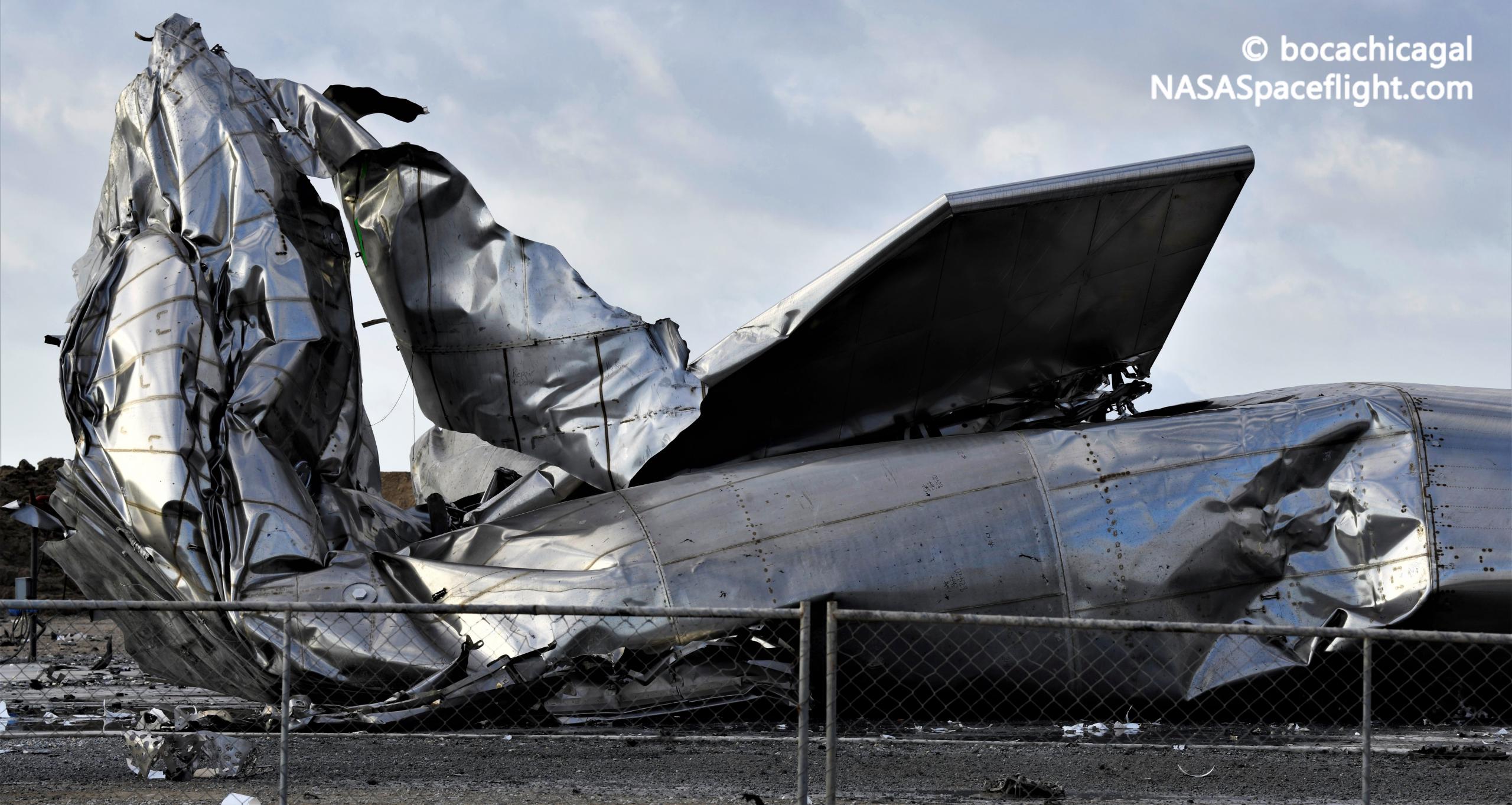
This time around, Musk’s debriefing comes after Starship serial number 10 (SN10) briefly became the first prototype of its kind to land in one piece – an extremely encouraging milestone for SpaceX. Less than 15 minutes later, though, an uncontrolled fire somehow breached the rocket’s stainless steel propellant tanks, resulting in a violent depressurization and explosion that tore Starship SN10 to pieces.
SN10’s momentarily successful landing came less than 30 days after Starship SN9’s own launch and landing attempt, which debuted a quick-fix design change meant to sidestep a different issue that caused Starship SN8 to fail shortly before touchdown last December. As it turns out, that design change – which SN9 never really had the chance to test – may have been Starship SN10’s downfall.
Starships must perform highly unusual maneuvers during their skydiver-style approach to atmospheric descent and the aggressive flip required to transition from that belly-down attitude into a propulsive vertical landing configuration. To enable those acrobatics, Starships need secondary ‘header’ tanks that permit the high-pressure storage of landing propellant.
Instead of having to maintain Starship’s building-sized main tanks at high pressures, header tanks make it far easier to safely store and feed propellant to Raptor engines. Most importantly, they help avoid prevent fuel flow interruptions or bubbles that can easily damage or destroy high-performance liquid rocket engines like Starship’s Raptors.
After Starship SN8’s last-second landing failure on December 8th, SpaceX concluded that low pressure in the liquid methane header tank was largely to blame. Normally pressurized with methane gas in a cutting-edge process called autogenous pressurization, SpaceX ultimately seemed to think that that process was the root cause and responded by adding an alternative helium pressurization workaround at the last second. Long-term, helium is not a viable solution as it’s virtually impossible to resupply in-situ (on the fly), meaning that any Starships reliant upon helium would find themselves stranded on the Moon or Mars.
Starship SN9 ultimately failed a few seconds earlier than Starship SN8 when one of its Raptor engines failed to ignite, precluding a true flight test of the helium pressurization fix. As it turns out, Musk believes that that very fix may have doomed Starship SN10.
As Starship SN10 forged ahead past the points of failure that killed SN8 and SN9, the SpaceX CEO thinks that one or more of the vehicle’s three Raptor engines began to ingest some of that helium pressurant as they emptied their methane header tank. As a result, engine thrust would have dropped below expected values, preventing Starship SN10 from slowing down for a truly soft landing. Instead, the Starship hit the ground traveling a solid 25 mph (~10 m/s), obliterating its tiny landing legs and damaging its skirt section.
It’s unclear if that hard landing was the sole cause of SN10’s subsequent explosion, as both official and unofficial webcasts of the launch appear to show a major fire starting well before touchdown and continuing to burn up to the point of failure. Regardless, Musk says that “multiple fixes” are in work for Starship SN11, which is currently speeding towards a launch attempt as early as next week. It remains to be seen if those planned “fixes” will delay SN11’s launch plans.



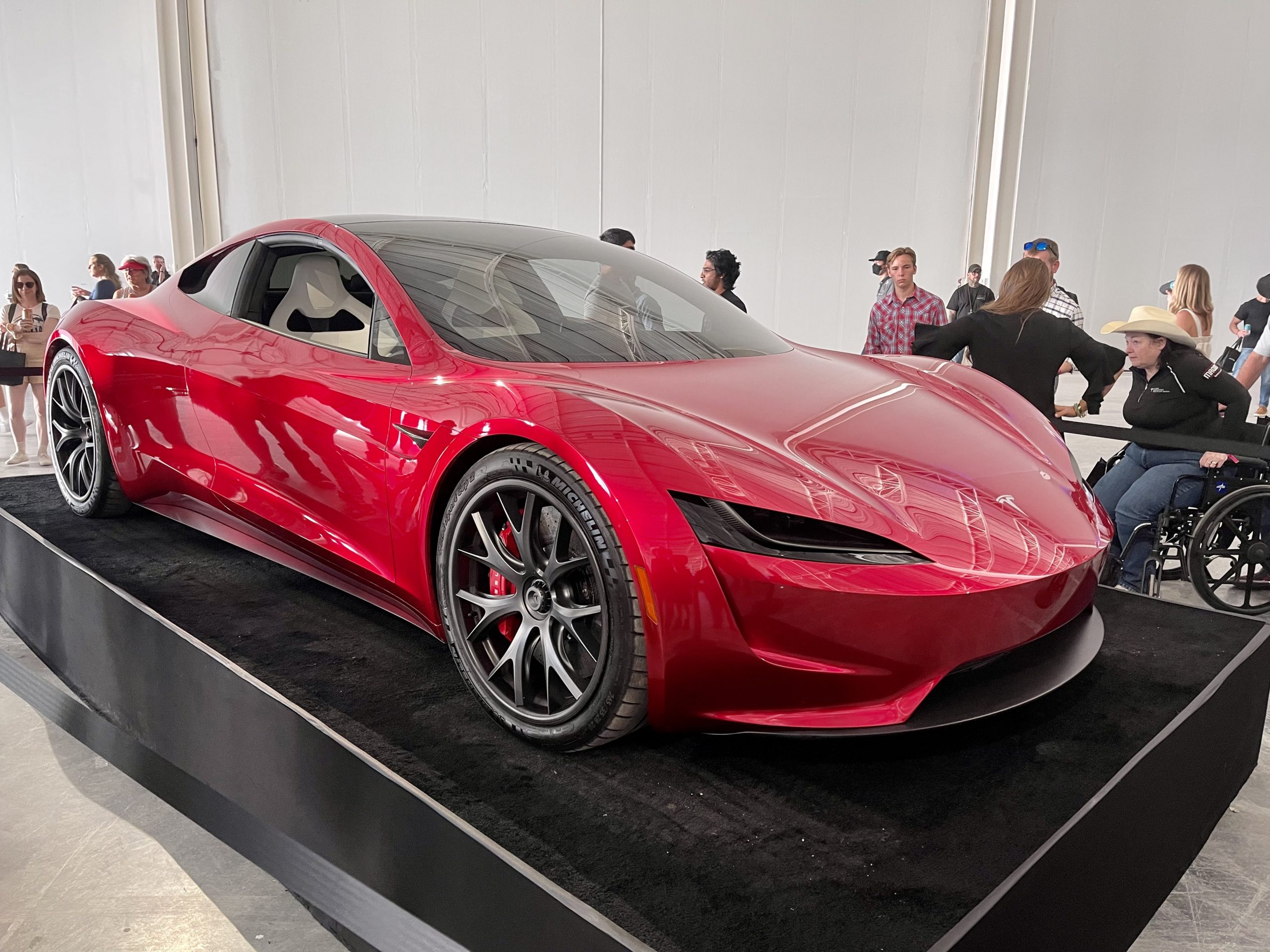
Tesla has reportedly pushed the unveiling of the Roadster once again, but there are also evidently new details about the event that the company plans to show off.
The Information reported this morning that Tesla will now unveil, for the second time, the next-generation Roadster in August, a further delay from the multiple timeline that the company had previously stated.
The report has not been confirmed or denied by Tesla at any capacity.
It also states the unveiling event will take place in Texas, the same place that Tesla executives revealed in May would be the place of manufacture for the company’s highly-anticipated supercar, which boasts a top speed of over 250 MPH and 650 miles of range, according to its website.
Tesla is also expected to showcase the SpaceX package, which will be used for faster acceleration and potentially hovering capabilities, at the unveiling event, the report states. Musk has always planned for this to happen, but now it seems it is more realistic than ever
The report also states the Roadster unveiling is planned for August pic.twitter.com/By26XZIJzU
— TESLARATI (@Teslarati) June 5, 2026
The Roadster has had its unveiling date and manufacturing date pushed back on many occasions. It was set to start production in 2020, but the COVID-19 pandemic crippled supply chain operations, forcing Tesla to push its timeline back considerably.
However, COVID has been over for some time, and Tesla has still not managed to successfully schedule and execute an unveiling event, which is something fans and enthusiasts, as well as those who have put down a $50,000 deposit, have been waiting for.
The vehicle was close to completion last year, but Musk truly wanted Lars Moravy and Franz von Holzhausen to push the limits of the Roadster. In July of last year, Moravy said:
“Roadster is definitely in development. We did talk about it last Sunday night. We are gearing up for a super cool demo. It’s going to be mind-blowing; We showed Elon some cool demos last week of the tech we’ve been working on, and he got a little excited.”
It is important to note two things: Tesla has not confirmed these details, and the company has regularly pushed these dates back. Until Tesla sends out formal invitations with a concrete date, taking any unveiling event reports with a grain of salt is a good idea.
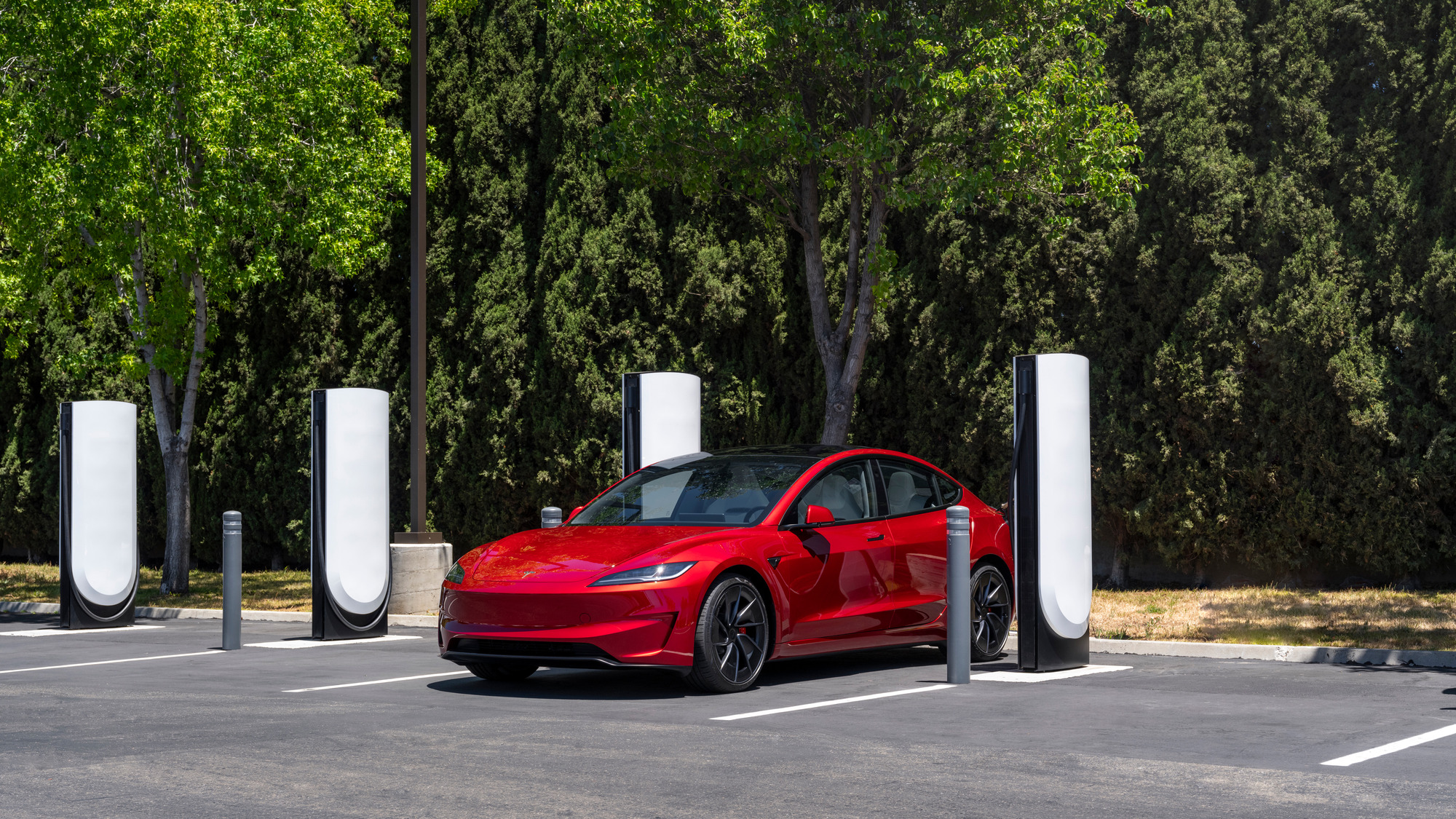
Tesla is offering a tasty Supercharging incentive on certain Model 3 trims, but the company has officially put a concrete end date on it, so those interested should act fast.
Tesla is offering Free Supercharging for One Year on the Model 3 Premium and Performance trims, the top two offerings of the all-electric sedan. There are three trims of the Model 3 that will have the Free Supercharging offer attached:
- Premium Rear-Wheel-Drive – $42,490
- Premium All-Wheel-Drive – $47,490
- Performance – $54,990
Tesla has now announced that this offer will expire on June 15, giving potential buyers about ten days to take advantage of the incentive.
This could be an additional incentive for car buyers to transition to electric vehicles. Many states are showing gas prices well over $4 per gallon, with the national average currently sitting at $4.22, according to AAA.
A free year of Supercharging miles would allow people to charge and travel for free, other than routine maintenance, which is already incredibly cheap compared to a gas car.
🚨 Tesla is now showing that it’s Free Supercharging offer for Model 3 Premium and Performance trims ends June 15 pic.twitter.com/VCLeddNSj8
— TESLARATI (@Teslarati) June 5, 2026
At Tesla Superchargers, peak rates, meaning prices between 8 a.m. and 10 p.m., average between $0.45 and $0.60. One year of driving at an average of 12,000 miles would cost between $1,000 and $1,500 at $0.50 per kWh. It’s a pretty good deal.
Supercharging prices have also increased recently:
Many of the Superchargers in my area just had their peak rates increased from $0.44 per kWh to $0.49, $0.52, and $0.54 per kWh
If you’re looking to save on your commute/travel for the next year, this Model 3 Free Supercharging incentive might not be a bad idea https://t.co/YDwwl4xxHk pic.twitter.com/DleURW7eqa
— TESLARATI (@Teslarati) June 5, 2026
Tesla has used Free Supercharging to move units in the past, and it’s a great strategy for those who plan to use the car for longer commutes, cross-country drives, or do not have reliable access to home charging.
It should be noted that Tesla recommends that Supercharging be used at a minimum to preserve the life of the battery, as fast-charging is more stressful on the cells.
However, some people might not have an option, so the Free Supercharging incentive could truly be a great reason for many people to charge their cars.
The Supercharging incentive is short-term, and it is pretty rare that Tesla utilizes it, so once this offer is gone, we probably will not see it on the Model 3 for some time.
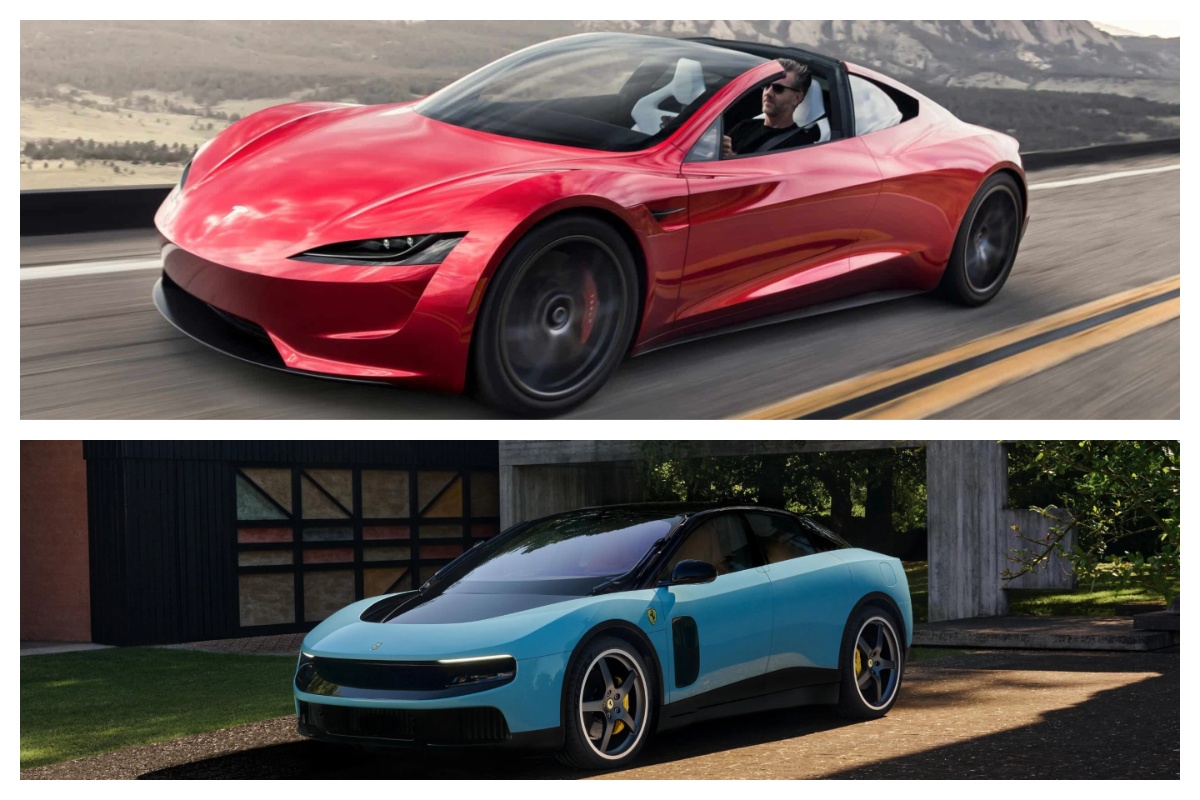
Ferrari CEO Benedetto Vigna revealed that the Italian automaker’s future will not involve self-driving, a point that echoes that of Tesla CEO Elon Musk’s — sort of.
You might be thinking, “Are you insane? Musk has been so incredibly hellbent on delivering self-driving vehicles to the public, so much so that he has even hinted that Tesla won’t need the ever-popular and widely-requested Model Y L in the U.S.”
However, when it comes to electric supercars with high-performance specs and lofty price tags, Vigna’s stance is exactly what Musk wants for Tesla’s own hypercar project, the Tesla Roadster.
🚨 Tesla Roadster vs. Ferrari Luce
Price – $250,000 vs. $640,000
Horsepower – 1,000+ vs. 1,035
0-60 MPH – 1.1s OR 1.9s vs. 2.4s
Top Speed – 250+ MPH vs. 194 MPH
Range – 620 miles vs. 280 miles https://t.co/uEgswwVLeD pic.twitter.com/XcP58ZRO6Z— TESLARATI (@Teslarati) June 5, 2026
In a new interview with Australian media outlet Drive, Vigna made it clear that Ferrari’s ambitions for the future do not involve autonomy, simply because the company’s cars are not designed for anything but manual, spirited driving.
He said:
“We will not make fully autonomous cars — loud and clear. We want the people to have fun, not the [computer] chips. We want to have a steering wheel and a man or a woman behind the steering wheel. Otherwise, why do you buy a Ferrari?”
This seems to be a reasonable assertion. Ferraris are not made for daily commutes, cross-country road trips, or bumper-to-bumper traffic. They’re made for fast, spirited driving, and many of their buyers will only put a few thousand miles on them throughout their lifetime. True, exciting, fun driving is meant to be done manually.
That is not to say Full Self-Driving or other semi-autonomous suites are not “fun,” but they are meant to take the stress out of driving. They are made for the daily commutes, the rush hour traffic, and the parking lots and garages. It’s made to take the stress out of driving.
Tesla Full Self-Driving attempts 150-mile stress test: the good and the bad
Musk had stated in an interview in early 2026 that the Roadster would also be geared toward fun, manually-controlled driving. On the Moonshots podcast with Peter Diamandis, Musk said about the Roadster:
“This is not a…safety is not the main goal. If you buy a Ferrari, safety is not the number one goal. I say, if safety is your number one goal, do not buy the Roadster…We’ll aspire not to kill anyone in this car. It’ll be the best of the last of the human-driven cars. The best of the last.”
There are cars out there that simply are meant to be driven by humans, and Ferraris and Roadsters are a few of them. Ferrari has no true advantage in developing self-driving; their cars sell at low volumes with high price tags, and their performance specs and engineering are all geared toward spirited driving.

Tesla Roadster unveiling gets pushed again, but new event details emerge

Tesla Model 3 has a tasty Supercharging incentive, but it’s ending soon


