News
Starlink V3 satellites could enable SpaceX’s orbital computing plans: Musk
Musk’s remarks come as companies explore how orbital infrastructure could solve the Earth-bound energy and cooling challenges that come with hyperscale AI computing.

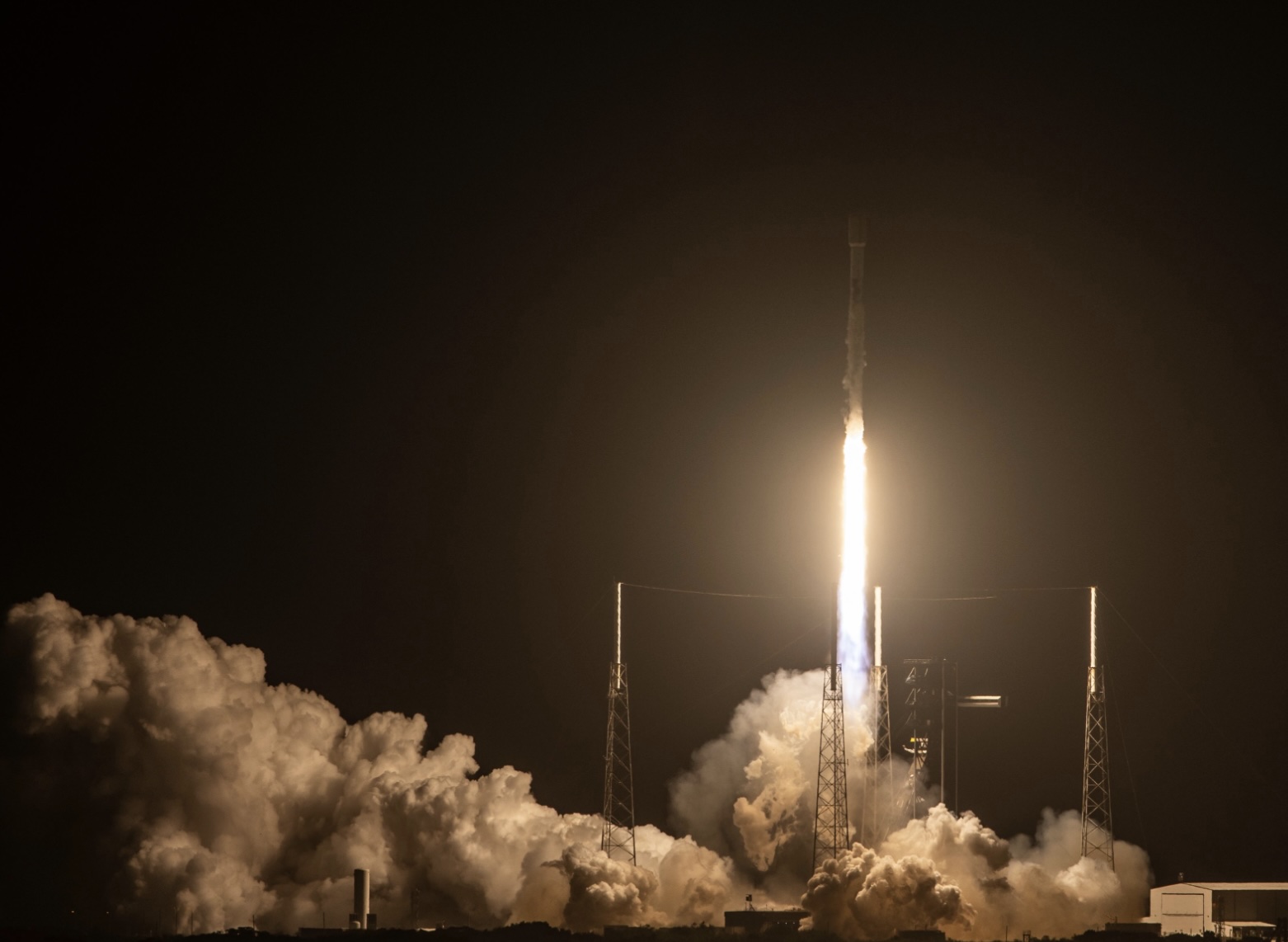
As artificial intelligence fuels surging demand for computing power, Elon Musk has hinted that SpaceX may use its Starlink V3 satellites to develop space-based data centers.
Musk’s remarks come as companies explore how orbital infrastructure could solve the Earth-bound energy and cooling challenges that come with hyperscale AI computing.
SpaceX could lead the race to orbit-based computing
After Ars Technica published a report on autonomous space construction, Musk replied on X: “Simply scaling up Starlink V3 satellites, which have high speed laser links would work. SpaceX will be doing this.”
SpaceX’s Starlink V3 platform is capable of up to 1 terabit per second (Tbps) throughput, so it could potentially form the foundation for orbital computing clusters powered by solar energy.
Proponents have noted that such data centers could eliminate the massive land, water, and power footprints of traditional facilities on Earth. Critics, however, have question the economics and complexity of maintaining large-scale data systems in orbit.
Elon Musk, for his part, recently reiterated on X that this particular idea is a very big deal.
SpaceX’s track record is substantial
Despite the reservations for such a radical idea, SpaceX’s track record is pretty much bulletproof at this point. The company’s Starlink network, once deemed as unrealistic by critics, now delivers broadband to millions worldwide while turning a profit. Its Falcon 9 rockets, which are capable of landing on land or on a drone in the middle of the ocean, are also among the world’s most reliable.
With this track record in mind, it would seem that Elon Musk’s idea of using Starlink satellites as the building blocks for a space-based data center might not be too farfetched at all.
Interest in space-based data storage and processing has intensified in recent months, Ars noted. Former Google CEO Eric Schmidt reportedly acquired Relativity Space with an eye on orbital data infrastructure, while Jeff Bezos recently predicted gigawatt-scale data centers will operate in space within two decades.


Energy
Tesla’s newest “Folding V4 Superchargers” are key to its most aggressive expansion yet
Tesla’s folding V4 Supercharger ships 33% more per truck, cuts deployment time and cost significantly.

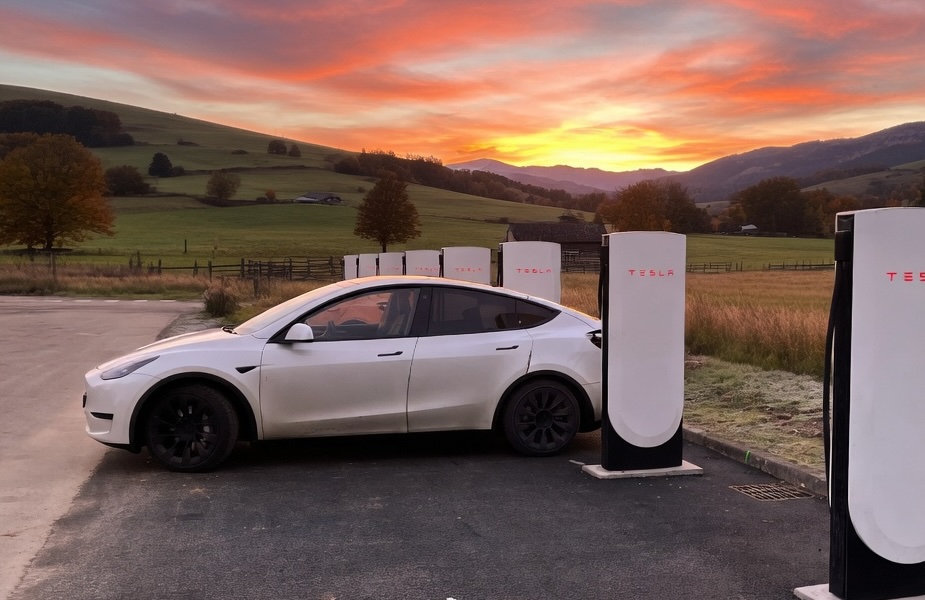
Tesla is rolling out a folding V4 Supercharger design, an engineering change that allows 33% more units to fit on a single delivery truck, cuts deployment time in half, and reduces overall installation cost by roughly 20%.
The folding mechanism addresses one of the least glamorous but most consequential bottlenecks in charging infrastructure: getting hardware from factory floor to job site efficiently. By collapsing the form factor for transit and unfolding into an operational configuration on arrival, the new design dramatically reduces the logistics overhead that has historically slowed Supercharger rollouts, particularly at large or remote sites where multiple units are needed simultaneously.
The timing aligns with a broader acceleration in Tesla’s network strategy. In March 2026, Tesla’s Gigafactory New York produced its final V3 Supercharger cabinet after more than seven years and 15,000 units, pivoting entirely to V4 cabinet production. The V4 cabinet itself is already a generational leap, delivering up to 500 kW per stall for passenger vehicles and up to 1.2 MW for the Tesla Semi, while supporting twice the stalls per cabinet at three times the power density of its predecessor. The folding transport innovation layers logistical efficiency on top of that technical foundation.
Tesla launches first ‘true’ East Coast V4 Supercharger: here’s what that means
Tesla Charging’s Director Max de Zegher, commenting on the V4 cabinet when it launched, captured the operational philosophy behind these changes: “Posts can peak up to 500kW for cars, but we need less than 1MW across 8 posts to deliver maximum power to cars 99% of the time.” The design philosophy has always been about maximizing real-world throughput, not just peak specs, and the folding transport upgrade extends that thinking into the supply chain itself.
Posts can peak up to 500kW for cars, but we need less than 1MW across 8 posts to deliver maximum power to cars 99% of the time.
No more DC busbar between cabinets. Power comes from a single V4 cabinet to 8 stalls. Easier to install, cheaper, more reliable.
Introducing Folding Unit Superchargers
– V4 cabinet with 500kW charging
– 8 posts per unit
– 2 units per truck
– 2 configurations: folded, unfoldedFaster. Cheaper. Better. pic.twitter.com/YyALz0U5cA
— Tesla Charging (@TeslaCharging) March 25, 2026
The network is expanding rapidly on multiple fronts. The first true 500 kW V4 Supercharger on the East Coast opened in Kissimmee, Florida in March 2026, followed closely by a new site in Nashville, Tennessee. A public Megacharger for the Tesla Semi launched in Ontario, California in early March, with 37 additional Megacharger sites targeted for completion by end of year. Meanwhile, more than 27,500 Supercharger stalls are now accessible to non-Tesla EVs from brands including Ford, GM, Rivian, Hyundai, and most recently Stellantis, whose Dodge, Jeep, Ram, Fiat, and Maserati BEV customers gained access in March 2026.
As Tesla pushes toward a denser, faster, and more open charging network, innovations like the folding V4 Supercharger reflect the company’s growing focus on deployment velocity, not just hardware performance. Getting chargers to the ground faster, cheaper, and in greater volume per shipment may ultimately matter as much as the kilowatts they deliver.
Elon Musk
The Boring Company clears final Nashville hurdle: Music City loop is full speed ahead
The Boring Company has cleared its final Nashville hurdles, putting the Music City Loop on track for 2026.
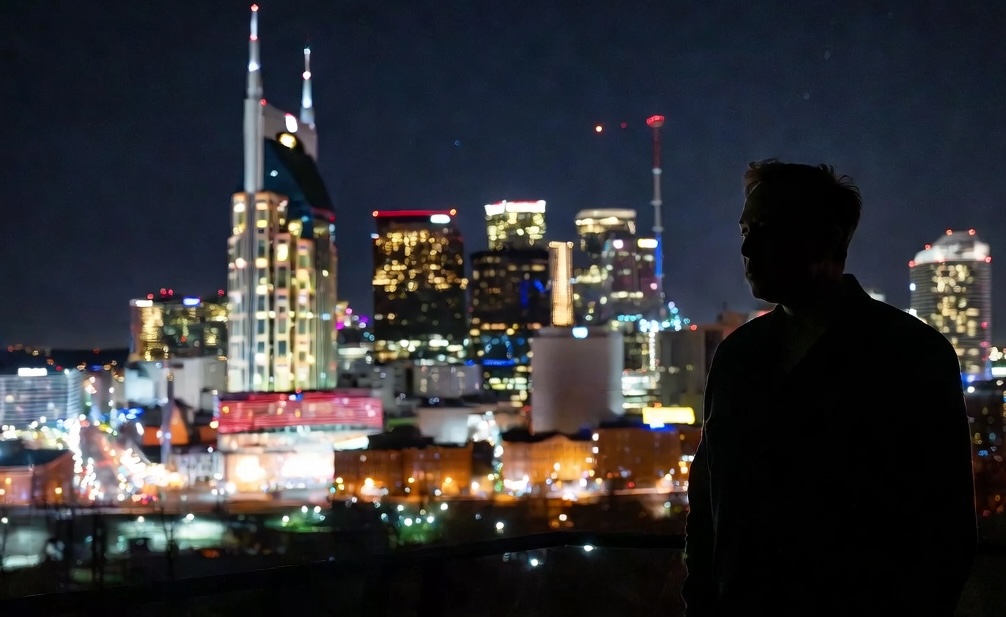
The Boring Company has cleared one of its most significant regulatory milestones yet, securing a key easement from the Music City Center in Nashville just days ago, the latest in a series of approvals that have pushed the Music City Loop project firmly into construction reality.
On March 24, 2026, the Convention Center Authority voted to grant The Boring Company access to an easement along the west side of the Music City Center property, allowing tunneling beneath the privately owned venue. The move follows a unanimous 7-0 vote by the Metro Nashville Airport Authority on February 18, and a joint state and federal approval from the Tennessee Department of Transportation and the Federal Highway Administration on February 25. Together, these green lights have cleared the path for a roughly 10-mile underground tunnel connecting downtown Nashville to Nashville International Airport, with potential extensions into midtown along West End Avenue.
Music City Loop could highlight The Boring Company’s real disruption
Nashville was selected by The Boring Company largely because of its rapid population growth and the strain that growth has placed on surface infrastructure. Traffic has become a persistent problem for residents, convention visitors, and airport travelers alike. The Music City Loop promises an approximately 8-minute underground transit time between downtown and the Nashville International Airport (BNA), removing thousands of vehicles from surface roads daily while operating as a fully electric, zero-emissions system at no cost to taxpayers.
The project fits squarely within a broader vision Musk has championed for years. In responding to a breakdown of the Loop’s construction costs, Musk posted on X: “Tunnels are so underrated.” The comment reflected a longstanding belief that underground transit represents one of the most cost-effective and scalable infrastructure solutions available. The Boring Company has claimed it can build 13 miles of twin tunnels in Nashville for between $240 million and $300 million total, a fraction of what comparable projects cost elsewhere in the country.
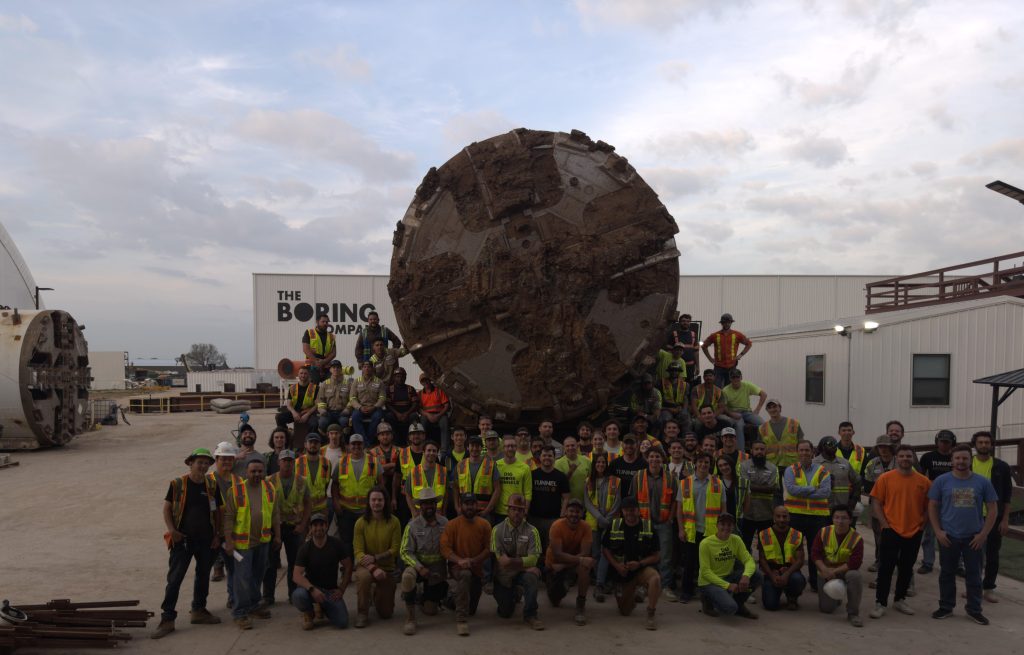
Image Credit: The Boring Company/Twitter
The Las Vegas Loop, The Boring Company’s first operational system, has served as a proof of concept. During the CONEXPO trade show in March 2026, the Vegas Loop transported approximately 82,000 passengers over five days at the Las Vegas Convention Center, demonstrating the system’s capacity during large-scale events. Nashville draws millions of convention visitors and tourists each year, and local business leaders have pointed to that same capacity as a major draw for supporting the project.
The Music City Loop was first announced in July 2025. Construction began within hours of the February 25 state approval, with The Boring Company’s Prufrock tunneling machine already in the ground the same evening. The first operational segment is targeted for late 2026, with the full route expected to be complete by 2029. The project represents one of the largest privately funded infrastructure efforts currently underway in the United States.
Elon Musk
Elon Musk demands Delaware Judge recuse herself after ‘support’ post celebrating $2B court loss
A banner on the post read “Katie McCormick supports this,” using LinkedIn’s heart-in-hand “support” icon, an endorsement stronger than a simple “like.” Musk’s lawyers argue the action creates “a perception of bias against Mr. Musk,” warranting immediate recusal to preserve judicial impartiality.

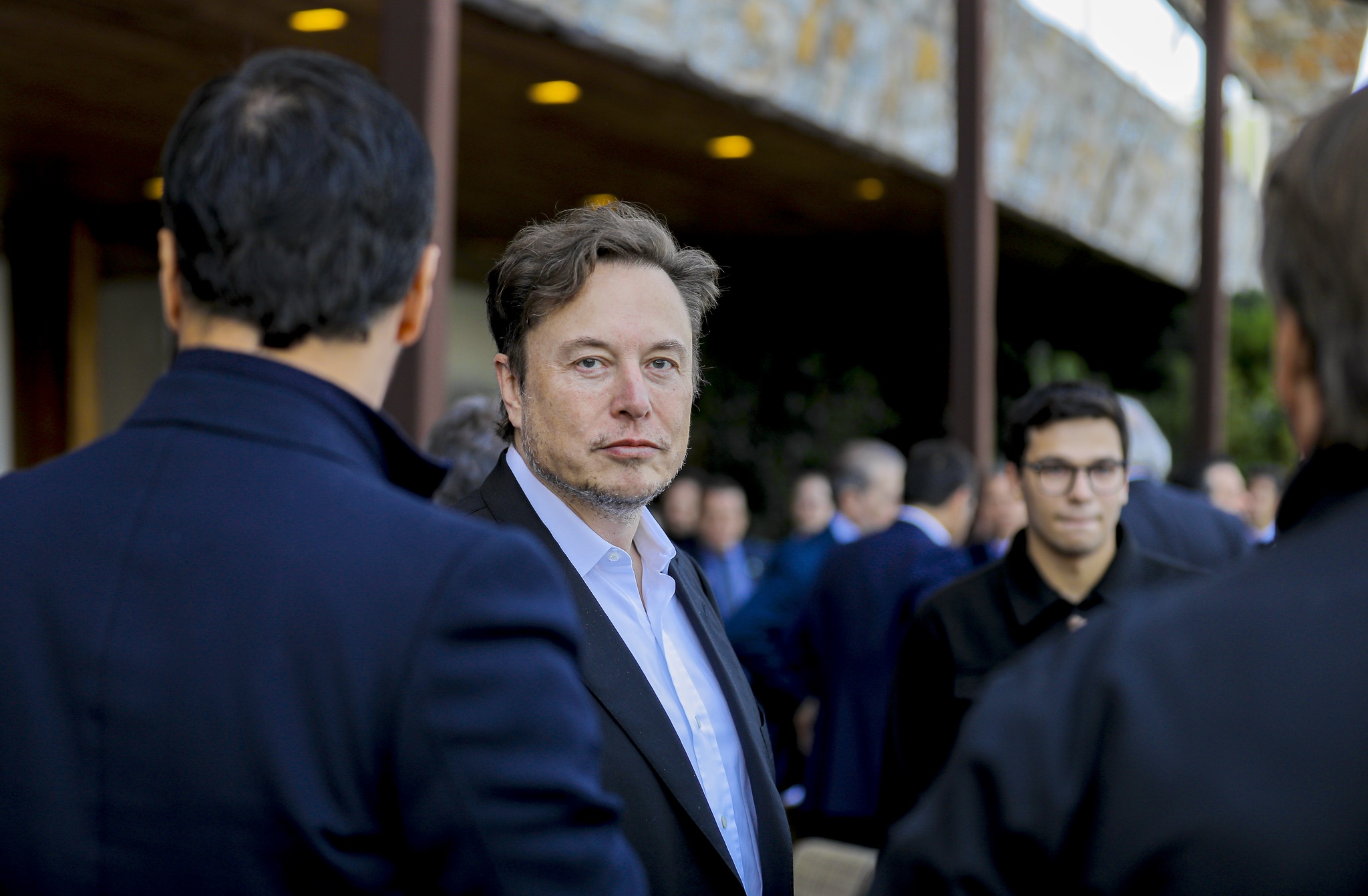
Tesla CEO Elon Musk’s legal team has filed a motion demanding that Delaware Chancellor Kathaleen McCormick disqualify herself from an ongoing high-stakes Tesla shareholder lawsuit.
The filing, submitted March 25, cites an apparent LinkedIn “support” reaction from McCormick’s account to a post celebrating a $2 billion jury verdict against Musk in a separate California securities-fraud case.
The move escalates long-simmering tensions between Musk, Tesla, and the Delaware judiciary, where McCormick previously presided over the landmark challenge to Musk’s record $56 billion 2018 compensation package.
Delaware Supreme Court reinstates Elon Musk’s 2018 Tesla CEO pay package
The LinkedIn post was written by Harry Plotkin, a Southern California jury consultant who assisted the plaintiffs who sued Musk over 2022 tweets about his Twitter acquisition. Plotkin praised the trial team for “standing up for the little guy against the richest man in the world.”
The New York Post initially reported the story.
A banner on the post read “Katie McCormick supports this,” using LinkedIn’s heart-in-hand “support” icon, an endorsement stronger than a simple “like.” Musk’s lawyers argue the action creates “a perception of bias against Mr. Musk,” warranting immediate recusal to preserve judicial impartiality.
This appears to be unequivocal proof she denied the pay package because of her own personal beliefs and not the law.
Corruption. https://t.co/8dvgcfYuvh
— TESLARATI (@Teslarati) March 25, 2026
McCormick swiftly denied intentional endorsement. In a letter to attorneys, she stated she was unaware of the interaction until LinkedIn notified her. She wrote:
“I either did not click the ‘support’ icon at all, or I did so accidentally. I do not believe that I did it accidentally.”
The chancellor maintains the reaction was inadvertent, but critics, including Musk allies, call the explanation implausible given the platform’s deliberate interface.
McCormick’s central role in the Tesla pay-package litigation underscores the stakes. In Tornetta v. Musk, in January 2024, she ruled the 2018 performance-based stock-option grant, potentially worth $56 billion at the time and now valued far higher, was invalid.
The package consisted of 12 tranches of options, each vesting only after Tesla achieved ambitious market-cap and operational milestones. McCormick found Musk exercised “transaction-specific control” over Tesla as a controlling stockholder, the board lacked sufficient independence, and proxy disclosures to shareholders were materially deficient.
Applying the entire-fairness standard, she concluded defendants failed to prove the deal was fair in process or price and ordered full rescission, an “unfathomable” remedy she described as necessary to deter fiduciary breaches.
After the ruling, Tesla shareholders ratified the package a second time in June 2024. McCormick rejected that ratification in December 2024, holding that post-trial votes could not cure defects.
Tesla appealed. On December 19 of last year, the Delaware Supreme Court unanimously reversed the rescission remedy while largely leaving McCormick’s liability findings intact. The high court deemed total unwinding inequitable and impractical, restoring the package but awarding the plaintiff only nominal $1 damages plus reduced attorneys’ fees. Musk ultimately received the full award.
The current recusal motion arises in yet another Tesla derivative suit before McCormick. Legal observers say granting it could signal heightened scrutiny of judicial social-media activity; denial might reinforce perceptions of an insular Delaware bench.
Broader fallout includes accelerated corporate migration out of Delaware, Musk himself moved Tesla’s incorporation to Texas after the first ruling, and renewed debate over whether the state’s specialized courts remain the gold standard for corporate governance disputes.
A decision is expected soon; whichever way it lands, the episode highlights the fragile balance between judicial independence and public confidence in high-profile litigation.

Tesla’s newest “Folding V4 Superchargers” are key to its most aggressive expansion yet

The Boring Company clears final Nashville hurdle: Music City loop is full speed ahead

Elon Musk demands Delaware Judge recuse herself after ‘support’ post celebrating $2B court loss

Elon Musk’s Boring Co. Tunnel Vision Challenge ends with a surprise for Louisiana, Maryland and Dallas

What is Digital Optimus? The new Tesla and xAI project explained


