News
Tesla comes through on huge promise for Bay Area ride-hailing service
Tesla’s ride-hailing service in the California Bay Area is somewhat similar to what the company is doing with Robotaxi in Austin, Texas.

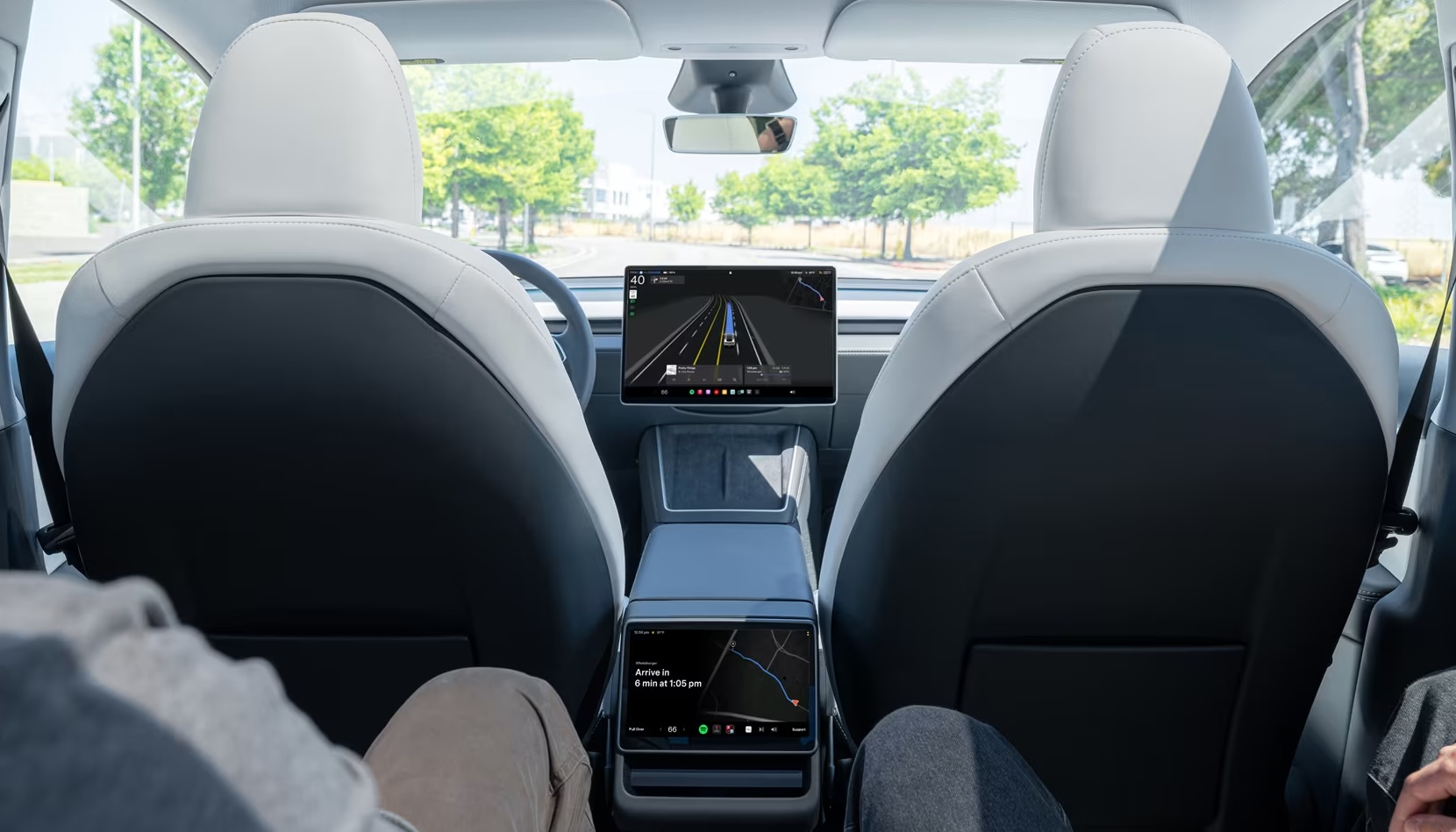
Tesla has come through on a huge promise for its Bay Area ride-hailing service just two months after aiming to expand to a new territory.
Tesla’s ride-hailing service in the California Bay Area is somewhat similar to what the company is doing with Robotaxi in Austin, Texas.
However, regulatory rules and the fact that the company is operating with someone in the driver’s seat —a stark difference from the operation in Austin —have kept the business categorized as a ride-hailing application in California.
But Tesla is still breaking barriers down with its service, which operates entirely using the Full Self-Driving (Supervised) platform, as the “Safety Monitors” are only there to ensure safety and take over in the most necessary circumstances.
In September, Tesla filed to begin operating its ride-hailing service at various airports in the Bay Area, including San Francisco International Airport, San Jose Mineta International Airport, and Oakland International Airport.
Tesla targets Bay Area airports as next step for Robotaxi rollout
It officially came through on that promise last night, as it announced its Bay Area ride-hailing service would now go to San Jose Mineta International Airport:
Our Bay Area ride-hailing service now goes to SJC airport ✈️
— Tesla AI (@Tesla_AI) October 27, 2025
The expansion signals a key approval for Tesla to travel to one of the more popular places where people would need or simply want a drop-off. Airports are expensive to park in, so many people utilize ride-hailing services to enable a more economical experience from start to finish.
With this approval for SJC, Tesla will likely gain even more approvals for other airports in the Bay Area in the coming weeks or months.
While Tesla believes at least half of the U.S. population will have access to the company’s Robotaxi program or its ride-hailing service by the end of the year, the first step will be gaining approval in more metropolitan areas.
Tesla is looking to expand to other states, including Nevada, Florida, and Arizona, with its Robotaxi platform in the near future.


News
Tesla Roadster unveiling set for this month: what to expect
As Tesla finally edges toward production and an updated reveal, enthusiasts aren’t asking for compromises; they’re demanding the original vision be honored. Here are five clear expectations that will come with the vehicle’s unveiling, which is still set for later this month, hopefully.
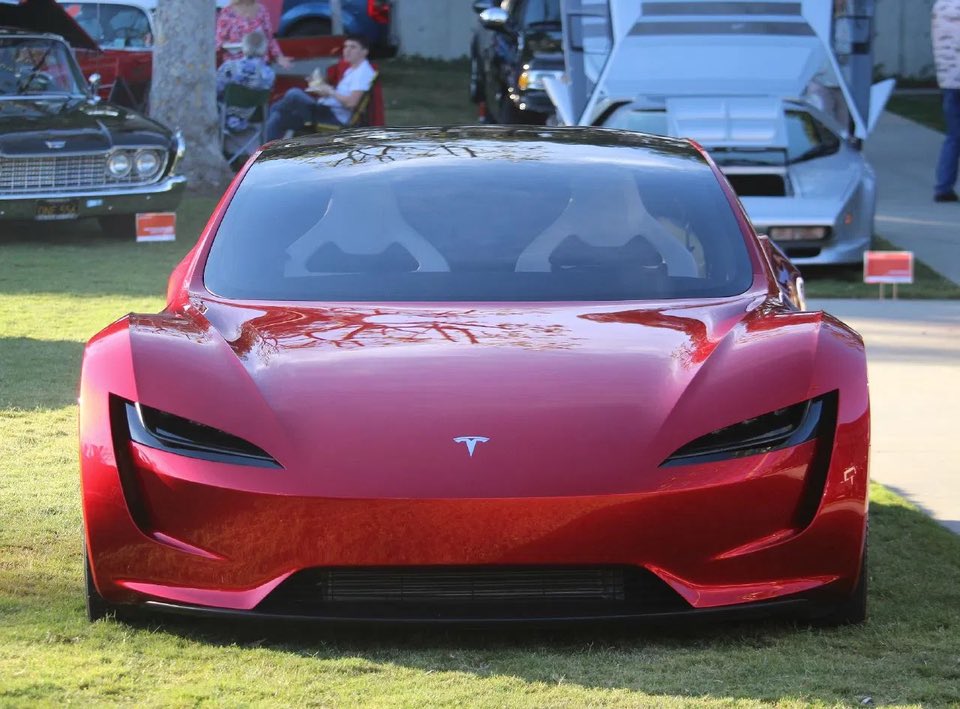
The Tesla Roadster has been the ultimate carrot on a stick since its 2017 unveiling. Promised as the fastest production car ever made, with 0-60 mph in under two seconds and a top speed over 250 mph, it has endured years of delays.
As Tesla finally edges toward production and an updated reveal, enthusiasts aren’t asking for compromises; they’re demanding the original vision be honored. Here are five clear expectations that will come with the vehicle’s unveiling, which is still set for later this month, hopefully.
Performance and Safety Do Not Go Hand in Hand, and That’s the Point
The Roadster is not a family sedan or a daily commuter. It is a no-holds-barred supercar meant to embarrass six-figure exotics on track days. Tesla should resist the temptation to load it with every passive-safety nanny and electronic guardian that dulls the raw feedback drivers crave.
Owners want to feel the road, not be shielded from it. Strip away unnecessary electronic limits so the car can deliver the visceral thrill Elon Musk originally described. Safety ratings will still be strong because of Tesla’s structural excellence, but the Roadster’s mission is speed, not coddling.
He said late last year:
“This is not a…safety is not the main goal. If you buy a Ferrari, safety is not the number one goal. I say, if safety is your number one goal, do not buy the Roadster…We’ll aspire not to kill anyone in this car. It’ll be the best of the last of the human-driven cars. The best of the last.”
Musk was clear that this will not be a car that will be the safest in Tesla’s lineup, but that’s the point. It’s not made for anything other than pushing the limits.
Tesla Needs to Come Through on a HUGE Feature
The Roadster unveiling would be wildly disappointing if it were only capable of driving. Tesla has long teased the potential ability to float or hover, and they need to come through on something that is along those lines.
The SpaceX cold-gas thruster package was never a joke. Musk, at one time, explicitly said owners could opt for a set of thrusters capable of lifting the car off the ground for short hops or dramatic launches. That feature is what separates the Roadster from every other hypercar on the planet.
If the production version arrives without it—or with a watered-down “maybe later” version—enthusiasts will feel betrayed. Deliver the thrusters, make them functional, and let the Roadster literally hover above the competition.
An Updated Design Might Be Warranted
It’s been nine years since Tesla first rolled off the next-gen Roadster design and showed it to the world.
The 2017 concept still looks sharp, but eight years is an eternity in automotive styling. The sharp lines and aggressive stance now compete against the angular Cybertruck and the next-generation vehicles rolling out of Fremont and Austin.
Tesla Roadster patent hints at radical seat redesign ahead of reveal
A subtle refresh, maybe with sharper headlights, revised aero elements, and modern materials, would keep the Roadster feeling current without losing its identity. Fans don’t want a complete redesign, just enough evolution to prove Tesla still cares.
Self-Driving Isn’t a Necessity for the Tesla Roadster
Full Self-Driving hardware and software belong in the Model 3, Model Y, and the upcoming robotaxi—not in a two-seat rocket built for canyon carving. The Roadster’s entire appeal is the direct connection between driver, steering wheel, and asphalt.
Offering FSD as standard would dilute the purity that separates it from every other Tesla. Make autonomy an optional delete or simply omit it. Let the Roadster remain the purest driving machine in the lineup, because that’s what it is all about.
Tesla Needs to Come Through on the Unveiling Timeline
The last thing Tesla needs right now is another complaint about not hitting timelines or expectations. This unveiling has already been pushed back one time, from April 1 to “probably in late April.”
Repeated delays have tested even the most patient fans. Whatever date the company now sets for the next major reveal or start of production must be met. No more “next year” promises. The Roadster has waited long enough. When it finally arrives, it must feel worth every extra month.
If Tesla hits these five marks, the Roadster won’t just be another fast car—it will be the machine that redefines what a Tesla can be. The world is watching.
News
Tesla Cabin Camera gets an incredible new feature for added driver safety
The company quietly expanded the capabilities of its in-cabin camera with the rollout of Software Update 2026.8.6. Tesla hacker greentheonly revealed that coding for the software version provides details on now tracking the age of the driver.
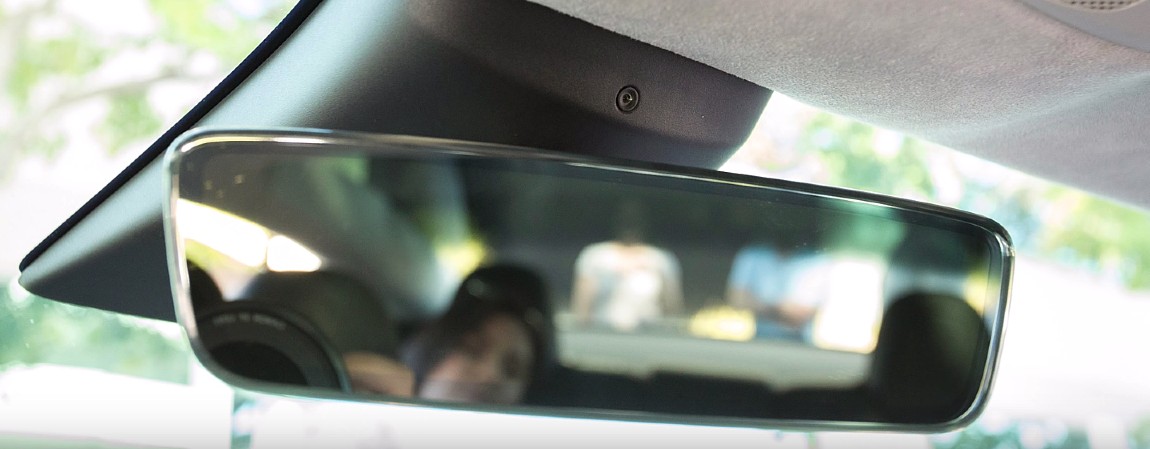
Tesla’s interior Cabin-facing Camera just got a brand new feature that is an incredible addition, as it provides yet another layer of added safety.
The company quietly expanded the capabilities of its in-cabin camera with the rollout of Software Update 2026.8.6. Tesla hacker greentheonly revealed that coding for the software version provides details on now tracking the age of the driver.
The camera, which is positioned just above the rearview mirror, is now performing facial analysis to estimate the driver’s age. While not yet user-facing, the feature is the latest example of Tesla’s ongoing push to refine its driver monitoring system for both everyday safety and future Robotaxi operations.
Ha, interesting, cabin camera / driver monitor is now (2026.8.6) doing “driver age” checking.
I wonder if it’s going to filter out children or elderly too?
— green (@greentheonly) April 10, 2026
The cabin camera already processes images entirely onboard the vehicle for privacy, sharing data with Tesla only if owners enable it during safety-critical events.
Age estimation likely uses computer vision to classify facial features, similar to existing attention-tracking algorithms. Potential applications include preventing underage drivers from engaging Full Self-Driving (FSD) or shifting into drive, acting as a secondary safety lock.
It could also be linked to Robotaxi readiness: the upcoming Cybercab will need robust occupant verification to ensure children cannot hail or ride unsupervised.
In consumer vehicles, it could enable tailored FSD behaviors—more conservative acceleration and braking for elderly drivers, for instance—or simply block unauthorized use by minors.
Beyond age checks, the cabin camera powers Tesla’s comprehensive driver monitoring system, introduced years earlier and continuously improved. It first gained prominence for detecting inattentiveness. When Autopilot or FSD is active, the camera tracks eye gaze, head position, and steering inputs in real time.
If the driver looks away too long or fails to keep their hands ready, the system issues escalating visual and audible alerts before disengaging assistance. This has dramatically reduced misuse cases and helped Tesla meet stricter regulatory demands for hands-on supervision.
The camera also monitors for drowsiness. Activated above roughly 40 mph (65 km/h) after at least 10 minutes of manual driving, the Driver Drowsiness Warning analyzes facial cues—frequency of yawns and blinks—alongside driving patterns like lane drifting or erratic steering.
When fatigue is detected, a clear on-screen message and chime prompt the driver to pull over and rest, or even to activate Full Self-Driving. Tesla explicitly states this feature enhances active safety without relying on facial recognition for identity.
These layered capabilities create a robust safety net. Inattentiveness detection alone has curbed distracted driving during assisted operation. Drowsiness alerts address a leading cause of highway crashes by intervening before impairment escalates.
Adding age verification extends this protection: it could flag inexperienced young drivers for extra caution or restrict high-autonomy features, while preparing vehicles for a future where robotaxis must safely manage passengers of all ages.
With privacy safeguards intact and processing done locally, Tesla’s cabin camera continues evolving from a simple attention monitor into a sophisticated guardian—advancing safer roads today and autonomous mobility tomorrow.
Elon Musk
Tesla’s Semi truck factory is open with a detail that changes everything
Tesla’s dedicated Nevada Semi factory has opened, targeting 50,000 trucks per year as fleet adoptions accelerate nationwide.

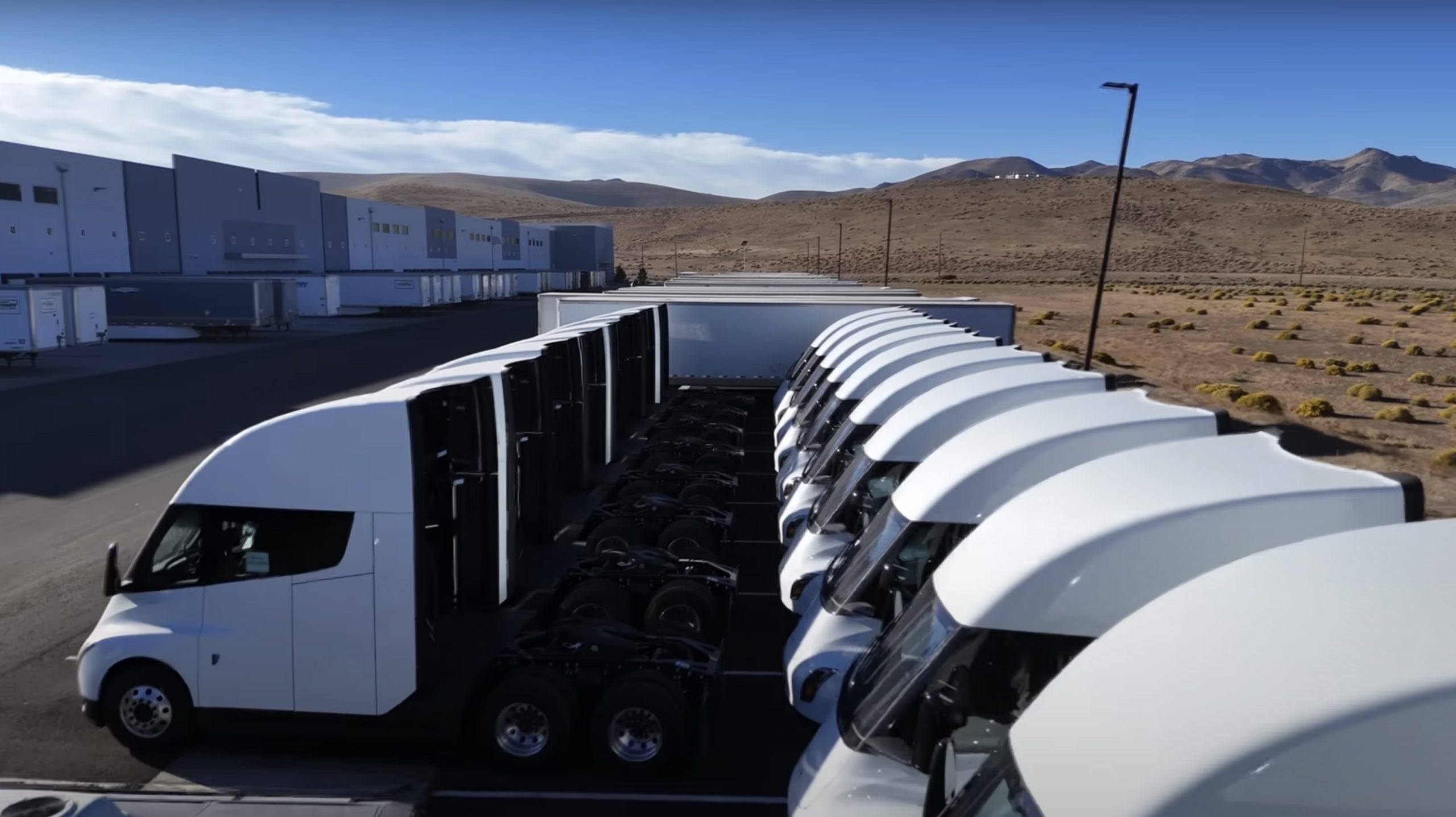
Nearly nine years after Elon Musk unveiled the Tesla Semi in November 2017, the company is now opening a dedicated factory just outside of Reno, Nevada, and ramping toward mass production of 50,000 trucks per year.
Volume production began in March 2026 at the new Tesla Semi factory, with the competitive advantage not being the factory itself. Rather, it’s where Tesla built it. By constructing the 1.7 million square foot facility directly adjacent to Gigafactory Nevada in Sparks, Tesla closed the one supply chain loop that had delayed the Semi program for years. The 4680 battery cells that power the Semi are manufactured in the same complex, which significantly streamlines supply logistics. That single decision eliminates the bottleneck that forced Tesla to prioritize battery supply for passenger cars over the Semi throughout 2020, 2021, and 2022, which is precisely why the first deliveries slipped three years past the original target. Every other electric truck manufacturer sources its battery cells from a separate supplier, ships them to a separate factory, and absorbs the cost and delay that comes with that. Tesla built its Semi factory around its battery factory, and that vertical integration is what makes 50,000 trucks per year a realistic number rather than an aspirational one.
At the 2025 Annual Shareholder Meeting, Musk was direct about where things stood, stating “Starting next year, we will manufacture the Tesla Semi. We already have a lot of prototype Semis in operation – PepsiCo and other companies have been using them for some time. But in 2026, we’ll begin volume production at our Northern Nevada factory.” Full ramp to volume output is targeted before June 30, 2026.
🚨 Awesome new video showing the new Tesla Semi factory in Sparks, Nevada
The future of sustainable logistics is being built here: pic.twitter.com/dbiGV8FYn3
— TESLARATI (@Teslarati) April 10, 2026
The first limited deliveries happened in December 2022 to PepsiCo, which eventually doubled its fleet to 50 trucks out of its California distribution facility. Since then the Semi has been showing up in more corporate fleets. As Teslarati noted in March, a Ralph’s Supermarkets branded Semi was spotted on a Los Angeles highway, confirming Kroger’s partnership with Tesla to deploy up to 500 electric Semis. Walmart, Costco, Sysco, US Foods, DHL, Hight Logistics and WattEV are among the companies actively running or receiving units. DHL logged real-world efficiency of 1.72 kWh per mile under a full 75,000 pound load over 388 miles, matching Tesla’s targets closely.
The 2026 production model arrives with meaningful upgrades over the original, with a 1,000 pound weight reduction, updated aerodynamics, and support for 1.2 MW Megacharger speeds that can restore 60% of range in around 30 minutes during a mandatory driver rest break. Tesla opened its first public Megacharger in Ontario, California in March, positioned near the I-10 and I-15 interchange serving the Ports of Los Angeles and Long Beach. The company plans 37 Megacharger sites by end of 2026 and 66 total across 15 states by early 2027, with construction beginning at the nation’s largest truck stop operator in the first half of this year.
Tesla reveals various improvements to the Semi in new piece with Jay Leno
Musk has described the Semi’s economics as a straightforward case. “The Semi is a TCO no-brainer,” he said, noting the total cost of ownership is “much, much cheaper than any other transportation you could have.” At under $300,000, the truck costs roughly double a comparable diesel, but California’s $200,000 per vehicle subsidy has driven over 1,000 state orders alone. As Teslarati has tracked, the prototype fleet accumulated over 13.5 million miles with 95% fleet uptime before production ever scaled. The factory opening now turns that proof of concept into a production program.

Tesla Roadster unveiling set for this month: what to expect

Tesla Cabin Camera gets an incredible new feature for added driver safety


