Investor's Corner
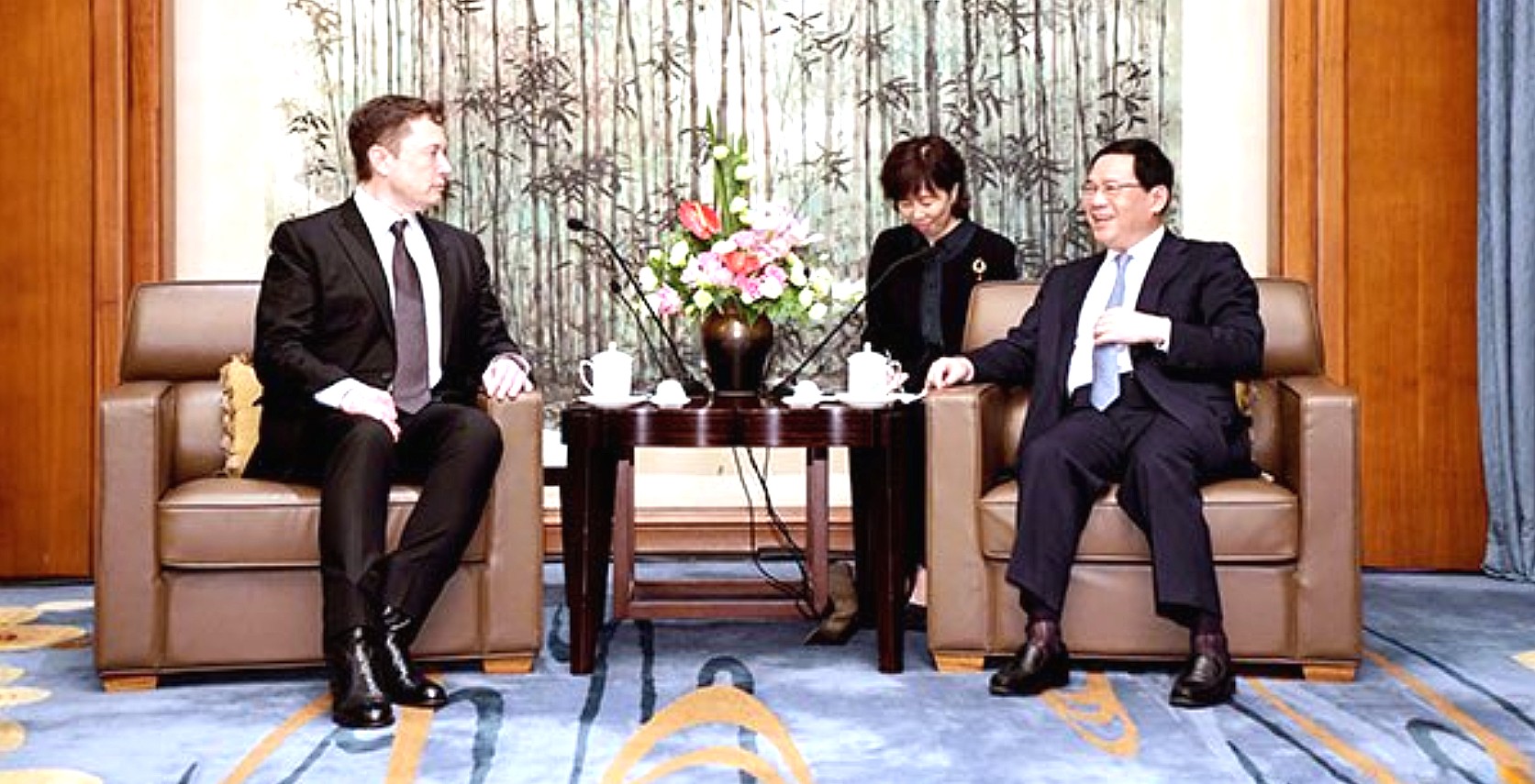
Elon Musk visits Gigafactory 3 site, receives support from Shanghai Party secretary

Recent images from China revealed that Tesla CEO Elon Musk had a busy day following his appearance at the opening segments of the 2019 World Artificial Intelligence Conference in Shanghai. Following his free-wheeling AI debate with Alibaba founder Jack Ma, Musk visited the Gigafactory 3 site in the Lingang industrial area, before meeting with Shanghai Party Secretary Li Qiang for a conversation about Tesla’s initiatives in China.
Elon Musk’s visit to the Gigafactory 3 site appears to have been a welcome change of pace for the upcoming facility’s workers, who appeared to appreciate the presence of the Tesla CEO. The details of Musk’s visit to the Shanghai-based electric car production facility have not been shared by local news outlets yet, but social media reports from Shanghai stated that the Tesla CEO was extremely happy about the progress of Gigafactory 3’s construction.
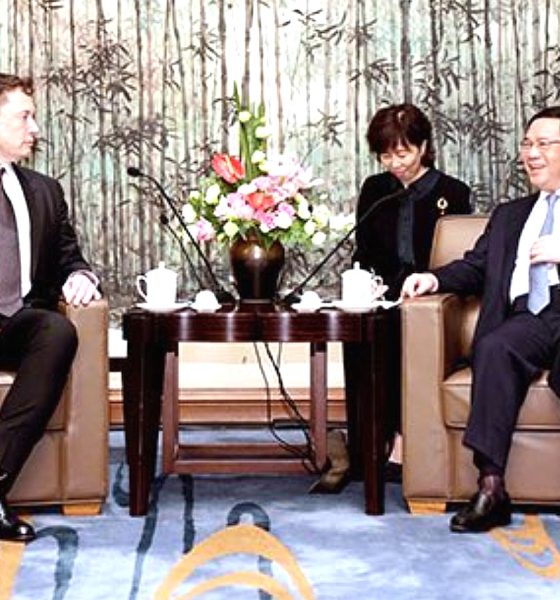
After his visit to the Gigafactory 3 complex, Musk met with Li Qiang, the secretary of the Shanghai Municipal Party Committee. During their conversation, the government official highlighted that Tesla and Gigafactory 3 are welcome additions to Shanghai, as they will bring new products and innovations to the city. Li also mentioned that Shanghai wants to build a highland for AI development in the future.
Musk, for his part, proved equally optimistic and thankful for China’s support of Tesla. While speaking at the 2019 WAIC, Musk remarked that he is simply stunned about the quickness and efficiency of Gigafactory 3’s buildout. “Tesla’s China team has done an amazing job and I’m astounded that so much progress has been made for the Shanghai Gigafactory. It’s a good story for the world to see how much progress you can make in China. I really think China’s future looks very impressive,” he said.
Following his busy Thursday, Musk appeared to have flown to China’s capital on Friday, as evidenced by pictures depicting the Tesla CEO having lunch at a famous Baozi (filled bun) restaurant in Beijing. Interestingly, the restaurant is very close to the Beijing office of the National Development and Reform Commission (发改委), which handles the country’s comprehensive economic projects, among others.
Apart from Elon Musk’s appearance at the 2019 World AI Conference and his visit to the Gigafactory 3 complex, the Tesla CEO is also expected to launch The Boring Company’s China unit on this particular China trip. More details about this initiative will likely be shared from local news agencies, or in social media platforms, in the coming days.
 -
-


Elon Musk
SpaceX’s next trillion dollar bet has nothing to do with rockets, Musk tells staff
Elon Musk told SpaceX staff AI revenue will soon dwarf rockets and Starlink combined entirely.

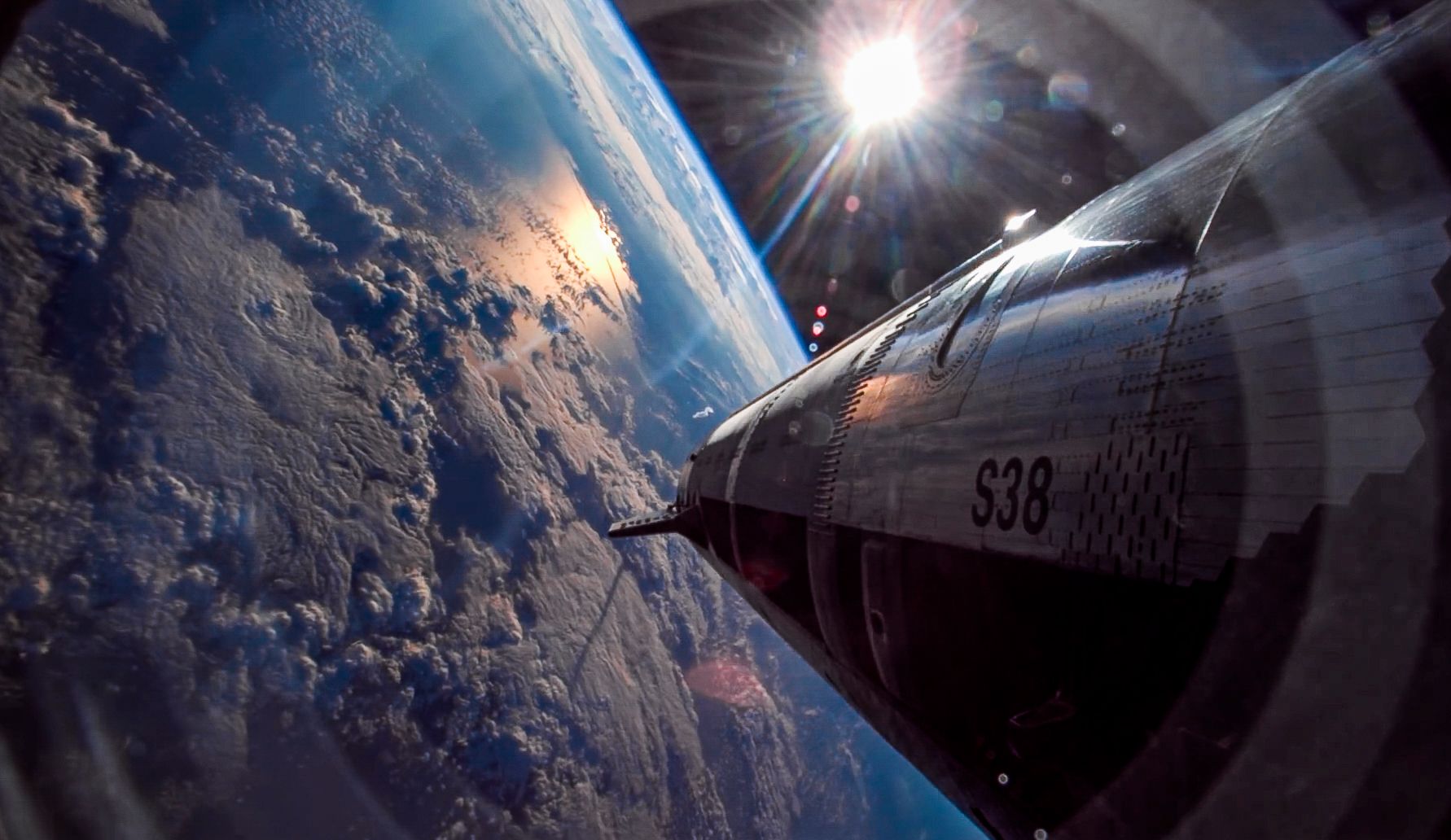
Elon Musk told SpaceX employees this week that artificial intelligence, not rockets, will soon carry the company’s revenue. In a roughly 29 minute internal address posted on SpaceX’s X account on Tuesday, Musk said AI revenue will pass every other line of business at SpaceX “probably in September” and pull further ahead by the fourth quarter.
The numbers he gave are specific. SpaceX currently runs 1.4 gigawatts of AI compute capacity. Musk wants that at 10 gigawatts by the end of 2027, a jump he tied directly to revenue: “if we bring 10GW of AI online by the end of next year, it will be $300 billion to $500 billion a year in revenue.” He called those “big numbers,” which undersells a projection larger than what most countries produce in a year.
We made rockets reusable and are rebuilding the internet in space. The next challenge: making life multiplanetary and understanding the true nature of the universe
Watch @ElonMusk deliver a company update to @SpaceX employees pic.twitter.com/5c8rxoCQfu
— SpaceX (@SpaceX) August 11, 2026
Musk went further on where AI fits into SpaceX’s future. “Probably in four or five years, AI will be 99% of the value of SpaceX,” he told staff, adding that digital intelligence would eventually run “a trillion times” ahead of biological intelligence as computing scales. He tied that growth to the company’s founding mission, telling employees “we must win on AI, because the future is overwhelmingly AI and robots,” with the payoff meant to help fund Starship and a Mars program that increasingly runs through Terafab, the joint Tesla, SpaceX and xAI chip plant.
Elon Musk launches TERAFAB: The $25B Tesla-SpaceXAI chip factory that will rewire the AI industry
None of this is entirely new territory. SpaceX told investors much the same story during its first earnings call as a public company on August 4, where Musk moved the company’s $1 trillion revenue target up a year to 2030 and said Starlink could someday carry a majority of the world’s internet. What the all hands video adds is a hard deadline and a specific power figure Musk had not given publicly before, along with a franker pitch to his own workforce that AI, not launch cadence, is now the thing SpaceX is betting its future on.
The AI revenue itself is not coming from SpaceX training its own models. It is largely Starlink acting as the network layer for xAI’s workloads, plus SpaceX renting out compute capacity directly, the same approach behind the roughly $16 billion the company spent on AI infrastructure in a single quarter.
Musk closed the video with a pitch aimed at recruiting and retention rather than investors, telling employees that anyone who helps SpaceX win the AI race will eventually get the chance to go to the moon or Mars themselves. Whether SpaceX can turn 1.4 gigawatts into 10 in seventeen months is the more immediate question, and one that will show up in quarterly numbers well before anyone leaves Earth.

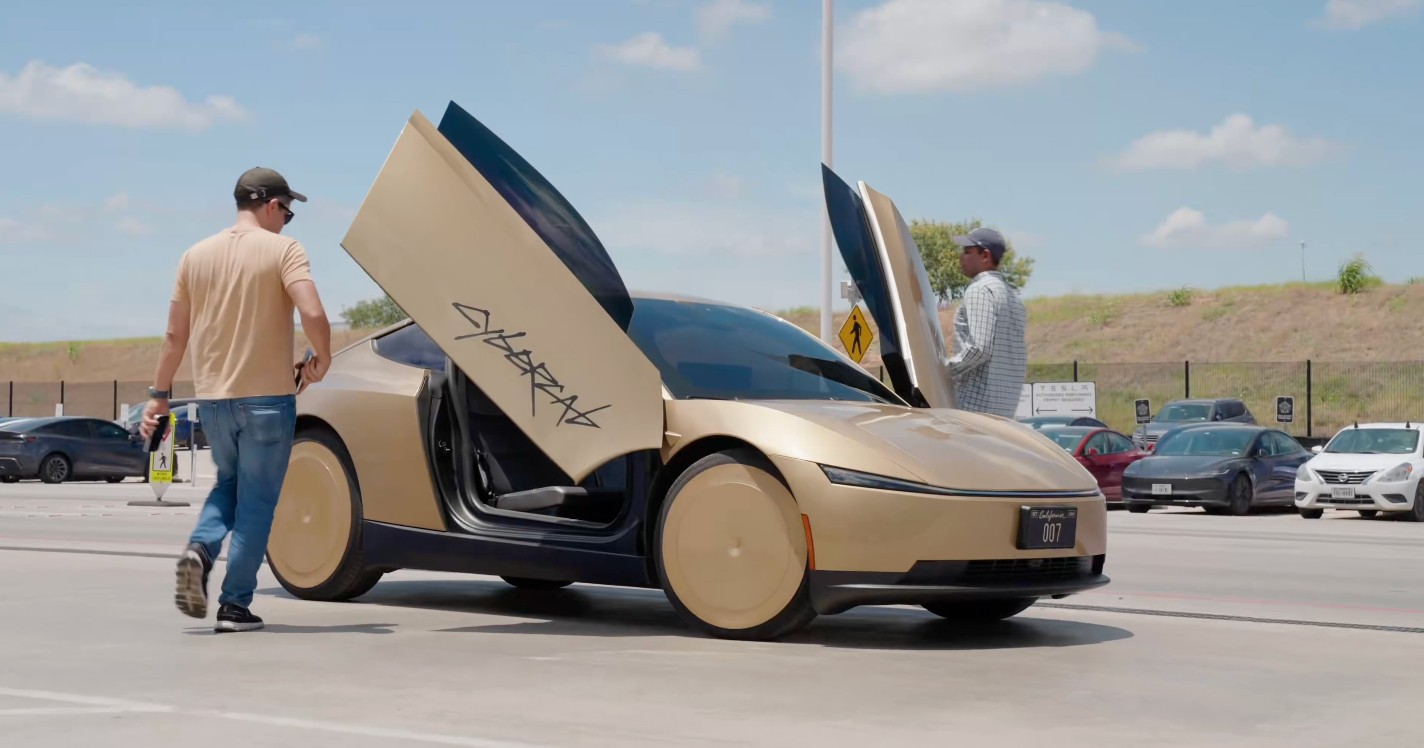
In a new note to investors on Tuesday, Morgan Stanley analyst Andrew Percoco said that Tesla has one big financial question to answer for investors regarding its Robotaxi rollout, Full Self-Driving software, and Optimus.
Percoco said in the note that, for the most part, investors are still very positive about the direction the company is headed. However, there are some things the firm would like to see, and they have to do with financials.
Tesla (TSLA) Q2 2026 earnings results: miss on EPS, beat on revenue
Tesla bulls are more than convinced that the company’s Full Self-Driving software is proof it can develop physical AI. Financially, however, there are still some questions, especially on elevated spending, which CEO Elon Musk said would occur as the company works to roll out Robotaxi faster and continue developing its Optimus robot.
The latter two are where Tesla will have to prove progress to investors, as Percoco writes that both projects “will require clearer evidence that Robotaxi is scaling and more tangible Optimus proof points to support the ROI on elevated capex.”
Percoco said the second quarter earnings call did not change his long-term thesis of where Tesla is positioned in the AI race, which is out in front. However, there are concerns that weaker gross margins and higher R&D spend will stress financials, and that has “sharpened our (and investors’) focus on measurable progress across Robotaxi and Optimus.”
Additionally, Robotaxi still needs to be proven with more operation in existing cities while maintaining safety but improving how many rides it gives in any given time, he said. For Optimus, Percoco wrote that he is “still looking for evidence beyond commentary around SOP.”
Morgan Stanley put Percoco in charge of covering Tesla after long-time analyst Adam Jonas transitioned to the automotive side.
Currently, Morgan Stanley has a $415 price target on Tesla and a ‘Hold’ rating on the stock. It is trading at around $330 at the time of publication, which was 2:30 P.M. on the East Coast.
SpaceX’s massive investment in AI will make it a big winner, Argus Research said after the company’s successful earnings call last week.
The firm also upgraded shares to a Buy from Hold and set a $160 price target.
SpaceX (NASDAQ: SPCX) is currently recovering from its heavy AI infrastructure investments, as it spent nearly $16 billion in Q2 alone. The company did this primarily by monetizing high-demand GPU compute capacity at a much faster pace than traditional data center economics would suggest.
Company CFO Bret Johnsen said that SpaceX would be able to pay back anything on new deployments within a year.
There are plenty of ways the company can do this:
Leasing excess compute capacity through contracts
SpaceX has already built Colossus and Colossus II, largely for its own model training. However, much of that capacity is already rented out to third parties. It already has major deals with Anthropic, Google, and Reflection AI. These partnerships are adding billions per month to SpaceX’s spreadsheet.
High utilization driven by industry-wide scarcity
The demand for advanced AI training and inference capacity continues to exceed what is available for use. SpaceX can fill new racks quickly after they come online, so the capital deployed converts into revenue with minimal idle time.
Additionally, management and outside observers have described the new compute capital as behaving more like a cost-of-goods-sold than traditional multi-year capex, especially because of this rapid monetization pattern.
Capacity has already scaled from ~0.4 GW a year to 1.4 GW annually by the end of Q2. There are targets of more than 2 GW by year-end.
High incremental margins on the rental business once capacity is online
GPU cloud providers often operate at strong gross margins. SpaceX can monetize capacity that was already partially built or can be added efficiently. This means that incremental EBITDA margins on the rental revenue are usually high. This accelerates cash recovery relative to the gross capital outlay.
Parallel monetization of its own AI software and applications
Beyond pure infrastructure rental, SpaceX also generates revenue from Grok through subscriptions and usage, from X through ads, data, and other related services, enterprise APIs, and the planned integration of the Cursor coding tools acquisition.
These application layers ride on the same compute infrastructure and provide additional high-margin streams that could offset build-out costs. AI-segment revenue overall rose sharply to about $2.6 billion in Q2, according to Motley Fool. This was driven primarily by the infrastructure contracts, but the software side is also partially responsible.
Efficient, large-scale deployment and vertical integration advantages
SpaceX has emphasized the rapid construction of power and cooling infrastructure and favorable cost-per-megawatt economics relative to industry benchmarks in some disclosures.
Combined with its ability to scale capacity aggressively and the fact that many contracts start generating revenue within months of capacity coming online, the effective payback compresses dramatically compared with more conventional multi-year data-center projects.
SpaceX’s dominant near-term recovery path will turn the AI clusters into a hyperscale-style compute rental business for other leading AI companies while still using a portion for internal models.

Tesla finally got its Nevada Robotaxi Permit but with a few catches hard to miss

Tesla launches Powerwall Lease for affordable home backup


