News
Tesla’s Elon Musk gives subtle nod to more affordable FSD monthly subscriptions

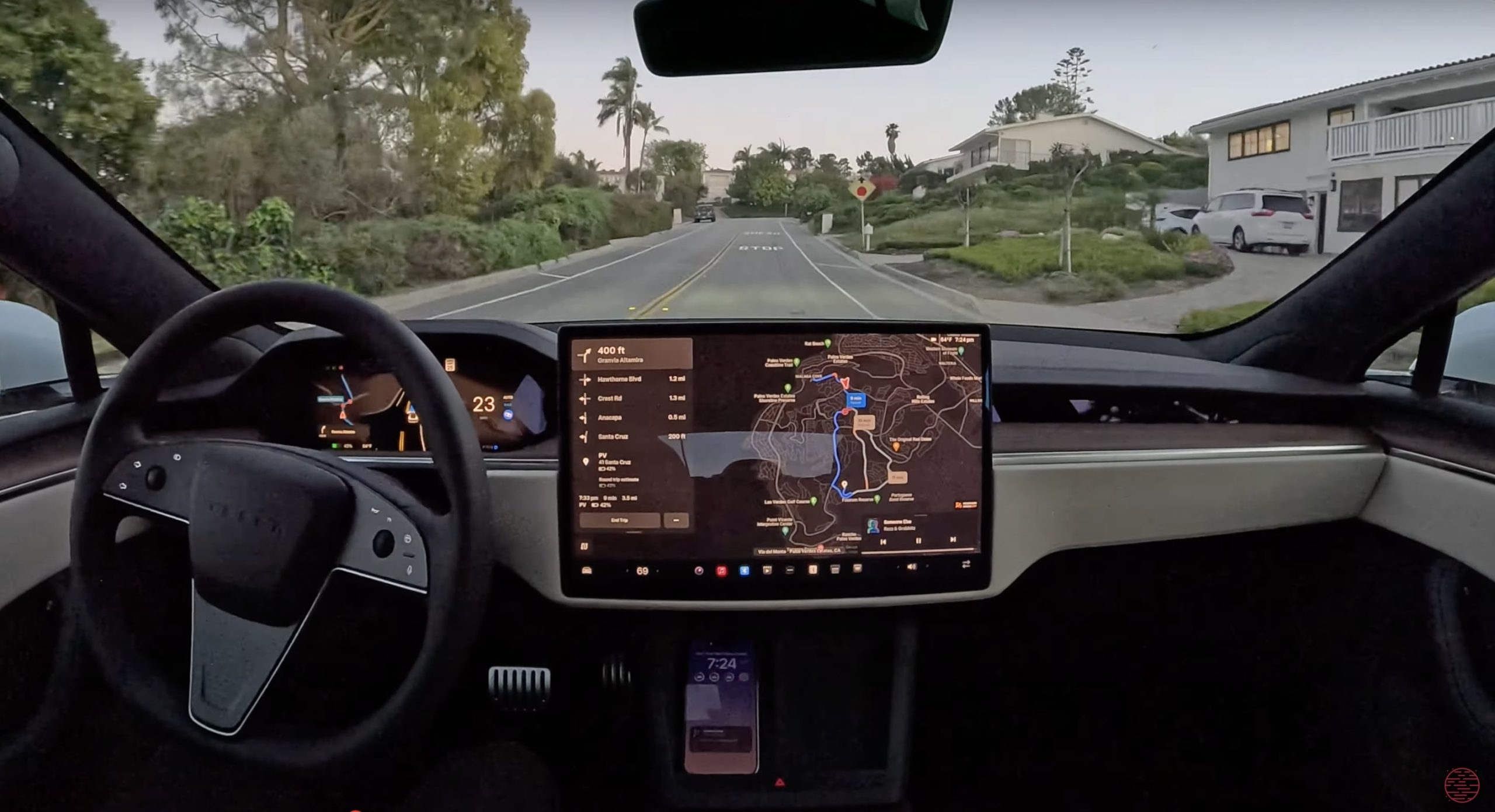
Tesla CEO Elon Musk appears to have given a subtle nod to the idea of more affordable Full Self-Driving (FSD) monthly subscriptions. A cheaper monthly rate for FSD would likely increase the take rate for the advanced driver-assist system’s subscription service.
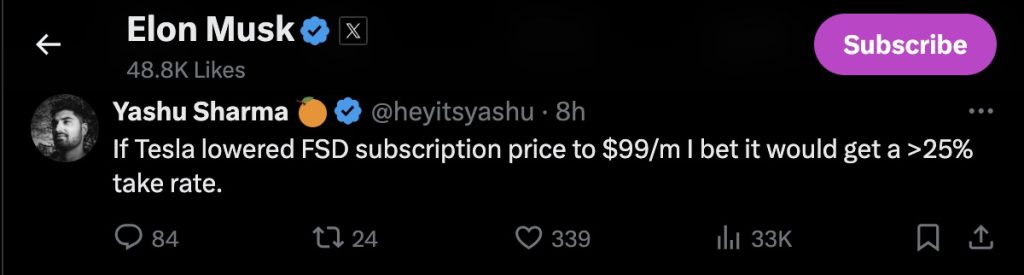
Musk’s apparent nod to a cheaper FSD subscription was observed by Tesla enthusiasts on social media platform X, several of whom noted that the CEO had liked a post from an EV advocate stating that the take rate for FSD subscriptions would likely see a notable increase if the service was priced at $99 per month. Musk has not removed his like on the Tesla owners’s FSD subscription post as of writing.
Do it @elonmusk pic.twitter.com/5r1vJAaTXZ— Sawyer Merritt (@SawyerMerritt) April 12, 2024
Tesla launched FSD subscriptions in July 2021 after much anticipation from the electric vehicle community. At the time, Tesla priced the service at $199 per month for vehicles that only have Basic Autopilot, or $99 per month for vehicles that have Enhanced Autopilot activated. The service was only available for vehicles that were equipped with Tesla’s Hardware 3.0 or above.
The premium pricing of FSD subscriptions in 2021 received polarizing reactions from Tesla owners, many of whom considered the price to be high for what FSD Beta offered at the time. This is not necessarily the case today, as Tesla has started the rollout of FSD (Supervised) V12, which has received notably better real-world reviews from drivers. Simply put, FSD (Supervised) V12 may actually be good enough to warrant a paid subscription.
While Tesla is quick to highlight that FSD (Supervised) does not make its vehicles autonomous, the EV maker and its CEO have been doubling down on promoting the advanced driver-assist system to new and existing EV owners. Musk has made FSD (Supervised) test rides part of Tesla’s vehicle delivery process, and the company has rolled out a free trial program for FSD (Supervised) to qualified vehicles in its existing fleet.
Tesla’s FSD program has achieved notable milestones as of late. Just recently, the official Tesla AI account on X revealed that FSD users have driven a cumulative distance of over 1 billion miles. This is a notable step towards Tesla’s goal of getting regulatory approval for the advanced driver-assist system. After all, Elon Musk estimated in Master Plan Part Deux that worldwide regulatory approval for autonomous vehicles will likely require about 6 billion miles worth of data.
Don’t hesitate to contact us with news tips. Just send a message to simon@teslarati.com to give us a heads up.


Elon Musk
The Tesla and SpaceX merger everyone is talking about is quietly building
Tesla and SpaceX may be closer to merging than Wall Street or either company is admitting.

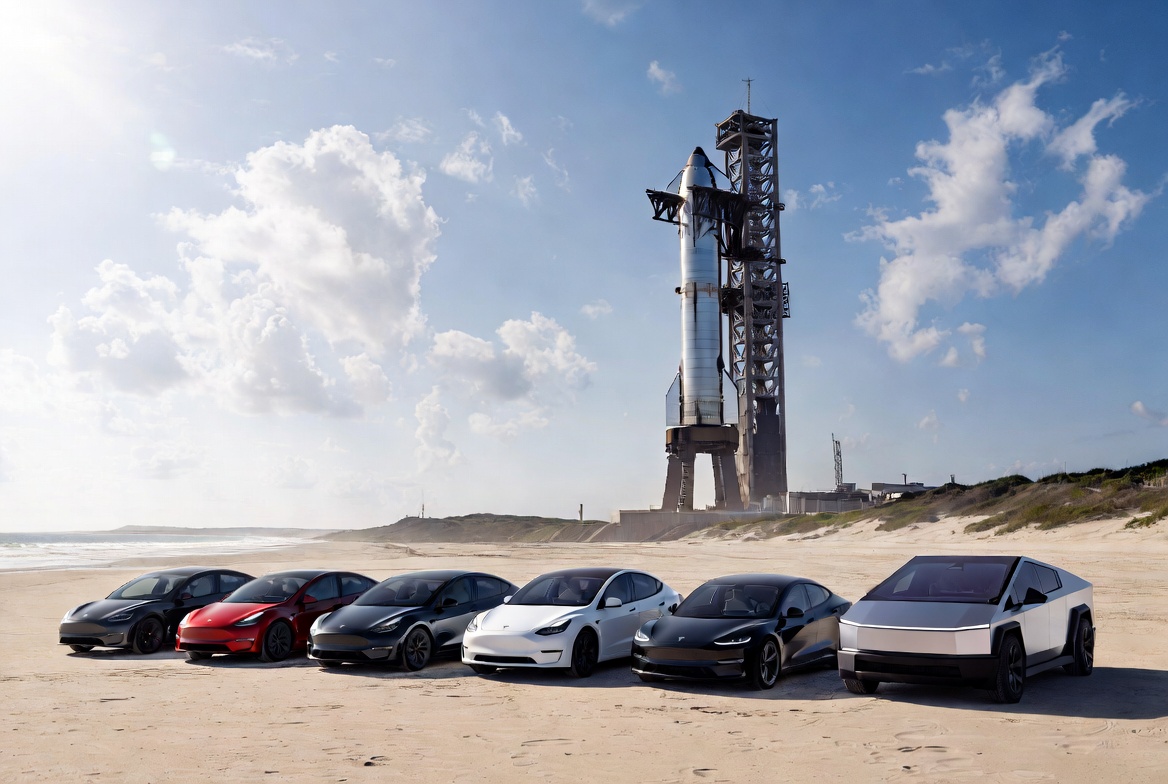
Elon Musk has reportedly discussed merging Tesla and SpaceX with people close to him, according to CNBC, which cited sources familiar with the conversation. Tesla employees have long expected such a transaction and the topic is openly discussed internally, according to internal sources. With SpaceX is days away from kicking off its Wall Street roadshow for what could be the largest IPO in market history, this would be the first time the company will have public market currency to execute a stock-for-stock deal with Tesla.
The financial logic for a merger would make sense. A combined SpaceX and Tesla would create a conglomerate spanning rockets, satellites, electric vehicles, AI infrastructure, and energy storage valued at roughly $3.35 trillion to $3.6 trillion based on SpaceX’s IPO target range and Tesla’s current market capitalization. The two companies are already more intertwined than most people realize. SpaceX bought $697 million worth of Tesla Megapack systems for xAI data centers and $131 million worth of Cybertrucks. Tesla invested $2 billion in xAI, which subsequently merged with SpaceX. Past transactions also include Tesla selling solar equipment and parts to SpaceX, and SpaceX helping with Cybertruck materials.
Will Tesla join the fold? Predicting a triple merger with SpaceX and xAI
Musk himself signaled where this was heading in November 2025 when he posted on X, “My companies are, surprisingly in some ways, trending towards convergence.” Tesla and SpaceX announced a joint semiconductor fabrication facility in Austin called Terafab on the Gigafactory Texas campus, covering two advanced chip factories, with one serving Tesla’s AI needs for vehicles and Optimus robots, the other targeting space-based data centers under SpaceX’s infrastructure vision.
Wedbush analyst Dan Ives places the probability of a merger at 80% to 90% with a target completion in the first half of 2027. The mechanics of a deal became possible the moment SpaceX filed its S-1. Legal experts said a merger likely would not spark antitrust issues but would raise concerns among shareholders in each company, with questions around which company would be the parent, how a stock swap would take place, and who determines the appropriate price. Musk holds about 20% of Tesla’s equity but controls 85.1% of SpaceX’s voting power through a super-voting share class, meaning he would largely be negotiating the terms with himself.
Not everyone is convinced the timing is imminent. Traders on Kalshi place only 33% odds that a merger will happen before May 2027. The more immediate concern for Tesla shareholders is whether the SpaceX IPO pulls capital and Musk’s attention away from Tesla before any merger consolidates the upside for both.
What is clear is that the structural groundwork is already being laid. The Terafab announcement, the xAI merger, the shared supply chain, the cross-company balance sheet transactions, and now the IPO all point in the same direction. Whether the merger follows in 2027 or later, the two companies are already operating more like divisions of a single entity than independent competitors.
Elon Musk
SpaceX to become America’s Military data backbone for missiles, drones, and warfighters
The Space Force just handed SpaceX $2.29 billion to build the military’s space internet backbone.
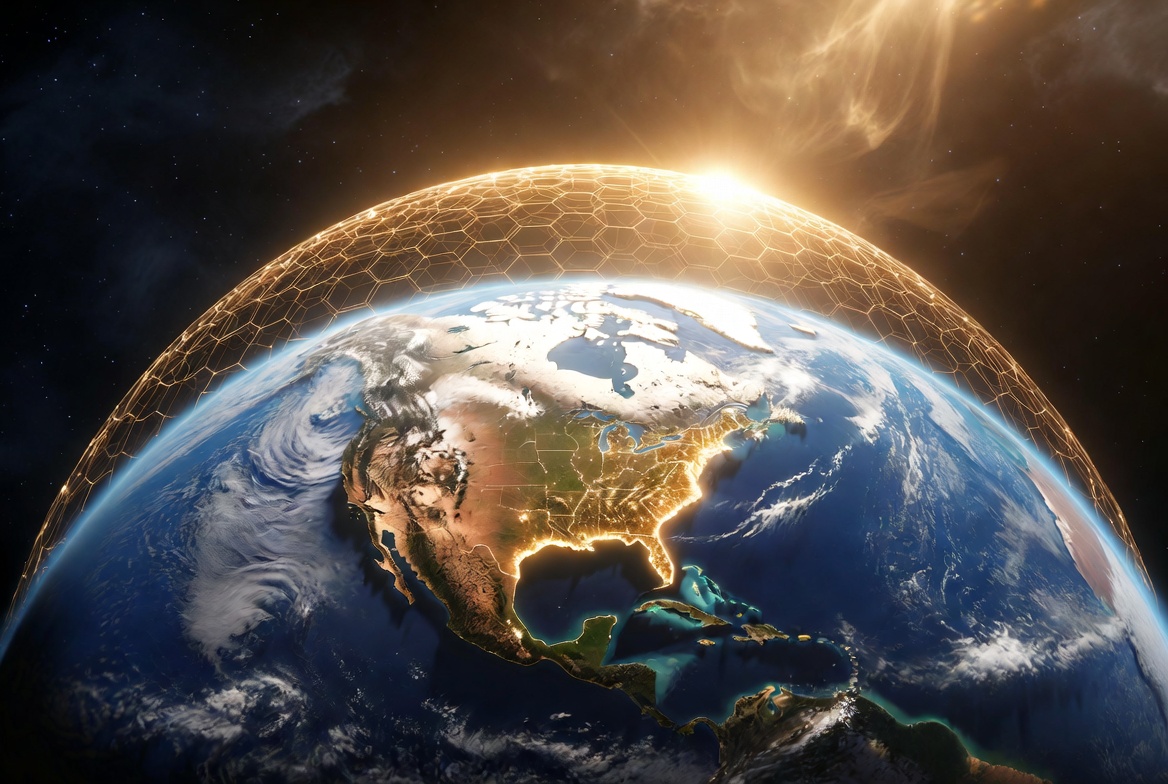
The U.S. Space Force awarded SpaceX a $2.29 billion contract on May 26, 2026 to build the backbone of its Space Data Network, a satellite-based communications system designed to keep American military forces connected anywhere on Earth in real time. The contract is firm-fixed-price and requires SpaceX to deliver a fully operational prototype by the end of 2027.
In plain terms, the SDN Backbone is the plumbing behind the military’s space-based internet. It functions as a low Earth orbit satellite constellation providing robust, high-capacity, and low-latency data transport for the Joint Force, connecting sensors and weapons systems continuously, globally, and securely. Think of it as a private, hardened version of Starlink built specifically for battlefield communications, one that soldiers, ships, and aircraft can rely on even in contested environments where ground-based networks have been disrupted.
SpaceX is quietly becoming the U.S. Military’s only reliable rocket
The Space Force was direct about why SpaceX was selected. “The SDN Backbone leverages the best of commercial innovation and delivers a strong foundation for the SDN mission set — a huge benefit and enabler for our warfighters,” said USSF Col. Ryan Frazier.
“We aren’t trading speed for scale; we are demanding both. By using rapid prototyping and Other Transaction Authorities, we are ensuring our advanced solutions are integrated and delivered to the warfighter as fast as possible,” added USSF Lt. Col. Fry, SDN Backbone system program manager.
The SDN Backbone will work alongside the Space Development Agency’s Transport Layer, with the two systems forming a unified open architecture to provide critical data transport for current and future Department of War missions.
As Teslarati has reported, this is not SpaceX’s first Space Force contract of 2026. In April, the Space Force awarded SpaceX $178.5 million to launch missile tracking satellites, and SpaceX is already embedded in the Golden Dome missile defense software group. The $2.29 billion SDN Backbone award puts SpaceX at the center of how the American military communicates in space, a position with direct implications for its reported $1.75 trillion IPO valuation as the company heads toward a public offering as early as June 2026.

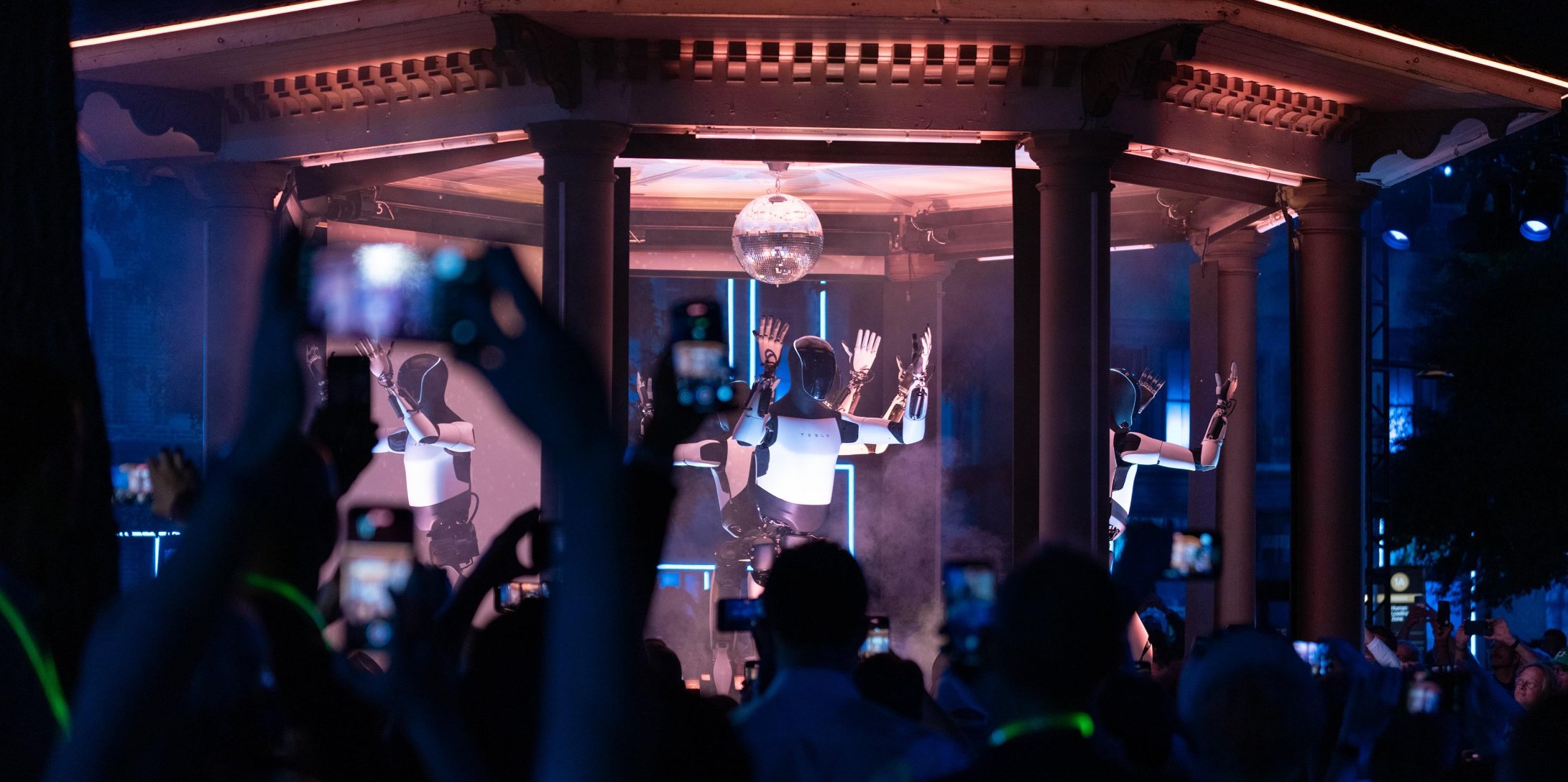
Tesla’s dedicated factory for building up to ten million Optimus units is officially under construction at Gigafactory Texas.
Drone footage released on May 27 by Giga Texas observer Joe Tegtmeyer captures the significant milestone of the first steel structure officially standing at Tesla’s new Optimus factory on the North Campus of the facility.
Phase two of land reclamation is advancing steadily, and the progress will let the new building extend nearly the full length of the main Giga Texas factory, potentially exceeding 4,000 feet, while measuring somewhere between 50 and 70 meters narrower. Extensive foundation work is proceeding as well.
Big news at the new Optimus 10m/y factory construction site today! The 1st steel structure has been erected & as expected the second phase of land reclamation is underway.
This will allow this new factory to grow to nearly the same length as the main Giga Texas factory,… pic.twitter.com/FidRLV6XpU
— Joe Tegtmeyer 🚀 🤠🛸😎 (@JoeTegtmeyer) May 27, 2026
This facility forms a central element of Tesla’s broader North Campus expansion at Giga Texas. The project will add more than 5.2 million square feet of new industrial space. It sits alongside other advanced developments, including a Terafab for next-gen AI chips. The scale reflects Tesla’s commitment to transforming humanoid robotics into a core pillar of the company’s future.
Musk has said that Optimus will be the biggest product in the world on several occasions. He believes it will be Tesla’s biggest valuation contributor.
Tesla prepares to expand Giga Texas with new Optimus production plant
Tesla plans to build about 10 million robots at the site annually once it is completed, which would be about 27,000 units each day.
The Optimus plant at Giga Texas is part of Tesla’s phased strategy for Optimus manufacturing. In an effort to start production of the robot well before the Giga Texas plant is complete, Tesla ended production of the Model S and Model X vehicles, which were built in Fremont, California, to make way for initial Optimus manufacturing efforts.
Production there will start in either July or August of this year, and early units will support internal factory tasks while the team gathers real-world data to refine processes. The Gigafactory Texas facility will house a second-gen production line. It targets high-volume output starting in Summer 2027.
Musk has repeatedly described Optimus as potentially more valuable than Tesla’s entire vehicle business. Current versions are already completing minor tasks around various facilities, while Tesla continues to refine its abilities and add new features.
Tesla’s total investment could reach several billion dollars. Significant challenges lie ahead, including the creation of an entirely new manufacturing ecosystem, the refinement of AI systems for dependable autonomy, and the development of reliable supply chains for actuators, sensors, and other components.
Nevertheless, the visible progress at Giga Texas highlights Tesla’s capacity to translate ambitious concepts into physical reality.
Tesla’s Optimus factory stands as much more than a simple expansion project, as it is quite literally the second phase of what could potentially be the biggest product ever. With construction beginning, 2027 is poised to become a transformative year for Tesla, as it evolves even further from an electric vehicle leader into a pioneer of intelligent, general-purpose machines.

The Tesla and SpaceX merger everyone is talking about is quietly building

SpaceX to become America’s Military data backbone for missiles, drones, and warfighters


