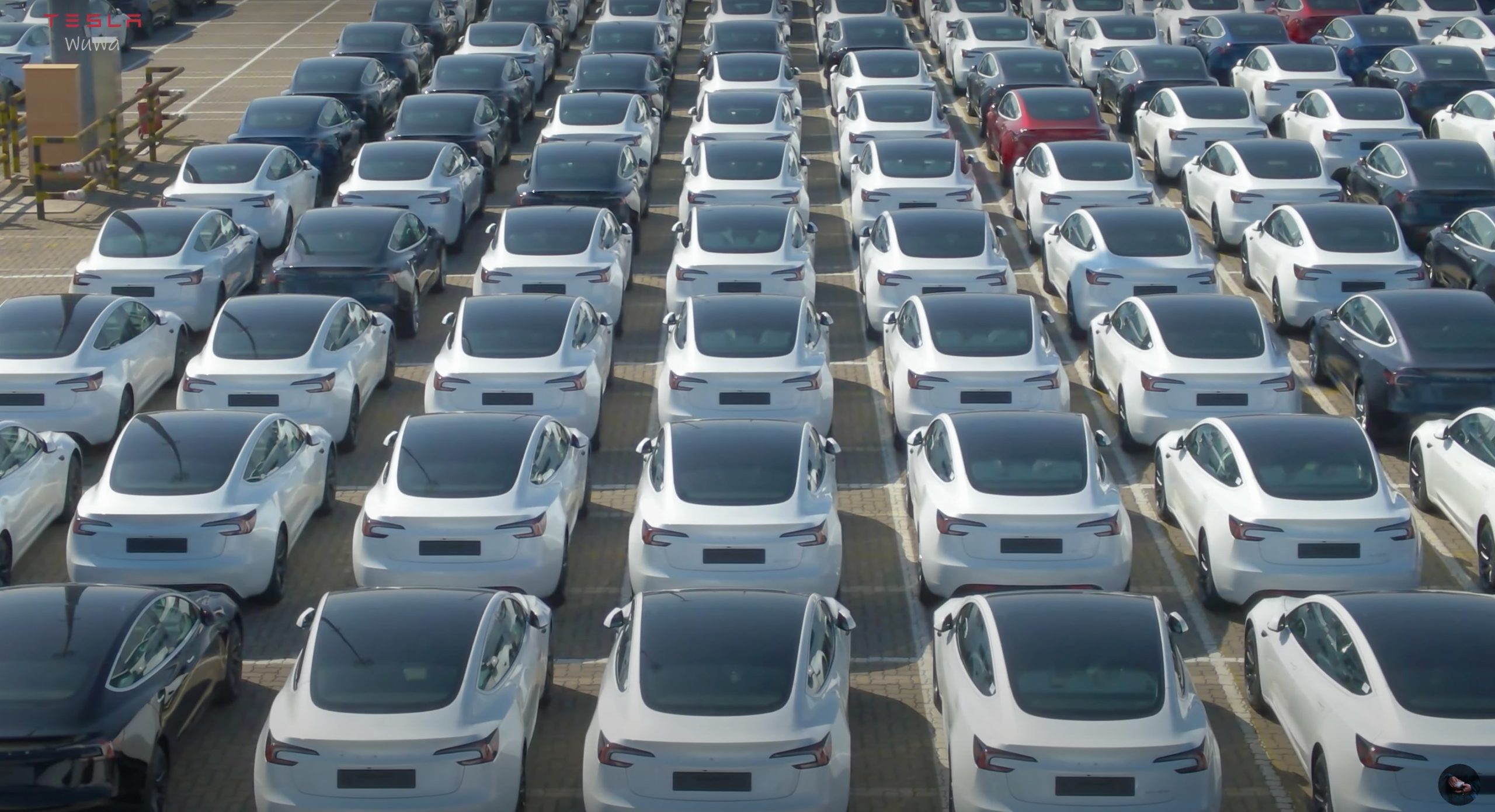

Tesla’s tariffs in Europe for China-made electric vehicle (EV) imports are expected to get lower.
Last month, the European Commission gave Tesla an individual tariff rate of 9% for its EV imports from China. The Commission reportedly plans to revise Tesla’s tariff rate, reducing it to below 8%. According to Mlex, Tesla’s rate might be reduced to 7.8%, but no official announcement has been made yet.
Tesla requested to receive an individual tariff rate from the European Commission, citing that it complied with its anti-subsidy investigation on EV imports from China. In July, EU inspectors visited Tesla Giga Shanghai to see if the factory relied heavily on subsidies from the Chinese government and determine its individual tariff rate.
Based on the Commission’s initial announcements earlier this year, Tesla would have been assigned a duty of 20.8% before it received an individual tariff rate. The original tariff rates reached as high as 38%. The Commission revised its tariff rates in August, with a maximum rate of 37.6%.
According to Bloomberg’s sources, other automakers who import EVs from China may also receive adjusted tariff rates. Besides Tesla, Volkswagen also received an individual duty of 21.3% for the Cupra Tavascan.
The sources did not mention whether BYD, Geely, or SAIC’s individual tariff rate would be reduced. Although the big three Chinese automakers’ individual tariff rates were decreased already last month.
If you have any tips, contact me at maria@teslarati.com or via X @Writer_01001101.



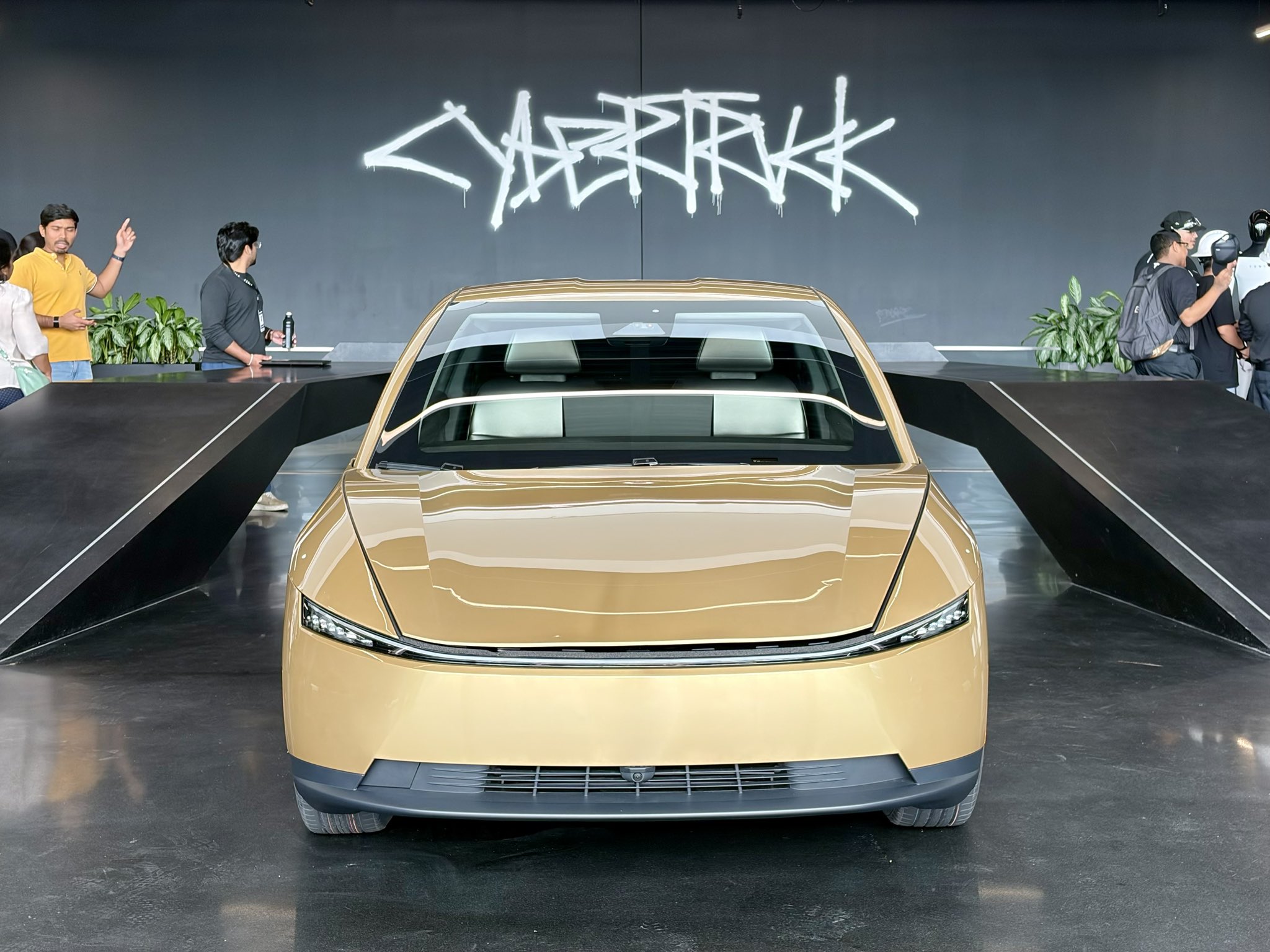
Elon Musk said the Tesla Cybercab will perform “a majority of all passenger miles” where it is allowed to operate and that point is “obvious to anyone with eyes and a brain.”
Musk used the point to double down on the company’s decision to ax the cult-favorite Cybertruck, as its production space will be removed and transitioned into additional Cybercab lines. The move has catalyzed a polarizing conversation on whether its right or wrong.
Whatever side you are on — it’s happening.
Dodge ended the Viper.
Audi retired the R8.
Mitsubishi said goodbye to the Lancer Evo.
Ford bid farewell to the Bronco (at one point).
Chevrolet sunset the Camaro.Tesla is ending the Cybertruck. I’m pissed. I’m upset.
Fans of those five automakers mentioned did the same thing. It happens. It sucks. I don’t like it.
But I still love Tesla. I love my Model Y. I hoped to be in a Cybertruck in a little under two years.
I won’t be. But I still won’t put my family in anything else. Too safe. Too advanced. Too much better than everything else.
— TESLARATI (@Teslarati) November 10, 2026
Regardless, Musk seems to be getting to the point that he is done talking about the choice. At some point, you have to think that this was truly a difficult decision for him and the company as well, and this is not something he took lightly. In fact, he’s probably a little bit disappointed with it, too.
But the point remains that the Cybertruck is gone. Musk’s focus is purely on developing an autonomous platform that the world will utilize for transportation, and he’s telling you that anyone “with eyes and a brain” can see it:
@PalmerLuckey @carlhancock Cybercab will do a majority of all passenger miles in any jurisdiction where it is not prohibited by law.
Obvious to anyone with eyes and a brain.
— Elon Musk (@elonmusk) November 10, 2026
Tesla is betting that all of its passengers in the future will be okay with not owning their own personal cars and will be fine with ride-hailing for the rest of their lives. Every dinner, every errand, every trip to the airport and transportation thereafter, will all be operated by ride-sharing, and in Tesla’s perfect world, it will happen in a Cybercab.
As of now, Cybercab is only active in Austin, but it has been spotted all over the country with a driver behind the wheel in those prototypes. In Austin, the car has no steering wheel or pedals for people to control the vehicle.
The Cybertruck dilemma is one that has truly come across the entire Tesla community and while it seems to be a great idea to keep it because people love it, the business side of things is steering Musk and Tesla in another direction.
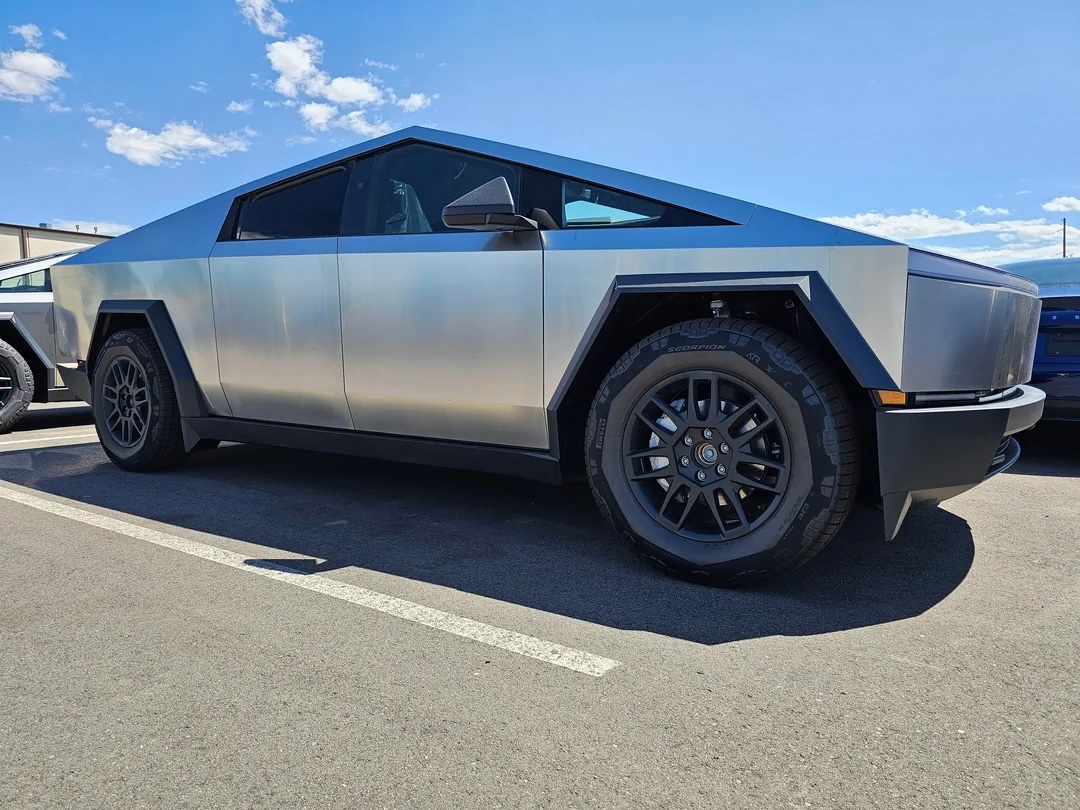
Tesla has slimmed its Cybertruck offerings to offer only its most expensive trim: the Cyberbeast.
After announcing that the Cybertruck would no longer be produced and the company would wind down manufacturing sometime in the middle of 2027, Tesla started to eliminate some of the configurations offered to customers.
Tesla has stopped taking orders for the Cybertruck Premium AWD.
The Cyberbeast is now the only trim you can order, and its price went up $7,500 to $109,990.
Estimated deliveries have also slipped to March–June 2027 as the Giga Texas line heads toward its mid-2027 wind-down. https://t.co/o28epA0ZQl
— TESLARATI (@Teslarati) November 10, 2026
Now, only one remains: the $109,990 Cyberbeast. This is truly what seems like Tesla’s last effort to deter any remaining orders from coming in: eliminate the cheap trims and leave only the high-dollar vehicle within the lineup of Cybertruck options.
Those who want to take advantage of this last-ditch opportunity to own Tesla’s symbolic pickup have to pay to play.
Tesla says the reason for the wind down is truly because of Cybercab and its importance to the future.
Despite cries for Tesla to continue production of the pickup, Musk says it is too difficult to ramp a high-volume line instead of ending the truck altogether. He also says Cybercab is what will take passengers around for the “majority of all miles in any jurisdiction where it is not prohibited by law.”
@PalmerLuckey @carlhancock Cybercab will do a majority of all passenger miles in any jurisdiction where it is not prohibited by law.
Obvious to anyone with eyes and a brain.
— Elon Musk (@elonmusk) November 10, 2026
Tesla is going all in on autonomy, and that’s never been a secret. But the commitment to a two-door, two-seat Cybercab truly limits people from having options for labor or hobbies. It also limits people from having their entire family in a single car.
Parents with even a single child will be required to take multiple vehicles if Cybercab is truly the only option Tesla plans to have.
Elon Musk keeps justifying Tesla Cybertruck’s cancelation, but it’s confusing
Tesla has stated the Robovan will also be in production eventually, but it still does not seem like the most ideal vehicle to own. It seems like it is geared more toward commercial uses, but Tesla might have something in the pipeline for families.
News
Tesla exec hints at a wild fix for Robotaxi’s biggest weather problem
Tesla VP Lars Moravy says focused lasers could keep robotaxi cameras clear instead of wipers.

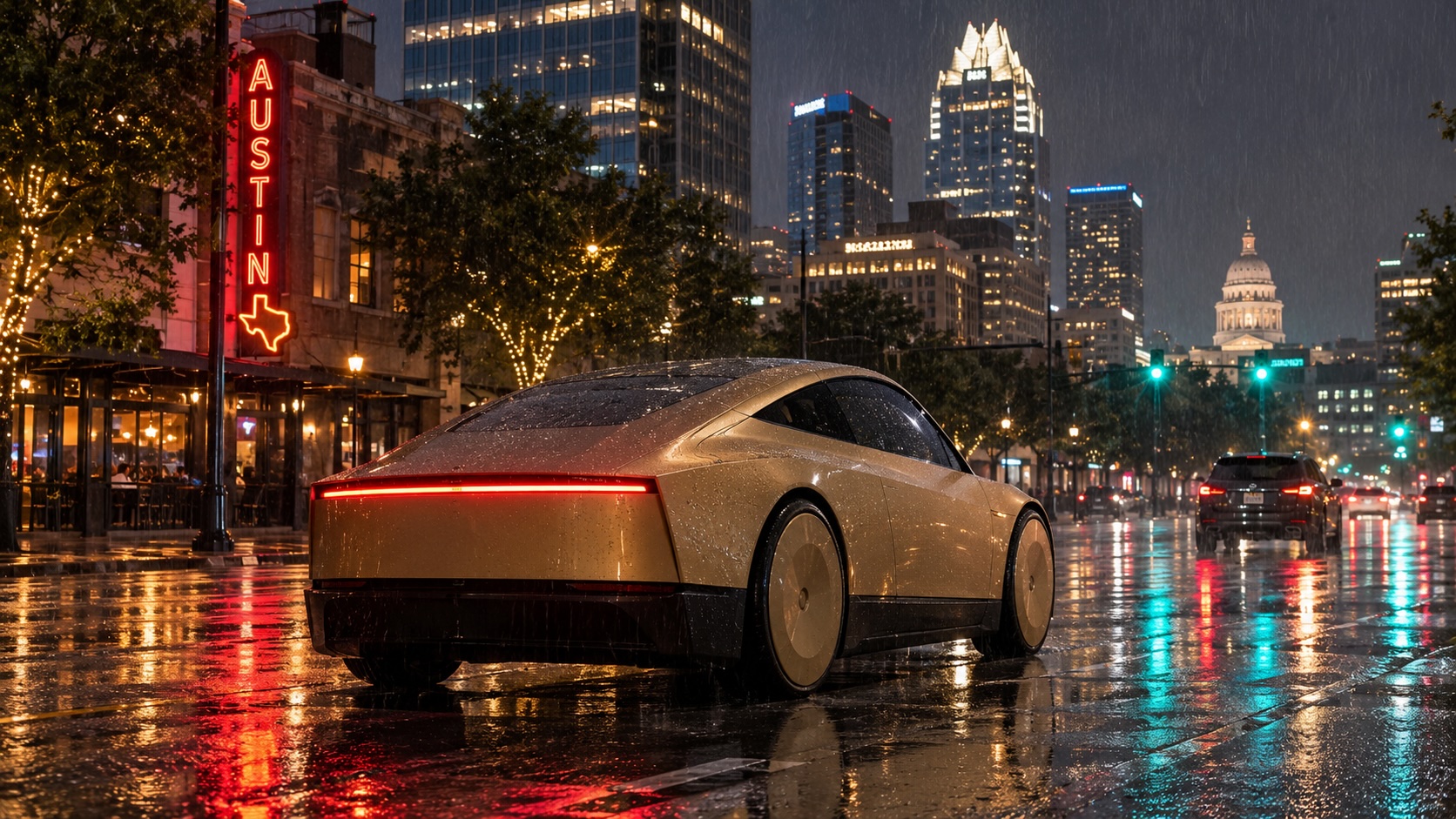
Tesla may one day use lasers instead of wiper blades to keep its robotaxi cameras clear. Lars Moravy, Tesla’s Vice President of Vehicle Engineering, floated the idea in a new episode of Jay Leno’s Garage released Monday, where he and design chief Franz von Holzhausen walked Leno through the Model Y L.
“If you fire them in a focused area, you can clean the sheet of water and create a barrier,” Moravy said. “When you think about autonomy, it might be a good solution to only clean the area where the camera is.” He added that clearing an entire windshield would take too many lasers to be practical.
🚨 Jay Leno has released a new episode breaking down the Model Y L. You can watch it here: https://t.co/umMp85UEaB — TESLARATI (@Teslarati) November 9, 2026
The comment brings back one of Tesla’s stranger patents. The company filed for “Pulsed Laser Cleaning of Debris Accumulated on Glass Articles in Vehicles and Photovoltaic Assemblies” in May 2019, and the U.S. Patent Office granted it in September 2021. An updated divisional version was granted on March 31, 2026. The system detects debris on the glass, identifies what it is, and pulses the laser at a calibrated rate so the beam never penetrates deeper than the glass itself. The filing names windshields, side windows, camera lenses and solar panels as possible targets.
Lasers were once rumored for the Cybertruck, which appeared at its November 2019 unveiling with no wipers at all. Tesla eventually settled on a single oversized blade, and Elon Musk admitted the wiper was the part of the truck that troubled him the most. That production line is now scheduled to shut down around mid 2027 to make room for more Cybercab output.
What has changed since then is who is in the vehicle. A privately owned car has a driver who can notice a smeared windshield and do something about it. A Cybercab heading to its next pickup has nobody on board to check. Tesla has been chipping away at that problem with conventional hardware. Model Y Robotaxis in Austin were spotted with washers on their side repeater cameras in January, and a lens cleaning patent granted in May describes a fluid and wiper assembly for vehicle cameras and Optimus’ eyes. A laser would remove the fluid and the blades, both of which need regular replacement across a fleet.
The same episode gave Leno his first ride on Full Self-Driving (Supervised). The Model Y L pulled over on its own when an ambulance approached with its sirens on. “We got it on self-driving mode! I’m not touching anything,” Leno said. Moravy and von Holzhausen also explained that owners remain responsible while using FSD (Supervised), while Tesla takes responsibility for Robotaxi rides because it acts as the operator. Tesla launched the Model Y L in the U.S. in July at $61,990.
Moravy gave no timeline, and he described the laser setup as something Tesla is considering rather than a confirmed feature. The fleet it would serve keeps getting bigger, though. Tesla launched unsupervised Robotaxi service in San Antonio on Monday, its eighth city, and expanded its Austin service area to roughly 443 square miles on the same day. Several of those markets, including Houston, Miami and Tampa, see heavy seasonal rain.

Elon Musk says Tesla Cybercab future is ‘obvious to anyone with eyes and a brain’

Tesla slims Cybertruck offerings to only its most expensive trim


