Lifestyle
The Tesla Dilemma: Texas or Tulsa

When news broke that Tesla had announced the finalists for its next Gigafactory, which actually could be called a Terafactory based on the expected cell production output from the facility, comparisons between Austin, Texas, and Tulsa, Oklahoma was rampant across social media. Each location has its own distinct advantage and disadvantage, which I’ll explore.
I will start with Austin, Texas, because of the location’s notoriety as the “favorite” of the two locations. Also, it is fairly evident that Elon seems to think highly of the Lone Star State based on his Tweets about the state and also the presence of his SpaceX business there.
Texas has a lot of available lands, and it’s very cheap. Houses and businesses can get the same amount of land in Texas that they can in California, but at a significantly cheaper price. Tesla could save a lot of money on the purchase price of the land and it could be using Tulsa as leverage to get an even better deal on the Texas property.
—————————————————–
This is a preview from our weekly newsletter. Each week I go ‘Beyond the News’ and handcraft a special edition that includes my thoughts on the biggest stories, why it matters, and how it could impact the future.
A big thanks to our long-time supporters and new subscribers! Thank you.
—————————————————–
One of my favorite reasons for a Texas Factory is the fact that the state has long been the heart of oil and gas, and the world’s largest electric automaker in the same region. I find that to hysterical to me. I feel that Tesla establishing its largest and most dominant production facility in that area would be a big “middle finger” to the pollution-causing gas and oil drillers who, for a long time, have called Texas home.
Texas also has a hearty history of automotive manufacturing and is ranked fourth out of all fifty U.S. states in the sector. Also, Tesla could provide a stable economic boost to the State. While this also applies to Tulsa, Texas already has a strong presence in automotive manufacturing, which could ease regulations and transition time in the state.
Texas is also home to SpaceX’s Boca Chica Launch Facility. This statement solidifies Musk’s presence in the state and makes it an already familiar option for the CEO’s other company.
However, Tulsa has its own array of advantages, a lot of which are similar to Texas but in a slightly different way.
Tulsa also offers a sizeable amount of affordable land that Tesla could use for its next production facility. Although the company has roots in Texas and not in Tulsa, local authorities are ready to make a strong push for Tesla, knowing that the electric automaker could provide a substantial positive economic injection into the state’s employment rate.
Tulsa is also slightly more centralized than Austin, as it is closer to the geographical center of the country. While it may not provide much of an advantage as far as location goes, it is slightly more centralized than Austin is.
I also feel like Tulsa may want the factory a little bit more than Austin. I could be wrong here, because what city wouldn’t want a manufacturing plant that will provide 12,000+ with jobs and provide a positive economic impact? But Tulsa took a statue of an oil driller and put Tesla’s logo on it, and I feel like that is pretty special in itself considering the city’s rich roots in oil drilling. It is especially impressive that the local figures in Tulsa are willing to sit there and modify a very notable statue in the area to woo Tesla in their direction.
—————————————————–
If you made it this far, thank you :), and please consider Subscribing and joining me next week as I go ‘Beyond the News’
—————————————————-
Simply enough, it’s pretty obvious that Texas is the favored choice. At least it is for me. While Tulsa does have its advantages, it just doesn’t seem like it would provide enough benefits that make it a clear favorite over Texas. Elon has also mentioned Texas on numerous occasions like I previously mentioned, and really, economically, I think it provides more benefits to Tesla as a company.
What do you think?
I’d also like to add that there were plenty of great emails last week that I received after sending out the Fremont piece. Thanks for being sure to send me messages. I really appreciate the feedback and I love the fact that whether you agree or disagree, you’re telling me your thoughts. Thanks again!


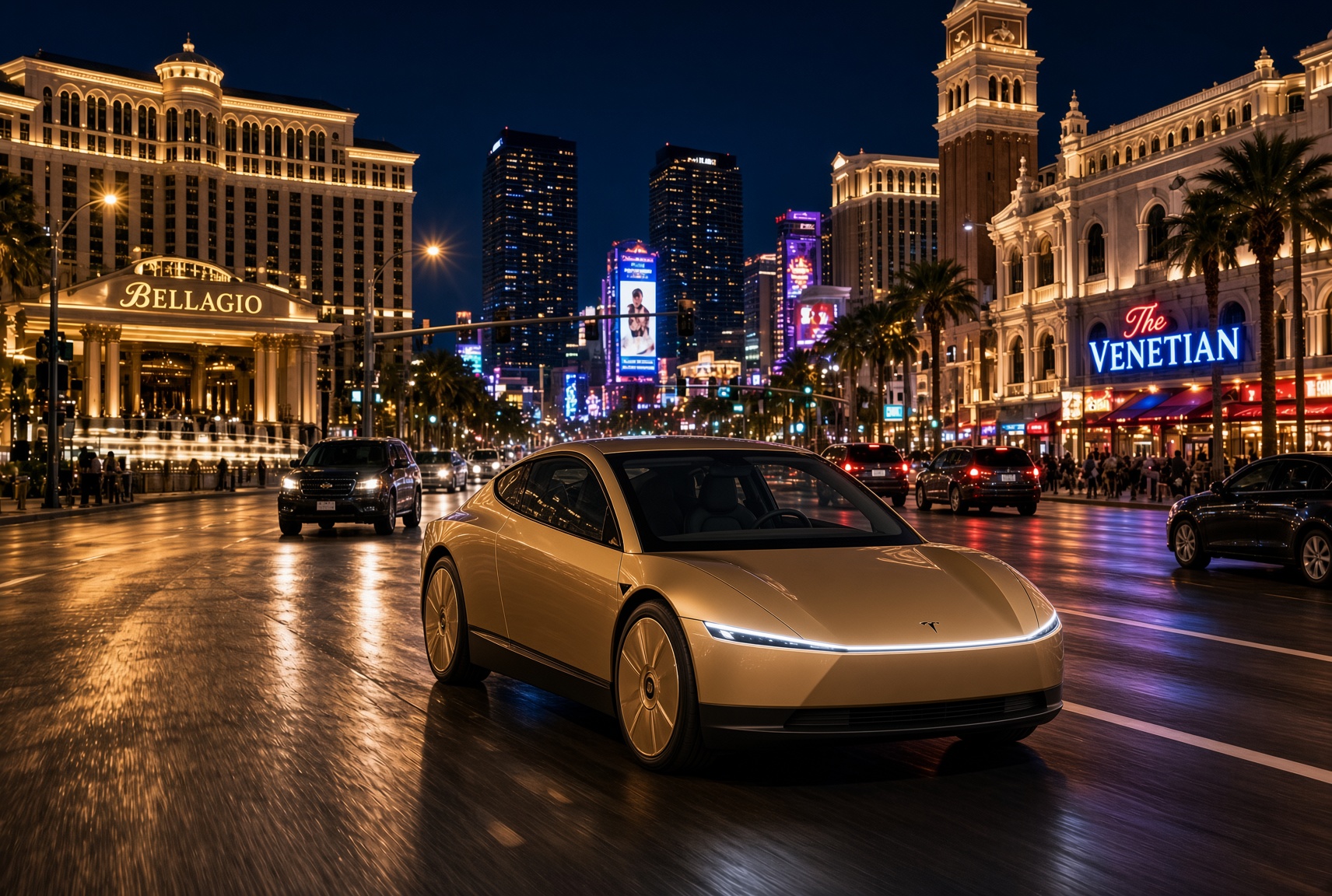
For a century, the car has asked the same thing of its owner, which is basically to pay attention. Even the best ride-hailing app like Uber or Lyft only moved the problem into someone else’s hands. You stopped driving, but you still sat in a stranger’s car, while half listening, and wondering whether to take a phone call in the car without being rude. The Cybercab has no wheel, no pedals and no driver. With Grok @bot now live inside it, it becomes something else entirely, and I think that matters more than the fleet count that everyone is tracking.
Grok @bot is an agent, not a voice assistant. A rider signs in once, and from then on can say what they need and watch it happen. Order dinner from a favorite restaurant. Fill the grocery cart. Move money, answer email, adjust a calendar, push a work project forward. Tesla engineer Yun-Ta Tsai confirmed it is enabled across every Cybercab and the rest of the Model Y fleet, and Tesla’s own pitch is that Full Self-Driving handles the commute while Grok handles the errands.
Think about what that does to a thirty minute ride. Uber sells you a trip, while Waymo sells you the same trip in a more private setting. Tesla is selling the thirty minutes themselves, returned to you with an assistant attached. Errands that used to eat a Saturday get done between pickup and drop off. The ride stops being dead time between two places and becomes a place of its own.
Tesla integrates Grok Bot into its vehicles for the ultimate personal assistant
Best of all, your Bots follow you into any Cybercab, and presumably your own Tesla, then logs you out automatically when you step out. Anyone can bolt a chatbot onto a screen, but much harder to own the vehicle, the autonomy stack and the assistant at once. It also quietly ties SpaceX’s Super Intelligence business to Tesla’s fleet, after Tesla converted its xAI stake into SpaceX equity. The relationship between those two companies is getting harder to describe as separate.
This is also where the hard questions start, because an agent that can spend your money in a vehicle other people also ride in needs some answers. How does it handle a voice it shouldn’t trust? What gets recorded, who can see it, and for how long? What happens when a rider leaves halfway through a task?
If Tesla gets those answers right, the scoreboard changes. We have been counting Cybercabs and wait times. The more telling number may be what riders accomplish per trip. That is data almost no one else will ever have, and it is the real reason to watch Grok @bot.
What do you think? Leave me a comment.
Lifestyle
Tesla’s mirrorless Cybercab will give riders a visibility upgrade
Tesla engineer confirms Cybercab update letting riders pull up rear and repeater cameras on demand.

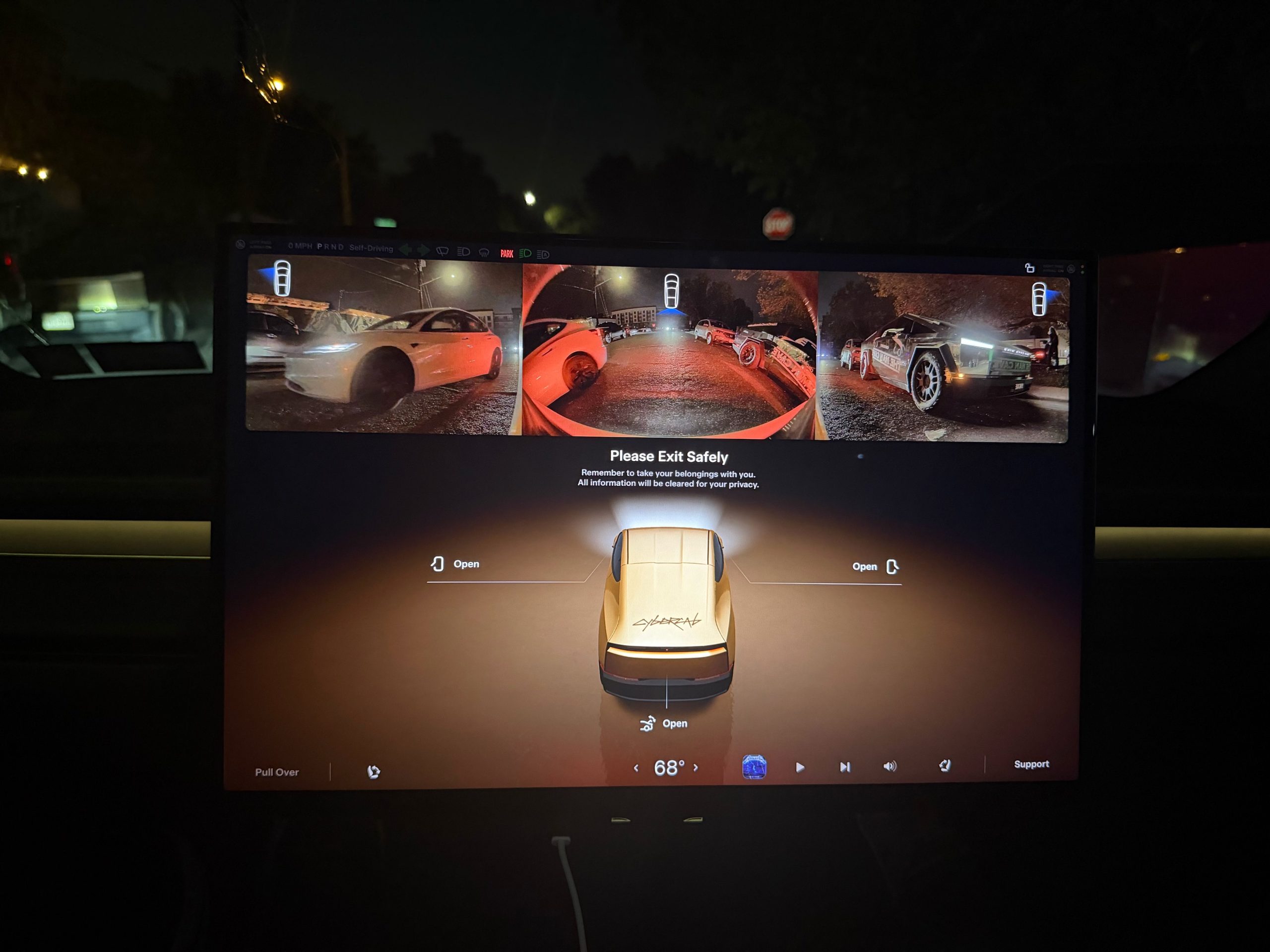
Tesla is working on a Cybercab update that would let passengers pull up the vehicle’s rear and side cameras on demand, and the request came straight from a rider.
The exchange played out on X late Friday. Cybercab rider Dan Burkland shared photos of the two-seater’s cabin screen after an evening ride, praised the UI team’s work, and left one request: let riders open the rear and repeater cameras whenever they want, “especially for peace of mind.” Tesla UI software engineer Evan (@CarCoder) answered with two words: “In development.”
The Tesla UI team absolutely crushed it with the infotainment software. Nicely done @CarCoder!
One feature request: Allow folks to pull up the rear & repeater cameras on demand. This would be great especially for peace of mind. https://t.co/mNAOSLx6pE
— Dan Burkland (@DBurkland) October 10, 2026
The idea fits a pattern Teslarati has tracked since public rides began. Days after paid Cybercab service opened in Austin, Tesla sent riders a survey that asked them to rate the touchscreen, the app and the cabin, and to pick the features they wanted most. We reported on that survey in September, and a camera view is the kind of small software change Tesla can push quickly if riders keep asking.
It also speaks to something unique about the vehicle. With no steering wheel, no pedals and no driver, passengers have no mirror to check and no way to see behind them. The hardware is clearly built for camera awareness, from the repeater cameras to the rear camera. Letting a passenger look through those same cameras would give a nervous first time rider a way to confirm what is around the car.
The timing matters because the fleet is growing fast. Tesla’s Robotaxi account said on Saturday that more than 300 Cybercabs are now serving Austin, an eightfold increase in 30 days, and Tesla AI chief Ashok Elluswamy named Dallas as the next city. More cars and more cities mean more people riding in a driverless vehicle for the first time, which is exactly when small trust features carry weight.
For now, the feature is confirmed only as in development. If Tesla follows its usual pattern with Cybercab software, riders could see it appear in a point release without any announcement, and Teslarati will watch for it.
Elon Musk
Elon Musk’s surprise addition to the X Takeover lineup has fans talking
Elon Musk will join Saturday’s X Takeover at Giga Texas for a live virtual interview.
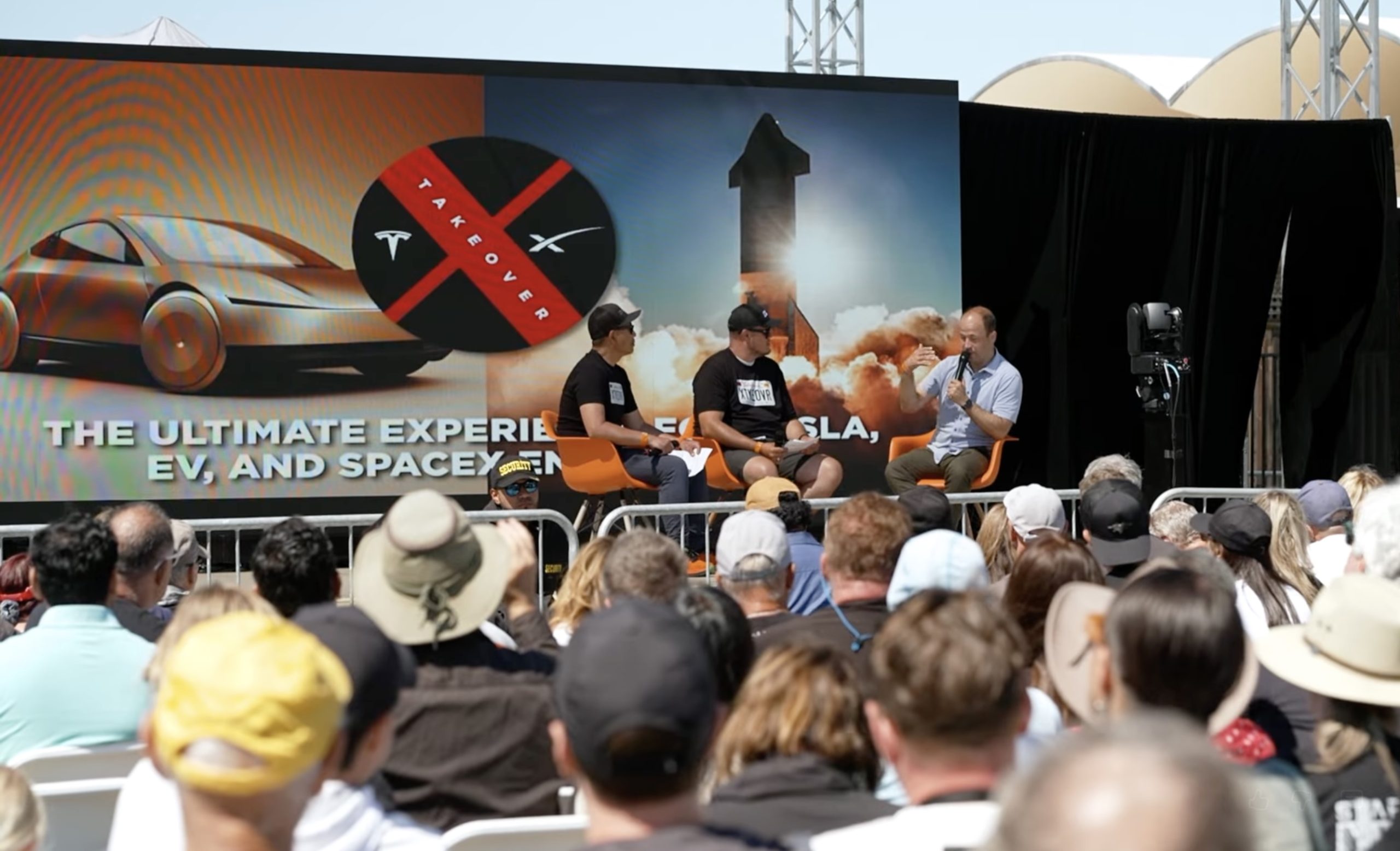
Elon Musk will join X Takeover at Giga Texas on Saturday for a live virtual interview, according to Sawyer Merritt, who shared the news late Thursday. Musk will not be on stage in Austin. The conversation is set to stream for free on the @teslaownersSV account on X.
Organizers had kept expectations in check. In a September update, Tesla Owners Silicon Valley said Musk had appeared at the event twice before but was not promising a third appearance, even as fans hoped he would walk the Giga Texas grounds in person. A virtual spot matches 2024, when Musk gave a surprise interview of about an hour to the crowd in San Luis Obispo, as Teslarati reported at the time.
Wasn’t expecting this 🫡
— Tesla Owners Silicon Valley (@teslaownersSV) October 9, 2026
This year’s edition is a first in several ways. It is the first X Takeover held outside California and the first at a Tesla facility, with tickets selling out in eight days. Tesla provides the venue, but the event is produced independently by Tesla Owners Silicon Valley. The main event runs from 10 a.m. to 6 p.m. CT, followed by a drone and light show at 9 p.m. Maye Musk is the keynote speaker, Franz von Holzhausen is set for a virtual keynote, and Nicki Minaj is the special guest. Joe Tegtmeyer, whose drone footage Teslarati used to track the Optimus factory steel frame at Giga Texas, is also on the speaker list.
Musk’s interview topics have not been revealed, but the backdrop is busy. Tesla doubled its Cybercab fleet in Austin in late September, and last week Musk explained why Robotaxi hours only moved from 10 p.m. to 11 p.m.. Merritt also reported Thursday that Texas DMV records now show 319 registered Cybercabs, up from 169. NHTSA’s deadline for Tesla’s sworn answers on Cybercab certification is October 30, and Tesla reports third quarter earnings on October 21.
Fans who cannot make it to Austin can watch the livestream on X. Musk tends to say more in unscripted settings than he does in prepared remarks, which is the reason this one is worth having open on Saturday.

Taiwan power firm bets big on Tesla Megapacks as AI data center thirst grows

Tesla Cybercab and Robotaxi’s real advantage won’t be the ride service

Why Elon Musk’s target date for buying an Optimus robot is harder than it sounds

The Pentagon taps Elon Musk to design the battlefield of the future

Tesla Roadster’s new patent preps white-knuckle speeds, keeping it grounded


