News
Tesla gets courted by Brazil to establish a Gigafactory in the country

Brazil’s Minister of Science, Technology, Innovations and Communications Marcos Pontes and Congressman Daniel Freitas are reportedly in early talks about the potential for a Tesla Gigafactory in Brazil.
Both Pontes and Freitas did not disclose what company they’re negotiating with, only they hinted that it is one of the most valuable automakers in the world today. The officials also noted that they are hoping the talks will eventually result in the company opening one of its facilities in the country by 2023, the Brazilian publication NSC Total first reported.
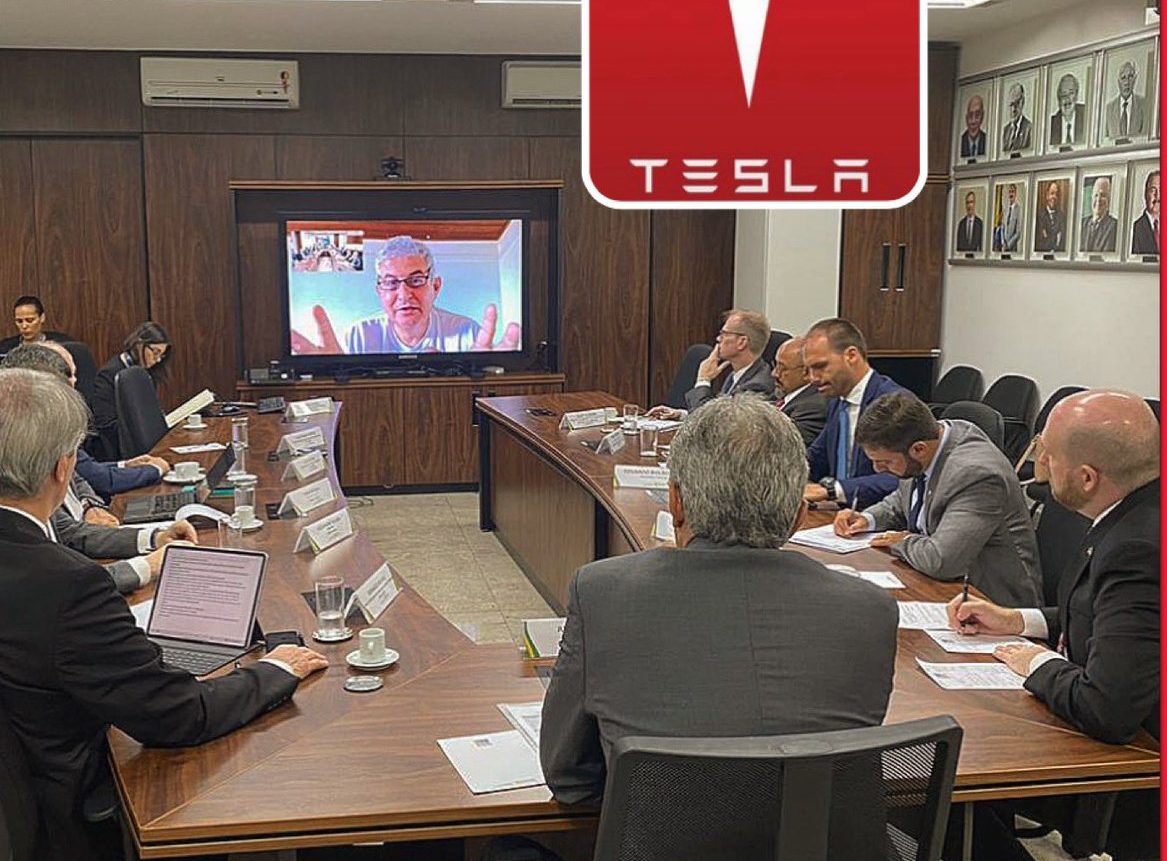
However, a Tweet posted on Thursday by Eduardo Bolsonaro, son to Brazil’s President and a lawmaker in the country, would later confirm that talks have taken place between Brazilian authorities and William Popp, charge d’affaires at the U.S. embassy in Brasilia, on the prospect of Tesla opening up a factory in South America’s largest country.
Min. @Astro_Pontes operou ouvido ontem e hoje estava em videoconferência conosco e Sr. Popp da @EmbaixadaEUA no @mctic tratando de atrair para o Brasil fábrica da americana @Tesla ,empresa de tecnologia renovável que produz baterias e carros elétricos@DFDanielFreitas@elonmusk pic.twitter.com/S54jnjN7qs
— Eduardo Bolsonaro🇧🇷 (@BolsonaroSP) February 20, 2020
Bolsonaro’s tweet follows earlier reports that officials met on Feb. 12 to discuss the initial plans to help the federal government convince Tesla of the benefits of setting up shop in the country. The plan is to form a delegation that may include President Jair Bolsonaro to visit the Tesla headquarters in the United States.
The official entry plotted on the schedule of Minister of Science, Technology, Innovations and Communications reveals that Tesla’s Senior Staff Manufacturing Engineer Anderson Pacheco was present via video conference in the office of Pontes. Pachecho graduated with a Master of Science in Production Engineering from Brazil’s Universidade Federal de Santa Catarina. He has been with Tesla for over 4 years now and works both at the Fremont facility and Gigafactory 1 in Sparks, NV.
Details are limited as of reporting but the proponents may encourage Tesla to put its first Gigafactory in South America at Santa Catarina, a state in Southern Brazil and roughly 1.5 hours by plane from Rio De Janeiro.
Meanwhile, Freitas is the author of a bill that pushes for the exemption of electric vehicles from import tax. The said bill also proposes tax incentives for EVs or hybrid vehicles produced in Brazil.
If the talks of the Brazilian government and Tesla prospers and results in the building of Giga Brazil, it would be another step towards Tesla CEO Elon Musk’s goal of having Gigafactories in every continent.
Can’t wait to bring Tesla to Brazil. One of my favorite countries!
— Elon Musk (@elonmusk) July 31, 2018
Elon Musk also recently hinted that Tesla is considering a Giga Texas, which could be a perfect solution to ramp battery production or may even be the facility to help produce its upcoming all-electric Cybertruck.
Gigafactory Brazil also makes perfect sense as the country is considered a sleeping tech giant and is one of the countries of the future. With a Tesla strong foothold in Brazil, the distribution of Tesla vehicles in South America will be easier just like how the carmaker plans to do it in Asia with Giga Shanghai and in Europe with Giga Berlin.


Elon Musk
Elon Musk offers to pay TSA salaries as government shutdown leaves agents without paychecks
Elon Musk offered to personally cover TSA salaries as the DHS shutdown deepens travel chaos nationwide.

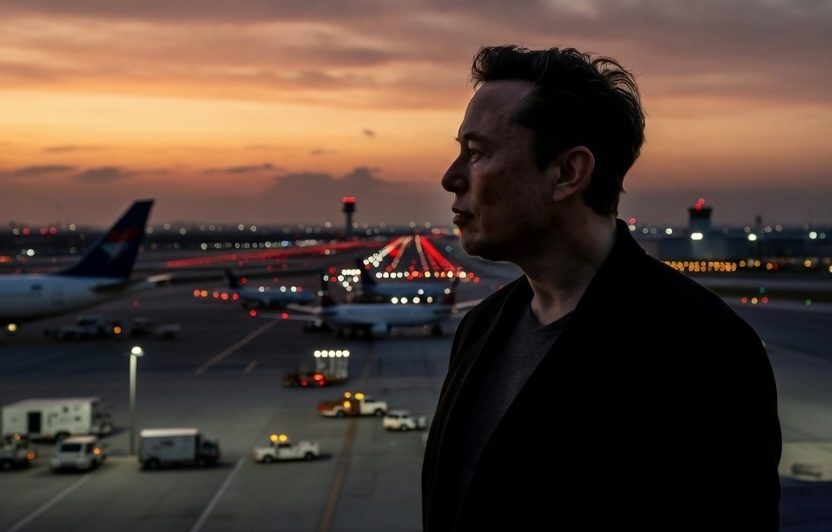
Elon Musk says that he is willing to personally cover the salaries of Transportation Security Administration (TSA) workers caught in the crossfire of a partial government shutdown that has now dragged on for over a month. “I would like to offer to pay the salaries of TSA personnel during this funding impasse that is negatively affecting the lives of so many Americans at airports throughout the country,” Musk wrote.
I would like to offer to pay the salaries of TSA personnel during this funding impasse that is negatively affecting the lives of so many Americans at airports throughout the country
— Elon Musk (@elonmusk) March 21, 2026
The offer arrives as Congress let funding expire for the Department of Homeland Security on February 14, amid a disagreement over immigration enforcement, leaving most TSA employees classified as essential and on duty but working without pay. The timing could not be more disruptive, as the shutdown is colliding directly with spring break travel season when millions of Americans are in the air.
This is not the first time TSA workers have endured this kind of hardship. TSA agents are being asked to work without pay until congressional action unblocks their paychecks, having previously held out through the longest government shutdown in U.S. history at 43 days. The pattern reveals a systemic failure in how Congress funds critical security infrastructure, and Musk’s offer shines a spotlight on that recurring failure at a moment when the public is directly feeling its effects through long lines and terminal closures.
Whether Musk can legally follow through remains unclear, as federal law generally prohibits government employees from receiving outside compensation related to their official duties.
Elon Musk
Elon Musk launches TERAFAB: The $25B Tesla-SpaceXAI chip factory that will rewire the AI industry
Tesla, SpaceX, and xAI unveiled TERAFAB, a $25B chip factory targeting one terawatt of AI compute annually.
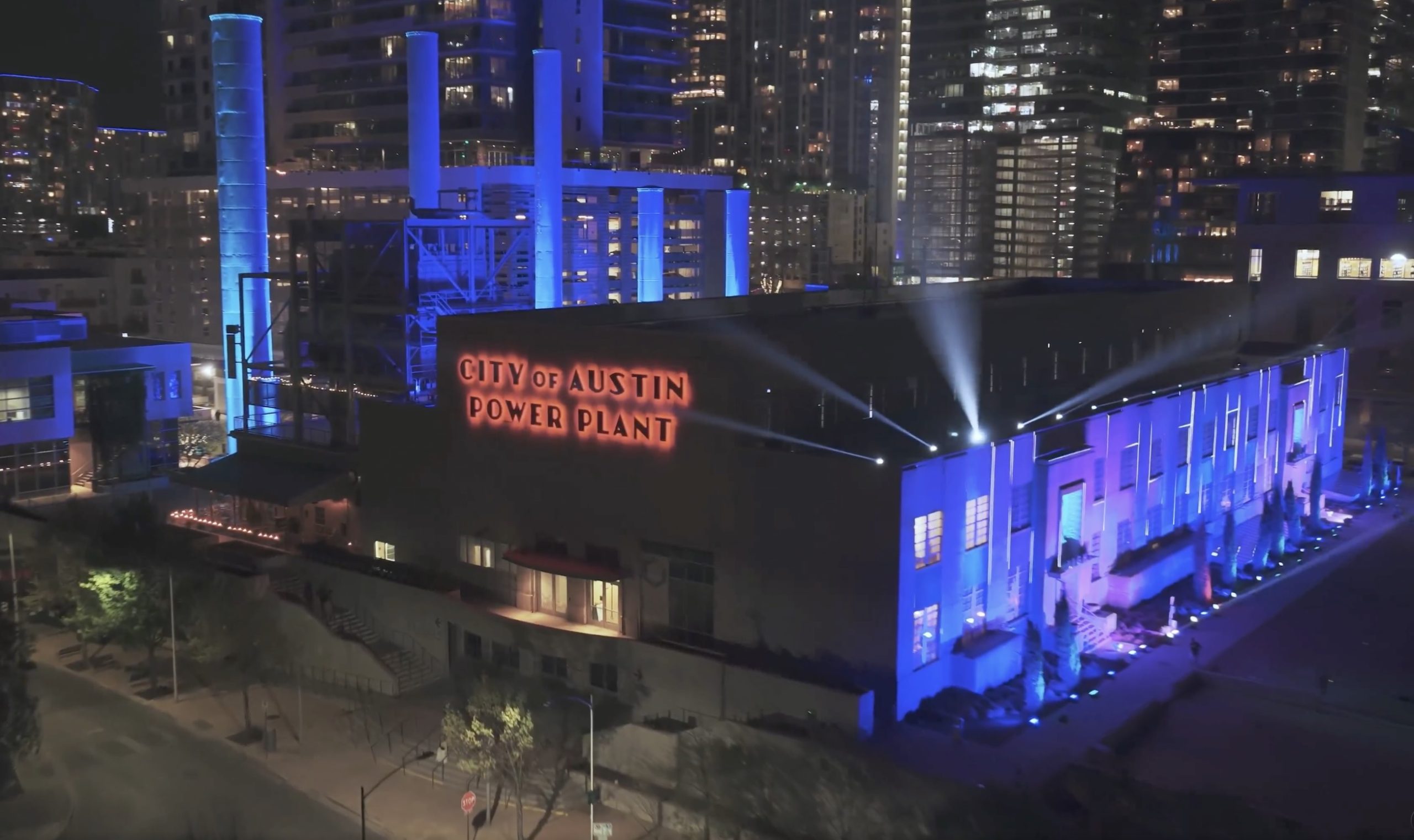
Elon Musk took the stage over the weekend at the defunct Seaholm Power Plant in Austin, Texas, to officially unveil TERAFAB, a $20-25 billion joint venture between Tesla, SpaceX, and xAI that he described as “the most epic chip building exercise in history by far.” The announcement marks the most ambitious infrastructure bet Musk has made since Gigafactory 1 in Sparks, Nevada, and it fuses three of his companies into a single, vertically integrated AI hardware machine for the first time.
TERAFAB is designed to consolidate every stage of semiconductor production under one roof, including chip design, lithography, fabrication, memory production, advanced packaging, and testing. At full capacity, the facility would scale to roughly 70% of the global output from the current world’s largest semiconductor foundry from Taiwan Semiconductor Manufacturing Company (TSMC).
Elon Musk’s stated goal is one terawatt of computing power annually, split between Tesla’s AI5 inference chips for vehicles and Optimus robots, and D3 chips built specifically for SpaceXAI’s orbital satellite constellation.
Tesla Terafab set for launch: Inside the $20B AI chip factory that will reshape the auto industry
The logic behind the merger of these three entities is rooted in a supply chain crisis Musk has been signaling for over a year. At Tesla’s Q4 2025 earnings call, he warned investors that external chip capacity from TSMC, Samsung, and Micron would hit a ceiling within three to four years. “We’re very grateful to our existing supply chain, to Samsung, TSMC, Micron and others,” Musk acknowledged at the Terafab event, “but there’s a maximum rate at which they’re comfortable expanding.” Building in-house was, in his framing, not a strategic option, but a necessity.
The space angle is where the announcement becomes genuinely unprecedented. Musk said 80% of Terafab’s compute output would be directed toward space-based orbital AI satellites, arguing that solar irradiance in space is roughly 5x greater than at Earth’s surface, and that heat rejection in vacuum makes thermal scaling viable. This directly feeds the SpaceXAI vision, which is betting that within two to three years, running AI workloads in orbit will be cheaper than doing so on the ground. The satellites, powered by constant solar energy, would effectively turn low Earth orbit into the world’s largest data center.
Will Tesla join the fold? Predicting a triple merger with SpaceX and xAI
Historically, this announcement threads together every major Musk initiative of the past two years: the xAI-SpaceX merger, Tesla’s $2.9 billion solar equipment talks with Chinese suppliers, the 100 GW domestic solar manufacturing push, the Optimus humanoid robot program, and Starship’s development. TERAFAB is the capstone that ties them into a single coherent architecture — chips made on Earth, launched by SpaceX, powered by Tesla solar, run by xAI, and ultimately extended to the Moon.
“I want us to live long enough to see the mass driver on the moon, because that’s going to be incredibly epic,”Musk said during the presentation.
Announcing TERAFAB: the next step towards becoming a galactic civilization https://t.co/IDKey07mJa
— Tesla (@Tesla) March 22, 2026
News
Rolls-Royce makes shocking move on its EV future
When Rolls-Royce unveiled its first all-electric model, the Spectre, in 2022, former CEO Torsten Müller-Ötvös declared the brand would cease production of internal combustion engine vehicles by the end of the decade.

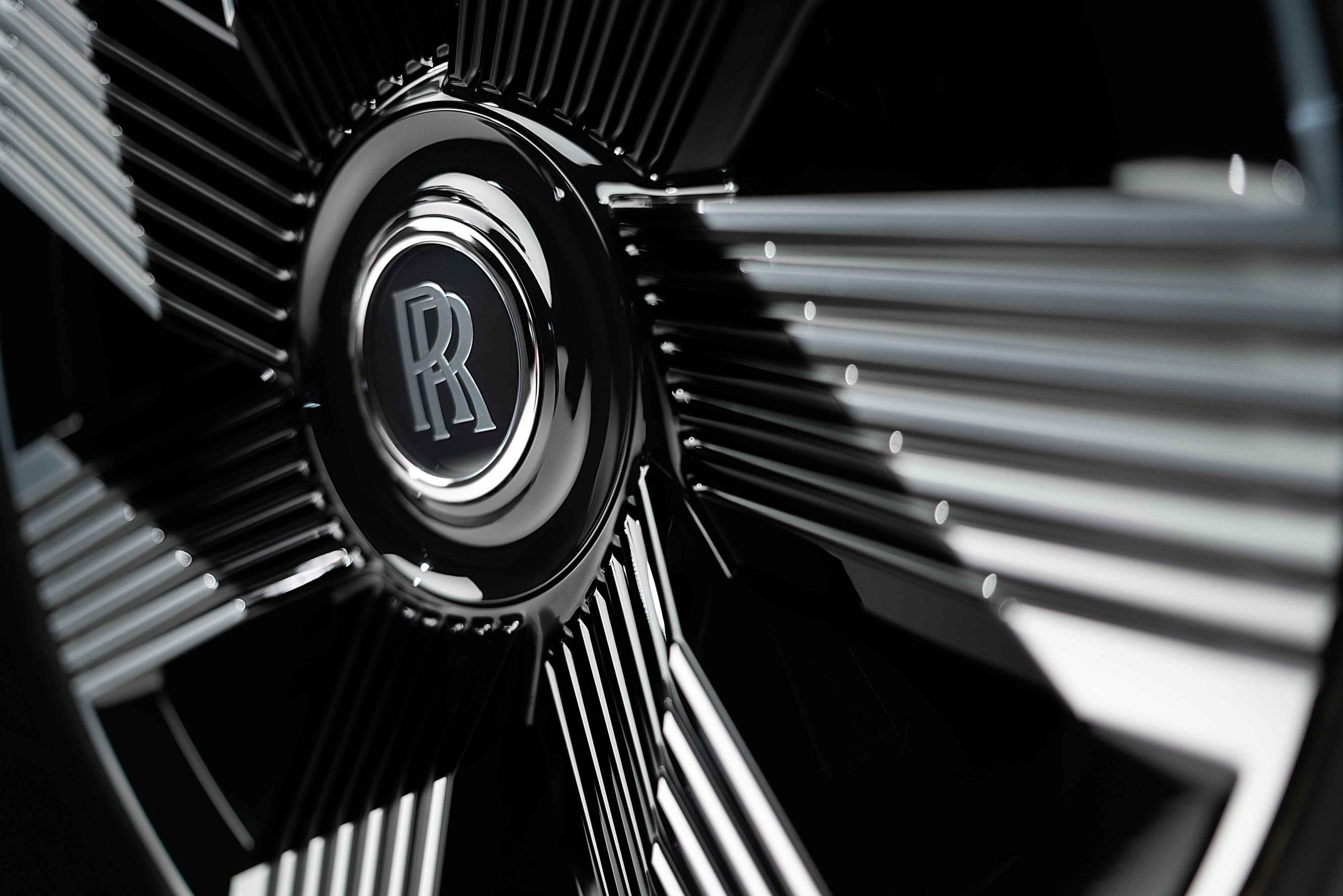
Rolls-Royce made a shocking move on its EV future after planning to go all-electric by the end of the decade. Now, the company is tempering its expectations for electric vehicles, and its CEO is aiming to lean on its legacy of high-powered combustion engines to lead it into the future.
In a significant reversal, Rolls-Royce Motor Cars has scrapped its ambitious plan to become an all-electric manufacturer by 2030. The luxury British marque announced the decision amid sustained customer demand for traditional combustion engines and shifting regulatory landscapes.
When Rolls-Royce unveiled its first all-electric model, the Spectre, in 2022, former CEO Torsten Müller-Ötvös declared the brand would cease production of internal combustion engine vehicles by the end of the decade.
The move aligned with the industry’s broader push toward electrification, promising silent, effortless power befitting the “Rolls-Royce of cars.”
However, new CEO Chris Brownridge, who assumed the role in late 2023, has reversed course. “We can respond to our client demand … we build what is ordered,” Brownridge stated.
The company will continue offering its iconic V12 engines, which remain a cornerstone of its heritage and appeal to discerning buyers who appreciate the distinctive sound and character. He noted the original pledge was “right at the time,” but “the legislation has changed.”
While not abandoning electric vehicles entirely, the Spectre remains in production, with an electric Cullinan option forthcoming; the decision marks the end of a strict all-EV timeline. Relaxed emissions regulations and slowing EV demand, evidenced by a 47 percent drop in Spectre sales to 1,002 units in 2025, forced the reconsideration.
It was a sign that perhaps Rolls-Royce owners were not inclined to believe that the company’s all-EV future was the right move.
Rolls-Royce joins a growing roster of automakers reevaluating aggressive electrification targets.
Fellow luxury brand Bentley has pushed its full electrification from 2030 to 2035, while continuing to offer hybrids and ICE models. Mercedes-Benz walked back its 2030 all-EV goal, now aiming for about 50% electrified sales while keeping combustion engines into the 2030s. Porsche has abandoned its 80% EV sales target by 2030, delaying models and extending hybrids.
Mainstream giants are following suit. Honda canceled its U.S. EV plans, including the 0-Series and Acura RSX, facing a $15.7 billion hit as it doubles down on hybrids. Ford and General Motors have incurred tens of billions in writedowns, canceling models and pivoting to hybrids amid an industry total exceeding $70 billion in charges.
This trend reflects a pragmatic shift driven by infrastructure gaps, consumer preferences, and policy changes. In the ultra-luxury segment, where emotional connection reigns, automakers are prioritizing flexibility over rigid deadlines, ensuring brands like Rolls-Royce evolve without alienating their core clientele.

Elon Musk offers to pay TSA salaries as government shutdown leaves agents without paychecks

Elon Musk launches TERAFAB: The $25B Tesla-SpaceXAI chip factory that will rewire the AI industry


