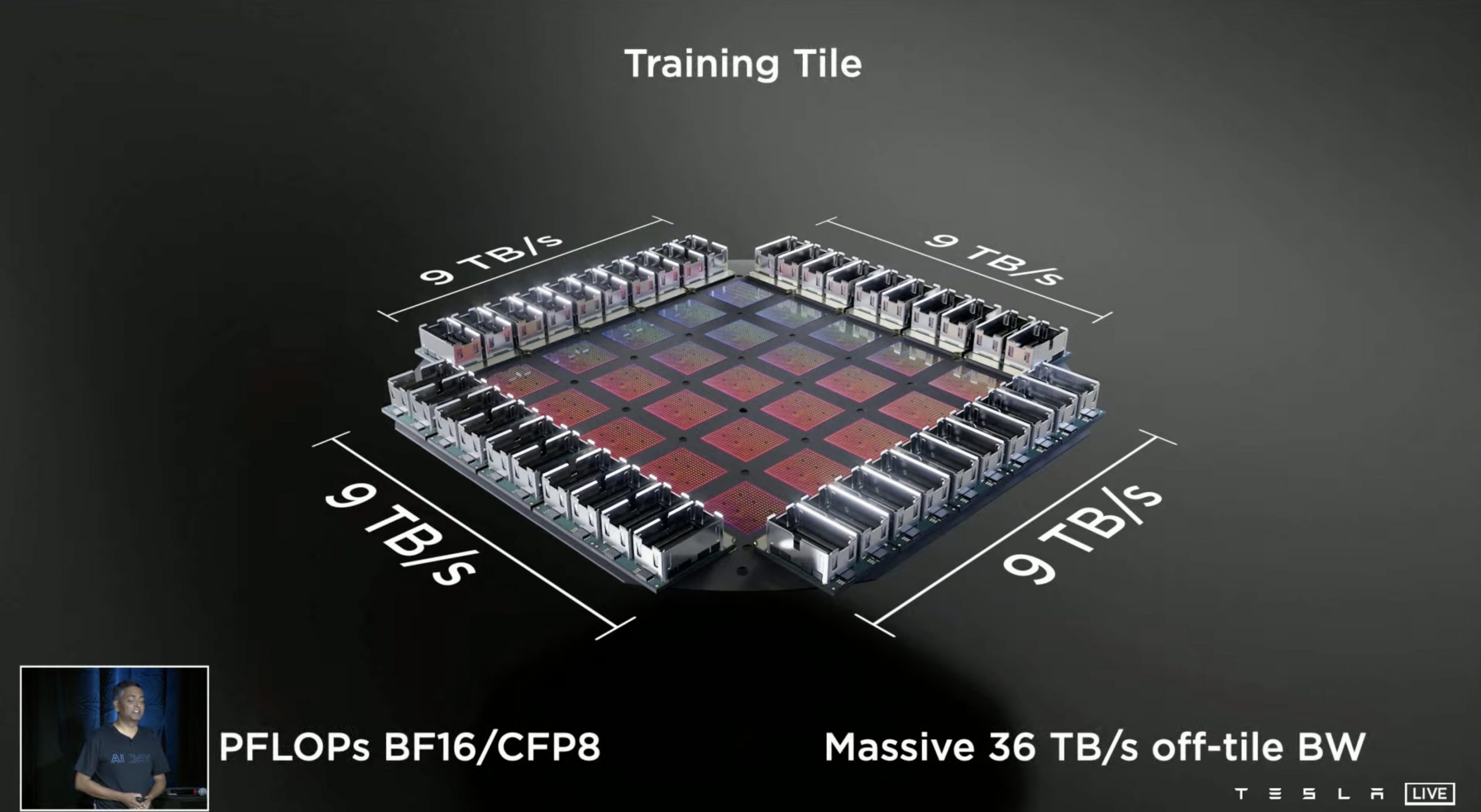

One of the most impressive things about Tesla’s stellar Q3 2021 vehicle production and delivery results was the fact that the company was able to hit new records in the middle of a chip shortage crisis. The effects of the chip crisis are substantial, with fellow American automaker General Motors laying the blame for its 33% year-on-year drop in sales to “semiconductor supply chain disruptions and historically low inventories.”
Tesla’s strategy to weather the semiconductor shortage is no secret. In its Q2 2021 Update Letter, Tesla stated that its team “demonstrated an unparalleled ability to react quickly and mitigate disruptions to manufacturing caused by semiconductor shortages.” Tesla was able to do this by using software and new microcontrollers to build its vehicles. The chip shortage still adversely affected Tesla, but not to the same degree as its peers in the automotive sector.
While Tesla’s Q3 2021 production and delivery results are proof that flexibility and a notable degree of vertical integration are key to weathering the global semiconductor crisis, it also shows that the auto sector is in dire need of some innovation. This was explained by Intel Chief Executive Pat Gelsinger in a statement to Fortune last month. According to Gelsinger, the chip shortage in the auto sector is partly due to the fact that most cars today still use chips that are, in a lot of ways, already primitive.
When the pandemic hit, big-ticket items like cars were pushed back while sales of home consumer devices increased. By the time the auto segment bounced back months later, chipmakers like Intel had already reallocated their capacity. And since dozens of chips for vehicles’ systems like electronic brake systems typically rely on obsolete technology, automakers found themselves with very little supply of components such as transistors that can be anywhere from 45 nm to 90 nm in size.
According to the Intel executive, he has been bombarded with requests to invest in new production capacities for semiconductors that were, at best, state-of-the-art when the original Apple iPhone launched in 2007. If carmakers used newer chips, however, then the semiconductor shortage would not be as detrimental to the auto sector.
“I’ll make them as many Intel 16 [nanometer] chips as they want. It just makes no economic or strategic sense. Rather than spending billions on new ‘old’ fabs, let’s spend millions to help migrate designs to modern ones,” Gelsinger said.
The use of updated chips is something that seems inherent in companies like Tesla, as well as newcomers to the production EV market such as NIO, Rivian, and Lucid. In a way, the Intel executive’s statement rings true. There is very little incentive to ramp the production of obsolete chips, after all, especially if newer, better ones are available. Legacy automakers would just need to be bold enough to innovate. This is something that was specifically highlighted by ARK Invest Founder Cathie Wood recently, when she noted that EVs actually need more chips than regular cars.
Don’t hesitate to contact us with news tips. Just send a message to tips@teslarati.com to give us a heads up.



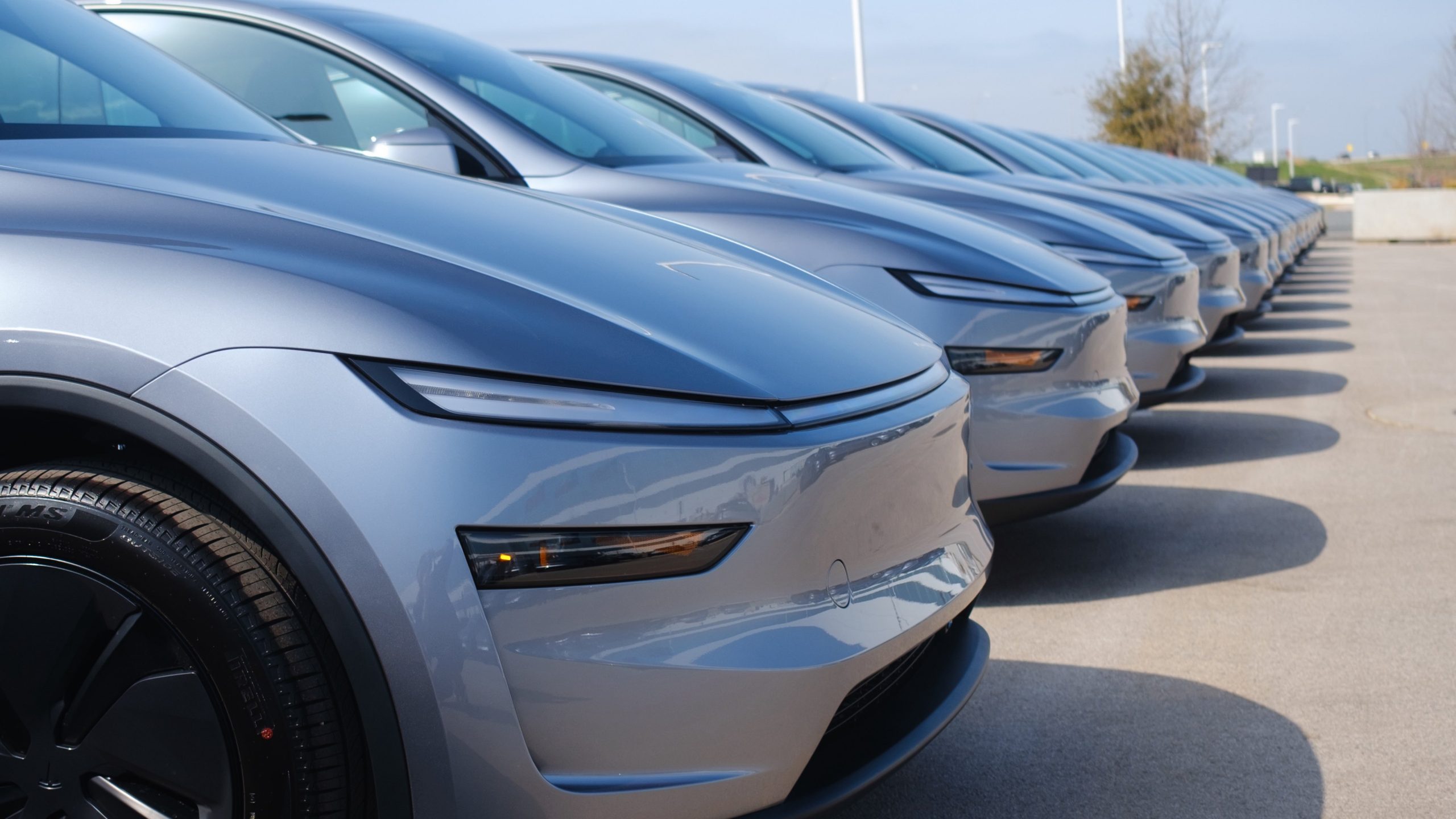
In a notable shift for electric vehicle perceptions, Tesla has emerged as a standout performer in the latest iSeeCars longevity study, which analyzed over 174 million used vehicles.
The data reveals that Tesla models have a 4.6 percent chance of reaching 250,000 miles, matching the industry average of 4.8 percent and tying for sixth place among 32 brands. This positions Tesla ahead of many established names, including Subaru (2.3 percent, roughly half of Tesla’s rate), Nissan (2.4 percent), Mazda, BMW, Mercedes-Benz, and Porsche.
Toyota leads with an impressive 17.8 percent likelihood, followed by Lexus (12.8 percent), Honda, and Acura. Yet Tesla’s result stands out for a relatively young EV brand. Experts attribute this to the inherent simplicity of electric powertrains: fewer moving parts mean no oil changes, timing belts, or complex engine components that typically fail in internal combustion vehicles.
Fewer things to maintain means fewer things to break, and ultimately, fewer things to go wrong.
A Tesla is twice as likely to reach 250,000 miles as a Subaru⁰⁰“No engine, no oil changes, no timing chains, no fuel injectors, and far fewer moving parts overall”⁰⁰https://t.co/k8iJwbzrrp
— Tesla North America (@tesla_na) June 8, 2026
This design advantage helps Teslas defy unfounded skepticism about battery longevity and overall durability, two things that have plagued the company from outsider perspectives without much proof.
The iSeeCars reliability ratings further bolster Tesla’s case. The Tesla Model S earns a strong 7.9/10 reliability score, ranking No. 1 out of 35 most reliable electric cars. It boasts a predicted average lifespan of about 154,419 miles (around 16.9 years) and a 21.9 percent chance of hitting 200,000 miles.
Tesla, as an electric car brand, also scores 7.9/10 overall, securing the top spot among electric vehicle manufacturers in several luxury and segment categories.
Real-world examples reinforce the data. High-mileage Teslas, including Model S vehicles exceeding one million miles, demonstrate that EVs can endure when properly maintained. Owners report minimal mechanical issues beyond typical wear items like tires and brakes, which regenerative braking often extends.
Tesla Model 3 hits quarter million miles with original battery and motor
This performance challenges narratives around EV reliability, especially amid mixed reports from other sources like Consumer Reports or regional inspections. iSeeCars‘ massive dataset emphasizes long-term durability over short-term defect rates, painting Tesla as a leader in sustainable, high-mileage ownership.
For buyers prioritizing longevity and low maintenance, Tesla’s results signal strong value. While no brand is flawless, factors like driving habits, climate, and software updates matter—the numbers suggest Tesla belongs among the elite for those seeking vehicles built to last.
As EV adoption grows, this iSeeCars data underscores Tesla’s engineering edge in creating enduring, future-proof automobiles.
Tesla owners have long griped about the wireless phone charger in the Model Y and other vehicles. It often turns smartphones into miniature ovens rather than reliably topping them up.
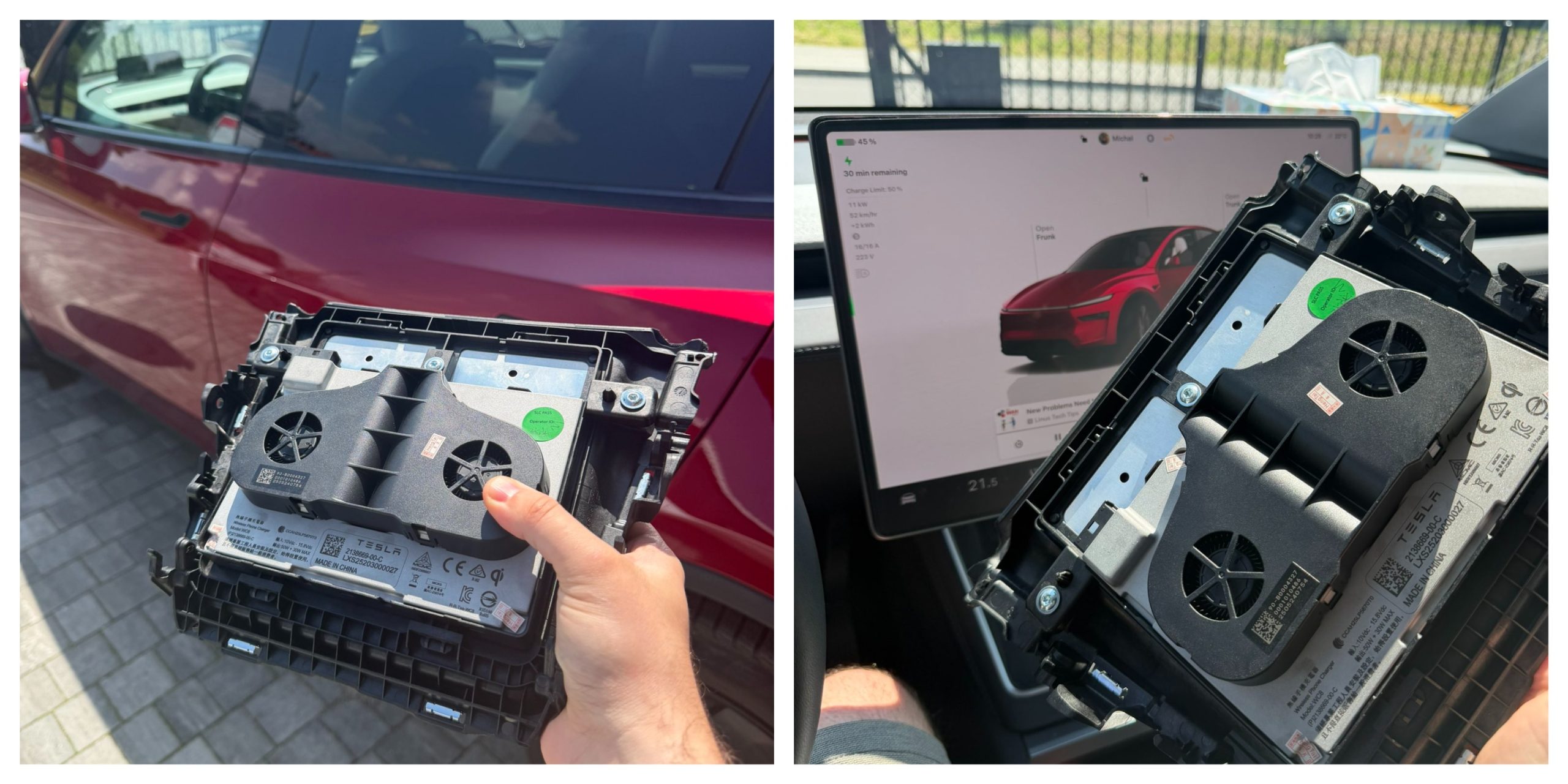
Software engineer and Model Y owner Michał Gapiński tackled this issue head-on with a clever DIY upgrade, swapping the cooled wireless charger pad from the China-made Model YL in for the one that came standard in his vehicle.
There are several key differences between the U.S.-built Model Y’s wireless charging pad and the one that Tesla has been installing in the Model YL. The one installed in U.S.-built vehicles lacks active cooling and relies on basic heat dissipation, leading to rapid temperature buildup during charging. In contrast, the Model YL integrates a small fan for active cooling.
Will it fit? Fingers crossed, I want a first YL charger deployed in the regular juniper pic.twitter.com/wWDqSNFVkW
— Michał Gapiński (@mikegapinski) June 2, 2026
This design maintains lower temperatures even in warm ambient conditions, though it does not support faster Qi2 charging on iPhones. The connector matches exactly, making physical swaps feasible on compatible consoles, but coding is required to enable full functionality.
Owners in the U.S. have complained about the wireless charging pad, with many reporting that overheating is fairly common. Within 20 or 30 minutes of placing a phone on the wireless charging pad, many have reported overheating messages on their phones, which halt charging and essentially turn the pad into a fancy place to rest your phone.
Many owners have opted to simply plug their phones into a charging cord. Tesla has acknowledged the problem by releasing several solutions for owners, including a relatively new feature that allows you to simply turn off the charging and simply act as a holder for your phone while driving.
Gapiński said that he sourced the cooled pad affordably from China, and it cost under $200 for the part.
He removed the existing console charger, swapped in the new unit, confirming a perfect connector fit, and handled the trim differences. Since the parameter isn’t fully secured, he enabled it through custom coding outside official Toolbox.
Connector is identical, she fits, now time to code it. https://t.co/Y9idgDrpCq pic.twitter.com/uwwgq6blg7
— Michał Gapiński (@mikegapinski) June 2, 2026
The fan activates quietly, blending with AC and seat cooling. He reported the installation was effective and the wireless charging pad worked perfectly; it even kept the phone cool as it stayed at just 86 degrees Fahrenheit. Many times, the wireless charging pad will bring the phone’s temperature well above 100 degrees, sometimes even being relatively hot to the touch.
The retrofit worked, no issues. First Model Y with a cooled wireless charger! No QI2/faster charging on the iPhone but it does not boil the phone even when it is 30 degrees outside.
The fan kicks in, it is not audible especially with the air conditioning and seat cooling. The… https://t.co/JOyR8Tb1Yo pic.twitter.com/kJcYhQIlYq
— Michał Gapiński (@mikegapinski) June 2, 2026
This retrofit highlighted an elegant, owner-driven solution to a factory shortcoming. It is expected that Tesla will begin installing the cooled charging pads into new cars in the U.S. soon, and hopefully, it will offer some sort of retrofit service or kit to owners here who want to use the charging pad effectively.
For those who love to tinker, it’s an accessible upgrade, proving that innovation thrives beyond the production line.
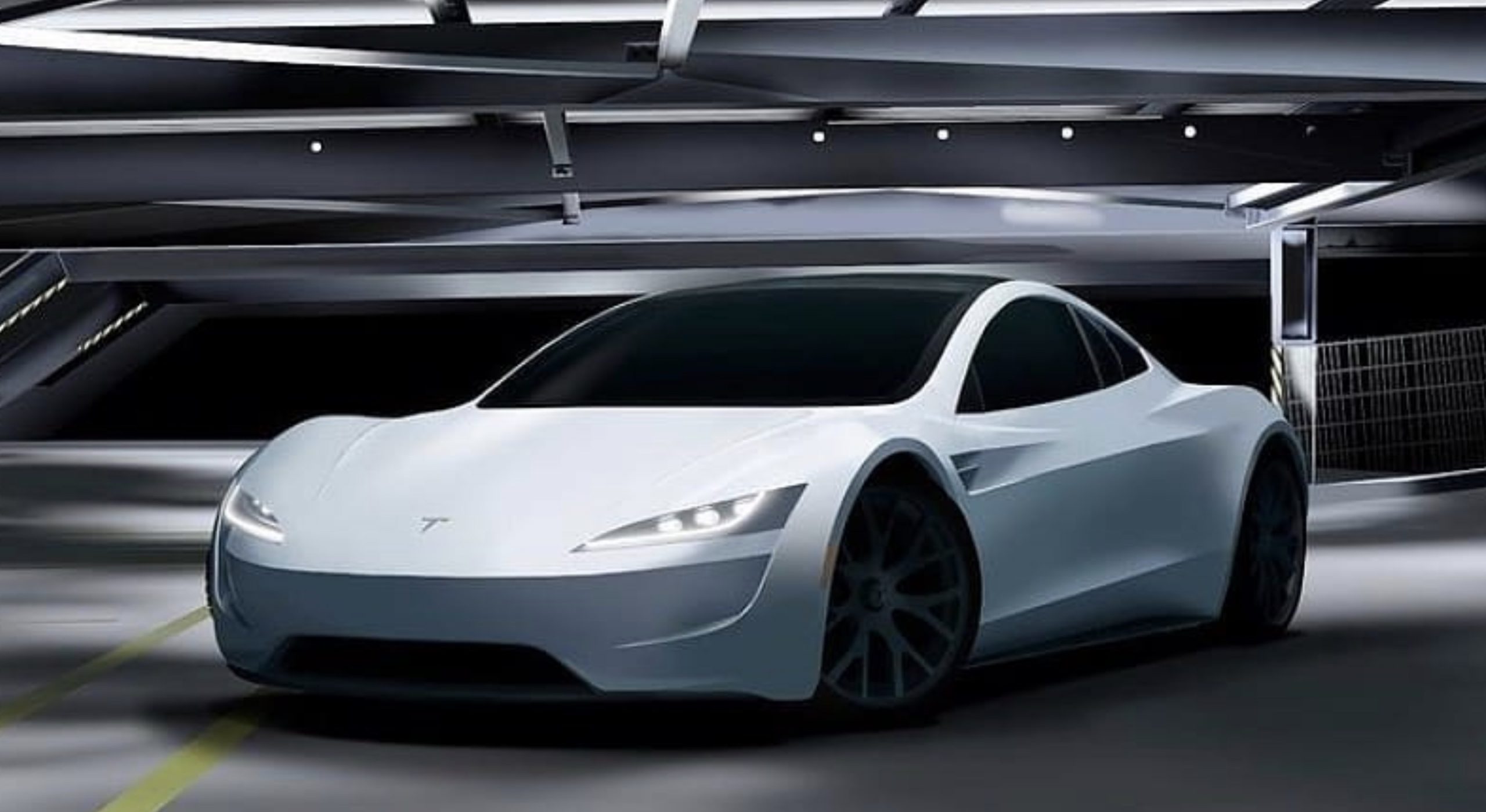
The Tesla Roadster unveiling could be coming “in a few weeks,” according to the company’s Chief Designer Franz von Holzhausen, who said at the Tesla Takeover Europe Event in Austria that the all-electric hypercar could finally make its way to the production line after years of anticipation.
Von Holzhausen delivered the news just days after The Information reported that Tesla planned to push the Roadster unveiling to August. It was slated for both April and May of this year, but now it seems the company is leaning toward a late Summer event to cap off the heat with perhaps its most anticipated vehicle of all-time.
🚨 Tesla Chief Designer Franz Von Holzhausen, speaking to the crowd at Tesla Takeover Europe, said at the event that the Roadster is coming “in a few weeks,”
Multiple attendees have confirmed this pic.twitter.com/B1v6yb2Geq
— TESLARATI (@Teslarati) June 6, 2026
Franz has been with Tesla since 2008, and has played a pivotal role in the iconic design language the company has utilized with its vehicles. Speaking to the crowd in Austria virtually, von Holzhausen’s comments injected fresh excitement into a project that has been plagued by delays for nine years.
The second-generation Roadster promises to redefine supercar standards. Tesla’s website still highlights ambitious targets: 0-60 mph in under 1.9 seconds (with optional SpaceX thruster pack potentially achieving 1.1 seconds or less), a top speed exceeding 250 mph, and a range of about 620 miles.
Equipped with a tri-motor all-wheel-drive setup delivering over 1,000 horsepower, the four-seater aims to blend blistering acceleration, everyday usability, and innovative features like cold gas thrusters for short-hop capabilities, technology that will combine the project with SpaceX.
But years after the company promised to start production, which was slated for 2020, the timeline for the Roadster has continued to shift.
Tesla has strung along those who have put $50,000 deposits down, as well as fans and enthusiasts of the company who have been long awaiting the company to bring forth a car truly designed for the human driver, and not autonomy. The Roadster is more than just a halo vehicle for Tesla; it showcases the company’s ability to push the boundaries while incorporating synergies from other Musk companies.
However, it has to make it to production, which is something Musk and Co. have pushed back repeatedly.
As Tesla navigates Robotaxi development and broader autonomy goals, the Roadster serves as a reminder of its performance roots. If von Holzhausen’s timeline holds, fans could witness this engineering marvel by late June or early July 2026. Whether a full unveiling, demo, or initial deliveries, it marks a milestone for electric supercars.

Tesla skeptics will hate what this new reliability study says

Tesla owner fixes common feature complaint with crafty DIY retrofit


