News
Tesla Model X safety-first approach saves groom’s life after hit and run the night before his wedding

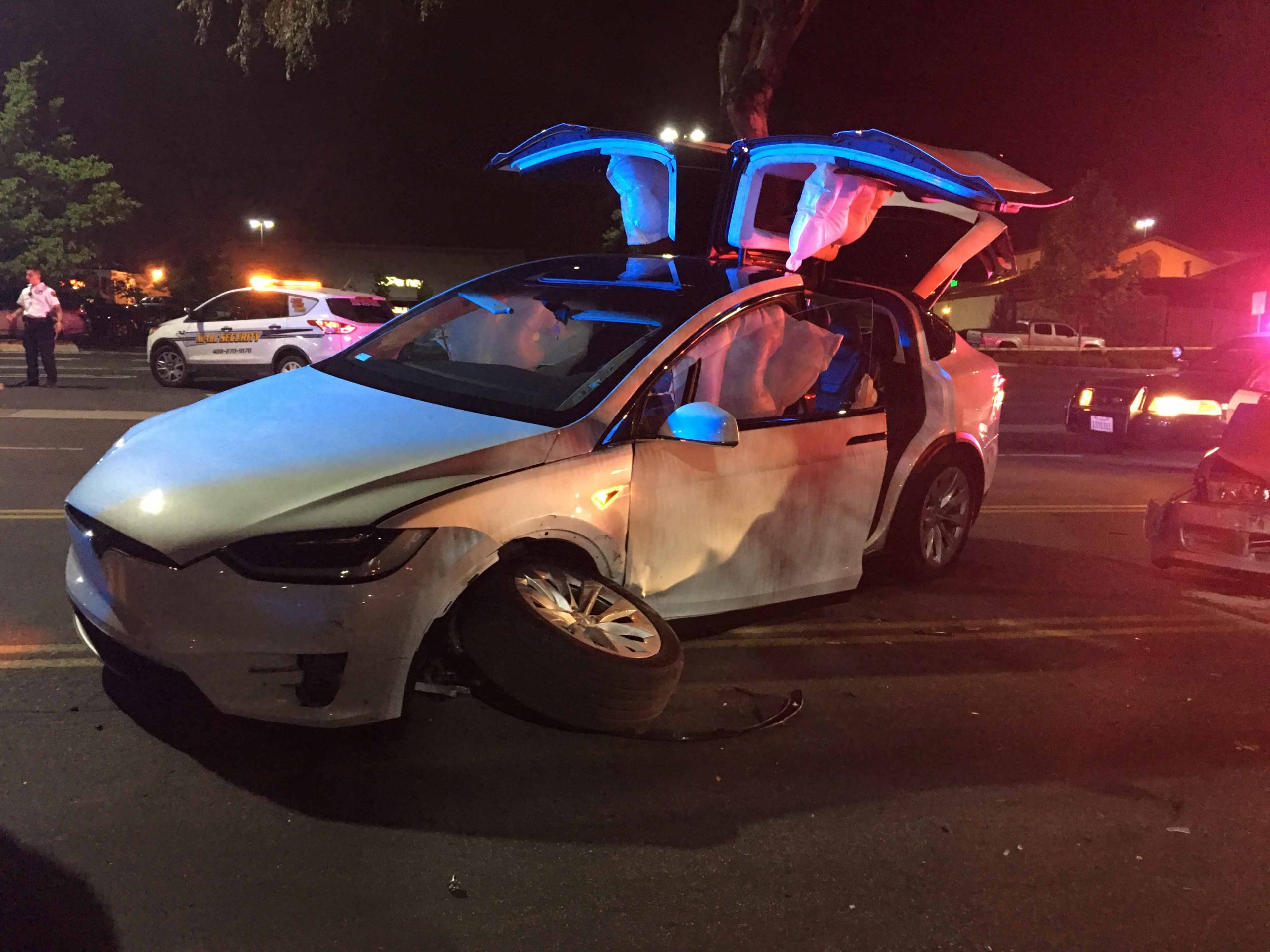
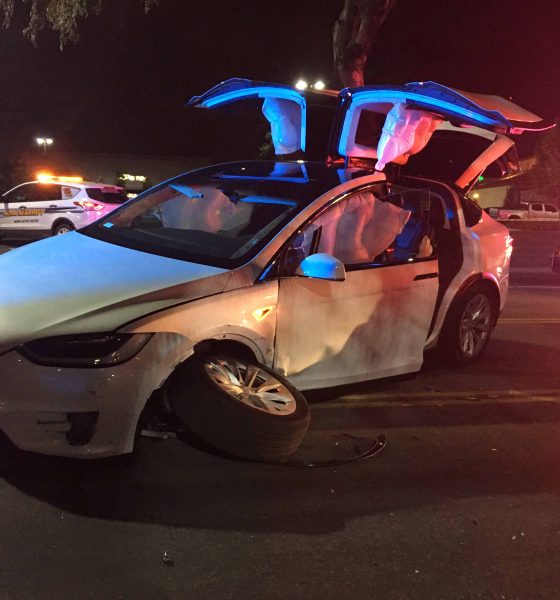
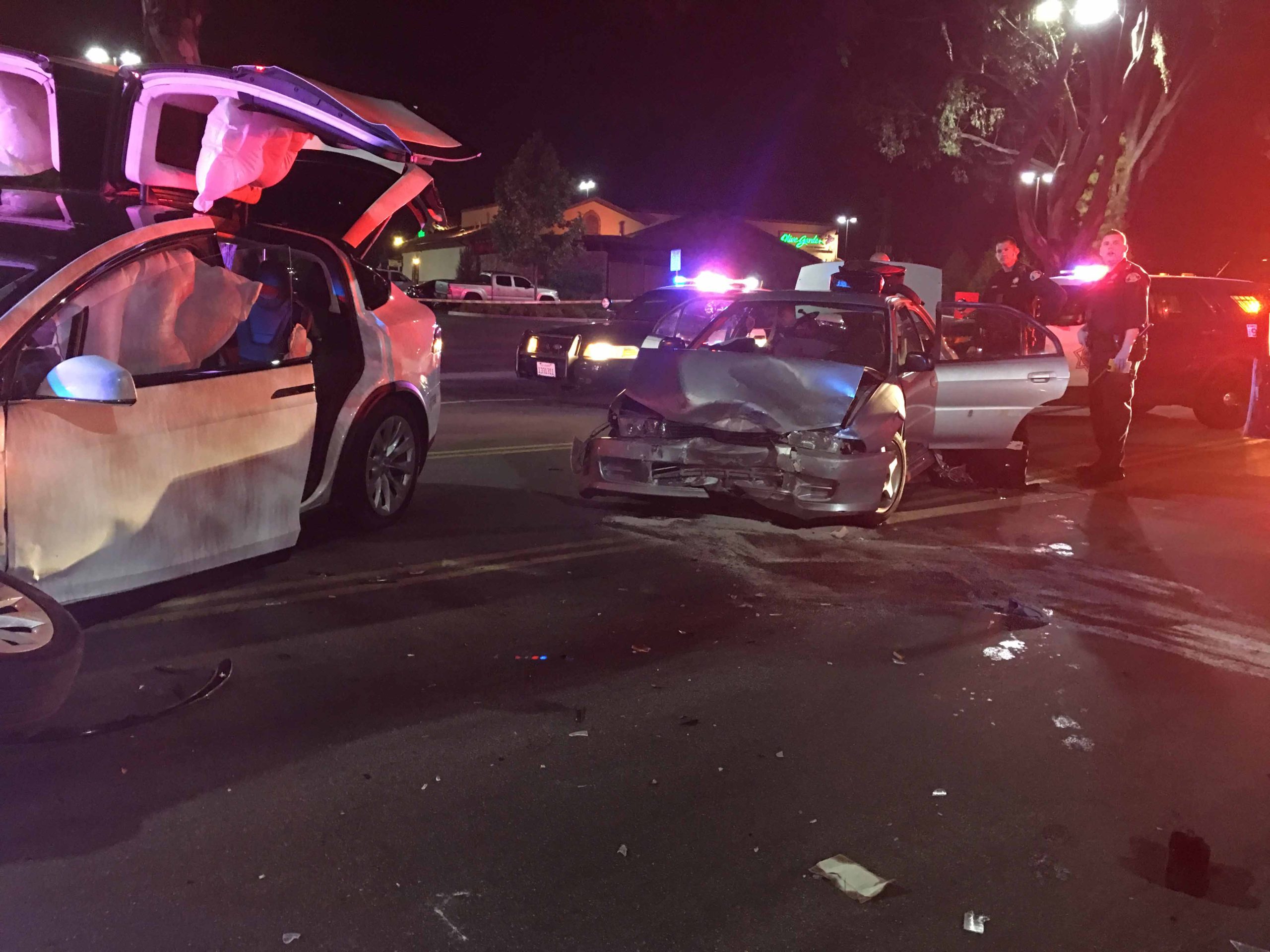
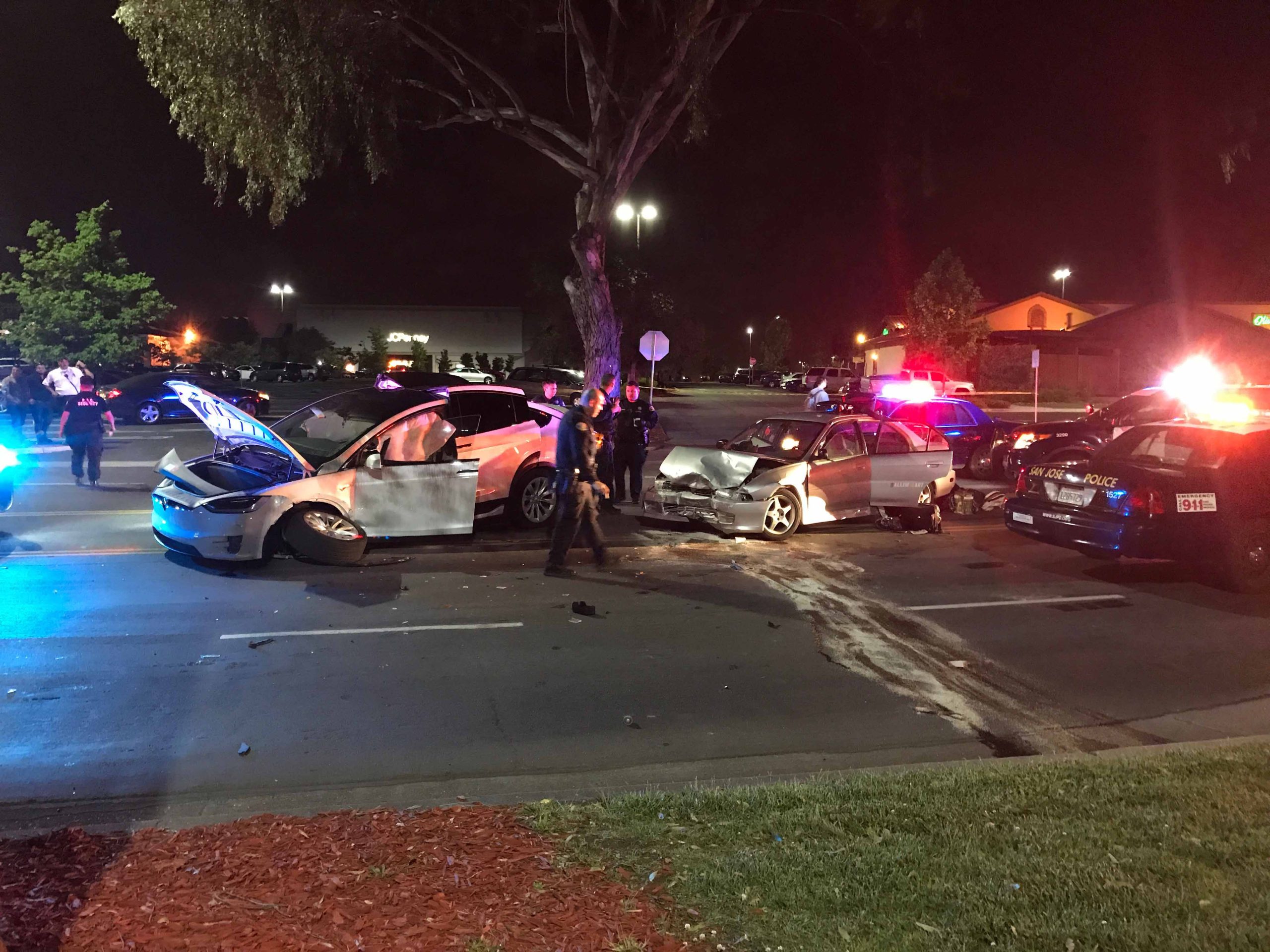
A groom-to-be behind the wheel of Tesla Model X is thankful to be alive after the vehicle was involved in a severe side-impact collision by a stolen vehicle that careened into the driver’s door of the all-electric SUV at 65 miles per hour.
The driver, an automation consultant for Tesla, rented a Model X for his wedding. After leaving the rehearsal dinner that took place the night before the wedding, the groom-to-be dropped off his fiancé and headed home. Then things took a turn for the unexpected. In a forum post entitled ‘I am alive today well BC of a Model X‘, the driver recounts:
“When I made my way out of the parking lot, I began to take a left turn onto the main street. Mid-turn, I noticed a silver car quickly approaching the driver’s side of the vehicle (I later learned that they were going over 65mph on a private road). I had no time to react, since the driver came from a blind spot on my left. At this point, it looked like the driver had no intention of slowing down, and I immediately thought that I was either going to get badly hurt or potentially die.
I quickly braced and gripped the steering wheel as I was pounded by the silver car, sending me over 20 feet away from my starting point. With the impact, all of the airbags deployed, instantly leaving me in shock. The outgassing of the airbags caused the car to smoke, making it difficult to see. I reached for the door handle with my right hand, but was not able to open it. Seeing no other option, I kicked open the door and was able to escape the vehicle. As I walked outside, I immediately saw the police chasing after the culprits driving the silver car. I looked around, dazed, and ended up falling to the ground. I am unsure of what happened next, but all I can remember is hearing voices from the people nearby, and Nancy screaming my name. When I came to consciousness, I was being helped by the police, paramedics, and fire department. The silver car was a mess, but the Model X only suffered a broken axle and bent wheel.”
An impact from a 3,000 pound Honda Civic traveling at 65 miles per hour into a nearly stationary vehicle would normally end with disastrous consequences but the Model X was able to sustain the impact by cocooning the driver with twelve airbags: head and knee airbags in the front, two side curtain airbags, four seat-mounted side airbags, and two door-mounted airbags, putting the safety-first design to the test in ways nobody would ever want to have to experience. We saw a similar occurrence last year when a Tesla Model X saved the life of an entire family and their pet after it was involved in a horrific traffic accident at an intersection. “I waited 4 years for this one and would wait 4 more if that is what it took to protect my family like this.” said the driver of the Model X at the time.
The groom-to-be that was saved in this latest accident had previously worked with Tesla as an automation consultant for the company in the stamping, body and paint production line, and worked directly with engineers involved in the Model S, X and Model 3. Having worked with many of the people who designed the vehicle instilled a respect for Tesla and its vehicles that was enough for him to choose a Model X as the vehicle to be used for his wedding.
“I wanted to write this to you in hopes that this raises visibility to the management chain at Tesla. I can’t thank Elon Musk, Tesla, and the team enough for what they do and want them to know that their car saved my life. While I also believe that I am still alive because of divine intervention, being in that car was definitely my shield and protector. I have made it a short term goal of mine to sell my cars and buy a Tesla as my next vehicle. That car saved my life. Thank you for your time and I hope this message gets passed through to everyone, especially Elon.”
This story highlights a critical differentiator between Tesla and other auto manufacturers. Tesla and Elon Musk have always put safety first which the company puts as a main focal point at each new vehicle reveal. This focus on safety led to the development of vehicles with larger crumple zones up front (the frunk) than any comparably-sized vehicle, better coverage from integrated airbags and a greatly reduced risk of rollover due to the floor-mounted battery.
Tesla summarizes the safety features of the Model X on its website:
Model X is designed with safety as the first priority. The floor-mounted battery lowers the center of gravity so that the risk of rollover is about half that of any vehicle in its class. The battery structure strengthens Model X against side impact intrusions. And without a gasoline engine, the large front trunk acts as a giant impact-absorbing crumple zone. Although the National Highway Traffic Safety Administration has not yet conducted crash testing on Model X, Tesla’s own internally conducted crash testing indicates that Model X should be the first SUV to receive the highest safety rating in every category.
Building on the world-class safe design of Tesla vehicles, a layer of active safety features that are included in every Tesla sold take this to the next level with features like Automatic Emergency Braking and side impact collision warnings.
The safety-first culture at Tesla extends beyond its vehicles and into the next generation of products the company is producing – its factory. In its recent blog post about safety, Tesla shared how a safety-first focus underpins the entire design process even going so far as to look for ergonomics concerns in virtual mock ups of its manufacturing lines before they are built.
Tesla is revolutionizing the way humans get around and at the same time, rethinking the safety systems that keep all the people in its care in ways that ultimately benefit everyone. The driver of the Model X in this accident has made it a short term goal to acquire a Tesla as his personal vehicle. That should speak volumes to anyone who has been in an accident, lost someone in an accident or wants to keep themselves and those they travel with as safe as possible.
Source: Teslarati Forums


Elon Musk
The Starship moon landing number NASA and Elon Musk can’t agree on
Musk disputes NASA estimate of 22 Starship launches for Moon landing, predicting 6 to 8.

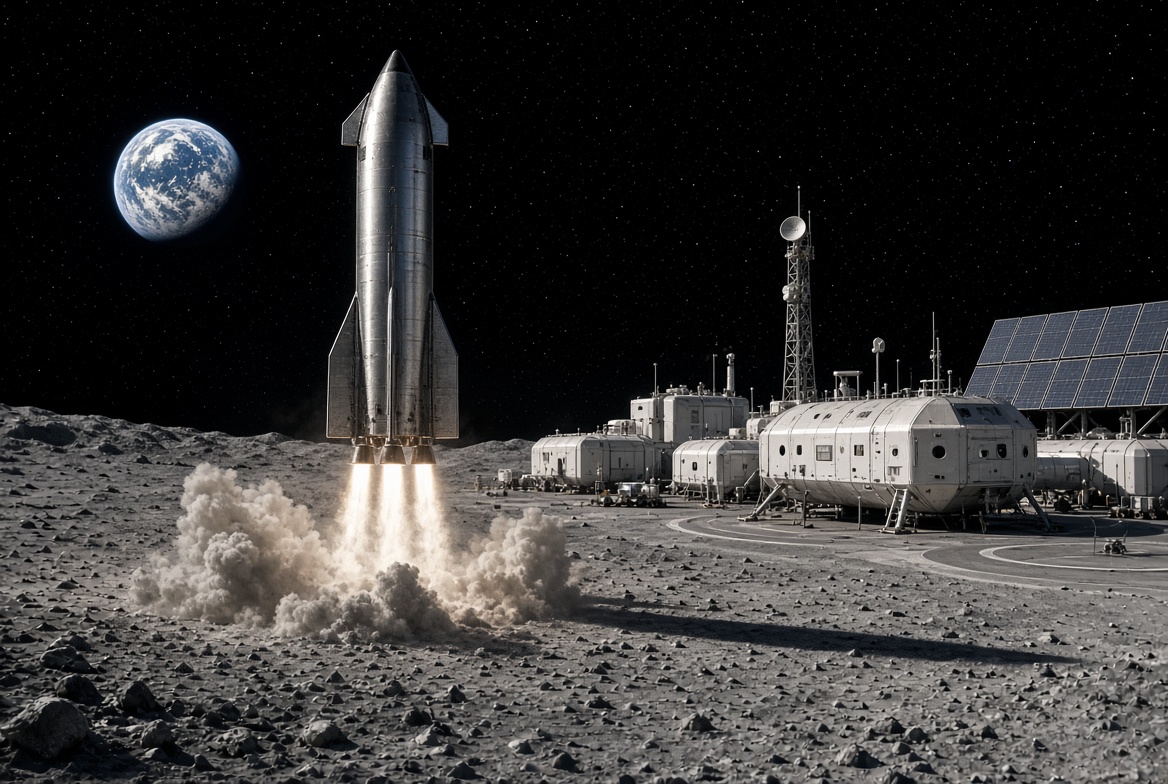
Elon Musk is disputing a new NASA safety panel estimate of how many Starship launches it will take to put astronauts on the Moon, saying the real number will be less than half the panel’s figure.
On Thursday, NASA’s Aerospace Safety Advisory Panel held its quarterly public meeting. Panel member Charlie Precourt, a former NASA astronaut, flagged the fueling process for SpaceX’s lunar lander as a major risk for Artemis IV, the mission planned to land a crew on the Moon in 2028. “We need to keep our eyes on numerous required fuelings for the lander,” Precourt said, according to Ars Technica. “I think the last estimate is around 22 flights.”
Ars Technica’s Eric Berger posted the comment on X, and Musk replied. “That’s way too high,” Musk wrote. “Actual number will be more like 6 to 8.”
The disagreement comes down to a basic problem with sending a ship as large as Starship to the Moon. Starship burns nearly all of its propellant just reaching Earth orbit, so it cannot continue on to the Moon without stopping for a refill. SpaceX’s answer is a gas station in space. First, a Starship that works as a storage tank, called a depot, is launched into orbit. Then a series of tanker Starships launch one at a time, dock with the depot and pump their leftover propellant into it. Once the depot is full, the lunar lander version of Starship launches, docks, fills up and heads for the Moon.
Every tanker trip is its own full rocket launch, which is why the count matters. More launches mean more time, more cost and more chances for something to go wrong before astronauts ever leave Earth. Berger estimated that even if SpaceX reaches twice weekly Starship launches by the end of 2027, filling a depot at the panel’s number would still take roughly three months.
How many tankers are needed depends mostly on how much propellant each one can carry to orbit and how much is lost along the way. Starship’s fuel and oxygen are stored at extremely cold temperatures, and some of it slowly boils off while waiting in orbit. More is lost in each transfer. NASA appears to be working from what Starship can lift today, while Musk’s range assumes a more capable rocket.
Musk has pushed back on higher counts before. In 2021, after a government document suggested 16 launches, he called that “extremely unlikely” and said eight tankers would be the most required.
Much of the answer depends on hardware SpaceX has not finished flying. As Teslarati noted earlier this year, the company plans to carry out the refueling process with its upgraded V3 Starship, and Precourt described Artemis IV as carrying “a large number of firsts.” He also praised NASA Administrator Jared Isaacman’s team for working to clear obstacles for both SpaceX and Blue Origin, whose Blue Moon lander does not rely on orbital refueling for its first mission.
Elon Musk
Tesla’s secretive “Project Crystal Sun” gets a big green light in Texas
Fort Bend County approved four incentive agreements Thursday for Tesla’s proposed $10.1 billion solar factory.
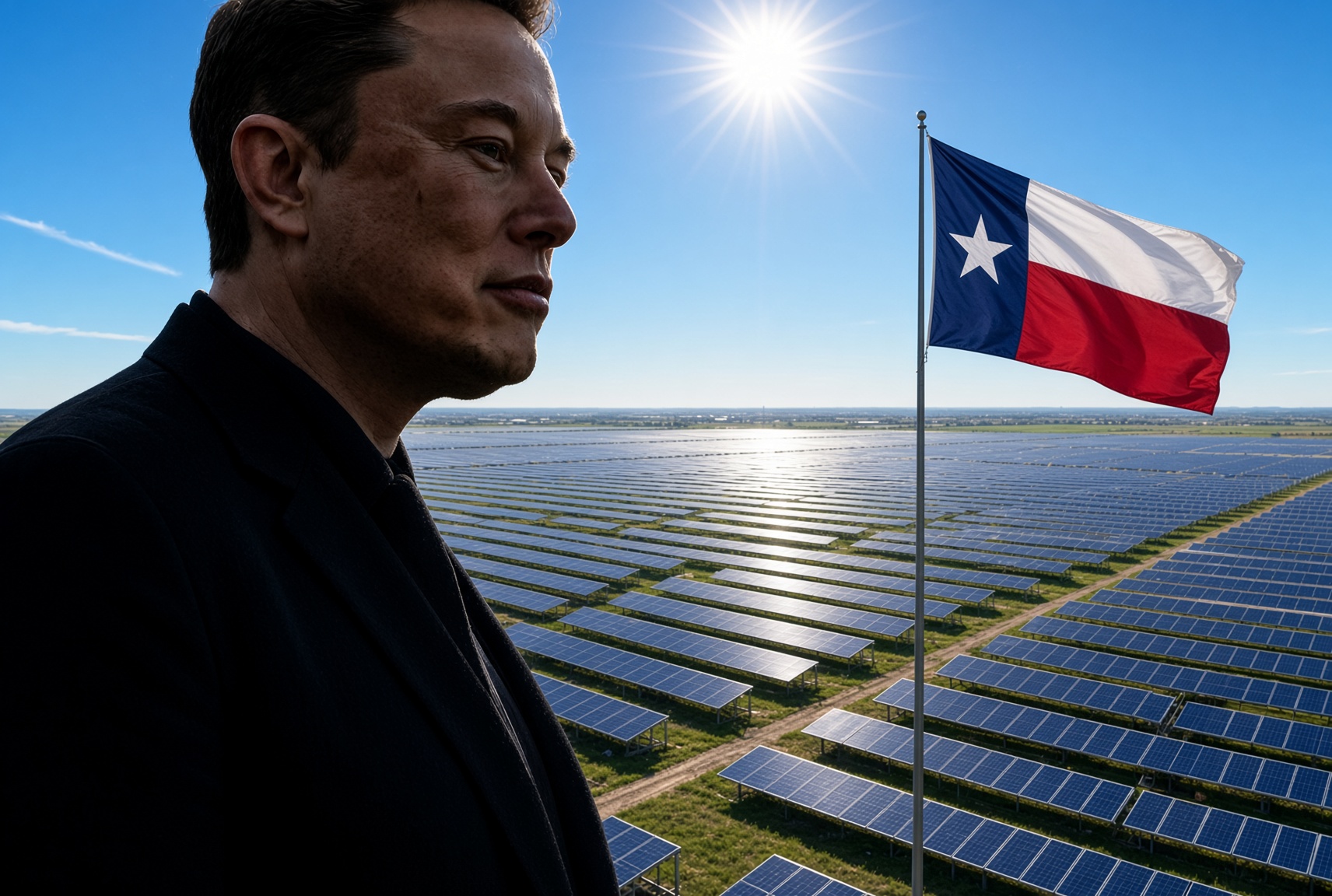
Fort Bend County commissioners on Thursday approved a package of tax incentives for Tesla’s proposed $10.1 billion solar cell factory near Needville, Texas, giving the company one of the last local approvals it needs before it decides where to build. All four Tesla agreements passed 4 to 0.
The votes covered a property tax abatement inside Reinvestment Zone No. 34, a Chapter 381 economic development agreement, a foreign trade zone non-objection paired with payments in lieu of certain taxes, and a separate payment in lieu of taxes “true up” agreement, according to agenda notes from the Fort Bend Commissioners Court meeting.
The project, known internally as “Project Crystal Sun,” would make solar cells and finished modules on roughly 3,000 acres near FM 762 and FM 1994, south of the Brazos River. As Teslarati reported when the filing first surfaced in August, Tesla’s application under the state’s JETI Act splits the investment into $1.5 billion in real property and $8.6 billion in equipment, with 9,712 permanent jobs projected by 2033 and commercial operations targeted for the first quarter of 2029. The plant would handle the full chain from ingot and wafer production through cell testing.
Inside Tesla’s secretive $10 Billion “Project Crystal Sun” filing
Thursday’s approval does not lock in the site. Tesla has told the Texas Comptroller it is still weighing other locations, and site selection adviser David Dennison told Lamar Consolidated ISD trustees in September that the race had narrowed to Fort Bend and one out of state rival with a “very compelling package,” according to the Houston Chronicle. Tesla hopes to decide before the end of 2026, and the incentives still need sign off from the Comptroller and the Governor’s office.
Local officials have now done nearly everything within their control. Commissioners created the reinvestment zone in an August 24 special meeting, with Interim County Judge Daniel Wong formally withdrawing himself over his engineering firm’s past work with Tesla. Lamar CISD trustees voted 7 to 0 on September 15 to advance a JETI agreement that would tax Tesla’s qualifying property at 50 percent of its value for maintenance and operations from 2029 through 2038.
The plant lines up with a target Elon Musk set on Tesla’s Q4 2025 earnings call in January, when he said the company would “work toward getting 100 GW a year of solar cell production, integrating across the entire supply chain from raw materials all the way to finished solar panels.” In March, Tesla was reported to be negotiating a $2.9 billion purchase of Chinese solar manufacturing equipment bound for Texas. The Houston area already hosts Tesla’s Megafactory in Brookshire, where Megapack 3 production has started. Tesla said on its Q3 call that Megapack supply for 2027 is nearly sold out, and Musk wrote on X Thursday that the company is “increasing production of Megapacks as much as possible,” as demand from data centers climbs.

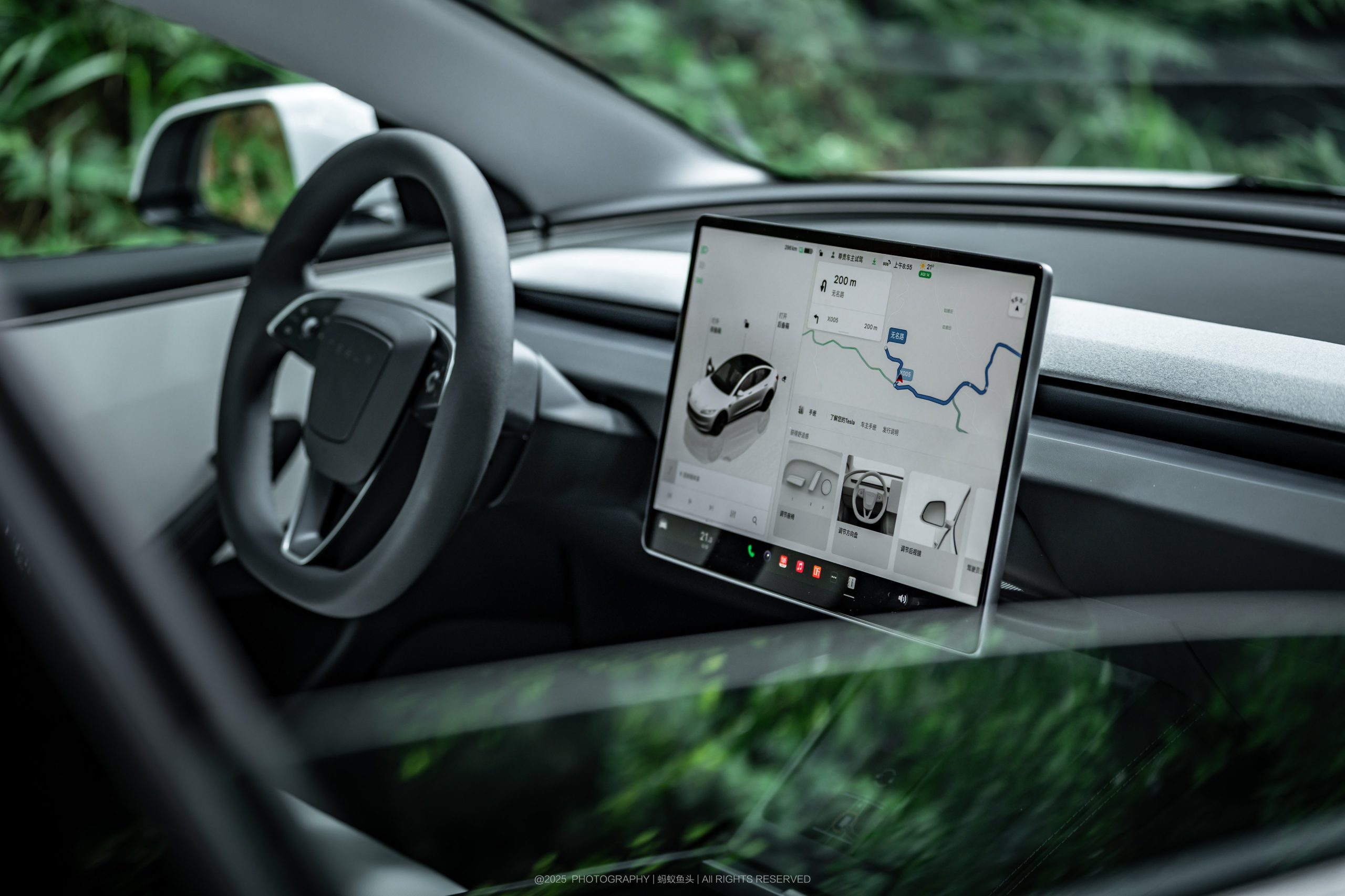
Tesla revealed plans to develop its own maps internally to fix Navigation issues and give owners more control over their routing.
On the company’s Q3 2026 Earnings Call, a question was asked about FSD Navigation issues, particularly speed limit recognition, parking, and routing. These are issues that surface from version to version and seem to be seriously challenging for Tesla’s AI team to resolve.
Tesla’s Head of AI, Ashok Elluswamy, said in response to the question:
“You’re totally right that we shouldn’t be depending on external people’s maps. So we are building our own maps, but not like the same way as OneMoreMap. We are building an entirely new architecture with essentially AI-based mapping and navigation.”
He continued:
“It’s going to be super awesome. It’s going to be integrated with voice. You can talk to it, ask for different routes. It’s going to learn your personalized preferences, plus the fleet preferences. The collective intelligence of all the cars is going to flow into making the maps and navigation super cool.”
Elluswamy said this issue should be confronted, and the mapping should be available for people by the time the v15 release starts deploying to customers.
“And over the next several months,” he added, “it’s just going to take over all of the navigation functions, parking, destination handling. And it will know you better than you know yourself in some regard for the driving task, and then handle it fully.”
Tesla Summon got insanely good in FSD v14.3.2 — Navigation? Not so much
Navigation is perhaps the most notable complaint with FSD, and although it has gotten better, it is still flawed. Much of the time, FSD will take people on routes that are not preferred by the driver, but Tesla tried to combat this with a routing feature in the Summer 2026 Update.
Tesla currently relies on Google for map data, but it is sort of counterintuitive to believe the company would rely on a third party for this. These improvements will be welcome, as routing and navigation have been such a pain point for so many owners for so long.
Quotes via Motley Fool

The Starship moon landing number NASA and Elon Musk can’t agree on

Tesla’s secretive “Project Crystal Sun” gets a big green light in Texas


