Lifestyle
Tesla’s next-gen Roadster unleashes Jay Leno’s inner child in ‘Jay Leno’s Garage’ segment

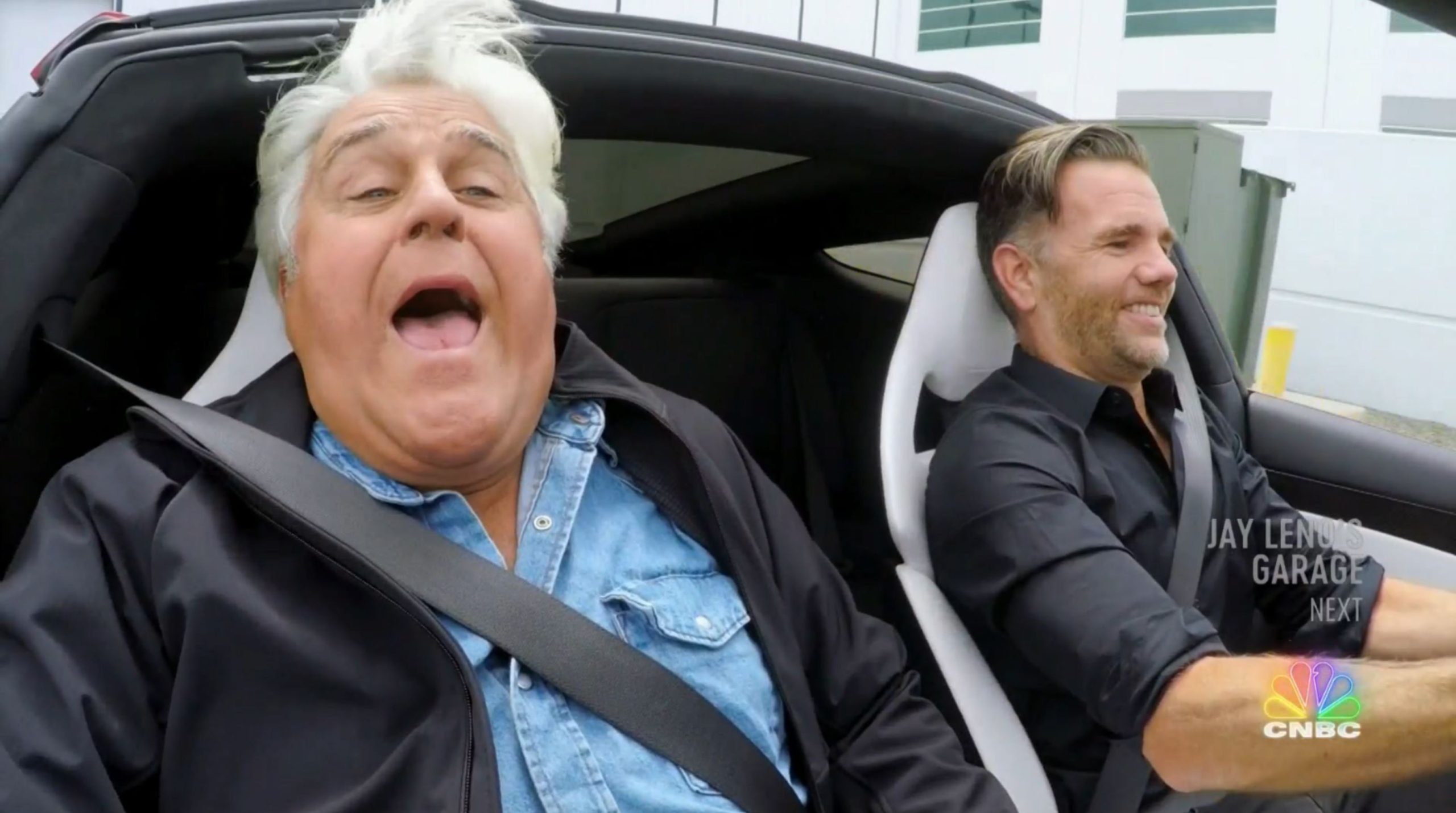
Iconic talk show host Jay Leno loves cars, particularly those that are unique and are capable of going incredibly fast. After retiring from late-night TV, Leno now hosts Jay Leno’s Garage on CNBC, a program where he goes hands-on with some of the world’s most compelling vehicles. This week, Jay Leno’s Garage featured a segment about a rather impressive and unique car — the next-generation Tesla Roadster.
Just like his segment with the Tesla Model S back in 2012, Jay Leno was joined by Tesla Chief Designer Franz von Holzhausen, who provided some insights and background on the upcoming all-electric supercar. Leno met up with the Chief Designer in Tesla’s design studio driving his first-generation Roadster, which he dubbed as a revolutionary automobile.
“I’m driving the past so I can look at the future,” Leno said.
-
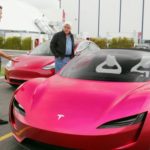
- Jay Leno checks out the next-generation Tesla Roadster. [Credit: Jay Leno’s Garage/CNBC]
-
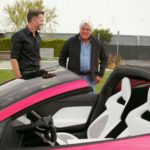
- Jay Leno checks out the next-generation Tesla Roadster. [Credit: Jay Leno’s Garage/CNBC]
-
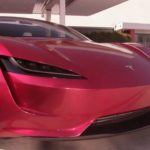
- Jay Leno checks out the next-generation Tesla Roadster. [Credit: Jay Leno’s Garage/CNBC]
-
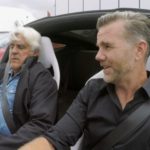
- Jay Leno checks out the next-generation Tesla Roadster. [Credit: Jay Leno’s Garage/CNBC]
-
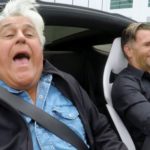
- Jay Leno checks out the next-generation Tesla Roadster. [Credit: Jay Leno’s Garage/CNBC]
Leno’s Tesla visit began with a brief test drive of the Model 3. Leno was largely impressed with the electric sedan, stating that the smaller car “feels exactly like a Model S.” That said, what really got the veteran host excited was the Model 3’s faster, more insane brother — the next-generation Tesla Roadster. Leno’s response to the upcoming Roadster was one of wonder, comparing the vehicle’s top speed to that of a fighter jet and the car’s quarter-mile time to that of a purpose-built drag racer. The veteran host’s inner child was in full force during the segment, particularly during a sprint when he alternately screamed “I’ll buy it! I’ll take it!” while Franz was flooring the vehicle.
The next-generation Tesla Roadster is designed to be a supercar to end all supercars. Equipped with three electric motors, the base variant of the vehicle is capable of sprinting from 0-60 mph in 1.9 seconds, allowing it to do quarter-mile runs in 8.8 seconds. The next-gen Roadster’s top speed of over 250 mph, as well as its 200 kWh battery that gives it a range of 620 miles on a single charge, are all designed, according to Elon Musk, to “give a hardcore smackdown to gasoline-powered cars.”
-
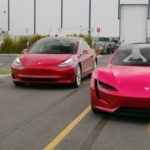
- The next-generation Tesla Roadster as featured in ‘Jay Leno’s Garage.’ [Credit: Jay Leno’s Garage/CNBC]
-
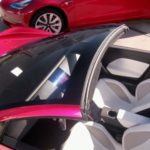
- The next-generation Tesla Roadster as featured in ‘Jay Leno’s Garage.’ [Credit: Jay Leno’s Garage/CNBC]
-
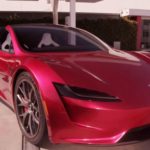
- The next-generation Tesla Roadster as featured in ‘Jay Leno’s Garage.’ [Credit: Jay Leno’s Garage/CNBC]
-
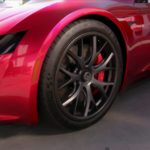
- The next-generation Tesla Roadster as featured in ‘Jay Leno’s Garage.’ [Credit: Jay Leno’s Garage/CNBC]
-
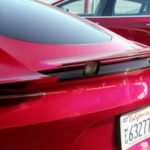
- The next-generation Tesla Roadster as featured in ‘Jay Leno’s Garage.’ [Credit: Jay Leno’s Garage/CNBC]
-
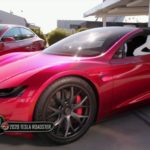
- The next-generation Tesla Roadster as featured in ‘Jay Leno’s Garage.’ [Credit: Jay Leno’s Garage/CNBC]
-
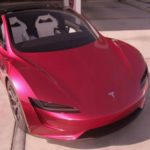
- The next-generation Tesla Roadster as featured in ‘Jay Leno’s Garage.’ [Credit: Jay Leno’s Garage/CNBC]
-
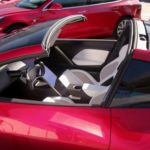
- The next-generation Tesla Roadster as featured in ‘Jay Leno’s Garage.’ [Credit: Jay Leno’s Garage/CNBC]
-
- The next-generation Tesla Roadster as featured in ‘Jay Leno’s Garage.’ [Credit: Jay Leno’s Garage/CNBC]
-
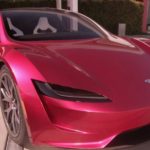
- The next-generation Tesla Roadster as featured in ‘Jay Leno’s Garage.’ [Credit: Jay Leno’s Garage/CNBC]
What is particularly notable about the Roadster is that Tesla has only revealed the specs of the vehicle’s base variant. Elon Musk has since stated that there will be higher-trim models available, among them being the nothing-short-of-insane-but-cool-just-the-same SpaceX option, which uses rocket tech to help the supercar go faster. That said, Tesla’s ambitious performance claims for the Roadster were recently confirmed by test driver Emile Bouret, who gave test drives in Maximum Plaid Mode during the vehicle’s unveiling last November. According to the professional driver, the Roadster’s specs are not theoretical at all, as Tesla has actually “done those numbers.”
The production of the next-generation Tesla Roadster is expected to begin in 2020. Test drives for the all-electric supercar are expected to begin sometime next year as well.
Watch the Tesla Model 3 and next-gen Tesla Roadster’s segment in Jay Leno’s Garage in the video below.


Elon Musk
SpaceXAI just launched into your kitchen with their new app
SpaceXAI just powered its first consumer app and it predicts what you want to buy.

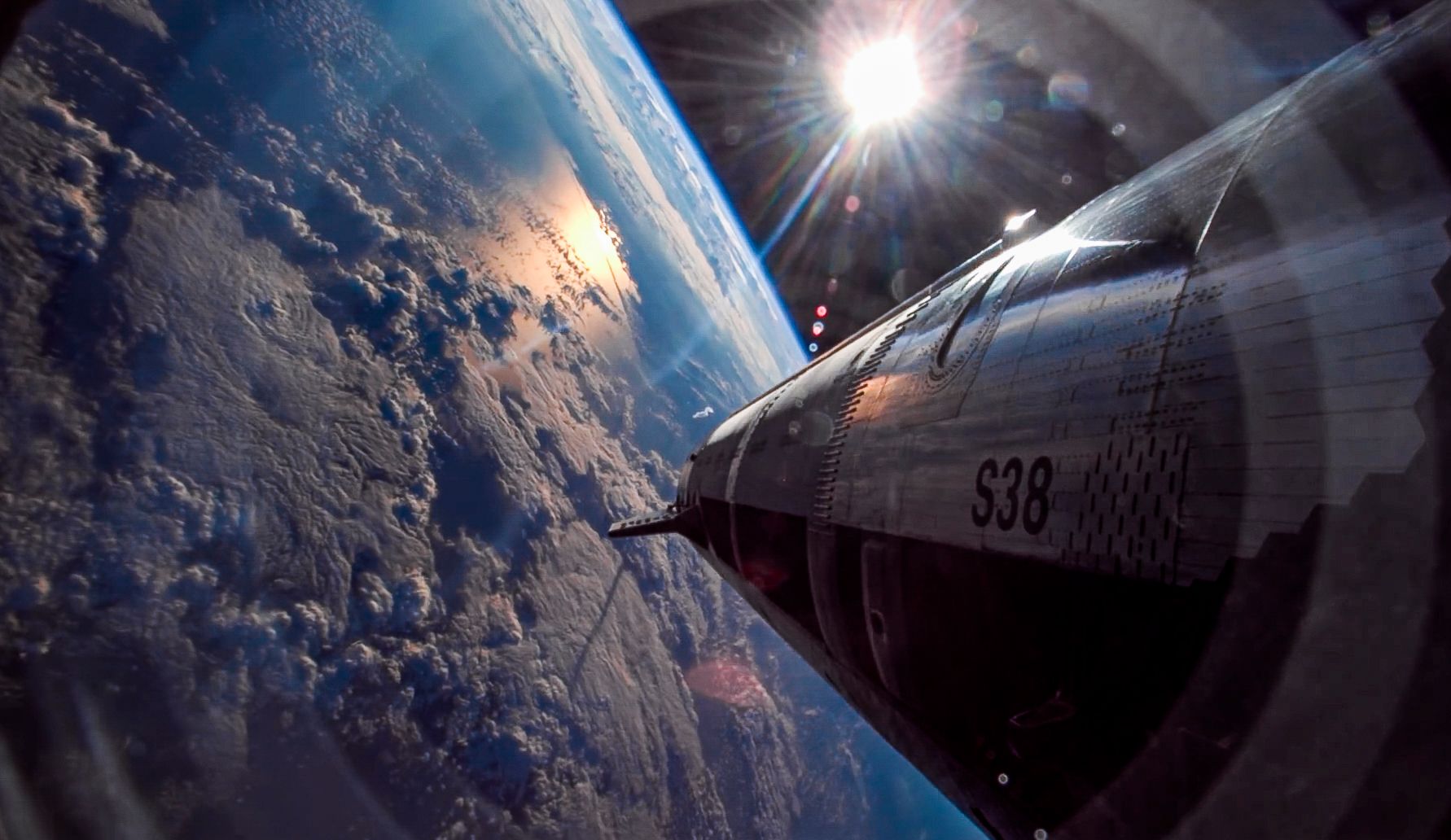
SpaceXAI just made its first move into consumer AI, and it involves your grocery cart. On June 3, 2026, Gopuff and SpaceXAI announced the launch of Go, a Grok-powered shopping assistant built directly into the Gopuff app that predicts what you need before you even start searching for it.
Gopuff is an instant delivery platform that operates more than 400 micro-fulfillment centers across the U.S., delivering everyday essentials, snacks, drinks, and household items in as little as 15 minutes. It is not a restaurant delivery app or a marketplace. It owns its inventory, controls its warehouses, and handles its own logistics, which means it has built one of the most detailed consumer behavior datasets in retail over its 13-year history.
Go combines SpaceXAI’s advanced reasoning, voice, and image generation models with Gopuff’s dataset of hundreds of millions of orders and real-time cultural signals from X to prepare a suggested cart the moment a customer opens the app. It learns each shopper’s habits and automatically builds a personalized cart based on time of day, location, order history, and real-time indicators. Returning customers can check out with a single tap.
Rather than searching for specific items, users can describe a situation like a game-day party or the desire for a healthy breakfast and Go will assemble a cart automatically. It can also predict when shoppers are running low on items like coffee or paper towels and have them packed and delivered in under 15 minutes. Grok voice integration lets users talk to the app in plain conversational language and check out completely hands-free.
Gopuff co-founder and co-CEO Yakir Gola said: “Today, we believe the greatest friction left in commerce is not delivery or instantaneous access to the essentials customers need. It’s the moment before: the thinking, the deciding, the remembering. We’re combining Gopuff’s demand intelligence with xAI’s frontier reasoning to create an everyday shopping experience that feels like a true extension of you.”
Why SpaceX just made a $60 billion bet on AI coding ahead of historic IPO
The timing carries context beyond the product launch. SpaceXAI was formed after SpaceX completed an all-stock merger with Elon Musk’s xAI earlier this year, folding one of the most advanced AI labs in the world into the same corporate structure as the company preparing what could be the largest IPO in history. SpaceXAI is dipping into consumer-focused AI just as it prepares for its public debut, and while Musk has openly discussed building an everything app, this launch uses Grok to power another company’s product rather than launching a standalone consumer platform. Every consumer-facing deployment of Grok ahead of the IPO roadshow adds tangible evidence that SpaceXAI is not just an infrastructure play but a direct competitor in the AI application layer where OpenAI and Google are already fighting for dominance.
Lifestyle
Tesla saves its passengers again – This time after a 300-foot cliff fall in Malibu
A Tesla Model 3 fell 300 feet off a Malibu cliff and both passengers survived.
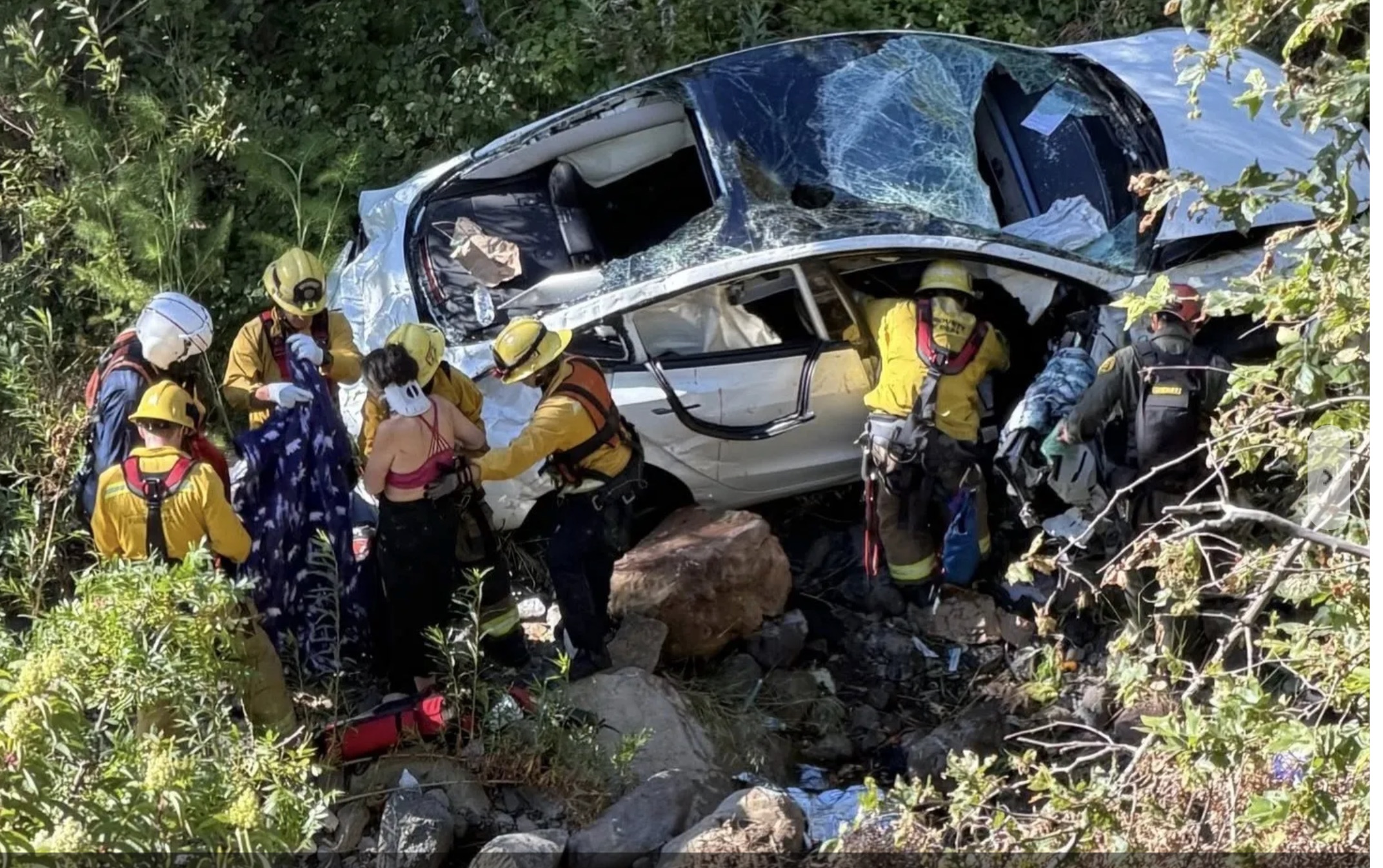
A Tesla Model 3 plunged roughly 300 feet off a cliff on Mulholland Highway in Malibu on Friday morning, May 29, 2026, and both occupants survived. The crash was reported at approximately 7:30 a.m. near the 2500 block of Mulholland Highway, triggering a multi-agency rescue operation involving Malibu Search and Rescue, the Los Angeles County Fire Department, the California Highway Patrol, and McCormick Ambulance.
When first responders arrived, the male driver was outside the vehicle shouting for help while the female passenger remained pinned inside the Tesla. Rescue crews rappelled down the cliffside on ropes to reach the wreckage. A flight medic was lowered by helicopter to begin treating both victims, and the driver was hoisted up to the roadway before crews used the Jaws of Life to free the trapped passenger. Both were airlifted to a local trauma center with moderate injuries despite a remarkable result for a fall that steep.
The outcome is not surprising, considering Model 3 earned an overall 5-star rating from NHTSA in every category and sub-category, and recorded the lowest probability of injury of any car ever evaluated by the U.S. New Car Assessment Program. The absence of a traditional engine in the front of the vehicle creates a longer crumple zone that absorbs impact energy before it reaches occupants, and the battery pack running along the floor gives the car an unusually low center of gravity that reinforces structural rigidity.
This is not the first time a Tesla has kept passengers alive after going off a cliff. A Tesla Model Y carrying a family of four survived a plunge off a cliff at Devil’s Slide near San Francisco in January 2023, with two adults and two children walking away from a 250-foot fall. That incident drew widespread attention to how the structural integrity of Tesla’s electric platform performs in extreme crash scenarios that most vehicles would not survive.
Tesla Model Y driver who drove off cliff with family attempts to avoid criminal conviction
Elon Musk
NASA’s first human outpost on the Moon starts now – SpaceX on deck
NASA named the rovers, landers, and vendors that will build America’s first Moon Base.
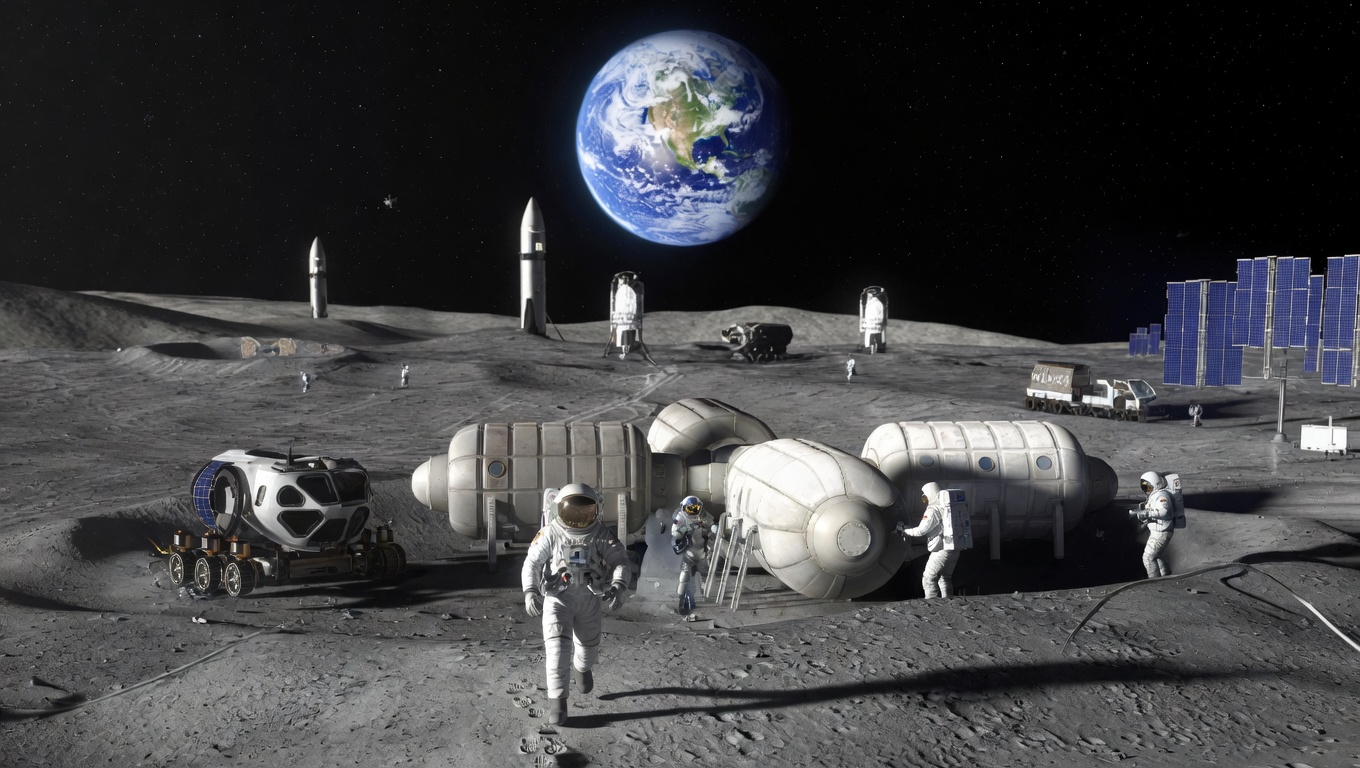
NASA has laid out its most detailed Moon Base plan to date, describing a permanent outpost near the Moon’s south pole that the agency intends to build over the coming decade as a direct stepping stone to Mars. “The Moon Base will be America’s and humanity’s first outpost on another celestial world,” NASA Administrator Jared Isaacman said, adding that every mission crewed and uncrewed “will be a learning opportunity as we return to the lunar surface, build the infrastructure to stay, and master the skills required to live and operate in one of the most demanding and dangerous environments imaginable.”
The plan is structured in three phases involving both uncrewed and crewed missions to deliver equipment, vehicles, and infrastructure to the surface, with the first three moon base missions targeted to launch before the end of 2026.
Moon Base I, targeting fall 2026, will use Blue Origin’s Blue Moon Mark 1 lander to deliver scientific instruments to the Shackleton Connecting Ridge, the same region where Artemis astronauts will land. Moon Base II will send Astrobotic’s Griffin lander carrying more than 1,100 pounds of cargo including Astrolab’s FLIP rover to begin developing mobility systems on the surface. Moon Base III will carry the Lunar Vertex science mission on Intuitive Machines’ Nova-C Trinity lander to study lunar swirls near the south pole, with ESA and Korean science payloads aboard.
On the rover side, NASA awarded Astrolab $219 million and Lunar Outpost $220 million to build the first phase of Lunar Terrain Vehicles, with both rovers targeted for deployment to the lunar surface by 2028. Astrolab’s crewed rover weighs roughly 2,000 pounds and can reach over 6 mph. Lunar Outpost’s Pegasus rover can operate autonomously or via remote control at over 9 mph. Blue Origin separately received $188 million with an option worth $280.4 million to deliver cargo landers for rover transport.
NASA also confirmed that MoonFall, a mission deploying four survey drones to scout Artemis landing sites, has selected Firefly Aerospace to build the transport spacecraft, with a 2028 launch target.
SpaceX sits at the center of that commercial layer. SpaceX holds the NASA Human Landing System contract for the Starship-derived lander that will put astronauts on the surface under Artemis IV, currently targeting 2028. Before that can happen, SpaceX must demonstrate in-orbit propellant transfer at scale, a process requiring multiple Starship tanker launches to fuel a single mission. Water ice at the lunar south pole is central to the base’s long-term viability, as it can be converted into drinking water, breathable oxygen, and rocket fuel, directly reducing dependence on Earth resupply. That resource loop becomes far more practical if Starship can land and be refueled on or near the Moon itself.
Elon Musk has publicly stated that Starship V3, which recently completed its first flight, should be capable enough for initial Mars missions. The Moon Base plan announced Tuesday is the infrastructure layer that connects everything between those two ambitions, and SpaceX is the only American company currently contracted to build the rocket that gets humans to either destination.

Tesla Roadster unveiling gets pushed again, but new event details emerge

Tesla Model 3 has a tasty Supercharging incentive, but it’s ending soon


