Lifestyle
Racing legend talks Teslas, EVs, and making history in America’s deadliest track

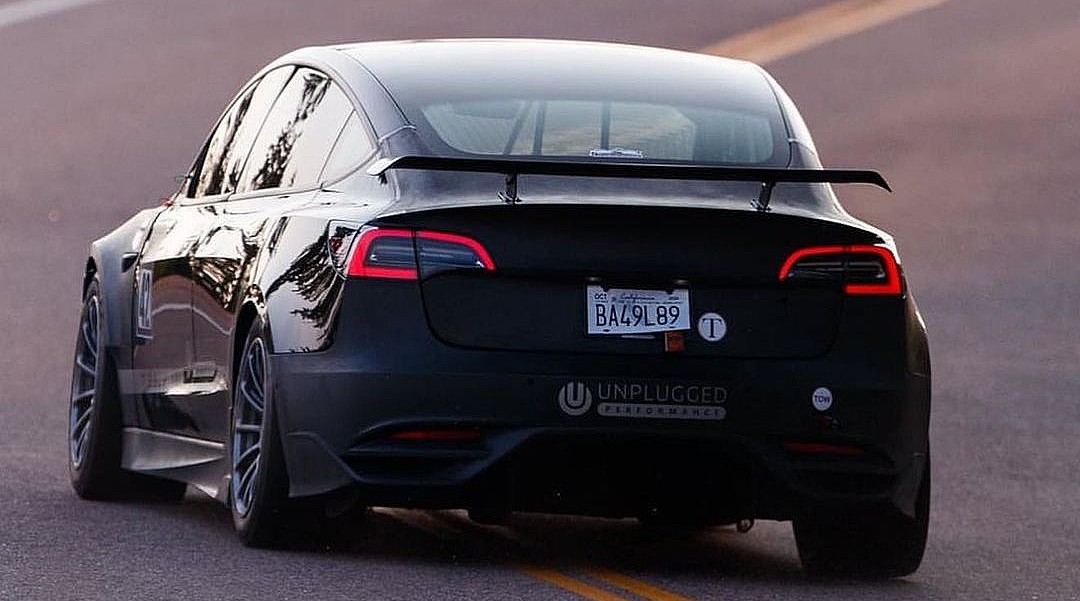
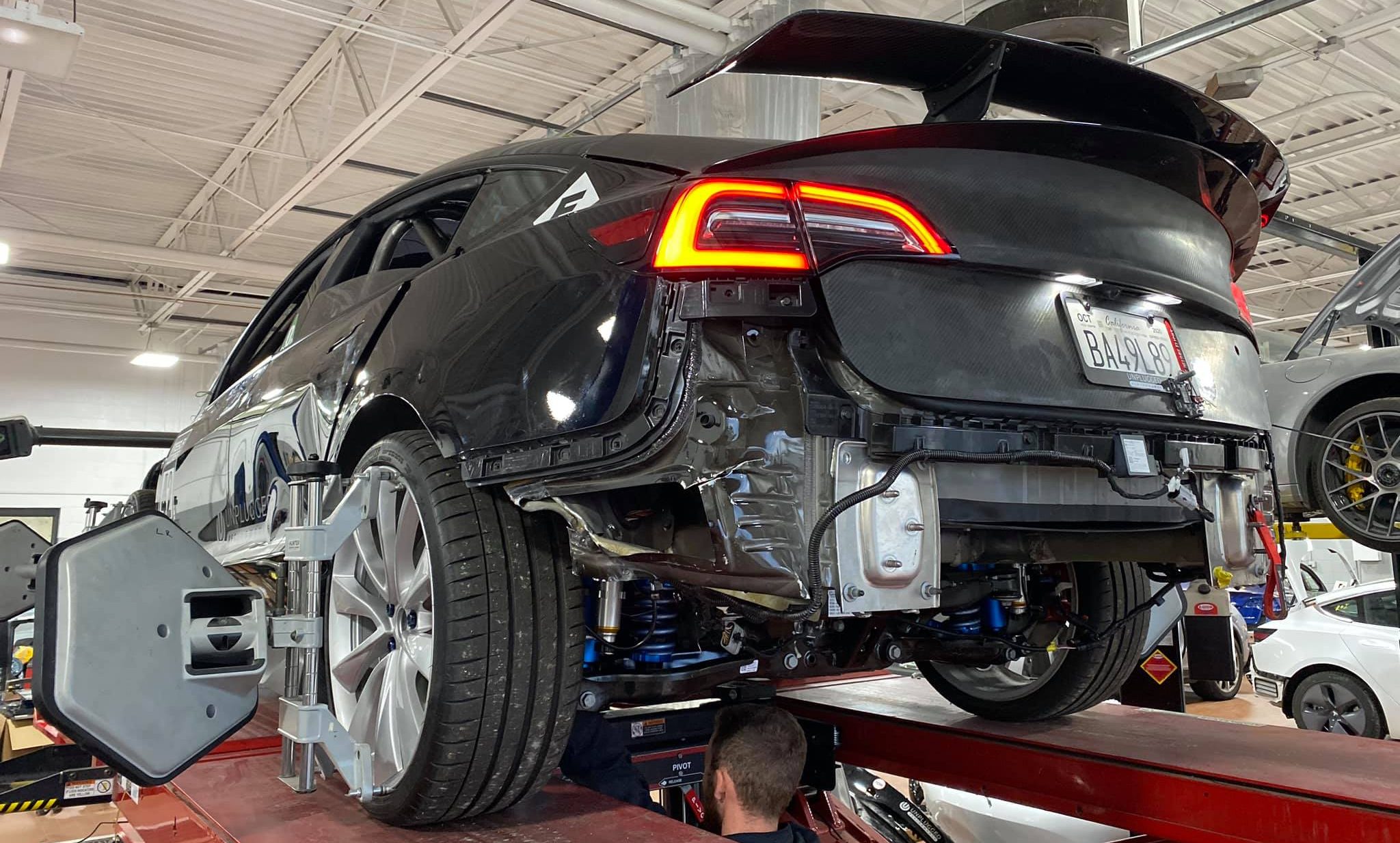
Last August, legendary racecar driver Randy “The Rocket” Pobst, arguably one of the most respected racers in the industry, took his battered Unplugged Tesla Model 3 Performance up Pikes Peak just a few days after crashing spectacularly at the Bottomless Pit. Pobst finished second place at the event’s Exhibition Class, just behind another Model 3 Performance driven by fellow racer Blake Fuller. It was a victory of sorts considering that the Unplugged Model 3 completed the Pikes Peak climb with a bent frame and throttled power due to battery issues. Finishing the race was a feat in itself, But for The Rocket, it was not enough.
A Sub-10-Minute Climb
Pobst and the Unplugged Performance team are looking to return to Pikes Peak this year, and this time, the veteran racer and the Tesla tuners are determined to accomplish the goal that they were not able to reach last year. This time around, Pobst is aiming to achieve a sub-10-minute run up the treacherous hill. In a conversation with Teslarati, Pobst and Unplugged Performance CEO Ben Schaffer shared some of their plans and hopes for this year’s Pikes Peak attempt and why a Tesla is perfect for such competitive events.
When asked why he is returning to Pikes Peak this year in another Tesla, Pobst explained that electric cars are actually a perfect fit for the dangerous race. Being some of the best EVs in the market today, Teslas are amazingly-suited for Pikes Peak, especially considering that the vehicles’ electric motors provide tons of torque instantly. In a statement, the legendary racer explained why a 10-minute run would be just right for electric cars’ characteristics.
“This event is such an incredible thrill and challenge, and it just happens to be very well-suited to a Tesla and electric power in general. There are three reasons why: one, the flow of electrons is unaffected by the 14K high-altitude lack of oxygen; two, the short 10-minute hill climb is well-suited to current battery technology at full power; and three, the strong low-speed torque, instant response, and no need to shift are all ideal for the 160 turns up that mountain road, especially the many switchbacks,” Pobst said.
During his attempt last year, Pobst remarked that his race-tuned Unplugged Model 3 Performance was among the best cars that he has ever driven. Thanks to its all-electric design and the Tesla tuner’s refinements, the professional racer noted that the vehicle just hugged the road at high speeds. This was proven by the fact that Pobst was actually among the fastest in the entire field prior to his crash, with the humble Model 3 finishing ahead of formidable vehicles like race-spec Porsches.
Another Chance At Making History
For now, neither Pobst nor Schaffer have revealed if they would be attempting the 2021 Pikes Peak hill climb in another Unplugged Tesla Model 3 Performance. When asked about this, the Unplugged CEO stated that the details for Randy Pobst’s racecar this year are still being determined. Schaffer did mention that Unplugged is working on some exciting projects for the Model S Plaid and Model S Plaid+, both for street and motorsports use.
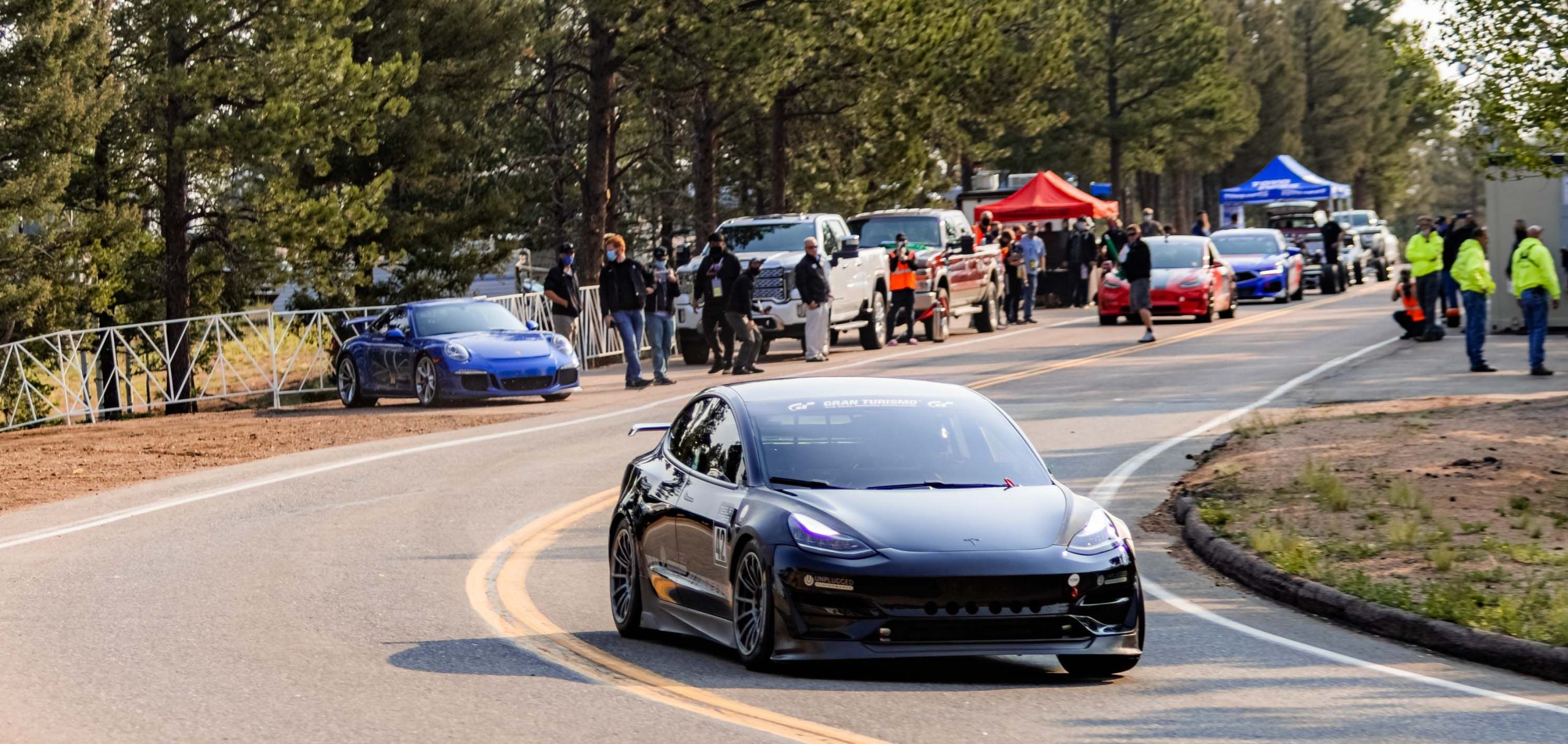
If Pobst and the Unplugged Performance team return to Pikes Peak this year with another Model 3 Performance, however, the racecar driver could very well complete what he set out to do last year and perhaps win the Exhibition Class outright in the process. As Pobst stated himself, the Model 3 Performance is a very fast car, and when it’s tuned for racing, it is a frightening beast of a machine that has the potential to perform close to or at the levels of bespoke racers explicitly created for Pikes Peak. With last year’s experience in tow, Pobst and the Tesla tuner could very well make history this time around.
But this is still just the beginning for Tesla and its future in motorsports. Sharing his thoughts further, Schaffer stated that he hopes to eventually bring the next-gen Tesla Roadster to the treacherous hill climb when the vehicle is released. And with the Model S Plaid and Model S Plaid+ coming this year, the opportunities that exist for dedicated EV tuners and racers are only getting bigger.
“Our goal since 2013 has remained consistent. Unplugged Performance exists to show car enthusiasts around the world how exciting it can be to drive a Tesla. This furthers the Tesla mission and has been our contribution since 2013 as Tesla’s neighbors and friends. Events like this—TeslaCorsa, our Nürburgring activities—and also our street tuning upgrades all are designed to tell that story and to turn petrolheads into EVHeads,” Schaffer said.
Randy Pobst, for his part, is all for this plan. “I’m in!” he responded excitedly to Schaffer’s plans, suggesting that his Pikes Peak attempts in a Tesla are probably only just beginning. In jest, Pobst also suggested that EV advocates and enthusiasts should probably start calling themselves “AMPheads” soon. The electric car movement, after all, is proliferating, and it is only a matter of time before EVs are recognized for being the preferred vehicles in both regular use and in racing. And when that happens, the community of AMPheads, as Randy Pobst has stated, would likely be incredibly vast.
Don’t hesitate to contact us for news tips. Just send a message to tips@teslarati.com to give us a heads up.


Elon Musk
Tesla ditches India after years of broken promises
Tesla has ditched its plans to build a factory in India after years of failed negotiations.

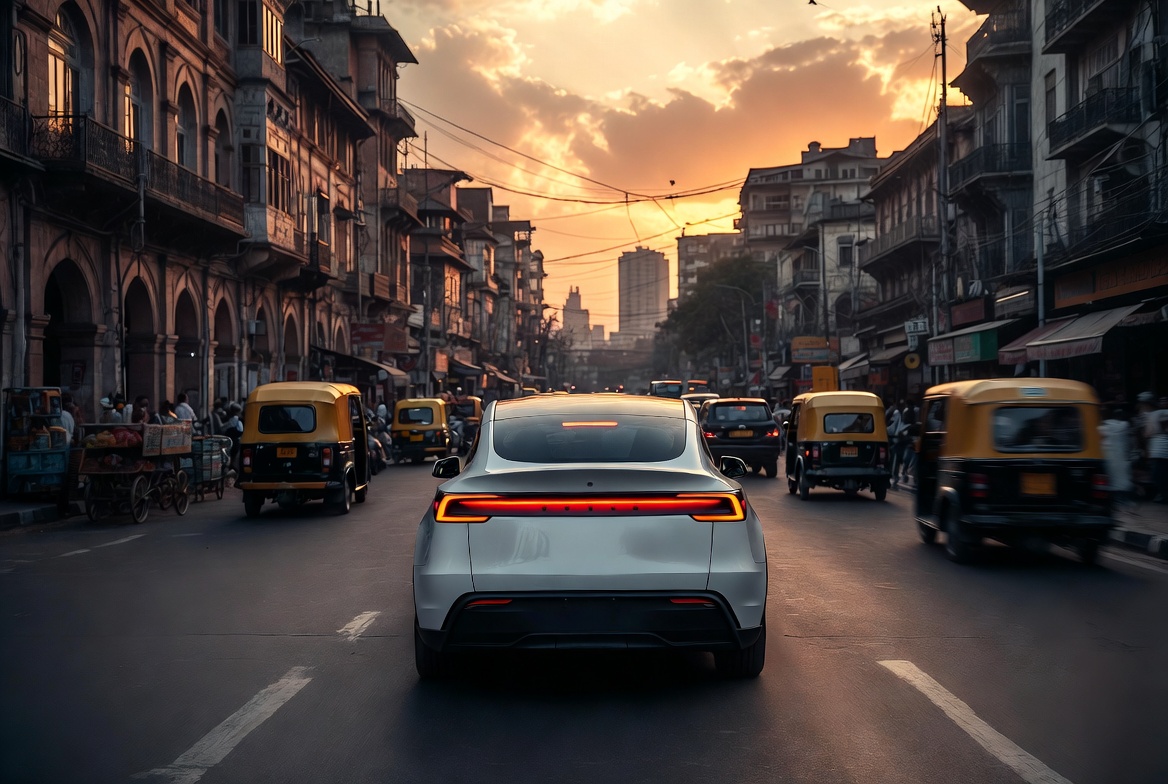
Tesla’s long-running effort to establish a manufacturing presence in India is officially over. India’s Minister of Heavy Industries H.D. Kumaraswamy confirmed on May 19, 2026 that Tesla has informed authorities it will not proceed with a manufacturing facility in the country.
Tesla first signaled serious interest in India around 2021, when it began hiring local staff and lobbying the Indian government for lower import tariffs. The ask was straightforward: reduce duties enough for Tesla to test the market with imported vehicles before committing capital to a local factory. India’s position was equally firm, with an ask of Tesla to commit to manufacturing first, then receive tariff relief. Neither side moved, and the talks quietly collapsed.
Tesla to open first India experience center in Mumbai on July 15
India had offered a policy that would reduce import duties from 110% down to 15% on EVs priced above $35,000, provided companies committed at least $500 million toward local manufacturing investment within three years. Tesla declined to participate. The tariff standoff was only part of the problem. Analysts pointed to significant gaps in India’s local supply chain, inadequate industrial infrastructure, and a mismatch between Tesla’s premium pricing and the purchasing power of India’s automotive market as additional factors that made the investment difficult to justify.
First signs of an unraveling relationship came in April 2024, when Musk abruptly cancelled a planned trip to India where he was set to meet Prime Minister Modi and announce Tesla’s market entry. By July 2024, Fortune reported that Tesla executives had stopped contacting Indian government officials entirely. The government at that point understood Tesla had capital constraints and no plans to invest.
The more fundamental issue is that Tesla’s existing factories are currently operating at approximately 60% capacity, making a commitment to building new manufacturing capacity in a new market difficult to defend to investors. Tesla will continue selling imported Model Y vehicles through its existing showrooms in Mumbai, Delhi, Gurugram, and Bengaluru, but local production is no longer part of the plan.
Elon Musk
Trump’s invite for Elon just reshuffled Tesla’s big Signature Delivery Event
Tesla rescheduled its final Model S farewell to May 20 after Musk joined Trump in China.
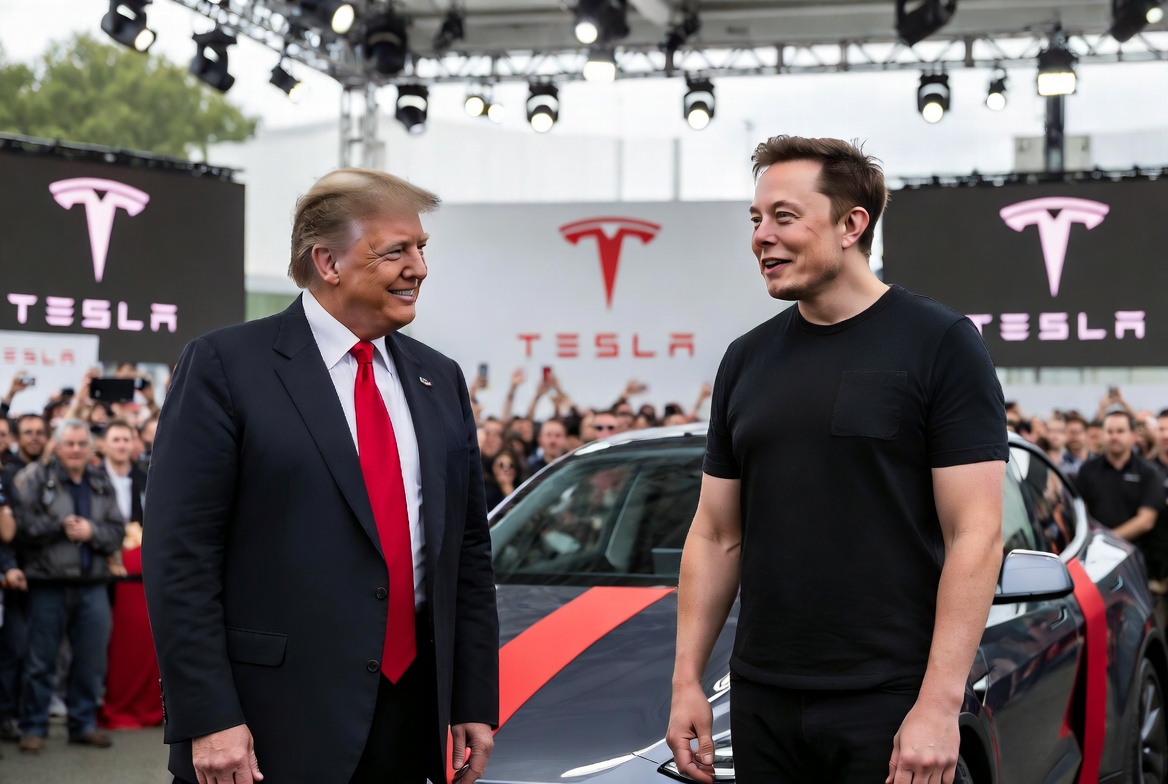
Tesla has rescheduled its Model S and Model X Signature Edition delivery event to Wednesday, May 20, 2026, after abruptly calling off the original May 12 celebration. The event will take place at Tesla’s factory at 45500 Fremont Boulevard in Fremont, California, the same location where the Model S first rolled off the line in 2012. Invitees received a follow-up email asking them to reconfirm attendance and download a new QR code ticket, with Tesla noting that all travel and accommodation expenses remain the buyer’s responsibility.
The reason behind the original cancellation came into focus the same day it was announced. President Trump invited Elon Musk, Apple’s Tim Cook, BlackRock’s Larry Fink, Boeing’s Kelly Ortberg, and executives from Goldman Sachs, Blackstone, Citigroup, and Meta to join his trip to China this week for a summit with President Xi Jinping. The agenda covers trade, artificial intelligence, export controls, Taiwan, and the Iran war, following weeks of escalating friction between Washington and Beijing over AI technology, sanctions, and rare earth exports. Trump wrote on Truth Social, “I am very much looking forward to my trip to China, an amazing Country, with a Leader, President Xi, respected by all.”
Tesla launches 200mph Model S “Gold” Signature in invite-only purchase
The vehicles at the center of all this are the last Model S and Model X units Tesla will ever build. Priced at $159,420 each, the 250 Model S and 100 Model X Signature Edition units come finished in Garnet Red with a one-year no-resale agreement, giving Tesla right of first refusal if the owner decides to sell. As Teslarati reported, the Model S defined Tesla’s early identity as a serious luxury automaker, and the Fremont factory line that built it is now being converted to manufacture Optimus humanoid robots.
Musk’s inclusion in the China delegation drew attention given his very public relationship with Trump, and the invitation signals the two have moved past and past grievances. Trump originally brought Musk on to lead the Department of Government Efficiency following his inauguration, and despite a sharp public dispute in mid-2025, the two have appeared together repeatedly in recent months. A seat on the China trip, the most diplomatically consequential visit of Trump’s current term, puts Musk back at the table on U.S. economic policy at a moment when Tesla’s China revenue remains one of the company’s most important financial pillars.
Lifestyle
Tesla Semi hauls fresh Cybercab batch as Robotaxi era takes hold
A Tesla Semi was filmed hauling Cybercab units out of Giga Texas for the first time.
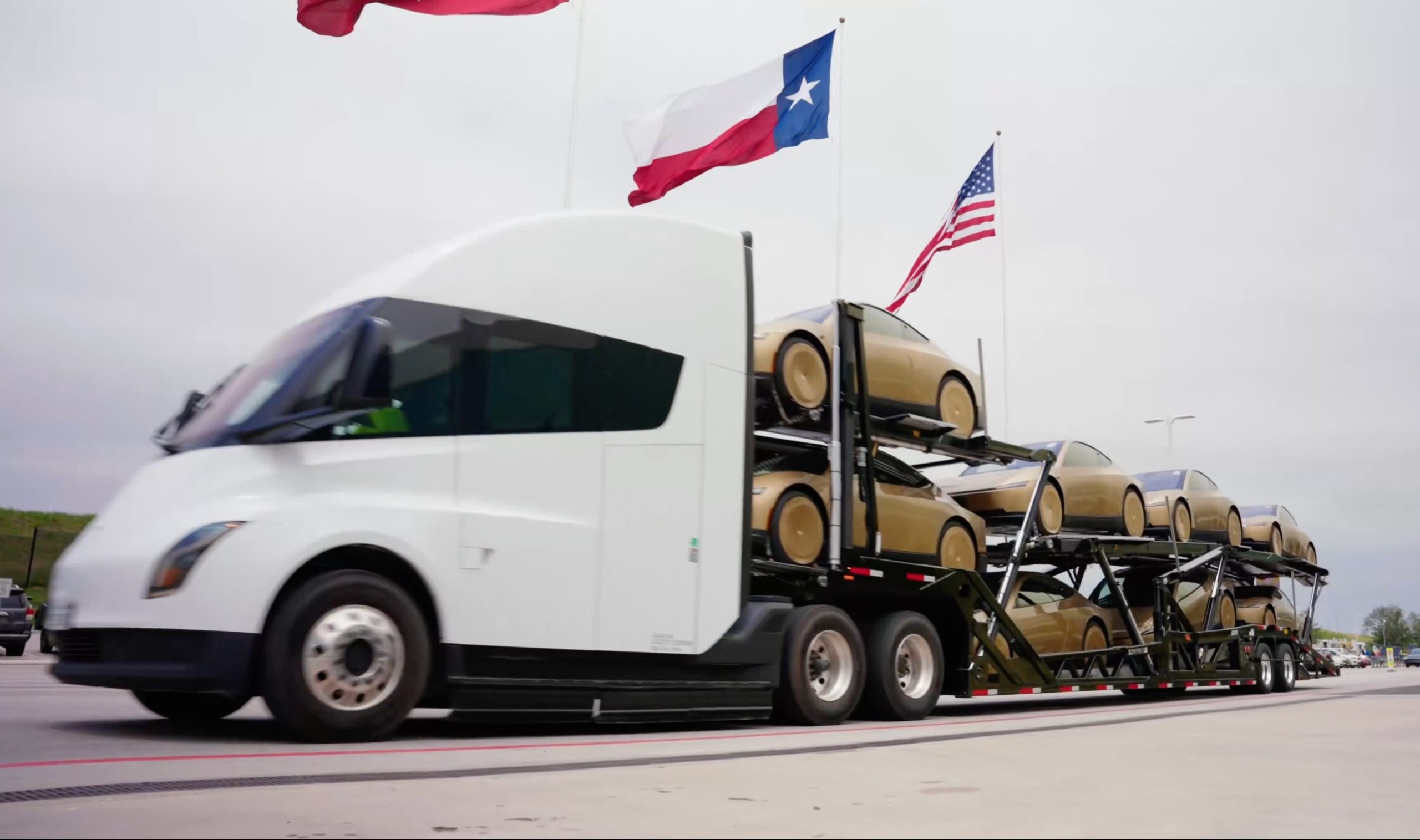
A Tesla Semi loaded with Cybercab units was recently filmed leaving Gigafactory Texas, marking what appears to be the first documented delivery run of Tesla’s autonomous two-seater. The footage shows multiple Cybercabs secured on a flatbed trailer being hauled by a production Tesla Semi, a truck rated for a gross combination weight of 82,000 lbs. The location is consistent with Giga Texas in Austin, where Cybercab production has been ramping since February 2026.
The sighting follows a wave of Cybercab activity at the Austin facility. In late April, drone operator Joe Tegtmeyer spotted approximately 60 Cybercabs parked in two organized groups in the factory’s outbound lot, the largest concentration observed to date. Units being staged in an outbound lot is a standard pre-delivery step, and the Semi footage is the logical next frame in that sequence.
En route with @tesla_semi pic.twitter.com/ZfuOjaeLH1
— Tesla Robotaxi (@robotaxi) May 7, 2026
This is not the first time Tesla has used its own Semi to move Tesla products. When the Semi was unveiled in 2017, Musk noted it would be used for Tesla’s own operations, and over the years Semi prototypes were spotted carrying cargo ranging from concrete weights to Tesla vehicles being delivered to consumers. In 2023, a Semi was photographed transporting a Cybertruck on a trailer ahead of that vehicle’s delivery launch.
The Cybercab itself was first revealed publicly at Tesla’s “We, Robot” event on October 10, 2024, at Warner Bros. Studios in Burbank, where 20 pre-production units gave attendees rides around the studio lot. Musk stated at the event that Tesla intends to produce the Cybercab before 2027. The first production unit rolled off the Giga Texas line on February 17, 2026, with Musk posting on X: “Congratulations to the Tesla team on making the first production Cybercab.”
Tesla’s annual production goal is 2 million Cybercabs per year once multiple factories reach full design capacity, with the company targeting a price under $30,000 per unit. Tesla has confirmed plans to expand its robotaxi service to seven cities in the first half of 2026, including Dallas, Houston, Phoenix, Miami, Orlando, Tampa, and Las Vegas, building on the unsupervised service already running in Austin. Musk has said he expects robotaxis to cover between a quarter and half of the United States by end of year.

NASA just gave SpaceX more crew missions because Boeing can’t certify

Elon Musk called it Epic: The full story of SpaceX’s Starship Flight 12


