News
Tesla rival Volkswagen takes stand against FUD on electric cars’ carbon footprint

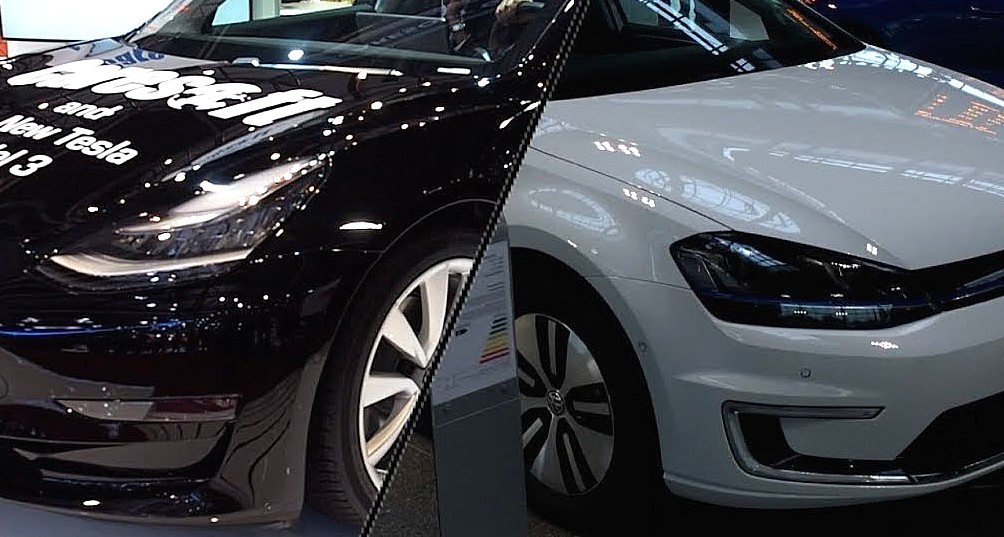
Tesla rival Volkswagen has taken a stand against a debunked yet insistent argument against all-electric vehicles. In a recent study involving one of its most popular vehicles, the German automaker declared that EVs have a smaller carbon footprint than their internal combustion-powered counterparts, even if they are not charged from renewable sources.
Volkswagen used two of its vehicles, a Golf TDI and an e-Golf for its study. The e-Golf produced 57g/km of carbon dioxide per vehicle, which is higher than the Golf TDI’s 29g/km of CO2 per vehicle during its production phase. This is the only time that the electric car’s carbon footprint exceeded that of its diesel counterpart, since when it came to charging and operating the vehicles, the e-Golf proved far cleaner than its diesel-powered sibling.
Driving the Golf TDI resulted in an average CO2 output of 111g/km, which was notably higher than the 62g/km CO2 produced by the e-Golf when charging. Volkswagen estimated that this figure could drop to as low as 2g/km if the electric car were charged using renewable energy. With these calculations in mind, the German carmaker noted that the diesel-powered Golf TDI produced an average of 140g/km over its lifetime. The e-Golf, on the other hand, produced an average of 119g/km over its lifetime.
The Volkswagen-backed study mirrors the findings of a previous analysis by research organization BloombergNEF, which concluded that the CO2 emissions produced by electric vehicles charged from non-renewable power were still 40% lower than cars operating with internal combustion engines. This gap, of course, is set to get smaller with the introduction of more efficient battery technology and more sustainable automotive manufacturing processes.
Credit is due to Volkswagen for taking a stand against a persistent piece of misinformation that has been peddled for years. The study, if any, is yet another sign that one of Germany’s largest of automakers is beginning to take the upcoming electric car revolution seriously.
This is highlighted by Volkswagen’s recent public comments, as shown when the carmaker acknowledged Tesla for establishing that the demand for electric vehicles is there. The company also made headlines when CEO Herbert Diess encouraged BMW and Daimler to commit to an all-electric future. After Das Auto’s agreement, BMW member of the board Klaus Fröhlich confirmed that Germany would be moving away from other alternative forms of propulsion like hydrogen, as the country’s automakers will be focusing on all-electric vehicles instead.
While Volkswagen is arguably one of Tesla’s loudest rivals with its constant releases of concept all-electric vehicles that are yet to enter production, the company has shown some earnest interest in the electric car maker’s work. During the final days of Elon Musk’s short-lived attempt to take Tesla private last year, the CEO received a number of offers from investors willing to fund company’s privatization at $420 per share. The deal, which was estimated to cost around $30 billion, attracted a number of prominent investors, one of which was none other than Volkswagen AG.
 -
-
Volkswagen’s electric car emissions study could be accessed here.


Elon Musk
The Boring Company’s newest tunnel vehicle runs on Tesla parts and no one is driving it
The Boring Company’s new tunnel vehicle runs on Tesla Model 3 batteries and drive units.

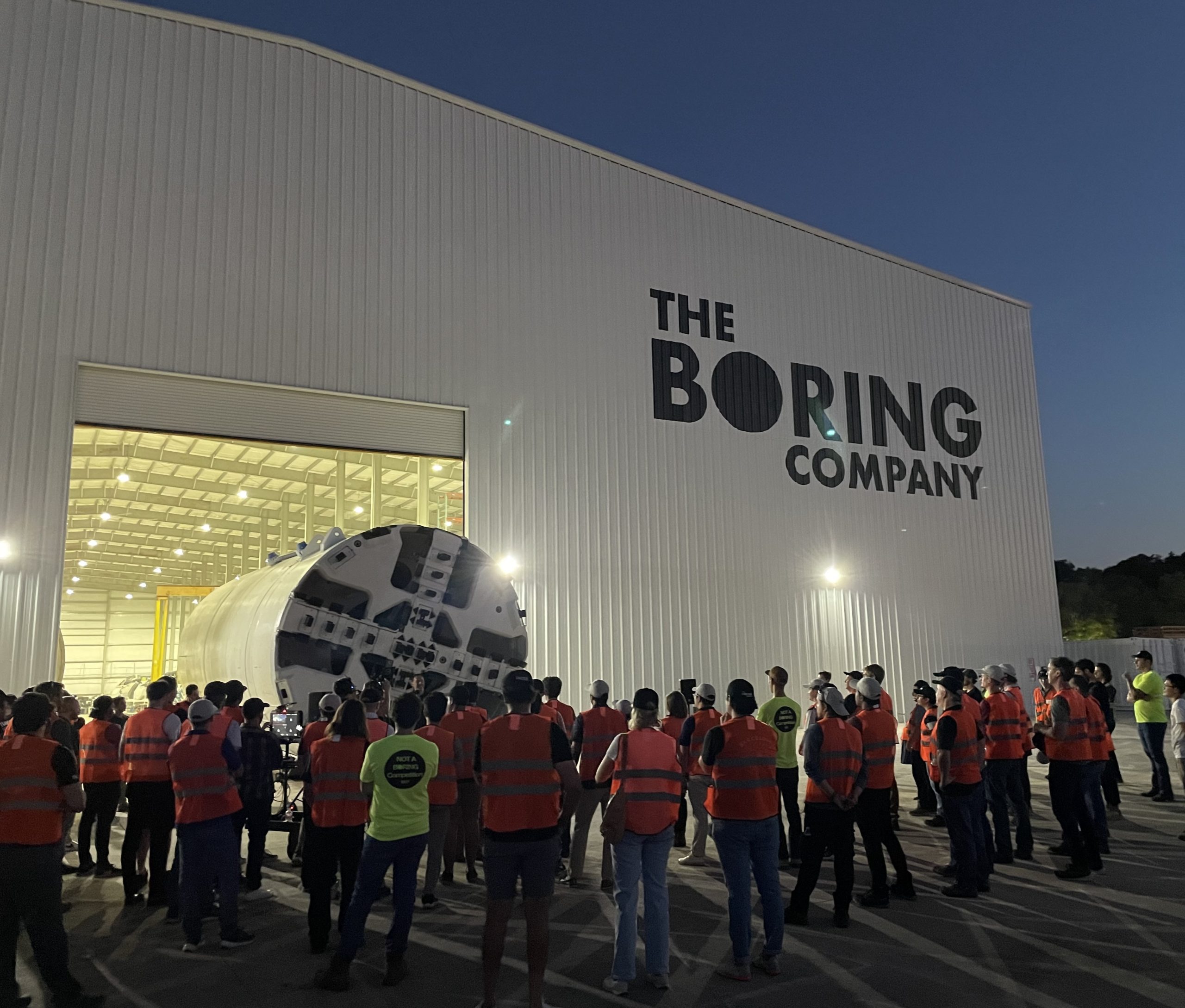
The Boring Company just introduced a new piece of hardware, and it runs on parts pulled straight from a Tesla showroom. Liner Truck 3, unveiled in a post from the tunneling company’s official X account, is an all electric vehicle built around Tesla Model 3 battery packs and drive units, purpose built to move concrete tunnel segments to the boring machine face without a single person underground.
Introducing Liner Truck 3 — our latest fully electric tunnel vehicle.
– Tesla Model 3 battery and drive units
– Transports 22,000+ lb of concrete segments to the boring machine
– 28 miles of range
– 12 mph max operating speed
– Remotely piloted from Global OCC in Texas, with… pic.twitter.com/XB7FgSXnpy— The Boring Company (@boringcompany) August 7, 2026
The job itself is unglamorous but critical. Each precast segment run weighs more than 22,000 pounds, roughly the load of a full cement mixer, and Liner Truck 3 hauls that weight repeatedly between the surface staging area and wherever the Prufrock machine happens to be cutting.
The Boring Company said Liner Truck 3 is piloted remotely out of its Global Operations Control Center in Texas, extending the Zero-People-In-Tunnel approach the company has spent years building toward. An earlier version of a ZPIT liner truck was already tested at the company’s Bastrop, Texas research tunnels, and a factory tour released last month showed an employee flying a fully loaded liner truck with a PlayStation controller. Liner Truck 3 looks like the production version of that same idea, cleaned up and pushed into daily use.
The timing lines up with a company digging in more places than it ever has before. The Boring Company now has multiple Prufrock machines active or arriving in Nashville, where Music City Loop construction has been accelerating since February, and its Vegas Loop network keeps adding tunnel mileage on a near monthly basis. Every one of those projects depends on getting concrete segments to the cutting face fast enough to keep the boring machine from idling, which is exactly the bottleneck Liner Truck 3 is designed to remove.
It also reinforces something Tesla owners have watched happen gradually across Musk’s companies: passenger car hardware finding a second life in heavy equipment. Model 3 drive units already move people through the Vegas Loop, and now the same components are hauling concrete underground in Nashville and wherever The Boring Company digs next. Whether that kind of component reuse extends further into TBC’s equipment lineup, or into other Musk owned industrial hardware, is the next thing worth watching.
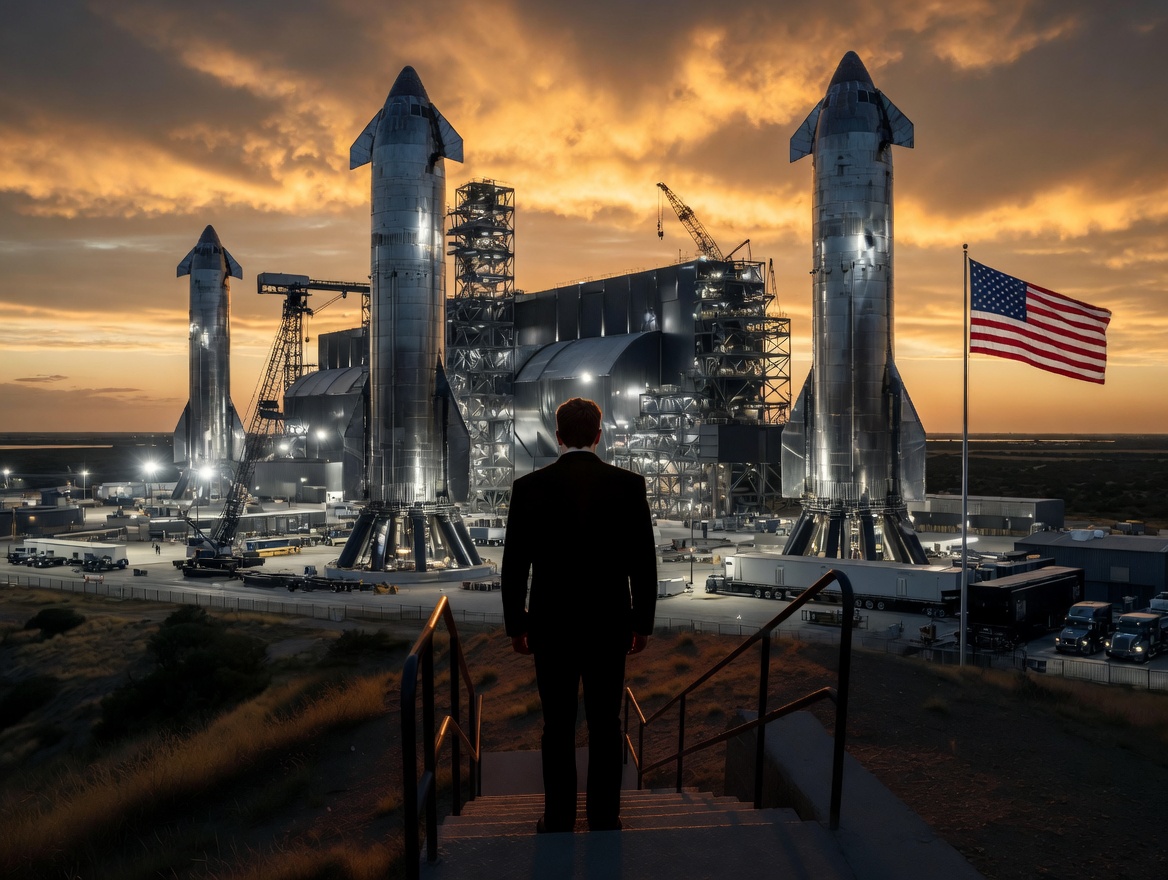
SpaceX stock did the opposite of what most of Wall Street expected this week, when the day designed to be its most dangerous turned into a rally, and the rally kept going.
Thursday marked the first major lockup expiration since SpaceX’s June IPO, making roughly 911.5 million insider held shares eligible to trade for the first time, more than doubling the company’s public float. Analysts and short sellers had spent weeks bracing for a flood of selling, especially after the stock fell 13 percent following its first earnings report as a public company on Tuesday. Instead, shares rose 6.1 percent Thursday to close at $114.92, and by Friday they were trading near $129, up more than another 12 percent on the day.
SpaceX shorts get warned by Musk ally, echoing Tesla’s early struggles
The setup made the outcome notable. Short interest had climbed to roughly 34 percent of the float heading into earnings, among the highest of any large cap stock, with about 95 percent of available shares to borrow already on loan. CEO Elon Musk warned short sellers twice in the weeks before the lockup, writing on X that “the survival probability of firms who maintain a significant short position in SpaceX over time is very low,” then following up on the morning of earnings with “I try to warn them, but they just double down.”
When the newly unlocked shares hit the market and the selloff never showed up, some of that short position appears to have started unwinding. TipRanks reported that options activity shifted toward bullish strategies like put selling and risk reversals following the rally, with roughly $600 million in options premium trading Thursday alone. Retail buyers also stepped in during the earnings dip, according to Vanda Research.
The fundamentals behind the stock have not changed much in a week. SpaceX’s revenue nearly doubled year over year to $7.8 billion, with Starlink subscribers doubling to 12 million and the company’s AI segment growing 247 percent. What spooked investors on Tuesday was the spending side. Capital expenditures jumped to more than $18 billion for the quarter, up from $2.8 billion a year earlier, with AI investment alone rising from $749 million to $15.8 billion. Wall Street remains split on whether that spending is building infrastructure SpaceX needs or outrunning what the business can currently support, a debate Teslarati has tracked since shares first came under pressure.
None of that resolves the bigger question hanging over the stock. Thursday’s release was only the first of nine staggered lockup tranches, with roughly $800 billion worth of additional shares scheduled to become eligible through October, and Musk’s own stake stays locked until next June. If this week is any indication, the market is treating that supply as something it can absorb rather than something to fear, at least for now.
News
The Boring Company’s newest Vegas Station has a permit quietly waiting behind it
Sahara Las Vegas opened a new Vegas Loop station, joining an exclusive two resort transit club.
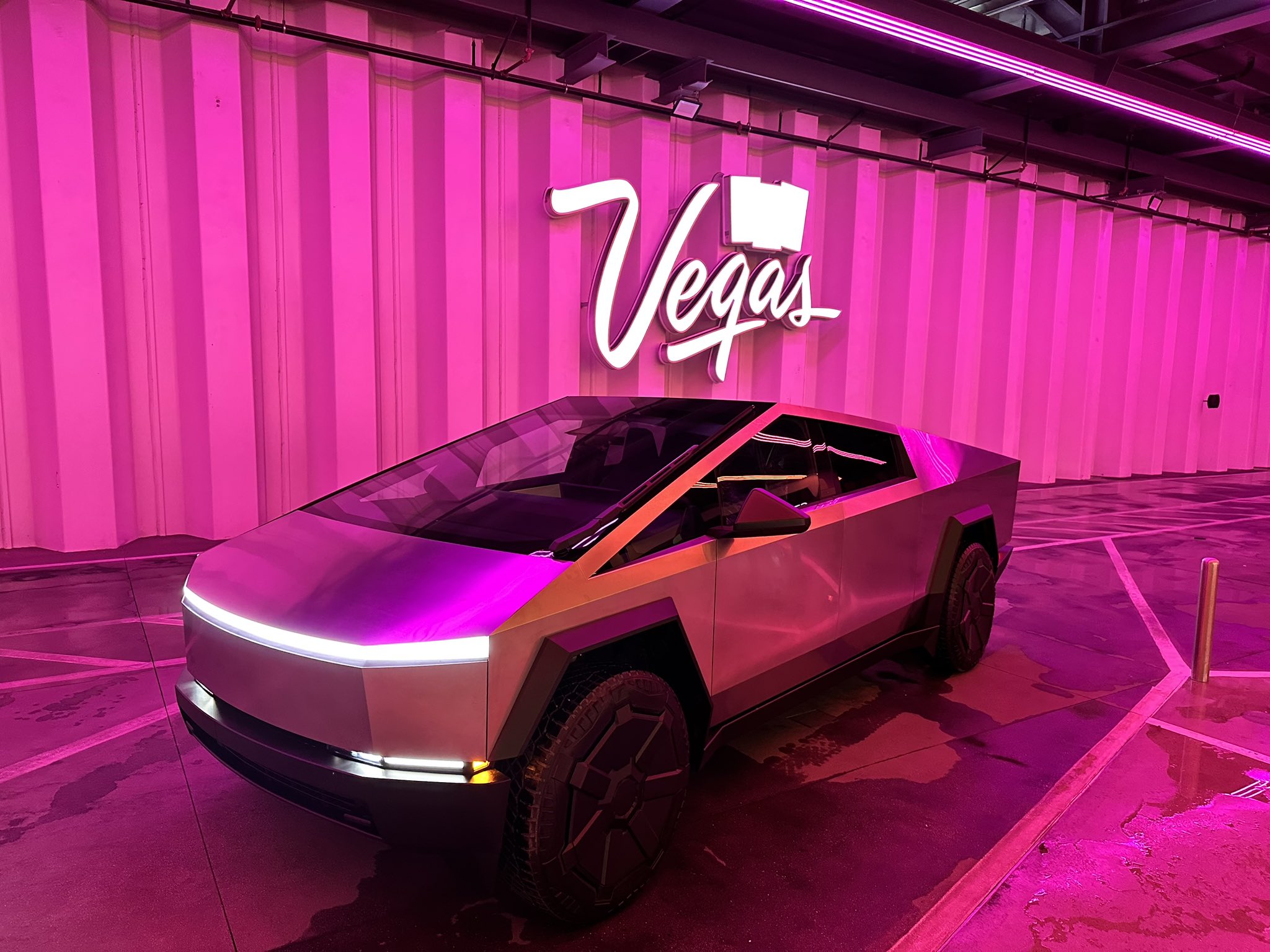
Sahara Las Vegas opened a new Vegas Loop station Thursday, giving The Boring Company’s underground transit system its northernmost stop yet on the Strip. The station sits at Sahara’s Paradise Road entrance, on the southeast corner of Las Vegas Boulevard and Sahara Avenue, and connects riders to the Las Vegas Convention Center, other Strip resorts on the network and, eventually, Harry Reid International Airport.
The addition makes Sahara the second resort, after Fontainebleau opened its own station in January, to get a stop built at street level rather than tucked into the property itself. Sahara now joins Westgate as the only two Strip resorts offering both a Vegas Loop station and a stop on the Las Vegas Monorail, giving guests two separate ways to get around without leaving the property.
The Boring Company just doubled its tunneling power in Nashville
The bigger news buried in Thursday’s announcement is what comes next. Boring Company has already secured its first permit to tunnel north of Sahara Avenue, extending the network beyond where it currently ends, even though permits to push the Loop toward downtown Las Vegas still haven’t been granted. Crews are also working on a two mile dual tunnel line running from Westgate to a planned station at 4744 Paradise Road, just north of Tropicana Avenue, that Las Vegas Convention and Visitors Authority CEO Steve Hill has said the company hopes to open in time for November’s Las Vegas Grand Prix.
Ridership has grown alongside the buildout. The Loop moved roughly 82,000 passengers during CONEXPO in early March, a total the company highlighted on its own X account at the time, and the system has now carried more than 4 million passengers through 11 open stations since it began running in 2021. The airport connector tunnels, meant to give the Loop a direct link to Harry Reid, have slipped past their original first quarter target and remain under construction, with Boring Company director Mike Baier saying that a full opening is still a few months out.
For Sahara, the calculation is straightforward. Convention traffic drives a large share of Loop ridership, and a station at the property’s front door gives conventiongoers one more reason to book rooms on the Strip’s north end instead of closer to the convention center itself.

Inside Tesla’s secretive $10 Billion “Project Crystal Sun” filing

The Boring Company’s newest tunnel vehicle runs on Tesla parts and no one is driving it


