Lifestyle
Tesla Semi competitor Nikola set to unveil battery-only semi-trucks at launch event

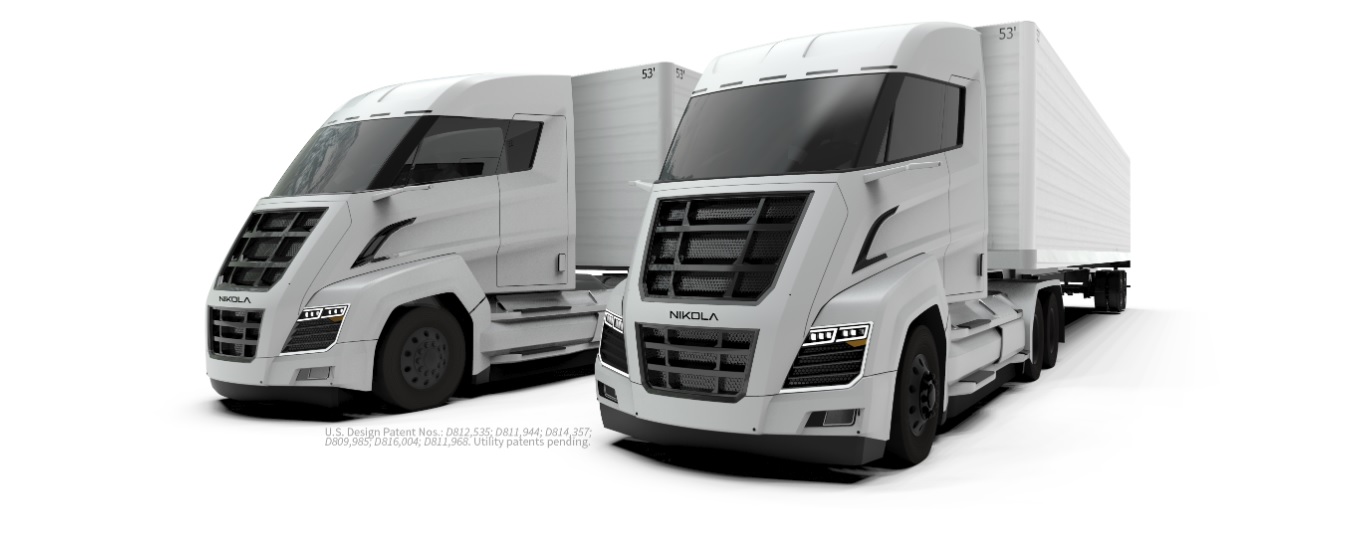
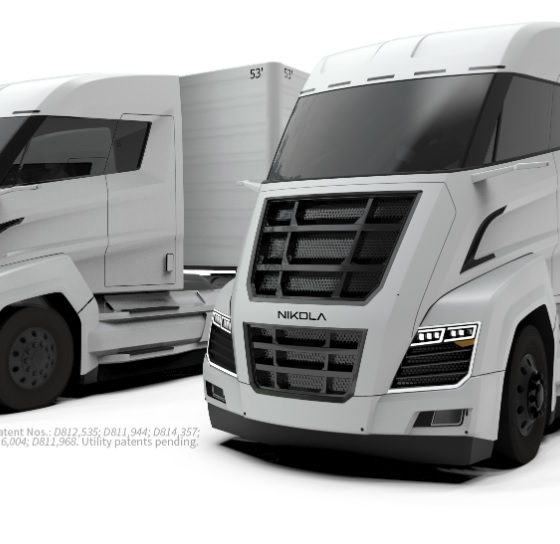
Tesla Semi Truck competitor Nikola Motor Company will unveil battery-only versions of the Nikola Two and Nikola Tre semi-trucks at its two-day Nikola World 2019 event in Scottsdale, Arizona this week. Previously, hydrogen-electric versions were announced, including the Nikola One, unveiled in 2016. A track demonstration of the Nikola Two will be part of the Nikola World activities, and a functioning version of the company’s coming solar powered hydrogen fueling stations will be on display.
In the lead up to the Nikola World production, the zero-emissions trucking startup has made significant development headway, teased further product announcements, and built excitement around its brand. At the end of March, Nikola finalized a deal with Saint Holdings IPA acquiring 400 acres of prime development property of an up-and-coming vehicle manufacturing hub in Pinal County, Arizona. The manufacturing mega site will host the factory where Nikola’s Class 8 vehicles will be built once complete. For now, Fitzgerald Glider Kits is handling the initial truck manufacturing.
Nikola announced a $16 million-dollar equipment purchase (out of hundreds of millions planned) for its hydrogen fuel cell laboratory shortly after the Arizona land deal was made public. The technology already developed and utilized in the company’s demo trucks will continue to be improved upon at this lab, enabling Nikola to “set a new efficiency benchmark for heavy-duty fuel cell systems”, as described by CEO Trevor Milton in a press release about the investment.
#NikolaWorld2019 is tomorrow and we're so excited to share with the world what we've been tirelessly working on over the past couple of years. Tomorrow will be a huge step in showing off the most advanced technology the transportation industry has ever seen. See you all tomorrow. pic.twitter.com/gMxrafOxi3
— Nikola Corporation (@nikolamotor) April 15, 2019
Nikola has made a number of bold claims about the products it’s developing since the Nikola One’s unveiling in 2016. Nikola’s truck lineup itself is said to meet or exceed the performance provided by diesel-powered vehicles with 1,000 hp, up to 2,000 ft-lbs of torque, and around 1,000 miles of range. In response to claims that hydrogen production requires fossil fuels, the company stated that its fueling stations will primarily use renewable energy sources as will its manufacturing facilities. Along with committing to a clean energy, diesel-free future for transportation, Nikola is also working on making its products ready for full autonomous driving, all of which draw direct comparisons to its main rival, the Tesla Semi.
The hydrogen-electric truck company unveiled the Nikola One full-cab semi-truck prior to Tesla’s launch of its own commercial hauler, which should have given Nikola a time and development advantage; however, over the last year, the Arizona-based truck manufacturer has acquired the appearance of having fallen technologically behind.
The electric vehicle community has grown accustomed to seeing all-electric vehicle manufacturer Tesla’s continued success while also witnessing several electric startups disappear almost as quickly as they appeared. The lack of a near-production vehicle feeds the perception that Nikola’s “talk” won’t be translated into its “walk”, to borrow a common phrase. There are also doubts about the hydrogen fuel cell component of Nikola’s technology, something the company has addressed numerous time, doubling down on the viability of fuel cells as a better solution over batteries-only for long range trucking.
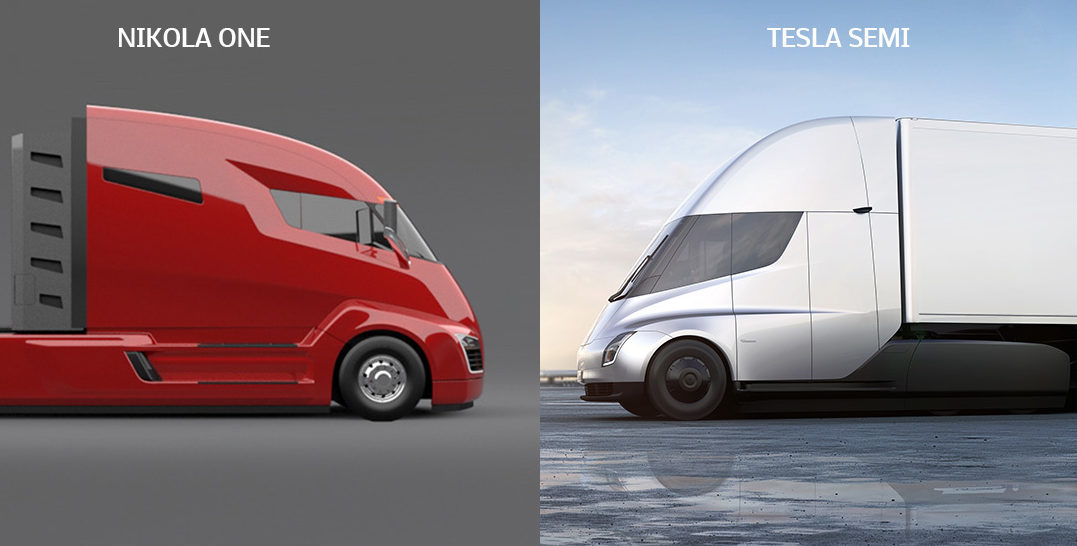
In contrast, the Tesla Semi test mule has been seen on public roads on several occasions, and Tesla has even released production-quality video of the semi-truck hauling its all-electric sedan and SUV brethren. Photos of the long-hauler making deliveries of those same vehicles to customers were also published by Tesla, furthering the narrative that significant progress is being made by the California-based car maker with its Semi.
Tesla itself is very familiar with the public relations climb. Every slip in production estimates, price change, or even odd tweet or two (etc.) from CEO Elon Musk draws the ire of critics and skepticism of fans alike. Musk’s tenacity, however, has given way to the phrase “Tesla Effect”. Due to Musk’s drive that helped lead to success at Tesla, any newcomers to the electric auto manufacturing industry are going to have to answer the question, “What are you doing that’s better?” Nikola Motors is no exception despite the primary business differences between the companies.
Nikola World 2019’s product announcements and battery-electric unveilings will serve to bring the company’s tangibility into view. Nikola also frequently communicates its gratitude for its supporters, and this week’s event is no different. An announcement was made via the company’s social media accounts that guests of Nikola World would be treated to a country music superstar performance during the first night of the event.
“SURPRISE ANNOUNCEMENT! We will be having a special country music superstar performing the night of the unveiling, you don’t want to miss it,” the company tweeted. Nikola World 2018 was the company’s first annual event, officially putting Nikola on the map of next generation, Class 8 truck manufacturers.
SURPRISE ANNOUNCEMENT! We will be having a special country music superstar performing the night of the unveiling, you don't want to miss it! #NikolaWorld2019 pic.twitter.com/FidOf1FwLA
— Nikola Corporation (@nikolamotor) April 10, 2019
Follow us @Teslarati for behind-the-scenes coverage from Nikola World, taking place on April 16-17 in Scottsdale. We’ll bring you a first look at Nikola’s upcoming all-electric semi trucks and new products.


Investor's Corner
Tesla unfolded its first European “folding Supercharger”
Tesla’s folding Supercharger just arrived in Europe and it changes how fast charging expands.

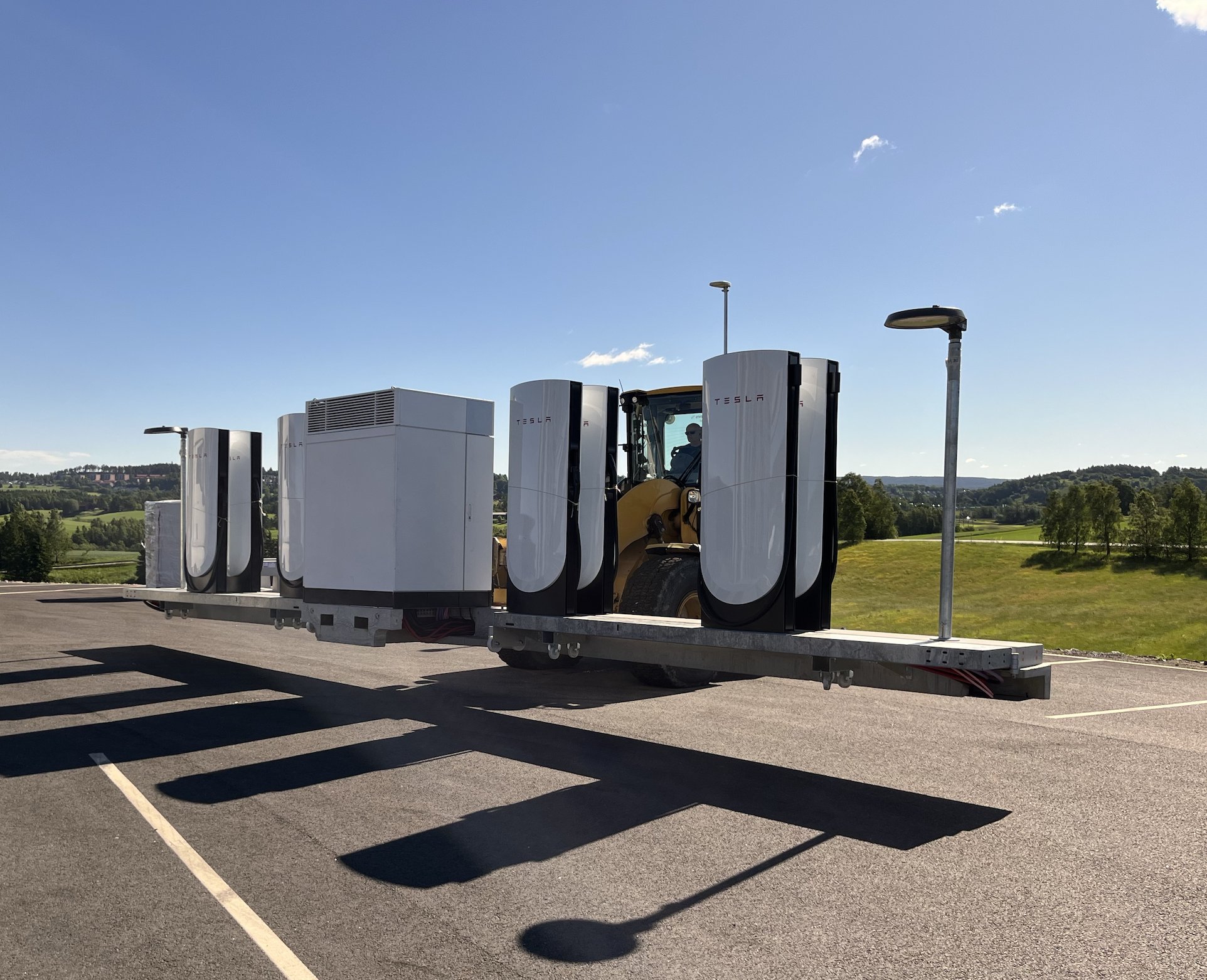
Tesla’s Folding Unit Supercharger has officially landed in Europe, with the company teasing a new installation in its effort for a broader rollout targeting major motorway rest stops across the European continent in Q3 2026. The arrival marks a notable shift in how Tesla is thinking about network expansion, moving from hardware performance alone to engineering the logistics chain itself.
While Tesla did not reveal the exact location for the new folding Supercharger in Europe, the photo shared on X heavily suggests that this maybe somewhere in Norway. Historically, whenever Tesla rolls out an entirely new infrastructure architecture in Europe, whether it was the original Supercharger stalls years ago or these brand-new modular V4 “Folding Units”, Norway is almost always the designated launch pad because of its unmatched EV adoption rate and supportive infrastructure
The Folding Unit, introduced in March 2026, is a factory pre-assembled V4 charging station built on an industrial hinge system mounted to a heavy-duty concrete base. The entire assembly arrives on site ready to unfold and connect. Tesla confirmed the units feature telescopic light poles specifically designed for easy transportation and fast on-site deployment, a detail that signals how carefully the logistics chain has been engineered alongside the hardware itself. The design allows 33% more stalls per delivery truck, cuts installation time roughly in half, and reduces overall deployment costs by more than 20% compared to traditional installations.
Tesla’s newest “Folding V4 Superchargers” are key to its most aggressive expansion yet
Tesla also noted telescopic light poles which provide benefits over traditional Supercharger installations that require fixed-height poles that are awkward to ship, slow to position on site, and often require separate crews and equipment to erect before charging hardware can even be staged. By engineering poles that compress for transit and extend on arrival, Tesla has removed one of the quieter bottlenecks in the physical deployment process. Every hour saved on a light pole installation is an hour redirected toward getting stalls energized. At scale, across dozens of new sites per quarter, those hours add up to a meaningful acceleration in how quickly a location goes from approved permit to serving its first customer.
Each Folding Unit pairs a single V4 power cabinet with eight charging posts. The V4 cabinet delivers up to 500 kW per stall for passenger vehicles and up to 1.2 MW for the Tesla Semi, supporting twice the stalls per cabinet at three times the power density of its predecessor. Longer cables make every new station immediately usable by non-Tesla vehicles, a priority as Tesla continues opening its network to Ford, GM, Rivian, Hyundai, Stellantis, and others.
As Teslarati reported when the Folding Unit was first unveiled, Tesla’s Gigafactory New York produced its final V3 Supercharger cabinet in March 2026 after more than seven years and 15,000 units, completing a full pivot to V4 production. The European arrival of the folding design is the next chapter in that transition.
Faster and cheaper deployment means Tesla can justify building in markets and corridors that were previously too expensive to serve, filling the coverage gaps that have slowed EV adoption outside major urban centers.
First Folding Unit Superchargers in Europe 🇪🇺 https://t.co/KNfYWJukkL pic.twitter.com/YR1udIpH1i
— Tesla Charging (@TeslaCharging) June 10, 2026
Elon Musk
SpaceXAI just launched into your kitchen with their new app
SpaceXAI just powered its first consumer app and it predicts what you want to buy.
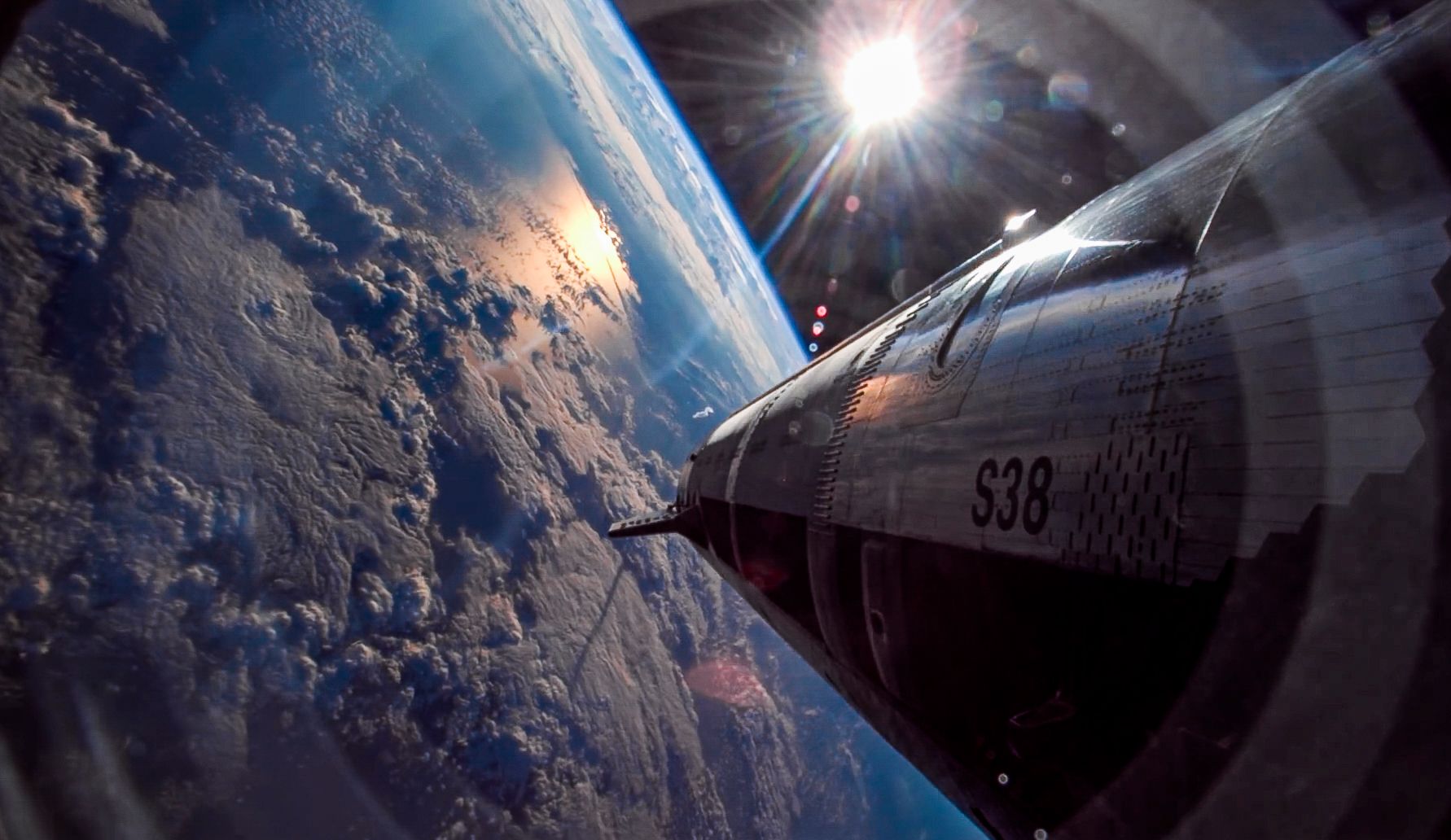
SpaceXAI just made its first move into consumer AI, and it involves your grocery cart. On June 3, 2026, Gopuff and SpaceXAI announced the launch of Go, a Grok-powered shopping assistant built directly into the Gopuff app that predicts what you need before you even start searching for it.
Gopuff is an instant delivery platform that operates more than 400 micro-fulfillment centers across the U.S., delivering everyday essentials, snacks, drinks, and household items in as little as 15 minutes. It is not a restaurant delivery app or a marketplace. It owns its inventory, controls its warehouses, and handles its own logistics, which means it has built one of the most detailed consumer behavior datasets in retail over its 13-year history.
Go combines SpaceXAI’s advanced reasoning, voice, and image generation models with Gopuff’s dataset of hundreds of millions of orders and real-time cultural signals from X to prepare a suggested cart the moment a customer opens the app. It learns each shopper’s habits and automatically builds a personalized cart based on time of day, location, order history, and real-time indicators. Returning customers can check out with a single tap.
Rather than searching for specific items, users can describe a situation like a game-day party or the desire for a healthy breakfast and Go will assemble a cart automatically. It can also predict when shoppers are running low on items like coffee or paper towels and have them packed and delivered in under 15 minutes. Grok voice integration lets users talk to the app in plain conversational language and check out completely hands-free.
Gopuff co-founder and co-CEO Yakir Gola said: “Today, we believe the greatest friction left in commerce is not delivery or instantaneous access to the essentials customers need. It’s the moment before: the thinking, the deciding, the remembering. We’re combining Gopuff’s demand intelligence with xAI’s frontier reasoning to create an everyday shopping experience that feels like a true extension of you.”
Why SpaceX just made a $60 billion bet on AI coding ahead of historic IPO
The timing carries context beyond the product launch. SpaceXAI was formed after SpaceX completed an all-stock merger with Elon Musk’s xAI earlier this year, folding one of the most advanced AI labs in the world into the same corporate structure as the company preparing what could be the largest IPO in history. SpaceXAI is dipping into consumer-focused AI just as it prepares for its public debut, and while Musk has openly discussed building an everything app, this launch uses Grok to power another company’s product rather than launching a standalone consumer platform. Every consumer-facing deployment of Grok ahead of the IPO roadshow adds tangible evidence that SpaceXAI is not just an infrastructure play but a direct competitor in the AI application layer where OpenAI and Google are already fighting for dominance.
Lifestyle
Tesla saves its passengers again – This time after a 300-foot cliff fall in Malibu
A Tesla Model 3 fell 300 feet off a Malibu cliff and both passengers survived.
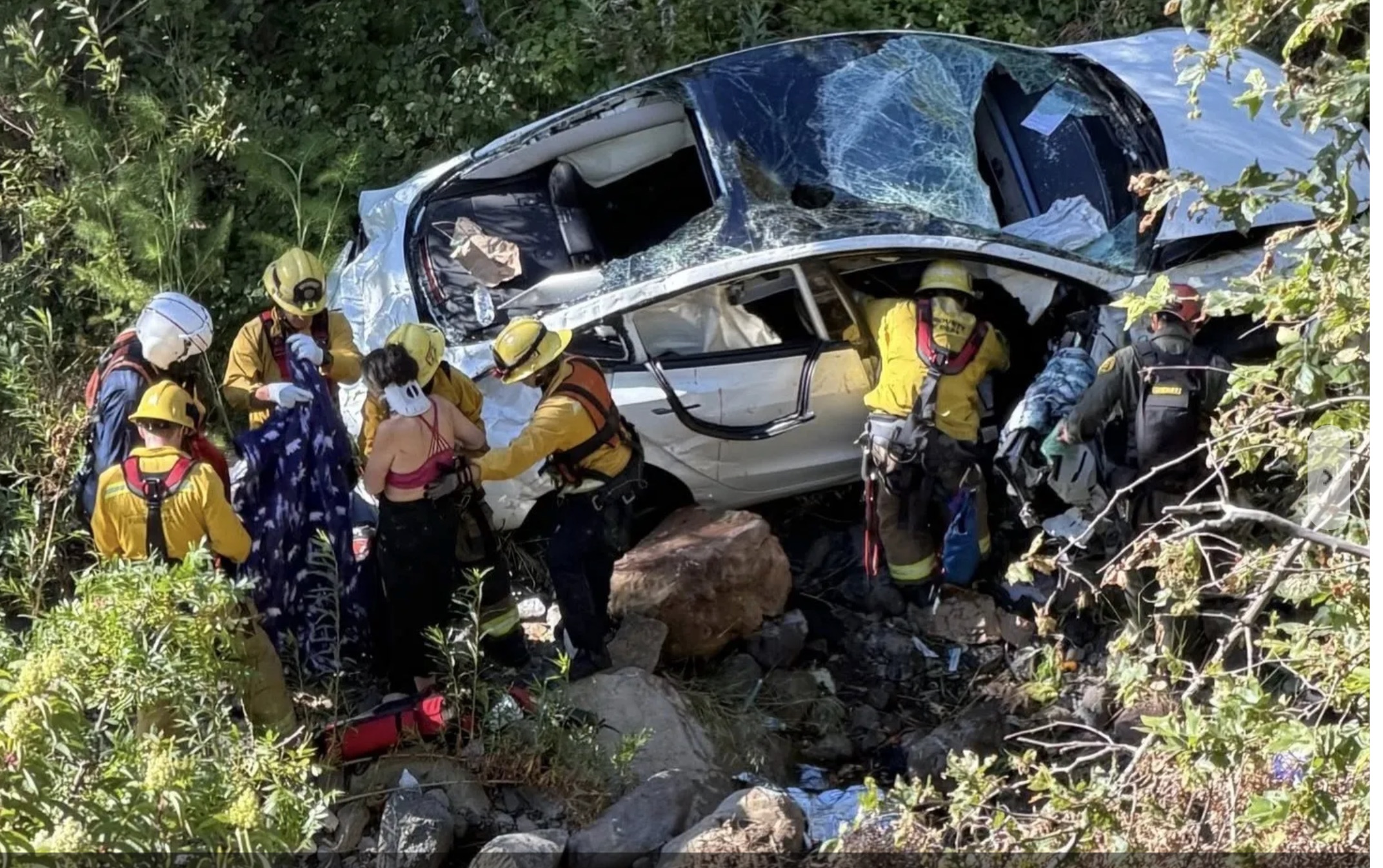
A Tesla Model 3 plunged roughly 300 feet off a cliff on Mulholland Highway in Malibu on Friday morning, May 29, 2026, and both occupants survived. The crash was reported at approximately 7:30 a.m. near the 2500 block of Mulholland Highway, triggering a multi-agency rescue operation involving Malibu Search and Rescue, the Los Angeles County Fire Department, the California Highway Patrol, and McCormick Ambulance.
When first responders arrived, the male driver was outside the vehicle shouting for help while the female passenger remained pinned inside the Tesla. Rescue crews rappelled down the cliffside on ropes to reach the wreckage. A flight medic was lowered by helicopter to begin treating both victims, and the driver was hoisted up to the roadway before crews used the Jaws of Life to free the trapped passenger. Both were airlifted to a local trauma center with moderate injuries despite a remarkable result for a fall that steep.
The outcome is not surprising, considering Model 3 earned an overall 5-star rating from NHTSA in every category and sub-category, and recorded the lowest probability of injury of any car ever evaluated by the U.S. New Car Assessment Program. The absence of a traditional engine in the front of the vehicle creates a longer crumple zone that absorbs impact energy before it reaches occupants, and the battery pack running along the floor gives the car an unusually low center of gravity that reinforces structural rigidity.
This is not the first time a Tesla has kept passengers alive after going off a cliff. A Tesla Model Y carrying a family of four survived a plunge off a cliff at Devil’s Slide near San Francisco in January 2023, with two adults and two children walking away from a 250-foot fall. That incident drew widespread attention to how the structural integrity of Tesla’s electric platform performs in extreme crash scenarios that most vehicles would not survive.
Tesla Model Y driver who drove off cliff with family attempts to avoid criminal conviction

SpaceX (SPCX) IPO is live today at $135: Here’s exactly what you need to know

Tesla unfolded its first European “folding Supercharger”


