News
Tesla Semi prototype’s multiple camera setup highlighted in new video

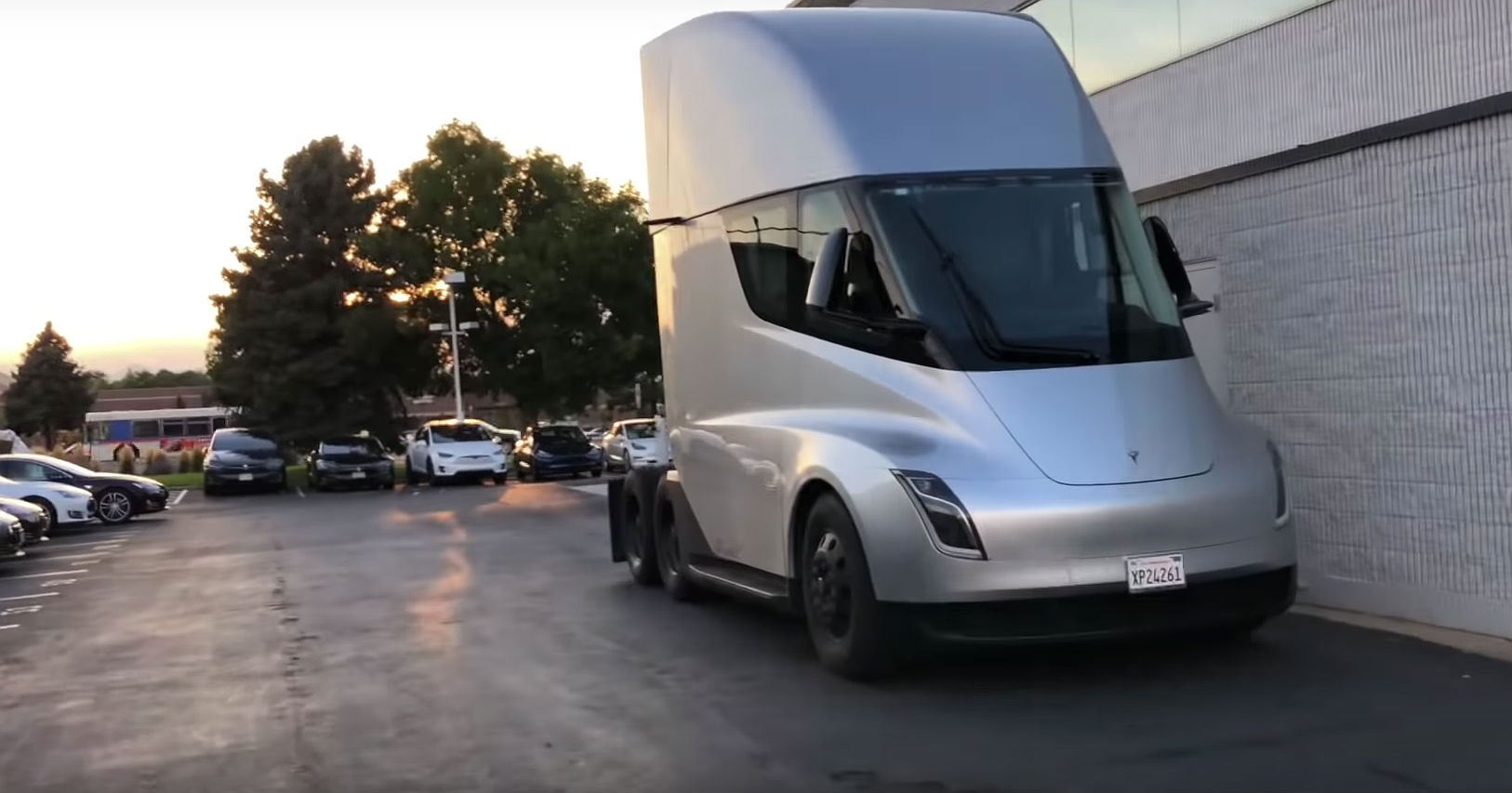
Tesla expects to start production of the electric Semi truck sometime in 2019, but the company is already getting busy doing some real-world tests using a hand-built prototype version of the vehicle. The Tesla Semi prototype has been spotted in multiple states recently, and when it stopped by CO, it was filmed extensively by Tesla enthusiasts.
The Semi was initially sighted as it was charging at the Brush, CO Supercharger. During its stop, Model 3 owner and recording engineer Erik J. Martin was able to ask questions to the team of engineers who were accompanying the truck as it traveled across the United States. Among the most notable aspects of the vehicle that were related to Martin were its 300-mile range, its lack of a sleeper cabin, its carbon fiber body, and its unique 26-camera system.
These cameras were filmed by Tesla owner-enthusiast Sean Mitchell, who was able to take a very close look at the electric long-hauler while it was parked at the company’s facility in Denver, CO. Mitchell’s video revealed the unique placement of some of the vehicle’s cameras, including those that were installed at the truck’s side mirrors, as well as an array of at least six cameras that were mounted at the back of the truck. The vehicle also featured Tesla’s trademark three-camera array at the front, which would likely be utilized for the vehicle’s semi-autonomous functions.
Tesla is sparing no expense with the Semi, and the vehicle is designed to be one of the most technologically advanced trucks on the road. Since it’s planned for a 2019 release, Tesla is likely ensuring that the vehicle is future-proof as well, which could explain why the company opted to install a very generous number of cameras in the prototype. Cameras would play a significant role in Tesla’s vision for the Semi, particularly since the vehicle was unveiled with a side-mirror-less design. “Convoy Mode,” a key feature that allows the trucks to semi-autonomously draft in close proximity with each other, would likely utilize input from multiple cameras as well.
In a follow-up video on his YouTube channel about his encounter with the vehicle, Erik J. Martin noted that he was informed that the Semi’s production version would likely have fewer cameras. This would be a sensible decision on Tesla’s part, especially since some of the cameras currently in the prototype appear to be redundancies for other cameras on the vehicle.
Tesla is now on full throttle in terms of testing the Semi on actual roads, and the prototype, which has been going around the United States for months now, has likely gathered a healthy amount of mileage. This could be seen when the long-hauler was filmed in Denver, CO, as signs of wear from thousands of miles worth of traveling were evident in the vehicle. These battle scars from the road make the Semi even more impressive, as it shows that Tesla is ensuring that the electric truck will be ready for deployment when it reaches the market.
Elon Musk announced last November that the Semi would enter production sometime in 2019. Such a timeline is hyper-aggressive, and is classic Elon Musk. That said, the fact that the Semi shares several components with the Model 3 such as its electric motors, door handles, air vents, and 15″ touchscreens would likely make the vehicle a little less troublesome to produce at scale than the midsize electric sedan. Thus, even if the Semi’s actual production ends up starting in “Elon time,” there is a good chance that the electric truck’s deliveries would not see the delays that plagued the company’s previous vehicles like the Model X and the Model 3.
Watch Sean Mitchell’s extensive look at the Tesla Semi in the video below.



Tesla just gave what is perhaps its biggest signal yet that the launch of the Cybercab, its autonomous ride-hailing-geared car, is imminent.
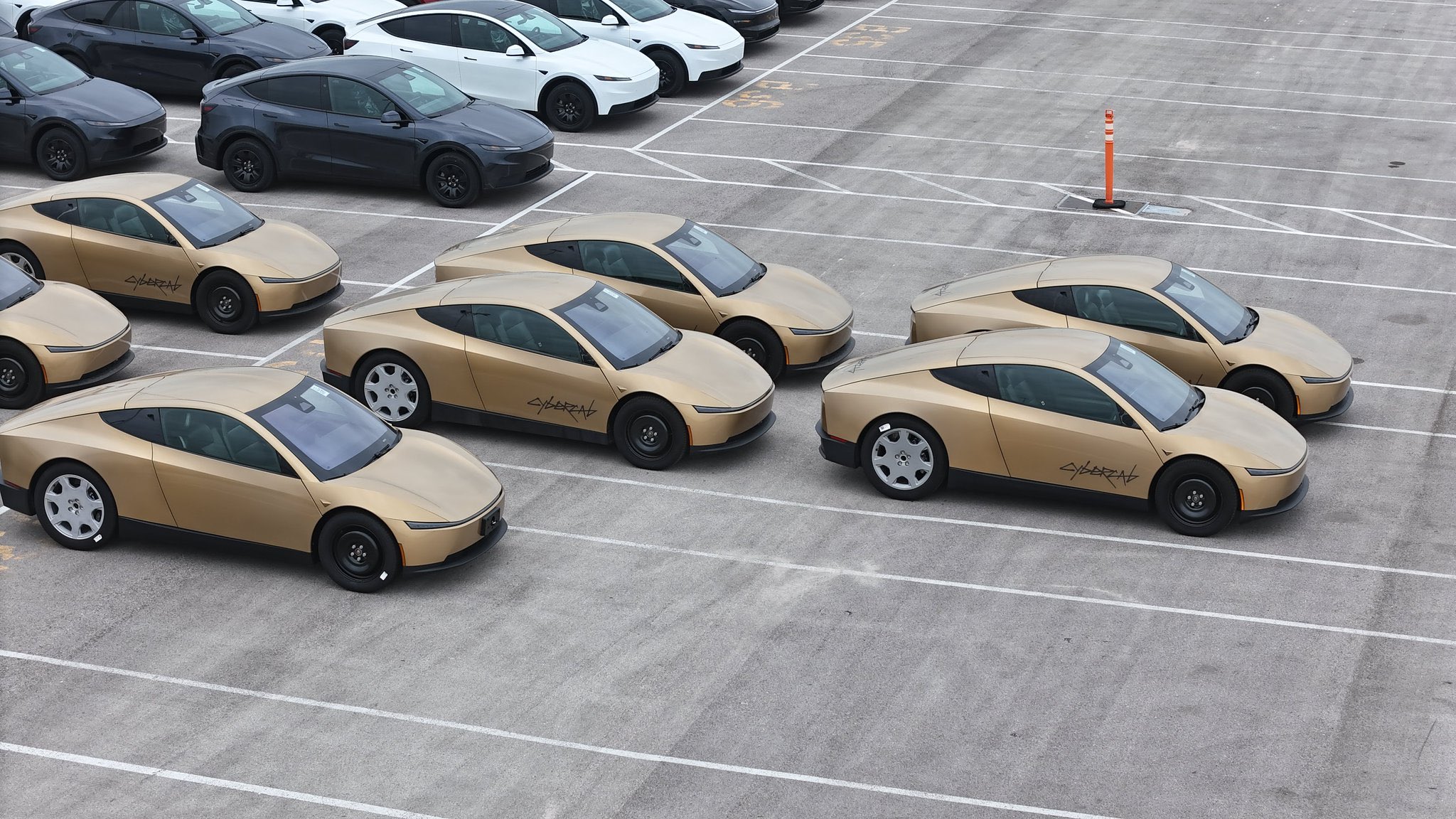
The Cybercab has been spotted outside of Gigafactory Texas in massive numbers over the past few days, with hundreds of units being stored on property just days after the vehicle received a Certificate of Conformity from the EPA.
Today, things were a bit different.
Cybercabs spotted on Giga Texas property today had an addition: a Cybercab decal on the side, reminiscent of the “Robotaxi” ones that were placed on Model Ys just as the company launched its ride-sharing platform about a year ago.
Giga Texas drone operator Joe Tegtmeyer noticed the change today:
Tesla Cybercabs are now getting “Cybercab” logos on the side of them!
Tesla did the same with Model Ys that were given “Robotaxi” logos: https://t.co/DanANtw1m7 pic.twitter.com/FqOhH0S9Ks
— TESLARATI (@Teslarati) June 19, 2026
Tesla could be signaling that the Cybercab is preparing to enter the Robotaxi fleet in the coming weeks or months with this move. It seems more symbolic than anything; Tesla is ready to throw Cybercabs in the ride-hailing platform just as it did with Model Ys last year.
The addition of the Certificate of Conformity awarded to the Cybercab is another major factor working to Tesla’s advantage. The company now has permission from the EPA to allow the vehicle to operate on public roads and enter the chain of commerce. It’s officially street legal.
Tesla Cybercab specs revealed: range, curb weight, range ratings, and more
The big question that remains is whether Tesla will be able to operate the car without a safety monitor, especially considering it plans to put the car out there without a steering wheel or pedals. With the Cybercab only having a seating capacity of two, it is hard to believe Tesla will even consider putting a Safety Monitor in the car.
It did recently self-certify as Level 4 and has the ability to operate driverless vehicles in the State of Texas under a law that took effect on May 28. You can read more about that here:
Tesla’s Robotaxi dreams just took a massive step toward reality
We’d imagine Cybercabs will be on the roads as soon as July, but August will likely be a better estimate of when the car will be entered into the Cybercab fleet. It all depends at where Tesla is, as they’ve truly prioritized safety with the rollout of the Robotaxi platform.
Elon Musk has publicly questioned Moody’s credit assessments following the rating agency’s decision to assign SpaceX a Baa1 investment-grade rating, two notches above Tesla’s Baa3. The comments came amid discussions comparing the two companies’ financial profiles.
SpaceX earned its first-time Baa1 rating with a stable outlook from Moody’s. The agency highlighted the company’s leadership in orbital launches, the growing recurring revenue from its Starlink satellite network, strong vertical integration, U.S. government contracts, and emerging opportunities in AI infrastructure.
These factors were cited as supporting robust cash flows, margin expansion, and financial flexibility.
Musk responded directly: “Tesla’s credit rating is ridiculously low tbh,” and added, “Yeah, makes no sense. Tesla has over $40B in cash, no debt, and is consistently profitable!” His remarks underscored Tesla’s balance sheet strength and profitability at a time when many traditional automakers continue to report losses in the shift to electric vehicles.
Yeah, makes no sense.
Tesla has over $40B in cash, no debt and is consistently profitable!
— Elon Musk (@elonmusk) June 19, 2026
Tesla maintains a leading position in the global EV market, with diversification into energy and storage, battery technology, and robotics through projects like Optimus. Recent financial updates show the company generated positive free cash flow of $1.4 billion in Q1 2026, supported by operating cash flow of $3.9 billion. Cash and short-term investments stood at approximately $44.7 billion.
Moody’s has affirmed Tesla’s Baa3 issuer rating with a stable outlook in periodic reviews, acknowledging the company’s EV leadership, technology strengths, including AI for autonomous vehicles, solid profitability, and strong liquidity.
Tesla (TSLA) scores Baa3 Moody’s rating for ‘stable’ outlook
However, the agency has also noted challenges in the automotive segment and expectations for margin pressures.
Musk’s critique highlights a common debate about how traditional rating methodologies apply to high-growth, capital-intensive technology companies. SpaceX benefits from long-term government-backed contracts and diversified, recurring revenue streams, while Tesla’s valuation reflects heavy investment in future technologies such as autonomy and robotics.
Both ratings remain investment-grade, yet the one-notch difference has fueled online discussion about potential inconsistencies in evaluating innovative firms.
The exchange comes as SpaceX explores financing options following its recent valuation milestones, while Tesla continues executing on its multi-year roadmap. Musk’s pointed response serves as a reminder that credit ratings, though influential for borrowing costs, represent one lens through which markets assess corporate strength—and that company leaders often view their financial positions through the lens of long-term innovation and cash generation rather than short-term risk metrics alone.
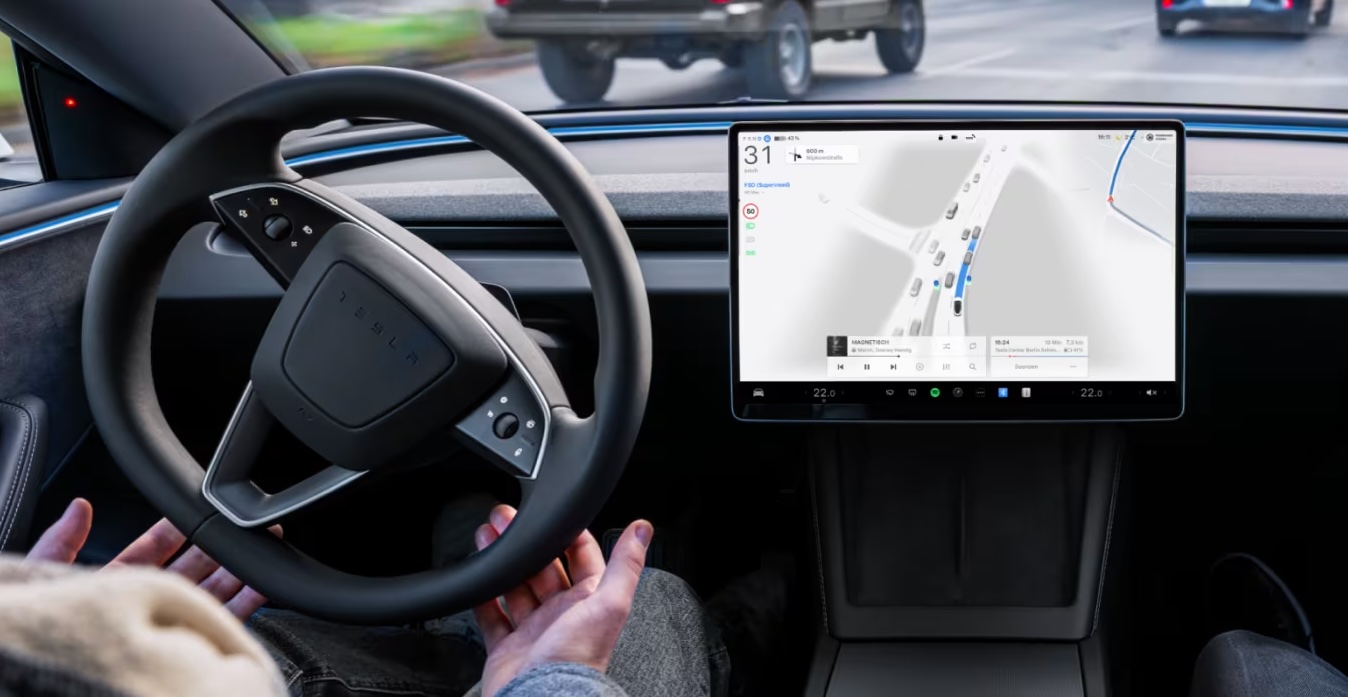
A new report from Reuters claims that a transport authority in Sweden is pushing back against the approval of Tesla’s Full Self-Driving suite because it will travel over speed limits.
The report says the Swedish Transport Administration (TRV) recommends the European Union votes against FSD’s approval. TRV believes it should not be approved until Tesla disables FSD’s ability to speed.
TRV sent a letter to the European Union’s Technical Committee on Motor Vehicles (TCMV), which is set to meet on June 30 to discuss the potential approval of the Tesla FSD suite in the country. Tesla, which has received various approvals in Europe over the past two months, has not provided a comment.
Teslas operating on FSD do travel over the speed limit, depending on the Speed Profile that is chosen. Drivers have the ability to disengage FSD at any point; Tesla specifically states that those supervising the suite are responsible for its actions.
Let’s cut to the chase: humans operating any vehicle speed almost daily in the United States. Realistically, speed limits in the U.S. are more frequently treated as speed minimums. However, other countries are different, and driving behaviors are less aggressive.
TRV believes that “allowing automated systems to systematically exceed legal speed limits…risks undermining both the legal framework and the expected safety benefits of vehicle automation,” the report stated. It’s surprising that Tesla has not received this claim from other countries previously.
This could be a good argument to bring Max Speed back, the setting that previously allowed the driver to choose the absolute fastest the car would travel.
This would still put the responsibility of supervision in the hands of the driver. It would allow the driver to choose whether the car would travel over the speed limit or not, acknowledging that they set the speed, and if they get pulled over, there would be no ability to argue it.
However, it does not seem as if this is something Tesla will do, especially considering many U.S. drivers have requested the feature in an effort to eliminate speeding or at least tone it down. The company has not shown any interest in bringing it back.
Tesla has approvals for FSD in Europe in Estonia, Lithuania, Denmark, the Netherlands, and Belgium.

Tesla Cybercab launch is imminent after latest sighting at Giga Texas

Elon Musk says this part of Tesla ‘makes no sense’


