Investor's Corner
LIVE BLOG: Tesla 2023 Cyber Roundup (Annual Shareholder Meeting)

Tesla’s (NASDAQ:TSLA) 2023 annual shareholder meeting, also known as the 2023 Cyber Roundup, is here. There’s quite a lot of excitement leading into the event, especially with regards to the potential return of Tesla co-founder JB Straubel as a member of the company’s Board of Directors.
This year’s annual meeting of stockholders comes after one of Tesla’s most notable quarters to date. In the first quarter, the company produced over 440,000 vehicles and delivered over 422,000 vehicles. That’s a new record, though it was one that was achieved following notable price cuts to the company’s vehicle lineup.
Tesla’s 2023 Cyber Roundup is expected to begin with stockholders voting on a number topics and concerns. Following this, a Q&A session with CEO Elon Musk and a number of other executives is expected.
The following are live updates from Tesla’s 2023 Cyber Roundup. I will be updating this article in real-time, so please keep refreshing the page every minute or two to view the latest updates on this story.
16:50 CT – With the meeting concluded, we’d like to thank you once more for staying with us for this live blog. Until the next time!
16:49 CT – A Tesla shareholder asks if the company could have a public-facing timeline for FSD. Elon reiterates that FSD is really all about safety.
And with those (several) extra questions, Tesla’s 2023 Annual Shareholder Meeting (2023 Cyber Roundup) is done. Elon Musk thanks everyone again as he closes the meeting.
16:43 CT – Tesla bull Gary Black of The Future Fund asks about Tesla’s pricing strategy for the Model Y moving forward. Musk notes that Tesla looks at demand and adjusts pricing to meet the demand. Car companies also do adjustments all the time, so Tesla is no exception.
16:40 CT – Another shareholder asks about “Guest Mode” for its vehicles, and a Plaid Mode for the Model X. Elon Musk notes that Tesla will roll out Plaid Mode for its flagship SUV.
16:37 CT – A shareholder asks about Cybersecurity, and what Tesla is doing to protect itself and its products. The shareholder also asks if Tesla can do some navigation improvements. Musk notes that Tesla is putting in a lot of effort to ensure that its cars are protected from online attacks. “We take information security very seriously,” Musk said.
16:36 CT – A shareholder asks if Optimus would be deployed on Mars. Musk notes that Optimus is not that deep of a thinker right now, but Tesla is emphasizing safety for the humanoid robot.
16:35 CT – A shareholder asks about Tesla’s career opportunities and diversity inclusion efforts. Musk notes that in all Tesla Gigafactories, the company works with schools to foster talent for its facilities — even if Tesla is already good with automation.
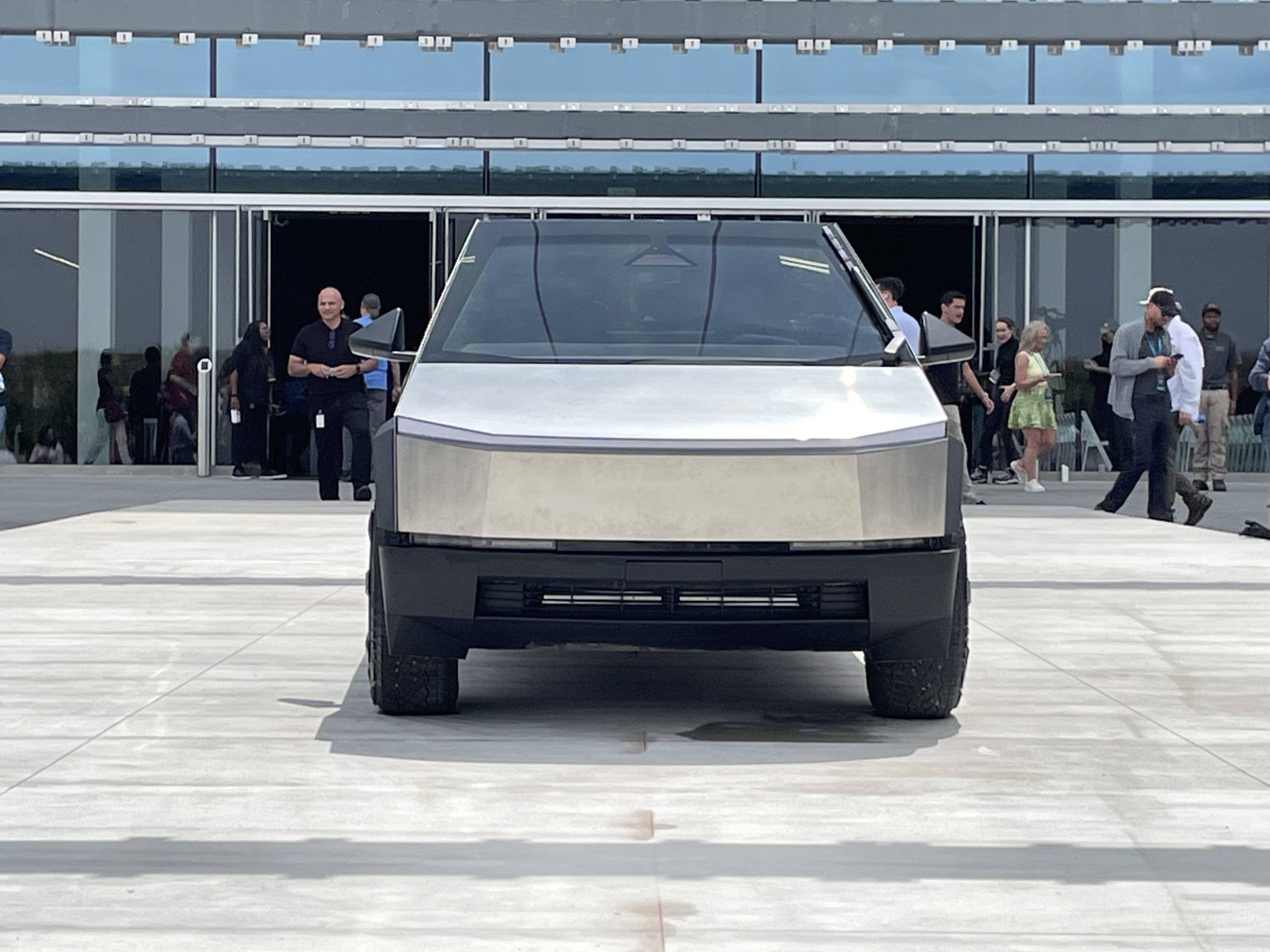
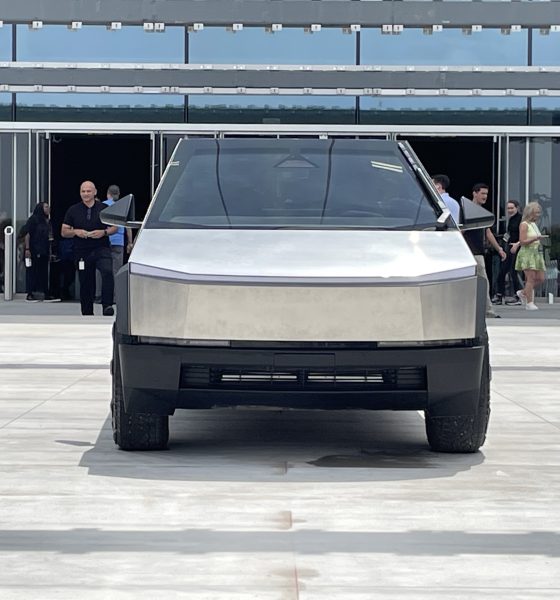
16:32 CT – Another shareholder asks about Cybertruck’s target production, and if Musk is looking to step down as CEO. Musk crushes rumors about stepping down as CEO. “It ain’t so,” he said. As for Cybertruck’s production, Musk stated that production would follow an S curve. “We’ll see what the demand is,” Musk said, suggesting that Tesla could probably do a quarter to half a million a year. He also noted that Tesla does not just have to improve its production. The company should also be able to optimize its production efficiency.
16:27 CT – Another shareholder asks about Tesla’s software as a service potential, and the company’s peak margin. Musk notes that this is highly speculative territory, but if customers have a car that costs the same, but has a 20-25% margin, and FSD comes, then 80% or so margins would be possible. This is, of course, extremely speculative.
16:24 CT – A shareholder asks about Tesla insurance on more states like Florida. Zachary Kirkhorn confirms off camera that Tesla Insurance in Florida is coming this year. Elon Musk highlights that getting approval for Tesla Insurance is insanely complicated.
16:23 CT – A shareholder asks about the next-generation Roadster. Any updates will be nice, the shareholder said. Musk notes that this is a totally fair question. “We expect to complete the engineering and design of the next-gen roadster this year. Hopefully start of production next year, Musk said. The CEO adds that the Roadster is not just the icing on the cake. It’s the cherry on the icing on top of the cake.
16:20 CT – A longtime retail investor asks about Tesla’s plans to secure lithium supply. Musk notes that he believes the constraint with lithium is in refining. This is why Tesla’s South Texas lithium facility is coming from refining. “The limiting factor is not how fast you can mine, but how much you can process,” Musk said.
16:15 CT – Another shareholder asks if Tesla is developing the ability of third parties to develop games for the car. Elon Musk notes that this is something that makes sense in the future, but for now, Tesla’s software team is focused on achieving full self-driving. “Once we achieve full self driving, there will be a lot of opportunities for apps and whatnot,” Musk said.
16:13 CT – Another shareholder, Meet Kevin from YouTube, highlights that Tesla needs advertisements, at least to inform people about the amazing things about Tesla that people don’t known about. The YouTuber noted that he recently talked to a TSLA bear that still echoes talking points from 2016. Elon Musk actually agrees. “I hear you,” Musk said, adding that ironically, Twitter is highly dependent on advertising.
Musk notes that yes, “We’ll try a little advertising and see how it goes,” he said. The audience CHEERS. Musk jokes that he has taken the shareholders’ subtle hint.
16:08 CT – The shareholder now asks if Tesla would be open to extending its vehicle’s financing terms. Elon Musk notes that the banks are the ones that are deciding on its vehicles’ financing. “It’s really the bank’s choice as to what they’re willing to do,” Musk said.
16:07 CT – A Tesla shareholder asks how the company can incentivize customers to embrace energy products. Musk notes that Tesla is making headway on some projects. This question is followed by a shareholder asking how Musk is doing.
The CEO noted that it’s not really fun with his constant negative media coverage, but he’s optimistic. “Sometimes the work pain level is quite excruciating,” Musk said. He also mentions that he believes Twitter’s new CEO would likely make the platform work.
“Thanks for asking this. It’s kind of you to ask,” Musk said.
16:03 CT – A Tesla shareholder in an Optimus costume asked if Tesla is looking to make an RV. Elon Musk notes that Tesla is not currently planning a dedicated RV, but the Cybertruck would have accessories that would make it perfect for camping. Tesla is even adding “attach points” to the Cybertruck, so third-party companies can add things to the pickup truck. Oh, and a 30-min “podcast” will be added after an earnings call, covering Optimus updates.
16:00 CT – Questions from the audience are starting. “Hit me with your toughest question,” Musk said.
16:00 CT – Musk stated that Optimus will far outnumber Tesla’s vehicles. With this in mind, it would not be surprising if Tesla’s business in the future is built on the back of its humanoid robot. “Tesla’s long-term value, a majority of its value will be Optimus. And that prediction I’m confident of,” Musk said.
15:55 CT – A new video of the Tesla Bot (Optimus) is also shared, showing the humanoid robot performing more complex tasks. Musk reiterated that Optimus will use the same FSD system as the company’s electric vehicles.
15:54 CT – Musk reiterated Tesla’s goal of producing 20 million cars per year. He also noted that Cybertruck production is hard, and he stated that it will still be exoskeleton based.
Production Cybertrucks will start deliveries this year, and it will likely be better than expected, Musk said. “Cybertruck is the car I will be driving on a day-to-day basis,” he added.
“I think the product (Cybertruck) is better than expectations,” Musk said. He also teased that Tesla is currently making two new products that will be heads and shoulders above the competition.
“Just these two products alone — and this is Elon’s guess — will make in excess of five million units per year combined,” Musk said.
15:49 CT – Musk noted that Tesla is seeing a lot of demand for the Megapack. “The Tesla Megapack is now more competitive than a gas-powered peaker plant,” he said.
Musk added that, as he predicted in the past, Tesla’s stationary battery storage business is indeed growing at a faster rate than the company’s electric vehicle business. “The demand is quasi-infinite here,” Musk added.
15:46 CT – Musk highlighted Tesla’s dedication to safety, noting that the company focuses itself on its cars avoiding accidents altogether. But even in the event of an accident, Tesla makes it a point to protect its occupants.
Musk also highlighted that Tesla’s cabin overheat protection — a rather underrated feature — has resulted in zero infant or pet deaths in a Tesla to date. “Never in the history of the company, as a child or a pet died in a Tesla,” Musk said.
15:44 CT – Musk gave special credit to Tesla’s software team. He also notes that Tesla is confident the Model Y could become the world’s number one best-selling car this year. This has already happened in Europe, and it’s performing well in China. “It’s going well,” Musk said.
15:42 CT –”Tesla is not immune to the global economic environment,” Musk cautioned. He notes that the next 12 months will be challenging, and lots of other companies would probably go under. “I want to make sure that this is not just the good news parade. That said, it would not be darkness forever,” Musk said. He also noted that Tesla would be in an extremely good position after this period.
15:39 CT – Musk highlights that Tesla is the world’s largest carmaker. Tesla is the highest margin of any car maker in the world. “We’re making EVs profitably. Almost no one is,” the CEO said.
15:37 CT – Musk reiterates his previous points for FSD Beta, noting that the system would allow for a notable value increase for Tesla’s fleet. “It’s not that a Full Self Driving will be safer than a person, it will be a lot lot better–like a lot,” Musk said.
15:35 CT – The CEO announces some of Tesla’s next innovations, such as the company’s new drivetrain, which is more affordable, and the shift to 48-volt architecture, which will save a lot of copper. Musk also notes that FSD Beta is growing “hyper-exponentially.”
15:33 CT – Musk pledges that there will be a time when electric vehicles are cheaper than gasoline-powered cars. “We’re gonna get to the point where an electric vehicle is cheaper than a gasoline vehicle,” Musk said. He also noted that Tesla’s factories are among the safest in the industry. Tesla is also among the most popular places to work.
“The top two most desirable companies on Earth for engineers were SpaceX and Tesla… Where are the most smartest and driven people are gonna work? That company is gonna win,” he said.
15:29 CT – Musk invites critics to post their critique of Master Plan Part 3. He did state, however, that most of the feedback for Master Plan Part 3 has been positive. This suggests that Tesla’s assumptions may be quite accurate.
15:28 CT – Musk mentions Master Plan Part 3, stating that Tesla wants to highlight how a path towards sustainability exists, and it can be accelerated. He mentions some of Master Plan Part 3’s most salient points, such as the fact that based on Tesla’s computations, it would actually save the world money if it shifts to sustainability.
Musk notes that Tesla would be doing a third-party audit for its battery supply chain. “You know what, we will do a third-party audit,” Musk said, noting that Tesla would even put cameras on its mines. “If anybody sees any children (working there), do let us know,” he said.
He also highlighted that Tesla uses nickel cells, which use little cobalt, and iron cells, which uses no cobalt at all. The CEO noted that phone batteries use lots of cobalt. But even for the small amount of cobalt that Tesla is using, Musk noted that the company would have this audited heavily.
“Even for the small amount of cobalt–6 weeks to sunday–we do use, we will make sure that no child labor is used,” Musk said.
15:23 CT – Tesla CEO Elon Musk takes the stage to much cheering from the audience. He notes that he loves Tesla shareholders. “I seriously love all of you guys,” he said. He also notes that the Tesla team accomplished notable milestones in the past year.
15:22 CT – Martin Viecha announces that shareholders have voted along with the company’s recommendations, except for the proposal pertaining to executives’ compensation. This means that JB Straubel has become the newest member of Tesla’s Board of Directors!
15:20 CT – Another shareholder takes the stage. She highlights the issue of human rights and abuses in the EV maker’s supply chain. The shareholder notes that Tesla should have third-party checks for child labor in cobalt mining in Congo and forced labor in China.
Tesla’s Impact Report has noted that the company is strictly auditing its supply chain. The shareholder, however, argues that there are still things that are unclear. She cites more figures to highlight her point, noting that Tesla’s leadership needs to anchor its stance on empathy and a concern for human rights abuses.
15:16 CT – A Tesla shareholder takes the stage to argue for the idea of the company reporting key-person risks. Tesla advises that shareholders vote against this proposal.
The shareholder notes that TSLA management is focused on things that are not Tesla. Margins are falling, and even if the product pipeline is good, Tesla’s management is fragmented, the shareholder noted. “They see the company as an extension of its CEO,” the shareholder stated.
“The company is so much more than its key person,” the shareholder added, noting that it is pertinent for Tesla to adopt systems that would allow the company to become stronger and more refined.
15:13 CT – Here are the proposals that shareholders are voting for.
Proposal One—Tesla proposal to elect three Class I directors
Proposal Two—Tesla proposal to approve executive compensation on a non-binding advisory basis
Proposal Three—Tesla proposal to approve the frequency of future votes on executive compensation on a non-binding advisory basis
Proposal Four—Tesla proposal to ratify the appointment of independent registered public accounting firm
Proposal Five—Stockholder proposal regarding reporting on key-person risk, if properly presented
15:11 CT – Martin Viecha takes the floor. He declares the polls open. Let’s go!
15:10 CT – Denholm also highlighted Tesla’s environmental milestones over the past year. She brings up a number of points from the 2022 Impact Report, such as the Supercharger Network’s sustainability and the company’s battery-related efforts. Denholm thanks Tesla’s Board of Directors and mentions JB Straubel’s potential addition to the team. The audience cheers loudly.
15:06 CT – Denholm notes that Tesla is getting ready to roll out its first Cybertruck. She highlights how Tesla is achieving massive gains in its production capacity. The Tesla Chair also gives credit to the company’s leadership for putting the company in a strong position to advance its ambitious mission.
15:04 CT – Viecha states that the 2023 Cyber Roundup will be comprised of two parts. A voting segment on several topics and another one featuring a session with CEO Elon Musk. The Tesla VP gives the floor to Tesla Chair Robyn Denholm, who also welcomes the audience. She highlights the progress of Giga Texas over the past year.
15:00 CT – Here we go! Tesla VP of Investor Relations Martin Viecha opens the event to much cheers from the audience. He thanks the audience for their attendance.
Don’t hesitate to contact us with news tips. Just send a message to simon@teslarati.com to give us a heads-up.


Investor's Corner
Elon Musk drops a Thanksgiving hint about Starship’s biggest test yet
Elon Musk says Starship Flight 15 will try to catch the ship itself, a first.

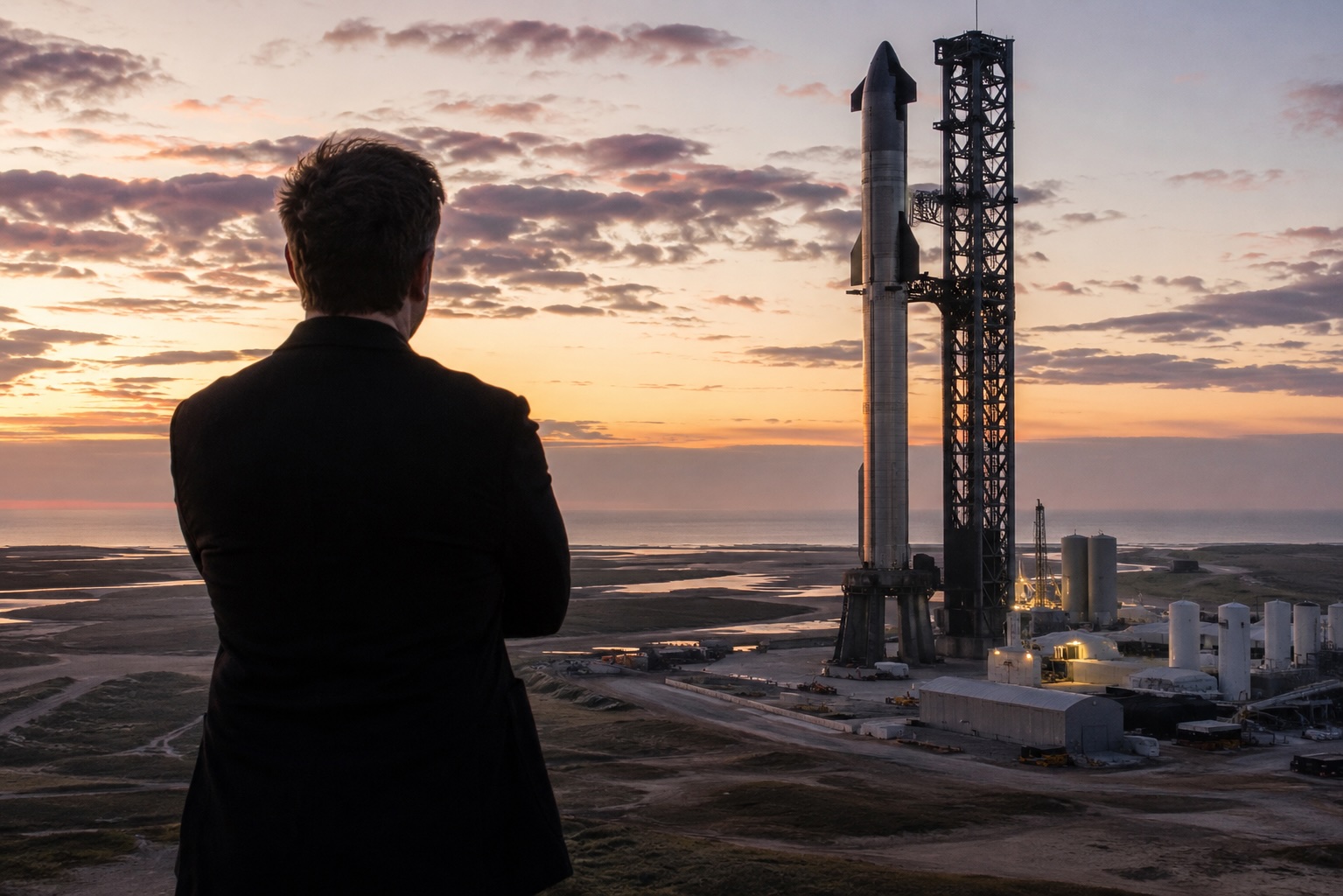
Elon Musk says SpaceX’s next Starship flight will try something nobody has done before, by catching the ship itself. Speaking to roughly 2,000 people at the X Takeover event at Giga Texas on Saturday, Musk said Flight 15 is about four to six weeks away and “probably launches a little bit before Thanksgiving, is my guess.”
That is a slip from earlier reporting, which had pointed to a launch as early as October 19. Musk explained why the date keeps moving. “We’re making a bunch of improvements to the rocket between every flight,” he said, adding that there are often hundreds, sometimes thousands, of small changes. This time the list is short, “but some of them take a fair bit of work and we’ve got to go inside the tank to make some of these changes.”
“We’re going to try to catch the ship, which is a super big deal,” Musk said. “If we do so, that’ll be the first time that there’s been full recovery of an orbital class rocket.” SpaceX has already caught the Super Heavy booster with the tower’s mechanical arms, and has talked about catching the ship since late 2025, but the upper stage has never been caught.
Musk also laid out what comes after. “The next big milestone would be to refly both the booster and the ship,” he said, describing a Flight 16 where “all parts of an orbital rocket are reflown.”
The reason SpaceX wants this comes down to cost and cadence. Every Starship ship so far has ended its flight in the ocean, and SpaceX expects most of those water landings to end in fireballs. A ship that returns to Starbase intact can be inspected and flown again. SpaceX’s IPO filing, says Starship V3 is designed to deliver 100 metric tons to orbit in a fully reusable configuration, that SpaceX aims to cut the cost to reach orbit by 99% or more versus the historical average, and that tower catches should allow “multiple launches per day.”
The payoff goes beyond cheaper launches. The next generation Starlink V3 satellites are too large for Falcon 9 and can only fly on Starship, which can carry up to 60 per flight. Flight 14 on September 28 deployed the first 26 of them after Starship reached orbit despite an early engine shutdown, as Teslarati reported. Musk blamed engine computer software, and said the heat shield “was extremely robust,” which he claimed in August had solved Starship’s biggest challenge.
NASA’s Moon plans depend on the same capability. NASA’s inspector general has described a lander mission that needs a propellant depot in low Earth orbit and more than 10 tanker flights, with SpaceX targeting one tanker launch every six days. That schedule only works if ships and boosters come back fast and fly again. Also, ship to ship propellant transfer has not been attempted yet.
One interesting hurdle yet to be explored is bringing the ship back to the launch site, with reentry over land, which will undoubtedly come with a lot of aviation safety reviews.
Investor's Corner
SpaceX reveals how its 1 Million AI satellite network will work and prevent space collisions
SpaceX reveals plans for one million Starmind AI satellites and calls out operators hiding maneuvers.
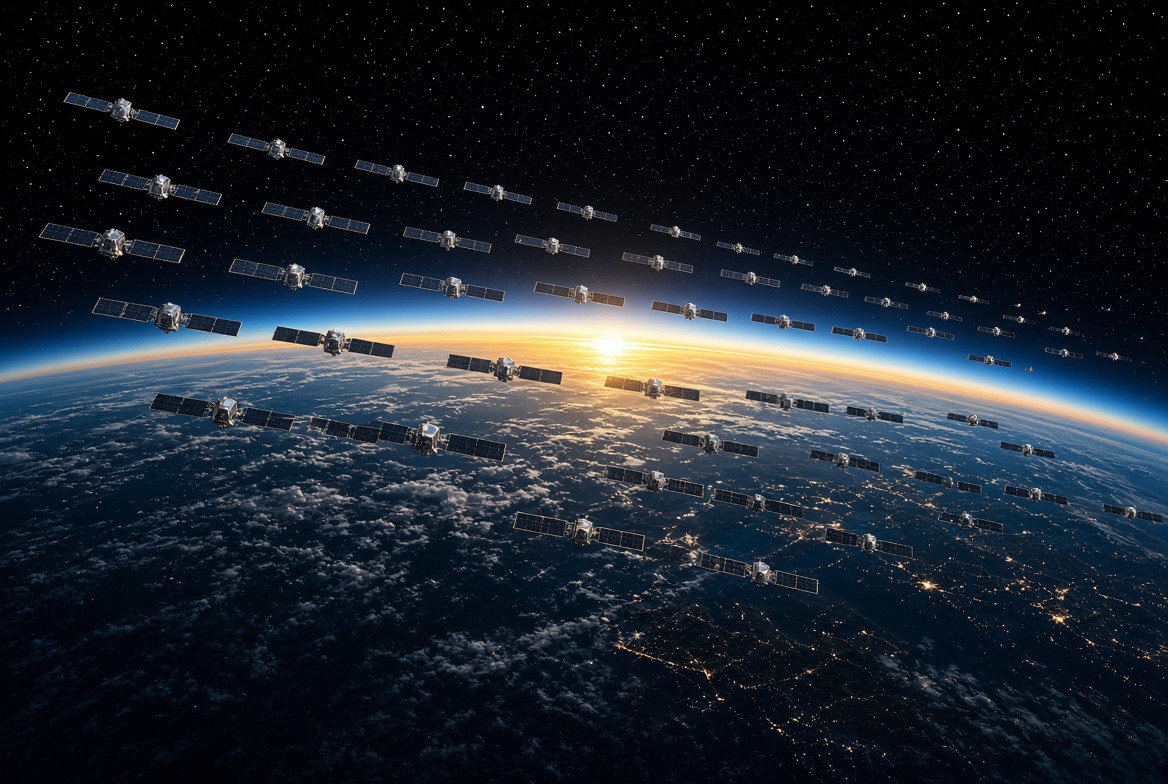
SpaceX has put the largest satellite count it has ever published into writing, and it says that plan only works if every other operator in orbit starts sharing what it knows.
In a new Space Safety page highlighted Tuesday morning by Sawyer Merritt on X, SpaceX said it “plans to operate up to 100,000 Starlink satellites and up to 1 million Starmind AI satellites to meet the growing demand for broadband and supercompute.” Starlink has a little over 11,000 satellites in orbit today, so the target alone implies roughly a ninefold expansion of the broadband network.
Starmind is SpaceX’s orbital AI compute constellation. Elon Musk confirmed the Starmind name in June after an xAI trademark filing surfaced, and in August SpaceX said it was working with Nvidia on the compute payload. The FCC accepted the filing for up to one million satellites back in February.
FCC accepts SpaceX filing for 1 million orbital data center plan
SpaceX also released a new render of what a full Starmind constellation could look like. Alongside it, SpaceX VP Michael Nicolls explained why the satellites will not operate on their own. “We need to operate clusters of satellites in tight formation to get enough coherent compute to run AI models efficiently,” Nicolls said. “A cluster will be 10-ish satellites connected with 10 terabits or so of bandwidth between them, and interconnected to the broader constellation.”
That is the most specific detail SpaceX has given on how Starmind will be built. Instead of a million independent servers, the network would work as tightly packed groups of about 10 satellites acting as one compute unit, with Starlink’s laser links carrying results back to Earth.
There is a bright and exciting future for humanity ahead – and space is fundamental to that future.
To achieve this, space safety must be done right. We encourage every operator to not only share ephemeris data proactively the same way Starlink already does, but to also adopt the high standards of space safety that SpaceX and Starlink use every day → https://t.co/QizAkQZvEm
— Starlink (@Starlink) October 6, 2026
Packing satellites that close together, at that scale, makes collision avoidance the central problem, and most of the Space Safety page is aimed at other operators. SpaceX said Starlink encountered collision risks with about 650 unique maneuvering third party satellites in 2026, and only about half of them shared data. Over six months, Starlink recorded roughly 164,000 more collision risks where the closest approach came within four hours of an unannounced maneuver.
Some operators keep maneuver plans private over proprietary concerns, while others cannot get government permission to share them. SpaceX called those policies “counterproductive,” saying they “largely only serve to create preventable collision risk between satellites.” Starlink is also offering a free ephemeris sharing and screening platform that returns risk results within a minute, backed by its Stargaze network of 30,000 optical sensors.
The push comes as the Starmind application draws opposition from astronomers and environmental groups. In a September filing with the FCC, SpaceX said each Starmind satellite could weigh up to 4,000 kg, nearly seven times the mass of a Starlink V2 Mini. Musk has brushed off crowding concerns before, telling viewers in June that “space is enormous” and that SpaceX already knows how to run very large constellations safely.
SpaceX’s Starmind page says its Gigasat factory in Bastrop, Texas, is designed to produce AI satellites at scale, with deployment of thousands of units starting as soon as late 2027.

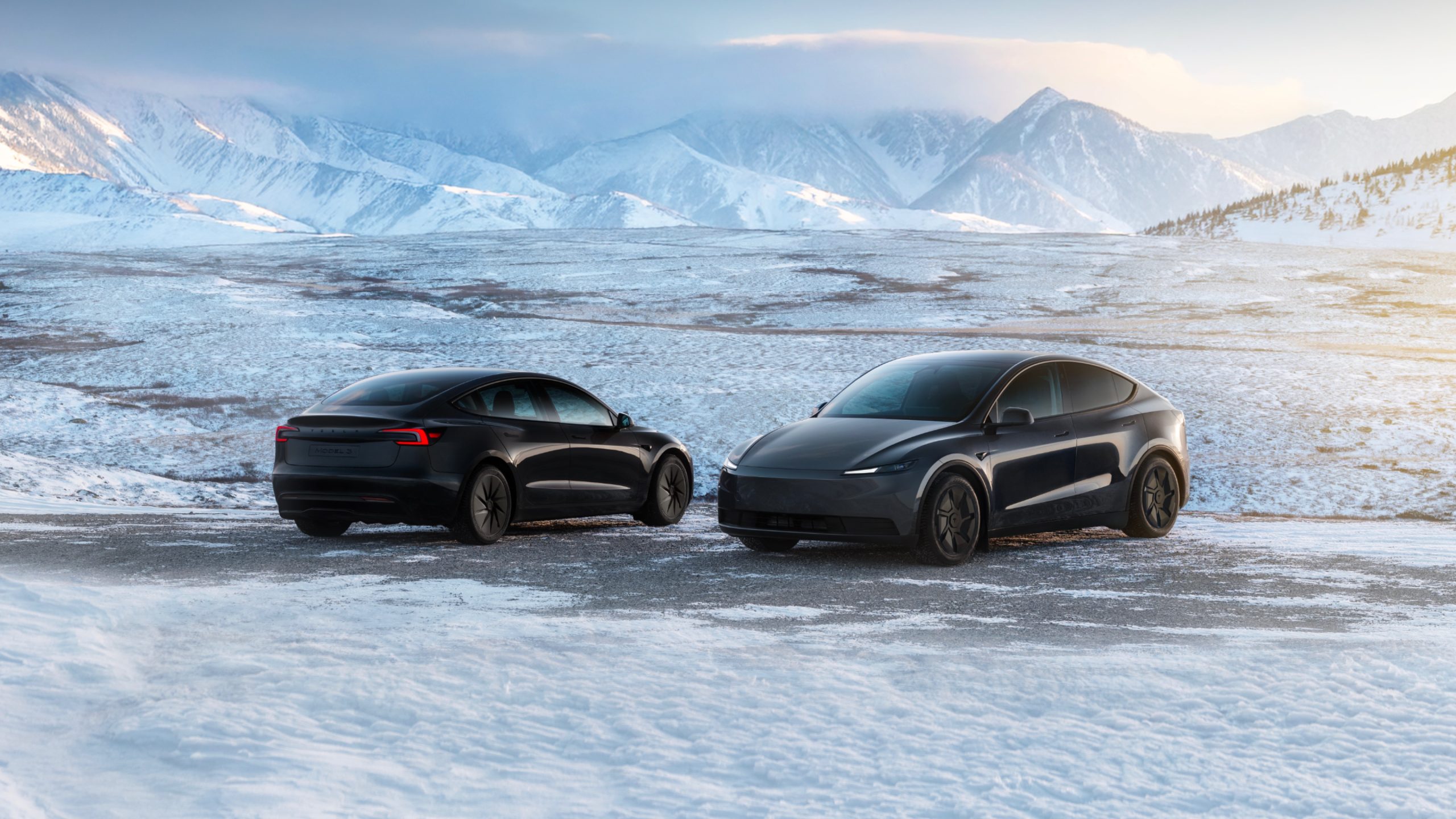
Tesla (NASDAQ: TSLA) reported strong delivery figures that beat Wall Street guesses, and they were revealed alongside the company’s second-best quarter in terms of energy deployments ever.
Tesla announced this morning that it delivered 486,532 cars in Q3, while producing 464,391, exceeding analyst consensus, which sat around 462,000 units.
Meanwhile, Tesla reported 13.7 GWh of energy storage deployed for the quarter. That’s the second-best quarter Tesla has ever reported on that side of things.
🚨 Tesla delivered 486,532 vehicles in Q3, beating expectations at 464,391.
Big Q from the Tesla team, also 13.7 GWh of energy was deployed. pic.twitter.com/olioLWgG7a
— TESLARATI (@Teslarati) October 2, 2026
Vehicle Deliveries
Deliveries were strong, and it was another quarter when Tesla had the opportunity to outshine the Wall Street pundits who are quick to criticize and slow to give credit. Tesla saw a slight decrease in deliveries compared to Q3 2025, but Tesla still had the $7,500 EV Tax Credit to use to help incentivize consumers to pick an EV.
A small decrease of 2.1 percent is pretty telling because it shows Tesla does not need massive federal credits to convince consumers to purchase its vehicles.
It was also the company’s third-best performance all-time in terms of deliveries, trailing that of Q3 2025 with 497,099 deliveries and Q4 2024, when the company handed over 495,570 cars.
We reported several days ago that Tesla Showrooms across the United States were completely bare of inventory or unclaimed units. Many locations also removed Demo Drive units, which had been bought by customers looking to take delivery sooner.
Tesla showrooms picked clean ahead of Q3 end as demand looks strong
Energy Generation
Tesla’s Energy Generation performance in Q3 was also very strong, as the company deployed 13.7 GWh of energy storage over the past three months. The only quarter when Tesla reported stronger energy deployment figures was Q4 2025, when 14.2 GWh of energy storage was deployed.
Tesla’s Q3 performance in energy generation has continued to grow each quarter, with the company increasing its deployments by ten-fold since Q3 2021, when just 1.3 GWh was deployed.
It is also nearly double what it was in Q3 2024, when the company reported 6.9 GWh. This is one of Tesla’s quickest-growing divisions, and it flies under the radar with fans and analysts, as many are focused on self-driving or the vehicles themselves.
Tesla Stock
Shares rose 5.07 percent to $372.06 at just after 10 a.m. on the East Coast. This is a rarity for Tesla after a strong delivery report, as positive news usually brings the stock down. Many quarters with extremely robust delivery reports have not been as kind to the Teslanaires of the world.

Tesla Roadster livestream: everything Tesla has revealed before Thursday night

SpaceX just combined Grok, Cursor, and X into one mega plan

Taiwan power firm bets big on Tesla Megapacks as AI data center thirst grows

The Pentagon taps Elon Musk to design the battlefield of the future

Tesla Roadster’s new patent preps white-knuckle speeds, keeping it grounded


