
Investor's Corner
Tesla (TSLA) ‘likely to clear a rising bar’ for Q3 deliveries, Credit Suisse says

Tesla (NASDAQ: TSLA) has lofty expectations for its third-quarter delivery numbers, but Credit Suisse analysts Dan Levy and AJ Denham are convinced that the electric automaker is “likely enough to clear a rising bar.”
Levy and Denham also raised their “Blue Sky Scenario” price target to $630.
In a note to investors, Levy and Denham write that they expect Tesla’s Q3 2020 deliveries to be around 140,000 cars. They believe that this is “enough to clear likely buy-side consensus ~ 135-140k. While our expectation would require a record month for Tesla in September (~65k units), we believe this is feasible given Tesla’s typical quarter-end wave.”
* While the bar has risen on the 3Q delivery release, we believe Tesla may have just enough to clear it | Credit Suisse
Blue Sky PT $630$TSLA pic.twitter.com/a82lORbJlv
— David Tayar (@davidtayar5) October 1, 2020
Tesla stereotypically turns up the heat and increases production and deliveries during the final two weeks of a quarter. In the past, the last two weeks have proven to be a boost to the company’s delivery figures as Tesla requires an “all hands on deck” approach to finish out the quarter strong.
“While the bar has risen on the 3Q delivery release, we believe Tesla may have just enough to clear it,” the analysts said.
140,000 Q3 deliveries would be Tesla’s largest quarterly display yet. “We assume June/July combined deliveries of ~75k; for context, this is the highest first two months of a quarter for Tesla, ahead fo the prior high of ~50k in Oct/Nov 2019, and all ahead of Oct/Nov 2019 of ~47k.” This number is astronomical, but the analysts believe it is doable because of U.S. demand and a quickly growing Chinese sector.
“While aggressive, we believe this is feasible given Tesla’s typical quarter-end wave.”
Earlier this month, CEO Elon Musk emailed Tesla employees, stating that there is the potential for “record deliveries” this quarter. The previous record was 112,000 in Q4 2019. Levy and Denham indicate that the bar has shifted after this email was sent and that a larger number of deliveries should be expected for Q3.
Finally, Levy and Denham believe that the post-Battery Day decline has been wiped away and that even a miss at the estimated delivery figure would still keep the stock higher than most price targets. “We’d expect the stock to remain elevated (even if temporarily trading off), as investors would ultimately look past the miss, focusing on Tesla’s robust growth narrative.”
A robust Q3 showing could open the doors for Tesla to achieve its yearly delivery target of 500,000 vehicles. Tesla would need a 160,000 Q3 delivery figure to slice the target in half, but around 140,000 would undoubtedly contribute to the cause.
Tesla will announce quarterly delivery figures within the next few days, and its Q3 2020 Earnings Call will be toward the end of the month, as usual.
Disclaimer: Joey Klender is a TSLA Shareholder.







Investor's Corner
Tesla could save $2.5B by replacing 10% of staff with Optimus: Morgan Stanley
Jonas assigned each robot a net present value (NPV) of $200,000.

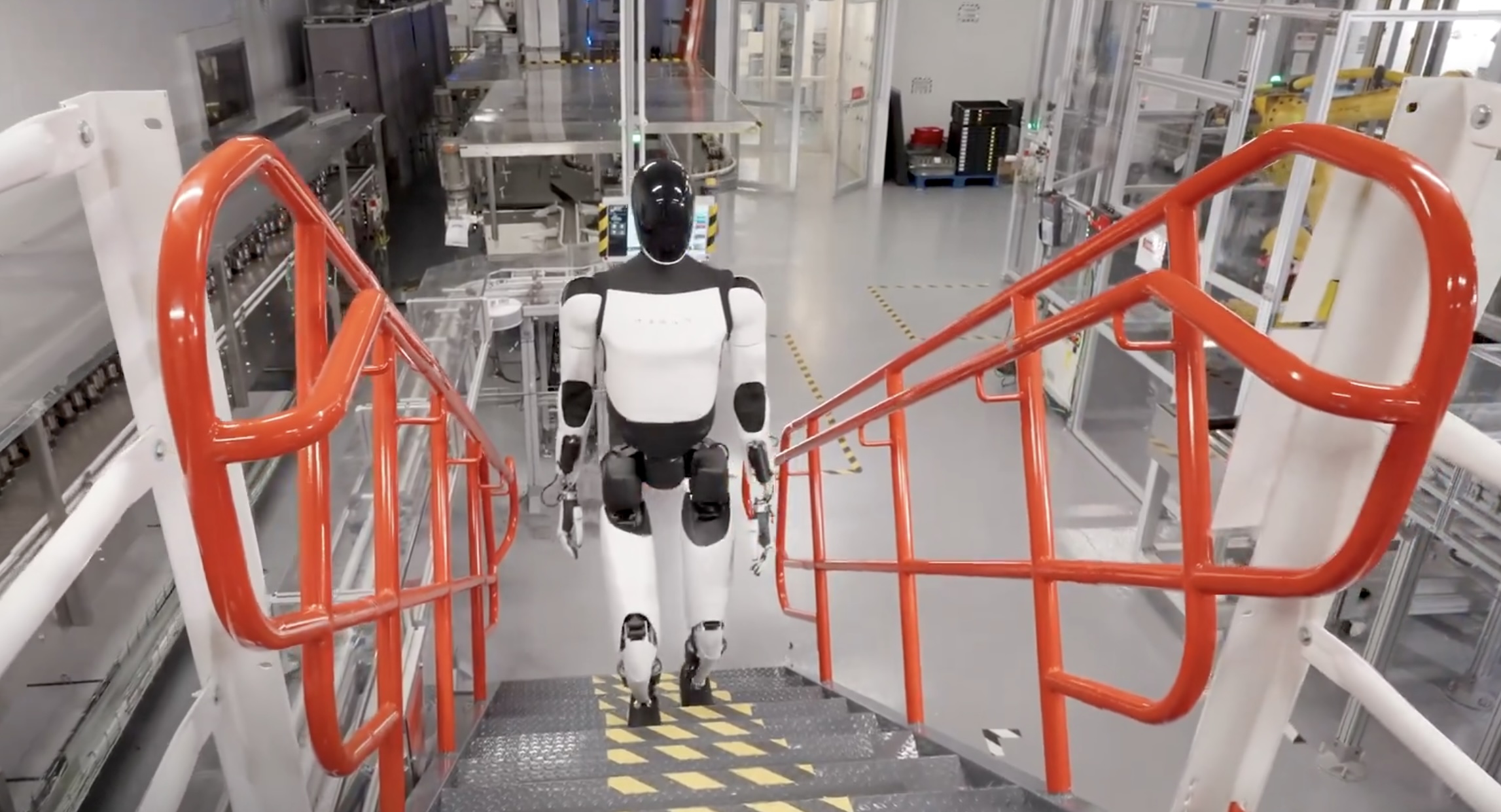
Tesla’s (NASDAQ:TSLA) near-term outlook may be clouded by political controversies and regulatory headwinds, but Morgan Stanley analyst Adam Jonas sees a glimmer of opportunity for the electric vehicle maker.
In a new note, the Morgan Stanley analyst estimated that Tesla could save $2.5 billion by replacing just 10% of its workforce with its Optimus robots, assigning each robot a net present value (NPV) of $200,000.
Morgan Stanley highlights Optimus’ savings potential
Jonas highlighted the potential savings on Tesla’s workforce of 125,665 employees in his note, suggesting that the utilization of Optimus robots could significantly reduce labor costs. The analyst’s note arrived shortly after Tesla reported Q2 2025 deliveries of 384,122 vehicles, which came close to Morgan Stanley’s estimate and slightly under the consensus of 385,086.
“Tesla has 125,665 employees worldwide (year-end 2024). On our calculations, a 10% substitution to humanoid at approximately ($200k NPV/humanoid) could be worth approximately $2.5bn,” Jonas wrote, as noted by Street Insider.
Jonas also issued some caution on Tesla Energy, whose battery storage deployments were flat year over year at 9.6 GWh. Morgan Stanley had expected Tesla Energy to post battery storage deployments of 14 GWh in the second quarter.
Musk’s political ambitions
The backdrop to Jonas’ note included Elon Musk’s involvement in U.S. politics. The Tesla CEO recently floated the idea of launching a new political party, following a poll on X that showed support for the idea. Though a widely circulated FEC filing was labeled false by Musk, the CEO does seem intent on establishing a third political party in the United States.
Jonas cautioned that Musk’s political efforts could divert attention and resources from Tesla’s core operations, adding near-term pressure on TSLA stock. “We believe investors should be prepared for further devotion of resources (financial, time/attention) in the direction of Mr. Musk’s political priorities which may add further near-term pressure to TSLA shares,” Jonas stated.
Investor's Corner
Two Tesla bulls share differing insights on Elon Musk, the Board, and politics
Two noted Tesla bulls have shared differing views on the recent activities of CEO Elon Musk and the company’s leadership.
Two noted Tesla (NASDAQ:TSLA) bulls have shared differing views on the recent activities of CEO Elon Musk and the company’s leadership.
While Wedbush analyst Dan Ives called on Tesla’s board to take concrete steps to ensure Musk remains focused on the EV maker, longtime Tesla supporter Cathie Wood of Ark Invest reaffirmed her confidence in the CEO and the company’s leadership.
Ives warns of distraction risk amid crucial growth phase
In a recent note, Ives stated that Tesla is at a critical point in its history, as the company is transitioning from an EV maker towards an entity that is more focused on autonomous driving and robotics. He then noted that the Board of Directors should “act now” and establish formal boundaries around Musk’s political activities, which could be a headwind on TSLA stock.
Ives laid out a three-point plan that he believes could ensure that the electric vehicle maker is led with proper leadership until the end of the decade. First off, the analyst noted that a new “incentive-driven pay package for Musk as CEO that increases his ownership of Tesla up to ~25% voting power” is necessary. He also stated that the Board should establish clear guidelines for how much time Musk must devote to Tesla operations in order to receive his compensation, and a dedicated oversight committee must be formed to monitor the CEO’s political activities.
Ives, however, highlighted that Tesla should move forward with Musk at its helm. “We urge the Board to act now and move the Tesla story forward with Musk as CEO,” he wrote, reiterating its Outperform rating on Tesla stock and $500 per share price target.
Tesla CEO Elon Musk has responded to Ives’ suggestions with a brief comment on X. “Shut up, Dan,” Musk wrote.
Cathie Wood reiterates trust in Musk and Tesla board
Meanwhile, Ark Investment Management founder Cathie Wood expressed little concern over Musk’s latest controversies. In an interview with Bloomberg Television, Wood said, “We do trust the board and the board’s instincts here and we stay out of politics.” She also noted that Ark has navigated Musk-related headlines since it first invested in Tesla.
Wood also pointed to Musk’s recent move to oversee Tesla’s sales operations in the U.S. and Europe as evidence of his renewed focus in the electric vehicle maker. “When he puts his mind on something, he usually gets the job done,” she said. “So I think he’s much less distracted now than he was, let’s say, in the White House 24/7,” she said.
TSLA stock is down roughly 25% year-to-date but has gained about 19% over the past 12 months, as noted in a StocksTwits report.
Investor's Corner
Cantor Fitzgerald maintains Tesla (TSLA) ‘Overweight’ rating amid Q2 2025 deliveries
Cantor Fitzgerald is holding firm on its bullish stance for the electric vehicle maker.
Cantor Fitzgerald is holding firm on its bullish stance for Tesla (NASDAQ: TSLA), reiterating its “Overweight” rating and $355 price target amidst the company’s release of its Q2 2025 vehicle delivery and production report.
Tesla delivered 384,122 vehicles in Q2 2025, falling below last year’s Q2 figure of 443,956 units. Despite softer demand in some countries in Europe and ongoing controversies surrounding CEO Elon Musk, the firm maintained its view that Tesla is a long-term growth story in the EV sector.
Tesla’s Q2 results
Among the 384,122 vehicles that Tesla delivered in the second quarter, 373,728 were Model 3 and Model Y. The remaining 10,394 units were attributed to the Model S, Model X, and Cybertruck. Production was largely flat year-over-year at 410,244 units.
In the energy division, Tesla deployed 9.6 GWh of energy storage in Q2, which was above last year’s 9.4 GWh. Overall, Tesla continues to hold a strong position with $95.7 billion in trailing twelve-month revenue and a 17.7% gross margin, as noted in a report from Investing.com.
Tesla’s stock is still volatile
Tesla’s market cap fell to $941 billion on Monday amid volatility that was likely caused in no small part by CEO Elon Musk’s political posts on X over the weekend. Musk has announced that he is forming the America Party to serve as a third option for voters in the United States, a decision that has earned the ire of U.S. President Donald Trump.
Despite Musk’s controversial nature, some analysts remain bullish on TSLA stock. Apart from Cantor Fitzgerald, Canaccord Genuity also reiterated its “Buy” rating on Tesla shares, with the firm highlighting the company’s positive Q2 vehicle deliveries, which exceeded its expectations by 24,000 units. Cannacord also noted that Tesla remains strong in several markets despite its year-over-year decline in deliveries.

Tesla launches in India with Model Y, showing pricing will be biggest challenge

Tesla ups Robotaxi fare price to another comical figure with service area expansion

Tesla Model Y and Model 3 dominate U.S. EV sales despite headwinds


-

 News3 days ago
Tesla debuts hands-free Grok AI with update 2025.26: What you need to know
-

 Elon Musk1 week ago
Elon Musk confirms Grok 4 launch on July 9 with livestream event
-
 Elon Musk5 days ago
xAI launches Grok 4 with new $300/month SuperGrok Heavy subscription
-
 News2 weeks ago
Tesla Model 3 ranks as the safest new car in Europe for 2025, per Euro NCAP tests
-

 Elon Musk2 weeks ago
xAI’s Memphis data center receives air permit despite community criticism
-
 News5 days ago
Tesla begins Robotaxi certification push in Arizona: report
-
 Elon Musk2 weeks ago
Tesla reveals it is using AI to make factories more sustainable: here’s how
-
 Elon Musk2 weeks ago
Tesla scrambles after Musk sidekick exit, CEO takes over sales