Investor's Corner
Tesla shareholders will prosper, says veteran Wall St. analyst

Tesla shares (NASDAQ:TSLA) have seen a drop recently amidst last week’s reveal of the Model Y SUV and Elon Musk’s ongoing skirmish with the Securities and Exchange Commission (SEC). Despite these headwinds, Loup Ventures managing partner Gene Munster believes that the company will likely survive and thrive after it overcomes these recent challenges.
In a recent post, the 23-year finance veteran noted that while Tesla’s Q1 results and performance are still up in the air due to swing factors such as vehicles in transit, demand, and profitability, the company’s long-term view remains intact. Munster added that he believes patient TSLA investors will be rewarded in the future, as Tesla’s long-term strategy unravels.
“We believe Tesla will survive because we expect the company can continue to raise money based on their lead in undeniable long-term growth opportunities including EVs, autonomy, and renewable energy. We continue to believe that over the long-term Tesla will prosper, and patient shareholders will be rewarded. The electrification of vehicles is undeniable, and Tesla’s participation in that EV future is crucial given its leading family of vehicles along with optionality around energy capture/storage products and autonomous driving,” Munster wrote.
Munster is not alone in his continued support for Tesla. The electric car maker’s shares dipped sharply following the Model Y event, with the company’s critics coming out in full force to express their skepticism for the vehicle and its effects on Tesla’s business. Despite these reservations, a number of analysts have remained firm in their positive outlook for the electric car maker.
Canaccord Genuity analyst Jed Dorsheimer maintained a Buy rating and a $450 price target for Tesla stock. Dorsheimer wrote that “we suspect the strategy with the Y will follow a similar trajectory to the 3, skimming the high end of the market with more profitable sales, as the company works to bring costs down and then in 2021 introduce more mainstream price points to drive a further competitive lead over traditional internal-combustion-based vehicles.”
Baird analyst Ben Kallo, a longtime Tesla bull, also kept his Outperform rating and $465 price target for the company. Kallo argues that “sales of the Model Y should be supported by [a] growing market for premium/luxury crossovers and SUV. We estimate the U.S. market to be over 1.5 million vehicles annually, based on historical sales.” Daniel Ives of Wedbush further asserted his Outperform rating and $390 price target on Tesla, stating that “while some have argued that the production of Model Y could potentially cannibalize Model 3 deliveries, in our opinion this is a smart and strategic move by Musk & Co. as they aim to further their leadership position in the electric vehicle market by now going after the hot SUV crossover market.”
Tesla shares are currently weighed down by several potential factors, one of which is Elon Musk’s continued clashes with the SEC. The agency had requested that Musk be held in contempt of court over his tweet last February 19, when he noted that Tesla would produce “around 500,000 cars in 2019.” The SEC argued that Musk’s tweet violated the settlement that it reached with the CEO last year following the now-infamous “funding secured” fiasco. Musk’s legal team has fought back, alleging that the agency is over-reaching in its efforts against the CEO.
Despite concerns about the Model Y and Elon Musk’s SEC troubles, Tesla’s numbers in the first quarter might prove to be a pleasant surprise. Elon Musk has noted that the first quarter would likely be unprofitable, though the mass deliveries of the Model 3 to Europe and China, as well as the push for the $35,000 Model 3 in the United States, might make a difference for the company’s numbers. Coupled with a recently leaked message hinting that Tesla is urging its employees to help deliver vehicles until the end of the month, the electric car maker’s Q1 2019 performance might prove better than expected.
Disclosure: I have no ownership in shares of TSLA and have no plans to initiate any positions within 72 hours.


Elon Musk
Tesla ditches India after years of broken promises
Tesla has ditched its plans to build a factory in India after years of failed negotiations.

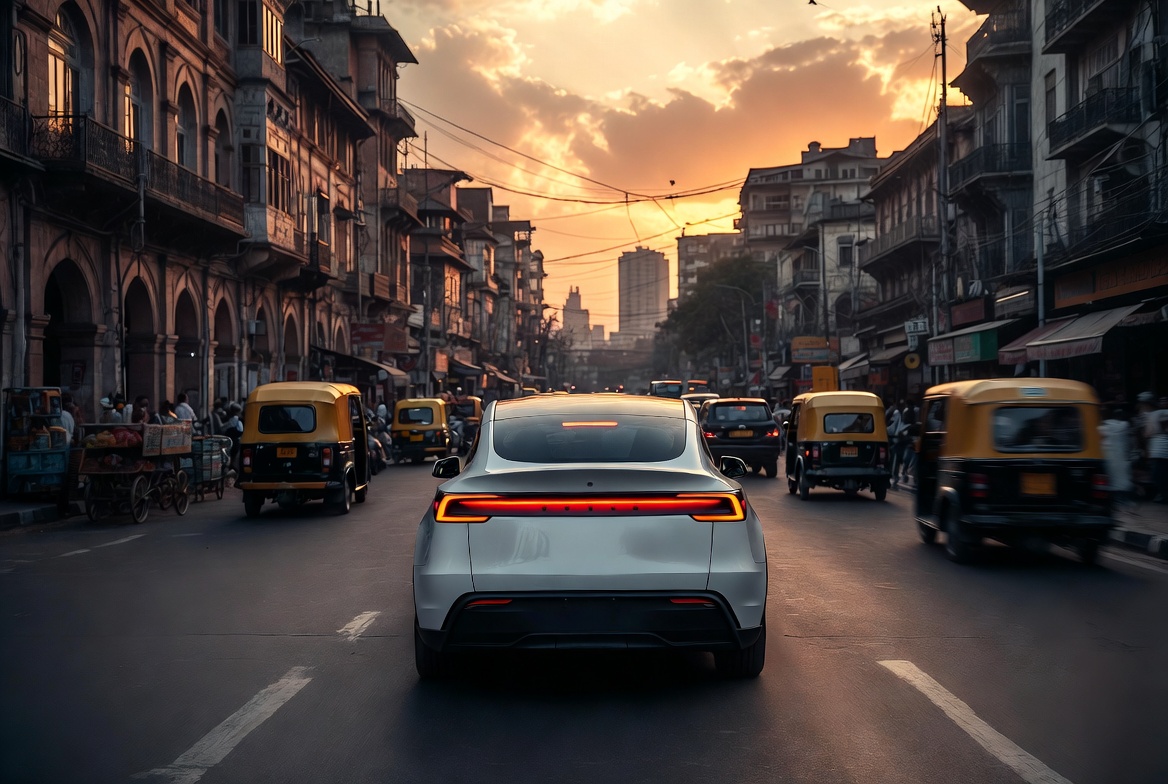
Tesla’s long-running effort to establish a manufacturing presence in India is officially over. India’s Minister of Heavy Industries H.D. Kumaraswamy confirmed on May 19, 2026 that Tesla has informed authorities it will not proceed with a manufacturing facility in the country.
Tesla first signaled serious interest in India around 2021, when it began hiring local staff and lobbying the Indian government for lower import tariffs. The ask was straightforward: reduce duties enough for Tesla to test the market with imported vehicles before committing capital to a local factory. India’s position was equally firm, with an ask of Tesla to commit to manufacturing first, then receive tariff relief. Neither side moved, and the talks quietly collapsed.
Tesla to open first India experience center in Mumbai on July 15
India had offered a policy that would reduce import duties from 110% down to 15% on EVs priced above $35,000, provided companies committed at least $500 million toward local manufacturing investment within three years. Tesla declined to participate. The tariff standoff was only part of the problem. Analysts pointed to significant gaps in India’s local supply chain, inadequate industrial infrastructure, and a mismatch between Tesla’s premium pricing and the purchasing power of India’s automotive market as additional factors that made the investment difficult to justify.
First signs of an unraveling relationship came in April 2024, when Musk abruptly cancelled a planned trip to India where he was set to meet Prime Minister Modi and announce Tesla’s market entry. By July 2024, Fortune reported that Tesla executives had stopped contacting Indian government officials entirely. The government at that point understood Tesla had capital constraints and no plans to invest.
The more fundamental issue is that Tesla’s existing factories are currently operating at approximately 60% capacity, making a commitment to building new manufacturing capacity in a new market difficult to defend to investors. Tesla will continue selling imported Model Y vehicles through its existing showrooms in Mumbai, Delhi, Gurugram, and Bengaluru, but local production is no longer part of the plan.
Elon Musk
SpaceX just forced Verizon, AT&T and T-Mobile to team up for the first time in history
AT&T, T-Mobile, and Verizon just joined forces for one reason: Starlink is winning.
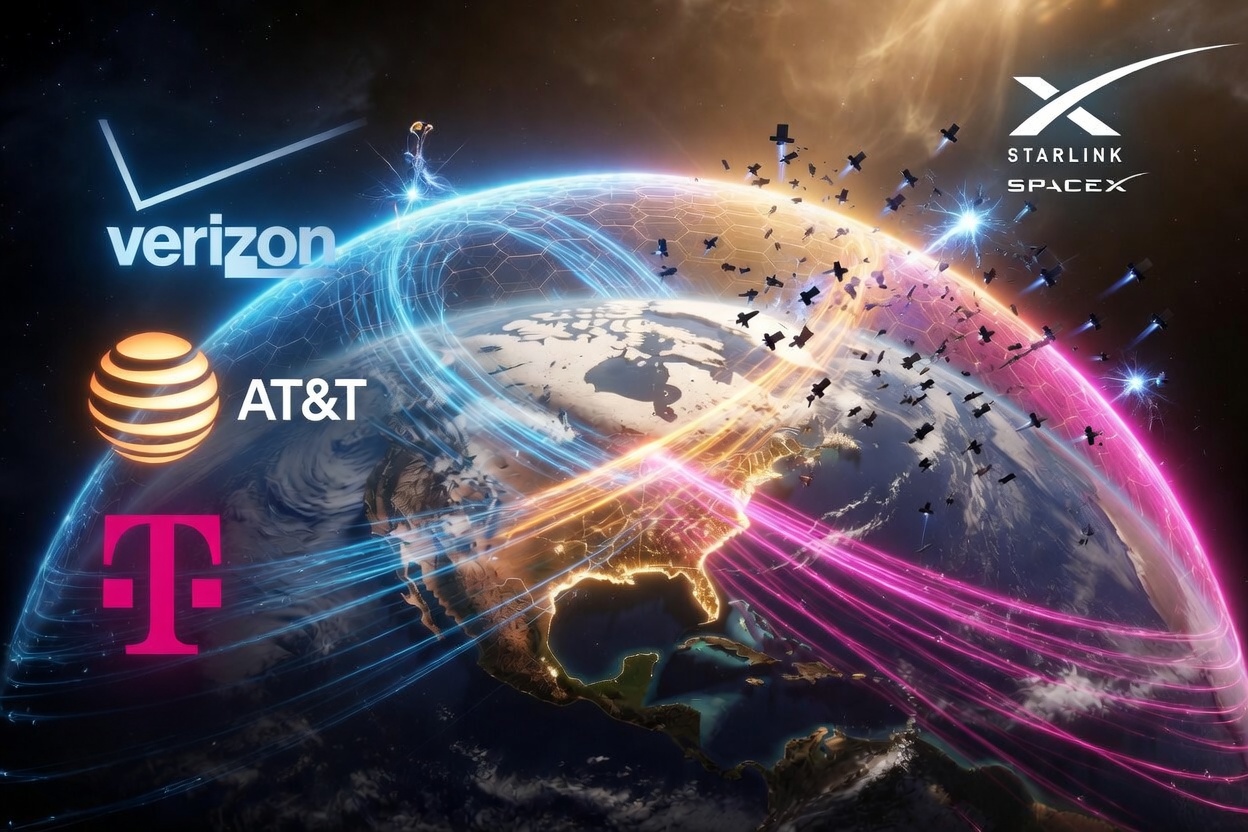
America’s three largest wireless carriers, AT&T, T-Mobile, and Verizon, announced on On May 14, 2026 that they had agreed in principle to form a joint venture aimed at pooling their spectrum resources to expand satellite-based direct-to-device (D2D) connectivity across the United States in what can be seen as a direct response to SpaceX’s Starlink initiative. D2D, in plain terms, is technology that lets a standard smartphone connect directly to a satellite in orbit, the same way it connects to a cell tower, with no extra hardware required.
The alliance is widely seen as a means to slow Starlink’s rapid expansion in the satellite internet and mobile markets. SpaceX’s Starlink Mobile service launched commercially in July 2025 through a partnership with T-Mobile, starting with messaging before expanding to broadband data. SpaceX secured access to valuable wireless spectrum through its $17 billion deal with EchoStar, paving the way for significantly faster satellite-to-phone speeds.
SpaceX was not shy about its reaction. SpaceX president and COO Gwynne Shotwell responded on X: “Weeeelllll, I guess Starlink Mobile is doing something right! It’s David and Goliath (X3) all over again — I’m bettin’ on David.” SpaceX’s VP of Satellite Policy David Goldman went further, flagging potential antitrust concerns and asking whether the DOJ would even allow three dominant competitors to coordinate in a market where a new rival is actively entering.
Weeeelllll, I guess @Starlink Mobile is doing something right! It’s David and Goliath (X3) all over again — I’m bettin’ on David 🙂 https://t.co/5GzS752mxL
— Gwynne Shotwell (@Gwynne_Shotwell) May 14, 2026
Financial analysts at LightShed Partners were blunt, saying the announcement showed the three carriers are “nervous,” and pointed to the timing: “You announce an agreement in principle when the point is the announcement, not the deal. The timing, weeks ahead of the SpaceX roadshow, was the point.”
As Teslarati reported, SpaceX’s next generation Starlink V2 satellites will deliver up to 100 times the data density of the current system, with custom silicon and phased array antennas enabling around 20 times the throughput of the first generation. The carriers’ JV, which has no definitive agreement, no financial structure, and no deployment timeline yet, will need to move quickly to matter.
Elon Musk’s SpaceX is targeting a Nasdaq listing as early as June 12, aiming for what would be the largest IPO in history. With Starlink now serving over 9 million subscribers across 155 countries, holding 59 carrier partnerships globally, and now powering Air Force One, the carriers’ joint venture announcement landed at exactly the wrong time to look like anything other than a defensive move.
Investor's Corner
Tesla and SpaceX get latest synopsis from Wall Street legend Ron Baron
In a wide-ranging appearance on CNBC’s Squawk Box on May 12, legendary investor Ron Baron, founder, CEO, and portfolio manager of Baron Capital, reaffirmed his deep conviction in Elon Musk’s two flagship companies.

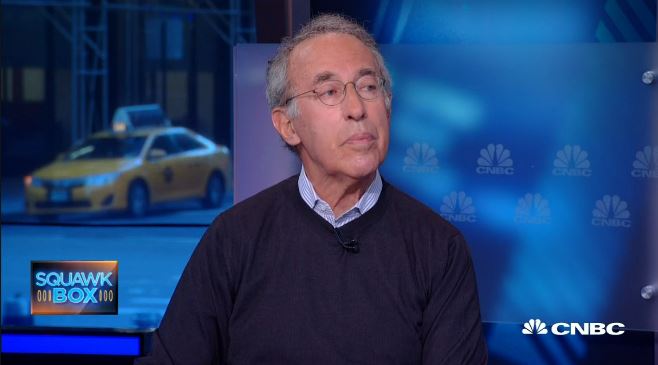
Legendary investor Ron Baron says he will continue buying stock of both Tesla and SpaceX, as he continues his support behind CEO Elon Musk, who he says is a special person and “brilliant.”
In a wide-ranging appearance on CNBC’s Squawk Box on May 12, legendary investor Ron Baron, founder, CEO, and portfolio manager of Baron Capital, reaffirmed his deep conviction in Elon Musk’s two flagship companies.
With assets under management approaching $55–56 billion, Baron detailed his firm’s substantial holdings, outlined plans for the anticipated SpaceX IPO, and painted an exceptionally optimistic picture for both Tesla (NASDAQ: TSLA) and SpaceX, framing them as generational opportunities that will reshape industries and deliver extraordinary long-term returns.
Baron Capital’s position in SpaceX has grown dramatically since the firm began investing around 2017. What started as roughly $1.7 billion has ballooned to more than $15 billion, making it the firm’s largest holding.
Tesla ranks second, valued at approximately $5 billion in the portfolio. Together with stakes in xAI and related Musk-led ventures, these investments account for roughly one-third of Baron Capital’s $60 billion in lifetime profits since 1992. Baron emphasized that the growth stems from Musk’s singular ability to execute ambitious visions—from reusable rockets to global satellite internet and beyond.
The centerpiece of the discussion was SpaceX’s expected initial public offering, targeted for mid-2026 following a confidential S-1 filing. Baron announced plans to purchase an additional $1 billion in shares at the IPO.
Ron Baron said today that he plans on buying an additional $1 billion of SpaceX stock during the upcoming IPO:
“At the IPO price, I’ve got an order for $1 billion. I want to buy more stock at the IPO. I don’t know if we’re going to get filled, but we’re going to try. I believe… pic.twitter.com/KOv1HvYcZ0
— Sawyer Merritt (@SawyerMerritt) May 12, 2026
He described the company’s trajectory in sweeping terms: “This is going to become the largest company on the planet.”
He highlighted Starlink’s expansion of high-speed internet to every corner of the globe, the revolutionary economics of reusable rockets, and Starship’s potential to enable massive space-based data centers and interplanetary infrastructure.
Baron sees SpaceX not merely as a rocket company but as a platform poised for exponential scaling once it goes public, with post-IPO appreciation potentially reaching 10- to 20- or even 30-times current levels over the next decade or more.
On Tesla, Baron struck an equally enthusiastic note, declaring that “now is Tesla’s moment.” He projected the stock could reach $2,000 to $2,500 per share within 10 years—implying a market capitalization near $8.3 trillion and roughly 5–6 times upside from recent levels. While Tesla remains a major holding, Baron’s optimism centers on its evolution beyond electric vehicles into an AI, robotics, autonomous-driving, and energy platform.
He pointed to robotaxis, Full Self-Driving (FSD) technology, Optimus humanoid robots, energy storage, and the vast real-world data advantage from Tesla’s global fleet as catalysts that will fundamentally alter the company’s revenue model and valuation multiples. Baron views these developments as transformative, shifting Tesla from a traditional automaker to a high-margin technology and infrastructure powerhouse.
Throughout the interview, Baron’s admiration for Musk was unmistakable. He has likened the entrepreneur to a modern Leonardo da Vinci for his artistic, multidisciplinary approach to solving humanity’s biggest challenges.
Baron’s personal commitment mirrors this confidence: he has repeatedly stated he does not expect to sell a single share of his own Tesla or SpaceX holdings in his lifetime, positioning himself as the “last one out” after his clients. This stance underscores a philosophy of patient, long-term ownership rather than short-term trading.
Baron’s comments arrive at a time of heightened anticipation around SpaceX’s public debut, which could rank among the largest IPOs in history and potentially value the company at $1.5–2 trillion or more at listing.
For investors, his message is clear: the Musk ecosystem—spanning electric vehicles, autonomy, robotics, satellite communications, and space exploration—represents one of the most compelling secular growth stories of the era. While short-term volatility in tech and EV stocks may persist, Baron sees these as buying opportunities for those who share his multi-decade horizon.
In summarizing his outlook, Baron reinforced that the combination of technological breakthroughs, massive addressable markets, and Musk’s leadership creates asymmetric upside that few other investments can match.
For Baron Capital’s clients and long-term Tesla and SpaceX shareholders alike, the investor’s latest CNBC remarks serve as both validation and a call to remain patient through the inevitable ups and downs. As Baron sees it, the best days for both companies—and the returns they can deliver—are still ahead.

Tesla scales back driver monitoring with latest Full Self-Driving release

Tesla Full Self-Driving expands in Europe, entering its second country


