Investor's Corner
Tesla stock pushes another firm to boost price target with a Buy rating
Gianarikas raised Canaccord’s price target on Tesla shares up to $490 from $333, as the stock has been well above the latter number for some time.

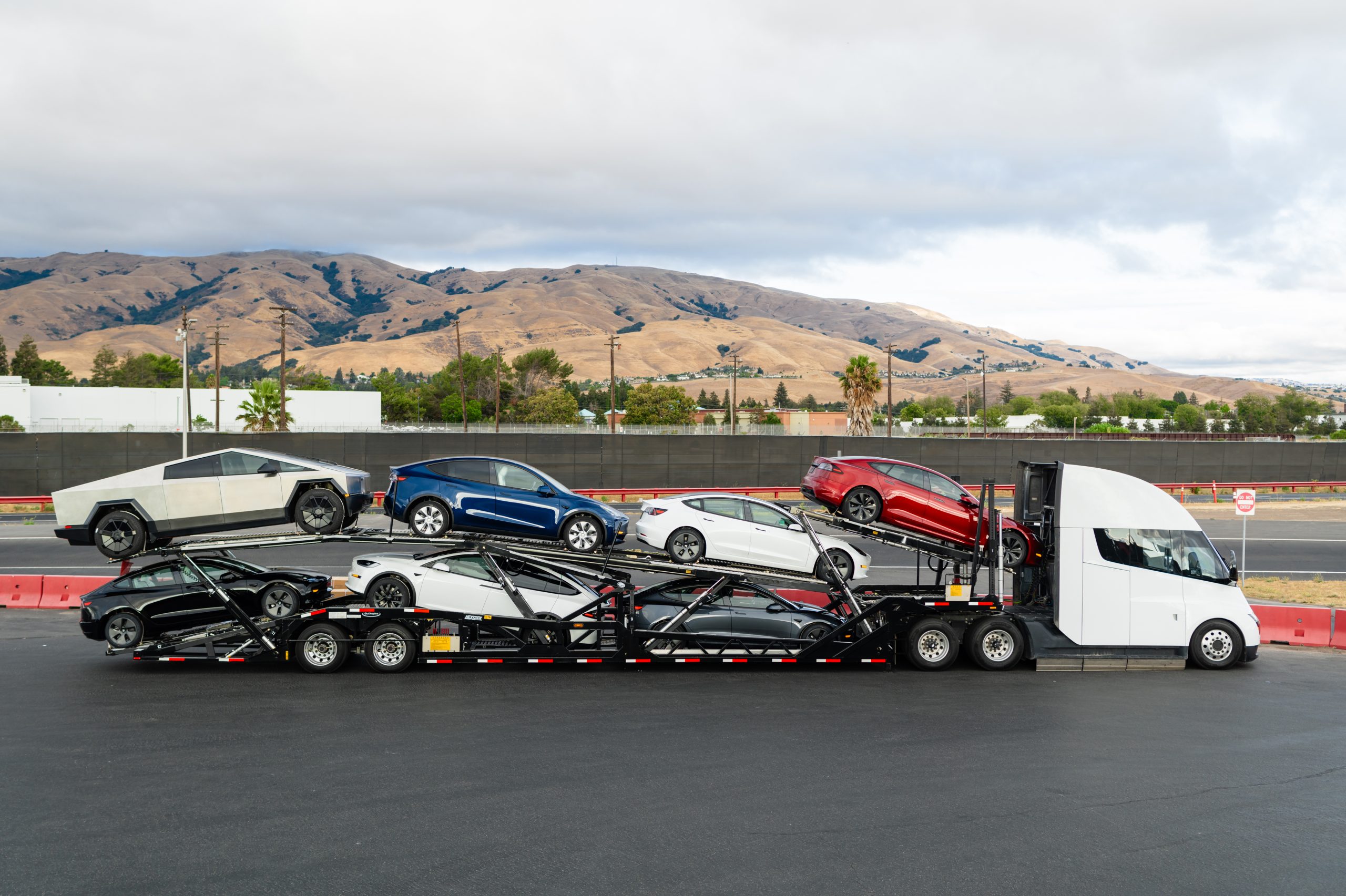
Tesla stock (NASDAQ: TSLA) has pushed yet another Wall Street firm to boost its price target, but this time, shares have also held their ‘Buy’ rating, as Canaccord Genuity analyst George Gianarikas made both adjustments.
Gianarikas raised Canaccord’s price target on Tesla shares up to $490 from $333, as the stock has been well above the latter number for some time.
Shares are currently trading at around $443, and have not traded at $333 since the beginning of September. Tesla shares have increased by over 34 percent in the past month.
A new note written to investors from Gianarikas breaks down each division of the company and how it will contribute to Tesla’s overall growth through the next several quarters. Investors are certainly concerned about the removal of the $7,500 EV tax credit, but it’s important to note that Tesla is much more than an automotive stock play.
Affordable Models
Gianarikas notes that Canaccord expects higher deliveries this quarter, in part due to the removal of the tax credit, which will occur today.
The firm expects Tesla to offset the loss of the tax credit with the introduction of new, affordable models, something the company has stated it is working on and plans to introduce during the second half of this year.
Now, with just a quarter left in 2025, it seems Tesla plans to launch those models within the next three months. Canaccord said:
“…on the EV side, we expect more new models soon – as promised by management. These should help global sales momentum – and potentially help alleviate any post-3Q cliff in the US after EV tax credits go away. And these new vehicles should be interesting.”
Tesla Energy
The company’s Energy division is one that consistently flies under the radar and gets little attention. With an increase in data centers and the need for more power, Canaccord thinks this is where Tesla could see some true growth over the next few years:
“Fully using grid resources not only takes significant time and effort but is increasingly met with resistance from utilities and consumers as they express concerns about increasing power prices and impact on grid resiliency. Elon Musk himself used behind-the-meter solutions like methane gas turbines and generators in Memphis to build his xAI facility – although next time he should be careful not to pollute the environment when he does it. Energy storage will play a material role in behind-the-meter solutions.”
Elon Musk’s Comp Package
Locking up Musk for the next several years was a crucial part of keeping Tesla as a bullish stock play for many firms.
The new comp plan for CEO Elon Musk will benefit investors as well as the Tesla frontman, and although these tranches are challenging, they appear to be well within the realm of possibility.
“Those targets, if achieved, promise great returns for Tesla shareholders. Embedded in the upcoming shareholder vote is an opportunity for Tesla shareholders to potentially invest in xAI as well. Given Mr. Musk’s singular business achievements, we see his commitment to the company and bold targets as – mostly -a positive. $400B in EBITDA. Yowza. That’s one of Mr. Musk’s operational targets over a 10-year period and compares to ~$15B TTM as of 2Q25. Mr. Musk is who he is, and it is hard to underestimate him. But, a lot needs to go right for him to achieve it.”
Price Target and Rating
Gianarikas says there was a potential for a stock downgrade while mulling what forecast to put on Tesla shares, especially as the firm admits it “still struggles” with the valuation. Near-term, however, there are more catalysts than drawbacks.
With the affordable EVs presumably on the way, as well as plenty of momentum in Robotaxi and Optimus projects, Tesla is sitting in a good spot, especially from an investor perspective, Canaccord believes.
It ups its price target to $490 and reiterates its ‘Buy’ rating.


Investor's Corner
Tesla opens the Q&A for its biggest earnings call yet
Tesla opens its Q3 earnings Q&A, and Cybercab, Robotaxi, Optimus and regulators loom over October 21.

Tesla has opened its shareholder question portal for the Q3 2026 earnings call, with the Say Q&A page already listing questions. Investors have until 4:00 p.m. EDT on October 20 to submit and vote on what management should answer.
The call is set for Wednesday, October 21. Tesla will post results after the market closes, with a live webcast at 4:30 p.m. CT, or 5:30 p.m. ET, through its investor relations site.
Say ranks questions by the number of shares behind the votes, which gives institutional holders extra weight over the retail crowd.
Ahead of Q2, retail investors asked why Robotaxi growth had stalled, when Cybercab would start customer rides, and where the Optimus Gen 3 ramp stood, while an institutional holder asked how Tesla and SpaceX would split Terafab duties. Cybercab has since answered one of those. Tesla said last week it has 300 plus Cybercabs serving Austin, up eightfold in 30 days, with Dallas named as the next city. The questions now are likely to move from when to how fast.
There is also a regulatory question hanging over the call. NHTSA has demanded sworn answers on how the pedal free Cybercab was certified against federal safety standards, with responses due October 30, nine days after the call. Whether an analyst raises it live is unknown, but it is the kind of exposure that tends to find its way into a Q&A.
The numbers will not be the main draw. Tesla already reported 486,532 deliveries and 13.7 GWh of storage for the quarter. Consensus sits around 43 to 45 cents per share on roughly $27.8 billion in revenue, according to Zacks, after a Q2 report that missed on EPS. Goldman Sachs, which holds a Neutral rating and a $360 target, argues the outlook for Robotaxi, FSD and Optimus will matter more to the stock than the quarter itself.
The call also lands six days after the rescheduled Roadster event, which Tesla will stream on X on Thursday, October 15, at 7:55 p.m. CT. If the Roadster shows up with a production date or a SpaceX thruster package, expect it to climb the voting list before the deadline.
Elon Musk
FAA kicks off review of SpaceX’s bid to fly Starship nearly every day
FAA is reviewing SpaceX’s plan for 456 Starship launches a year, up from 25 today.
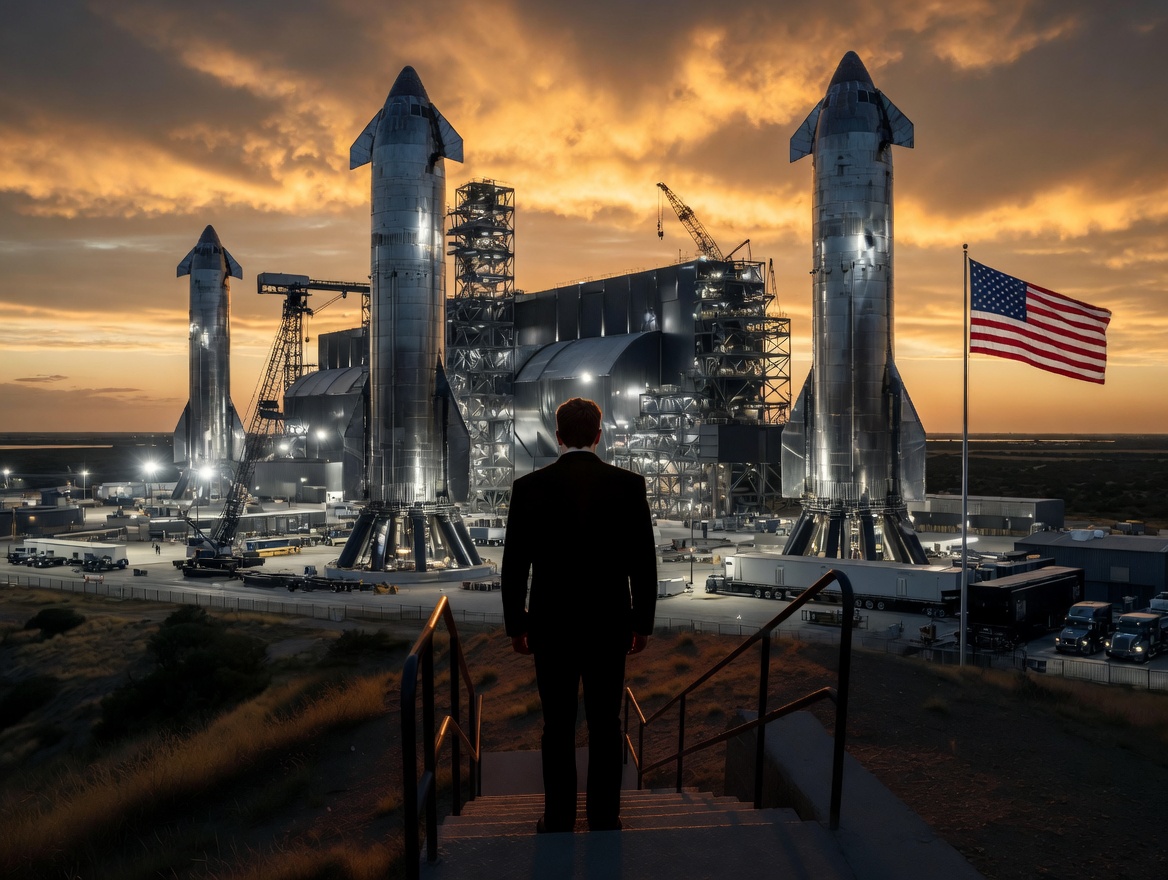
The FAA said Tuesday that it will prepare an environmental impact statement on SpaceX’s proposal to run as many as 456 Starship launches and 912 landings a year from Starbase, Texas. SpaceX is currently authorized for 25 launches and 50 landings annually, which makes the request roughly 18 times the existing ceiling. The notice of intent is set to publish in the Federal Register on Wednesday.
The plan comes in two phases. Phase 1 would allow up to 100 launches and 200 landings a year, on any day and at any hour. Phase 2, which the FAA says could arrive within several years, would raise the limit to the full 456 launches, still at any hour but only on weekdays. The agency noted that 912 landings is the upper limit for the Texas facility no matter where a given mission begins, and that Starship and Super Heavy could come down at the launch site or in the Gulf and open ocean.
A draft statement will be released for public comment at a later date, and the FAA has not said when. According to the Federal Registar, written comments are due November 30 on regulations.gov under docket FAA-2026-12808, with in person scoping meetings on November 17 in Brownsville and November 19 in Port Isabel, plus a virtual session on November 18. The review will weigh air quality, wildlife, coastal resources, water, noise, and aviation, and the FAA said any increase beyond this proposal would need its own separate review.
The numbers look large next to what Starbase has actually done. Starship has flown three times from Texas this year, including Flight 14 on September 28, the first orbital flight, which deployed 26 Starlink V3 satellites. Bloomberg reported that Starbase has never launched more than five times in a calendar year. The current cap of 25 comes from an FAA approval in May 2025. In February, the agency also approved up to 44 Starship launches a year from Launch Complex 39A in Florida, so Phase 1 in Texas alone would more than double that allowance.
Musk has said Starship could eventually fly more than once per hour within less than a decade, per Bloomberg. The nearer term target is Flight 15. Musk said on October 10 that it is hopefully four to six weeks away and will try to catch the ship with the tower, as Teslarati covered. That flight still runs under the existing 25 launch limit, and so would every Starbase launch for as long as the new review takes.
As of mid morning Pacific time on Tuesday, SpaceX had not posted about the filing on its own account.
Investor's Corner
Elon Musk drops a Thanksgiving hint about Starship’s biggest test yet
Elon Musk says Starship Flight 15 will try to catch the ship itself, a first.
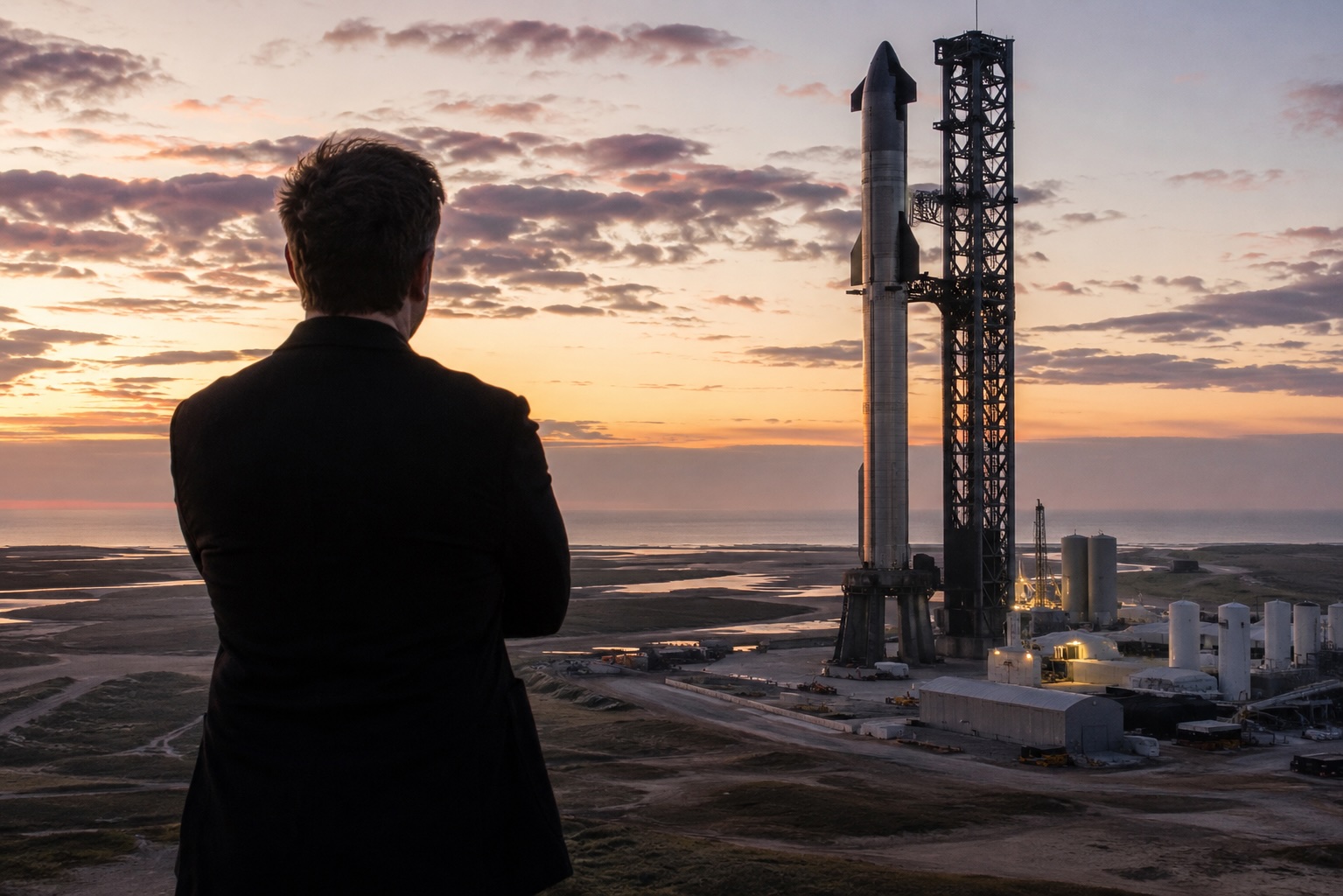
Elon Musk says SpaceX’s next Starship flight will try something nobody has done before, by catching the ship itself. Speaking to roughly 2,000 people at the X Takeover event at Giga Texas on Saturday, Musk said Flight 15 is about four to six weeks away and “probably launches a little bit before Thanksgiving, is my guess.”
That is a slip from earlier reporting, which had pointed to a launch as early as October 19. Musk explained why the date keeps moving. “We’re making a bunch of improvements to the rocket between every flight,” he said, adding that there are often hundreds, sometimes thousands, of small changes. This time the list is short, “but some of them take a fair bit of work and we’ve got to go inside the tank to make some of these changes.”
“We’re going to try to catch the ship, which is a super big deal,” Musk said. “If we do so, that’ll be the first time that there’s been full recovery of an orbital class rocket.” SpaceX has already caught the Super Heavy booster with the tower’s mechanical arms, and has talked about catching the ship since late 2025, but the upper stage has never been caught.
Musk also laid out what comes after. “The next big milestone would be to refly both the booster and the ship,” he said, describing a Flight 16 where “all parts of an orbital rocket are reflown.”
The reason SpaceX wants this comes down to cost and cadence. Every Starship ship so far has ended its flight in the ocean, and SpaceX expects most of those water landings to end in fireballs. A ship that returns to Starbase intact can be inspected and flown again. SpaceX’s IPO filing, says Starship V3 is designed to deliver 100 metric tons to orbit in a fully reusable configuration, that SpaceX aims to cut the cost to reach orbit by 99% or more versus the historical average, and that tower catches should allow “multiple launches per day.”
The payoff goes beyond cheaper launches. The next generation Starlink V3 satellites are too large for Falcon 9 and can only fly on Starship, which can carry up to 60 per flight. Flight 14 on September 28 deployed the first 26 of them after Starship reached orbit despite an early engine shutdown, as Teslarati reported. Musk blamed engine computer software, and said the heat shield “was extremely robust,” which he claimed in August had solved Starship’s biggest challenge.
NASA’s Moon plans depend on the same capability. NASA’s inspector general has described a lander mission that needs a propellant depot in low Earth orbit and more than 10 tanker flights, with SpaceX targeting one tanker launch every six days. That schedule only works if ships and boosters come back fast and fly again. Also, ship to ship propellant transfer has not been attempted yet.
One interesting hurdle yet to be explored is bringing the ship back to the launch site, with reentry over land, which will undoubtedly come with a lot of aviation safety reviews.

Tesla opens the Q&A for its biggest earnings call yet

Ukraine says Starlink is cutting out its military drones as Poland calls out Elon Musk

FAA kicks off review of SpaceX’s bid to fly Starship nearly every day

The Pentagon taps Elon Musk to design the battlefield of the future

SpaceX reveals how its 1 Million AI satellite network will work and prevent space collisions


