Investor's Corner
Tesla critic abandons bet against TSLA, with no plans to revive it

Tesla (NASDAQ:TSLA) has a lot of critics, and some of them tend to be aggressive at times. One of these is Carson Block, which The New York Times describes as a “volatile and sometimes venomous short-seller” who runs Muddy Waters Capital. Block had taken a position against Tesla in the past, but in a shareholder letter, the short-seller admitted that his bets against the Elon Musk-led EV company had been abandoned.
Block’s letter to shareholders is pretty rare on its own, being the first of its kind since he started a hedge fund in 2015. Block’s letter reportedly stated that Elon Musk’s “narcissism” was a cause for his disdain, and it encouraged his beliefs that Tesla’s business would crater. He admitted, however, that he underestimated the Tesla CEO’s ability to raise capital and captivate shareholders.
As a result, Block noted that Muddy Waters’ bet against Tesla had been sent to “heaven,” and there are currently no plans to revive it. “The market cap, the luster, the élan of Elon, is still there,” Block wrote.
“Tesla shorts have focused on Tesla’s lack of scale to compete in EVs with GM, Ford, VW, etc. They are correct in that lack of scale would have been the death of Tesla. But they were looking at the wrong scale. Tesla is here not because it has scale in terms of manufacturing base or unit sales. It has scale because of its capital base,” he added.
In a way, Block’s argument about Tesla’s scale still seems a bit short-sighted, especially if one were to look at the growing electric vehicle market today. The Tesla critic cites the scale of companies like GM and Ford, but much of these companies’ output and size is related to their internal combustion vehicle production. In the EV sphere, which is growing as the market for ICE cars declines, Tesla’s scale is no joke. In terms of key resources for EV production like batteries alone, it is Tesla that has the scale, not legacy automakers.
Nevertheless, Block has admitted that Tesla should be able to raise many billions before its cap becomes sub-scale. “One could look at Tesla’s market cap and think it’s fragile — that reality will shatter it. However, Tesla should be able to raise many billions before its cap becomes sub-scale — and keep in mind that Tesla equity raises tend to push the stock higher. (Those “dumb money” investors actually knew that capital base scale is what mattered all along.)” Block wrote.
Disclaimer: I am long TSLA.
Don’t hesitate to contact us with news tips. Just send a message to tips@teslarati.com to give us a heads up.


Elon Musk
Tesla confirmed HW3 can’t do Unsupervised FSD but there’s more to the story
Tesla confirmed HW3 vehicles cannot run unsupervised FSD, replacing its free upgrade promise with a discounted trade-in.

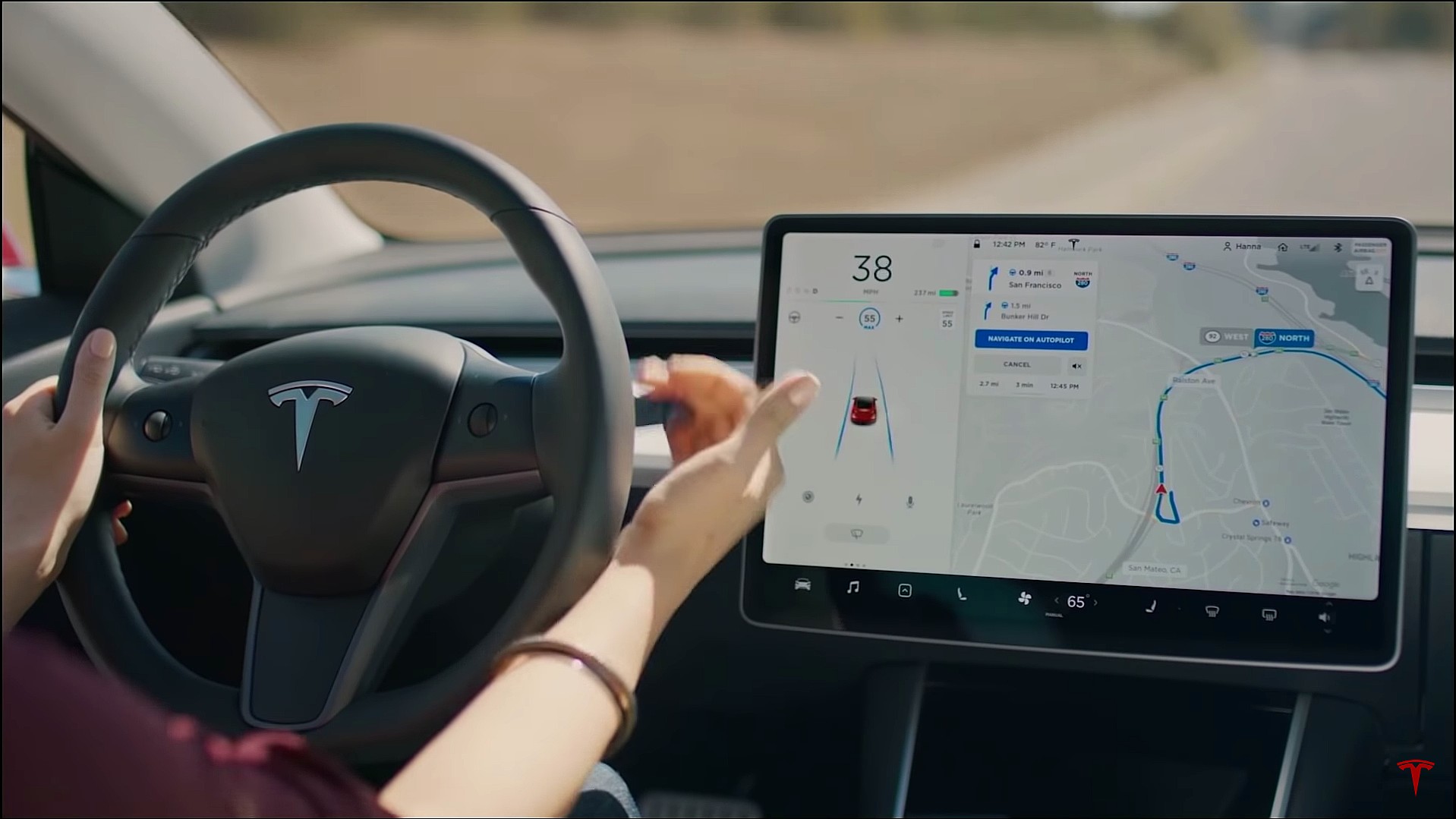
Tesla has officially confirmed that early vehicles with its Autopilot Hardware 3 (HW3) will not be capable of unsupervised Full Self-Driving, while extending a path forward for legacy owners through a discounted trade-in program. The announcement came by way of Elon Musk in today’s Tesla Q1 2026 earnings call.
🚨 Our LIVE updates on the Tesla Earnings Call will take place here in a thread 🧵
Follow along below: pic.twitter.com/hzJeBitzJU
— TESLARATI (@Teslarati) April 22, 2026
The history here matters. HW3 launched in April 2019, and Tesla sold Full Self-Driving packages to owners on the understanding that the hardware was sufficient for full autonomy. Some owners paid between $8,000 and $15,000 for FSD during that period. For years, as FSD’s AI models grew more demanding, HW3 vehicles fell progressively further behind, eventually landing on FSD v12.6 in January 2025 while AI4 vehicles moved to v13 and then v14. When Musk acknowledged in January 2025 that HW3 simply could not reach unsupervised operation, and alluded to a difficult hardware retrofit.
The near-term offering is more concrete. Tesla’s head of Autopilot Ashok Elluswamy confirmed on today’s call that a V14-lite will be coming to HW3 vehicles in late June, bringing all the V14 features currently running on AI4 hardware. That is a meaningful software update for owners who have been frozen at v12.6 for over a year, and it represents genuine effort to keep older hardware relevant. Unsupervised FSD for vehicles is now targeted for Q4 2026 at the earliest, with Musk describing it as a gradual, geography-limited rollout.
For HW3 owners, the over-the-air V14-lite update is welcomed, and the discounted trade-in path at least acknowledges an old obligation. What happens next with the trade-in pricing will define how this chapter ultimately gets written. If Tesla prices the hardware path fairly, acknowledges what early adopters are owed, and delivers V14-lite on the June timeline it committed to today, it has a real opportunity to convert one of the longest-running sore subjects among early adopters into a loyalty story.
Tesla (NASDAQ: TSLA) reported its earnings for the first quarter of 2026 on Wednesday afternoon. Here’s what the company reported compared to what Wall Street analysts expected.
The earnings results come after Tesla reported a miss on vehicle deliveries for the first quarter, delivering 358,023 vehicles and building 408,386 cars during the three-month span.
As Tesla transitions more toward AI and sees itself as less of a car company, expectations for deliveries will begin to become less of a central point in the consensus of how the quarter is perceived.
Nevertheless, Tesla is leaning on its strong foundation as a car company to carry forward its AI ambitions. The first quarter is a good ground layer for the rest of the year.
Tesla Q1 2026 Earnings Results
Tesla’s Earnings Results are as follows:
- Non-GAAP EPS – $0.41 Reported vs. $0.36 Expected
- Revenues – $22.387 billion vs. $22.35 billion Expected
- Free Cash Flow – $1.444 billion
- Profit – $4.72 billion
Tesla beat analyst expectations, so it will be interesting to see how the stock responds. IN the past, we’ve seen Tesla beat analyst expectations considerably, followed by a sharp drop in stock price.
On the same token, we’ve seen Tesla miss and the stock price go up the following trading session.
Tesla will hold its Q1 2026 Earnings Call in about 90 minutes at 5:30 p.m. on the East Coast. Remarks will be made by CEO Elon Musk and other executives, who will shed some light on the investor questions that we covered earlier this week.
You can stream it below. Additionally, we will be doing our Live Blog on X and Facebook.
Q1 2026 Earnings Call at 4:30pm CT https://t.co/pkYIaGJ32y
— Tesla (@Tesla) April 22, 2026
Elon Musk
Tesla Earnings: financial expectations and what we should to hear about
In terms of discussions, Tesla earnings calls are usually a great time to get some clarification on the company’s outlook for its current and future projects.

Tesla (NASDAQ: TSLA) will report its earnings for the first quarter of 2026 this evening after the market closes, and analysts have already put out their expectations from a financial standpoint for the company’s first three months of the year.
Additionally, there will be plenty of things that will be discussed, including the recent expansion of the Robotaxi program, the Roadster unveiling, and Full Self-Driving (Supervised) approvals across the globe.
Financial Expectations
Wall Street consensus expectations put Tesla’s Earnings Per Share (EPS) at $0.36, while revenues are expected to come in around $22.35 billion.
This would compare to an EPS of $0.27 and $19.34 billion compared to Tesla’s Q1 2025. Last quarter, EPS came in at $0.50 on $29.4 billion of revenue.
Tesla beat analyst expectations last quarter, but the next trading day, the stock fell nearly 3.5 percent. We never quite can gauge how the market will respond to Tesla’s earnings; we’ve seen shares rise on a miss and fall on a beat.
It really goes on the news, and investor consensus, it seems.
What to Expect
In terms of discussions, Tesla earnings calls are usually a great time to get some clarification on the company’s outlook for its current and future projects. Right now, the big focus of investors is the Robotaxi program, the Roadster unveiling, and what the outlook for Full Self-Driving’s expansion throughout Europe and the rest of the world looks like.
Robotaxi
Tesla just recently expanded its unsupervised Robotaxi program to Dallas and Houston, joining Austin as the first cities in the U.S. to have access to the company’s ride-hailing suite.
Tesla expands Unsupervised Robotaxi service to two new cities
Some saw this move as a quick effort to turn attention away from a delivery miss and an anticipated miss on earnings. However, we’ve seen Tesla be more than deliberate with its expansion of the Robotaxi suite, so it’s hard to believe the company would make this move if it were not truly ready to do so.
The company is also working to expand its U.S. ride-hailing service outside of Texas and California, and recently filed paperwork to build a Robotaxi-exclusive Supercharger stall.
Expansion is planned for Florida, Nevada, and Arizona at some point this year, with more states to follow.
Roadster Unveiling
The Roadster unveiling was slated for April 1, and then pushed back (once again) to “probably late April,” according to Elon Musk.
It does not appear that the Roadster unveiling will happen within that time frame, at least not to our knowledge. Nobody has received media or press invites for a Roadster unveiling, and given the lofty expectations set for the vehicle by Musk and Co., it seems like something they’d want to show off to the public.
The Roadster has become a truly frustrating project for Tesla and its fans; evidently, there is something that is not up to the expectations Musk and others have. Meanwhile, fans are essentially waiting for something that is six years late.
At this point, also given the company’s focus on autonomy, it almost seems more worth it to just cancel it, remove any and all timelines and expectations, and surprise people with something crazy down the line, maybe in two or three years. There should be no talk of it.
Full Self-Driving Global Expansion
We expect Musk and Co. to shed some details on where it stands with other European government bodies, as it recently was able to roll out FSD (Supervised) to customers in the Netherlands.
Spain is also working with Tesla to assess FSD’s viability as a publicly available option for owners.
With that being said, there should be some additional information for investors as they listen to the call; no talk of it would be a pretty big letdown.
Optimus
There will likely be a date set for the Gen 3 Optimus unveiling, and we’re hopeful Tesla can keep that date set in stone and meet it. Not reaching timelines is a relatively minor issue, but a company can only do this for so long before its fans and investors start to lose trust and disregard any talk about dates.
It seems this is happening already.
Optimus has been pegged as Tesla’s big money maker for the future. The goals and expectations are high, but it is a privilege to have that sort of pressure when investors know the company’s capability.

Tesla gives HW3 owners another massive update

SpaceX Board has set a Mars bonus for Elon Musk


